
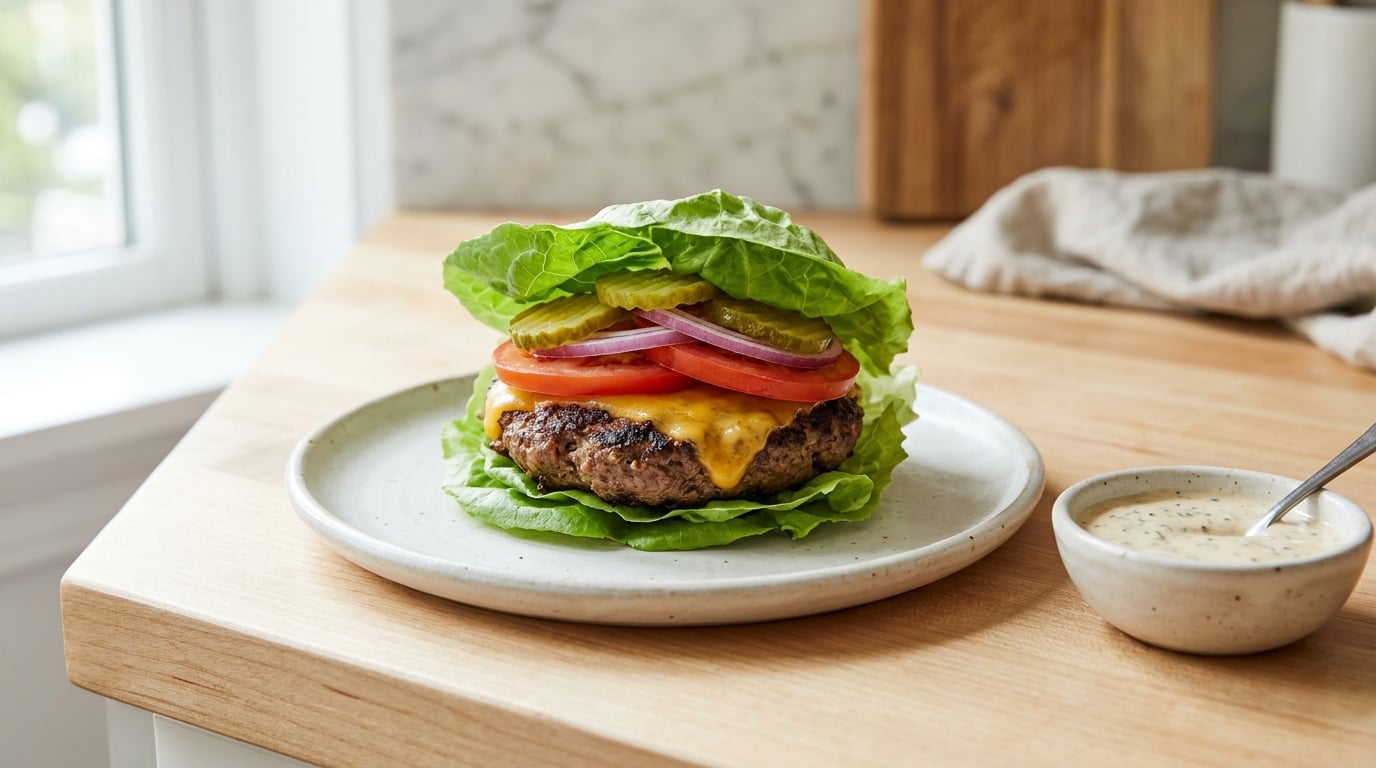
To make a low carb burger meal, drop the bun and build the whole thing from seasoned ground beef, cheese, vegetables and a sauce you make yourself. Sear the patty in a hot skillet, wrap it in lettuce or set it on a portobello cap, and you have dinner on the table in about 20 minutes with almost no carbohydrate coming from bread.
That bun is the whole problem. A standard sesame roll brings somewhere around 20 to 30 grams of carbohydrate with it, which on its own can push a plate past a daily low-carb limit. Remove it and the rest of the burger is naturally high in protein and fat, low in carbs, and honestly more satisfying than a thin patty between two soft buns.
This is not a diet food that tastes like a diet food. It is a burger with a seared crust, melted cheese, crisp pickles and a sauce sharp enough to wake you up. I’ve cooked this version more than any other weeknight meal, and the only real skill is not overworking the meat.
What You Need
Nothing here requires special equipment. If you own a skillet and a spatula, you can make the meal tonight.
Equipment
- A heavy skillet, cast iron if you have one, or a grill griddle
- A spatula wide enough to support a patty without folding it
- An instant-read thermometer (this is the one tool worth buying)
- A small mixing bowl for sauce
- Optional: an air fryer, a burger press, or a sheet pan for batch cooking
The patty
- 1 to 1.5 pounds ground beef, 80/20 for flavor or 90/10 if you want the leanest plate
- Salt, coarse black pepper, garlic powder, onion powder and a little paprika
- A spoonful of Worcestershire sauce or a splash of pickle brine, optional
The bun alternative
Pick one. Large leaves of romaine or iceberg lettuce work best because they hold a fold without tearing. Portobello caps taste more earthy and hold more sauce weight but can turn soggy if you do not pre-roast them. Thick cheese slices, sometimes called a cheese wrap, melt and bend like a bun once heated. Roasted vegetable halves and a bowl format are the two options that hold up best when the meal has to sit for a few minutes.
Toppings
- Cheese: cheddar, Swiss, provolone, Monterey Jack or blue cheese
- Lettuce, thick slices of tomato, red onion, dill pickles
- Radish, shredded cabbage, avocado, sugar-free ketchup, mustard, hot sauce
Sauce and sides
- Mayonnaise or plain Greek yogurt, yellow mustard, apple cider vinegar or pickle juice
- A side salad, cucumber slices, roasted vegetables or a small portion of another low-carb food
If you avoid dairy, use avocado or olive oil in place of mayo, lactose-free yogurt in place of Greek yogurt, and skip the cheese entirely. Roasted portobello caps or extra char on the patty add the savory depth cheese usually provides.
One label habit matters more than any ingredient swap: read the nutrition panel on your bun substitute and your sauce. Brands change formulas, and two “keto” sauces on the same shelf can differ by 3 or 4 grams of carbohydrate. You are aiming for a meal that lands under roughly 5 grams of net carbohydrate, which is total carbohydrate minus fiber, per serving.
Step-by-Step: How to Make a Low Carb Burger Meal
1. Choose your low-carb patty and bun alternative
An unwrapped beef patty is the simplest option and the one most people land on first. It cooks in 8 to 10 minutes and needs nothing from you except heat and a thermometer.
Compare the alternatives before you start:
- Lettuce wrap: fastest, crispest, nearly zero carbohydrate. Use two leaves for a single serving. The risk is tearing while you eat, so wrap the patty in the leaf first and put the sauce on top, not inside.
- Portobello cap: more substantial and holds heavy toppings. Roast or grill the cap for 3 to 4 minutes first so it is not soaking up grease in the pan.
- Cheese slice: heat an empty skillet, lay the slice down, let it soften about 20 seconds, then set the patty on top. It folds like a bun and adds almost nothing to the carbohydrate count.
- Roasted vegetable or bowl format: the most forgiving option for meal prep, since nothing has to stay crisp or intact.
2. Season and shape the beef
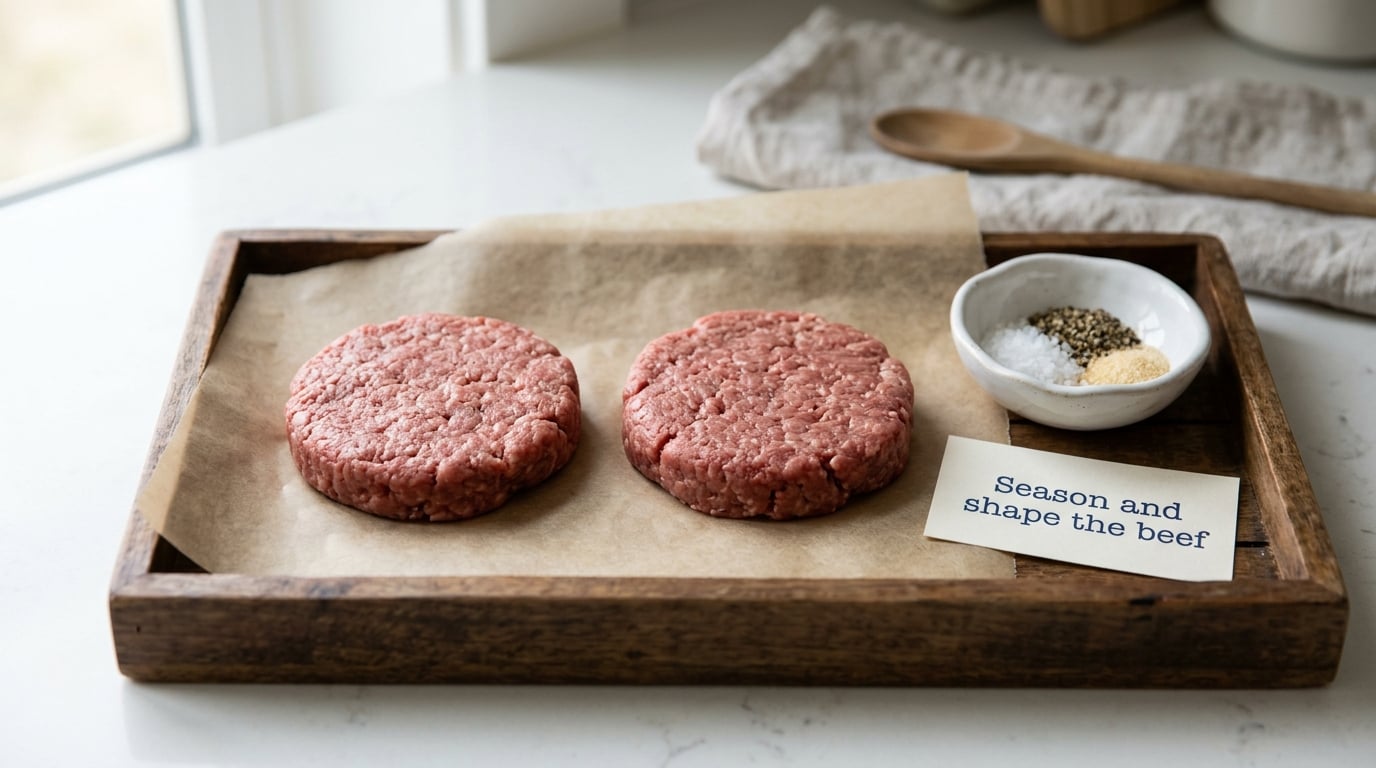
Thaw the beef fully if it was frozen. Mixing seasoning into cold, stiff beef is how you end up tearing the meat instead of forming it, and torn edges cook unevenly.
Add seasoning to the raw meat rather than on top of it: about 1 teaspoon salt per pound, 1/2 teaspoon black pepper, 1 teaspoon garlic powder, 1 teaspoon onion powder and a light pinch of paprika. A spoonful of Worcestershire sauce and a teaspoon of pickle brine add salt and acid at the same time, which is the move keto cooks on r/keto and r/ketorecipes reach for most often.
Now combine it gently. Two or three light turns, until the seasoning disappears and the meat looks slightly sticky. Overworking warms the fat in the meat and gives you a dense, bouncy burger, which is the opposite of what you want.
Divide into 3 to 4 portions and shape each into a patty a little wider than the bun you are replacing. Press a shallow indentation into the center with your thumb. That small dimple keeps the patty flat as it cooks, so the edges stay tender instead of curling into a hockey puck.
The indent is not a myth. It worked, and the difference between a flat patty and a curled one is enough that you will notice the first time you skip it.
3. Sear the patties safely
Heat the skillet on medium-high until a drop of water skitters and vanishes, then add the patties. A hot start is what gives you the browned crust. Do not move the meat for the first 2 to 3 minutes, and press it flat with the spatula once, right after it goes down.
Look for browning on the underside and a firmer texture before you flip, not a timer. Most patties take 3 to 4 minutes per side for a medium result.
Ground beef must reach an internal temperature of 160 degrees F (71 degrees C), so check with an instant-read thermometer in the thickest part before you take it off the heat. Restaurants and many home recipes stop well before this; a food thermometer removes the guesswork.
For an air fryer, set it to 400 degrees F and cook a thin patty for 6 to 8 minutes or a thick one for 9 to 12 minutes, flipping once at the halfway mark. Check temperature the same way. Air frying leaves the edges crisper than a skillet and needs no added fat.
Rest the patty on a plate for 2 minutes before you top it. The juices need a moment to settle back into the meat.
4. Melt the cheese and toast the toppings
Drop a cheese slice onto each patty during the final minute of cooking, fold the edges of the skillet over, and put a lid on. About 60 seconds is enough for cheddar or Monterey Jack. Swiss and provolone melt in half that time, so add them last.
Toast the onion separately if you want it soft. Ten seconds of dry heat in the same skillet turns raw onion rings into something that actually tastes cooked. Leave the lettuce raw and dry.
Drain tomato slices on a paper towel between two layers, and pat pickle slices dry. Every drop of surface water you remove is a drop that would otherwise migrate into the bun substitute and make it soggy.
5. Make a tangy no-added-sugar sauce
Most bottled burger sauces list sugar near the top of the panel, which is why keto cooks make their own. This base takes two minutes.
Stir together 3 tablespoons mayonnaise, 1 tablespoon yellow mustard, 1 teaspoon apple cider vinegar or pickle juice, and a small pinch of salt, black pepper and garlic powder. Thin with a teaspoon of water if you like it pourable.
For a thicker version, swap the mayo for Greek yogurt and skip the water. Add a teaspoon of smoked paprika or a few drops of hot sauce for a spicy version. Ranch-style: 3 tablespoons mayo, 1 tablespoon sour cream, 1 teaspoon vinegar, and dill, parsley and garlic powder.
Always check the label of anything you buy. Mustard is usually low in carbs, but ketchup brands vary widely, and some barbecue sauces carry as much sugar as a dessert.
6. Choose one or two low-carb sides
Pick one or two and stop there. The burger is the meal, so sides are there to add volume, not to become a second dinner.
- A dressed side salad with olive oil and vinegar, which costs you a few grams of carbs at most
- Thick cucumber slices with a pinch of salt and vinegar
- Roasted broccoli, Brussels sprouts or cauliflower cooked until browned
- Shredded cabbage slaw with a mayo-vinegar dressing
Skip fries, even the low-carb versions made from shredded vegetables, unless the meal is a special occasion. They compete with the patty for the same fat and salt and they rarely hold up as well as fresh vegetables.
7. Assemble and serve the burger
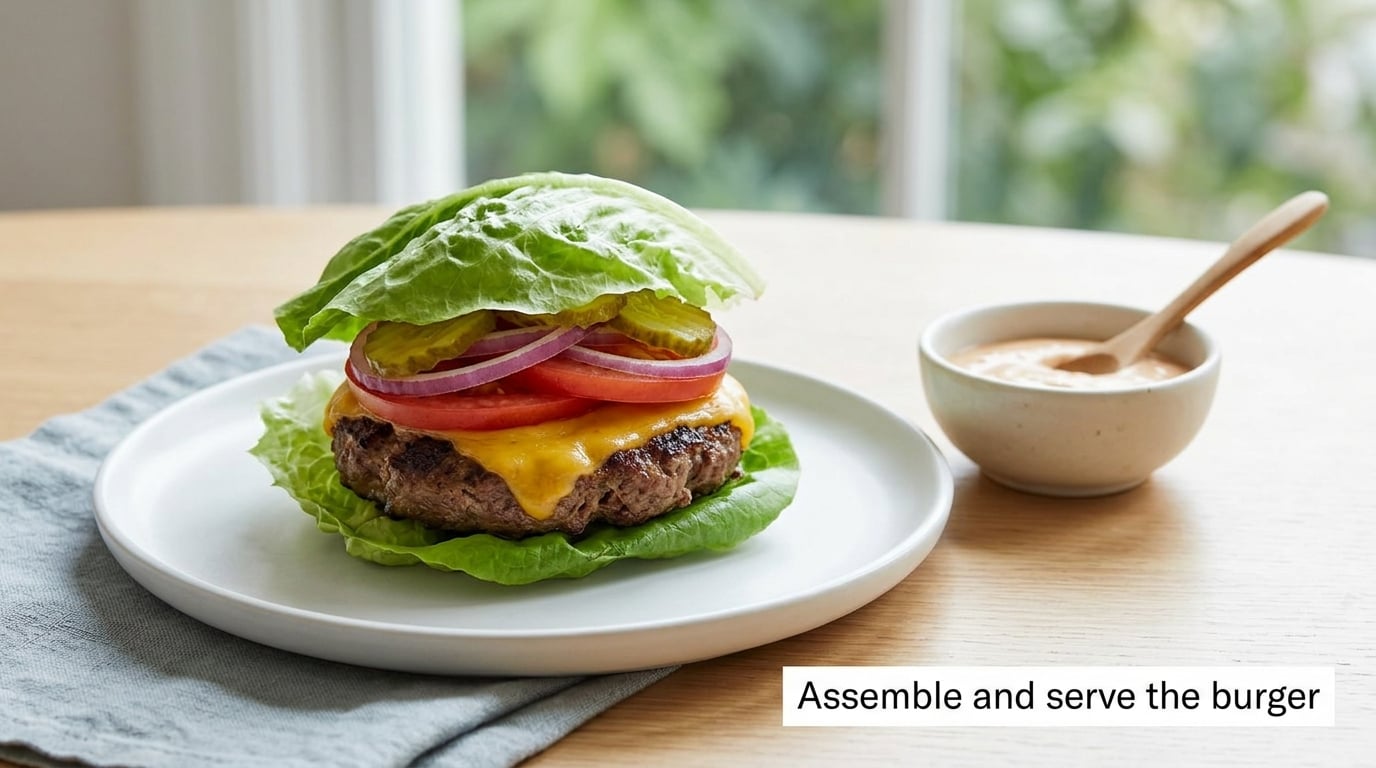
Build from the bottom up so the structure holds. A layer of lettuce, then the patty, then cheese, then the crispiest vegetables, then sauce last. Dressing the bottom slice lets you squeeze the whole thing without it sliding apart halfway through.
Use about 1 tablespoon of sauce per burger. More than that is how a wrap turns damp halfway through the second bite. Tomato slices go against the patty, not the leaf, so their juice runs into the meat instead of into the wrapper.
For a portobello bun, put the sauce on the cap itself so the patty sits on a dry surface. For a cheese wrap, spoon a thin layer onto the melted slice while it is still soft, then fold.
Serve it right away with pickles, a small side salad or nothing else at all. A low carb burger meal built this way takes about 20 minutes from the fridge to the table, and it is the kind of dinner that makes people ask what you are eating.
Common Mistakes to Avoid
Dry patties. Two causes: lean meat and too much heat. Use 80/20 beef, press once with the spatula at the start, and stop cooking at 160 degrees F (71 degrees C). Overcooked patties are also usually pushed flat, so skip the weight or a heavy press.
Raw centers. Color is not a temperature reading. Cut one patty in half or use a thermometer. Ground meat needs 160 degrees F throughout, not just at the edges.
Dense, bouncy patties. You mixed the meat too long or kneaded it. Stop as soon as the seasoning disappears. Loose meat is what lets the juices stay in.
Soggy toppings. Wet lettuce and tomato on a hot patty will steam the wrapper. Dry everything, add the tomato at the last moment, and keep the sauce to about a tablespoon.
Sweeter-than-you-want sauce. If the sauce tastes sweet, you probably used a bottled one. Check the panel for added sugar and switch to the homemade mustard-vinegar base above.
Cross-contamination. Use a separate plate for the raw patties, wash hands and utensils after handling raw meat, and never return cooked patties to the tray they started on. Keep raw meat below 40 degrees F while you prep everything else.
Unrealistic portions. A 3 to 4 ounce patty plus cheese and vegetables is a full plate. Cutting the bun habit often means eating a double patty out of habit, not hunger.
Cooked patties and assembled low-carb burgers keep 3 to 4 days in the refrigerator at or below 40 degrees F, and 3 to 4 months in the freezer. Freeze patties flat on a tray first, then bag them once solid. Store lettuce, sauce and toppings separately, since those are the parts that turn to mush.
If you are managing blood sugar or carbohydrate intake for medical reasons, general recipes like this one are informational only. A registered dietitian can help you fit them into a plan built around your own numbers.
Frequently Asked Questions
What can I use instead of a burger bun?
The most common substitutes are large lettuce leaves, portobello mushroom caps, thick cheese slices, and roasted vegetable halves. Lettuce is fastest and adds almost no carbohydrate, portobello caps give you a bun-sized shape but should be roasted first, and cheese slices fold once heated to hold heavy toppings. You can also serve the patty over a salad in a bowl. Check the nutrition label on any packaged option, since brands change their formulas.
How do I keep a low-carb burger patty from becoming dry?
Use ground beef with an 80/20 fat ratio and stop cooking at 160 degrees F (71 degrees C). Shape the patty gently and press a shallow dimple into the center so it lies flat, then press it once with the spatula at the start of cooking to seal the surface. Avoid pressing it repeatedly, which squeezes out the juices. Letting the patty rest two minutes after it leaves the heat returns moisture to the meat.
Can I make this meal with a frozen burger patty?
Yes, with one adjustment: check the ingredient list. Many frozen patties contain breadcrumbs or binders that add carbohydrate, so look for a product listing only beef, salt and spices. If you form your own patties, you can freeze them raw and seasoned with a sheet pan between layers, then move them to a bag once solid. Thaw them in the refrigerator overnight or cook them from frozen at a slightly lower heat.
How do I know the exact carbohydrate content of the meal?
Add up the total carbohydrate listed on each package and subtract the fiber to get net carbohydrates, then divide by the number of servings. Most of your meal will come from the bun substitute, the sauce and any onion or ketchup, not from the beef or cheese, which are naturally very low. For a restaurant burger, ask for the bun on the side and for sauces on the side so you control the amount.
How long can I store a cooked low-carb burger meal?
Cooked patties kept in the refrigerator at or below 40 degrees F are safe for 3 to 4 days. For longer storage, freeze them flat and use within 3 to 4 months. Store lettuce, cheese and sauce separately, because those items get soggy or weepy in a container. Reheat patties in a dry skillet or air fryer rather than the microwave, which dries the outside while leaving the center cold.
Conclusion
A low carb burger meal is not a compromise version of a burger. Drop the bun, pick a wrap or a portobello cap, and you still get the sear, the cheese, the pickles and the sauce, which are the parts people actually miss.
Start with the patty. Season thawed 80/20 beef lightly, mix it only until the seasoning disappears, shape it with a dimple in the middle, and sear it hard in a hot skillet until it reaches 160 degrees F (71 degrees C). Everything else follows from that one step.
Then choose your wrap, add vegetables you have patted dry, and make the mustard-vinegar sauce yourself so you know what is in it. Check the labels on anything you buy, and that is how you make a low carb burger meal you would happily eat on any weeknight.