
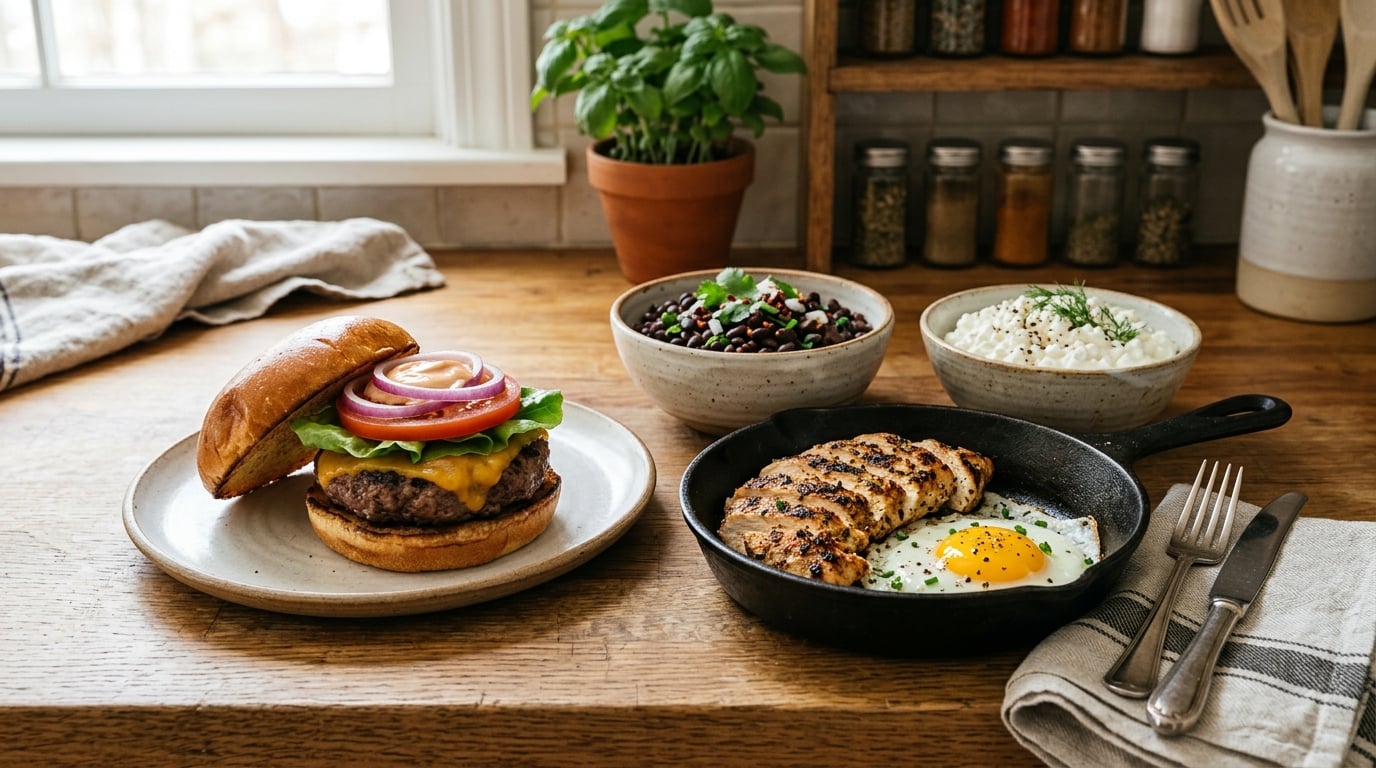
Knowing how to add protein to a burger meal is mostly a matter of picking one extra protein, cooking it properly, and putting it somewhere on the plate that keeps the burger eatable. A fried egg, a few spoonfuls of tuna salad, a scoop of cottage cheese, or a small pile of seasoned beans will each do it in under five minutes. A chicken fillet or a second patty takes ten minutes and changes the character of the meal entirely.
The trick is resisting the urge to pile on everything at once. One well-seasoned addition hits the spot, three competing proteins turn a burger into a construction project. This guide walks through the options, the safe cooking temperatures, and how to store whatever is left over.
What You Need
A protein add-on is anything you add to a burger plate that meaningfully raises the protein content of that plate. That includes a second patty, sliced chicken, a fried egg, tuna, cottage cheese, and beans. It also covers less obvious ones like a side salad topped with chopped egg or shredded cheese.
Before you shop, decide which of three jobs the add-on needs to do.
- Quick topping: you want more protein with almost no cooking. Fried or jammy eggs, canned tuna, cottage cheese, and beans all land here.
- Extra cooked protein: you want something substantial that holds its own next to the patty. Chicken, shrimp, bacon, or a second patty fit this group.
- Meat-free addition: you are avoiding meat and want the protein to come from beans, lentils, tofu, or edamame.
As for equipment, you really only need a skillet or a sheet pan, a spatula, and a digital thermometer. The thermometer is the one tool worth owning, because color is a poor indicator of doneness and it is the fastest way to remove the guesswork from step two.
Keep salt, black pepper, garlic powder, smoked paprika, and a prepared burger-style seasoning nearby. Plain added protein tastes flat next to a seasoned patty, and that is the single most common complaint about high-protein burger plates.
Step-by-Step
1. Choose a protein that complements the burger
Fast add-ons change the burger’s texture more than its flavor. A fried egg laid on top of a cheeseburger adds richness and a satisfying bite without competing with the beef. Canned tuna mixed with a spoonful of mayonnaise and chopped pickles behaves like a loose tuna salad and works equally well in the bun or in a side bowl.
Cottage cheese is the sleeper option most people skip. It carries real protein, a mild flavor, and a texture that blends with a patty without making it fall apart. Spoon half of it alongside the burger or fold a couple of tablespoons into the meat itself before forming patties.
Beans are the most substantial of the quick options. Rinse a can of black or pinto beans and warm them with a pinch of salt, cumin, and a splash of water until they soften. They hold their weight next to a burger without adding fat.
Substantial additions change the meal more. Sliced chicken breast or sautéed shrimp turn a burger plate into a burger bowl, which is often what people actually want when they say they want more protein. Bacon adds flavor fast but brings most of its calories as fat, so it is a poor efficiency pick. A second patty is the largest single jump in protein you can make and the largest jump in calories, too.
Pick one. Consider how long you want to cook, whether anyone at the table has dietary restrictions, and whether the burger is already loaded with cheese and sauce.
2. Cook the extra protein safely

Undercooking is the most common mistake here, and it is also the most fixable one. Insert the thermometer into the thickest part of the protein, away from bone and pan edge, and cook to these USDA minimum internal temperatures:
- 165°F (74°C) for poultry, ground poultry, and any seafood including shrimp.
- 160°F (71°C) for ground meat, including any second beef or turkey patty.
- 145°F (63°C) for intact whole cuts of beef and for fish, followed by a three-minute rest.
Visual cues lie. A chicken fillet can look finished at the center and still be undercooked, and a ground patty stays pink well past the point where it is safe. Color tells you about myoglobin and Maillard browning, not internal temperature.
For eggs, cook until the white is fully set and no longer translucent. Fried eggs for a burger work best when the yolk is still soft, since a runny yolk adds moisture to a bun that tends to go dry with lean meat.
If the extra protein is going straight into the bun, rest it two or three minutes first. Resting keeps the juices in the meat, which matters twice as much when the meat is lean and the added protein is a second patty.
3. Season the protein for the burger meal
Added protein that goes in unseasoned reads as an afterthought next to a properly seasoned patty. A pinch of salt and pepper fixes most of it in one step.
For chicken, season both sides before it hits the pan and let it sit for a few minutes so the salt has time to work into the surface. Garlic powder, smoked paprika, and a little mustard powder in the coating give you something close to a fast-food-style chicken fillet without a deep fryer.
For beans, warm them with salt, cumin, smoked paprika, and a spoonful of the burger sauce you already have on the counter. That last trick ties them to the plate better than any seasoning blend will.
For tuna, drain it well and mix it with a small amount of mayonnaise, chopped pickles, and black pepper. Keep the mayonnaise restrained. Too much turns the mixture into a sauce, and it will slide out of the bun on the first bite.
Cooking with the burger’s own seasonings already in play is the shortcut. If the patty has garlic, paprika, and Worcestershire in it, add the same three to whatever you are preparing.
4. Add it to the burger or serve it alongside
Some additions belong in the bun and some do not. Thin, dry, and sturdy works inside: a fried egg, a slice of cheese, shredded chicken, bacon, crisp lettuce leaves, a spoonful of beans. Anything that releases liquid belongs on the side, because moisture is what turns a bun to paste.
Cottage cheese is a borderline case. A small scoop on the side of the plate is fine. Spooning it into a bun and letting it sit makes the bottom half soggy within a few minutes.
Portion size matters more than most people expect. A quarter cup of beans or one egg is a sensible addition. Two eggs plus bacon plus a second patty is roughly three meals of extra protein served at once, and you will feel heavy before you feel satisfied.
Stack height is the other limit. Once a burger gets taller than about three inches it stops fitting a normal grip, and the first thing that happens is someone drops it. If the stack is getting tall, the extra protein belongs in a small bowl next to the burger instead of on top of it.
5. Finish the plate with a balanced side
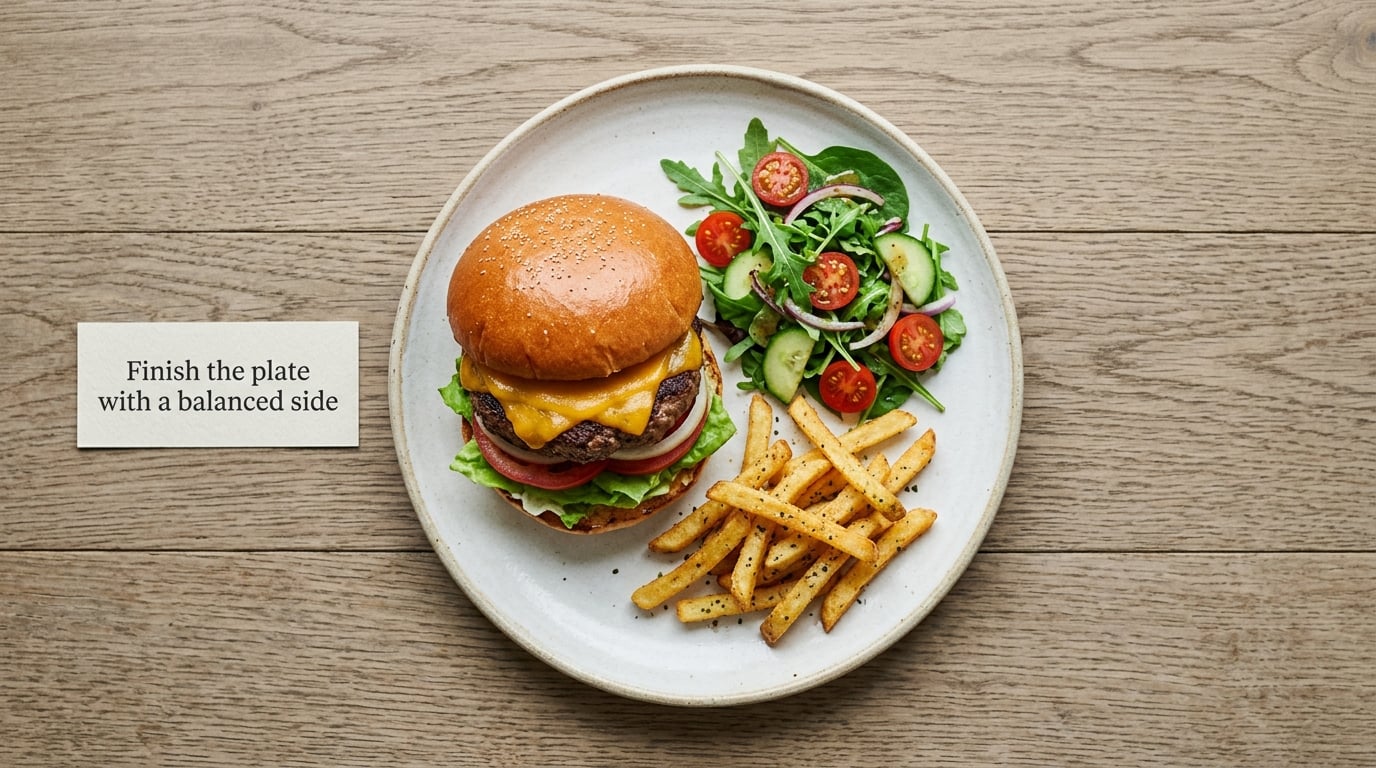
Pick a side that supports the added protein rather than burying it. A small serving of fries works fine when the added protein is lean, like chicken, shrimp, or eggs. A side salad is better when the protein already brings fat to the plate, as bacon or a double patty does.
Coleslaw and potato salad both hold up next to a burger without competing for attention. Skip anything heavily sauced or fried in the same oil as a fatty protein, because the two textures start to blur together and the plate feels heavier than its numbers suggest.
When the added protein already supplies plenty, keep the side light. A double patty on a burger is a complete meal by itself, and a second helping of fries adds calories without adding anything you were missing. A cup of plain yogurt, a boiled egg, or a handful of edamame on the side costs almost nothing and closes out the plate cleanly.
6. Store leftovers promptly
Refrigerate cooked burger components and toppings within two hours of cooking. Use a food-safe container with a lid, and separate wet ingredients like sauces, pickles, and tuna mixtures from the dry ones so the bun does not absorb them overnight.
Eat leftovers within three to four days. Prepared mayonnaise-based mixtures, including tuna salad and any sauce you mixed with mayo, need refrigeration rather than sitting out, because mayonnaise-based dressings support bacterial growth faster than vinegar-based ones.
Cooked chicken and shrimp keep three to four days. A cooked patty keeps about that long as well, though its texture flattens after the first reheating. Reheat in a skillet rather than a microwave when you can, since dry heat does less damage to the crust.
Common Mistakes
Adding too many proteins at once. Burger, bacon, egg, and a fried chicken fillet on the same plate is a lot of protein for one sitting and a lot of fat besides it. Pick one addition and let the burger’s own toppings stay simple.
Choosing wet or bulky toppings. Tomato slices, pickles, and tuna mixtures leak. Put them on the plate or under the lettuce, not directly on the bun bottom.
Undercooking the added protein. Use a thermometer and cook to the minimum internal temperature for that protein. Color and time alone are not reliable.
Skipping seasoning. Unseasoned chicken or tuna next to a seasoned patty tastes flat. Salt first, then add the burger’s own seasonings.
Overcrowding the plate. A burger, two sides, and a stack five layers tall is a lot of food to eat at once. Move the extra protein into a small side bowl and keep one side dish.
One more thing worth knowing: lean patties and mixed-in add-ons both dry out. If you are using lean beef or blending egg whites into the meat, add a tablespoon of water or a small splash of milk to the mixture and let it rest before forming patties. It keeps the inside from turning rubbery.
Frequently Asked Questions
What is the easiest protein to add to a burger meal?
A fried or jammy egg is the fastest option. It takes about three minutes, adds a meaningful amount of protein, and the runny yolk keeps a lean burger from tasting dry. Canned tuna drained and mixed with mayonnaise and pickles is the second quickest, since it needs no heat at all. Both work in the bun or on the side.
What can I add to a burger for protein without using more meat?
Beans, lentils, tofu, edamame, cottage cheese, Greek yogurt sauce, and eggs all add protein without any meat. Cottage cheese is the easiest to fold straight into a patty and keeps the texture moist. Greek yogurt replaces mayonnaise in a burger sauce and adds protein with fewer calories. Warm seasoned beans on the side is the simplest option of all.
Is adding a second burger patty the best way to increase protein?
A second patty gives you the biggest jump in protein in a single move, and it also adds the biggest jump in calories and saturated fat. It works well for people with high energy needs. If calories matter to you, one extra patty is often beaten by a smaller addition like cottage cheese mixed into the meat or a chicken fillet on the side.
How much extra protein should I add to one burger?
Start modest. Most people need roughly 20 to 30 grams of extra protein to make a burger meal feel filling, which is about one egg plus a quarter cup of beans, or a small chicken fillet on the side. Eat that way first and adjust up or down based on how satisfied you are. Adding too much at once usually backfires within an hour.
What protein toppings will not make a burger soggy?
Dry, sturdy toppings are the safest bet: a fried egg, sliced or shredded cheese, crisp lettuce, bacon, and well-drained beans all hold their structure. The ones that soak a bun are anything watery or dressed, including raw tomato, pickles, tuna salad, and sauces applied directly to the bun bottom. Put those on the plate instead.
Conclusion
Adding protein to a burger meal comes down to three moves. Choose one addition that suits how much time you have and what you want the meal to feel like, cook it to the right internal temperature so there is no guessing, and start with a modest portion before adjusting the rest of the plate.
For most people the easiest place to begin is a fried egg on a cheeseburger with a small side of seasoned beans. Cook the egg until the white is set, keep the yolk soft, and refrigerate whatever is left within two hours.