
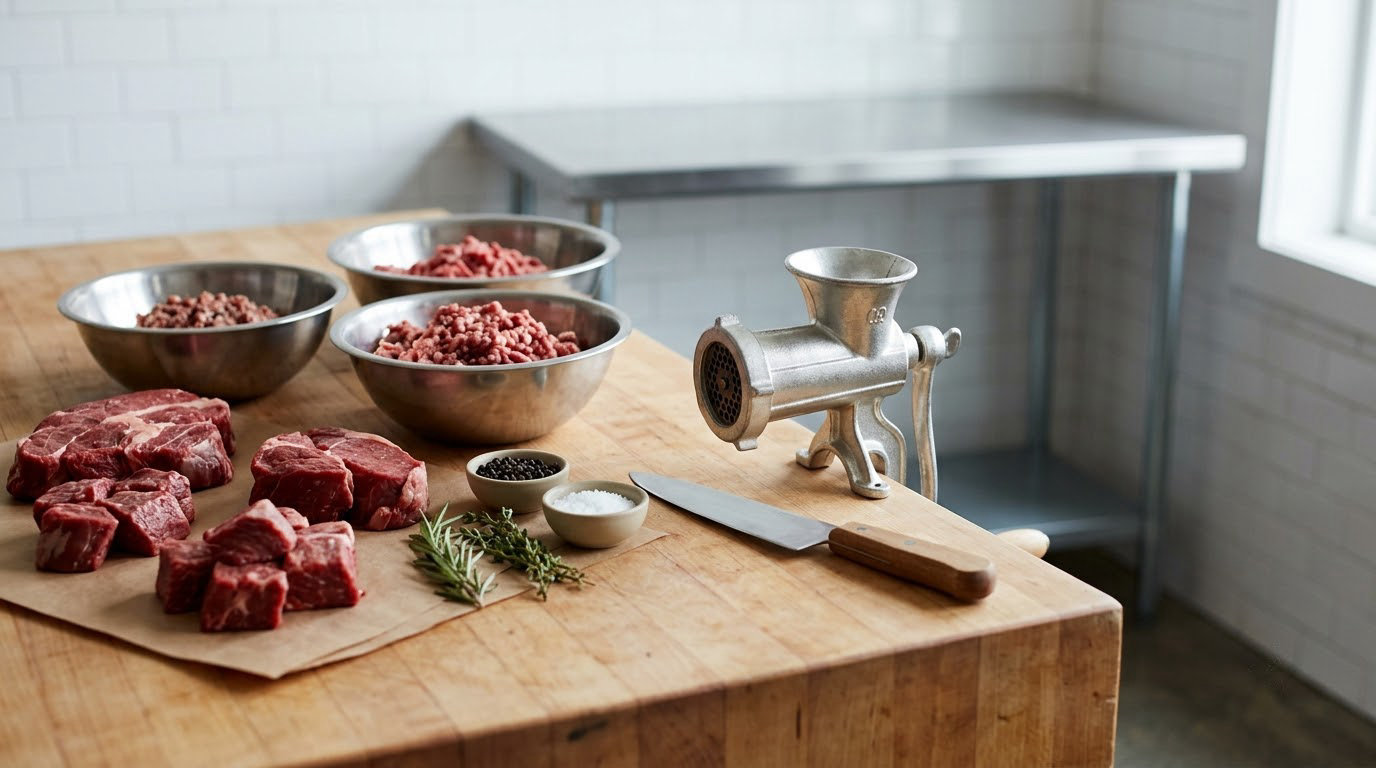
Yes, you can ask a butcher to grind meat for you, and most shops are happy to. You choose the whole-muscle cuts, name the fat percentage, say how coarse you want it, and they run it through the grinder while you wait. It takes about five minutes at the counter and costs you nothing but the asking.
That is the whole trick of how to ask a butcher for a custom grind. Nobody needs a culinary degree, and the sentence is short: “Can you grind me a pound and a half of chuck at 80/20, coarse?” What trips people up is assuming the counter is a place where you either know the lingo or you don’t. It isn’t. The people behind the case want you to order well, and they will happily build you a blend from scratch if you tell them what you are after.
What you give up is convenience. Pre-ground trays sit in the case, grab and go, and the fat percentage on the label is a legal label rather than a promise. A custom grind gives you control of the ratio, the cuts, and the texture, which is the single biggest lever you have over how a burger turns out. It also means the meat is ground the day you buy it, so you need a plan for cooking it that night or freezing it that night.
Table of Contents
What You Need
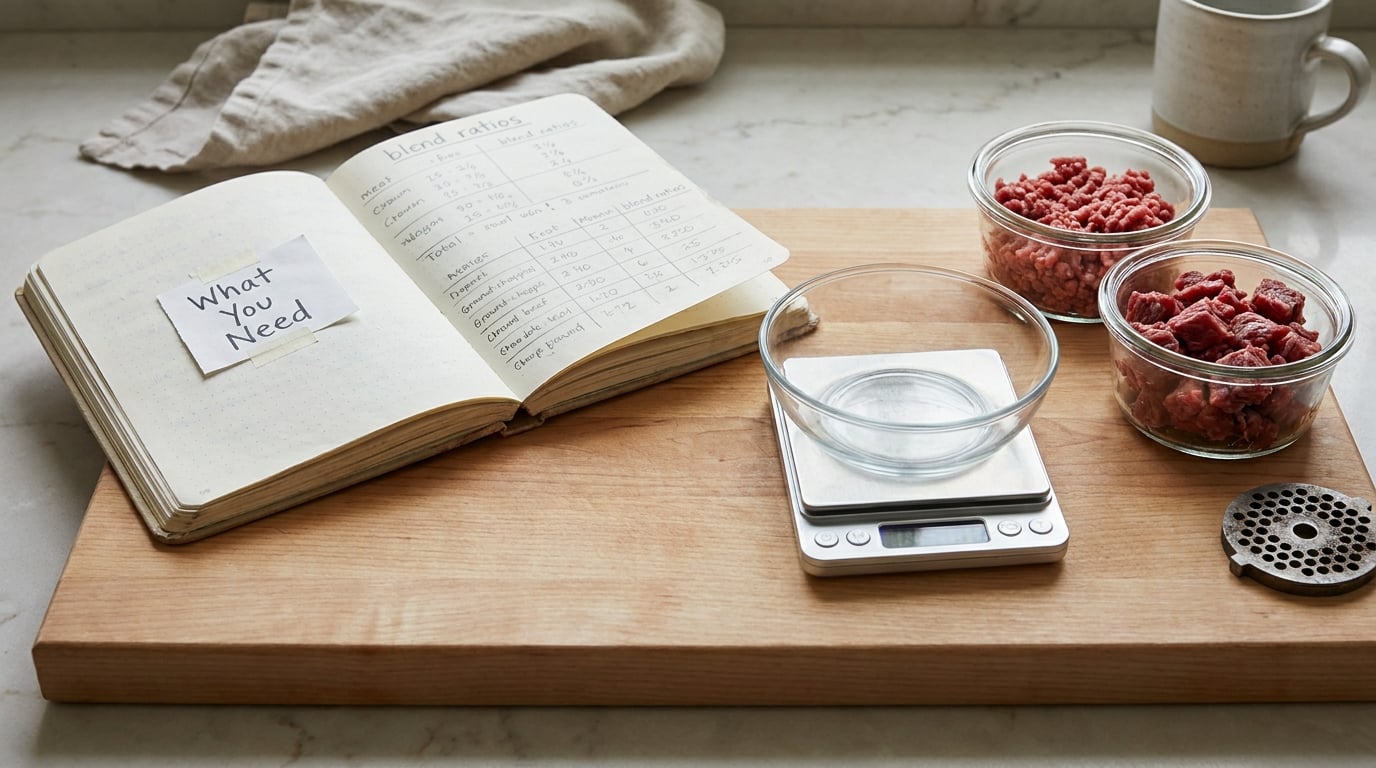
None of this is equipment. It is decisions, made before you get in line, because the person at the case works fast and you will get more out of the conversation if you are not deciding while the grinder is running.
Know the style of burger you are making. A thin smash patty, a thick restaurant-style patty, a smoked burger, and a breakfast patty all want different blends. Decide first, because the ratio follows the style, not the other way around.
Know your meat. Chuck is the workhorse. Short rib adds richness and a little chew. Brisket point brings smoke-friendly fat. Sirloin is the leaner option. If you do not want to name cuts, tell the butcher what you are cooking and how you are cooking it, and ask what they would use. Most will tell you, and often they will cut it for you from the case primals.
Know a fat percentage. 80/20, 85/15, and 90/10 are the three numbers that come up constantly. If you skip this, you will get whatever the grinder produces from the trim in front of them, and nobody will be at fault.
Know a grind size. Coarse, medium, or fine. Say it out loud. It takes one word and it changes the finished texture more than most people expect.
Know roughly how much. Half-pound patties are typical, so a pound makes two, and two pounds makes four. Ordering by patty count rather than by weight often lands better, especially for a cookout.
Know whether you want it plain. Unseasoned ground meat keeps the most freedom on the counter at home. Salt applied before grinding is the one request a shop will sometimes push back on, and there is a good reason, covered below.
Step-by-Step
Choose the Meat Blend
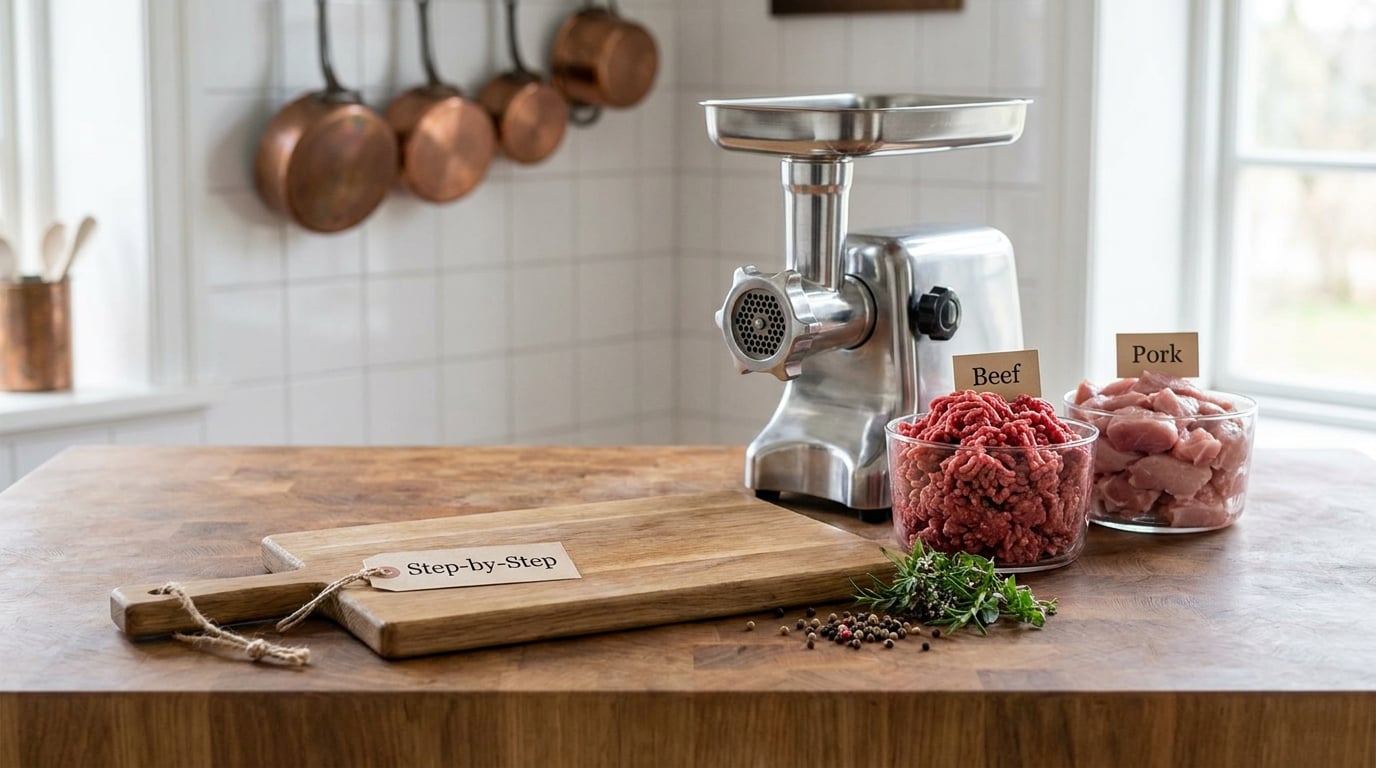
Start with the cuts, not the ratio. The blend is what determines flavor and texture, and the ratio is just a measurement of what is already in your choices.
A straight chuck grind is the easy default. Chuck carries a good amount of marbling and connective tissue, which is exactly what you want for a burger that stays juicy on a hot grill. Ask for the chuck denuded if you want less of the hard outer membrane, which some people chew around and others never notice.
Two- and three-cut blends are where it gets fun. Chuck with short rib gives you a richer, slightly looser patty that does well on a grill. Chuck and brisket point skews smoky and holds up well to long cooks. Chuck and sirloin lets you dial the fat down and keep more of the beef flavor without the heaviness. One home cook on r/food described a standing order of 60 percent chuck, 15 percent short rib, and 25 percent sugar bacon, which is a good illustration of how far this can go.
You are not limited to beef. Pork shoulder or pork butt ground fresh makes excellent sausage, and a little pork fat in a beef blend changes the texture in a way most people find surprising. Chicken thigh ground coarse is a leaner burger base that still stays moist. Lamb shoulder ground with a bit of fat works for gyros-style patties and for kofta. Venison is usually very lean, so it nearly always wants a fat added, either pork fat or suet, or it will come out dry and tight.
One practical note on organ meat: a lot of shops will blend a small percentage of liver or heart into a custom grind for people who want it, often at single-digit percentages. One r/zerocarb user described a recurring order of 4 kg chuck with 500 g suet and 500 g liver. If you want that, ask directly and expect to be told what their limit is.
Decide the Fat Ratio
The fat percentage is the number to name out loud. It is the one detail that separates a custom grind from whatever comes out of the case. Here is the useful version.
| Ratio | How it cooks | Best for | What to say |
|---|---|---|---|
| 80/20 | Juicy, forgiving, renders fat onto the grill | Classic burger patties, cookouts, smoke cooking | “Twenty percent fat, chuck based.” |
| 85/15 | Still moist, slightly firmer texture | Everyday burgers, meatball and sauce blends | “Eighty-five fifteen, please.” |
| 90/10 | Lean, dries faster, cleaner sear | Tacos, chili, bolognese, sausage | “Ten percent fat, and grind it fine.” |
| Blend plus added fat | Dense and rich, holds together well | Low-carb and whole-animal styles, sausage | “Chuck, then add a pound of suet to the mix.” |
Fat is what carries juice and flavor into a patty. Too little and the burger turns dry and tight no matter how well you cook it. Too much and it greases the pan and falls apart on the grill. 80/20 is the number most people land on because it holds together and still renders.
You can also ask for the blend to be made by weight rather than by eye. That is the detail that gets you an actual ratio instead of a hopeful estimate. If a shop offers a “butcher mix,” understand what that is first: it is typically assorted trim run through the grinder, and the percentage attached to it is an estimate the shop makes, not a measured figure. On the Pitmaster Club forum, one poster described house grinds as “butcher mix (guesstimated 85/15 by them) or 80/20 for almost everything,” which is exactly the ambiguity you avoid by naming your own cuts.
Choose the Grind Size
Grind size is a request about the plate, and saying the plain words is enough. You do not need to know hole measurements.
| Grind | What you get | Best for | What to say |
|---|---|---|---|
| Coarse | Chunky, loose, visibly textured | Grilled and smoked burger patties | “Coarse, on the biggest plate you’ve got.” |
| Medium | Even texture, holds together | Everyday burgers, meatballs | “Medium grind, please.” |
| Fine | Dense, almost paste-like | Sausage, meatloaf, sauces | “Fine grind, all the way through.” |
Coarse is the default ask for burgers. A coarse grind leaves more surface area, which means more browning and a better crust, and it stays looser and juicier on the grill. Fine ground patties cook up dense and can turn pasty, which is a complaint that comes up constantly in home burger circles. Fine is genuinely useful for sausage casings and for anything you want to emulsify into a sauce.
If you want the best of both, ask them to run it coarse and then pulse it a few more times. That is a request any butcher will understand.
Ask About Seasoning and Additions
Ask for the grind plain. Unseasoned meat lets you salt the patties right before they hit the grill, which is the only place salting does the most good.
There is a real reason to keep it that way. Salt applied before grinding draws moisture out of the meat, and a wet blend is harder to grind and harder to form into patties. Some shops will still do it if you insist, and if you are making sausage with a cure or a specific seasoning, a shop that makes sausage is usually happy to mix it in.
Cheese and other fillers are a different matter. A blended-in American cheese or similar adds moisture and helps a lean blend stay tender, and many butchers do it routinely. Just be aware it changes the blend from ground beef to something else, and the declared fat percentage stops being a simple story. Ask for it as a separate question rather than assuming it.
One question worth asking every time: “Anything else in there?” A clean answer names the cuts and confirms nothing else was added. An evasive answer is a reason to buy somewhere else next time.
Confirm Quantity, Packaging, and Storage
Before you leave the counter, three things need to be said out loud: the weight, how it is packaged, and how you are labeling it.
On weight, count patties. If you are cooking for six people, ask for a number that divides cleanly for your patty size, and check the weight on the scale yourself if the shop is weighing it in front of you. There is nothing rude about watching the scale, and watching the grind is a routine request at good shops rather than an unusual one.
On packaging, ask whether it comes loose on paper or bagged, and how many bags. Separate bags by blend if you ordered two, or ask them to label them. If they have a marker, that is a two-second favor that saves you a mystery container in the back of your freezer.
On storage, the rules for fresh ground meat are the same as for any raw ground meat, with one extra reason to move quickly. Keep it at or below 40°F, use it or freeze it within one to two days, and cook ground beef to an internal temperature of 160°F. If the blend includes poultry, cook to 165°F. Freshly ground meat has no barrier packaging, so it picks up odors and dries out faster than a sealed tray from the case.
The practical move is to plan the meal before you order. Grounding two pounds on a Saturday and grilling on Sunday works. Grounding two pounds on a Sunday night does not, unless you portion and freeze it right away.
Common Mistakes
Ordering vaguely. “Make me some good burger meat” hands the decision to whoever is working the case. Name the cut, the ratio, the grind, and the weight. That is the entire method.
Buying the blend on looks. A pre-ground tray with a bright color and visible fat is not a quality signal. Color comes from freshness, not from the cut, and a lot of supermarket ground beef is mixed trim of unknown composition.
Asking for the finest grind by default. Fine is for sausage and emulsified dishes. A fine burger patty is dense and pasty. Ask for coarse unless you have a reason not to.
Forgetting the fat number entirely. This is the most common miss. Without a percentage, you get whatever ratio the trim happens to be, and you will not find out until the burgers are on the grill.
Not asking about cross-contamination or storage. A meat counter grinder is used for many things in a day. If you are grinding for someone with a serious allergy, or you are handling a large batch, ask how the equipment is cleaned between runs and what the shop recommends for holding it.
Ordering more than you can use. Surplus custom grind is a recurring complaint in home cooking forums, and it usually happens because someone ordered an impressive batch rather than a realistic one. Order what you can cook or freeze in a week.
Tips for Working With a Butcher
Be specific first, then curious. Say what you want in one sentence, and follow it with a question. “Can you grind two pounds of chuck and brisket at 80/20, coarse? What would you change about that?” is a great opener, and it gives the person behind the case a reason to give you their actual opinion rather than just filling the order.
Find out before you commit whether the shop grinds to order at all. Ask a general question early, like whether they can do a custom blend today and what the minimum is. Some shops require a few pounds before they will open the grinder, and one shop regular on r/zerocarb reported a 5 kg minimum for custom blends, which is a lot of freezer space for a household. Asking first is polite and saves you from an awkward no at the counter.
Know the difference between a dedicated butcher shop and a supermarket meat department. A dedicated shop is your best shot: grind-to-order is part of the job, they have saws and denuding tables, and the person working the case is usually the person who will cut your order. Supermarket departments vary enormously. Some will happily grind whole-muscle beef you bought in the same store. Some will not grind a customer-supplied cut at all, because of chain policy, liability, or food-safety rules about equipment that has not been through their own case. The grinder may be sitting right there and still be off limits to you, so ask rather than assume.
Whether you can bring meat from elsewhere to be ground is a separate question from ordering meat from the shop. Some shops will do it, some will not, and it is worth asking on a visit when you are not in a hurry.
Ask about trim and off-cuts. Butchers cut steaks and roasts all day and the trim is a byproduct. A shop with regulars will sometimes sell it by the pound, and one r/grilling poster described a local butcher who grinds rib eye end scraps into patties for his regulars. That is a genuinely different cost from buying chuck, and it is a good thing to know about even if you do not take it up right away.
Skip anything that sounds like a challenge. Do not ask whether the trim is “good enough,” do not ask for the cheapest grind, and do not explain what you are planning to make before you have decided. The counter is not a negotiation, and the person you are talking to is usually a skilled person doing you a service by making a decision quickly.
Be a regular. Name the butcher who helps you, ask them what is worth buying this week, and tell them how last week’s blend cooked. That relationship is the reason people get first pick of the case and get offered trim. It also means the tenth visit takes forty seconds instead of ten minutes.
Frequently Asked Questions
Do butchers grind meat to order?
Most dedicated butcher shops do, and many supermarket meat departments will grind whole-muscle beef you buy in the same store. The minimum varies widely, from a single pound at a small shop to several pounds at a high-volume counter, so ask about the minimum before you commit. Some shops also require that you buy the meat from them rather than bringing it in.
Will a supermarket meat counter grind meat for you?
Sometimes, and it depends entirely on the chain and the store manager. Departments with a grinder on site often allow custom grinds of meat purchased in that store, but chain policy, liability, and sanitation rules can block it. The fastest way to know is to ask early in the visit: can you grind this chuck I am buying, and what is your minimum? A dedicated butcher shop is the more reliable option.
Should I ask for a coarse or fine grind for burgers?
Coarse, for nearly every burger. A coarse grind leaves more surface area for browning, gives you a better crust, and stays looser and juicier on the grill. Fine ground patties cook up dense and can turn pasty, which is the most common complaint about home burgers. Fine grind is the right call for sausage, meatloaf, and anything you plan to cook into a sauce.
Which cuts of beef are best to ask a butcher to grind?
Chuck is the standard base because it is well marbled and stays moist. Short rib adds richness and a little chew, brisket point adds fat that suits smoking, and sirloin gives you a leaner blend with more pure beef flavor. Round is leaner still and usually wants added fat. Ask for chuck denuded if you prefer less of the hard outer membrane in the grind.
Is 80/20 or 90/10 ground beef better?
It depends on what you are cooking, not on which is objectively better. An 80/20 blend is moist, forgiving, and holds together on a grill, which makes it the right default for burgers. A 90/10 blend is leaner, dries faster, and grinds finer, which suits tacos, chili, bolognese, and sausage. If you are unsure, start at 80/20 and adjust on the next order.
How do I know if my butcher grinds to order?
Ask directly: do you grind to order, and what is your minimum? Then listen for specifics. A shop that grinds to order will tell you what cuts they have, how long it will take, and how the blend will be packaged. A shop that does not will redirect you to the case. You can also ask whether the meat goes straight from the cutting table into the grinder, since whole-muscle cuts ground on the spot are the thing you came for.
Conclusion
Before you speak to anyone at the counter, write down four things on your phone: the burger style, the cuts, the fat percentage, and the grind size, plus a poundage that divides into the patties you actually need. Then say it in one sentence. “Can you grind me two pounds of chuck and short rib at 80/20, coarse, unseasoned?” That is how to ask a butcher for a custom grind, and it works at any counter in the country.
Plan the cooking before you plan the order. Freshly ground meat is at its best that night or frozen that night, and ground beef cooks to 160°F internal. Do that, and the one-pound order will keep improving long after the first trip to the case.