
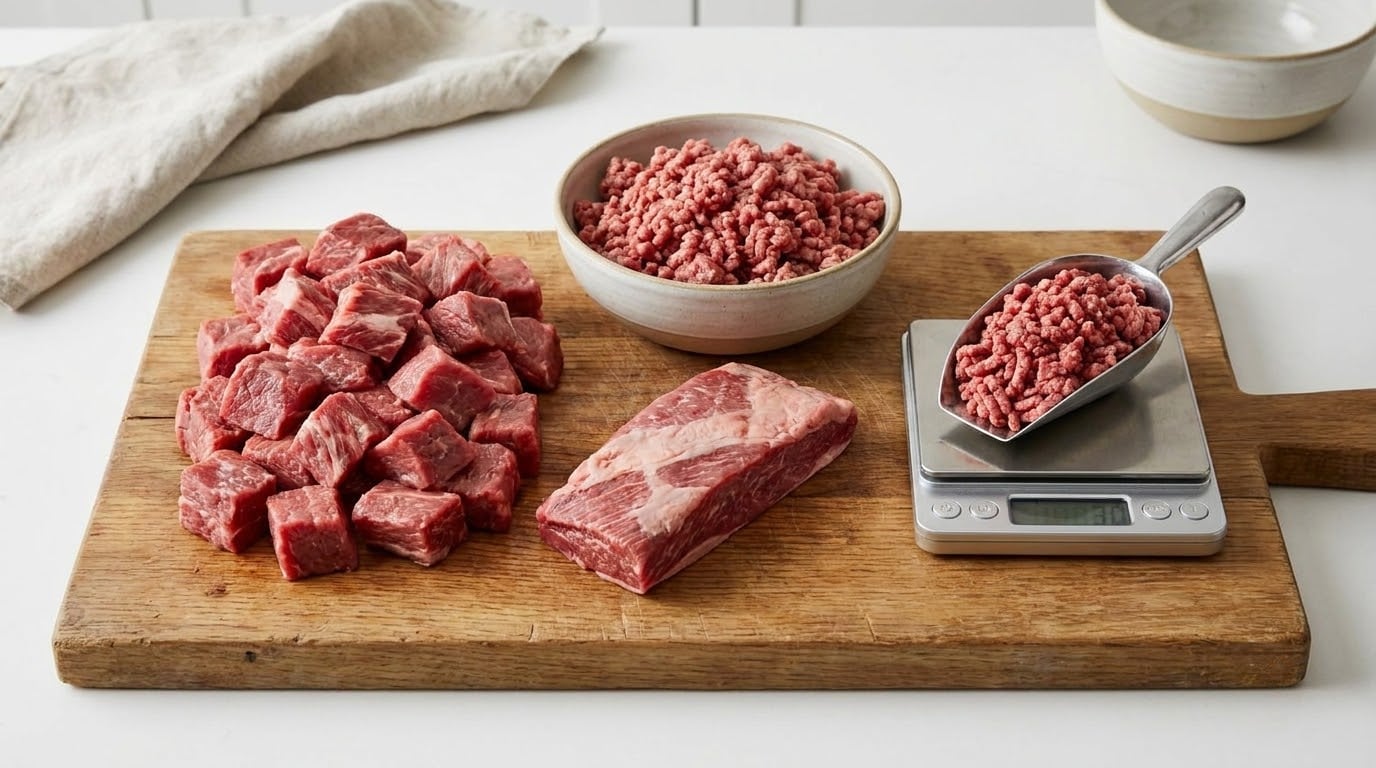
Brisket and chuck burger blend explained in one line: it is ground chuck and ground brisket combined, usually about 70 to 80 percent chuck to 20 to 30 percent brisket. Chuck supplies the fat and the structure that holds a patty together, and brisket supplies the deeper, more mineral beef flavor. Chuck comes from the shoulder and neck, brisket from the lower breast. Both are heavily worked muscles, so both carry connective tissue that turns gelatinous when ground and cooked, which is why the blend stays moist instead of turning crumbly.
I have ground and cooked this combination more than any other burger at my own grill, and the mistake I see most often is treating the ratio as a rule rather than a starting point. The numbers below are where I would begin, then adjust after you taste the first batch.
Table of Contents
- What Is a Brisket and Chuck Burger Blend?
- What Does Each Cut Bring to the Burger?
- Why Blend Brisket and Chuck Instead of Using Chuck Alone?
- What Fat Ratio Makes the Best Burger?
- What Proportion of Brisket to Chuck Should You Use?
- Should the Brisket and Chuck Burger Blend Be Ground Cold?
- How Do You Keep a Brisket-Chuck Burger Juicy?
- Why Does the Blended Burger Shrink or Turn Dry?
- How Do You Season a Brisket and Chuck Burger Blend?
- What Temperature Should You Cook a Burger Blend To?
- How Should You Store Leftover Burger Blend?
- Frequently Asked Questions
- Conclusion
What Is a Brisket and Chuck Burger Blend?
A brisket and chuck burger blend is ground beef made by combining chuck with brisket in a measured ratio, then grinding them together. Chuck is the shoulder and neck, a well-worked muscle that runs roughly 80 to 85 percent lean and gives fat, marbling, and binding. Brisket is the lower breast, denser and more saturated with myoglobin, and it carries a heavier, almost mineral and smoky note that chuck on its own does not have.
Grinding is what makes the combination work rather than just sit in a bowl together. Both cuts are full of collagen and connective tissue. Breaking them down in a grinder turns that tissue into small gelatin-rich fragments that melt during cooking, hold the patty together, and keep the center from drying out. Add a measured slice of brisket and you also get a flavor profile that a single cut of ground beef cannot reach on its own.
What Does Each Cut Bring to the Burger?
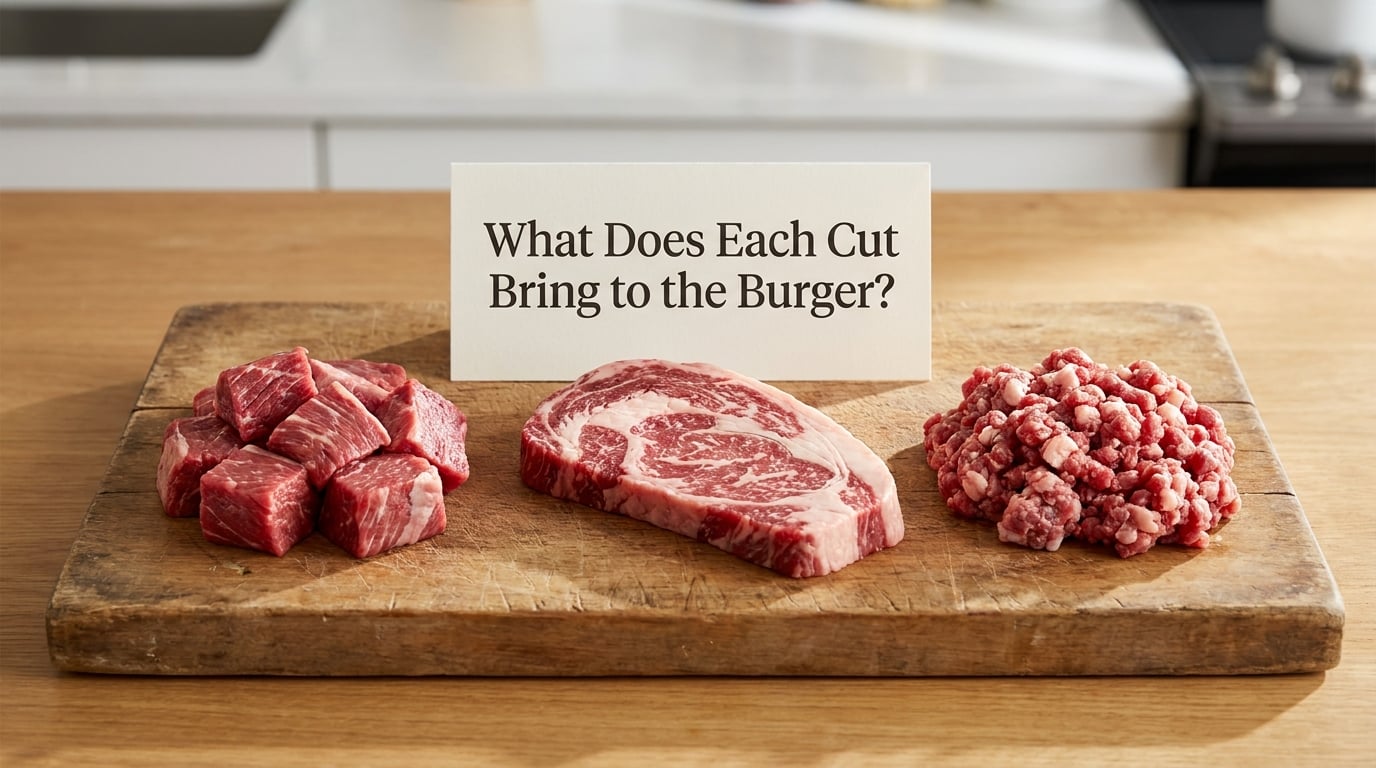
Chuck brings fat, marbling, and structure, and brisket brings concentrated beef flavor and moisture. The point of brisket is fattier than the flat, and the blend inherits the strengths of both. Here is how the pieces stack up.
| Cut | Typical lean-to-fat | Flavor | Texture and moisture | Best role in the blend |
|---|---|---|---|---|
| Chuck (shoulder and neck) | Roughly 80/20 to 85/15, varies by piece | Beefy, familiar, slightly sweet | Tender, binds well, high marbling | The base, usually 60 to 80 percent of the blend |
| Brisket point | Roughly 75/25 to 80/20 | Deepest, most roasted and mineral | Very moist, fat renders late | Flavor and moisture booster, 20 to 30 percent |
| Brisket flat | Leaner than the point, often 85/15 or leaner | Same family, less fat carry-through | Tighter grain, drier if overdone | Structure filler, useful at small percentages |
| Chuck plus brisket blend | Set by you, aim 80/20 to 85/15 | Layered, noticeably more complex | Moist, holds together, shrinks moderately | The all-purpose burger base |
Point versus flat is the detail most home cooks never hear. The point end carries a layer of fat between the muscle groups, so it stays juicy even when slightly overcooked. The flat is leaner and denser, and it adds structure more than flavor. If your butcher only has the flat, ask whether the point is available, and if not, keep the brisket percentage on the lower side so the blend does not go dry.
Why Blend Brisket and Chuck Instead of Using Chuck Alone?
Chuck alone works, but it has two weaknesses a measured brisket addition fixes at once: its fat percentage swings from piece to piece, and its flavor is a single note. Chuck is not always 80/20, so a bag labeled 80/20 from the shelf is an average across the batch rather than a promise about the patty in your hand.
Brisket answers the leanness problem in the other direction. Because brisket runs leaner than the shoulder, adding it lets you lift the fat ratio without adding fat as such, and it contributes myoglobin and mineral depth that reads as a longer, more savory finish.
Some combinations go wrong. Push brisket too high and the patty turns dry and pasty. Stay too heavy on the fat and you get a greasy burger where rendered fat pools in the pan and the crust turns greasy instead of crisp. A 20 to 30 percent brisket share with chuck makes up the balance without either failure.
What Fat Ratio Makes the Best Burger?
The best fat ratio for a home brisket and chuck burger blend is 80/20, because it is the balance point between juiciness and clean finish. The lean-to-fat number describes composition, and it drives shrinkage, crust quality, and mouthfeel more than the cut names do.
| Ratio | Juiciness | Richness | Shrinkage on cooking | Works best for |
|---|---|---|---|---|
| 80/20 | High | Full and balanced | Moderate, about a quarter of raw weight | Cast iron, grill, thick pub-style patties, the most versatile choice |
| 85/15 | Medium | Clean and beef-forward | More, tighter patty | Lean-forward burgers, patties finished under a broiler |
| 90/10 | Low | Noticeably lean, sometimes dry | Highest, patties shrink hard | Light burgers where you want a firm texture, not as a general base |
For thin patties on a very hot flat surface, a fatter blend helps, since fast cooking needs fat to render crisp edges. For thick patties cooked gently, 80/20 or 85/15 holds moisture better. If your butcher can only hit one target, ask for 80/20 and let the grind size do the rest of the work.
What Proportion of Brisket to Chuck Should You Use?
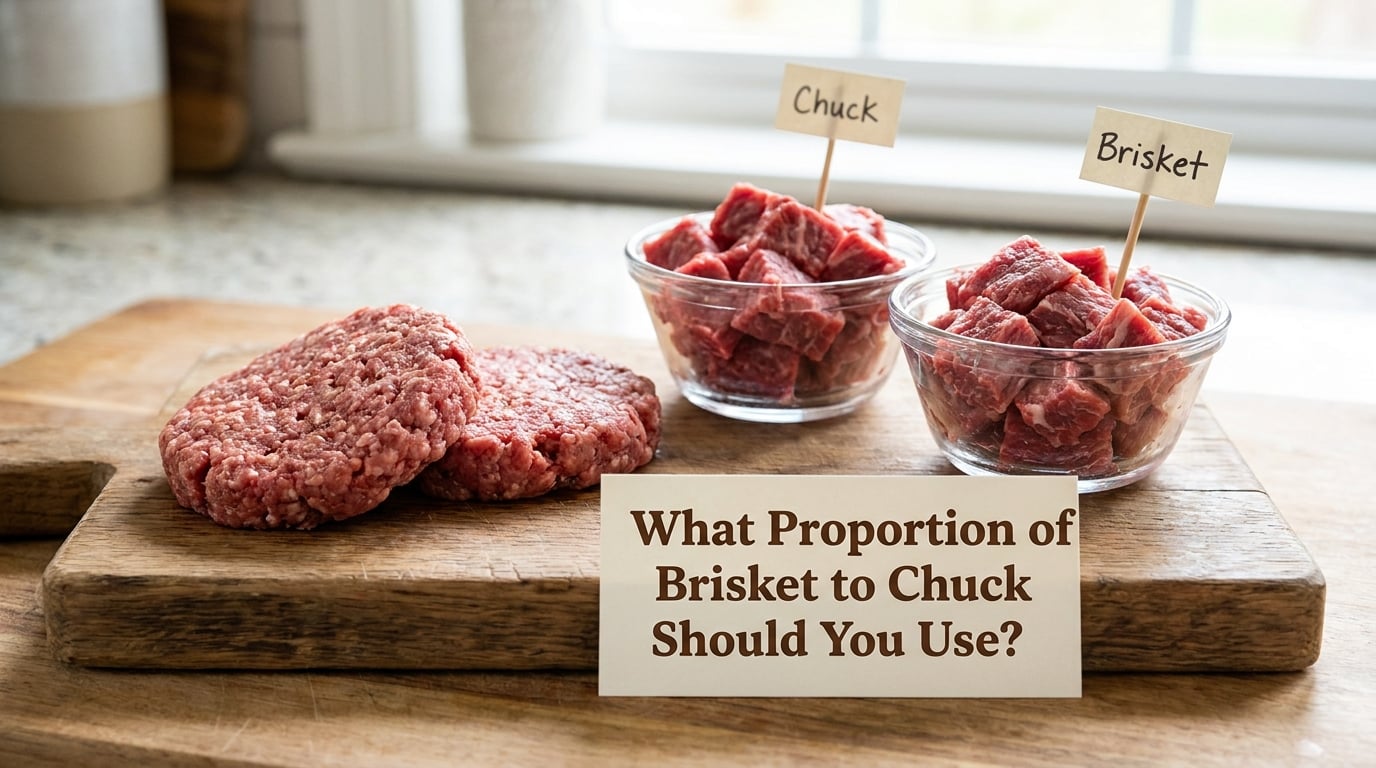
Equal parts chuck and brisket is the most forgiving starting proportion for a home cook, giving you a noticeable flavor lift with almost no risk of a dry patty. Think of these as launch points, not fixed formulas, because the fat content of your actual chuck piece decides more than the label does.
- 50/50 chuck and brisket: the easy default. Rich, deeply beefy, forgiving on the grill, and the one I hand to people making a blend for the first time.
- 70/30 chuck to brisket: closer to the restaurant-style ratio, with a firmer texture and less rendered fat pooling in the pan.
- 80/20 chuck to brisket: brisket used more as a seasoning cut. Noticeable flavor, patty still reads as a classic burger.
Going past 40 percent brisket, or using the lean flat as the majority, tends to produce a patty that feels tight and dry in the center. The percentages work because they are weights, so weigh your portions on a scale if you can. Guessing by eye is where most people end up with a blend far leaner than the number they intended.
Should the Brisket and Chuck Burger Blend Be Ground Cold?
Yes, grind it cold. Meat that is already warm smears, and the fat turns greasy and pasty in the grind, which is the single biggest reason a home blend fails to taste like anything from a restaurant. Cold meat cuts cleanly, the fat stays in distinct pieces, and you get a coarse, loose grind.
Chill the cubed meat in the freezer for 20 to 30 minutes before it goes through. It should be firm but not rock solid, firm enough that it does not smear against the plate. Use a coarse plate, roughly three-eighths inch, for a juicy burger; a fine plate gives a denser, more uniform texture that dries faster.
Grind each cut separately and combine after, or pass the mixed meat through twice at the coarse setting. The second pass gives you even distribution without emulsifying the fat. When you order the grind at a counter, ask for it fresh, coarse, and blended to your ratio, and pick the meat up cold and use it within a day or freeze it right away.
How Do You Keep a Brisket-Chuck Burger Juicy?
Keep the blend juicy by keeping the fat in distinct pieces, handling the meat gently, and cooking it no harder than it needs. Start with cold meat and a loose coarse grind, then shape patties with a light hand.
Handle the meat as little as possible. Compaction squeezes out air and moisture before cooking even starts, so form the patty just firm enough to hold and stop. A shallow dimple in the center keeps a thick patty from ballooning into a dome that cooks unevenly.
Cooking method changes the result more than people expect. Cast iron gives a hard sear and steady heat, which suits a medium-thick patty. A griddle or flat top cooks thin patties fast and renders fat for crisp edges. A grill gives you char but dries the surface in dry weather, so finish those patties under a lid or in a low oven. Season just before cooking, not when you form the patties, so salt does not draw moisture out of the meat early.
Why Does the Blended Burger Shrink or Turn Dry?
A blended burger turns dry when the fat is too low, the meat was worked too much, or the patty got hit with more heat than it could hold. Shrinking by itself is normal, since fat renders and water evaporates, but a hockey puck that squeaks when you cut it means something went wrong earlier.
| What happened | How it shows up | What to change |
|---|---|---|
| Lean meat or a lean flat-heavy blend | Dry, tight, hard center | Add fat or point brisket, target 80/20 |
| Overworking the patty while forming | Dense, pale, dry bite | Handle lightly, pat firmly once and stop |
| Fine grind | Tight crumb, less juice | Switch to a coarse plate |
| Salting too early | Wet surface, gray patty | Season right before it hits the heat |
| Heat too high or too long | Charred outside, raw or dry inside | Lower the heat, flip once, pull early |
| Pressing the patty down while cooking | Thin patty, all the juice in the pan | Let it cook without pressing |
A greasy finish points the other way. Too much fat, or a blend that was warm and smeared during grinding, leaves rendered fat pooling rather than soaking in.
How Do You Season a Brisket and Chuck Burger Blend?
Season a brisket and chuck burger blend lightly with salt, black pepper, and nothing else for the first batch. The meat is already deep and savory, and a heavy rub flattens the very flavor the brisket was added to deliver. Most people use far more salt than they need.
Salt goes on the surface just before cooking. Pepper goes on during the cook so the oils can pick it up. Garlic powder, onion powder, or a little smoked paprika work if you want a shift, but add them to the surface rather than mixing them into the meat, because mixed-in seasoning gets ground into the patty and disappears. Keep the patty surface dry and the shape even and the crust will form properly.
Brisket and Chuck Burger Blend Explained: Common Mistakes
When a brisket and chuck blend disappoints, check these in order before changing anything else.
- Meat temperature. Was the fat cold and firm when it went through the grinder? Warm meat smears and dries out.
- Fat ratio. Weigh the portions. An eyeballed 80/20 can easily be 90/10 on the day.
- Grind size. Coarse keeps moisture in. Fine makes a denser patty.
- Mixing. Blend after grinding, or pass the mixture twice. Do not work the meat into a paste.
- Shaping. Loose but firm patties, dimple in the center, no pressing while cooking.
- Doneness. Take it off the heat earlier than you think, since carryover cooking keeps moving the internal temperature.
What Temperature Should You Cook a Burger Blend To?
Cook ground beef to an internal temperature of 160°F (71°C), which is the USDA safe minimum for ground beef because bacteria are distributed through the whole patty rather than sealed in intact muscle. Pull the patty a few degrees below that and let carryover cooking finish the job, since the center keeps rising after it leaves the heat.
Color is not a reliable safety check. A patty can brown long before the inside is safe, and a pink center in a thick blend burger carries a genuine risk that a seared crust does not offset. Use an instant-read thermometer in the thickest part of the patty and let rest a few minutes before serving, which also lets the juices redistribute.
How Should You Store Leftover Burger Blend?
Store a raw brisket and chuck blend in the coldest part of the refrigerator for one to two days, and freeze it for longer. Keep it in its original packaging or a sealed container, and always put it on a tray underneath so nothing drips onto other food.
For the freezer, press out air, label the container with the date and the ratio you used, and expect about three to four months of quality. Thaw in the refrigerator rather than on the counter, and grind only what you need once it is thawed, since refreezing dulls the texture. Cooked patties or loose cooked blend keep about three to four days refrigerated, and reheat in a hot pan with a splash of oil so the surface re-crisps instead of steaming.
Grinding a large batch once and portioning it into freezer bags is what I do. It is faster than grinding before every cook and the difference in taste after freezing is small compared with the convenience.
Frequently Asked Questions
What is the best ratio of brisket to chuck for burgers?
Equal parts chuck and brisket is the most forgiving starting point for home cooks, and 70/30 chuck to brisket is the more restaurant-style version. Keep brisket between 20 and 40 percent unless your chuck is very lean, and weigh the portions rather than eyeballing them, since chuck fat content varies widely from piece to piece.
Is a brisket chuck blend better than all-chuck burgers?
It depends on what you are fixing. All-chuck is milder and slightly softer, while adding brisket gives a deeper, more mineral beef flavor and a firmer texture. A measured brisket share also lets you control the fat percentage more precisely, which is where most disappointing chuck patties actually come from.
Should I grind the brisket and chuck myself?
Grinding at home is the single biggest upgrade most home cooks can make. The meat is cold, you control the fat, the grind stays coarse, and nothing has been emulsified by a commercial machine. If you do not own a grinder, many meat counters grind customer-supplied primals for a small fee.
Why do my brisket-blend burgers shrink so much?
Shrinkage is normal, since fat renders and water evaporates, but heavy shrink usually means the blend was leaner than intended or the patty was overworked while forming. Weigh your portions to hit 80/20, grind coarse, handle the meat lightly, dimple the center, and stop pressing the patty down once it is on the heat.
Can I freeze a raw brisket and chuck burger blend?
Yes, and a fresh coarse grind freezes very well. Press out the air, label the container with the date and ratio, and use it within three to four months for the best texture. Thaw in the refrigerator rather than on the counter, and portion the blend before freezing so you only thaw what you need.
Conclusion
If you only remember one thing from this brisket and chuck burger blend explained guide, make it this: start with an 80/20 chuck-and-brisket blend, with brisket point at roughly 20 to 30 percent of the weight, and keep the meat cold through grinding. Shape the patty lightly, dimple the center, and cook it only to the USDA safe minimum of 160°F (71°C), letting carryover cooking finish the job. Everything else is adjustment, and the first batch is how you find your own ratio.