
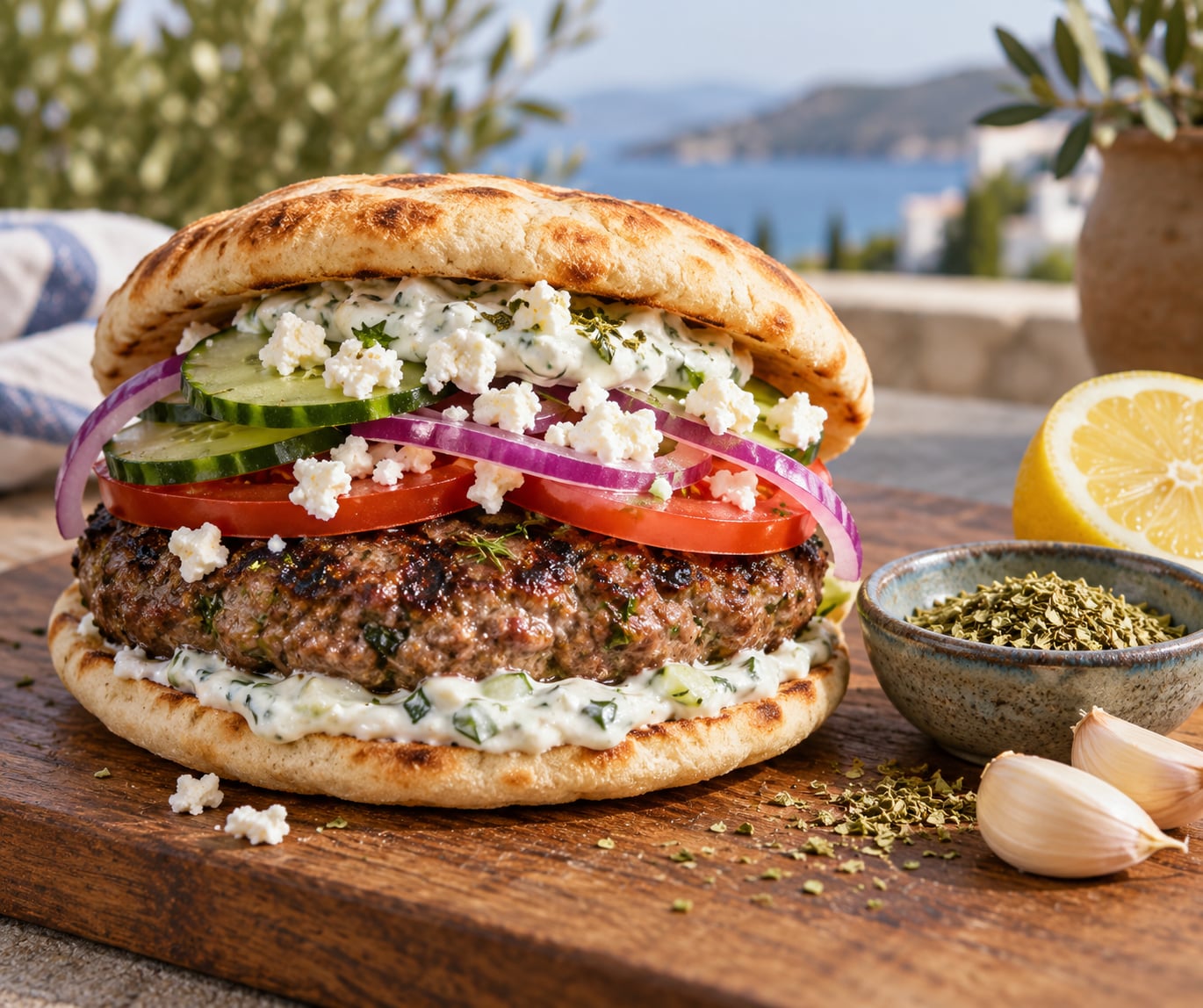
To make Greek lamb burgers, season ground lamb with dried oregano, garlic, lemon zest, cumin and fresh herbs, bind it with egg and breadcrumbs, then grill the patties until they reach 160°F (71°C) inside. Serve them in warm pita with homemade tzatziki, crumbled feta and red onion. The whole thing takes about 35 minutes and needs one bowl.
The reason homemade lamb burgers so often disappoint is that lamb is leaner than beef and has less fat to hold onto moisture. Skip a binder and the patties crumble on the grill. Cook them too long and they turn dry and grey in the middle. Fixing both takes about a minute of extra prep, which is most of what separates a good lamb burger from a disappointing one.
Keftedes, the traditional Greek cousin of this burger, are spiced through with oregano and onion and fried or grilled. This version works from a backyard grill, a cast-iron skillet on the stove, or an air fryer, with the same seasoning and the same doneness target.
What You Need
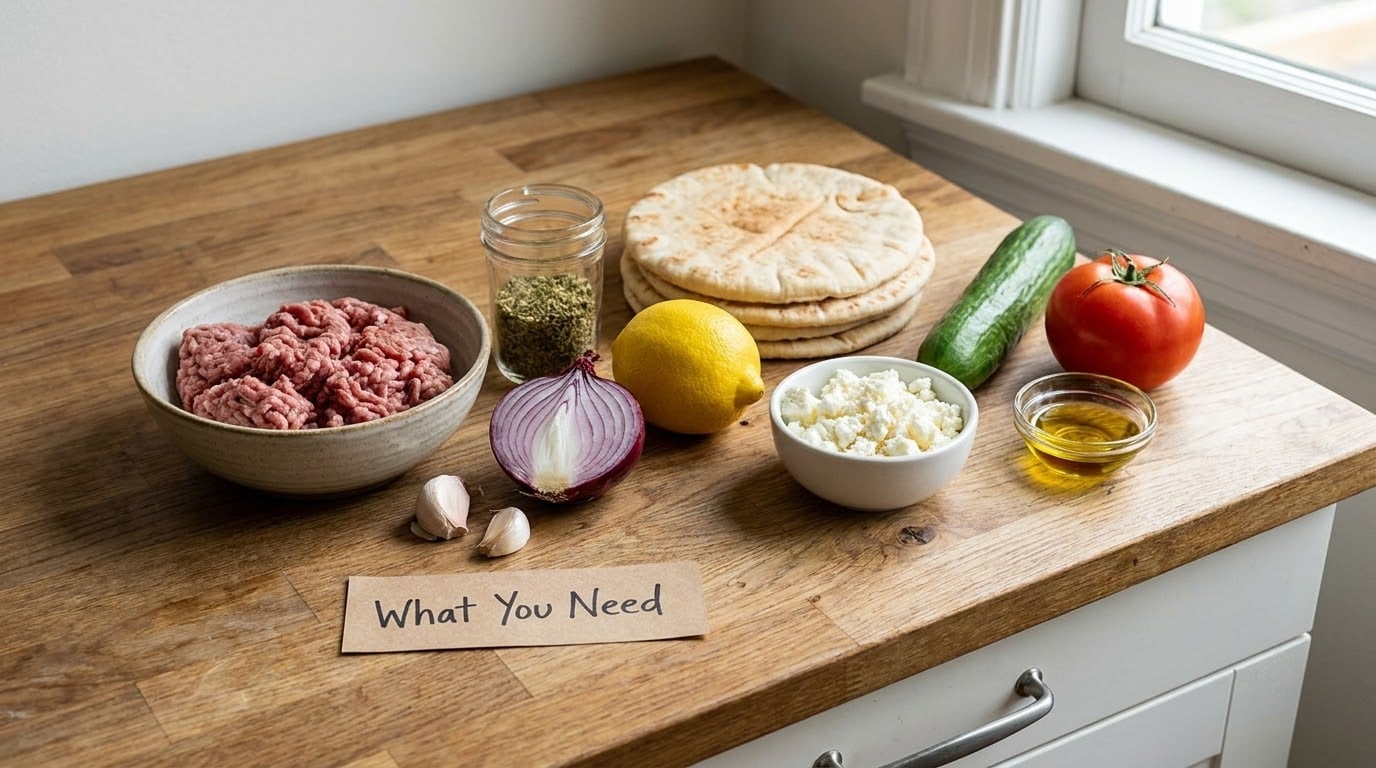
A Greek lamb burger is a patty of ground lamb flavored with olive oil, garlic, dried oregano, lemon zest and fresh herbs, cooked until browned outside and done inside, then served in warm pita or a bun with tzatziki, feta and olives. Everything else on this list is optional or substitutable, but the oregano, the lemon and the tzatziki are what make it taste Greek rather than just lamb.
For the lamb patties
- 1.5 pounds (680 g) ground lamb, preferably with about 20% fat
- 1 small red onion, finely grated
- 3 garlic cloves, minced
- 2 teaspoons dried oregano
- 1 teaspoon ground cumin
- 1 teaspoon smoked paprika (optional)
- Zest of 1 lemon
- 1 tablespoon fresh mint, chopped
- 1/4 cup flat-leaf parsley, chopped
- 1 large egg
- 2 tablespoons breadcrumbs
- 1 tablespoon extra-virgin olive oil
- 1 teaspoon kosher salt, plus more for the patties
- 1/2 teaspoon freshly ground black pepper
For the tzatziki
- 1 cup thick Greek yogurt, strained through a sieve if it looks loose
- 1/2 English cucumber, grated
- 1 garlic clove, grated
- 1 tablespoon lemon juice
- 1 tablespoon extra-virgin olive oil
- 1 teaspoon dried dill or dried mint
- Pinch of salt
For serving
- 4 pitas or 4 burger buns
- Lettuce leaves or sliced cucumber
- 1 tomato, sliced
- 1/2 red onion, thinly sliced, or quick-pickled in lemon juice
- 1/2 cup crumbled feta
- 1/3 cup pitted kalamata olives, sliced
- Lemon wedges
Equipment
A grill, a cast-iron skillet or an air fryer; a large bowl; a box grater; and an instant-read thermometer. The thermometer is the one piece of kit worth owning. Home cooks consistently trust a number far more than a guess at “cook until done,” and it is the difference between a juicy center and a dry one.
What to ask for when you buy the lamb
Ask for ground lamb with roughly 80% meat to 20% fat, and ask for a fine grind. Cooks in online cooking communities point out that coarse-grind patties break apart on a grill, while a fine grind gives you a patty that holds together and still sears well. If your butcher will not grind it, buy lamb shoulder or leg trimmed of silver skin and pulse it a few times in a food processor. Stop before it turns to paste.
Lean lamb is the one to skip. At 10% fat, the patties dry out before they brown, and there is nothing the sauce can do about that later.
Step-by-Step
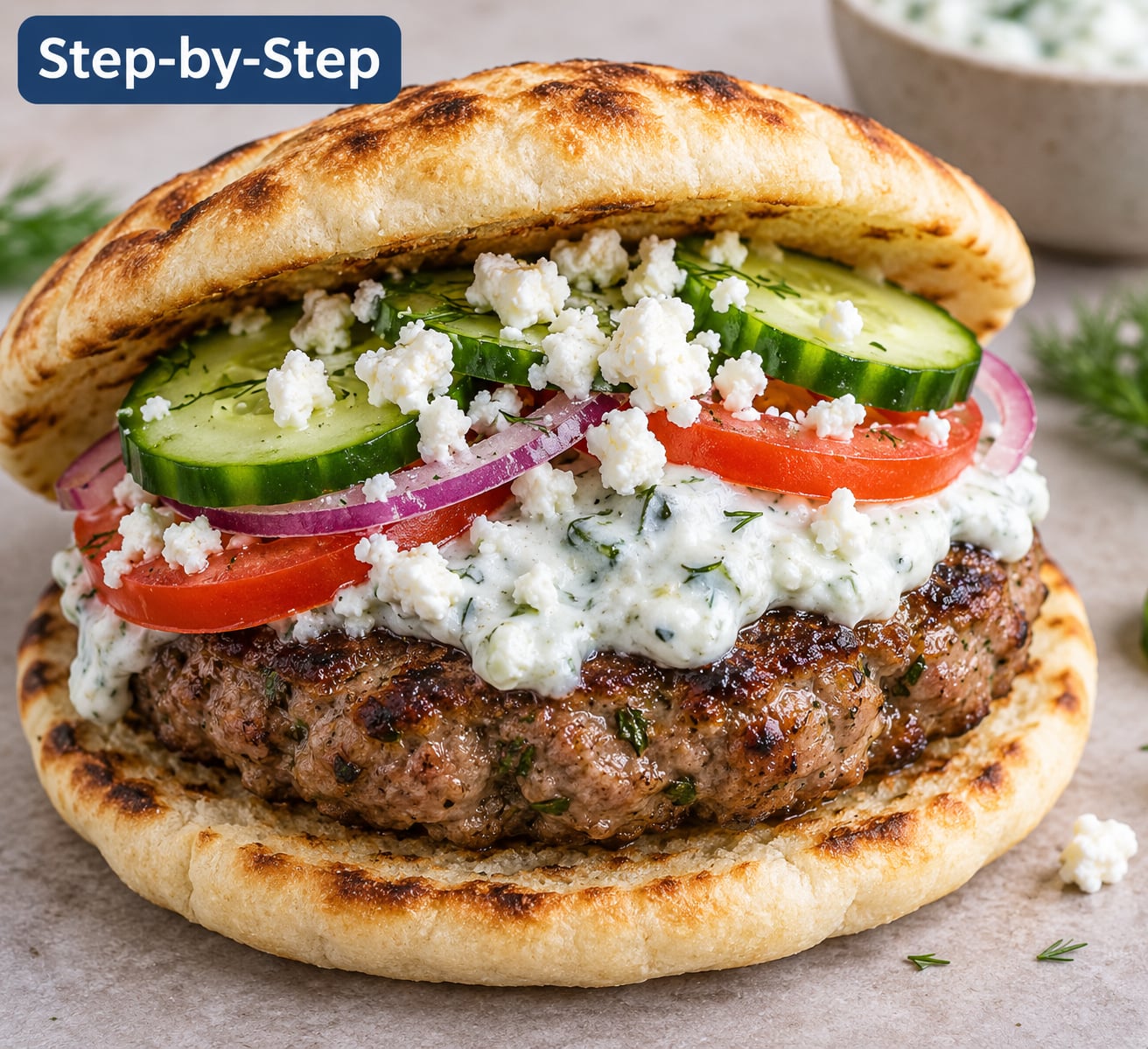
Step 1: Season and Mix the Lamb
Put the lamb in a bowl with the grated onion, minced garlic, oregano, cumin, smoked paprika, lemon zest, mint, parsley, olive oil, 1 teaspoon of salt and the pepper. Season the way you would a steak: salt the meat lightly and let the salt sit on the surface for 10 to 15 minutes while you make the tzatziki.
Mix with your hands or a fork until the seasoning disappears into the meat, about 60 seconds. Stop there. Lamb has no fat marbling to protect it, so kneading the mixture works gluten out of it and the patties turn dense and bouncy instead of tender.
Resting is the step that separates seasoned lamb from flavored lamb. Thirty minutes in the refrigerator lets the oregano and garlic penetrate instead of tasting like a spice crust on the outside of a raw burger.
Step 2: Add the Binder and Shape the Burgers
Lamb genuinely needs a binder here, because it is leaner than beef and has less of its own structure. Beat the egg, stir it through the meat, then add the breadcrumbs and mix until the mixture just holds when you squeeze it. Too many breadcrumbs and the patties turn bready, so two tablespoons per pound is plenty.
A tablespoon of the Greek yogurt from the tzatziki works in place of the egg if you want a tangier patty. The acid in the yogurt tenderizes the meat and gives you the same binding effect. Yogurt marinades come up again and again in home cooking forums as the trick for tender ground meat, and it works just as well mixed in as it does as a marinade.
Divide the mixture into four portions and shape them into patties about 3/4 inch thick and slightly wider than the bun, since lamb shrinks more than beef as it cooks. Make a shallow dimple in the center with your thumb. A domed patty is a patty that cooks unevenly and gives you a raw middle.
Chill the shaped patties for 15 minutes before they hit the heat. Cold patties hold their shape on a hot grill, and this is the single cheapest fix for the crumbly burger problem.
Step 3: Cook the Burgers Until Safe and Juicy
Heat a grill to medium-high, or a cast-iron skillet over medium-high heat, and brush the surface with oil. Cooking the patties hot and fast on the outside, then easing the heat, is the best way to make lamb burgers: you get a browned crust in a couple of minutes and a moist center, instead of a slowly cooked patty that dries out from the center out.
Grill method: place the patties about half an inch apart and cook 3 to 4 minutes on the first side without moving them. Season the raw side with salt, flip, and cook 2 to 3 minutes more.
Stovetop method: cook in a cast-iron skillet over medium-high heat, 3 to 4 minutes on the first side, then lower the heat to medium and cook 3 to 4 minutes on the second side.
Air fryer method: preheat to 400°F (205°C), spray or brush the patties with oil, and cook 9 to 11 minutes, flipping once at the 5-minute mark.
For the safe minimum, ground meat must reach 160°F (71°C) internally. Insert the thermometer into the thickest part of the patty, away from the bone of the pan or the grate, and check at the end. If you like lamb slightly pink in the middle, pull it at 145°F (63°C) and let the residual heat carry it the rest of the way.
Look for a deep brown crust and a clear, not pink, center when you cut into it. If you cut a burger open to check and put it back on the grill, the juices run out and you lose the moisture you spent all of this cooking to keep.
Make sure you only cook burgers once. For a smoke-free skillet method and other stovetop tricks, read how to make burgers on the stove without smoke.
Step 4: Rest, Top, and Serve
Move the patties to a plate and let them rest 3 to 5 minutes. That short rest lets the juices redistribute, which means the first bite is as juicy as the middle one.
While they rest, stir the grated cucumber into the Greek yogurt with the grated garlic, lemon juice, olive oil, dill and salt. Salt the grated cucumber and squeeze it dry first, otherwise the sauce turns thin within an hour. Home cooks report watery tzatziki almost more than anything else, and the cucumber is the reason.
Warm the pitas in a dry skillet for 20 seconds a side, or split a bun and toast it cut-side down. Then build: lettuce or cucumber, the patty, a spoon of tzatziki, tomato, thin red onion, crumbled feta and a few kalamata olives.
A drizzle of olive oil and a squeeze of lemon over the finished burger does more than any sauce. A lemon-mint yogurt, made by folding chopped mint and lemon juice into the same Greek yogurt, is a fast alternative if you are out of cucumber. For sides, a simple Greek salad and lemon-roasted potatoes handle the rest of the plate. If you want a second sauce, guacamole works better on a lamb burger than most people expect, and there is a quick method at how to make guacamole for burgers.
If you are serving more than one round, hold the cooked patties on a rack over a warm pan rather than stacking them on a plate. Stacked patties steam each other and the crust goes soft.
Common Mistakes
Dry lamb burgers
The fix is more fat and less time. Buy lamb with about 20% fat, mix in a tablespoon of olive oil, and take the patties off the heat at 160°F (71°C) rather than cooking until they feel firm. Most dry lamb burgers were cooked two minutes past done because the cook was nervous about pink.
Patties that fall apart on the grill
Three things cause this: overmixing, a missing binder, and a hot grill with no oil. Mix only until the seasonings disappear, add the egg and breadcrumbs, brush the grates with oil, and chill the shaped patties for 15 minutes. A wire rack set over a baking sheet keeps the raw mixture out of any leaking juices too.
Patties that are dense and chewy
You kneaded them. Lamb has almost no internal fat to keep the proteins from tightening, so any extended working makes the patty spring back when you bite it. Mix with a light hand, and use a fork if you can manage it.
Uneven cooking, raw in the middle
Two usual causes: patties shaped like meatballs, and a domed top. Press each one flat to about 3/4 inch, dimple the center with your thumb, and match the thickness of every patty. Leaner patties also need a gentler finish, so drop the skillet to medium for the second side.
Bland seasoning
Dried oregano loses its punch fast, so buy a tin that smells fragrant when you open it and replace it yearly. Beyond that, the usual culprit is salting only the mixture. Salt the raw side of each patty right before it goes on the grill, the way you would a steak, and add a spoonful of tzatziki to the finished burger.
Lamb that tastes gamey
Strong flavor usually comes from older lamb or from lamb that has sat too long in a very cold case. Shop with your nose and cook it fast, then cover the flavor with lemon, garlic and oregano. Yogurt mixed into the patty also rounds out any gaminess.
Watery tzatziki
Salt the grated cucumber, leave it in a sieve for 10 minutes, and squeeze it dry in your hands. Thick, strained Greek yogurt helps too, since regular yogurt is mostly whey and loosens the sauce further.
Meal prep and freezing
Shape the raw patties, lay them on a parchment-lined tray, and freeze until solid, then move them to a bag. They keep for about three months. Cook from frozen on a grill or skillet, adding two to three minutes to the total time, and do not thaw them first, since the patties fall apart the moment they lose their chill.
Cooked patties reheat in a skillet over medium heat for two to three minutes a side, or in a 350°F (175°C) oven for 8 to 10 minutes. The microwave makes them rubbery. A leftover guide for freezing and reheating every kind of burger is at how to make burgers for meal prep.
Cooked lamb also works cold: slice a leftover patty thin and pile it into a pita with lettuce, tomato and tzatziki for a quick lunch, or break it up over a salad with cucumber, olives and a squeeze of lemon.
Frequently Asked Questions
Do lamb burgers need a binder?
Yes. Lamb is leaner than beef and has less fat to hold itself together, so it benefits from a light binder. One egg plus two tablespoons of breadcrumbs per pound is the simplest version, and a tablespoon of Greek yogurt works just as well if you want the patties slightly tangier. Mix gently until the meat just holds when squeezed, then chill the shaped patties for 15 minutes before cooking. Too much binder makes the burgers bready, so add it by the tablespoon.
What internal temperature should lamb burgers reach?
The USDA safe minimum for ground meat is 160°F (71°C), measured in the thickest part of the patty with an instant-read thermometer. If you prefer lamb slightly pink in the center, pull the patties at 145°F (63°C) and let residual heat carry them the rest of the way. The reason most homemade lamb burgers are dry is that they are cooked well past this point out of fear of pink.
Why are my lamb burgers dry?
Three fixes cover nearly every case. Buy lamb with about 20% fat rather than lean ground, mix a tablespoon of extra-virgin olive oil into the meat, and stop cooking at 160°F (71°C) instead of waiting until the patty feels firm. Grilling hot and fast for the crust, then easing the heat, protects the juices better than cooking the whole burger at a moderate temperature.
How do I keep lamb patties from falling apart?
Overmixing is the main culprit. Lamb has almost no internal fat, so kneading the mixture works gluten into it and makes the patties dense and springy. Mix only until the seasonings disappear, add your binder, keep the patties an even 3/4 inch thick, chill them for 15 minutes, and brush the grill grates with oil before they go down. A wire rack over a baking sheet catches any leaking juices.
Can I freeze raw lamb burger patties?
Yes. Shape the patties, lay them on a parchment-lined tray, freeze until solid, then transfer them to a freezer bag. They keep for about three months. Cook from frozen on a grill or in a skillet, adding two to three minutes to the total cook time. Avoid thawing them first, because thawed patties lose their structure and crumble on the grill.
What are the best toppings for Greek lamb burgers?
Classic toppings are tzatziki, crumbled feta, thin-sliced red onion, tomato, lettuce or cucumber, kalamata olives, and a drizzle of extra-virgin olive oil with a squeeze of lemon. Kalamata olives can also be chopped straight into the meat. For a lighter sauce, fold chopped mint and lemon juice into Greek yogurt instead of making cucumber tzatziki. Pita and toasted ciabatta both work better than a soft burger bun.
Conclusion
Greek lamb burgers come down to four things: lamb with about 20% fat, seasoning applied evenly and given time to penetrate, a light binder mixed in gently, and cooking stopped at 160°F (71°C). Everything else is topping.
If you are making them for the first time, start with oregano, garlic, lemon zest and mint in the patty, then put a spoon of homemade tzatziki and a few kalamata olives on a well-toasted pita. That combination is where the flavor lives, and it is hard to get wrong.