
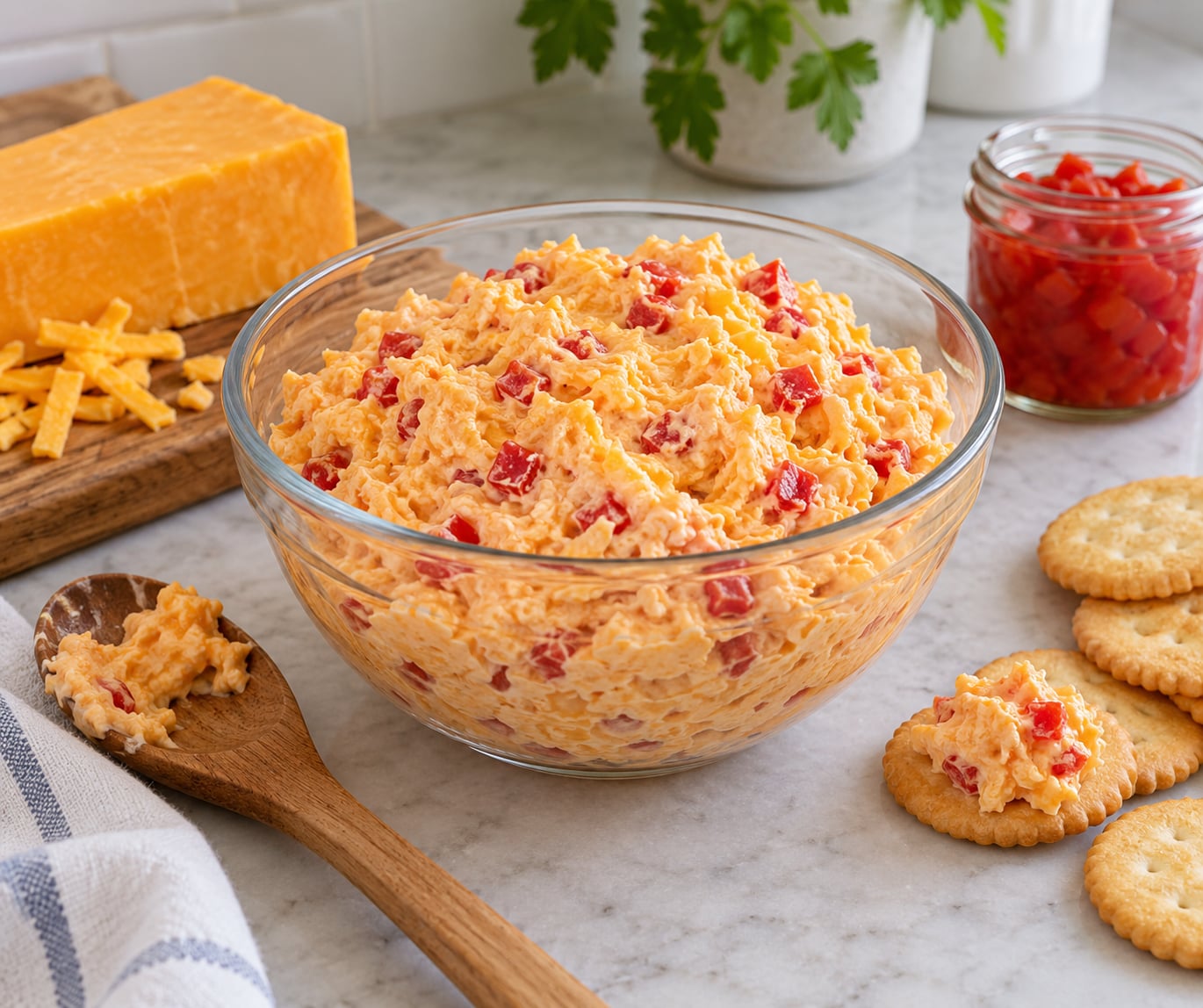
Pimento cheese is a cold, no-cook spread made by mixing grated sharp cheddar, softened cream cheese, mayonnaise and chopped pimentos, then chilling the mixture until it holds its shape. Knowing how to make pimento cheese takes about 15 minutes of active work plus an hour in the fridge, and there is no cooking involved at all.
The whole thing comes together in one bowl: beat the cream cheese until smooth, stir in the mayo and seasonings, fold in the pimentos, then add the cheddar last so the shreds stay distinct. Chill it covered, let it set, and spread it on crackers, toast, celery, or a burger bun.
A word on what you get. This is a spread, not a dip you scoop with a chip, though a thick one can work either way. The texture should be creamy with a little resistance from the cheese, closer to a soft pâté than a whipped dip. The two things that ruin most batches are wet pimentos and pre-shredded cheese, and both are avoidable.
What You Need
The base is four ingredients in a specific ratio, plus salt. Sharp cheddar carries the flavor, cream cheese carries the body, mayonnaise handles the tang, and the pimentos supply color and a mild pepper note.
- 8 ounces sharp cheddar cheese (about 2 cups grated), grated by hand from a block
- 4 ounces full-fat cream cheese (half a block), softened to room temperature
- 1/3 cup mayonnaise (about 80 g), full-fat
- 1 jar (4 ounces) pimentos, drained, or 1/2 cup diced roasted red pepper
- 1 teaspoon celery salt or a pinch of cayenne
- 1/2 teaspoon black pepper, freshly cracked
- 1/2 teaspoon Worcestershire sauce, optional
That yields roughly 1.5 cups, enough for about 8 people as an appetizer alongside crackers, or six generous burger toppers.
Sharp cheddar is the one cheese that matters
Buy a block and grate it yourself with a box grater. Bags of pre-shredded cheddar are coated with cellulose or other anti-caking agents so the shreds stay separate on the shelf, and that coating is exactly what stops the cheese from melting into the mixture.
Sharp is the flavor, not the fat. Mild cheddar tastes flat in a cold spread because it never gets hot enough to develop anything. If you only have mild, compensate with a little extra celery salt and a few drops of hot sauce.
For a different result, swap part of the cheddar. Pepper jack adds a gentle heat, Monterey Jack melts better if you plan to warm the spread, and smoked Gouda pushes it toward a cheese board. Go all sharp cheddar if you want the classic version.
Should you drain the pimentos?
Drain them, and drain them properly. A colander on top of the sink for a few minutes, then a paper towel, beats a slotted spoon every time. Pimentos arrive packed in salty liquid, and that liquid is the single most common reason a homemade batch turns out loose enough to run off a cracker.
Keeping a spoonful of the brine is a legitimate choice, just not in the base recipe. A teaspoon or two adds salty depth and a bit of acidity, and plenty of home cooks use it in place of part of the mayonnaise. The trade-off is looser texture, so add it only if your mixture already looks stiff.
On texture, mashing is the move many cooks land on. Drain the peppers, then press them with a fork until the pieces are small and soft. Jarred dice can stay crunchy in a way that reads as an accident rather than a texture.
Equipment
A box grater, a mixing bowl, a rubber spatula or wooden spoon, and a hand mixer if you have one. A stand mixer gives a smoother, more emulsified result by breaking down the shreds, but a fork and patience work fine for a single batch.
You also need an airtight container and fridge space, since the spread has to chill undisturbed for at least an hour before it will hold a shape.
Step-by-Step: How to Make Pimento Cheese
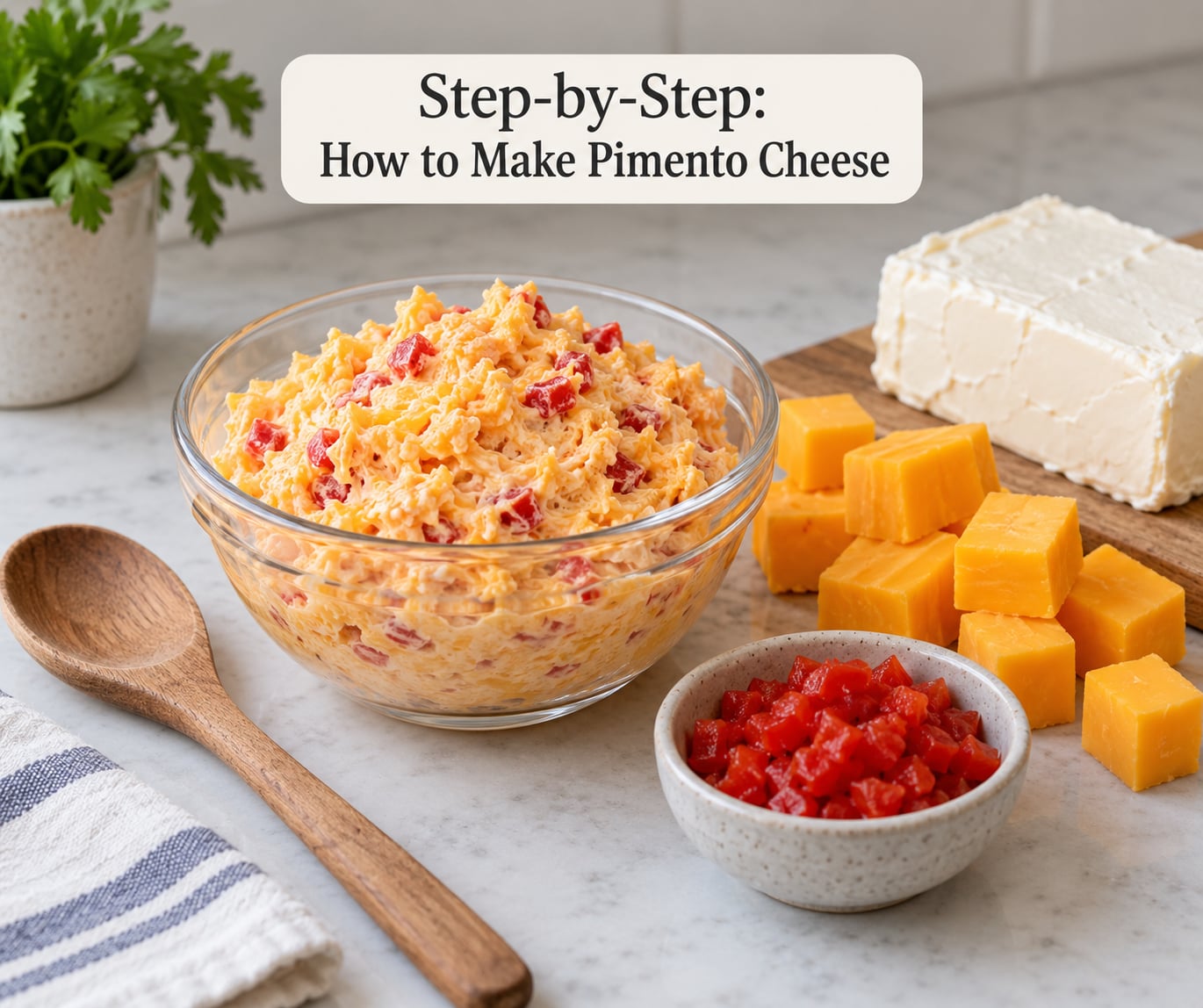
How to Make Pimento Cheese Step 1: Soften and Combine the Cheeses
Cut the cream cheese into cubes and set it out with the cheddar for 20 to 30 minutes, until it bends without cracking. Softening matters because cold cream cheese fights the mayo and leaves white streaks that never fully disappear.
Beat the cream cheese alone first, about 60 seconds, until it is completely smooth and no lumps remain. Then beat in the mayonnaise a spoonful at a time. Adding it gradually lets you stop when the base is soft but still holds a peak, which is the texture you want before the cheese goes in.
Add the grated cheddar last and fold, or beat on low for 20 seconds. Folding keeps visible shreds for texture; mixing smooths everything into a uniform paste. How to make pimento cheese turns on this choice, and both are correct depending on whether you want a rustic spread or a smooth one.
How to tell it worked: the base holds a soft ridge when you lift the spoon and does not slump flat on the bowl. If it is liquid, you added the mayo too fast.
How to Make Pimento Cheese Step 2: Add the Pimentos and Seasonings
Fold in the drained pimentos, celery salt, black pepper, and Worcestershire. Taste before adding salt, because jarred pimentos and Worcestershire are both salty on their own. You can always add more, and you cannot take it back.
If the flavor tastes flat, the usual culprits are underseasoned cheese, pimentos that got lost in a large batch, or bland mild cheddar. A pinch more celery salt, a few drops of hot sauce, or a teaspoon of pickle brine fixes all three.
For heat, add a finely minced pickled jalapeno, a teaspoon of wing sauce, or a dusting of smoked paprika. Green onion stirred in at the end gives a fresh, sharp note that cuts the richness.
How to tell it worked: the color is evenly speckled with red, and one spoonful tastes noticeably more seasoned than the rest. Even distribution is the test, and it comes from folding from the bottom rather than stirring the top layer.
How to Make Pimento Cheese Step 3: Chill Until Firm
Scrape the mixture into an airtight container, press the top flat with the back of the spoon, and refrigerate for at least 1 hour. Two to four hours is better if you can wait, since the cheddar needs time to firm fully.
The spread is ready when a clean knife drawn through it leaves a clean line instead of dragging. Set it out about 15 minutes before serving, since straight-from-the-fridge pimento cheese is closer to a brick than a spread.
That same chill is the answer to a batch that is too firm. Let it sit at room temperature, or beat in a spoonful of mayo. Never microwave it to soften, because dairy spreads go grainy and the texture never recovers.
To use it warm, spoon it onto a bun or toast and set it under a low broiler for 2 to 3 minutes, or in a skillet with a lid on until the top browns. It softens into a genuine melt, which makes it a good topping for a burger patty. If you want to know more about building that burger, I walk through how to make a burger without a bun using stacked toppings, and there is a jalapeno popper recipe for burger night if you want heat alongside the cheese.
How to tell it worked: it holds its shape on a knife but still smears easily onto toast. If it dents under the knife, chill it longer.
One more practical note for a party: this recipe doubles without changing the ratio, and a doubled batch is actually easier since you have more to hide small inconsistencies in. Plan about a quarter cup per person as an appetizer, and make it the day before.
Common Mistakes and How to Fix Them
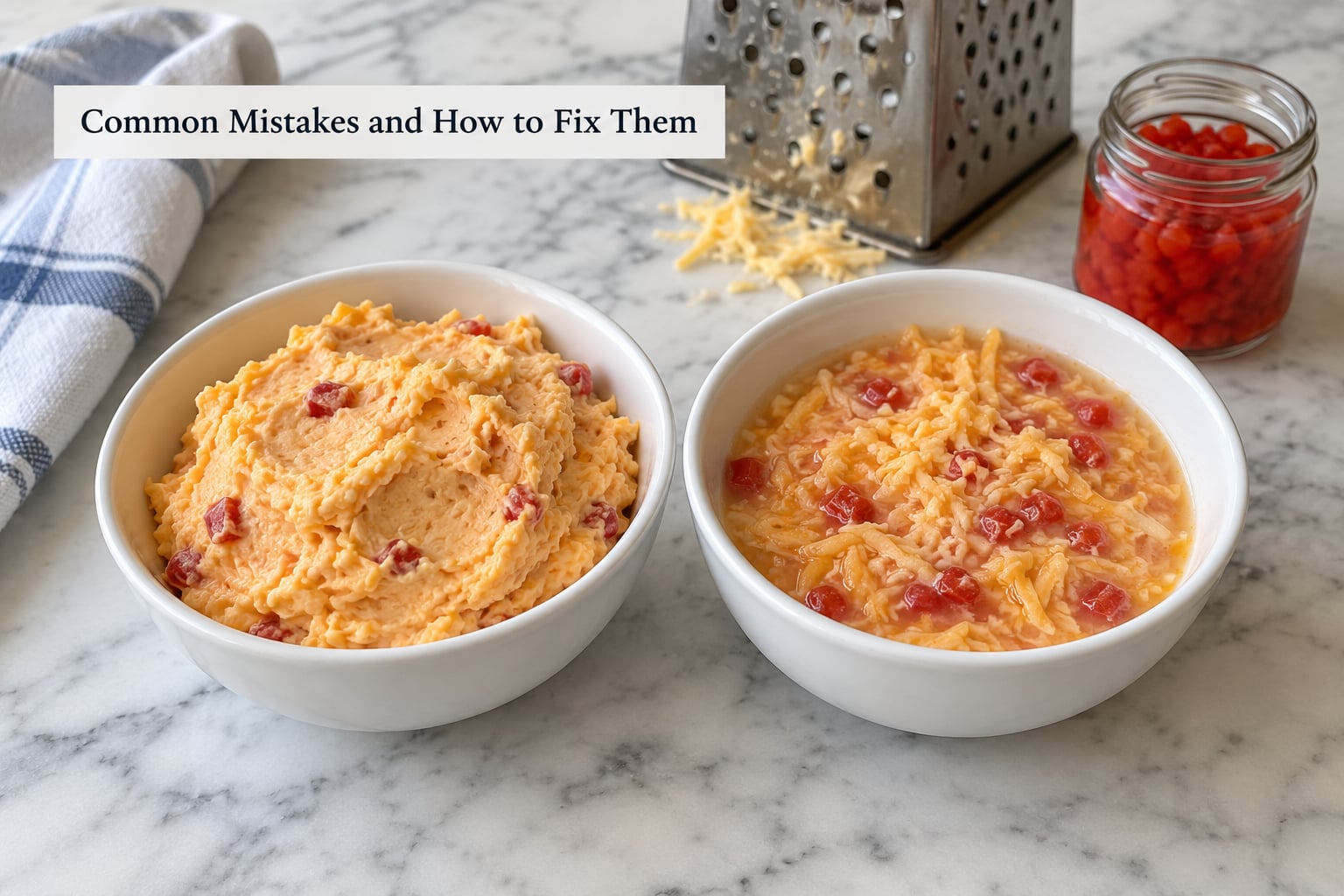
The spread is watery and slides off the knife
Nine times out of ten, the pimentos were not drained. Press them in a colander, then blot, and use only the amount the recipe calls for. Beyond that, add an extra 2 ounces of grated sharp cheddar and chill longer, since more fat and more solid cheese are the two levers that pull a loose mixture back together.
Other causes worth checking: too much mayonnaise, or not enough chilling time. Some home cooks in the r/Cooking threads on this dish chase the same problem and land on the same fix, cutting the mayo and extending the chill to overnight.
It sets up like a rock in the refrigerator
Too little fat and too much solid cheese. Cold cheddar straight from the fridge is the biggest culprit, so shred it after it has sat out for 20 minutes. Next most common is pre-shredded cheese, where the cellulose coating keeps everything from blending and the mixture never emulsifies. Add a tablespoon of mayo and a splash of pickle brine, then let it come to room temperature for 20 minutes before serving.
The texture is gritty
Over-processing. A food processor liquefies the fat and the spread turns grainy, and a stand mixer on high can do the same thing. Shred by hand, fold with a spatula, and stop while it still looks slightly uneven.
It tastes bland
More celery salt, a squeeze of lemon, and a bit more pimento than the recipe lists. A large batch dilutes jarred pimentos badly, and doubling the pimentos in a doubled recipe is usually the fix. Season again after the chill, not before, since cold food tastes blander than warm.
It is too hot or too salty
Over-seasoning is fixed by adding more base. Grate in another 2 ounces of sharp cheddar and a tablespoon of cream cheese, mix it through, and chill again. Do not try to dilute with water or extra pimentos; both push the texture toward loose.
How to store and serve it
Keep it in an airtight container in the fridge for 4 to 7 days. It is a mayonnaise-based spread, so do not leave it on the counter past two hours, and skip it entirely if the serving crowd includes anyone pregnant, elderly, or immunocompromised.
Freezing is possible but usually not worth it. Mayonnaise-based spreads weep and go grainy on thawing, and the cheddar loses its texture. If you must freeze, freeze it in small portions and expect a softer, slightly separated spread.
For serving, put it in a small bowl with a butter knife and a pile of sturdy crackers, since thin ones fracture under the weight. It also works stuffed into celery stalks, spread on thick toast and broiled, spooned over deviled eggs, or used as a dip for fried pickles. For a fuller burger spread, a fresh guacamole topping for burgers pairs well with a thin layer of pimento cheese on the same patty.
Frequently Asked Questions
What kind of cheese is best for pimento cheese?
Sharp cheddar is the standard, and it is the only cheese that gives the spread its full flavor. Buy a block and grate it yourself, because pre-shredded bags carry cellulose or other anti-caking agents that keep the cheese from blending into the mixture. Pepper jack, Monterey Jack, or smoked Gouda can replace part of the cheddar for a different result.
Can I use no-cream pimento cheese?
You can leave the cream cheese out and use a higher ratio of sharp cheddar and mayonnaise, roughly 10 ounces of cheddar to 1/2 cup of mayo. The result is looser and more cheese-forward, closer to a straight cheddar spread, and it firms up almost entirely from the cheddar once chilled. Adding a tablespoon of sour cream in place of some of the mayo gives you body back without losing the tang.
How do I keep pimento cheese from becoming watery?
Drain the pimentos in a colander for several minutes, blot them on a paper towel, and use only the quantity the recipe calls for. Add the mayonnaise a spoonful at a time so you can stop before the base gets loose, and refrigerate the finished spread for at least two hours. If a batch is already watery, mix in an extra 2 ounces of grated sharp cheddar and chill overnight.
How long does homemade pimento cheese last in the refrigerator?
Stored in an airtight container, homemade pimento cheese keeps for 4 to 7 days in the refrigerator. Because it is a mayonnaise-based dairy spread, do not leave it at room temperature for more than two hours, and use the same caution you would with any egg-based salad. It also freezes, but mayonnaise-based spreads tend to weep and turn grainy once thawed.
Can pimento cheese be made ahead of time?
Yes, and it is better made ahead. Chill it for at least four hours or overnight, then take it out of the fridge about 15 minutes before serving so it softens enough to spread. The recipe doubles without any change to the ratio, and a doubled batch is easier to season because there is more to balance out. Plan roughly a quarter cup per person for an appetizer spread.
Can I freeze pimento cheese?
You can, but expect some change in texture. Mayonnaise-based spreads release water as they thaw, and the cheddar goes grainy rather than staying creamy. If you freeze it, do so in small airtight portions and thaw them in the refrigerator overnight rather than on the counter, stirring well before serving. For most gatherings, making a fresh batch the day before gives a better result than freezing.
Conclusion
Knowing how to make pimento cheese comes down to two decisions: grate your own sharp cheddar from a block, and drain the pimentos until they are dry to the touch. Everything else is a soft cream cheese base, a spoonful of mayo at a time, and an hour in the fridge.
Chill the finished mixture until it holds a clean line from a knife, then take it out about 15 minutes before serving and spoon it onto a burger or a sturdy cracker. Once you have the basic version down, celery salt, pickle brine, and a few drops of hot sauce are where the personality lives.