
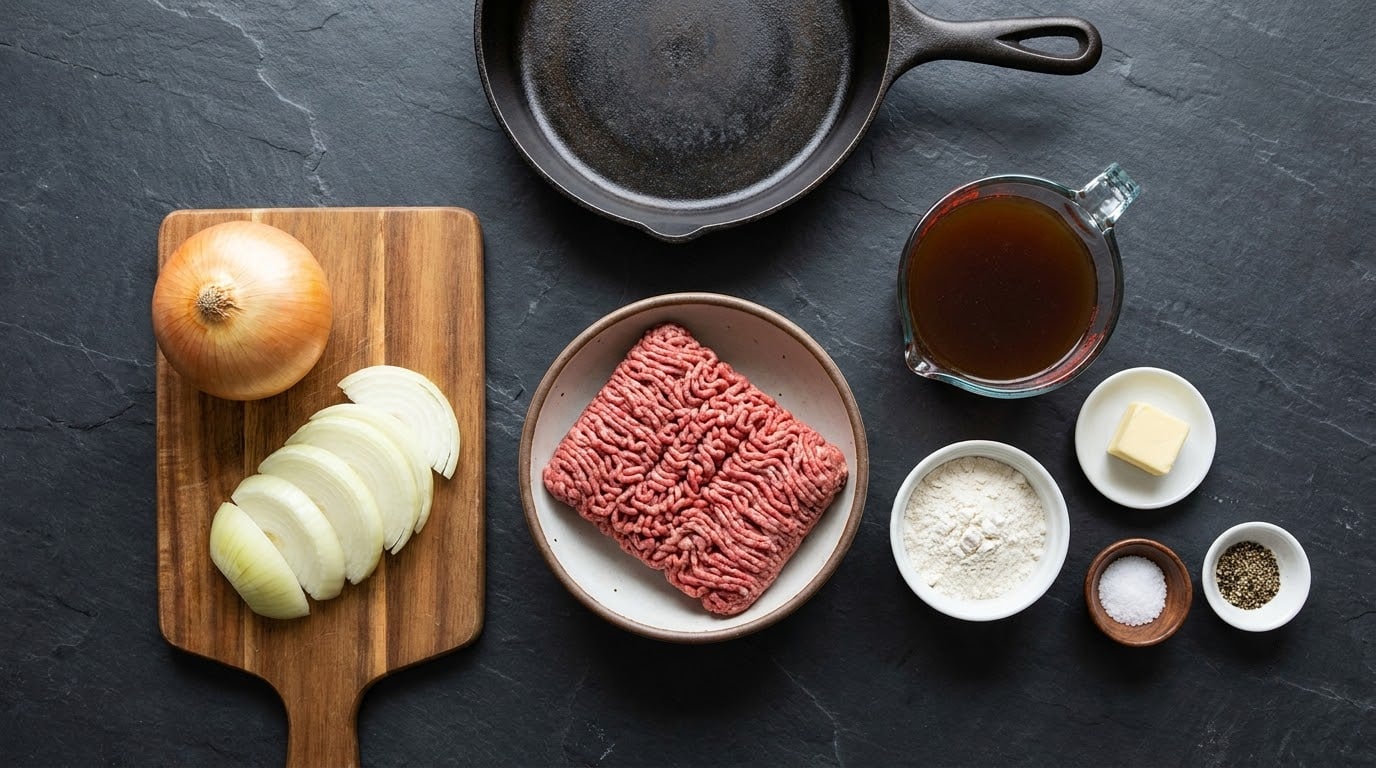
Hamburger steak with onion gravy is thin, seasoned ground beef patties seared hard in a hot skillet, then finished in a rich onion gravy built from the same pan. It takes about 35 minutes from cold pan to plated dinner, all in one skillet, and it is one of the cheapest dinners I make when the week runs long.
The whole dish turns on three things: do not compact the meat, let the patties brown undisturbed, and add the broth slowly. Get those right and the gravy is smooth, the steaks stay juicy, and nothing needs a second pan.
Here is the short version before the detail:
- Mix 1.5 pounds of 80/20 ground beef with egg, breadcrumbs, onion powder, garlic powder, Worcestershire sauce, salt and pepper, then shape four loose patties.
- Press a shallow dip in the center of each patty so they cook flat instead of doming.
- Sear in a hot skillet 3 to 4 minutes a side until deeply browned, then set aside.
- Soften two sliced onions in the pan fat, drain off extra grease, whisk in 2 tablespoons of flour, and pour in 2 cups of beef broth a little at a time.
- Return the steaks, simmer 10 to 15 minutes until the center hits 160°F, then spoon gravy over the top.
Table of Contents
- What You Need
- How to Make Hamburger Steak With Onion Gravy, Step by Step
- Common Mistakes
- Frequently Asked Questions
- What ground beef is best for hamburger steak with onion gravy?
- How do I keep hamburger steaks from drying out?
- Can I make onion gravy without flour?
- How long should I cook hamburger steak in a skillet?
- How do I know when hamburger steak is fully cooked?
- Can hamburger steak with onion gravy be made ahead?
- Conclusion
What You Need
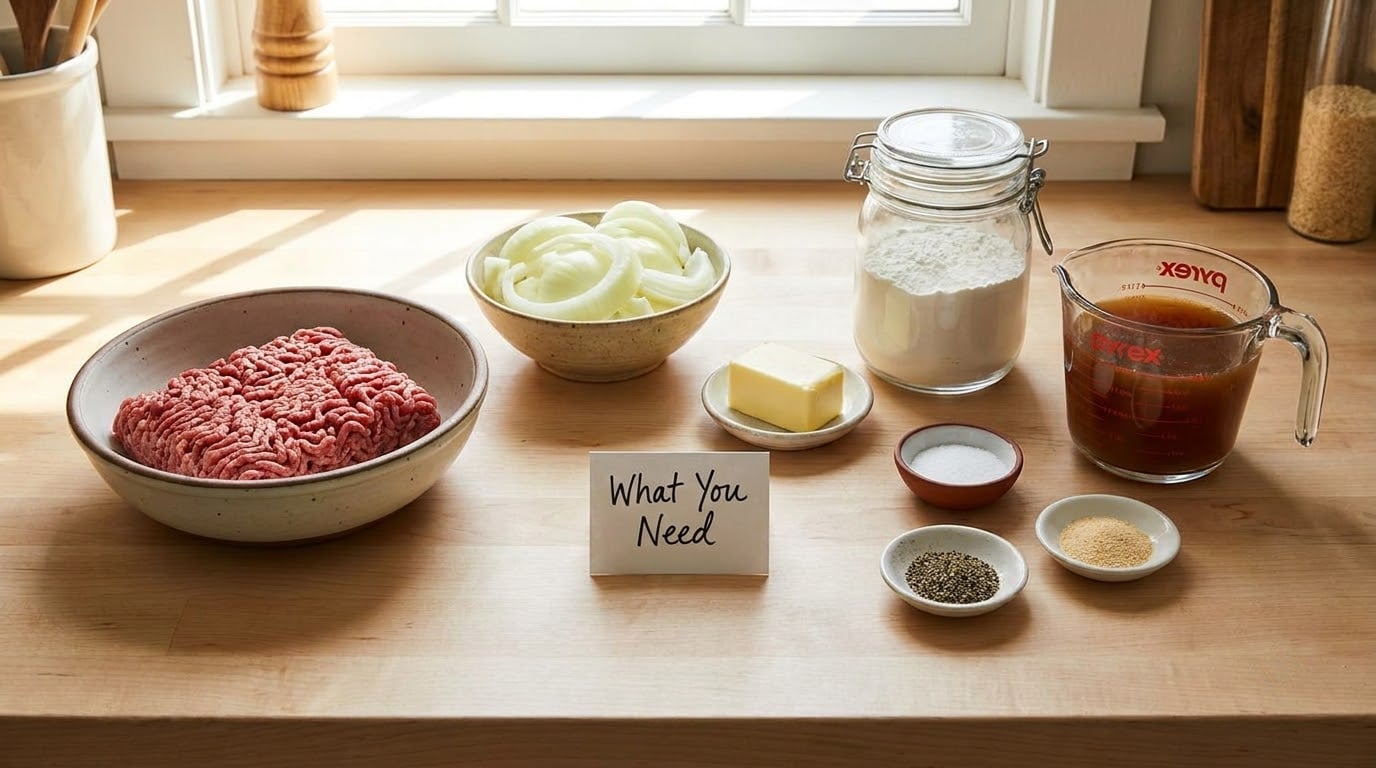
This recipe makes four servings. Nothing here is unusual, and every item on the list does one specific job in the finished plate.
For the patties
- 1.5 pounds ground beef, 80/20 or 85/15
- 1/3 cup plain breadcrumbs or panko
- 1 large egg
- 1 tablespoon Worcestershire sauce
- 1 teaspoon onion powder
- 1 teaspoon garlic powder
- 1 teaspoon kosher salt, plus more for the steaks
- 1/2 teaspoon black pepper
For the onion gravy
- 2 tablespoons butter or the pan drippings
- 2 large yellow onions, sliced into half-moons
- 2 tablespoons all-purpose flour
- 2 cups low-sodium beef broth, plus more if needed
- 1 teaspoon Worcestershire sauce
- Salt and pepper to taste
For the pan and the meat
- A 12-inch cast iron or heavy stainless skillet
- 1 tablespoon neutral oil such as canola or avocado
- A wide spatula or tongs
- A whisk
- An instant-read thermometer
Buy 80/20 if you can find it. That extra fat keeps the steaks tender while they simmer, and it gives you the fond you need for the gravy. If your store only carries 90/10 or lean beef, expect drier patties and consider mixing a small amount of 80/20 back in. Breadcrumbs bind the patty and hold moisture; a reader comparison of how to make burgers with breadcrumbs vs without at home covers the tradeoffs if you would rather skip them.
Yellow onions are worth the trip. White onions taste sharper and more pungent once caramelized, and sweet onions collapse into mush before they color.
How to Make Hamburger Steak With Onion Gravy, Step by Step
The process runs shape, sear, cook the onions, build the gravy, then finish the steaks in that gravy. Work in that order and every stage feeds the next one.
How to Shape the Hamburger Steaks
Divide the beef into four roughly equal 5-ounce portions and pat each one into a wide, flat patty about three-quarters of an inch thick. Handling the meat as briefly as possible is what keeps a hamburger steak tender, because kneading warms it and tightens the proteins that would otherwise stay loose.
After the mixed-in egg, crumbs and seasonings, make a shallow thumbprint in the center of each patty. It should be about a quarter inch deep and about two inches wide, and it stops the patty from puffing into a dome as the heat hits it. That dome is the reason a steak cooks raw in the middle while the edges go dry.
Patty width matters more than thickness. Wider patties are the whole point of the dish, since they have more surface area to brown and more time to pick up gravy flavor. Keep them oval like diner patties rather than shaping them into thick burger balls.
How to Brown the Hamburger Steaks
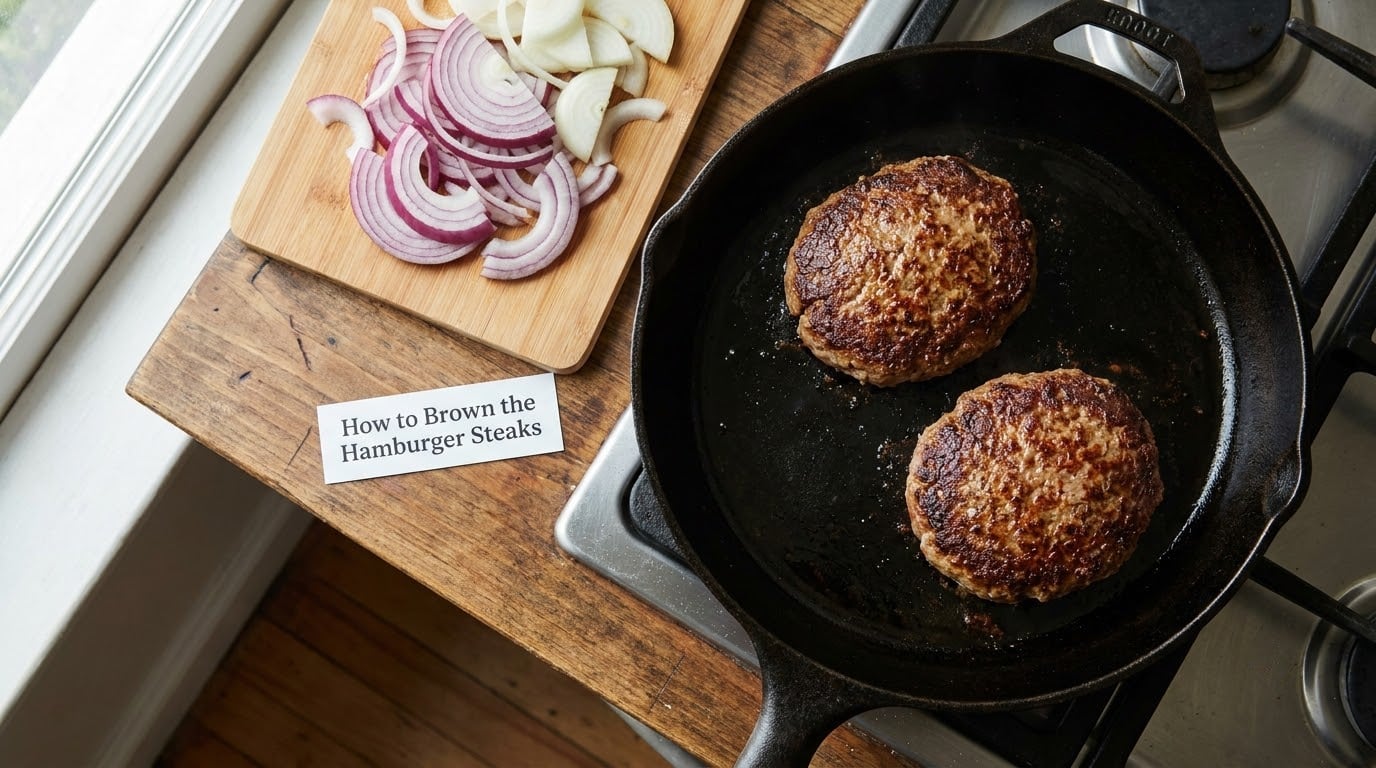
Heat the skillet over medium-high heat until a drop of water skitters across the surface, then add the oil. While it heats, salt and pepper the patties on both sides right up against the metal.
Lay the patties down and leave them alone for 3 to 4 minutes. Resist the urge to press or move them, since every early yank peels the crust off before it sets. You want the surface dark brown and crisp, not merely tan.
Flip once, cook another 3 to 4 minutes, and move the steaks to a plate. They will finish cooking in the gravy, so they do not need to reach temperature yet. Ground meat needs an internal temperature of 160°F or 71°C per USDA guidance, which the simmer step takes care of.
How to Make Onion Gravy
Lower the heat to medium and add the butter or the beef fat collected in the pan. Cook the onions with a pinch of salt for 5 to 6 minutes until they soften and turn translucent, then keep cooking 8 to 10 more minutes until they turn deep golden and smell sweet.
Let the excess fat go. If more than about a tablespoon of grease sits in the skillet, pour most of it off, since fat is what makes gravy greasy rather than rich. Scrape up the browned bits stuck to the bottom as you go and let them loosen into the fat.
Whisk in the flour and cook it for a minute, stirring, until the pan looks dry and the fat turns pasty. That roux is the thickening agent, so it needs to cook out its raw taste before liquid arrives.
Pour in about half the broth and whisk hard until smooth, then add the rest gradually. Piling in all of it at once is what produces a lumpy gravy, since cold liquid hits dry flour clumps before they have hydrated. Season with Worcestershire, salt and pepper, and simmer 3 to 4 minutes until it coats the back of a spoon.
If the gravy loosens while the steaks simmer, stir in a slurry of one teaspoon cornstarch whisked into two tablespoons of cold water. The roux base rarely needs it, but the last minutes of simmering can thin things down.
The roux-and-broth method here is the same one used for brown gravy for poutine, so the technique transfers if you want a larger batch.
How to Finish Hamburger Steak With Onion Gravy
Nestle the seared steaks back into the gravy and bring it to a bare simmer. Cook 10 to 15 minutes, spooning gravy over the top once or twice, until an instant-read thermometer in the thickest part reads 160°F (71°C) with no pink remaining.
Move the steaks to a warm plate and let them sit 3 minutes while the juices redistribute. Then spoon the onion gravy over the top, letting the pan juices run down the sides as well.
Mashed potatoes are the side I reach for, since the gravy does the same job on both. Egg noodles, white rice, green beans or a simple green salad all work. For something to drink alongside, how to pair beer with burgers covers styles that handle a dish this rich.
Common Mistakes
Nearly every disappointing plate of hamburger steak traces back to one of a handful of habits. Here is what goes wrong and the fix.
Patties turn out tough
You mixed or kneaded the beef too long, or used 90/10 meat. Handle the beef gently, stop mixing the moment the seasonings disappear, and choose 80/20. If you used lean beef, cook the steaks only to temperature in the gravy and take them out immediately.
Patties puff up or dome
You skipped the center indentation. Press a shallow dip into each patty before it hits the pan, and keep the patties wide rather than thick so the heat reaches the middle.
Patties fall apart when you flip
Three causes: the meat was mixed too much, the patty was too thick, or you moved it too early. Mix only until combined, press patties to three-quarters of an inch, and let them set for 3 full minutes before touching a spatula under them.
The onions steam instead of browning
The pan was crowded or the heat was too low. Cook the onions on their own after the steaks come out, spread them across the pan rather than piling them up, and give them 15 to 20 minutes total. If they scorch, pull them off the heat for a moment rather than starting over.
The gravy is lumpy
The broth hit the flour too fast. Whisk the flour into the fat first and cook it a full minute, then add broth in two or three additions, whisking constantly after each one. If lumps already formed, whisk hard with a splash more broth or pour it through a fine mesh strainer.
The gravy is too thin or too thick
Too thin means it needs reduction or a cornstarch slurry; too thick means it needs broth or water. Adjust one step at a time and taste after each, since adding broth lowers the salt and the thickening you add lowers it further.
The steaks shrink and dry out
Expect a small amount of shrinkage, but not much. Work the meat gently, keep the pan hot enough to sear fast, and use the 10 to 15 minute simmer rather than a long braise. Resting them 3 minutes before serving holds more juice in the meat.
Frequently Asked Questions
What ground beef is best for hamburger steak with onion gravy?
Eighty-twenty ground beef is the best choice for this dish, and 85/15 works nearly as well. The fat stays in the patty during the simmer, which is what keeps the meat tender, and it produces the browned bits that flavor the gravy. Lean 90/10 beef is fine but drier, so cook the steaks only until they hit 160°F and take them out of the pan right away.
How do I keep hamburger steaks from drying out?
Three habits prevent dry steaks: use 80/20 or 85/15 beef, mix the meat only until the seasonings disappear, and sear it fast so the crust forms before the moisture escapes. Press a shallow indentation in the center so the patty stays flat and cooks evenly. Finish in the gravy for 10 to 15 minutes only, then rest the steaks 3 minutes before plating.
Can I make onion gravy without flour?
Yes. Whisk 2 tablespoons of cornstarch into 2 tablespoons of cold water and stir it into the pan juices after the onions brown, then add the beef broth gradually while whisking. Cornstarch makes a clearer, glossier gravy than flour and has no raw taste to cook out, so it is the simpler route for a quick weeknight version. Add it only after the heat is off the boil.
How long should I cook hamburger steak in a skillet?
Sear each side 3 to 4 minutes for a well-browned crust, then simmer the steaks in the onion gravy for another 10 to 15 minutes. That total of roughly 16 to 23 minutes is enough to cook a three-quarter-inch patty through without drying the outside. Verify with an instant-read thermometer rather than time alone, since patty thickness and your skillet both change the pace.
How do I know when hamburger steak is fully cooked?
Use an instant-read thermometer and check the thickest part of the patty, away from the edge. Ground beef must reach 160°F or 71°C, and the juices should run clear with no pink color at the center. Push the probe into a spot near the gravy line for the most accurate reading, and check each steak separately rather than assuming they all finished at the same moment.
Can hamburger steak with onion gravy be made ahead?
Yes. Shape the raw patties and cook them fully, then cool the steaks and gravy separately in shallow containers and refrigerate within two hours. Store the gravy in an airtight container for up to three or four days, and reheat it on the stove with a splash of broth so it loosens. Keep the steaks covered in the fridge and warm them gently in the gravy so they do not dry out.
Conclusion
The sequence is what makes this dish work. Shape four wide patties with a light hand and a thumbprint in the center, brown them hard on both sides, cook the onions until deep gold, and build the gravy by adding broth to the flour in stages.
Start by slicing the onions and heating the skillet before you touch the meat. Everything after that follows in the order you just read, and the pan does nearly all of the work.