
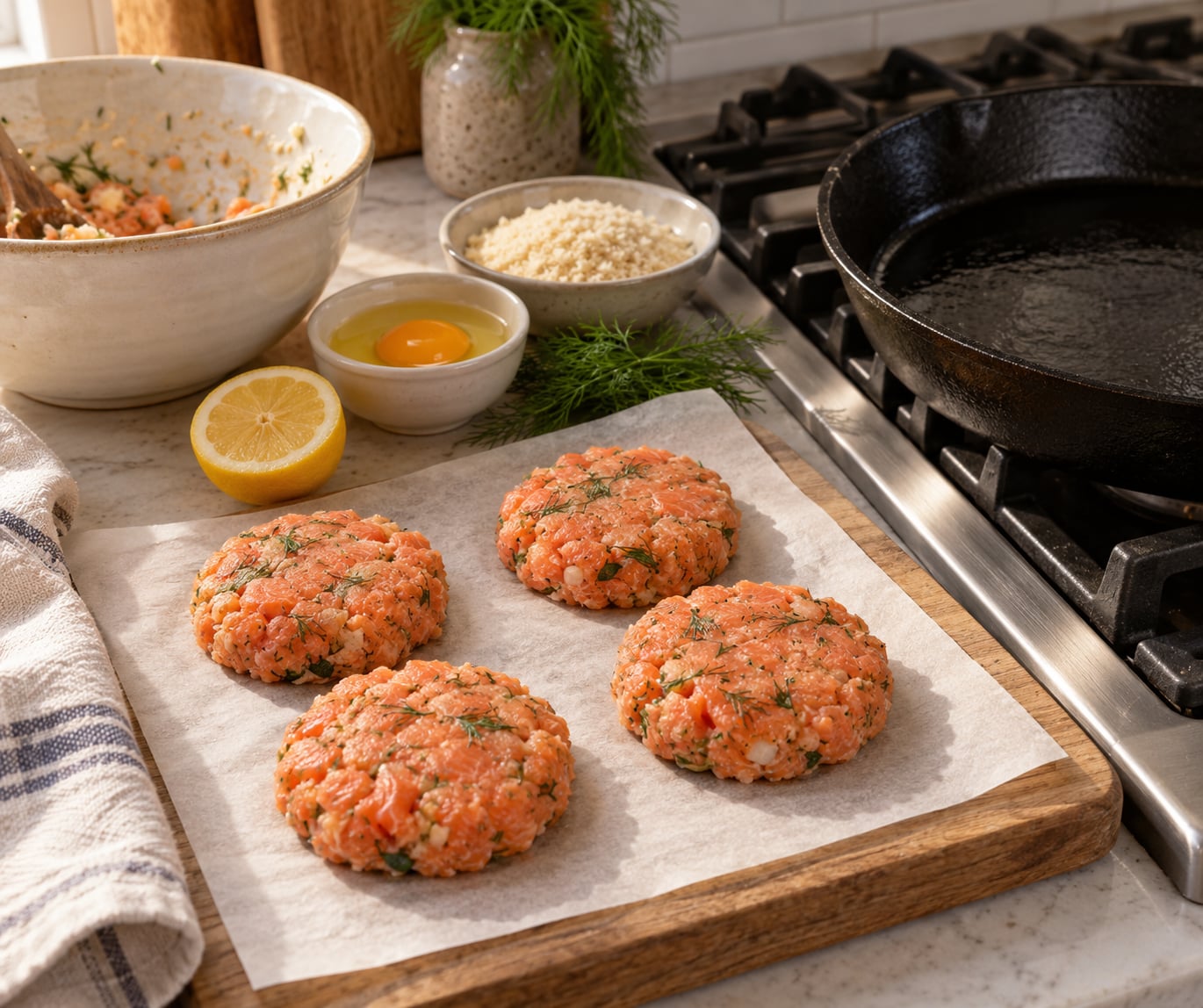
Salmon burgers come together in about 30 minutes with almost no equipment, and the whole thing hinges on three things: a binder, a short chill, and moderate heat. Get those right and you get a patty that stays tender in the middle, browns on the outside, and survives the flip. Get them wrong and you end up with a broken, greasy pile on your skillet.
Here is the method I use, written out so you can follow it without a food processor and without a thermometer if you trust your eyes. It makes four burgers.
What You Need
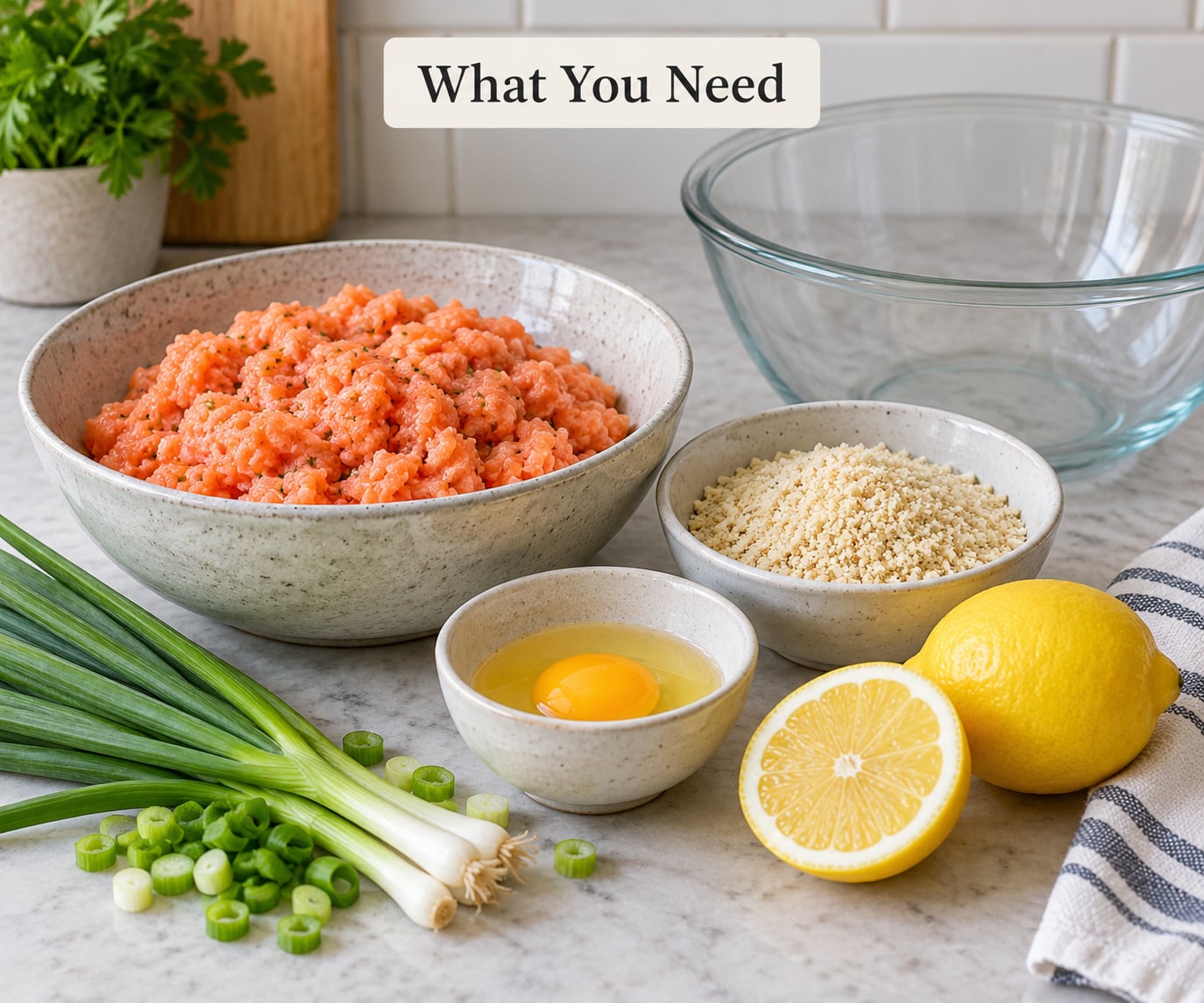
For four burgers you need about 1.25 lb (600 g) of salmon, either fresh skinless fillet or canned. Everything else in the list is small.
For the salmon patties
- 1.25 lb (600 g) skinless salmon fillet, or two 5 oz (140 g) cans, drained well
- 1/3 cup (about 40 g) panko breadcrumbs or plain breadcrumbs
- 1 large egg
- 1 tbsp Dijon mustard
- 1 tbsp lemon juice, plus zest from half a lemon
- 1 small shallot or 2 green onions, minced
- 1 tsp garlic powder
- 1/2 tsp kosher salt, plus more for the pan
- Fresh black pepper and a small handful of dill or chives
What the binder actually does
Salmon has almost no structural integrity of its own. The egg supplies stickiness, the breadcrumbs absorb juice that would otherwise make the pan slick, and both of them need 20 to 30 minutes in the fridge to set.
If you are gluten-free, swap the panko for almond flour or certified GF panko. If you are egg-free, add 2 tbsp mayonnaise in place of the egg; mayo works nearly as well because of its oil and protein content. You can also skip breadcrumbs entirely and lean on extra egg plus a longer chill, though the patty will be more fragile.
Tools
A wide cast iron or nonstick skillet, a sharp knife, a plate lined with parchment, and a spatula wider than the patty. That is it. A food processor is optional, and more on that in a moment.
Step-by-Step
Step 1: Prepare the Salmon Mixture
Pat the fillet dry and cut it into roughly 1/4 inch (6 mm) dice, then chop it a few times with a knife until it looks like coarse mince. If you have a food processor, pulse about one-quarter of the salmon to a paste and leave the rest coarse; the pulsed portion becomes the binder, the coarse portion keeps the patty flaky.
Do not run all of it through the processor. The friction and blade speed warm the fish, melt the fat, and turn the mix gluey and rubbery. That single mistake ruins more salmon patties than anything else.
Step 2: Add the Binder and Seasoning
Add the egg, Dijon, lemon juice, shallot, garlic powder, salt, pepper and herbs to the chopped salmon. Fold with a spoon or your hands until everything is evenly distributed, then stop.
The mixture should look slightly loose and hold a squeeze. Stirring past that point, or using a stand mixer, works the proteins into a dense paste and the finished burger turns bouncy instead of tender.
Step 3: Shape the Burgers
Wet your hands and divide the mixture into four equal portions. Press each into a patty about 3/4 inch (2 cm) thick, roughly the width of your bun, and smooth the edges so there are no cracks for the egg to escape through.
Even thickness matters more than diameter. A thick middle cooks slower than the edges, which is how you get a burnt rim around a raw center.
Put the patties on the parchment-lined plate and chill 20 to 30 minutes. Fish fat firms when cold, so the patty firms with it and holds together on the spatula. Skipping this step is the second most common reason patties fall apart.
Step 4: Cook Until Safe and Browned
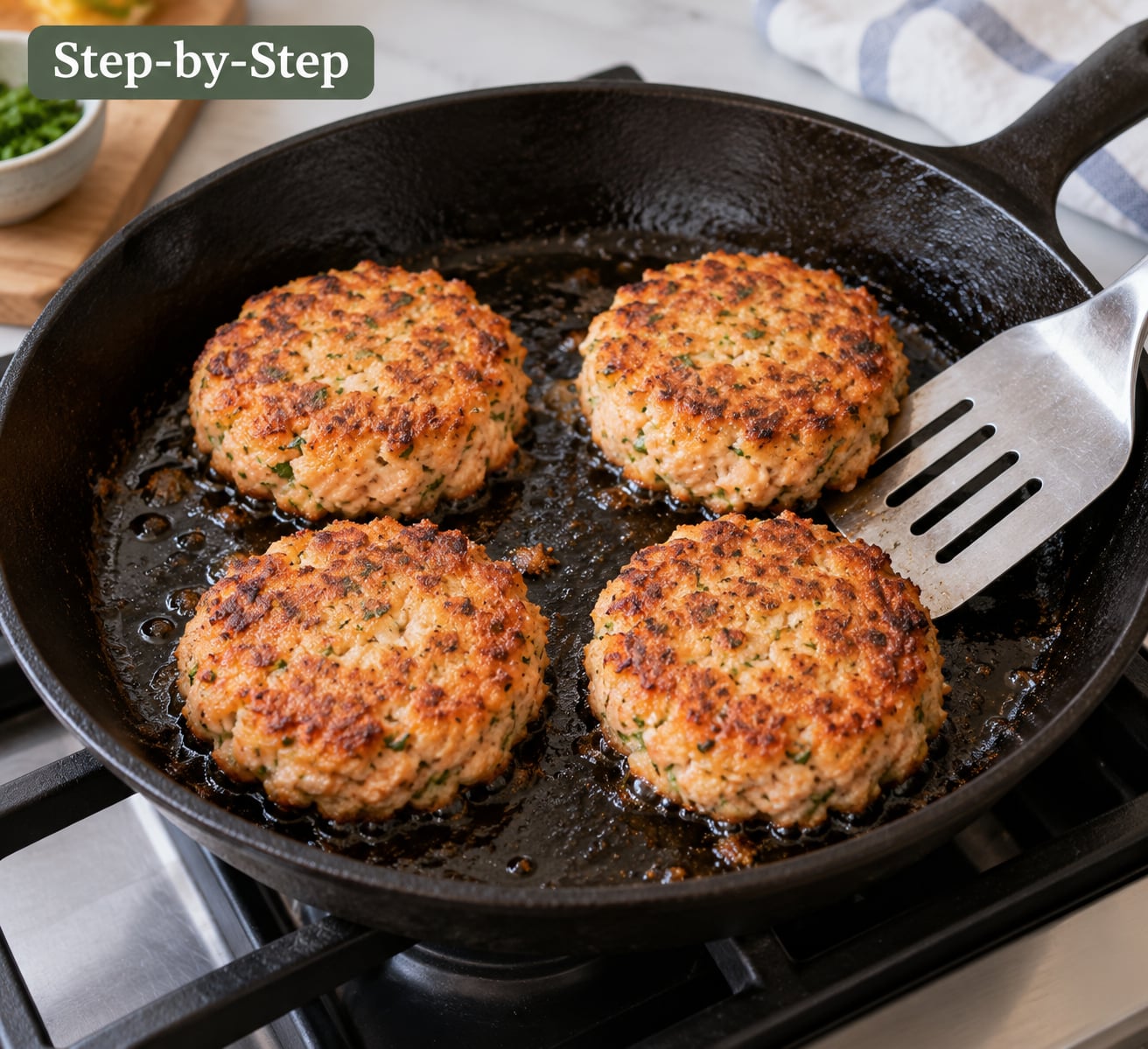
Heat a heavy skillet over medium-high heat and add a thin film of neutral oil. Wait for the oil to shimmer, then add the patties and press them down gently with the back of a spatula.
Cook 3 to 4 minutes per side without moving them. The edges should look set and golden brown before you turn, and the patty should release from the pan on its own. If it sticks, it needs another 30 seconds, not more force.
Ground fish must reach 160°F/71°C internally, so use an instant-read thermometer and check the thickest part if you want to be certain. Push one in from the side and read without touching the pan bottom.
Air fryer works well too: 425°F/220°C for 8 to 10 minutes, flipping once at the halfway mark.
Step 5: Rest and Serve
Move the patties to a plate and wait 2 to 3 minutes. Salmon keeps cooking after it leaves the heat, so resting is what lets you hit the safe temperature without drying out the middle.
Toast a brioche bun, spread on lemon-herb mayo (mayonnaise, chopped dill, a squeeze of lemon, a pinch of salt), then layer lettuce, the patty, and thin tomato. Capers and a smear of Dijon on the side work well too. Serve with fries, a green salad, or a lemony rice pilaf. For a low-carb version, skip the bun entirely.
For a cold, crunchy topping on the side, our homemade guacamole for burgers cuts the richness of the mayo. Keep it simple at first and add one extra element at a time, so you can still taste the salmon.
Common Mistakes
The patty falls apart when you flip it. Almost always one of three causes: the mixture was overmixed, it skipped the chill, or the pan was too hot so the outside sealed before the inside set. Fix all three at once by chilling 20 to 30 minutes and cooking on medium rather than medium-high.
The patty is dry inside and greasy outside. The fat renders out before the center cooks through. Cook gently, rest the patty, and stop at 160°F/71°C. Going past it does not make it safer, it just squeezes out more water.
The burger is rubbery or bouncy. The salmon went through the food processor, or the mix was worked too hard. Chop by hand next time and fold the rest in with a spoon.
The center is underdone while the outside burns. The patty was uneven or too thick. Press a second patty thinner and keep all four the same height so they cook on the same clock.
The burger tastes fishy. Often cured or farm-raised fish plus a hot pan. Cold-start the patties in the pan at medium, and finish with acid: lemon, capers, pickled onions, or a dill-heavy sauce all lift a lot of that edge.
A few habits worth keeping: pat the salmon dry before mixing, chill the shaped patties rather than the mixture if you have time, and cook no more than what you will eat in three days. Cooked salmon patties keep about three to four days refrigerated and freeze well raw, separated by parchment, for up to two months.
To reheat, use a skillet over medium-low with a splash of oil, roughly 2 minutes per side. The microwave is faster but dries the patty out noticeably.
Frequently Asked Questions
Do I need breadcrumbs to make salmon burgers?
No, but they help. Panko or breadcrumbs soak up juice that would otherwise make the pan greasy and give the patty structure. If you leave them out, add an extra egg or two tablespoons of mayonnaise and chill the patties a full 30 minutes. Gluten-free cooks can use almond flour or certified gluten-free panko in the same amount.
What is the safe internal temperature for salmon burgers?
Because the salmon is chopped rather than left whole, treat it like ground fish and cook to 160°F/71°C in the thickest part. Check with an instant-read thermometer pushed in from the side so you do not touch the pan. The 145°F/63°C figure applies to whole fish fillets, not to a chopped mixture, and it is not the safe target for a burger.
Why are my salmon burgers dry?
Dry salmon burgers come down to heat, not ingredients. A hot pan renders the fat out before the center cooks, and over-processing in a food processor does the same thing by melting the fat with friction. Chop by hand, keep the heat at medium, and stop cooking the moment the center hits 160°F/71°C. A two minute rest locks in the juice.
Can I make salmon burgers ahead of time?
Yes, and it often improves the texture. Shape the patties, chill them for 30 minutes, then refrigerate them on a covered tray for up to two days before cooking. Many home cooks go further and let the seasoned mixture rest overnight in the fridge, which firms the fat and makes the patty easier to handle. Cook straight from cold and add a minute to the cooking time.
Can I use salmon fillet instead of ground salmon?
Fresh fillet is the usual choice and works well once you dice and chop it to a coarse 1/4 inch mince. Canned salmon also works: drain it well, mash the larger flakes just enough to spread them, and skip any added salt since canned fish is already salted. Both make a lighter burger than ground beef and cook faster.
What toppings work best on salmon burgers?
Fresh and acidic toppings suit salmon best. Lettuce, thin tomato, red onion, cucumber pickles, capers and fresh dill or chives all work. Lemon-herb mayo or a sriracha mayo gives you a creamy base with a little heat. Skip heavy fried toppings and anything with a lot of sugar, which can make the burger taste muddy against the fish.
Conclusion
The first step is the one that matters: mix the salmon lightly and shape it to an even 3/4 inch thickness, then let it chill so the fat firms up. From there it is just a hot skillet and about 3 to 4 minutes per side, cooked gently to 160°F/71°C. Master the plain version with lemon, Dijon and dill, and only then start adding heat, curry paste, or capers. If you want to compare burger styles while you are at it, our portobello mushroom burger and black bean burger guides cover the same binder and chill logic from the plant-based side.