
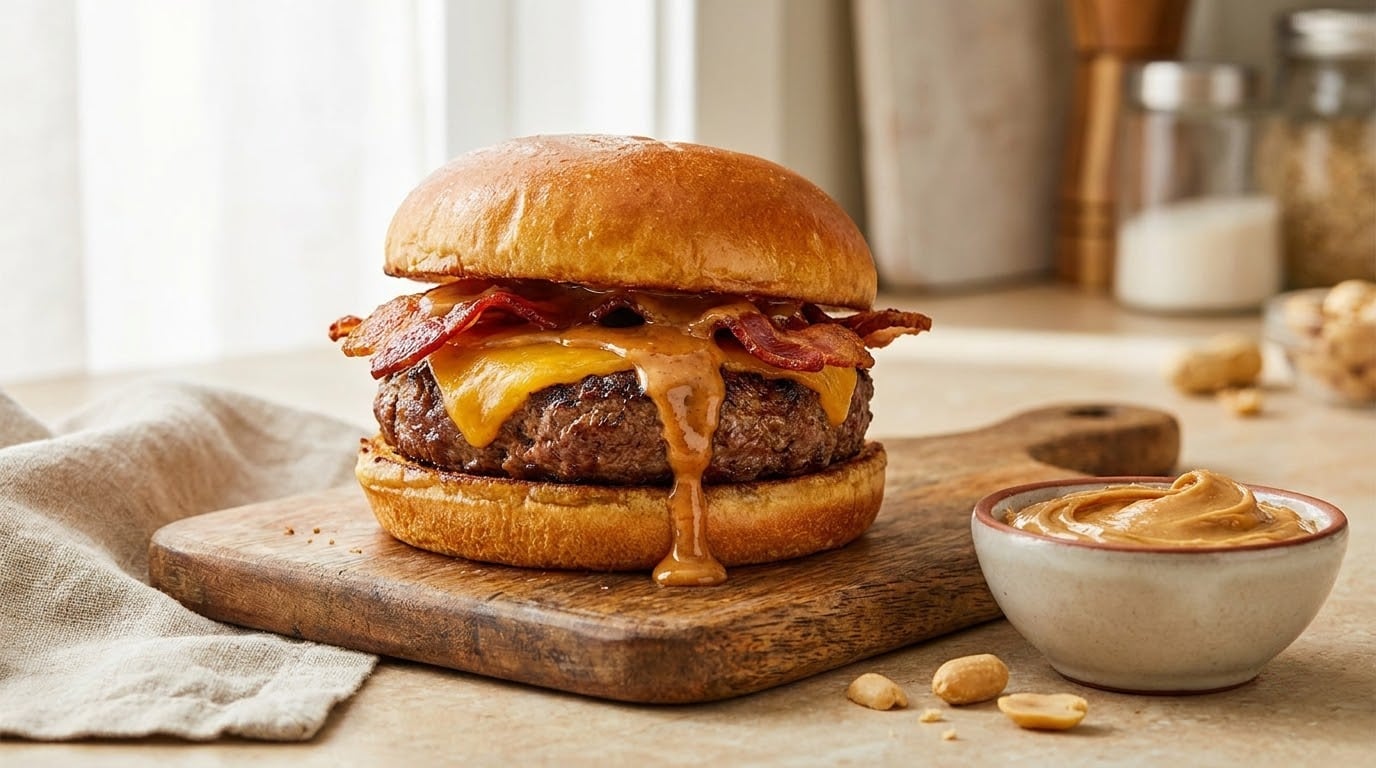
How to make a peanut butter burger is simple: sear a thin 80/20 ground beef patty hard in a cast iron skillet or on a hot grill, toast the bun in the beef fat, then spread a thin layer of warm peanut butter on the bottom half before you stack it. Bacon and cheese go on the patty. Twenty-five minutes from fridge to plate, and the yield is four burgers.
Most first attempts fail the same way. Someone slathers on a thick layer straight from the fridge, the butter slides off the hot patty, and the bottom bun goes to mush by the second bite. Fix the thickness and the temperature and the whole thing behaves like a normal burger with a nutty, caramelised finish.
I cook this one at home most weeks, usually on a cast iron skillet with the exhaust fan running because the peanut butter browns fast. Once you get the sequence down, it takes less effort than a cheeseburger.
Table of Contents
- What You Need for This Peanut Butter Burger
- Step-by-Step
- Common Mistakes
- Frequently Asked Questions
- Should peanut butter go inside the burger patty or on the bun?
- What type of peanut butter is best for a peanut butter burger?
- Can I make the peanut butter glaze ahead of time?
- How do I keep a peanut butter burger from being too sweet?
- Can I make a peanut butter burger on a grill instead of a skillet?
- What toppings work best with peanut butter burgers?
- Conclusion
What You Need for This Peanut Butter Burger
The ingredient list is short, and almost everything you probably already own.
For four burgers:
- 1.5 lbs (680 g) 80/20 ground chuck or ground beef
- 1/3 cup (about 5 tablespoons) creamy peanut butter, plus 1 to 2 tablespoons more for serving
- 2 tablespoons warm water, ketchup, or Worcestershire sauce for the glaze
- 1 teaspoon kosher salt and 1/2 teaspoon coarse black pepper
- 4 brioche buns or potato rolls
- 8 slices thick-cut bacon, cooked until crisp
- 4 slices sharp cheddar or pepper jack
- 2 tablespoons neutral oil for the pan, plus 1 tablespoon melted butter
For the toppings that make it work: crisp romaine or iceberg, thick-cut dill pickles, thin raw red onion, and a hot sauce. Pick two or three. A peanut butter burger needs something crisp and something sharp, otherwise the whole thing reads as dessert.
Equipment: a cast iron skillet or a grill, a wide spatula, a digital thermometer, and a pastry brush or the back of a spoon for the glaze. A scale helps too, since even patties cook at the same rate. There is more on that in how to make burger patties all the same size.
Substitutions: swap bacon for turkey bacon, cheddar for gouda or Swiss, and the brioche bun for a toasted sourdidge slice. Ground turkey works if you go a bit heavier on seasoning and keep the patty slightly thinner, since lean meat dries out faster. If you want the full PB and jelly version, stir 2 tablespoons of strawberry jam into the glaze.
One note on peanut butter choice. Creamy works better than crunchy for the glaze because it loosens evenly, and conventional brands are sweeter than natural ones. Natural peanut butter needs more stirring and less sugar, which usually means the burger tastes more like a burger.
Step-by-Step
1. Season and Shape the Beef
Put the beef in a bowl and add the salt and pepper. Use your fingertips to break it up and distribute the seasoning, then stop. The mixture should look loosely combined, not kneaded. Overworking ground beef is what makes a burger dense and chewy, and that mistake does not reverse itself once the patty hits the heat.
Divide the beef into four loose balls, roughly 6 ounces each. Keep them round and uncompressed. If you prefer a classic thick burger, leave them as balls and press them on the grill. For the crisper edge most people want from this recipe, make them smash burgers: put one ball on the skillet, press it flat with the spatula, and hold it for ten seconds so it grabs the pan.
Aim for a patty about three-eighths of an inch thick and slightly wider than the bun, since it shrinks as it cooks. If yours falls apart when you flip it, that is usually a patty pressed too thin or a pan not hot enough. Our guide to how to make burger patties that hold together covers the fix in detail.
For doneness, ground beef needs to reach 160°F (71°C) in the thickest part. Check with a thermometer, not by pressing, because judging by feel is how people serve pink burgers by accident. Pull the patty at 160°F and let it rest two minutes.
2. Make the Savory Peanut Butter Glaze
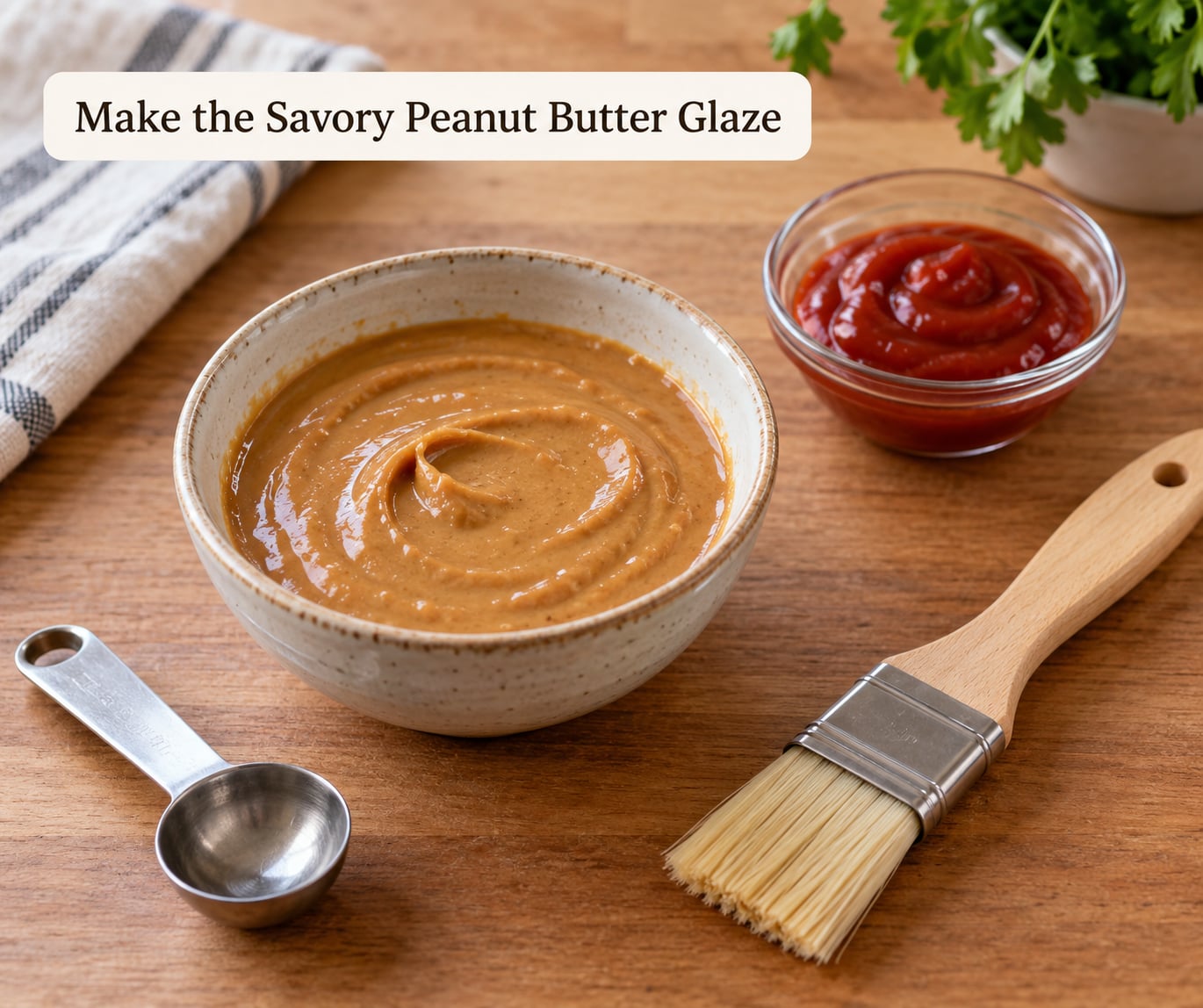
Stir 3 tablespoons of peanut butter with a tablespoon or two of warm water in a small bowl until it loosens into a spreadable, brushable consistency. Ketchup or Worcestershire sauce work in place of the water and add a little tang and savory depth. If you want heat, a teaspoon of sriracha goes in here too.
Think of it as a thick sauce, not a spread. If it pulls into a thick ribbon when you lift the spoon, add another splash of liquid. You want something closer to thick cream than frosting.
Warm the peanut butter in the microwave for 15 seconds beforehand if it is a natural variety straight from the jar. Cold peanut butter will tear the bun top instead of spreading on it.
3. Cook the Patty
For a skillet, set a cast iron pan over high heat until a drop of water skitters and evaporates in a couple of seconds. Add the oil, then the patties. Leave them alone for two to three minutes so a dark crust forms, then flip and cook two to three minutes more. Season the raw side right before it goes in the pan.
For a grill, do the same at full heat with the grates cleaned and oiled. Press the balls flat at the start, close the lid, and expect four to five minutes total for a thin patty. A single smashed patty on a hot grill takes about four minutes; a double-stacked pair takes closer to eight. Moving the patty to an indirect side of the grill after the first flip is how you finish a thicker burger without burning the outside.
If you prefer the oven, set a heavy cast iron or sheet pan under the broiler, sear the patties two minutes per side on the stovetop, then finish at 400°F (205°C) for four to six minutes until the thermometer reads 160°F. An air fryer at 400°F (205°C) runs about seven to nine minutes for a single thin patty, with no sear, so spread a little oil on both sides first.
Watch the temperature more than the clock. A cold patty on a ripping hot pan can char outside while staying cool in the middle, which is exactly what a thermometer is for.
4. Toast the Buns and Prep the Toppings
After the patties come out, wipe the skillet with a paper towel and drop the buns cut side down in the rendered fat for 30 to 60 seconds. That toast is the single best defense against a soggy burger, because the bread surface dries out before the glaze lands on it. Garlic butter works well here too, and it takes about the same effort as the garlic butter for burger buns method.
Slice the pickles and onion while the buns toast. Drain the cooked bacon on paper towels, and pat lettuce dry with a clean towel. Wet lettuce is the other half of the soggy burger problem, so give it a real shake.
Keep the components cold and separate until the moment you build. The glaze goes on only after the buns are out of the pan, and everything gets stacked in the last thirty seconds.
5. Brush, Assemble, and Serve the Peanut Butter Burger
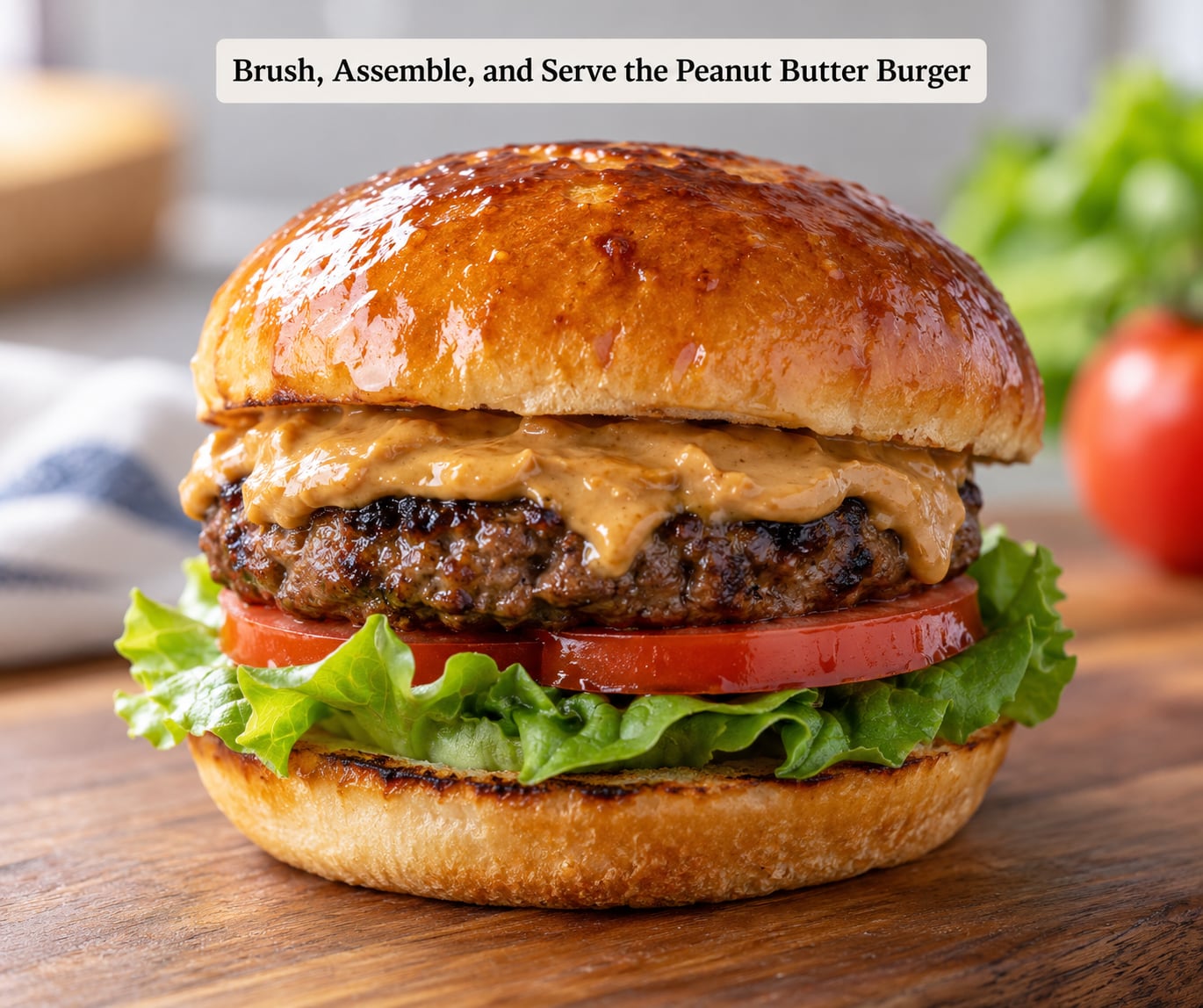
Spread about 1 to 1.5 tablespoons of the warm peanut butter glaze on the cut face of the bottom bun. That is roughly a quarter cup across. Then add the patty, cheese, bacon, and your toppings. If you are using cheese, put it on the patty while the patty is still hot so it melts.
The order that works best is bottom bun, glaze, patty, cheese, bacon, onion, pickles, lettuce, then the top bun with a thin swipe of glaze and a fried egg or jam if you want it.
Serve it immediately, on a plate or a piece of parchment. A peanut butter burger that sits for five minutes is a different sandwich than one eaten at once, mostly because the sauce migrates into the bread.
Cooked ground beef keeps three to four days in the refrigerator, so make the patties a day ahead and sear them fresh. Freeze raw formed patties in a single layer with parchment between them if you batch cook.
Common Mistakes
The burger falls apart in your hands. This is usually warm peanut butter liquifying on top of an already greasy patty. Fix it by using a thin layer, at room temperature or slightly warm, and by letting the patty drain on a rack for a minute instead of a plate.
The bun turns to mush. Toast it. A untoasted bun absorbs sauce in about ten seconds, and no amount of good peanut butter saves it. Warm the spread, keep the layer thin, and assemble last.
The peanut butter is bitter or scorched. You added it before or during the high heat sear. Peanut butter contains sugar, so it burns past dark gold fast. Keep it off the pan entirely and use it only as a spread.
It tastes like candy. You used too much and paired it with something sweet like jelly. Cut back to a tablespoon per burger, add sharp cheddar and pickles, and skip the jam unless you are deliberately making a PB and jelly burger.
The patties cook unevenly. That means they are different sizes or thicknesses, not that your heat is wrong. Weigh them before forming, or follow the dividing method in how to make burger patties all the same size, and press them to the same thickness with the same tool.
The pan steams instead of searing. The pan or the meat was wet, or the pan was not hot enough. Pat the beef dry, preheat fully, and give yourself the full two minutes before the first flip.
A few habits that make repeat batches consistent: season the beef just before it hits the heat, press the patty once and leave it, and start the buns only when the patties are out of the pan. If peanuts are a concern in your house, keep in mind that peanut is one of the nine major allergens in the US, and a dedicated pan, brush, and spatula are worth the habit.
Frequently Asked Questions
Should peanut butter go inside the burger patty or on the bun?
Spread it on the bun, thinly. Mixing peanut butter into the raw beef adds sweetness and moisture but softens the crust, and most of it falls off on the grill. A thin layer on toasted bread keeps the savory patty and the nutty sauce as separate elements, which is the balance the burger depends on.
What type of peanut butter is best for a peanut butter burger?
Creamy peanut butter, ideally a conventional one, is the easiest to work with because it loosens evenly into a glaze and carries more sugar for browning against the beef. Natural peanut butter works too and tastes less sweet, but stir it well and expect to warm it first. Crunchy is fine on top, just not in the glaze.
Can I make the peanut butter glaze ahead of time?
Yes. Whisk the peanut butter with the warm water, ketchup, or Worcestershire and store it covered in the refrigerator for up to three days. Take it out about 20 minutes before you need it, or warm it briefly in the microwave, because cold peanut butter will not spread on a bun without tearing it.
How do I keep a peanut butter burger from being too sweet?
Measure the spread instead of spooning it freehand. About 1 to 1.5 tablespoons per burger is the ceiling for a standard 6-ounce patty. Then lean on salty and sharp toppings: sharp cheddar or pepper jack, bacon, dill pickles, raw red onion, and a hit of sriracha or hot sauce to cut through the fat.
Can I make a peanut butter burger on a grill instead of a skillet?
Absolutely, and the grill gives you the best crust. Set it to full heat, clean and oil the grates, press the beef balls flat at the start, and cook about four minutes for a thin smashed patty or eight for a double stack. Toast the buns in a corner of the grill or on a cast iron pan afterward.
What toppings work best with peanut butter burgers?
Crisp bacon is the classic pairing and most people expect it. Beyond that, choose one crunchy, one sharp, and one fresh: dill pickles, thin red onion, crisp romaine, fried egg, or caramelized onion. A drizzle of sriracha or a swipe of jalapeno jelly works well, and so does a banana or strawberry jam for the PB and jelly version.
Conclusion
Start before the heat goes on. Loosen the peanut butter with a splash of warm water so it spreads like cream, portion four even balls of 80/20 beef, and season them lightly. Then sear hard, toast the buns in the rendered fat, and brush on a thin layer just before you stack.
That sequence is the whole trick. Sear for the crust, toast for the crunch, spread thin for the flavor, and assemble last. You get a peanut butter burger that reads as beef first and peanut butter second, which is how it should taste every time.