
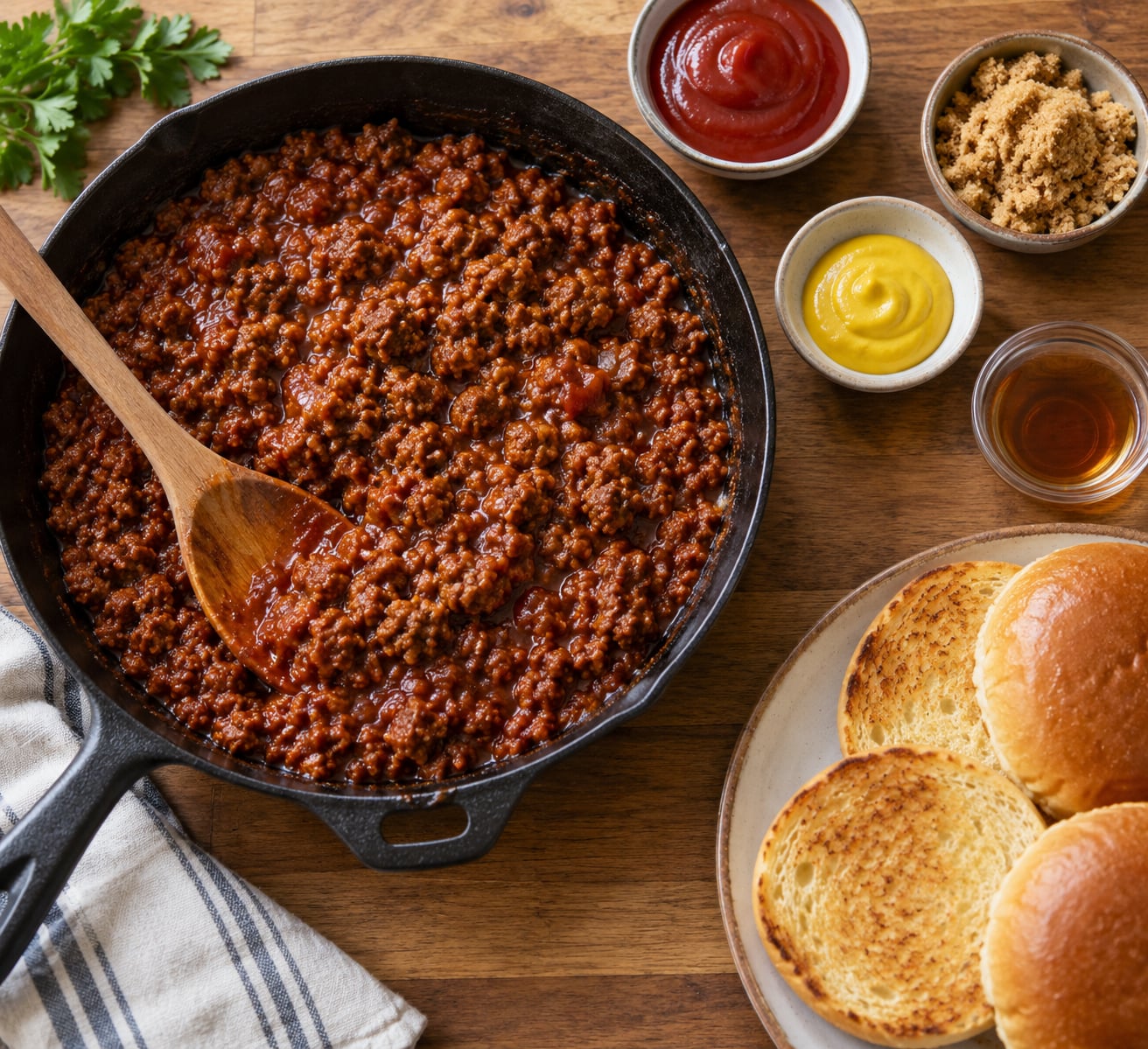
You can make sloppy joes from scratch in about 30 minutes with nothing more than ground beef, ketchup, brown sugar, mustard, vinegar and a handful of spices. Brown the beef in a skillet, drain the fat, pour in the sauce and let it simmer uncovered until it thickens enough to cling to a spoon. Toast the buns, fill them at the last second, and dinner is done.
The canned sauce is fine in a pinch, but it’s heavy on sugar and light on the tang that makes this sandwich taste like more than reheated leftovers. Homemade takes the same amount of time and costs about the same per serving. Once you’ve made it your way, you’ll never go back.
This recipe makes four sandwiches, scales up easily, and freezes well. If you’d rather not cook a pound of beef on a school night, the turkey and lentil swaps at the end work just as well.
What You Need to Make Sloppy Joes From Scratch
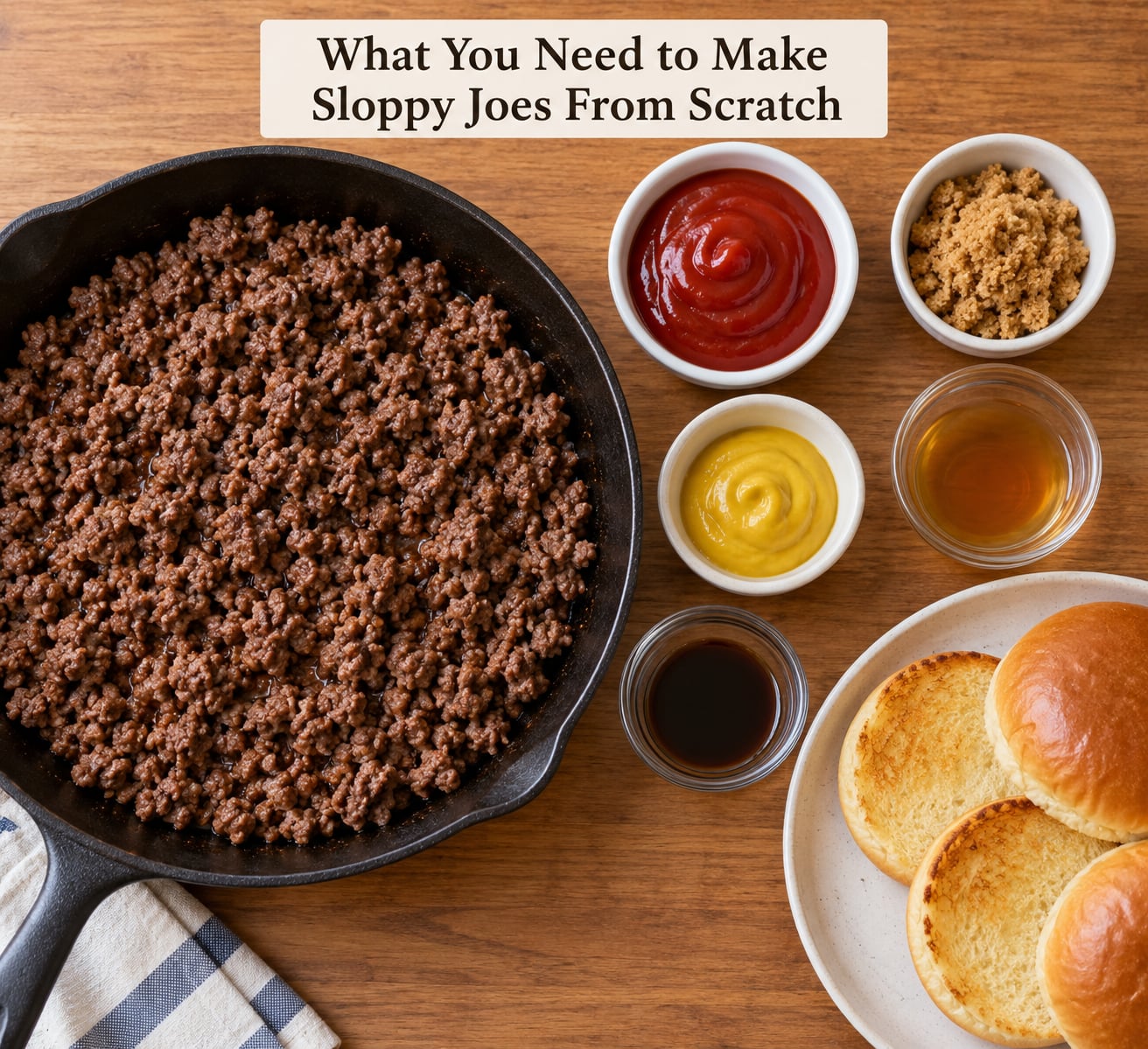
Everything comes from a standard pantry plus fresh ground beef. Measure the sauce ingredients into the bowl before you turn on the heat, because once that beef is browning you’ll be busy breaking it up into crumbles.
For the filling
- 1 pound lean ground beef (85 to 90 percent lean)
- 1 small yellow onion, diced, about half a cup
- 1 green bell pepper, diced
- 2 cloves garlic, minced
- 1 tablespoon olive oil
For the sauce
- 3/4 cup ketchup
- 1/2 cup tomato sauce
- 2 tablespoons light brown sugar
- 2 tablespoons yellow mustard
- 1 tablespoon apple cider vinegar
- 1 tablespoon Worcestershire sauce
- 1 teaspoon chili powder
- 1 teaspoon smoked paprika
- 1/2 teaspoon garlic powder
- 1/4 teaspoon black pepper
- 1/4 teaspoon salt, more to taste
For serving
- 4 hamburger buns, split
- Butter or oil for the cut faces
- Thinly sliced onion, shredded cheddar, dill pickle chips and hot sauce, all optional
Equipment
A 12-inch skillet with straight sides works best, because a shallow pan gives you less room to break the beef up and more drippings to drain. A wooden spoon, a set of measuring cups, and an instant-read thermometer are the rest of what you need. If you like knowing exactly when the beef is done rather than guessing at the color, the thermometer is the single most useful tool in the whole process.
The right beef matters more than any gadget. Ground chuck has enough fat to make the filling greasy, so I go with 85 percent lean and drain whatever renders out; 90 percent works if you want a bit more richness. If you use breadcrumbs in your burger patties, keep in mind that is a different technique: they bind beef into a formed patty, while a sloppy joe filling should stay loose and crumbles.
Step-by-Step: Browning the Beef and Thickening the Sauce
1. Mix the Sauce First
Whisk the ketchup, tomato sauce, brown sugar, mustard, vinegar, Worcestershire, chili powder, paprika, garlic powder, pepper and salt together in a medium bowl until the sugar dissolves.
Taste it with a clean spoon before it ever meets heat, because this is your only chance to adjust. If it tastes flat, add a splash more vinegar. If it’s so sweet you can’t taste the mustard, cut the brown sugar by half a tablespoon and add another teaspoon of mustard. The canned sauce is fixed, which is exactly why so many people find it cloying.
2. Brown the Ground Beef
Heat the olive oil in the skillet over medium-high heat until it shimmers but doesn’t smoke. Add the beef in a single layer and leave it alone for about 2 minutes so it develops some crust, then break it apart with the wooden spoon and continue cooking.
Keep breaking and stirring every minute or so until there’s no pink remaining and the crumbles are about the size of peas. Resist the urge to keep the heat high the whole way through; high heat scorches the beef before the water cooks off, and that’s where the bitter flavor comes from.
If the pan looks greasy, tilt it and spoon off the fat, leaving the crumbles behind. Some home cooks skip this step and let the rendered fat flavor the sauce, which is fine, but lean beef gives you a lot more water than a fatty blend does. Draining it means the sauce thickens on its own instead of turning to mush.
Check the temperature before you drain. Ground beef is safe to eat at 160 degrees Fahrenheit, and an instant-read thermometer takes three seconds to confirm it. If you’d rather not use one, break a piece open and look: no pink anywhere, including in the thickest crumble, and the juices run clear.
3. Simmer the Sauce Into the Beef
Dump the onion, bell pepper and garlic into the skillet and stir them through the beef. Let them cook for 2 to 3 minutes until the onion softens and turns translucent, then pour in the sauce you mixed earlier.
Turn the heat down to a low simmer and leave the lid off. Uncovered is the whole trick: you need steam escaping so the liquid reduces. Stir every minute or two, and give it 10 to 15 minutes.
You’re looking for a thick, glossy mixture that mounds on the spoon without running off. Test it by dragging the back of the spoon through the pan. If the sauce fills in behind the trail right away, it’s done. If it holds a clean channel for a couple of seconds, it’s ready.
4. Toast the Buns and Assemble
Butter the cut faces of the buns and toast them cut-side down in the same skillet for a minute, or under the broiler for 30 seconds. Watch them, because they go from golden to burnt fast.
Spoon the filling onto the bottom halves right before serving, not before. This is the main reason homemade sandwiches get soggy: sauce that has been sitting on bread for ten minutes while everyone finds their seat.
Fill generously, then top with cheese, raw onion, pickles or hot sauce if you like. A bowl of shredded cheddar inside the bun before the beef goes in melts into the filling and holds everything together, which helps with the messiest eaters.
Need better buns? Homemade burger buns take about an hour of mostly waiting and beat anything from a bag.
Common Mistakes and How to Fix Them
The filling is watery and won’t stick to the bun. You either didn’t drain the pan or you simmered it covered. Drain the fat, take the lid off, and give it another 5 minutes over medium heat. If it’s still loose at the end, simmer it without the beef for a couple of minutes, then fold the beef back in.
It tastes sweet and you wanted savory. You probably doubled up on ketchup and tomato sauce, which are both sweet. Cut the brown sugar first, then add vinegar or mustard, since acid and sharpness cut sweetness faster than more spice does.
The filling is bland. Almost always under-seasoned beef, not a bland sauce. Salt the meat as it browns, not at the end. A pinch of red pepper flakes or a spoonful of pickle juice in the sauce also sharpens it noticeably.
The bottom bun falls apart. The filling was too hot or too wet when it went on. Let the skillet sit for a minute after draining, and toast the buns so they have a sealed surface. Some people cut the bun into a pocket without splitting it fully, which keeps the filling contained.
The beef is dry and chewy. It got overcooked, usually from high heat and too much stirring. Use 85 percent lean rather than 93, and stop breaking it up once the water is gone. The sauce’s fat and sugar will take care of moisture from there.
The vegetables are mushy. You added them too early or cooked them with the beef the whole time. Give them two minutes in the pan with the meat, no more, so they soften without collapsing.
Make-ahead, freezing and scaling
The filling freezes well and keeps about 2 to 3 months in the freezer. Cool it completely first, press out the air, and leave a finger of room at the top of the container for expansion. Reheat from frozen in a covered pot over low heat with a splash of water, stirring, until the sauce loosens and steams. Microwaving dries it out, which is the complaint you see most often in leftovers.
Refrigerated, the filling keeps 3 to 4 days in the fridge, and you should refrigerate it within two hours of cooking. Reheat covered so the steam stays in.
For a crowd, the sauce scales cleanly: double the sauce and use 2 pounds of beef, but brown the meat in two batches so the pan stays hot. A full skillet cools too much, and then the beef steams instead of browns. Each batch takes about 6 minutes, so a big pot of sloppy joes is roughly a 45 minute job.
Variations worth trying
Swap the beef for ground turkey and add an extra teaspoon of the chili powder and smoked paprika, since turkey is blander. Lentils or a meatless crumbles mix work too, and neither needs the 160 degree wait. If you’re cutting sugar, swap in a tablespoon of molasses for depth, or use a low-sugar ketchup.
A tablespoon of pickle relish stirred into the sauce makes it taste like a diner version, two tablespoons of barbecue sauce turn it into a BBQ sloppy joe, and a cup of crushed pineapple stirred in at the end makes a Hawaiian one. For the slow cooker, set it to low for 4 to 6 hours and add the sauce only after browning the meat in a skillet first, otherwise you end up with grey crumbles in watery sauce. Want the meatless version done properly? Veggie burgers from scratch cover the seasoning base.
Frequently Asked Questions
Can I make sloppy joes with turkey instead of ground beef?
Yes, and the sauce barely changes. Use ground turkey, and brown it the same way you would beef. Because turkey is leaner and milder, add an extra teaspoon of chili powder and smoked paprika to the sauce, and season the meat with salt while it cooks rather than after. Skip the draining step since turkey renders less fat. Cook it to 165 degrees Fahrenheit for food safety, since it is poultry.
What sauce is best for sloppy joes made from scratch?
Ketchup plus a splash of brown sugar, yellow mustard and apple cider vinegar is the base that tastes most like a diner. Tomato sauce adds body and color, Worcestershire adds savory depth, and smoked paprika and chili powder keep it from tasting like plain ketchup. The important part is that you taste the sauce before cooking it and adjust the sugar and acid until the sweetness balances.
Can homemade sloppy joes be frozen and reheated?
Yes. Cool the filling completely, press out the air, and freeze it in a container with room for expansion. It keeps about 2 to 3 months. Reheat it covered over low heat with a splash of water, stirring until the sauce loosens, which takes about 10 minutes from frozen. Warming it in a microwave without a cover is the fastest way to end up with dry beef.
How do I keep sloppy joe sandwiches from getting soggy?
Toast the cut faces of the buns, fill them right before serving rather than ahead, and let the filling cool for a minute off the heat so it does not soak through. Toast the buns to cut side down in the skillet with a little butter so they form a sealed surface. Putting a slice of cheese in the bottom of the bun also blocks moisture from reaching the bread.
How do I know when sloppy joes are fully cooked?
Ground beef is safe to eat at 160 degrees Fahrenheit, and an instant-read thermometer confirms it in three seconds. Without a thermometer, break the largest crumble open and check that no pink remains, including in the center, and that the juices run clear rather than pink. Then simmer the filling 10 to 15 minutes more, which both finishes the cooking and thickens the sauce.
Conclusion
That is the whole recipe. Mix the sauce first and taste it, brown the beef and drain the fat, simmer everything uncovered until it mounds on a spoon, then toast the buns and fill them right before you sit down.
Thirty minutes, four sandwiches, and a filling that is better than anything from a can. Once you have it down, the variations are only a tablespoon or two apart from the original.