
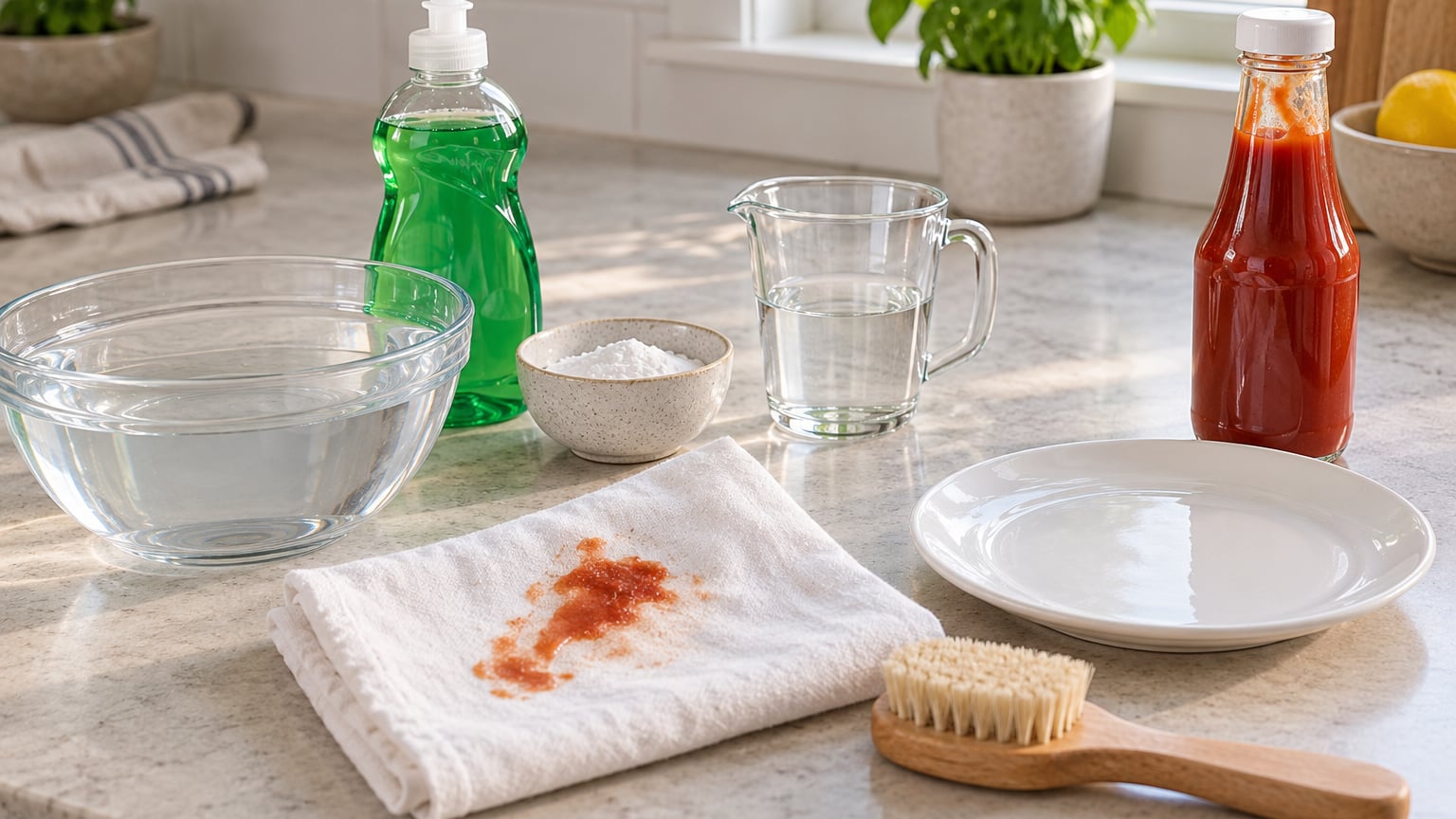
Most ketchup stains come out if you catch them early: lift the sauce off with a spoon, flush the fabric from the back with cool water, work a little dish soap or liquid detergent into what’s left, give it 5 to 10 minutes to sit, then wash per the care label and air dry so you can check the result. Ketchup is water-soluble, so speed and cool water decide the outcome more than the cleaner you use.
I have ruined more shirts with hot water than with any bad choice of cleaner. That is the part worth remembering before you read the rest: heat is the enemy at every stage, and a stain that never got dried is almost always recoverable.
What You Need
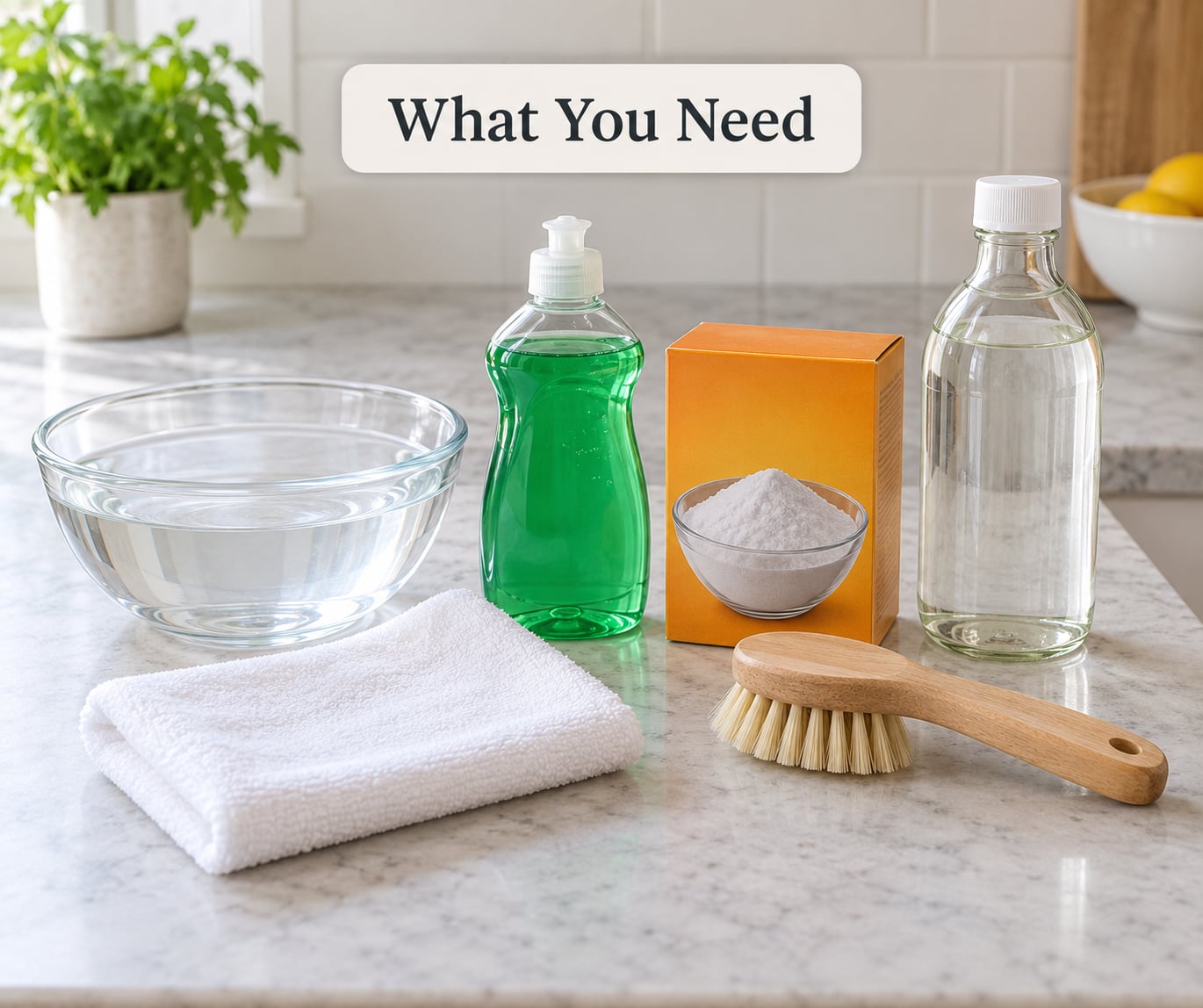
You do not need a dedicated stain product. Everything that reliably works is already in the kitchen or next to the washing machine, and most of it costs nothing to try.
- Cool water. Not warm, not hot. This is the one supply you cannot substitute.
- A dull knife or spoon to lift the wet sauce off the fabric before it soaks in.
- Clean white cloths or paper towels for blotting. Cotton lint-free cloths work best on upholstery.
- Mild dish soap, which attacks the oily, sugary part of the stain. Optional if you only have laundry detergent.
- Liquid laundry detergent and, for stubborn marks, an oxygen bleach such as OxiClean. Optional but useful.
- White vinegar for diluting into a 1:1 solution. Optional.
- Baking soda for a mild abrasive paste. Optional.
- A soft-bristled brush, an old toothbrush, or a soft sponge for carpet and sturdy table linens.
- A shallow bowl or basin and an old towel to lay the garment on while you work.
Two of those are optional in a meaningful sense: vinegar and baking soda are backups, not first moves. If the stain is fresh, dish soap or liquid detergent alone is usually enough.
Before you use anything, check the care label. Anything marked dry-clean only, hand wash or delicate should not get soaked, and peroxide or vinegar should always be spot-tested on an inside seam first, because both can fade a dye you cannot see yet.
Step-by-Step
How to remove ketchup stains from clothing with cold water
Hold the stained spot under cool running water and flush it from the back of the fabric. Water pushed forward drives the pigment deeper; water pushed backward pulls it out of the fibers.
Work in this order:
- Lift the excess. Use the back of a spoon or a dull knife, moving in one direction. Do not scrape hard and do not rub, because rubbing grinds the pigment into the weave.
- Flush from the back. Turn the garment inside out if you can and run cool water through the stain for a minute or two.
- Blot, never scrub. Press a clean white cloth onto the wet area and lift it away. Repeat with a fresh patch of cloth.
- Check before you add anything. A lot of fresh stains disappear at this stage. If a shadow remains, move to the detergent method.
You will know it worked when the wet fabric shows no color transfer on the cloth and no orange shadow when it is held to the light. Timing matters here more than anything else: this method loses its power within hours.
How to remove ketchup stains with detergent and baking soda
For a stain that survived the cold water flush, saturate the area with liquid laundry detergent and let it sit 5 to 10 minutes. That waiting period, sometimes called dwell time, is what lets the surfactant get to the sugar and oil; scrubbing it in immediately and rinsing it straight away just wastes it.
For more stubborn marks, mix baking soda with a splash of water into a thick paste and spread it over the damp stain. Leave it 10 to 15 minutes, then rinse with cool water and launder on the warmest temperature the care label allows.
Work the cleaner from the outer edge of the stain toward the middle so you do not push the pigment outward into clean fabric. Use a toothbrush on knits and woven cottons if the pile has caught the sauce, but keep it light on anything ribbed, sheer or lined.
The sign it worked is simple: after washing, the garment comes out with no orange cast when dry. Always air-dry first and inspect in daylight. A stain that looked gone while damp can reappear as the fabric dries, and that is the moment to re-treat rather than tumble-dry.
How to remove ketchup stains with vinegar
Dilute white vinegar 1:1 with cool water, then apply it with a cloth or soft brush to the stained area and blot. Let it sit about 10 minutes, rinse thoroughly with cool water, then treat with detergent and launder as normal.
Spot-test first. Vinegar is mild, but on some dyed fabrics, particularly rayon, silk blends and anything marked dry-clean only, it can shift or dull the color. Skip it entirely on wool and on protein fibers such as silk, where acid can weaken the fiber.
Vinegar is a supporting player here, not the main act. On its own it does little against the oily part of ketchup, which is why so many people end up disappointed after a round with vinegar and a full wash cycle. It works best after the detergent soak, on a stain that is already mostly clean.
How to remove ketchup stains from a table or countertop
Hard surfaces are the easy case, and speed still matters. Lift the ketchup with a spoon, blot the residue with a damp cloth, then wash the area with warm water and a drop of dish soap.
Rinse with a clean damp cloth to remove the soap film, and dry it right away so no ring forms. On laminate and sealed wood this is the whole job. On stone counters, check that your soap is pH-neutral, since dish soap used repeatedly dulls the finish.
On fabric tablecloths and napkins, treat them like clothing: scrape, rinse from the back with cool water, work in detergent, wash on the warmest safe setting, and air-dry flat. Cotton and linen hold tomato pigment better than synthetics, so white linens need a longer soak and a second round of detergent before you give up.
For a plastic tray, a cutting board, or the base of a ketchup bottle, a paste of baking soda and water scrubbed gently with a non-scratch pad usually takes it right off. On unsealed wood, wipe with a barely damp cloth and treat with a food-safe oil afterward.
How to remove dried ketchup stains from clothes
A dried stain needs re-wetting before anything else works. Soak the area in cool water for 15 minutes, or hold it under a slow stream until the fabric is soft again. Pretreat on damp, never on dry, fabric.
Then run the strongest safe treatment the fabric allows:
- Re-wet the stain, then work in liquid detergent with a little baking soda paste. Allow 15 minutes of dwell time.
- For white cotton and other colorfast whites, soak a laundry-safe oxygen bleach in cool water for 30 to 60 minutes, following the product label.
- For colors and synthetics, the 2 parts hydrogen peroxide to 1 part dish soap mix, applied and allowed to sit 10 to 15 minutes, is the option people find most useful. Test it on an inside seam first.
- Wash on the warmest safe temperature, air-dry, check in daylight, and repeat the cycle once more if a shadow remains.
If the garment already went through a dryer, treat it as a salvage job. Heat drives the pigment into the fiber and locks it there, so expect a partial recovery, not a full one. Repeat the treatment two or three times, and if the mark fades to a shadow that will not move, that is usually as far as it goes.
Tomato sauce, marinara, pizza sauce, chili and spaghetti sauce follow the same rules, with one caveat: darker, cooked-down sauces carry more pigment and need a longer soak. A batch of homemade ketchup made with fresh tomatoes stains the same way, just usually less deeply.
Common Mistakes
Almost every ruined ketchup stain traces back to one of six moves. Each has a simple correction.
Rubbing the stain. Friction grinds pigment deeper into the fiber and spreads it into clean areas. Blot with a clean cloth instead, pressing and lifting, and never use a brush on silk, rayon, wool or anything with a loose weave.
Hot water. Hot water sets a tomato stain chemically and also helps protein residues bond to the fiber. Use cool or cold water for every rinse and flush, even when the care label allows a hotter wash. The wash can be warm; the flush that dissolves the pigment should not be.
Dryer heat before checking. This is the single most expensive mistake, because it converts a recoverable stain into a semi-permanent one. Air-dry flat or on a rack until the fabric is fully dry, then look at it in daylight.
Delaying treatment. Ketchup is water-soluble and stays workable for days as long as it has not been dried. An hour-old stain flushed with cold water is an easy job; a two-day-old dried one takes an hour of soaking and may still leave a shadow.
Untested acidic or harsh products. Vinegar, lemon juice and peroxide are mild acids and oxidizers, and they can fade colors and weaken protein fibers. Spot-test on an inside seam, and keep chlorine bleach off anything that is not pure white cotton.
Spraying upholstery heavily. Overspraying a couch leaves a wet-looking ring that can take hours to fade and often draws out more soil from the padding beneath. Work a damp cloth or a foam applied sparingly, and dry the area with a fan.
Prevention is dull and effective: use a washable tablecloth, keep a stack of paper napkins within reach, and launder aprons and napkins after every grilling session rather than letting them dry with sauce on them. For greasy stains on clothing, see our guide to removing grease stains from clothes, which pairs well with this one after a cookout.
Frequently Asked Questions
Does Dawn dish soap remove ketchup stains?
Yes, and it is the most recommended pretreatment in cleaning communities. Dish soap contains surfactants that surround the oily, sugary film in ketchup and lift it off the fiber during a rinse. The catch is that it does little against the orange tomato pigment, which is why a faint shadow often remains. That is where hydrogen peroxide or an oxygen bleach soak comes in. Apply, wait 5 to 10 minutes, then wash.
Are ketchup stains permanent?
Not permanently, but a heat-set one is only partly recoverable. Ketchup that has never been dried comes out almost completely with cool water and detergent. Once the garment has been through a dryer or an iron, the pigment locks into the fiber and you are usually looking at a faded shadow rather than a clean patch. Several treatment cycles may lighten it further, but full removal is no longer realistic.
Can I get ketchup out of clothes without washing the whole garment?
Yes for a small fresh mark. Lift the excess, blot from the back with cool water, work a drop of dish soap into the damp spot and wait 5 to 10 minutes, then rinse and blot until the cloth shows no color. Air-dry the area and check it in daylight. This works well on table napkins and shirts you need to wear that evening, but it is not enough for an old dried stain.
How do I remove a dried ketchup stain from carpet or a couch?
Scrape off the dried residue gently, then blot from the outside of the stain inward with a cloth barely dampened with cool water. Dilute white vinegar 1:1 with water, dab it on, and let it sit 10 minutes before blotting again with a clean damp cloth. Avoid heavy spraying, which can leave a ring and push soil into the padding. Speed drying with a fan, and check the furniture care tag first.
Is vinegar safe for colored clothes and delicate fabrics?
On most colorfast cottons and synthetics, diluted vinegar is safe and mildly helpful. Spot-test it on an inside seam and wait a few minutes to see if the color shifts before you apply it broadly. Skip vinegar on wool, silk, rayon and anything labeled dry-clean only, since acid can weaken protein fibers and dull the finish. On those fabrics, dilute dish soap or a laundry-safe oxygen bleach is the safer choice.
Conclusion
Start by lifting the ketchup and flushing the fabric from the back with cool water, then use the gentlest method the material can take: dish soap or liquid detergent for a fresh mark, baking soda or oxygen bleach for a dried one, and vinegar only where the fabric and dye can handle it. Check the item in daylight before it ever reaches a dryer, because cool water and time do almost all of the work and heat is what ruins it.
Last reviewed for 2026.