
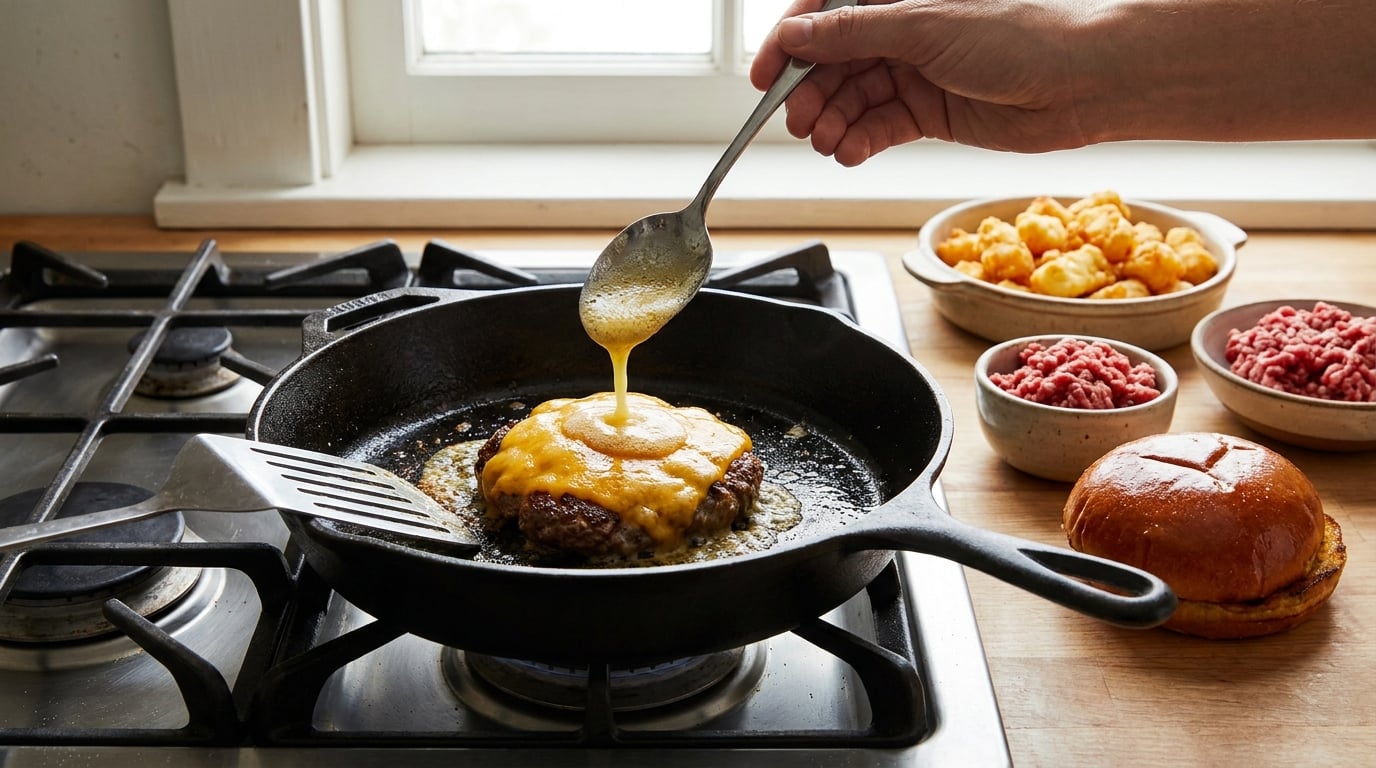
A Wisconsin butter burger is a ground beef patty seared hard in a buttered skillet, finished with American cheese and buttery sautéed onions, and served on a soft bun slathered with butter until glossy. To make one at home you need 80/20 ground chuck, a heavy skillet, salted butter, and about 30 minutes from fridge to table.
The real thing is a greasy-spoon sandwich from Milwaukee and Green Bay, the kind Solly’s Grille, Kopps, and Krolls West built their reputations on, and the version most people are chasing at home is the Culver’s ButterBurger. Those two are close relatives, not the same burger, and I cover the difference below.
Nothing in this method is difficult. The whole thing is really about three things: even patties, a properly hot pan, and patience for about three minutes before you touch the beef. It serves four, and it is the most reliable dinner I make when I have fifteen minutes of attention to spare.
Table of Contents
- What You Need
- Step-by-Step: How to Make a Wisconsin Butter Burger
- Frequently Asked Questions
- What kind of ground beef works best for a Wisconsin butter burger?
- Should the butter be mixed into the meat, or added in the pan?
- How do I keep the butter from burning while cooking the burger?
- What cheese works best on a Wisconsin butter burger?
- How long should I cook a burger made from ground beef?
- Can I make Wisconsin butter burgers on a grill or griddle?
- Conclusion
What You Need
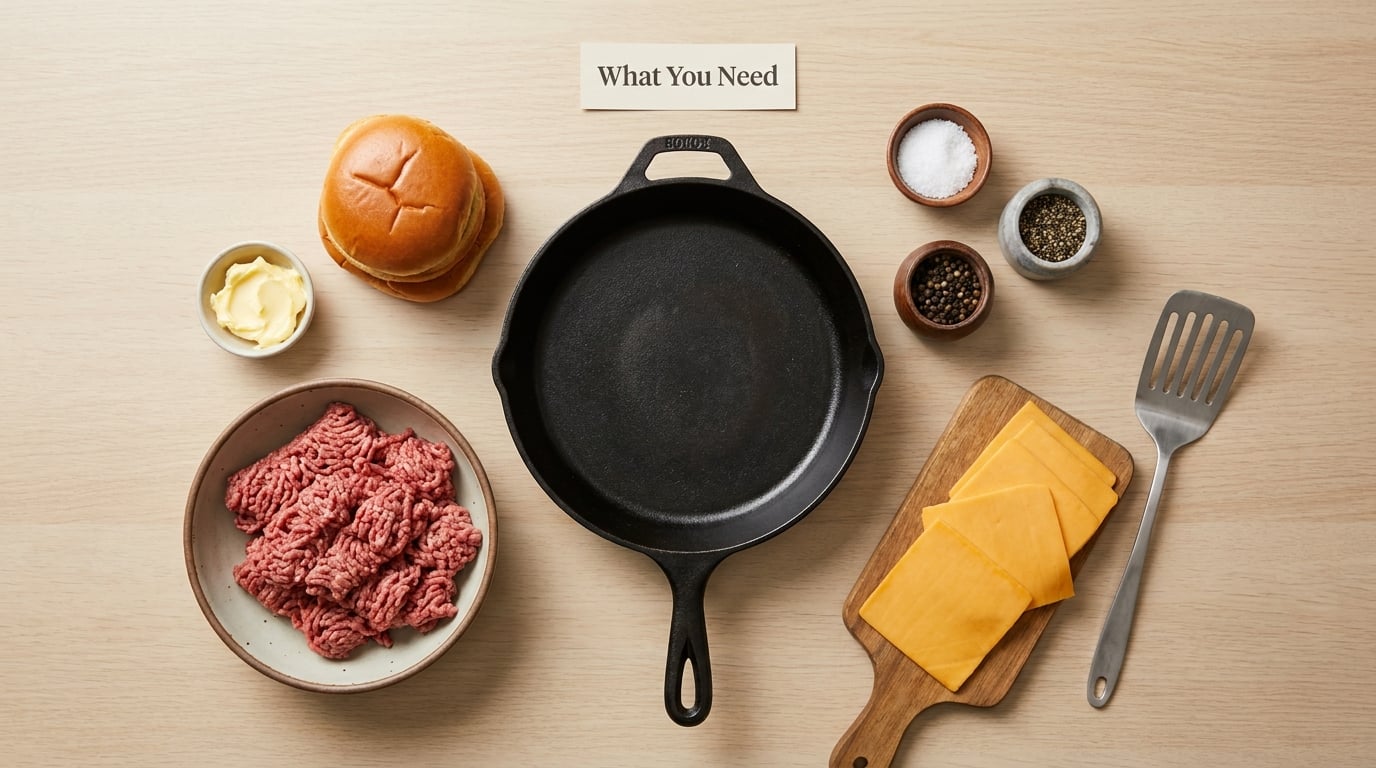
Butter is the ingredient most home cooks get wrong, because it shows up in three separate places and each one wants a different amount.
- Ground beef: 1.5 to 2 pounds 80/20 ground chuck. Eighty percent lean is the sweet spot. Leaner beef plus a full stick of butter turns dry, and fattier beef plus butter turns greasy.
- Salted butter: 8 tablespoons total, divided. 2 tablespoons for the skillet, 2 tablespoons melted over the patties, 1 tablespoon for the onions, and 2 tablespoons per bun top for four buns.
- Onion: 1 medium sweet onion, thinly sliced.
- Cheese: 4 slices American cheese. Sharp cheddar works if you like more bite.
- Buns: 4 soft potato rolls or bakery hamburger buns. Nothing denser than a potato roll holds up to this much butter.
- Seasoning: Kosher salt, coarse black pepper, and a thin line of yellow mustard on the patty tops.
- Optional: dill pickle slices, a splash of water for the onions, and a small handful of fried cheese curds on the side.
For equipment, a 10 or 12 inch cast iron skillet is the one tool that matters. Its mass holds heat long enough to brown the beef before the butter has a chance to scorch, and a stainless pan will not. A wide metal spatula matters too, since you need to get under the patty in one motion. An instant-read thermometer is optional but it takes the guesswork out of doneness entirely.
Give yourself about 15 minutes of prep and 10 to 12 minutes of cooking. If you only have one skillet, toast the buns in the same pan after the patties come out, since the butter and beef fat left behind will glaze them nicely.
Step-by-Step: How to Make a Wisconsin Butter Burger
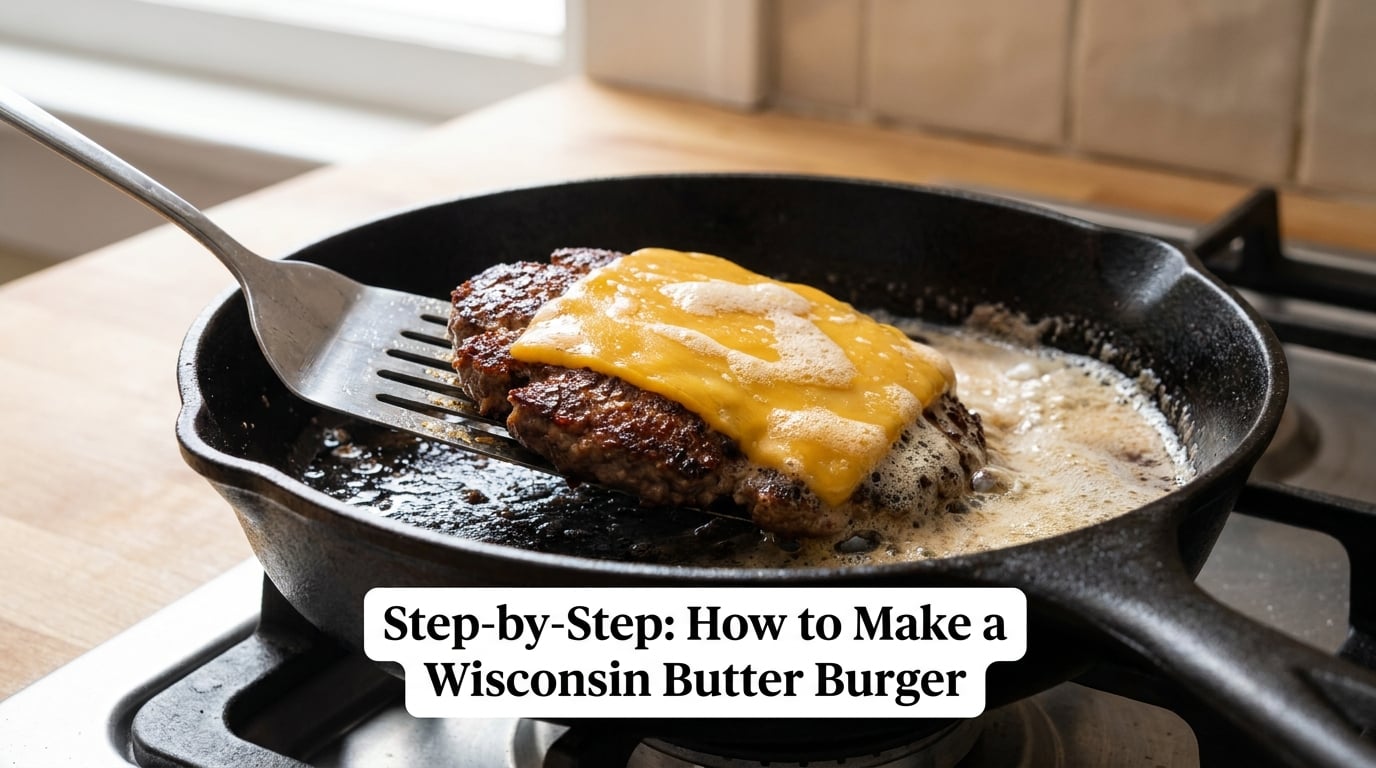
Five steps, in this order, produce a burger with a dark crust, melted cheese, soft onions, and a bun that is buttery instead of soggy. Read it through once before you start, because two of the steps have to happen while the beef is cooking and cannot be rushed.
Step 1: Prepare the Beef and Buns
Divide the beef into four loose balls and leave them in the fridge for 15 minutes while you do everything else. Cold beef sears; room-temperature beef steams and sticks. Then pat each ball into a patty about a quarter inch thick and slightly wider than your bun.
Handle the meat as little as possible. A few gentle presses to flatten is plenty, and working it more makes a dense puck that never browns properly. Season both sides with salt and pepper, and spread a thin line of yellow mustard across the top of each patty right before it hits the pan.
For the onions, melt 1 tablespoon of butter in the skillet over medium heat, add the sliced onion with a splash of water, cover, and cook for 4 minutes. Take the lid off, turn the heat up, and cook 4 to 6 more minutes until the water is gone and the edges are brown. Salt them at the end.
Step 2: Brown the Burger on the First Side
Get the skillet properly hot first, then add the butter. Heat the empty pan over medium-high for about 90 seconds until you feel warmth radiating upward, add the 2 tablespoons of butter, and let it foam but not brown.
Lay the patties down away from you and then step back. Cook them for 3 minutes without touching them at all. Pressing, moving, or peeking releases juice and is the single most common reason a home butter burger comes out grey and dry.
You will know the first side is ready when the underside is deep brown and the patty releases from the pan with almost no force. If it sticks, it needs another 30 seconds, not a spatula.
Step 3: Add Butter and Cook Through
Flip the patties with a thin edge of the spatula, scrape up the brown bits, and melt the remaining 2 tablespoons of butter into the pan. Tilt the handle and spoon the foaming butter over the tops of the patties for about 20 seconds.
That butter bath is the actual Wisconsin move. It seasons the crust, adds richness, and gives you the glossy finish that a plain seared burger never has. Cook the second side for 2 to 3 minutes, depending on thickness.
Ground beef is safe at an internal temperature of 160°F, or 71°C, and that is the number I cook to for this style. Press an instant-read thermometer into the thickest part of a patty without touching the pan, and pull the burgers at 160°F. Most people who eat them this way prefer 160 to 165°F, which still reads as juicy because of all the butter.
Step 4: Add Cheese and Toast the Buns
Add a slice of American cheese to each patty the moment it comes off the heat. Residual heat melts it in 20 to 30 seconds, and cheese that sits in a hot pan for longer turns rubbery and sometimes scorches.
Butter the bun tops now and toast them cut-side down in the same skillet for 30 to 45 seconds until the cut surface is golden and smells like toast rather than raw bread. Pull them off while the inside stays soft.
Toppings should be dry. Pickles, raw onion, or shredded lettuce are fine. Skip mayonnaise, tomato slices, and any sauce that drips, because they turn a buttered bun to glue within a minute.
Step 5: Assemble and Serve Your Wisconsin Butter Burger
Stack it in this order: bottom bun, cheese and patty, buttery onions, dill pickles if you like them, and then the buttered top bun. If you want the most authentic version, set a small cold pat of butter on the hot patty before the onions go on and let it melt for 20 seconds.
Eat these within a minute of assembly. That is not a serving suggestion, it is the whole point. The butter soaks the bun, the onions are still hot, and the cheese is still soft.
Let the patty rest for 2 minutes before serving if you cut it in half, so the juices settle instead of running out across the plate. Otherwise, plate them straight up with fries, fry sauce, onion rings, or a plate of fried cheese curds.
Common Mistakes and How to Fix Them
- The bun goes soggy. Butter the tops within a minute of assembly, not while the patties are still cooking. Butter melts and soaks fast, and a bun buttered ten minutes early is a wet bun.
- The butter burns. Add it after the pan is already hot, and use medium-high rather than screaming high. If it browns before the beef goes in, the pan was too hot and the butter was too old. Wipe the pan and start over.
- The patty splits or falls apart. It was too thick or too warm. Chill the beef, keep patties a quarter inch thick, and make sure the pan is hot enough to sear the whole surface at once.
- The burger tastes bland. Season both sides, not just the top, and add salt to the onions at the end when their water has cooked off.
- The beef turns dry. Stop pressing it. Any pressure at all squeezes moisture out, and a 90/10 patty has almost none left to lose.
- You crowded the pan. Cook in two batches if you must. Four patties in a 10 inch skillet drop the temperature enough to steam them instead of browning them.
Two small upgrades pay off every time. A pinch of smoked paprika or garlic powder in the beef gives the whole burger a smokehouse edge, and toasting the buns in the beef fat left in the skillet after the patties come out costs nothing and adds a layer most home versions miss.
Frequently Asked Questions
What kind of ground beef works best for a Wisconsin butter burger?
Ground chuck at 80 percent lean is the best all-around choice. It has enough fat to stay juicy through a hard sear, and the added butter on top handles the rest. If you buy 90/10, the burger is noticeably drier because there is little fat left to render. Very fatty 75/25 blends work but the finished burger can feel heavy once butter and cheese are on it.
Should the butter be mixed into the meat, or added in the pan?
Add it in the pan, not in the meat. Mixed-in butter melts away during cooking and leaves you with a bland patty and a greasy pan. The Wisconsin method keeps the four uses separate: butter in the skillet to start the sear, butter spooned over the patty mid-cook, butter for the onions, and a thick layer on the bun top right before serving.
How do I keep the butter from burning while cooking the burger?
Heat the skillet empty over medium-high for about 90 seconds, add the butter, and lay the patties in as soon as it foams. Butter browns fast once the pan is fully hot, so giving it a long empty window is what causes the smoky, bitter flavor people complain about. If it starts to brown before the beef goes in, pull it off the heat for a moment or wipe the pan and begin again.
What cheese works best on a Wisconsin butter burger?
American cheese is the traditional pick because it melts smooth, stays soft, and its mild saltiness balances the butter rather than competing with it. Sharp cheddar gives you more flavor if you want it, though it can turn grainy if it sits on the patty too long. Put the cheese on after the patty leaves the heat and let residual warmth do the work for 20 to 30 seconds.
How long should I cook a burger made from ground beef?
About 3 minutes on the first side undisturbed, then 2 to 3 minutes on the second for a patty cooked to the USDA minimum of 160°F, or 71°C. Add 30 to 45 seconds per side for a thicker patty. Pushing, flipping, or pressing the beef during those minutes is what dries it out, so set a timer and leave the pan alone.
Can I make Wisconsin butter burgers on a grill or griddle?
Yes, and a flat top is the most authentic setup. Run a griddle to medium rather than high, add the butter once the surface is hot, and let it brown the buns instead of burning. The key difference from a skillet is that a griddle holds heat evenly, so you can cook the buns and the patties at the same time. On a charcoal grill, sear the patties over direct heat and toast the buttered buns over the same fire.
Conclusion
Start with three things: evenly sized quarter-inch patties from 80/20 chuck, a properly preheated cast iron skillet, and three full minutes on the first side before you touch the beef. Everything after that is butter, patience, and assembly speed.
Once you have the crust right, change the cheese or the toppings freely. American and sharp cheddar both work, pickles and onion keep the bun dry, and a malt on the side is not a bad idea. Just keep the patty crisp and cook it to 160°F, and the rest is preference.