
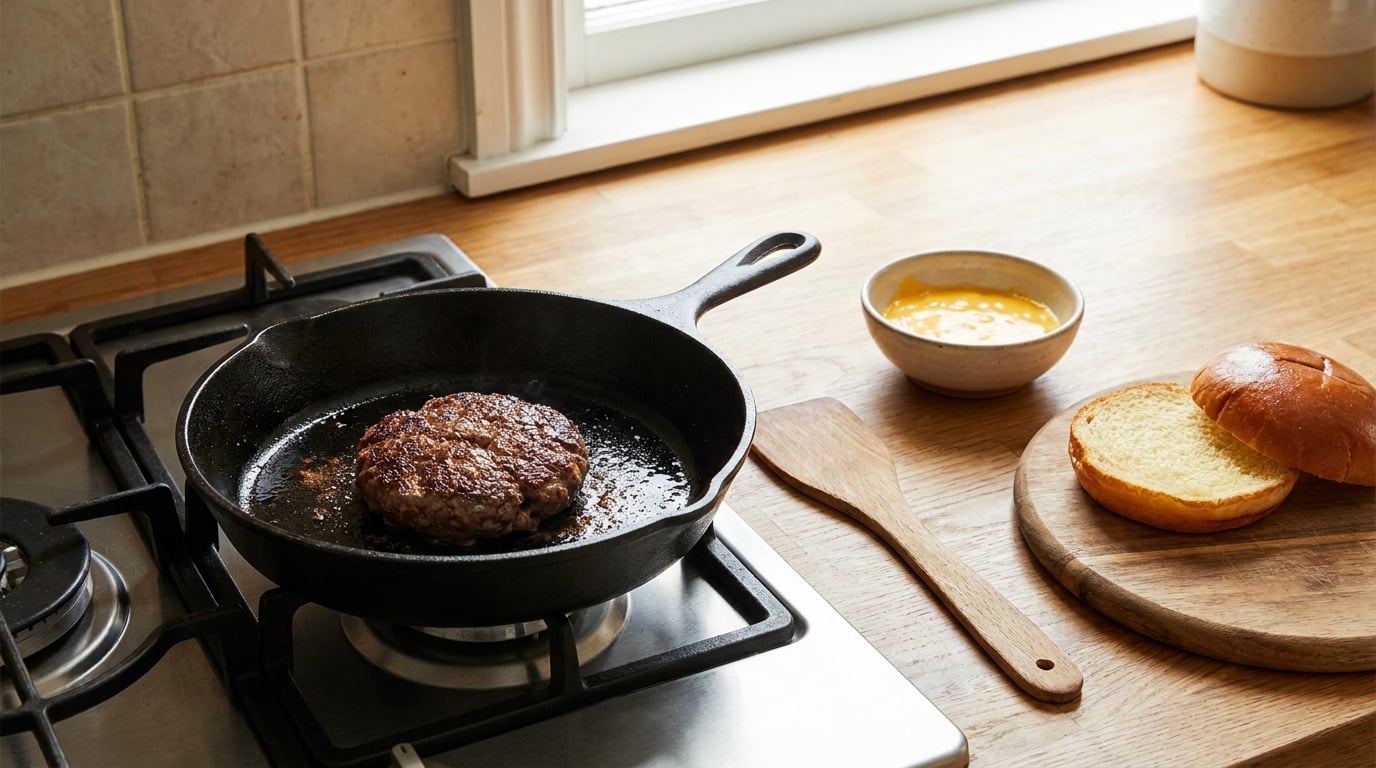
The best way to reheat leftover burgers so they stay juicy is to take the burger apart and warm the patty on its own in a cast iron skillet over medium heat, with a splash of water or beef broth and a lid on. Add cheese in the last minute and toast the bun separately. It takes about five minutes of attention and beats a microwave, which leaves the edges rubbery and the center cool.
The microwave is faster, but speed is the wrong thing to optimize here. Ground beef is dense and reheats quickly, so the patty spends most of the reheating window pushing water out of itself. Gentle, covered heat buys you back the moisture you already lost.
Table of Contents
- What You Need
- Step-by-Step: How to Reheat Leftover Burgers So They Stay Juicy
- Common Mistakes
- Frequently Asked Questions
- What is the best way to reheat a leftover burger patty?
- How long does it take to reheat a leftover burger?
- Is it safe to reheat burgers in the microwave?
- Should I heat the burger bun, and how do I avoid a soggy one?
- Can I reheat a frozen leftover burger patty without thawing it first?
- What are the most common mistakes when reheating burgers?
- Conclusion
What You Need
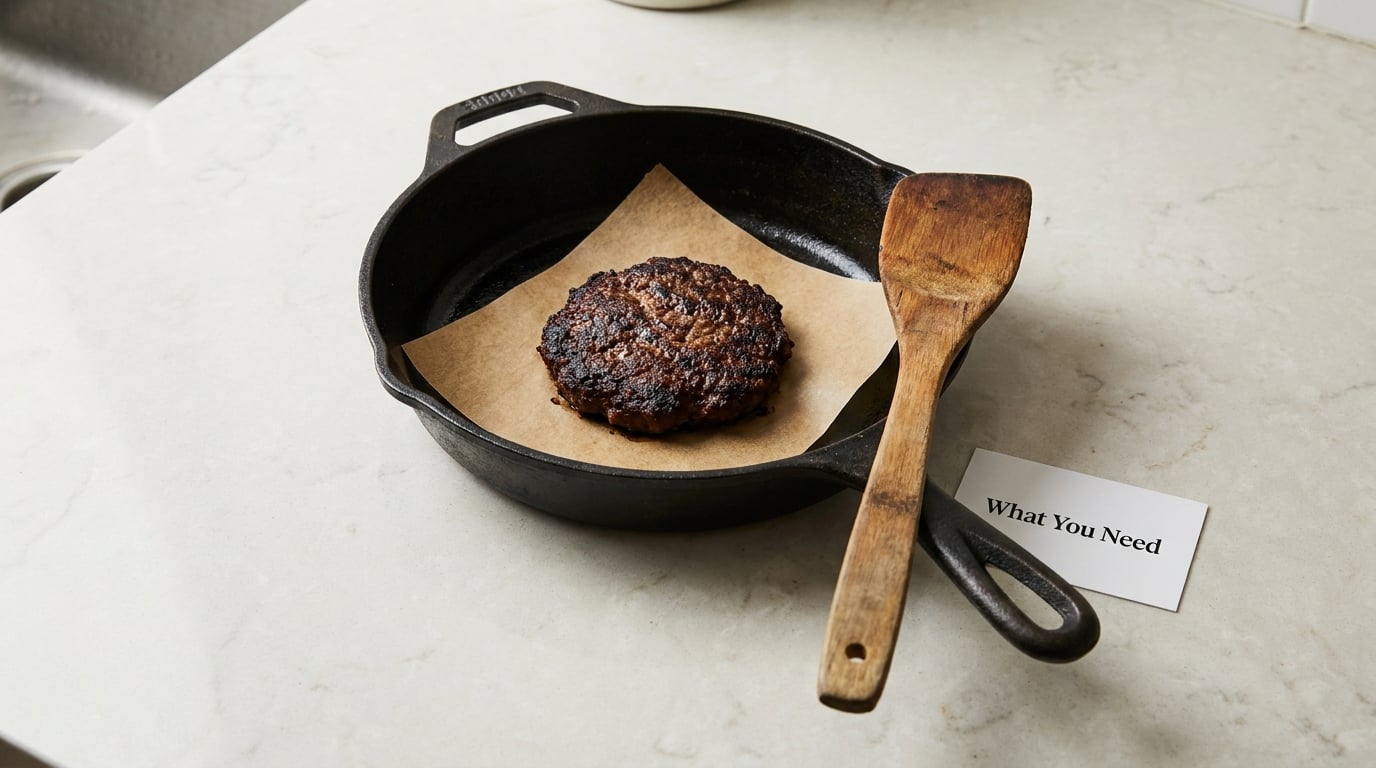
Most of this method list is equipment you probably already own. The one item worth buying if you cook a lot of burgers is an instant-read thermometer, because reheating is the one cooking task where the clock genuinely lies to you.
- Cast iron skillet or heavy nonstick pan for the stovetop method, plus a wooden spatula or tongs.
- Instant-read thermometer to confirm the patty center reaches 165°F (74°C) without overcooking it.
- Water or low-sodium beef broth for the splash that keeps the patty from tightening up.
- A lid that fits the skillet, or a sheet of foil, to trap steam for the first minute.
- Parchment paper or foil and a rimmed baking sheet for the oven method, plus a wire rack if you own one.
- Air fryer if you have one, for the fastest crisp patty.
- Cheese, sauce and fresh toppings to add after the patty is hot. A slice of American, Swiss or cheddar, plus butter for the bun.
- Paper towels for the microwave method and for draining rendered fat.
Step-by-Step: How to Reheat Leftover Burgers So They Stay Juicy
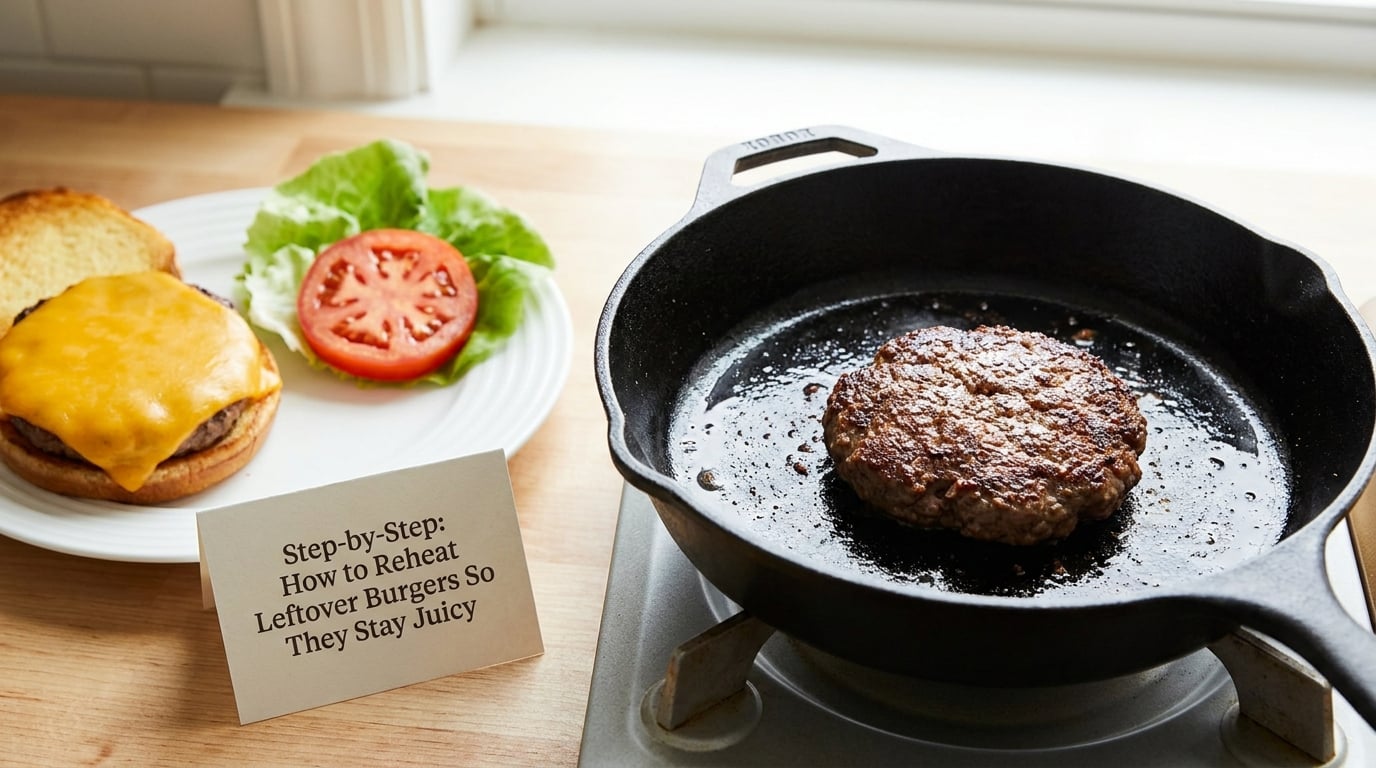
Step-by-Step: Choose the Best Reheating Method
Match the method to the patty, not to the clock. A thick half-inch patty from a backyard cookout behaves nothing like a thin quarter-inch fast food patty, and a big batch changes the math again.
| Method | Time | Temperature | Patty result | Best for |
|---|---|---|---|---|
| Skillet | 2-3 min per side | Medium heat, lid on | Crisp edges, juicy center | One or two patties, best overall |
| Oven or toaster oven | 10-15 min | 350-375°F (175-190°C) | Even heating, gentle | A batch after a cookout |
| Air fryer | 2-4 min | 350°F (175°C) | Crispest crust, fast | Thin or smashed patties |
| Microwave | 30-60 sec per patty | 50-70% power | Rubbery edges, no crust | Speed, with a damp towel |
Home cooks on cooking forums reach for the skillet more than anything else, and the reason is simple: it is the only method that browns the patty while water added to the pan becomes steam that softens the inside. A splash of water or broth is what separates a reheat from a second cook.
Step-by-Step: Reheat the Burger Gently
Start by taking the burger apart. Lift off the bun, pull the patty free, and set lettuce, tomato, pickles and onion in a bowl. Reheat the patty naked, and take the patty out of the fridge 10 to 15 minutes ahead of time so the center is not fighting a cold core.
For the skillet, set it over medium heat, add a tablespoon of water or broth, and lay the patty in. Cover and leave it for about 60 seconds while the steam softens the inside, then uncover, flip with a spatula, and give the second side two to three minutes. You are looking for a browned crust and juices running clear when you press the patty, not a long cook.
For the oven, heat to 350°F (175°C), set the patties on a rack over a rimmed sheet so drippings fall away, splash each with broth, and cover loosely with foil. Uncover for the last three minutes to re-crisp the surface.
For the air fryer, run the basket at 350°F (175°C) for two to four minutes and flip at the halfway point. Add the bun only for the final 30 to 60 seconds, which is the fix air fryer users most often miss.
For the microwave, wrap the patty in a damp paper towel, set it on 50 to 70% power, and heat in 30-second bursts. Check between bursts. This is a damp paper towel in the microwave for 30 seconds that people report over and over as the fix that turns a rubbery disc back into something edible.
Rest the patty for two minutes after any method. Heat pushes the juices outward, and resting gives them time to move back into the meat so they land in the burger rather than on the cutting board.
Step-by-Step: Add Cheese and Toppings at the Right Time
Cheese goes on last, during the final 30 to 60 seconds. Add it while the patty is still hot enough to melt it but before you overcook the surface, and put the lid back on briefly if you are using a skillet so the cheese softens rather than just sitting there.
The bun gets its own heat. Butter the cut face and toast it in the skillet for 20 to 30 seconds, or 2 to 3 minutes at 350°F in the oven. Toasting creates a barrier that keeps juice from soaking straight through to the middle, which is what causes the soggy middle bun.
Fresh toppings go on last and never go through heat. Lettuce, tomato and pickles heated at any point come out wilted and dull. Warm mayo-based sauce splits and turns greasy, so add ketchup, mustard or barbecue sauce after the patty is on the plate.
Common Mistakes
Most reheated burgers fail for one of these reasons, and each has a simple correction.
- Reheating the assembled burger. The bun absorbs the patty’s moisture and steam, the toppings wilt, and you get a soggy bun and a rubbery patty in the same bite. Heat the parts separately and reassemble at the table.
- Microwaving on full power. Full power heats the water molecules unevenly, so the edges seize and go leathery while the middle stays lukewarm. Use 50 to 70% power in 30-second bursts with a damp towel.
- High heat and a hot pan. A screaming-hot skillet browns the surface before the center warms, and the result is a crust with a cold raw-tasting middle. Medium heat plus a lid is faster in practice.
- No added moisture. A dry patty reheated dry will absolutely dry out further. One tablespoon of broth or water, or a covered first minute, is the whole trick.
- Stacking or crowding patties. A pile of patties steams itself unevenly and the ones underneath stay cool. Use a single layer and work in batches, or put the oven to work for you.
- Overholding. Warming finished burgers in a hot oven for an hour dries them out and shrinks the patty. To hold a batch, set the oven to 200-225°F (95-110°C), keep the patties covered in foil, and add a splash of broth. Holding works for about two hours; beyond that, cook fresh patties.
- Reheating twice. USDA guidance is to reheat leftovers once and eat them within two hours of reheating. A second pass pushes the patty further into the tough and dry zone with nothing left to give.
Two more things that come up constantly. Running cold water over cooked beef does not stop the cooking or pull out heat, so skip it. And frozen patties do not need thawing first: put them straight into a skillet from the freezer and give them a couple extra minutes on each side, or reheat them in the oven at 350°F (175°C) until they hit 165°F (74°C) in the center.
Storage matters as much as the reheat. Cooked patties keep three to four days in the fridge in a shallow airtight container, and you should not press them flat or bury them under heavier food.
Frequently Asked Questions
What is the best way to reheat a leftover burger patty?
Take the burger apart and warm the patty alone in a cast iron skillet over medium heat with a tablespoon of water or beef broth and the lid on for the first minute. Flip after two to three minutes, then add cheese for the final 30 seconds. Toast the bun separately and reassemble at the table. The lid traps steam that keeps the inside juicy while the uncovered surface browns.
How long does it take to reheat a leftover burger?
In a skillet, about two to three minutes per side. In a 350°F oven, ten to fifteen minutes for a batch. In an air fryer at 350°F, two to four minutes with a flip at the halfway mark. In the microwave on 50 to 70% power, 30 to 60 seconds per patty in bursts. Time varies with patty thickness, so confirm 165°F (74°C) with an instant-read thermometer rather than trusting the clock.
Is it safe to reheat burgers in the microwave?
Yes, as long as the patty reaches 165°F (74°C) in the center, which is the USDA recommendation for reheating leftovers. Microwaves heat unevenly, so check the thickest part of the patty rather than the edge, and heat in short bursts on medium power. Reheat the patty only, never the assembled burger, and eat it within two hours of reheating.
Should I heat the burger bun, and how do I avoid a soggy one?
Heat the bun separately, briefly. Butter the cut face and toast it in the skillet for 20 to 30 seconds, or for two to three minutes in a 350°F oven. The toasted buttered surface forms a barrier that slows juice from soaking into the bread. Never wrap the assembled burger in foil, and never microwave the bun, which wets the starch and turns the center into a damp sponge.
Can I reheat a frozen leftover burger patty without thawing it first?
You can, and the skillet is the fastest route. Put the frozen patty into a hot skillet over medium-high heat and leave it alone for a few minutes so it forms a crust, then flip and continue until the center reaches 165°F (74°C). In the oven, cook it from frozen at 350°F (175°C) with a splash of broth and loose foil, adding ten minutes to the usual reheating time. Thawing in the microwave first is what leaves the outside rubbery.
What are the most common mistakes when reheating burgers?
The four that ruin most leftovers: reheating the burger assembled, microwaving on full power, using high heat on a preheated pan, and adding no moisture. The fix for all four is the same: separate the parts, warm the patty gently, and cover it for the first minute so steam does the work. Stacking patties and holding finished burgers in a hot oven are the two that quietly dry out a whole batch.
Conclusion
Start by taking the burger apart. Everything else follows from that one move, because the patty needs heat on its own, the bun needs its own quick toast, and the lettuce needs no heat at all.
After that, pick the method with a simple rule: skillet for one or two patties and the best crust, oven at 350°F for a batch or a thick half-inch patty, air fryer at 350°F for the fastest crisp, microwave on medium power only when you are genuinely in a hurry. Add broth or water, cover for the first minute, keep the heat moderate, and check for 165°F (74°C) before the burger goes back together.