
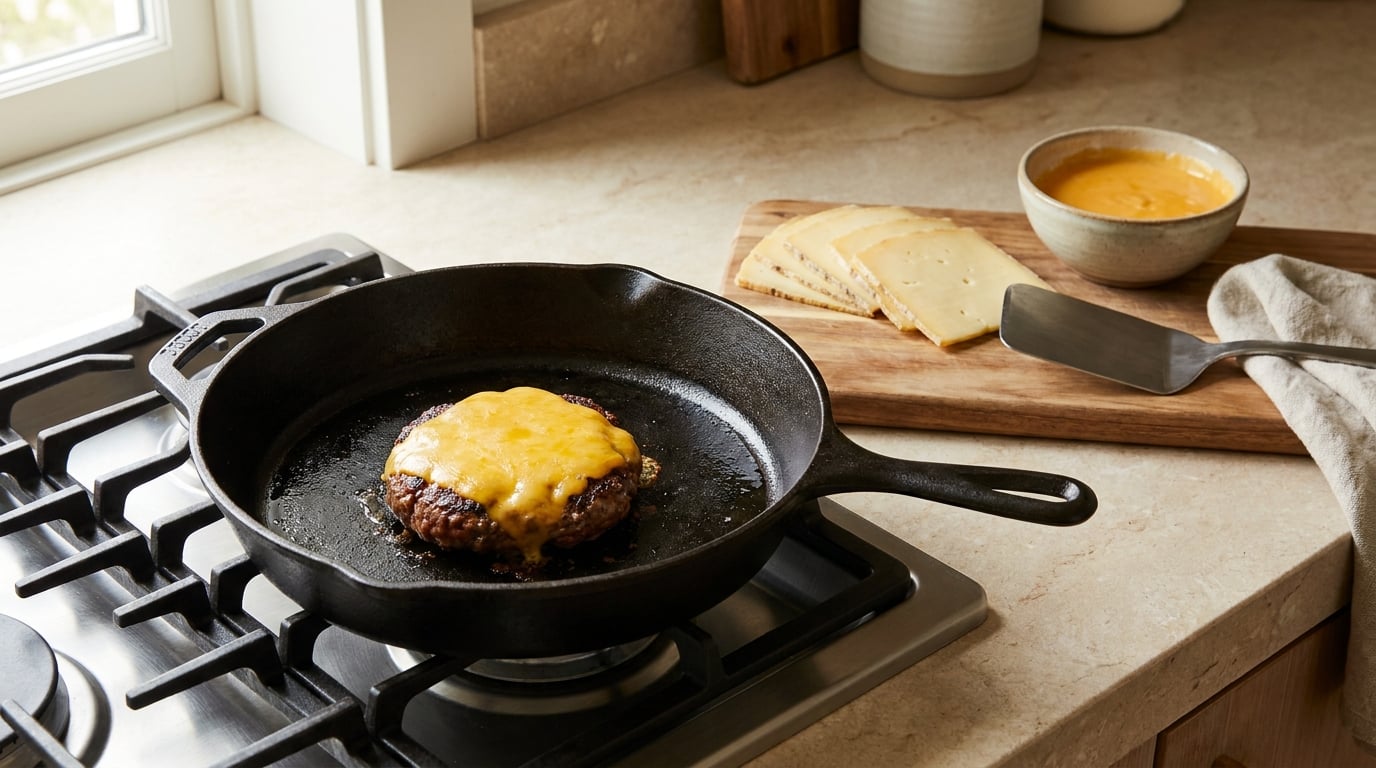
Most cheeseburger fails on the patty, not the beef. You sear, you flip, you slap a slice on, and 20 seconds later it is a stiff rubbery sheet sliding off the meat.
The fix is boring and specific: add the cheese in the final stretch of the cook, cover it so the steam finishes the melt, and take the burger off the heat before the cheese overcooks. If you are learning how to melt cheese on a burger perfectly, the whole job takes about 60 seconds once the patty is cooked. The rest is choosing a slice that behaves.
Below is the method cookouts and test kitchens actually use, with second-by-second timings for each common cheese and fixes for the five failures people hit most.
What You Need
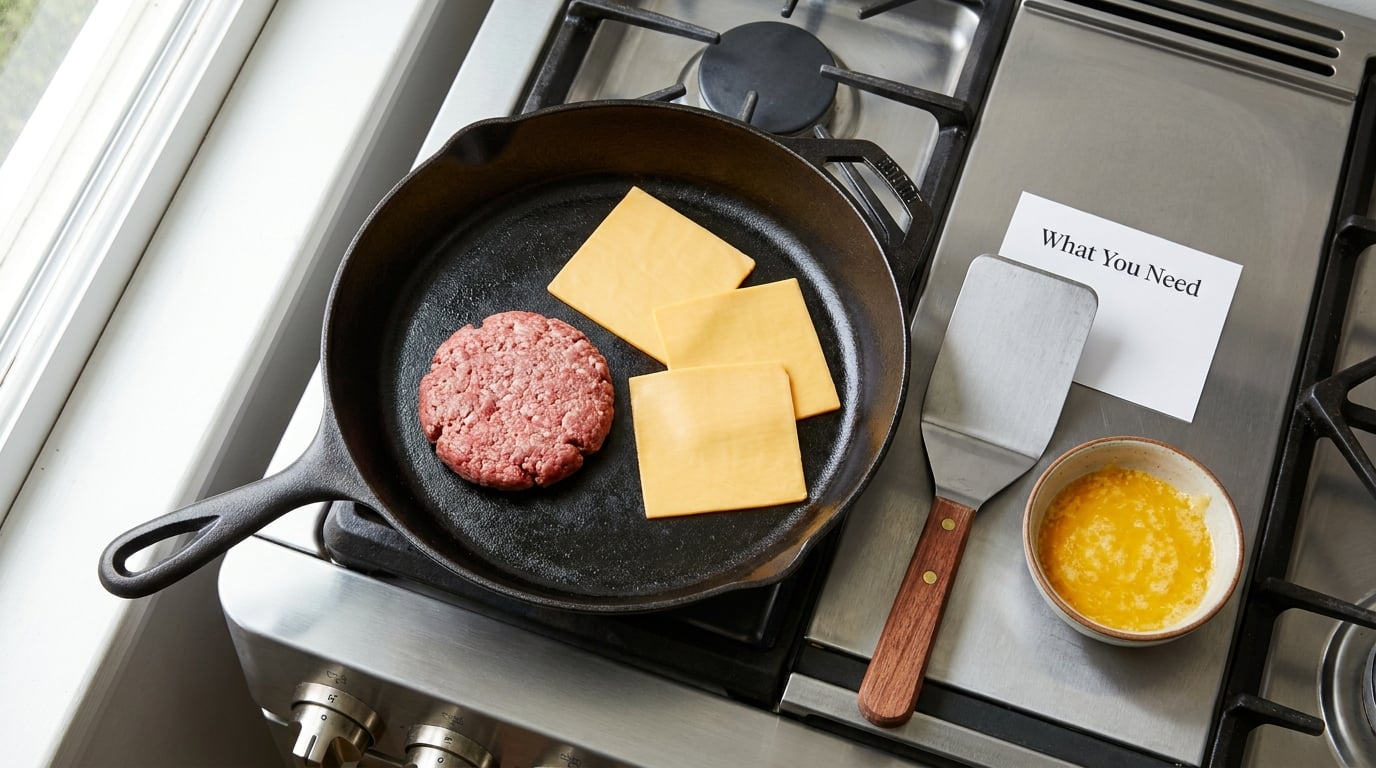
A clean melt needs almost nothing. You need a cheese that melts, a pan hot enough to have already seared the beef, and some way to trap steam. That is the whole equipment list.
The cheese
Look for slices thin enough to see light through, roughly 1/16 inch or under. Thick deli-sliced cheddar is the single biggest reason home melts disappoint. It has to heat all the way through before the surface softens, so the outside dries out while the middle stays cold.
Buy the youngest version of the cheese you like. A cheddar aged two or three months melts far better than an eight-year-old block, because less time means more moisture and a looser protein network.
The cheeses that behave well on a patty:
- American – melts in about 45 seconds, dead even, thanks to added emulsifying salts.
- Provolone – roughly 45 seconds, mild and buttery, holds its shape well.
- Swiss or Emmental – about 1 minute 20 seconds, good if you want real nuttiness.
- Young cheddar – about 1 minute 30 seconds, more flavor than melt speed.
- Fresh mozzarella – about 1 minute 45 seconds, milky, and drain it first or the patty steams.
- Brie or another soft-ripened wheel – about 1 minute 15 seconds, surprisingly the smoothest melt of all.
- Monterey Jack – melts fast and stays mild, a good blend with cheddar.
- Parmesan – grate it, never slice it. A hard wedge will not soften on a patty.
The tools
- A wide metal spatula. Thin edges slip under the patty and under the cheese without tearing either one.
- A preheated cast iron skillet, grill pan or griddle. The pan should already be hot from the sear. A cold pan is why cheese never gets going.
- A lid or an inverted metal bowl. Both trap steam, and steam is what melts the top face of a slice evenly. A plain lid is the easiest option; a bowl is the smashburger move and needs only about 20 seconds.
- A wire rack. Optional, but resting the patty on a rack after the melt stops the bottom bun from steaming itself soggy.
Step-by-Step: How to Melt Cheese on a Burger Perfectly
1. Choose a Cheese That Melts Smoothly
Meltability comes down to three things: moisture content, fat, and how tightly the proteins are bonded. Young, moist cheeses with moderate fat melt into a smooth sauce. Aged, low-moisture cheeses tighten up when heated, push out their oil and turn gummy.
Processed American cheese wins on consistency because of emulsifying agents – sodium citrate or sodium phosphate added during manufacture. Those salts keep the fat suspended in the protein instead of letting the cheese break into oil and curd, which is why it coats a patty evenly while a natural slice tears at the corners. That is the honest trade-off: American melts more reliably, natural cheese tastes better.
Fresh mozzarella is the one to watch. Slice it and let it sit on a towel for ten minutes, otherwise the water turns the top of your patty grey. Blue cheese also scores poorly on melt even though it tastes fine melted, and it breaks and weeps oil within about 1 minute 45 seconds.
Plant-based cheese is the biggest disappointment in testing. It typically needs two minutes or more and still does not coat. If it matters to you, shave it thin, put it on at the flip, and give it the longest covered time of any cheese on this list.
2. Heat the Burger and Prepare the Melt
Get the patty to 160 degrees F (71 degrees C) internal for ground beef, which is the USDA safe minimum, and no more. Overcooking while you wait for cheese to melt is the single most common home-cook error.
Start the melt in the last 60 seconds of the cook. On a grill holding 350 to 550 degrees F, grillers report about two minutes after the flip. On a stovetop cast iron, add the cheese as the second side finishes searing, while the pan is still hot enough to shimmer.
Have everything ready before the cheese goes on: slices cut and separated, spatula in hand, lid or bowl within reach. The melt window is short, and reaching for a lid after the cheese starts setting is how people end up with cold centers.
Rendered beef fat is your best heat source and it is already in the pan. If the patty is well browned, it leaves enough fat behind to soften the underside of the slice, so you only need the covered part to handle the top.
3. Add Cheese and Melt It Evenly
Lay the slice flat on the patty, draping it slightly over the edges so it clings instead of sitting on a mound. A slice laid on a domed thick patty slides down the sides by default – draping it over the curve is the fix.
Then cover. Put the lid on, or invert a metal bowl over the patty. The trapped steam wraps the cheese in warm vapor, which heats the top face gently and evenly while the pan and patty cook the underside. Aim for 45 to 90 seconds under the cover for a normal slice.
You will know it is right by look, not by the clock. The slice loses its matte surface, the edges slump over the patty, and a light press leaves a shallow dent that slowly fills back in. Glossy with a soft crown means done. Deeply browned edges or a film of orange oil pooling in the pan means you went too far.
A full melt is not automatically the best result. Pull the burger a few seconds before the slice fully slumps and the residual heat finishes it during the transfer to the bun. That gap is the difference between a sauce-like coat and a rubbery skin.
4. Finish and Serve Immediately
Get the burger assembled in the same motion you take it off the heat. Every extra minute the patty sits, the cheese tightens and the residual heat keeps cooking the beef.
Build on a toasted bun, cut side up. The toast is insurance against a soggy bottom, and it gives the cheese something warm and dry to sit against rather than a soft steamed crumb.
For a double cheeseburger, add the second slice when the first is half-melted rather than both at once. Staggering them means each slice gets a turn of direct contact with the patty.
Two variations are worth knowing. Melting on the bun is the inverted method: toast the bun halves face down, flip them, set the cheese on the hot toasted faces, cover the pan and kill the heat. The trapped steam and the residual warmth of the toasted bread melt the cheese evenly in 2 to 3 minutes without the beef overcooking underneath. It is the method cooks on cooking forums recommend most often for a thick patty.
Put sauces on the top bun or on the cheese, not under the patty. Gravity and steam will find any sauce sitting on the bottom bun within a minute.
Common Mistakes
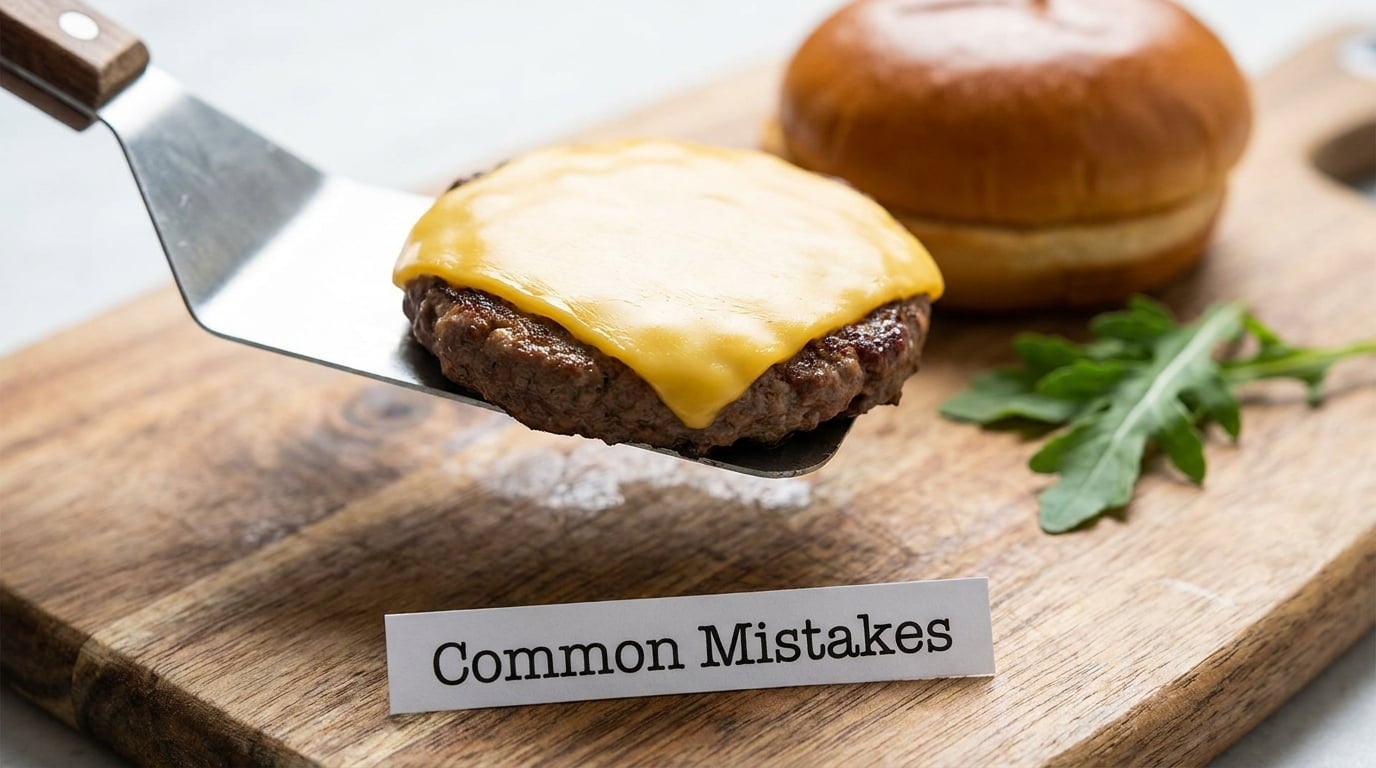
Every bad cheeseburger melt is one of five things. Here is what went wrong and what to change.
Rubbery, chewy cheese
Cheese turns rubbery when it overcooks or when it is a low-moisture aged cheese being forced past what it can do. A slice of eight-year-old cheddar will never melt; it sweats oil and tightens instead. Use a young cheddar aged two or three months, keep the pan heat at medium after the sear, and pull the burger earlier. A tight dome you can almost bounce off the patty means one minute too long under the lid.
Oily, separated cheese
Oil pooling around a patty means the cheese broke. Three causes: the pan was too hot, the cheese was aged and low-moisture, or you left it far too long. Drop to medium heat for the covered portion and take the burger off while the top of the slice still looks slightly matte. Melt times of 45 to 90 seconds keep most cheeses intact; two minutes is where natural cheeses start to break.
Cheese sliding off the patty
Cheese slides when the surface underneath is wet or the slice is flat on a domed patty. Pat the patty surface with a paper towel before laying the slice, and drape the cheese over the edges so it grips. Smash-style thin patties hold cheese far better than thick hand-formed ones. If the slice still slides on the way to the bun, the patty is the wrong shape for that cheese, not the wrong cheese.
Soggy bottom bun
Steam from the melt plus fat dripping out of the patty is enough to turn a bun bottom to mush in about two minutes. Toast the bun cut-side down in the pan for the last 30 seconds of the patty’s cook, drain excess fat before assembling, and hold the finished burger on a wire rack rather than a plate. It takes about ten seconds of extra work and it fixes the problem permanently.
Dry, overcooked patty
Adding cheese early is what does this. Every extra minute the beef sits cooking after the sear is moisture leaving it. Sear hard, season, add the cheese in the final 60 seconds, cover, and stop the heat. If your burger is dry, the melt technique was too slow, not the cheese.
Two habits make results consistent. Buy the same cheese and use the same thickness, because a brand swap changes melt time by 30 seconds or more. And treat the cover as the main heat source for the melt, not the flame, so the top face and the bottom face soften at the same rate.
Frequently Asked Questions
How long should you melt cheese on a burger?
Between 45 and 90 seconds once the cheese hits a hot patty, most often about 60 seconds under a lid. A full melt is not the target. Pull the burger when the slice loses its matte surface and the edges slump over the patty, then let the residual heat finish the center during the move to the bun. Hard aged cheeses and plant-based slices need closer to two minutes.
Should I put cheese on the burger or the bun?
Cheese goes on the patty for the classic melt, because the beef is the biggest heat source you have. Melting it on the toasted bun is the inverted method: toast the bun cut-side down, flip it, set the cheese on the hot face, cover the pan and turn the heat off. The trapped steam melts it evenly in 2 to 3 minutes and keeps a thick patty from overcooking underneath.
What type of cheese melts best on burgers?
American cheese melts the fastest and most evenly, roughly 45 seconds, because emulsifying salts keep the fat and protein blended. Among natural cheeses, provolone, Swiss and soft-ripened Brie melt smoothly, while young cheddar aged two or three months gives more flavor at a slower 90 seconds. Aged hard cheddar, blue and plant-based cheeses all break or fail to coat at all.
Do you add milk when melting cheese?
No. Milk and cream belong in cheese sauces, where they help a shredded cheese melt into a smooth pourable mixture. On a burger patty, added liquid just cools the slice and steams the beef, which slows the melt and can leave the patty grey. If you want a cheeseburger with a sauce-style topping, melt grated cheese in a pan with a splash of beer or cider vinegar off the heat instead.
Why does my melted cheese turn rubbery or greasy?
Rubbery means overcooked or a low-moisture aged cheese forced past its limits. Greasy means the cheese broke, which happens when the pan is too hot or the slice sat for two minutes or longer. Use a young, moist cheese, drop to medium heat after the sear, cover for 45 to 90 seconds, and take the burger off the heat while the top of the slice still looks slightly matte.
How do I stop a bottom bun from going soggy?
Toast the bun cut-side down in the fat for the last 30 seconds of the cook, then drain any extra grease before you assemble. Put sauces on the top bun or on the cheese, never under the patty, and hold the finished burger on a wire rack rather than a plate. Steam trapped under the patty is the main culprit, so a rack matters more than people expect.
Conclusion
Start with thin slices of a young, moist cheese, and skip the thick eight-year cheddar. Sear the patty, confirm it has reached 160 degrees F (71 degrees C), then lay the cheese on during the final 60 seconds of the cook.
Cover it with a lid or an inverted metal bowl for 45 to 90 seconds so the steam melts the top while the pan melts the bottom, take it off the heat a few seconds before the slice fully slumps, and assemble straight onto a toasted bun. That timing is the whole difference between a glossy coat and a rubbery sheet.