
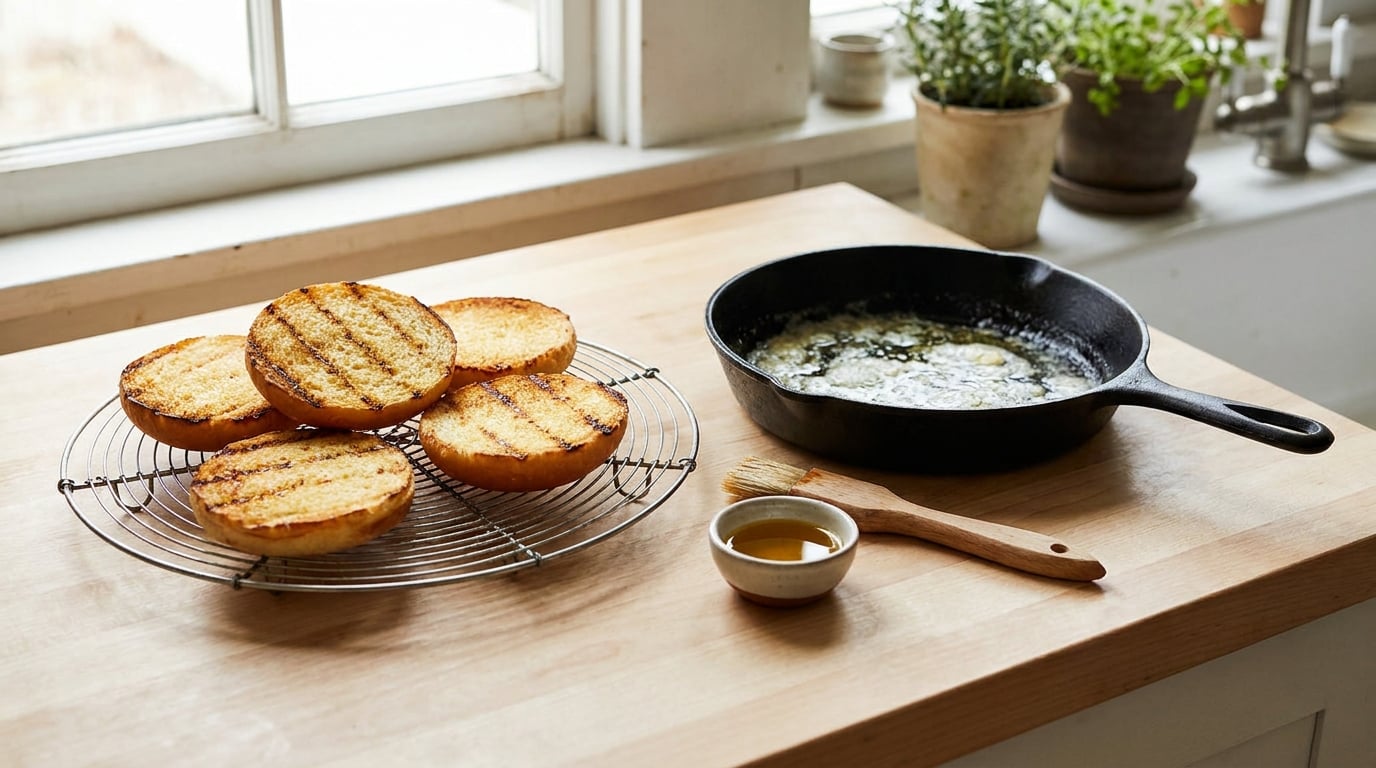
To toast burger buns properly, coat the cut sides lightly with butter or oil, lay them face down in a skillet over medium heat, and give them 30 to 60 seconds until they’re light golden brown and crisp at the edges. The inside stays soft and the whole thing takes about five minutes from start to finish.
The fat and the heat level are the two things people get wrong. A dry bun in a hot pan scorches in seconds, and a bun in a barely warm pan just goes pale and chewy.
Quick answer: medium heat, a thin coat of fat on the cut faces, cut side down, 30 to 60 seconds per side. Broiler and grill burn much faster, so those take seconds, not minutes.
Table of Contents
- What You Need
- How to Toast Burger Buns Properly: Step-by-Step
- Common Mistakes
- Frequently Asked Questions
- Why do my burger buns become hard or dry after toasting?
- Can I toast burger buns in the oven instead of a skillet?
- Should I toast burger buns with butter or oil?
- How do I keep toasted burger buns from getting soggy?
- Are frozen burger buns safe and practical to toast?
- How long should each side of a burger bun be toasted?
- Conclusion
What You Need
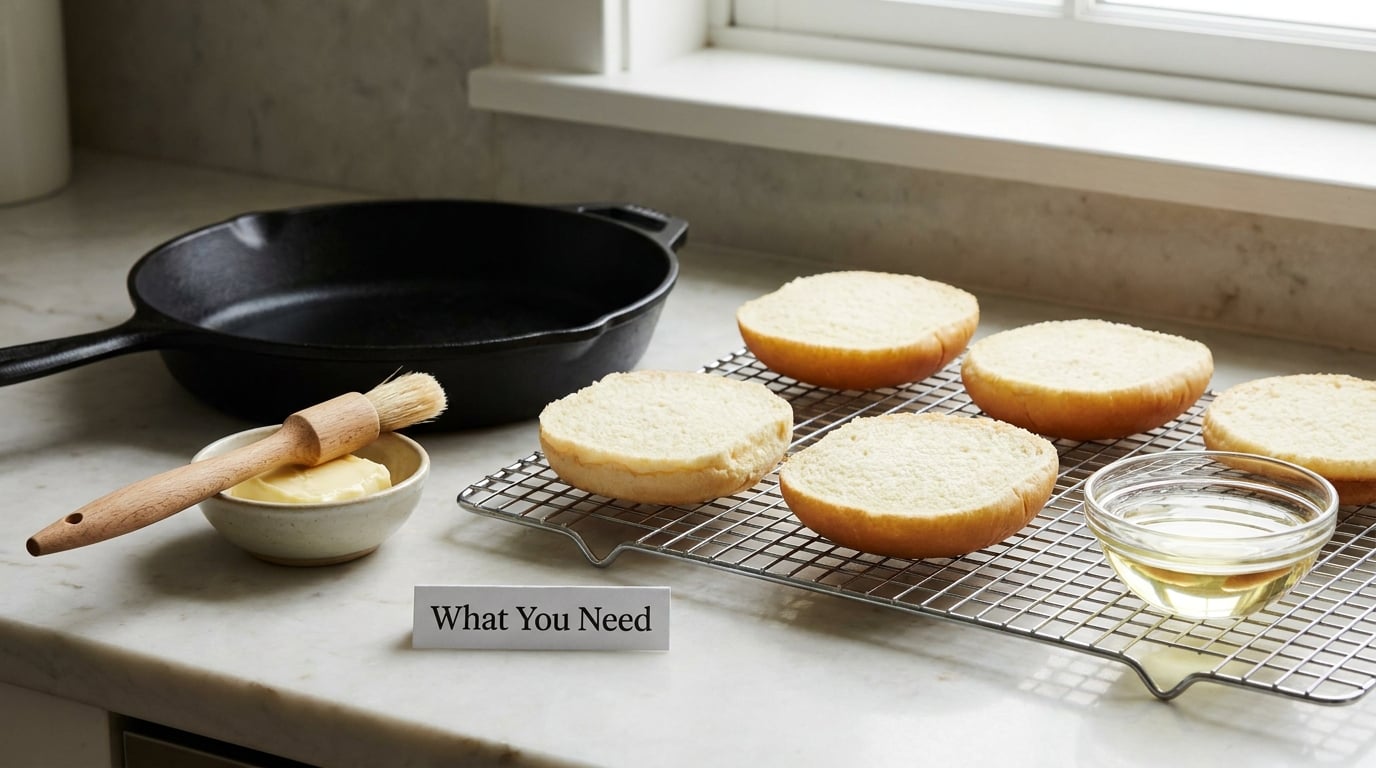
None of this is specialty equipment. If you own a skillet and a stick of butter, you’re set.
- A skillet — cast iron or stainless steel, with a heavy base so the heat doesn’t spike. A nonstick pan works too, it just needs slightly less fat.
- A wire rack or a plate — for resting the buns after toasting. A rack keeps the bottom from steaming.
- Tongs — the only reliable way to flip a bun half without folding it in half.
- Butter, oil, or a light nonstick spray — one of the three is all you need.
- A basting brush — optional, but it gives you a much lighter coat than buttering bread by hand.
The rack matters more than it sounds. A toasted bun set on a plate traps steam against its own bottom, and that’s exactly how a crisp bun turns soft in two minutes flat.
How to Toast Burger Buns Properly: Step-by-Step
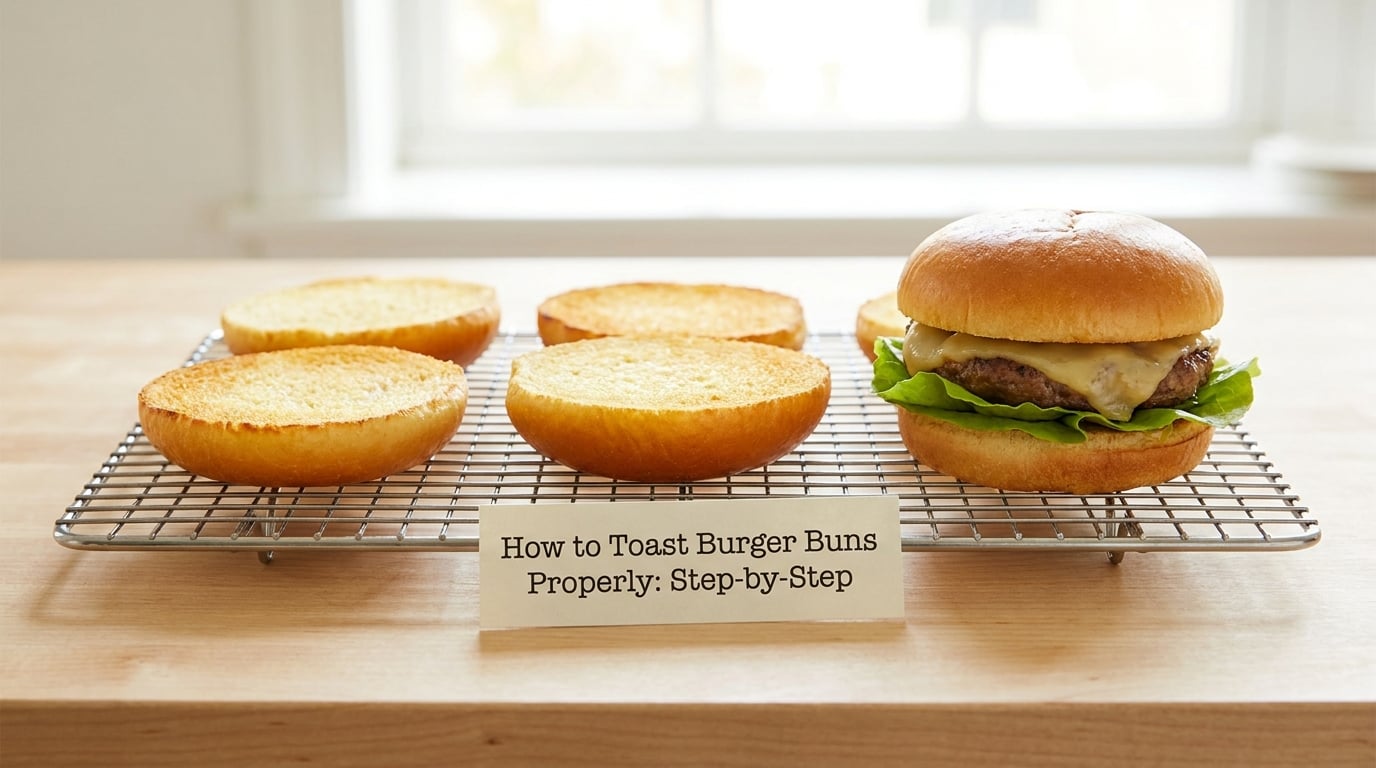
Five variables decide how to toast burger buns properly: the bun type, the fat, the heat level, the time, and which side faces the pan. Get those right and the result is repeatable every time.
1. Prepare the Burger Buns
Split each bun and lay the halves cut side up on a wire rack or a plate. The cut face is the crumb side, the part you want to brown, so it’s the part that goes in the pan.
Don’t toast the buns upside down with the crown in the pan. That toasts the smooth top, which already browns nicely in the oven, and leaves the crumb side soft and pale where you wanted texture.
If you’re working with frozen grocery buns, thaw them first. Toast from fridge-cold or frozen and the outside burns before the middle warms through, which is the single most common complaint about store-bought buns. Thirty to forty minutes on the counter does it.
2. Choose Butter or Oil and Set the Heat
Butter browns the fastest and tastes the richest, but its milk solids burn quickly once the pan gets hot. Use salted butter on medium heat and watch it, not the clock.
Olive oil and avocado oil have a higher smoke point and take a little longer to color, so they’re the better pick for a cast iron skillet or for cooking the patties first and toasting the buns in the rendered fat. You’ll get a crisper, less sweet crust.
A nonstick spray is the lightest option. It works, but you get less color and less flavor, so it’s worth saving for lean top buns.
Whatever you use, set the burner to medium and let the pan sit there for a minute before the fat goes in. Medium heat gives you steady, even coloring. High heat gives you a black ring around the edge and a pale middle.
3. How to Toast Burger Buns Properly in a Skillet
Melt a thin layer of butter or drizzle a thin film of oil across the pan and swirl it to coat the surface. You’re looking for a light sheen, not a puddle. A puddle of butter will scorch before the bun does.
Lay the bun halves cut side down, leaving a finger’s width between them. Crowding drops the pan temperature and you get pale, greasy buns with no crust.
Toast 30 to 60 seconds per side. A thick potato bun needs closer to a minute; a soft white or brioche bun only needs 30. Don’t walk away — the window between golden and burnt is short once it starts.
You’ll know it’s done by color, not time. Look for light golden brown across the cut face, deeper color at the edges, and a faint toasted smell. If it’s still white in the center and you want a heavier toast, give it another 20 seconds.
Flip with tongs and give the second side the same treatment. A lot of cooks only toast one side, and that’s fine, but two gives you a sandwich that holds up to a thick patty.
4. Toast the Top Halves if You Want Extra Crispness
The crown of the bun is worth a few seconds too, but it’s a garnish rather than a necessity. Lay the top halves crown-side down in the same pan for 15 to 20 seconds while you build.
Brioche and seeded buns need a gentler hand. Brioche carries more fat and sugar than a standard bun, so it colors fast and goes from toasted to burnt in about 15 seconds. Seeded buns catch sesame and crumbs in the pan, so toast them after the plain ones, not before.
5. Cool Briefly and Assemble the Burgers
Move the toasted buns to the wire rack cut side up and wait 30 to 60 seconds. That brief rest lets the steam escape instead of condensing inside the bun. Skip it and the interior turns gummy right under your patty.
Assemble in this order: bottom bun, sauce, patty, toppings, crown. Then eat. A toasted bun is at its best in the first few minutes, and it softens on the board if it sits while everybody assembles their own.
For a crowd, toast in batches of four or five and hold the finished buns on a rack. Don’t stack them face to face, and don’t cover them. Heat from the last batch plus trapped steam is what ruins make-ahead buns.
Common Mistakes
Burning them in seconds. The pan is too hot, or the fat was left to brown before the bun went in. Pull the burner down to medium, wipe the pan, and add fresh fat. The bun should sizzle steadily, not roar.
Buns stay pale and soft. Either the heat was too low or the pan was overcrowded. Heat the pan properly, space the buns out, and give the fat time to actually shimmer before they go in.
Edging out before the center catches up. Thick potato and homemade brioche buns cook unevenly at high heat. Start them on medium, and if the edges darken too early, move the bun to a cooler part of the pan or cover the handle end with a folded towel to lower the local heat.
No fat at all. A bare bun browns slowly and unevenly because there’s nothing to carry the color or seal the surface. Even a mist of spray changes the result.
Toasting the wrong face. The cut side is the side that needs browning. Crown-side down wastes the pan heat on the part of the bun that’s already fine.
Moving them too early. Resist the urge to check. Buns that get flipped and jostled tear at the edge, and you end up with a ragged, torn bun that soaks up juice faster than a clean cut face.
Letting them sit on the rack too long, or stacking them. A single layer on a rack, no covering, no long wait. Any steam trapped between toasted halves reverses the whole job.
Two habits make this consistent for me. First, wipe the pan and add fresh fat between batches — old burnt butter flavors everything after it. Second, treat the visual cue as the timer, since a cold pan and a hot pan can differ by 15 seconds of the same clock time.
If you’re grilling, the same logic applies with a much shorter window, and getting how to toast burger buns properly over charcoal comes down almost entirely to timing. Lay the buns cut side down on a grill at about 350°F for roughly 10 seconds, just long enough for faint grill marks, and get them off before the sesame browns.
Frequently Asked Questions
Why do my burger buns become hard or dry after toasting?
Most dry buns sit on direct heat too long or toast on both sides to a deep brown. Light golden brown is the stop cue, not deep brown. Medium heat also matters: high heat drives moisture out of the crumb fast. Toast the cut side for 30 to 60 seconds, check the color rather than the clock, and rest the buns on a rack for a minute before assembling.
Can I toast burger buns in the oven instead of a skillet?
Yes. Set a baking sheet on the center rack at 350°F, coat the cut sides lightly with butter or oil, lay the halves cut side up, and bake for 5 to 7 minutes. For a crisper result, finish under the broiler for 30 to 60 seconds, watching constantly, because broiler heat burns bun edges in seconds. The oven is the right choice for a big batch.
Should I toast burger buns with butter or oil?
Butter gives the fastest browning and richest flavor, so use it on medium heat and stay at the pan. Oil has a higher smoke point and browns a little more slowly, which makes it better in a hot cast iron skillet or after cooking patties. A nonstick spray is the lightest option but colors the least. Either way, use a thin coat rather than a heavy layer.
How do I keep toasted burger buns from getting soggy?
Assemble last, so the toasted surface stays dry as long as possible. Put sauce on the bottom bun only, before the patty, so it creates a barrier between the juicy meat and the bread. Rest toasted buns cut side up on a wire rack rather than a plate so steam escapes, and never cover or stack them. Toasting a little more aggressively helps too, since a thicker crust resists moisture.
Are frozen burger buns safe and practical to toast?
They are practical, but thaw them first. Straight from the freezer, the outside burns before the center warms and you get uneven color with a raw middle. Thirty to forty minutes on the counter solves it. Toasting them from frozen is fine if you use a moderate heat and start checking early, and toasting from the fridge works well as a compromise.
How long should each side of a burger bun be toasted?
Thirty to 60 seconds per side in a skillet over medium heat. Thick potato buns sit closer to a minute, soft white and brioche buns closer to 30 seconds. Color is the real test: light golden brown across the cut face with deeper edges. Under a broiler or on a grill the window is far shorter, roughly 30 to 60 seconds total, or about 10 seconds over direct grill heat.
Conclusion
Coat the cut sides lightly, set the pan to medium, and lay the buns face down for 30 to 60 seconds. Pull them at light golden brown, not deep brown, then rest them cut side up on a rack for a minute so the steam escapes. That is the whole method, and once you stop using the clock and start watching the color, the results hold up every time.