
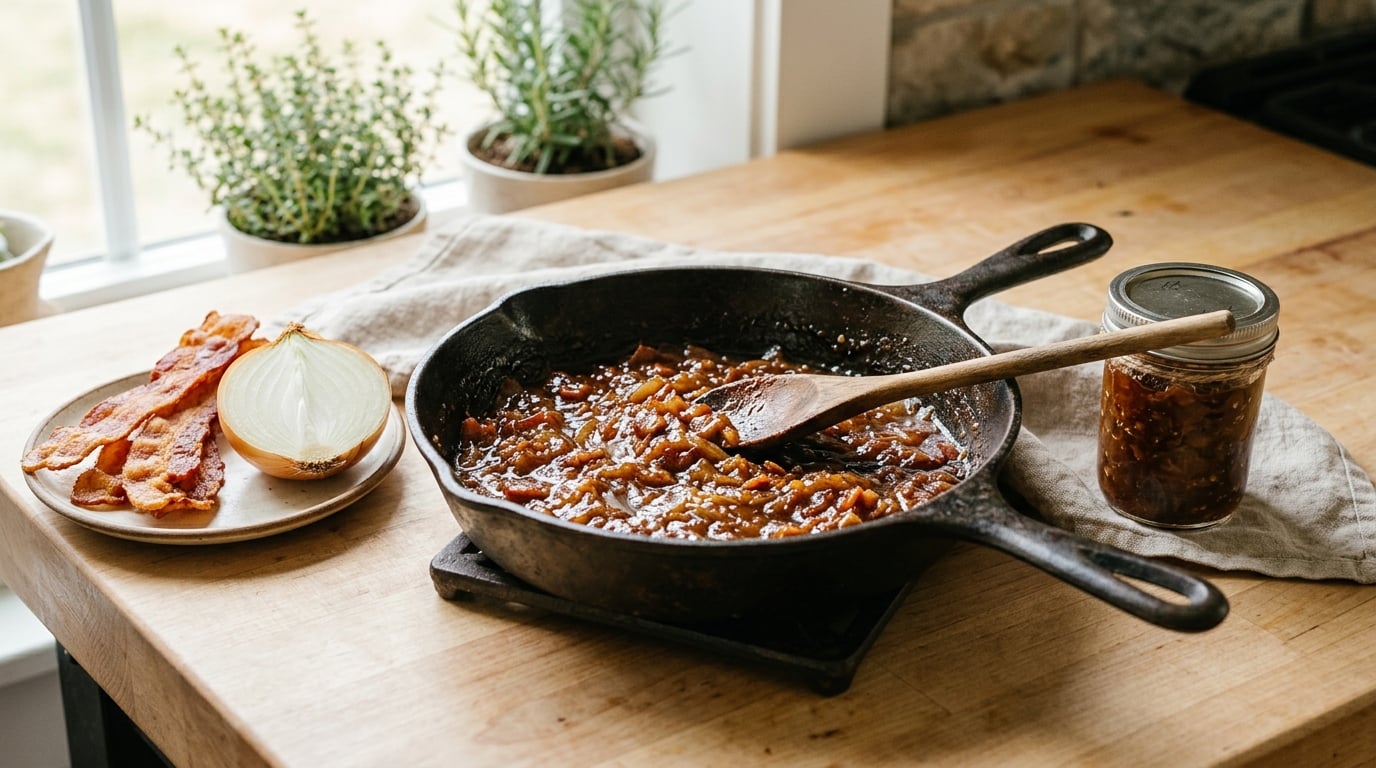
Bacon jam is a thick, sweet-savory spread made by cooking chopped bacon with onions, brown sugar and vinegar until the liquid reduces to a jam-like, syrupy consistency. If you have ever wanted to know how to make bacon jam for burgers, the whole thing happens in one skillet in about 30 minutes and makes enough for 3 to 4 burgers.
It goes by a few names on restaurant menus and recipe sites: bacon marmalade, bacon onion jam, bacon relish. Same food. Once you have a jar in the fridge, it stops being a burger topping and becomes a general-purpose condiment.
The technique is simple, so the parts that trip people up are the details. That is what this guide covers: how to get the bacon properly crisp, how to stop the onions from scorching, and how to pull the glaze off the heat before it turns bitter.
What You Need to Make Bacon Jam
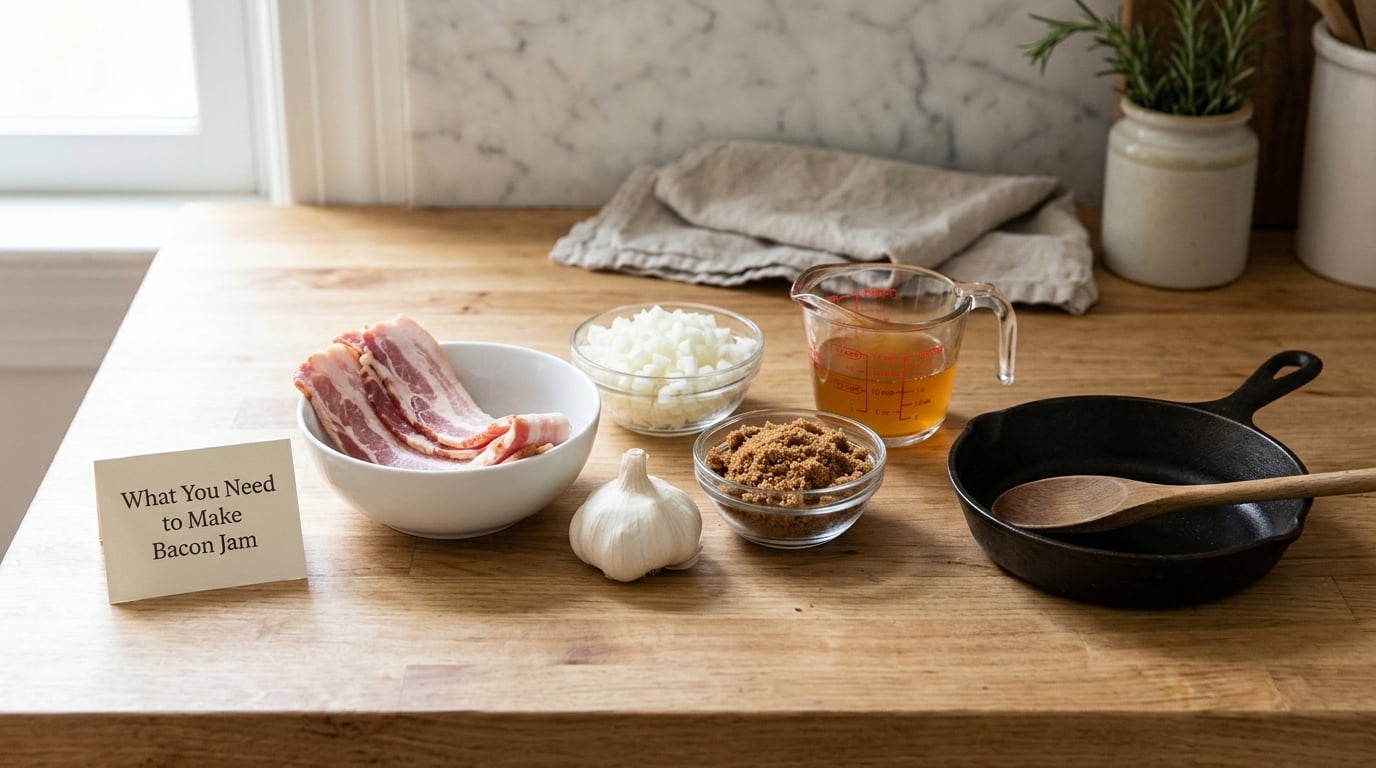
Start with this ratio and you can invent variants later: 1 pound bacon, 1 to 1.5 cups diced onion, half a cup brown sugar, a quarter cup vinegar. Everything else is optional.
Essentials
- 1 lb bacon (450 g), cut into 1/2 inch pieces. Thick-cut smoked bacon is the best choice because it holds its shape in the sauce instead of dissolving into it.
- 1 to 1.5 cups diced onion (150 to 200 g). A yellow or sweet onion is the standard. A shallot works too, and a red onion gives you something a little sharper.
- 2 to 3 garlic cloves, minced.
- 1/2 cup packed brown sugar (100 g).
- 1/4 cup apple cider vinegar (60 ml). Balsamic or red wine vinegar also work, and each one shifts the result.
Optional additions
- 1/4 cup maple syrup for a Vermont-style version.
- 1/2 cup strong brewed coffee, which adds bitter depth rather than coffee flavor.
- Pinch of cayenne, red pepper flakes or smoked paprika for heat.
- 2 to 3 tbsp bourbon if you are cooking on a gas burner and want the alcohol to burn off.
Equipment
A 12-inch cast iron skillet or a heavy stainless pan is the consensus tool, mostly because the bacon renders better in a heavy pan and you want the fat to stay in the same vessel where you will build the jam. You also want a slotted spoon, a paper towel-lined plate for draining the bacon, a knife and a wide spoon or heatproof spatula for stirring, plus clean jars for storage.
No cast iron? A wide sauté pan with high sides works fine. Just keep an eye on the reduction, since a shallow pan dries out faster and can scorch.
How to Make Bacon Jam for Burgers, Step by Step
How to Make the Bacon Crispy
Heat the skillet over medium heat and add the diced bacon in a single layer. Crowding drops the temperature and steams the bacon instead of crisping it, so work in batches if your pan is smaller than 12 inches.
Cook for 8 to 10 minutes, stirring every minute or two so the pieces color evenly. They are done when the fat has rendered out and the edges are deep brown, not black.
Tip the bacon onto the paper towel-lined plate and pour off all but 2 to 3 tablespoons of the rendered fat. Skim too much and the jam loses its body; too much and the burger feels heavy. Save the rest of the fat, it is the best cooking fat in the house for tomorrow’s potatoes.
How to Caramelize the Onions
Return the skillet to medium-low heat and add the reserved bacon fat with the diced onion and the garlic. Stir every 30 to 45 seconds so nothing sticks to the bottom.
For the first 4 to 5 minutes the onions soften and turn translucent. Then they turn pale gold, and then a real chestnut brown. Total time is usually 10 to 12 minutes on medium-low heat. If they darken much faster than that, drop the heat and stir more often.
Add the garlic in the last minute if you like a milder flavor, or at the start if you want it pronounced. Scorched garlic turns acrid fast, which is the most common way this recipe goes wrong.
How to Make the Tangy-Sweet Glaze
Stir in the brown sugar, the vinegar and any of the optional maple syrup or coffee you are using. The mixture will look thin and watery for the first minute, and it usually seizes up into a tacky paste right after that. That is normal.
Add the crisp bacon back in, along with cayenne, red pepper flakes or smoked paprika if you are using them. The starting ratio of 2 parts sugar to 1 part vinegar gives you a balanced glaze. If you like sweet, go 3 to 1. If you prefer tangy, add a tablespoon more vinegar at the end rather than reducing it further, because reducing concentrates sweetness along with the liquid.
How to Finish and Store Bacon Jam
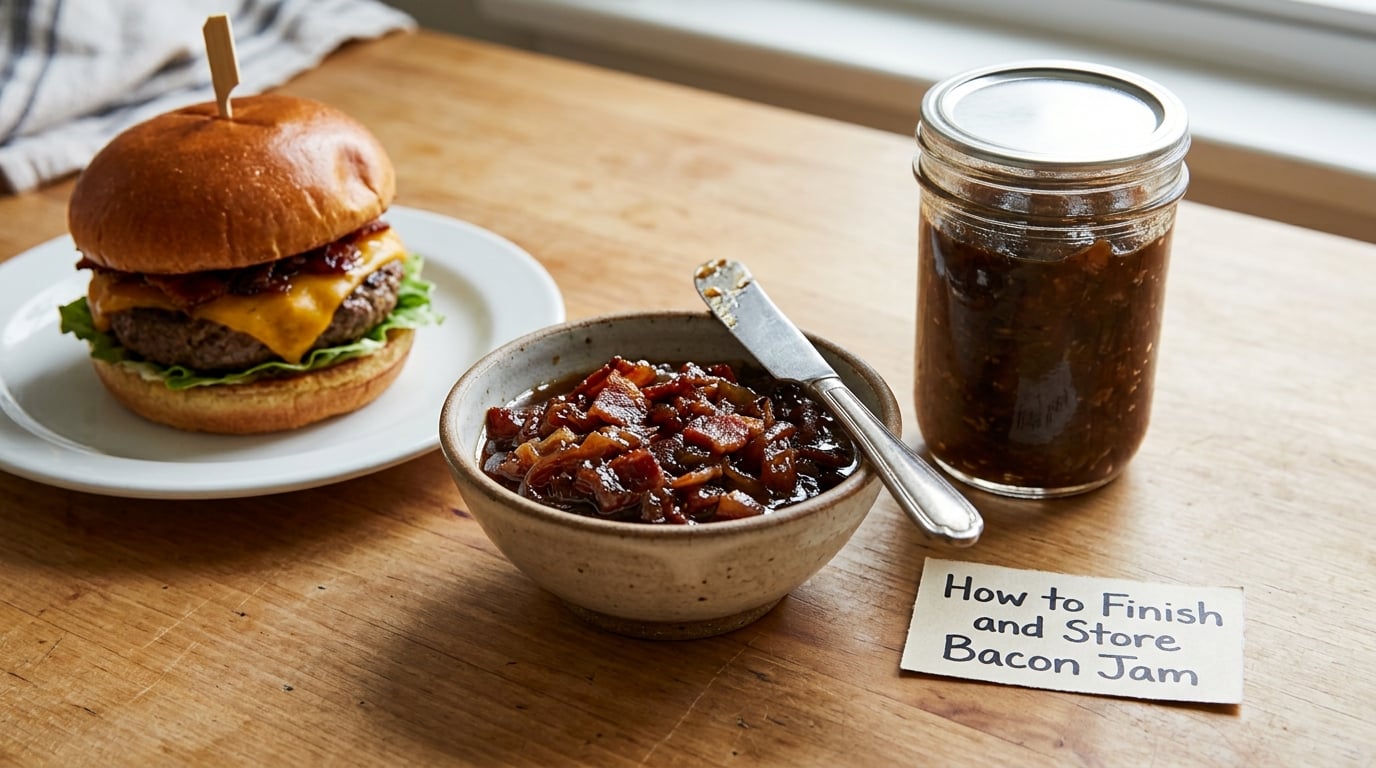
Simmer gently for 10 to 15 minutes, stirring now and then, until the liquid looks like a thick syrup and coats the back of a spoon. Pull it off the heat while it still looks slightly loose, because it thickens noticeably as it cools.
Transfer to a clean jar and let it cool uncovered on the counter for about an hour before sealing. Stir it before each use, since the fat separates as it sits.
For storage, keep it refrigerated in an airtight jar and use it within two weeks. For longer keeping, freeze it in small portions rather than one big jar, so you can thaw only what you need. Thaw it in the fridge overnight, never on the counter, and reheat it gently in a pan over low heat.
One batch makes roughly 1.5 cups, which is enough for 3 to 4 burgers. Double it for a cookout. I would not triple it in one pan, because the reduction takes much longer and you lose control near the end.
Common Mistakes and How to Fix Them
The jam is too sweet. This is the loudest complaint about burger toppings, and the fix is acid, not more simmering. Stir in a tablespoon of apple cider vinegar at a time until it tastes balanced. If you overshoot, a small splash of coffee helps too.
The jam is too thin and runs off the patty. Simmer it longer, and stir more often as it thickens, because the bottom of the pan scorches once the sugar concentrates. If it is still loose, transfer it to a small saucepan where you have more stirring control.
The jam reduced too far and tastes bitter or chewy. That means the sugar overcooked. Stir in a tablespoon of hot water and take it off the heat. It will loosen and lose some of the scorched flavor.
The bacon is soggy. Two causes: the pan was crowded, or you added the bacon back too early and simmered it in liquid for the full time. Crisp it fully in the first step and add it back for the last 5 minutes only.
The onions scorched. Sugar burns faster than it browns. Use medium-low heat, stir often, and if a few bits catch, scrape them out rather than stirring the burnt flavor through the batch.
The finished jam feels greasy. You left too much fat in the pan. Next time skim more aggressively at the end, right before the jam goes into the jar.
It is not safe on the shelf. This is refrigerator jam. It is not shelf-stable and it is not safe for water-bath canning without a tested recipe and proper acidity, so keep it cold.
Tips for Serving Bacon Jam
Start with about one teaspoon per burger, spread on the meat while it is still hot. The jam melts into the patty instead of sitting on top of it, which is the difference between a burger that tastes layered and one that tastes sticky.
Layer it like this: toasted bun with mayonnaise on the bottom, patty, jam on the patty, cheese on top of the jam so it melts into both, then your raw toppings. Put lettuce and tomato on top so they do not push the jam around.
For cheese, blue cheese is the classic pairing because the funk cuts straight through the sweetness. Cheddar and brie both work, and so does pepper jack if you want heat. Grilled cheese and a hot chicken sandwich are the two non-burger uses I make most, but it is also good on scrambled eggs, on toast with butter, on biscuits, or on a charcuterie board with crackers and a hard cheese.
If you are grilling a batch, make the jam a day or two ahead. It settles overnight and the flavor gets a little rounder, which is exactly what you want on a burger where you are busy with the grill.
Frequently Asked Questions
What is bacon jam made of?
Bacon jam is made from diced bacon, onions, brown sugar and vinegar, with garlic as a near-universal addition. The bacon renders first, the onions cook in the reserved fat, then the sugar and vinegar go in and everything simmers until the liquid reduces to a syrupy, spreadable jam. Coffee, maple syrup and bourbon are common optional additions.
How long does bacon jam take to make?
About 30 minutes from start to jar for a standard batch: 8 to 10 minutes to crisp the bacon, 10 to 12 minutes to caramelize the onions, and 10 to 15 minutes to reduce the glaze. A quick version using 5 slices of bacon and pre-diced onion comes together in about 20 minutes and still makes enough for 3 servings.
Can I make bacon jam without onions?
You can, and it is a good option if you want a cleaner, meat-forward condiment. Cook the bacon, pour off most of the fat, add the sugar, vinegar and garlic straight to the pan and reduce as normal. The result is closer to a sweet bacon relish than a jam, and it is noticeably lighter on a burger.
How thick should bacon jam be?
Thick enough that a spoon dragged across the bottom of the pan leaves a clean line that does not immediately fill back in, and thick enough to coat the back of the spoon. Pull it off the heat slightly looser than you think it should be, because it firms up as it cools. If you want a smoother spread, pulse it in a food processor.
How long does homemade bacon jam keep in the refrigerator?
About two weeks in an airtight jar, refrigerated the whole time. Stir it before each use, since the fat separates and settles. If you need longer than two weeks, freeze it in small portions; small jars thaw faster and you only open what you are using.
Can bacon jam be frozen?
Yes. Freeze it in small airtight containers or freezer bags with the air pushed out, leaving about half an inch of headspace. It keeps well frozen for several months. Thaw it in the refrigerator overnight rather than on the counter, and reheat it slowly in a pan over low heat.
Conclusion
The method itself is not complicated. Crisp the bacon and reserve the fat, cook the onions slowly until they are chestnut brown, then add sugar and vinegar and simmer until the mixture coats a spoon.
Where people go wrong is rushing the onions or reducing the glaze too far, so watch the color and pull the pan early. Taste it before it cools and add vinegar if it reads too sweet. Then start with a teaspoon on each burger and let people add more themselves.