
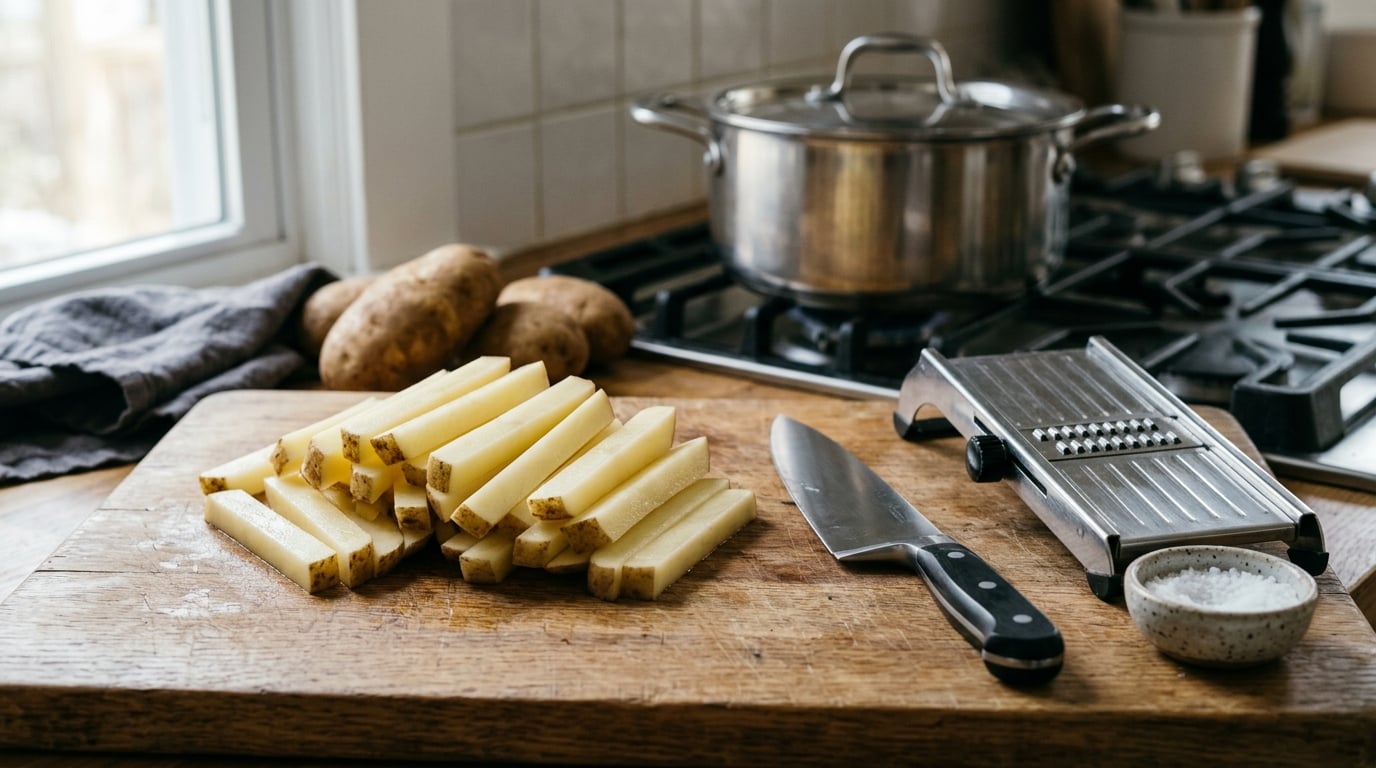
Learning how to make hand cut french fries at home is mostly about three things: cut the potatoes to an even thickness, get them completely dry, and fry them twice. The first pass at 325°F cooks the inside and sets the starch, the second at 375°F browns and hardens the outside. From scrubbed spud to salted fries takes about 45 minutes, and the actual hands-on work is closer to 20.
The reason restaurant fries stay crisp for the whole trip from kitchen to table is the double fry. A single fry gives you either a soft center or a dark shell, never both. Everything else in this guide — the soak, the towel, the batch size — exists to protect that two-temperature method.
Difficulty is low, but hot oil deserves respect. Keep water away from the pot, use a thermometer rather than guessing, and never drop a full basket of wet potatoes into the oil in one go.
What You Need to Make Hand Cut French Fries
You need very little. A russet potato, a neutral oil, salt, a heavy pot and a thermometer cover the whole job.
Ingredients
- Potatoes: 2 to 3 large russets (about 1.5 pounds) yields roughly 4 to 6 servings. Yukon Gold works but bakes up softer.
- Oil: 2 to 3 quarts for a home pot. Canola, peanut, sunflower and refined olive all work; pick one with a smoke point above 400°F.
- Salt: flaky or kosher, for finishing while the fries are hot.
- Optional: a teaspoon of baking soda for the soak, a tablespoon of malt vinegar for the Belgian finish, pepper or Old Bay for a different angle.
Why russets? High starch and low moisture are exactly what you want. The starch gives the interior a fluffy, almost cakey bite, and the low moisture lets the outside crisp instead of steaming.
Equipment
- Heavy-bottomed pot, 6 to 8 quarts, or a deep fryer. A thin-walled pot swings in temperature and cooks nothing evenly.
- Instant-read or deep-frying thermometer. This is the one tool that separates good fries from luck.
- Wire skimmer or spider, for lowering and lifting. A slotted spoon works but drains slowly.
- Wire rack set over a baking sheet, for draining.
- Chef’s knife or a mandoline fry cutter. Optional, but it cuts a nine-inch potato in under a minute.
Oil depth matters more than people expect. Two to three inches in a home pot gives the potatoes room to float instead of touching the pan floor, and it recovers temperature fast between batches. Going deeper does not make better fries, it just means a bigger pot and more oil to handle.
The two fry passes at a glance
Published recipes disagree wildly on first-fry temperature, which is where most home attempts fail. Here is the version that works in a home pot:
| Stage | Oil temperature | Time per batch | What you should see |
|---|---|---|---|
| First fry (blanch) | 325°F (163°C) | 4 to 6 minutes | Pale gold, soft, no color on the cut faces |
| Rest | Oil off the heat | 10 to 15 minutes | Fries go matte and slightly limp |
| Second fry (finish) | 375°F (190°C) | 2 to 3 minutes | Deep golden brown, rigid, audible crunch |
If your pot runs hot or your thermometer is cheap and jumpy, aim for the low end of each range and trust color over the clock.
Step-by-Step
Total time: about 45 minutes. Hands-on: about 20 minutes. The 10-to-15 minute rest between fries runs on its own.
How to Make Hand Cut French Fries
Scrub the potatoes under cold water and decide whether to peel. Skin-on fries hold more moisture in the flesh, taste earthier and are slightly crispier; peeled fries look more restaurant-polished and are easier to cut evenly. Either works, just do not switch halfway.
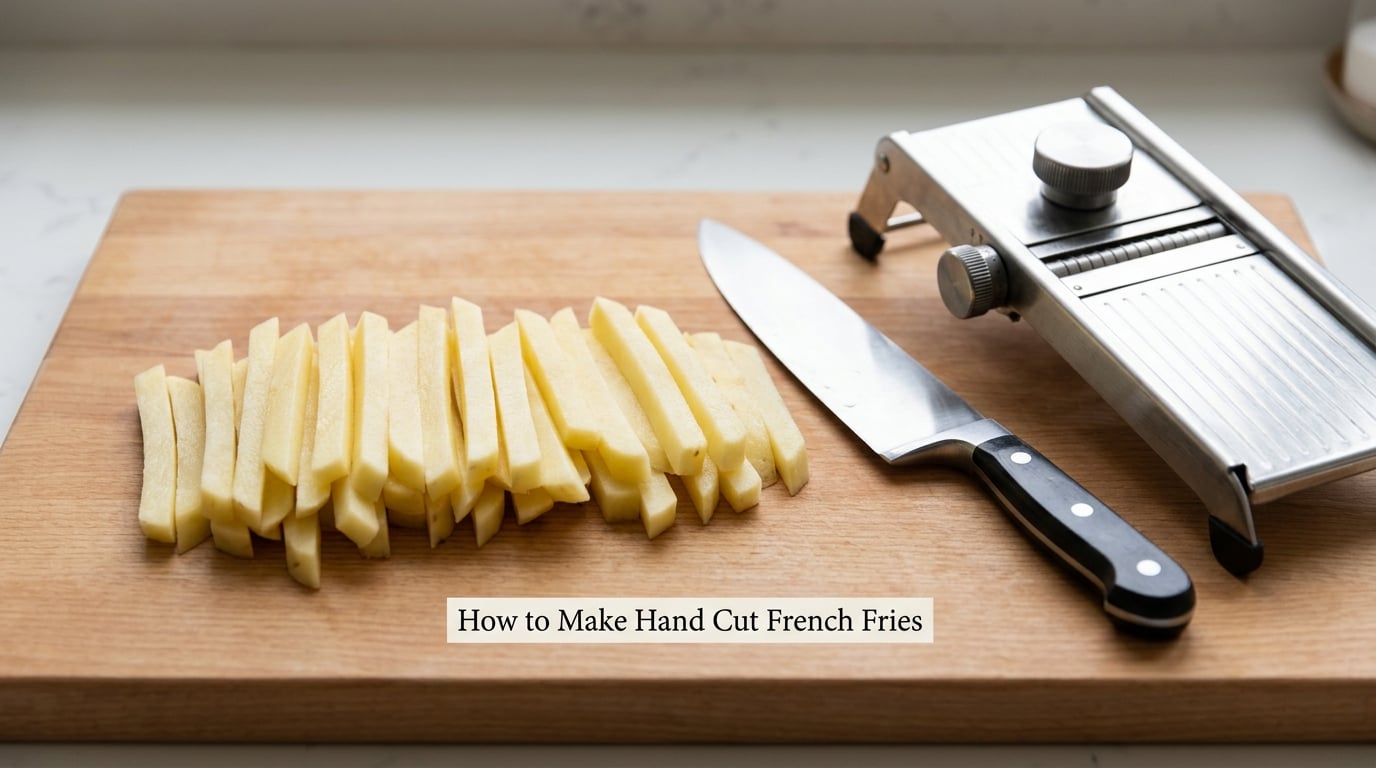
Slice each potato into slabs about a quarter inch thick, stack two or three slabs, and cut them into batons a quarter inch wide. A mandoline with a fry blade or a plastic fry cutter does this in one motion and is the fastest route to uniform pieces. A knife works fine, it just takes three times as long.
Uniformity is the entire game. Thin fries finish and brown before thick ones have cooked through, which is why a batch with mixed widths comes out part burned, part raw. If your cut has a few pieces noticeably smaller, pull them out and fry them a minute early.
Soak and Dry the Potato Sticks
Rinse the cut potatoes in cold water until the water runs noticeably clearer, usually two or three changes. That pulls off the loose surface starch that would otherwise make the fries glue together and turn patchy in the oil.
Then soak. How long depends on the time you actually have:
- No time: rinse well and fry anyway. You will get decent fries, just slightly less crisp.
- 20 to 30 minutes: the practical default, and what most home cooks should do.
- One hour: noticeably better, with the water changed once midway.
- Overnight: fine, but refrigerate the bowl. Potatoes left in room-temperature water for many hours invite bacterial growth, so treat more than two hours as a refrigeration question.
A teaspoon of baking soda in the soak water is a real trick, not folklore. It raises the surface pH, which breaks down surface starch and speeds up browning. Use a teaspoon, not a tablespoon, and skip it if you like a pale fry.
Drying is the step people rush. Spread the potatoes on a towel or a rack, pat them dry, and give them ten minutes. Water on the surface drops the oil temperature on contact, which is the single biggest reason home fries turn greasy and limp.
Heat the Oil Safely
Fill the pot with 2 to 3 inches of oil and clip the thermometer to the pot’s rim so the tip stays in the middle of the oil, not touching the metal. Heat to 325°F over medium-high.
Without a thermometer, drop a single potato stick in. At the right temperature it should sink for a moment, then hover with steady bubbles around it. Vigorous immediate bubbling means the oil is too hot; a lazy oil swallow means it is too cool.
Keep everything else dry. A wet potato, a wet hand, or a dripping skimmer all cause violent splatter. If the oil starts to smoke before it reaches temperature, the heat is too high or the pot is too shallow, so turn the burner down and let it come up slowly.
Fry in Small Batches
Lower the potatoes into the oil gently, away from you, in a loose single layer. A heaped basket drops the temperature by hundreds of degrees in seconds, and that temperature crash is what sogs them out. Fry two or three batches for six potatoes, not one enormous one.
Stir the first batch constantly for about 30 seconds so the sticks separate. Then cook at 325°F for 4 to 6 minutes, until the fries are pale gold and feel soft but not crunchy with almost no resistance.
Lift them out, spread on the rack, and wait 10 to 15 minutes. They will go slightly limp and matte as they cool, which is exactly right. Meanwhile, bring the oil to 375°F. Drop the fries back in for 2 to 3 minutes, and pull them at deep golden brown. Fry the remaining batches one at a time so every serving finishes at the same color.
If the first fry is browning noticeably, your oil is running above 325°F. Drop the fries sooner and turn the heat down. A blanch that develops color cannot be rescued by the second fry.
Drain and Season Immediately
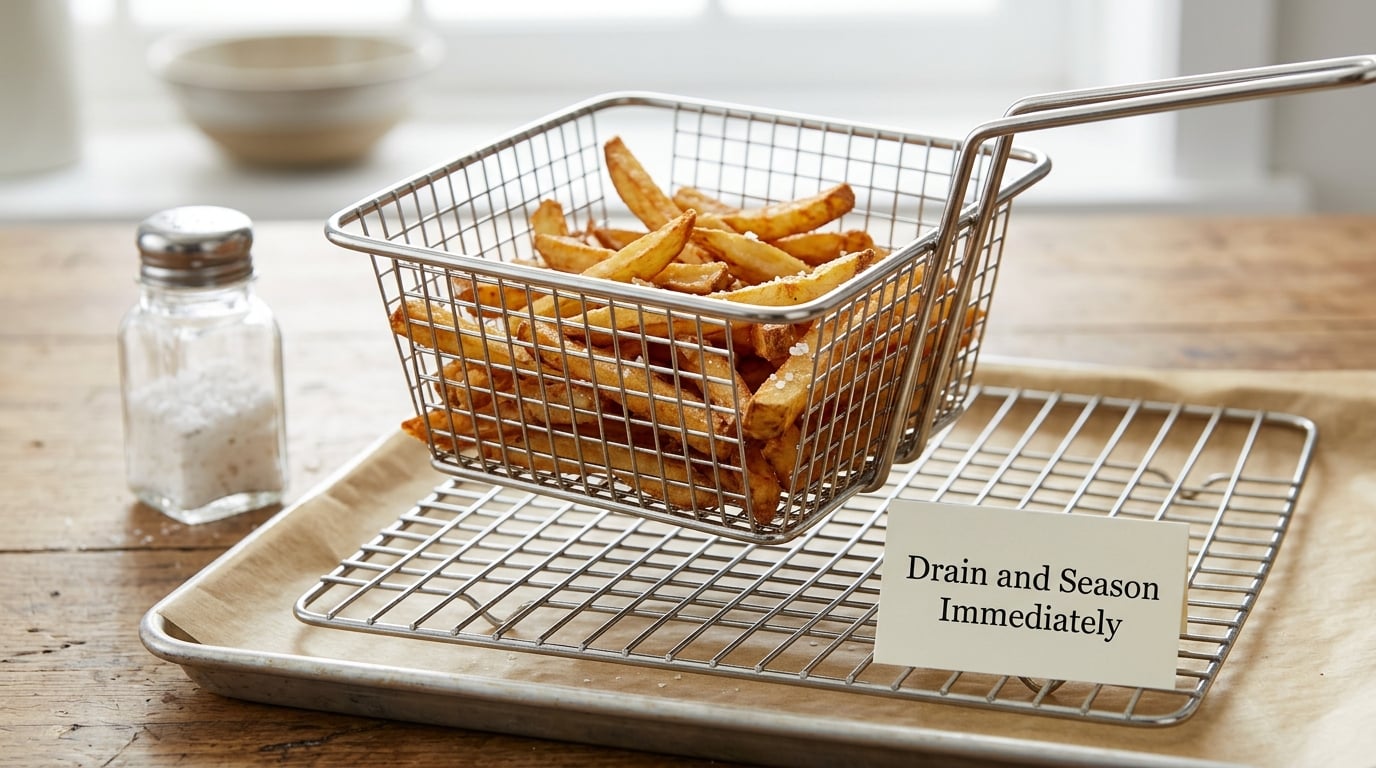
Drain on a wire rack set over a baking sheet, not on paper towels. The underside of a fry sitting on paper steams in trapped moisture, and that softens the crust you just built. A rack lets hot air circulate and keeps the fries from steaming each other.
Season while they are still hot. Salt needs surface moisture and fat to stick, and both are leaving the fries second by second. Flaky salt in a shaker works; a fine salt in a palm-toss reaches further.
Serve immediately. Fries start losing crispness the moment they leave the oil, and under a warm lamp in a serving basket they can go limp within ten minutes. If you must hold them, spread in one layer somewhere warm and dry, never covered and never piled.
Common Mistakes
Almost every bad batch traces back to one of six things.
Soggy fries. The potatoes were wet going in, or the oil fell too far when you added them. Dry the sticks properly, use smaller batches, and let the oil come back to temperature between batches before adding more.
Greasy fries. Oil temperature dropped on contact, so the potatoes drank oil instead of cooking. Same fix as above, plus a thermometer. If you skip the thermometer you are guessing, and 275°F oil and 350°F oil produce very different fries.
Limp fries that were crisp a minute ago. They were piled up, covered, or wrapped. Steam condenses under a cover and softens the crust. Hold them in a single layer and serve fast.
Dark, bitter fries. The second fry ran too long or the oil was above 375°F. Watch the color, not the timer, and pull at deep gold with an audible crunch. Also check your oil is not being reused after it has darkened past golden.
Uneven cooking. The cut was inconsistent. Sort the sticks by width before frying, or fry the smaller pieces for a shorter time.
Potatoes stuck together. They were either insufficiently rinsed or dropped in without separating. Rinse until the water runs clear, and stir for the first 30 seconds.
Planning ahead and changing temperatures
You can park cut potatoes between the two fries. Fry the first batch at 325°F, drain it, and spread it on a rack in the freezer for 20 to 30 minutes until solid. Later, fry from frozen at 375°F, giving the batch an extra minute. Cooks across the country freeze blanched fries and fry from frozen, and it works.
For long holds, parboil the sticks for four minutes instead of blanching, chill them, and refrigerate or freeze. Fry straight from that state at 375°F. The parboil cooks the interior and sets it, which is why that method survives reheating better than a raw cut.
If you do not own a deep fryer, a cast iron skillet with enough oil to come a quarter inch up the sides does the same job for small batches. It heats unevenly, so keep stirring and keep the batches small. An oven at 425°F with a thin coating of oil and a fully preheated sheet gives you browned, decent fries, though it roasts rather than fries and will never match the double-fry shell.
Two or three potatoes make a good first practice run. Once the timing and your pot’s temperature recovery feel familiar, scale up.
Frequently Asked Questions
What type of potatoes are best for hand-cut french fries?
Russets are the best choice because they are high in starch and low in moisture. The starch turns fluffy and cakey once cooked, and the low moisture lets the outside brown and crisp instead of steaming. Yukon Gold is creamier and holds color better but fries softer, so it works well if you like a gentle fry. Maris Piper is the other good option, slightly less starchy than a russet and very widely used in restaurant kitchens.
How thick should I cut potatoes for french fries?
Quarter-inch batons are the sweet spot for a home kitchen. They cook in 4 to 6 minutes on the first fry and stay tender in the center while the outside hardens. Half-inch cuts need closer to 8 minutes on the first pass and are more forgiving, which helps if your cuts are slightly uneven. Anything thinner than an eighth inch browns before the inside cooks.
Why are my hand-cut french fries soggy?
Three causes account for nearly every soggy batch: wet potatoes going into the oil, a pan overloaded with too many fries at once, and oil that never reached full temperature. Water on the surface drops the oil temperature, the potatoes soak instead of fry, and the crust never hardens. Dry the sticks thoroughly, fry two or three small batches instead of one, and check the oil with a thermometer before adding food.
What oil temperature should I use for crispy french fries?
Use 325°F (163°C) for the first fry and 375°F (190°C) for the second. The low first fry cooks the potato interior gently and sets the surface starch without browning it. The hot second fry drives off moisture and browns the outside into a hard shell. Recipes that quote 400°F for the finish need a heavy commercial fryer, since home pots lose heat too fast to hold it.
Can I make hand-cut french fries without a deep fryer?
Yes. A heavy cast iron skillet with oil a quarter inch up the sides works, provided you fry small batches and keep the potatoes moving, because the skillet heats unevenly. A Dutch oven is steadier. For an air fryer, soak and dry the cut potatoes, toss them in a small amount of oil, and cook at 400°F for 15 to 20 minutes, shaking the basket twice. The result browns well but has less of a fried shell.
Start with one batch. Cut two russets into even quarter-inch batons, soak them while the oil heats, dry them until they squeak against the towel, and fry at 325°F then 375°F. Once that single batch comes out evenly golden, the only variable left is scale.