
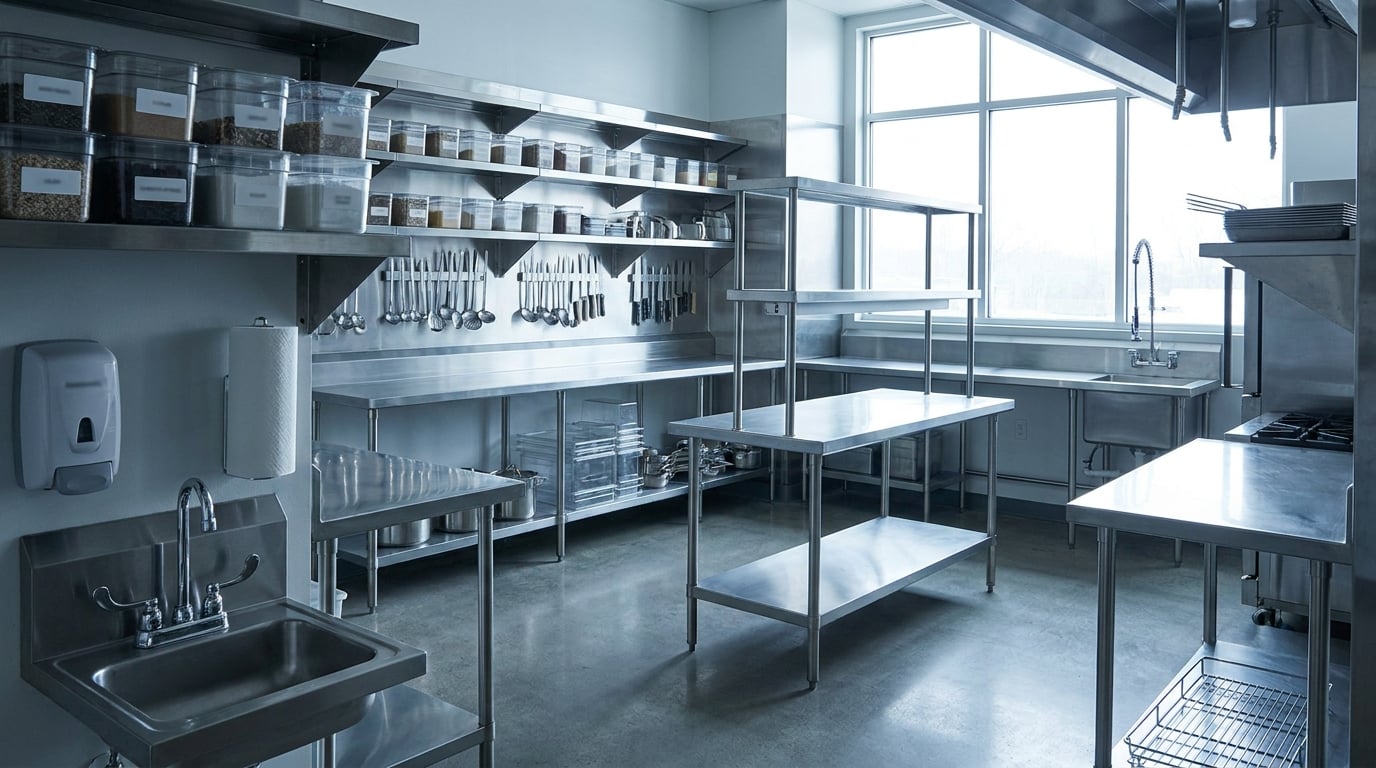
You judge a restaurant kitchen by its systems, not by one shiny surface. A spotless counter in a kitchen with unlabeled containers and a sticky floor tells you very little. What to look for in a clean restaurant kitchen comes down to order, correct storage, disciplined handwashing, and equipment that gets cleaned on a schedule rather than the night before an inspection.
Most diners never see past the pass. That is a shame, because the ten minutes you spend reading a menu is exactly when you can pick up on the small signals that separate a kitchen that runs the same way every day from one that only performs for the health department.
What to Look for in a Clean Restaurant Kitchen
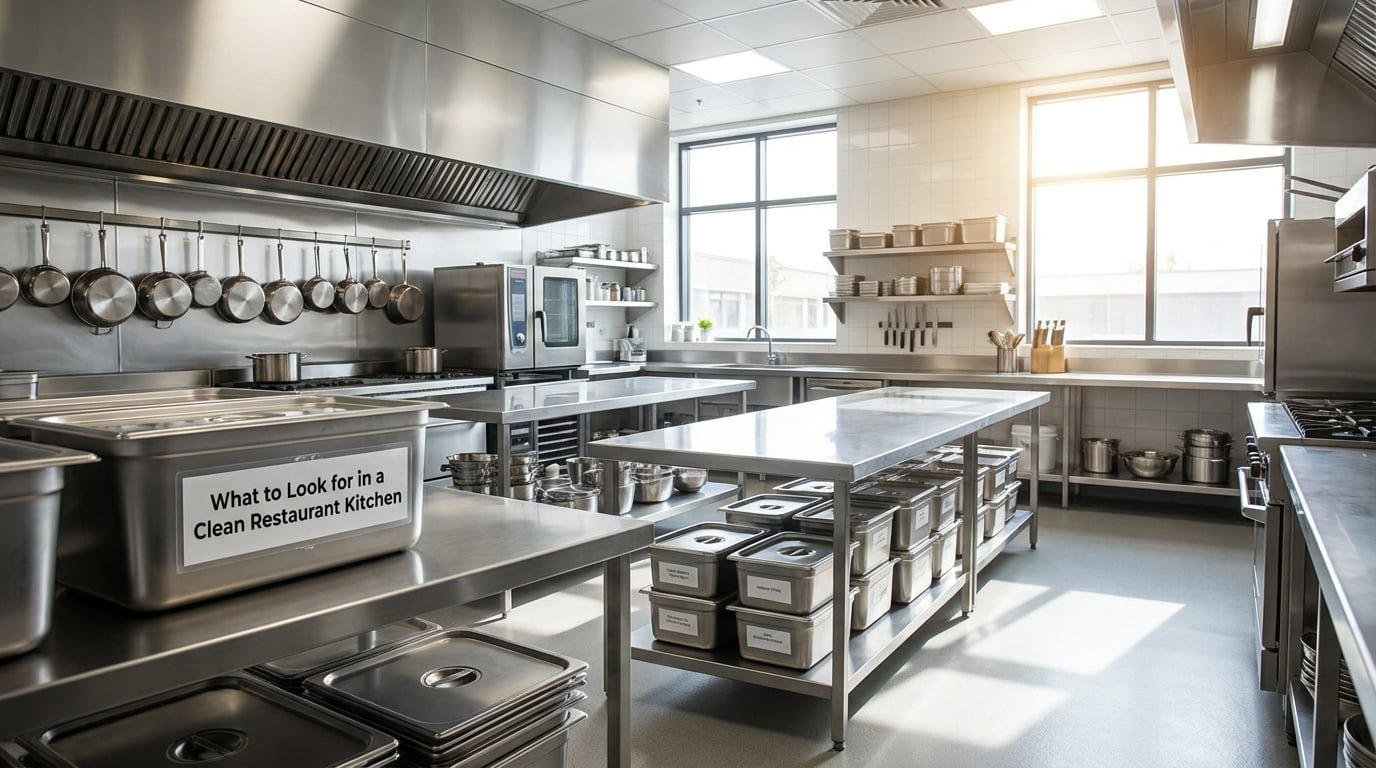
A clean restaurant kitchen is one where food-contact surfaces are sanitized between uses, raw and ready-to-eat foods are stored apart, food is held at safe temperatures, staff wash their hands when the job requires it, and floors, drains and equipment are free of grease, grime and pests. That is the definition, but the useful version is shorter: the kitchen looks like somebody works there on purpose.
Here are the signals I check, in the order I check them.
- Order of storage. Ingredients sit where they belong, not on the floor beside the fryer.
- Labeled containers. Prepped food carries a name and a date, and the discard date is respected.
- Raw kept separate. Raw protein sits on a lower shelf or in a separate unit from cooked and ready-to-eat food.
- A stocked handwashing station. Hot running water, soap and paper towels, nothing stored in the basin.
- Wiping cloths in sanitizer. Wipes live in a bucket, not draped over a shoulder or a prep rail.
- Clean, empty floors. No standing water, no grease film, drains covered and clear.
- Handled equipment. Slicers, cutting boards and can openers get washed between uses.
- Waste handled properly. Lidded bins, lids closed, nothing overfilling on the line.
- No pest evidence. No droppings, no gnaw marks, no flies near food.
- A posted inspection report. Current, in the dining room or available on request.
One of those tells you more than the other nine combined. An unlabeled container or a rag sitting dry on a steel table is a habit, and habits spread to everything else in the room.
Visible Cleanliness and Organization
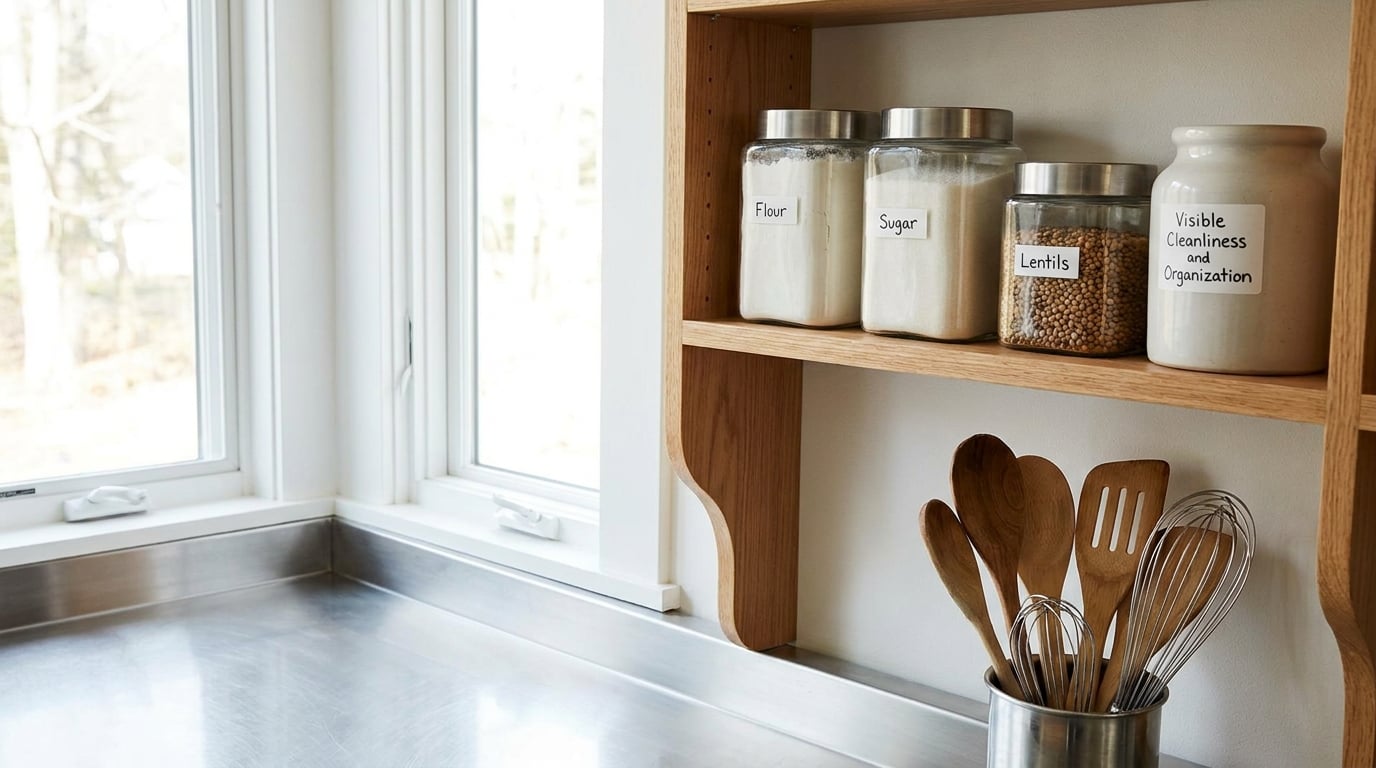
Look at the surfaces nobody stages for customers. Walls above the cookline, the underside of shelving, the floor behind the dish pit, the inside of the walk-in door. Those are the spots that show whether cleaning happens on a routine or whether the room was reset before you walked in.
Sinks tell on a kitchen too. A handwashing basin should be empty except for soap, and nothing should be stored in it. A prep or dish sink packed with produce crates means the staff wash their hands somewhere less convenient. Floors should read as dry and swept, and floor drains should be covered by grates that lift up for cleaning rather than painted shut.
Trash deserves a look as well. Bins with functioning lids, bags tied rather than stuffed, and a clean ashtray or two. Overflowing garbage near the prep line is one of the fastest ways to attract pests, and pests are the one cleanliness failure that reaches the plate.
Food Storage and Temperature Control
Good storage is visible: refrigerated food covered and dated, chemicals separated from ingredients, raw meat on the bottom shelf, and nothing stored on the floor. Walk-in coolers with organized shelving, floor drains clear and no product touching the walls are a good sign. A cooler that looks like a garage with a door is not.
Temperature is where observation gets harder, because you cannot see a thermometer reading from the dining room. The USDA minimum internal temperatures for cooking are the reference points most kitchens work from: poultry at 165°F (74°C), ground meat at 160°F (71°C), and whole cuts of meat and fish at 145°F (63°C). The FDA Food Code and your local food code set the specifics, and those codes also define the temperature danger zone that cold holding and hot holding are meant to stay out of.
What you can check as a diner: is cold food sitting out on the line for a long time, is the cook working from a hotel pan that has been out since lunch, is the walk-in door propped open. Door propped open is the classic one, and it also means the cooler’s working harder than it should.
Handwashing, Sanitation, and Cross-Contamination Control
Watch a cook change tasks. If they go from handling raw chicken to slicing bread without washing or changing gloves, you have your answer about how the rest of the kitchen is run. Gloves get changed, not rinsed. Wiping cloths go back into sanitizer. Cutting boards get swapped or washed between raw and ready-to-eat work instead of being wiped once and reused.
Allergen handling is a related signal. A kitchen that keeps a dedicated board or a separate prep area for allergen-sensitive orders is doing something most code requirements only partly mandate, and it is worth noticing when you order for someone with a serious allergy.
Some things you simply cannot see from a table. Interior wall cleaning schedules, dishwasher sanitizer concentration, temperature logs, and illness policies are all inspection territory. Judge what you can observe, and assume the rest is verified by the health department rather than by you.
Equipment Condition and Cleaning Habits
Equipment tells you about maintenance, and maintenance tells you about the kitchen. A range with carbonized buildup around the burners, a fryer with cloudy old oil, or a refrigerator with a gasket torn or a door that does not latch means heat is leaking out and contamination can get in. Those are cheap fixes that get deferred, which is a reasonable proxy for how the rest of the deferred work is handled.
Hoods and ventilation filters matter more than most diners realize, because grease in the duct work is both a fire risk and a cleaning headache. A hood that shows a thin, even film of grease has been wiped down. One with thick, tacky deposits has not been touched in a while.
Watch the dishwashing station too. Air-water temperature at the hand sink, the sanitizer bucket with cloths fully submerged, dish racks that are dripping onto the floor rather than onto a mat, and dishwashers with clear windows so you can see the racks are being run. Standing water under a rack means a floor that never dries, which means grease that never leaves.
Slicers are the one most people get squeamish about, and rightly so. A commercial slicer with removable guards and a visible wash-down step between tasks is doing the right thing. A blade exposed next to a bread station with no guard off is not.
What a Clean Kitchen Cannot Tell You
A clean kitchen still does not confirm everything. You cannot verify temperature logs, hidden surfaces, whether pest control is actually contracted or whether staff are reporting illness, or how the kitchen handles food when the health department is not coming. Those live in records you do not get to see.
Be honest about that and use the records that are public. In most jurisdictions, inspection reports are posted on the county or city health department website, and many states publish them through a state-level portal. The scoring bands differ: some places use a 100-point scale, others grade A through C. A C in one system may not map neatly onto a failing score in another, so read the local explanation rather than assuming a number.
Two other sources help. Review patterns that mention cleanliness, taken over a year rather than one visit, say something real about consistency. And staff behavior under observation says a lot: ask a simple question about an ingredient or an allergy and see whether the answer is confident or guessed.
Quick Questions to Ask or Check
Before you order, spend thirty seconds on these. Most take one glance.
- Is the current inspection report posted, and does the date look recent?
- Do you see a handwashing station that is stocked and unobstructed?
- Are prep containers labeled with a name and a date?
- Is raw protein stored below or apart from cooked and ready-to-eat food?
- Are wiping cloths sitting in sanitizer rather than lying on a counter?
- Do floors read as dry and swept, with drains covered?
- Do cooks change gloves and wash hands when they switch tasks?
- Can the server answer an allergen question without guessing?
- When you raise a concern, does a manager respond calmly and specifically?
That last one matters more than people give it credit for. A manager who dismisses a hygiene question is telling you how the kitchen handles the next one.
Frequently Asked Questions
How can I tell if a restaurant kitchen is clean?
Look for systems rather than one clean surface. Check whether food is labeled and dated, raw protein is stored below ready-to-eat food, the handwashing basin is stocked and empty, wiping cloths sit in sanitizer, floors are dry with covered drains, and waste bins have lids that stay closed. A kitchen that is organized in those ways is almost always a kitchen that cleans on a schedule.
How do I look up a restaurant’s health inspection score?
Search your state or county health department website for an online inspection database or restaurant search portal, then look up the restaurant by name and address. Many jurisdictions also post the current report inside the dining room. Scoring systems differ, so check the local scale: some use a numeric score out of 100, others grade establishments A through C.
Is it bad if a restaurant kitchen is messy during service?
Some clutter during service is normal. A kitchen running a full dining room at once will have pans, tickets and stock moving, and a floor that needs attention during a rush is ordinary. What matters is whether mess is actively managed: raw and cooked food separated, cloths in sanitizer, floors recovering, waste controlled. Disorder that persists after the rush is a different signal entirely.
What temperature should a restaurant keep food at?
USDA minimum internal temperatures for cooking are poultry at 165u0026deg;F (74u0026deg;C), ground meat at 160u0026deg;F (71u0026deg;C), and whole cuts of meat and fish at 145u0026deg;F (63u0026deg;C). Hot and cold holding requirements come from the FDA Food Code and your local food code, which define the temperature danger zone. Diners rarely see a thermometer, so treat this as background rather than something you can verify at the table.
Should I worry if a restaurant kitchen has no hair restraints?
Hair restraints are a routine requirement in food preparation areas, and the absence of them usually means the requirement is being skipped rather than that the food is unsafe. It is still a useful signal, because hair restraints sit alongside handwashing, glove changes and glove use, and kitchens that skip one tend to be loose on the rest. It is a cue to look closer, not a reason to walk out on its own.
Conclusion: Start with Consistency
Start with consistency rather than any single spot. The signs that matter most, in order: food stored and labeled properly, equipment that is cared for instead of neglected, floors and drains that are clean, handwashing that actually happens, and staff who answer your questions without guessing.
Kitchen cleanliness is judged by whether it holds on an ordinary Wednesday, not how it looked the morning an inspector arrived. That is the whole test.