
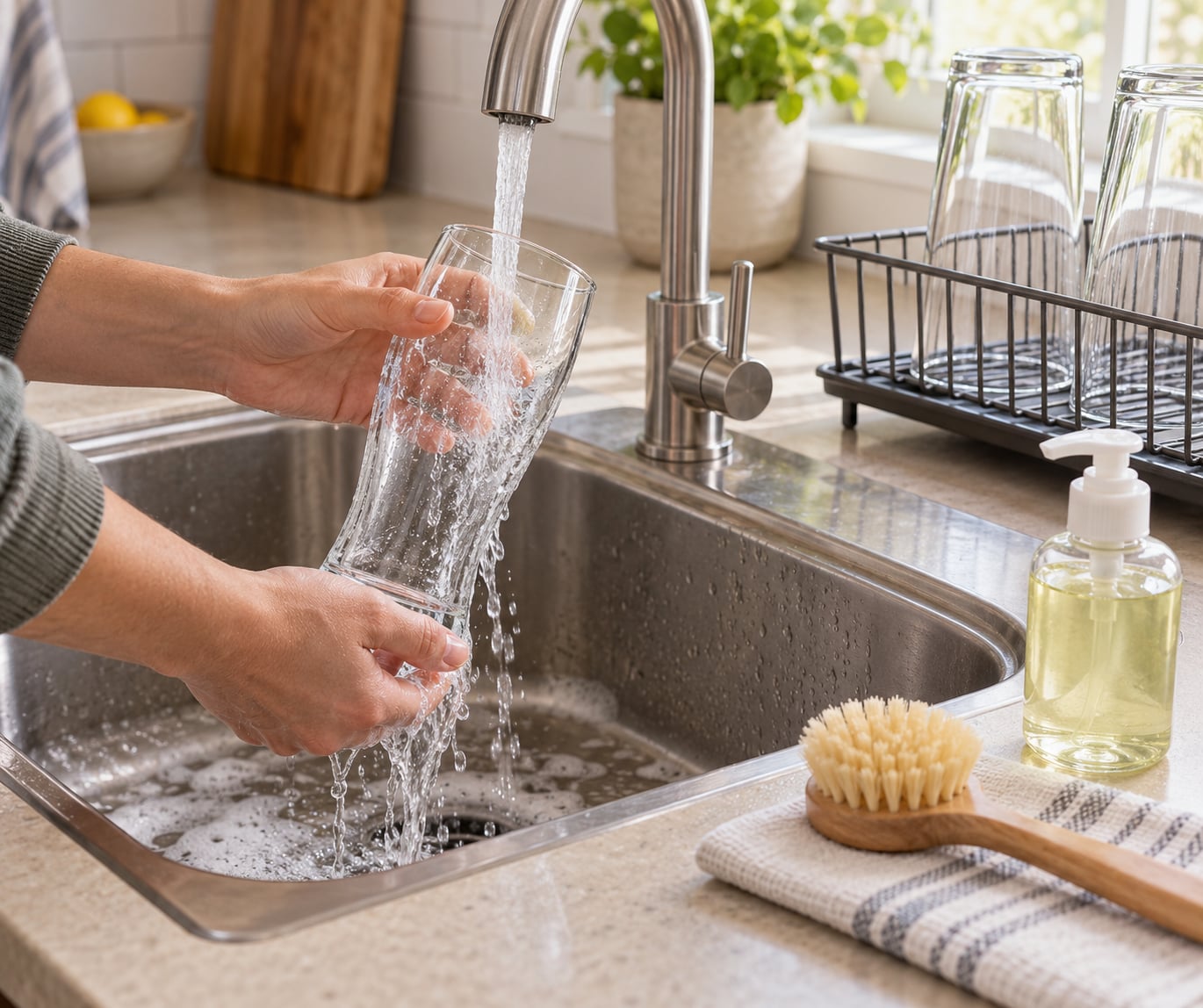
A beer-clean glass is one with no grease film, no soap residue and no water spots: it holds a proper foam head, lets lace trail down the side as you drink, and shows no patches of bubbles stuck below the foam line. Learning how to clean beer glasses properly takes about five minutes of active washing per glass, and the whole job is easier than most people expect.
You do not need special beer soap or a commercial glasswasher at home. You need lukewarm water, a mild unscented detergent, a soft brush you never use on plates, and somewhere for the glass to drain upside down without a towel touching it.
I keep two glasses per person in rotation rather than washing everything mid-session, which sounds fussy until you try to scrub a cloudy pint while guests are waiting. If you are building a small beer setup, the storage side matters too, and I covered that in how to store beer at home properly.
Table of Contents
- What You Need to Clean Beer Glasses Properly
- How to Clean Beer Glasses Properly: Step by Step
- Frequently Asked Questions
- Can I put beer glasses in the dishwasher?
- How do I remove cloudy residue or water spots from beer glasses?
- What is the best way to dry a beer glass without streaks?
- How often should I clean beer glasses at home or in a bar?
- Can I use the same glass for beer and other drinks without it tasting like beer?
- Conclusion
What You Need to Clean Beer Glasses Properly
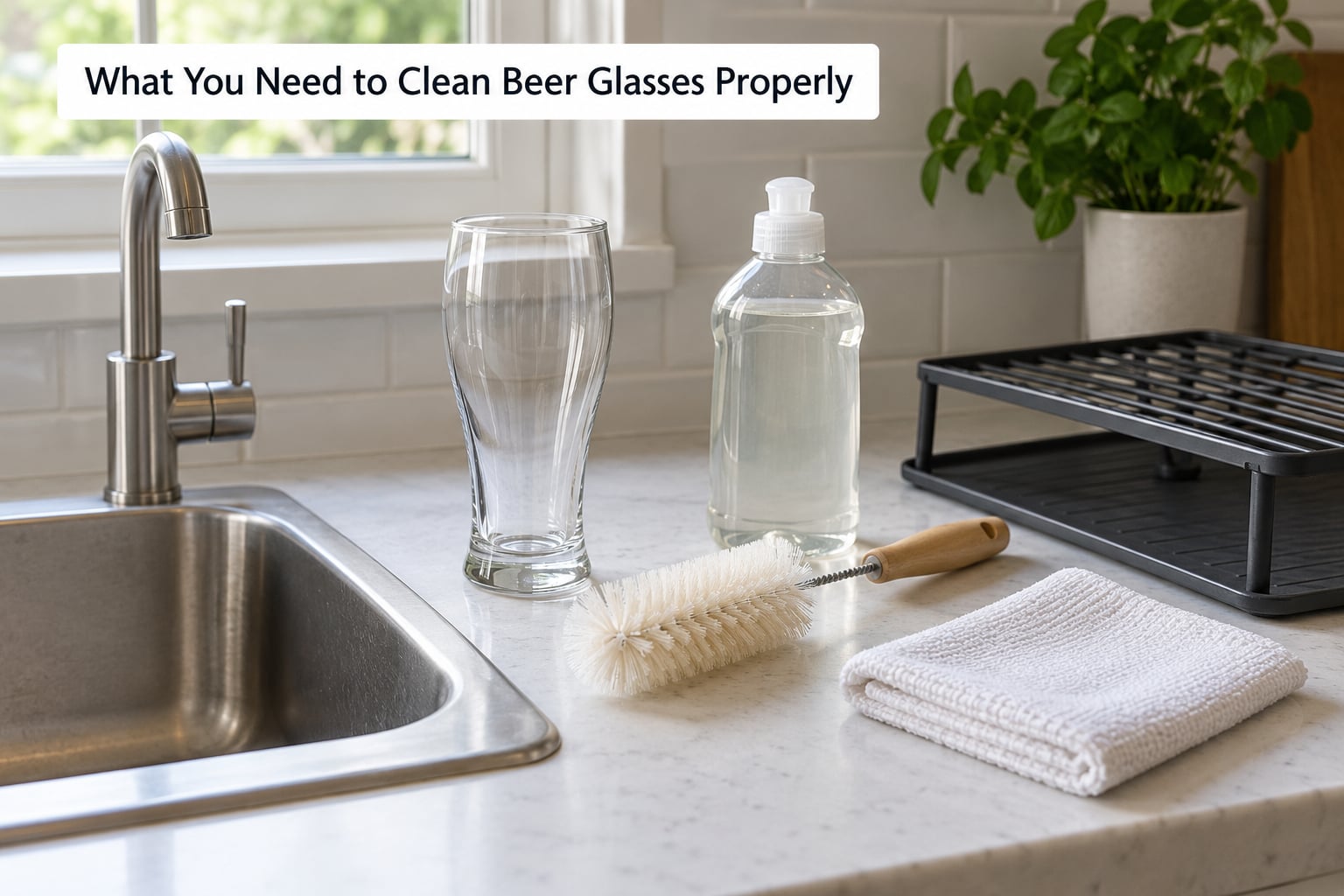
Most homes already have everything except one dedicated tool, and that tool is the thing worth buying: a glass brush kept in the sink with the glasses, never in the dish rack.
- Lukewarm water. Hot water helps cut grease, but it raises the risk of thermal shock cracking a thin glass and it sets protein haze in some shapes. Warm is the sweet spot.
- Mild, unscented detergent. Ordinary non-fat dish soap is genuinely enough. Anything labelled heavy-duty, concentrated, or scented leaves more behind than it removes.
- A soft bottle brush or non-abrasive sponge. The brush is for narrow necks, tulip bowls and the inside base of a mug where a cloth never reaches.
- A raised drying rack or ridge mat. A flat towel does not work, and stacking glasses inside each other is how rims get chipped.
- A lint-free towel. Not for drying the bowl. For wiping the outside of a glass before it goes into storage, and for polishing the base.
Use the brush when the glass has a narrow neck or a heavy sediment line in the base, which is where stale protein hides. Skip it on nucleated or etched specialty glasses, where the texture traps debris and stiff bristles can work it further in.
The dishwasher is only worth reaching for with sturdy, plainly printed pint tumblers. Everything else gets hand washed, and the section on the dishwasher below explains the trade-off honestly.
How to Clean Beer Glasses Properly: Step by Step
Six steps, and the whole routine takes about a minute once you have the brush moving. The order matters more than the effort: preparation catches breakage, the detergent does the degreasing, the rinse kills the soap, and the drying step decides whether you end up with streaks or sparkle.
1. Empty and Prepare the Glass
Pour out the dregs, then rinse the glass under lukewarm water to wash away the loose foam and sediment while it is still moving.
Hold it up to the light and look at the rim and the base for chips or cracks before it goes anywhere near hot water. A chip you can feel with a fingernail will cut somebody’s lip, so pull that glass out of rotation.
Then sort your pile. Hand-wash-only, etched, decorated and hand-blown glasses go in one stack; dishwasher-safe pint tumblers go in another. Mixing them is how the expensive ones get ruined.
2. Wash the Glass With Mild Detergent
Fill the glass about a third full with lukewarm water and add a small squeeze of mild unscented detergent, then swirl it so the solution reaches the whole interior wall, including the base.
Work a soft brush around the inside in short strokes. Pay attention to the rim, where lipstick and grease collect, and to the base, where dried protein sits. Outside the glass matters too: fingerprints and grease on the bowl show up the moment a customer holds it up to the light.
Keep the pressure gentle. Micro-scratches from a stiff brush or an abrasive pad never wash out, and they become nucleation sites that scatter bubbles instead of letting a head form.
On ordering, wash beer glasses first, before anything with frying oil or tomato sauce goes in. Fat re-deposits on a glass that was washed last, and it is the single most common cause of a flat-looking pint.
3. Rinse Away Every Trace of Soap
Rinsing is where most people cut corners, and soap film is the reason a beer tastes flat and dies in seconds.
Rinse the inside top to bottom, then the rim, then the outside. Hold the glass up against a light and rotate it slowly: what you are looking for is completely clear glass with no cloudiness, no rainbow streaks and no patchy film near the base.
A quick check: if the glass still smells faintly of detergent when it is wet, keep rinsing. Smell catches what the eye misses.
4. Dry the Glass Without Leaving Streaks
Air drying is the method that works, because it leaves no lint and no towel marks. Turn the glass upside down on a raised rack or a ridge mat so air can move through the bowl and water drains from the rim rather than pooling in the base.
In a busy bar, servers use a lint-free towel: hold the glass by the base, wrap the towel around the bowl, and rotate it while you buff. Keep your fingertips off the rim, because the head starts forming right where your mouth lands.
Whatever you do, do not dry the inside of the bowl with a cloth. Lint and fibres in a pint are a genuine complaint, and used kitchen towels carry the grease you just removed.
If you need glasses fast, fill them with cold water and a handful of ice for a minute, then dump and drain. A few home brewers do this before every pour, and it flushes a faint film you would otherwise miss.
5. Use the Dishwasher When the Glass Allows It
A dishwasher is fine for durable, undecorated pint tumblers and commercial glassware rated for it. Skip it for anything etched, nucleated, hand-blown, printed with a decal, or made of thin, thin-walled glass.
The reasons are physical. Prolonged heat plus pressure can chip a rim or split a thin base, dishwasher detergent leaves a film that suppresses head formation, and a nucleated base is a textured surface that traps that film permanently in the pits.
When you do use a machine, load glasses so they do not knock, choose the sanitising or heated-dry cycle, and take them out promptly so nothing air-dries under a wet glass. Never pour glasses straight from a hot machine into service: a warm glass warms the beer and flattens the aroma.
For a home kitchen, hand washing is faster and gentler anyway. A dedicated glass brush will not scratch the way a dishwasher rack does.
6. Inspect and Store the Clean Glass
Before it goes back into service, check for clarity, water spots, cloudiness and any new chips around the rim or foot.
Store glasses upright in a clean, dry cabinet with space between them. Never nest one glass inside another, because the rims press together and chip, and the contact surface holds moisture that leads to odours.
For a bar, keep glassware on a ventilated shelf rather than a closed cupboard. Homebrew Talk users go further, storing sanitised glassware inverted and covered so nothing sits damp inside a bowl overnight.
Keep a smell check in your rotation too. Glasses that hold a stale beer smell in the base are usually the ones nobody scrubs properly, and that odour comes back in the next pour.
Common Mistakes That Ruin Beer Glass Cleaning
Most streak and film problems trace back to one of a handful of habits. Here is the fix for each.
- Using hot or boiling water. Fix: lukewarm only. It cuts grease just as well on most glasses without risking thermal shock or setting protein into the base.
- Reaching for the greasy bottle by the sink. Fix: mild, unscented, non-fat detergent. Fat leaves an invisible layer that flattens the head and ruins lacing.
- Reusing a grimy sponge. Fix: a glass-only brush or sponge kept with the glassware. A shared sponge re-deposits the grease you just removed.
- Abrasive pads or stiff brushes on delicate glass. Fix: soft bristles, short strokes, light pressure. Scratches cannot be washed out.
- Washing beer glasses last. Fix: wash them first, before oily dishes, and before the general load goes in.
- Drying with a used kitchen towel. Fix: air dry inverted, or buff the outside with a clean lint-free towel you reserve for glassware.
- Running etched or hand-wash-only glass through the dishwasher. Fix: hand wash those, always.
- Stacking glasses nested together. Fix: upright, spaced, on a ventilated shelf.
For stubborn cloudy film, work a paste of baking soda and water around the bowl with a soft cloth, then rinse well. Homebrewers have used this with a Chux wipe for years because it lifts light film without any abrasive chemistry. If the cloudiness is mineral rather than greasy, a soak in warm white vinegar for fifteen minutes followed by a thorough rinse handles it. Vinegar is safe on plain glass; skip it on decorated or glued-together pieces.
For a tulip or goblet with a narrow stem, push the brush in gently and rotate the glass rather than jamming the brush down and bending it against the bottom. The residue you are chasing sits where the beer sat, so dwell there for a few extra seconds.
One more bar habit worth copying at home: give the glass a cold water rinse right before the pour. It clears any dust picked up in storage and wets the wall so the head starts forming immediately instead of a minute late.
If you regularly set out a flight of glasses for friends, the washing side of a tasting night is worth planning for. I wrote about the room setup in how to host a beer and burger tasting night, and it makes the rinse-and-dry routine much less painful than doing it between courses.
Frequently Asked Questions
Can I put beer glasses in the dishwasher?
Only for sturdy, undecorated, dishwasher-safe pint tumblers. Heat and pressure can chip rims or split thin bases, machine detergent leaves a film that flattens the head, and nucleated or etched bases trap that film permanently. Hand-wash anything hand-blown, decorated, etched or labelled hand-wash only, and never pour a glass straight from a hot cycle into service.
How do I remove cloudy residue or water spots from beer glasses?
Start with a paste of baking soda and water worked around the bowl with a soft cloth, then rinse thoroughly. If the film is mineral rather than greasy, soak the glass in warm white vinegar for about fifteen minutes and rinse well. Avoid abrasive pads and bleach, both of which can etch the glass permanently and dull the surface that helps a head form.
What is the best way to dry a beer glass without streaks?
Air dry is the most reliable method. Turn the glass upside down on a raised rack or ridge mat so water drains from the rim and air moves through the bowl. If you need the glass immediately, hold it by the base and rotate it while buffing the outside with a clean lint-free towel kept exclusively for glassware. Never dry the inside of the bowl with a cloth.
How often should I clean beer glasses at home or in a bar?
Wash them after every use rather than letting a stack sit. At home, rinse and wash at the end of a tasting session so nothing dries on overnight. In a bar, glasses go through the wash cycle continuously during service and get a full clean and sanitising rinse at closing. Wipe the outside and give a cold rinse before every pour to keep stored dust off the wall.
Can I use the same glass for beer and other drinks without it tasting like beer?
Yes, as long as the glass is washed properly rather than rinsed. A quick rinse leaves the protein and oil film that carries stale aroma into the next drink, usually water. Wash with mild unscented detergent, scrub the rim and base where residue collects, rinse until completely clear, then air dry inverted. Avoiders of any shared glassware should know that a proper wash is the only reliable fix.
Conclusion
Start by checking the glasscare label, then work through the same short routine every time: lukewarm water, mild unscented detergent, a soft brush on the rim and base, a rinse until the glass is completely clear, and air drying inverted on a raised rack.
That is genuinely all of it. No special soap, no machine, no towel on the bowl. A glass with no grease film and no soap residue holds a proper head, laces down the side as you drink, and lets the aroma come through instead of tasting flat. Updated for 2026, and it is worth the extra minute a glass.