
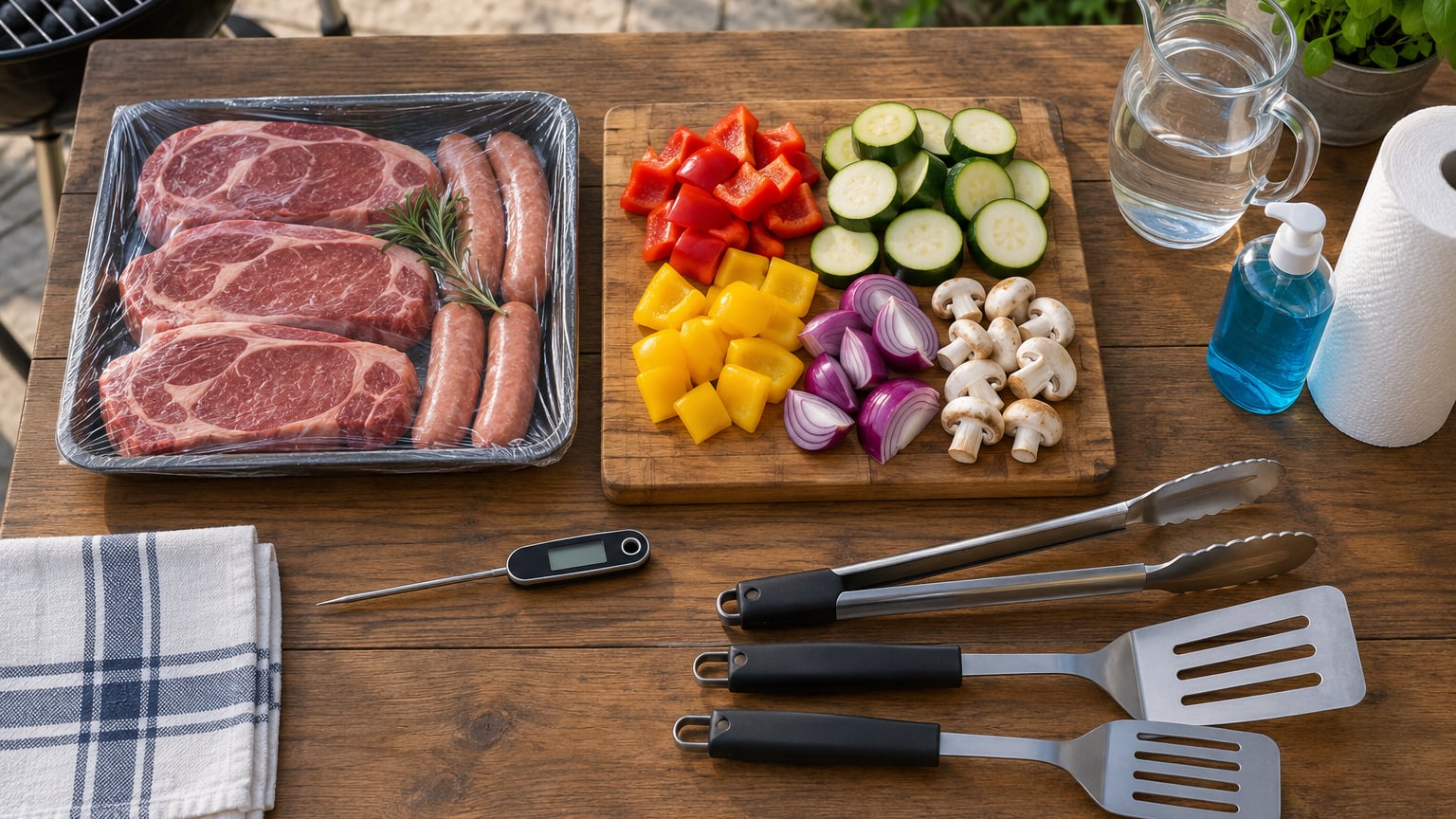
To prevent food poisoning at a barbecue, you control four things: clean hands and surfaces, separation of raw and cooked food, verified safe internal temperatures, and time control on hot and cold food. The CDC frames it as Clean, Separate, Cook, Chill, and it takes about 20 minutes of setup before the coals are even lit. Nearly every cookout illness traces back to one of those four.
The reason summer cookouts are riskier than a weeknight dinner is the environment. Food sits in direct sun instead of a refrigerator, raw meat juices drip across a shared grill grate, and a dozen guests graze from the same bowl with the same spoon. Most of it is preventable with a few cheap supplies and a thermometer that stays in your hand.
Table of Contents
- What You Need
- Step-by-Step: How to Prevent Food Poisoning at a Barbecue
- 1. Keep Refrigerated Food Cold Before the Cookout
- 2. Prevent Cross-Contamination During Preparation
- 3. Cook Food to the USDA Safe Minimum Temperature
- 4. Keep Hot Food Hot and Cooked Food Protected
- 5. Serve Safely and Watch the Time Outdoors
- 6. Refrigerate Leftovers Within Two Hours
- 7. Clean Up and Address Any Suspected Contamination
- Common Mistakes
- Frequently Asked Questions
- Conclusion
What You Need
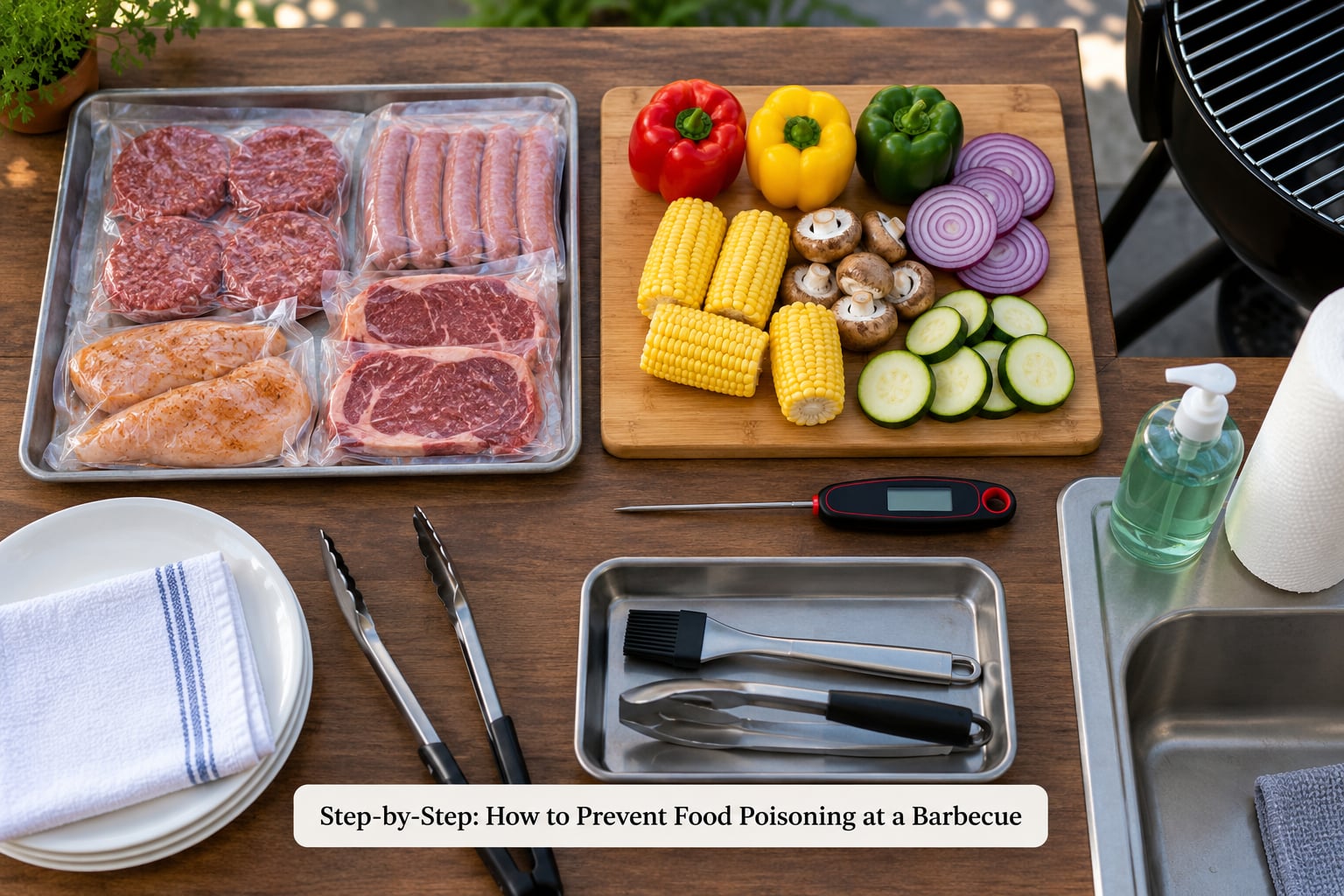
Gather this before guests arrive, not while the meat is already sitting out. Each item closes a specific gap.
- A refrigerator running at or below 40°F/4°C. This is your cold holding anchor for everything that will not go in a cooler.
- An insulated cooler with plenty of ice or frozen packs. Ice keeps raw meat below 40°F during transport and holds cooked food warm in the evening.
- A separate cooler for drinks. Opening the food cooler constantly is the fastest way to warm it up.
- An instant-read food thermometer. This is the single item that decides whether meat is done. Color and firmness are not proof.
- Two or three cutting boards. One for raw meat, one for produce, one for cooked food or bread.
- Two sets of tongs and spatulas. One set stays with raw meat for the whole cookout.
- Handwashing supplies. A jug of water, soap, and paper towels, plus a bin at the grill so nobody skips washing.
- Shallow food-safe containers and foil. Deep hot pans cool slowly, which pushes leftovers into the danger zone for hours.
Step-by-Step: How to Prevent Food Poisoning at a Barbecue
1. Keep Refrigerated Food Cold Before the Cookout
Groceries go straight into the refrigerator within two hours of getting home, and raw meat goes on the bottom shelf in a sealed tray so nothing drips onto produce below it. Transport perishables in a pre-chilled cooler packed with ice, not in a warm car trunk, and pack the drinks in their own separate cooler.
The result you want: raw meat still at or below 40°F/4°C when it hits the grill, with no warm gaps. Perishable food left in the danger zone between 40°F and 140°F for more than two hours invites bacterial growth, and the limit drops to one hour when the outdoor temperature is above 90°F/32°C. Set a phone alarm when the cooler is loaded rather than trusting a mental count of errands.
2. Prevent Cross-Contamination During Preparation
Wash hands with soap and water for at least 20 seconds before handling food, after using the bathroom, after touching pets, and any time you switch between raw and cooked tasks. Outdoors, hands get dirty fast, so the soap and water station should sit near the grill, not inside the house.
Give raw meat its own board, plate, tongs, and knife, and keep those items off everything else for the entire cookout. Do not rinse raw chicken, burgers, or steaks under the tap. It does not clean anything and it splashes bacteria across your sink, counters, and forearms. Prep vegetables and salads first on a clean board, then move them to a covered dish before raw meat comes out.
The result you want: no raw juices reaching a cooked burger, a bun, a salad, or a plate. If a tray of chopped onions for the burgers sits next to raw steak, move the onions. That single habit prevents more cookout illness than anything after cooking.
3. Cook Food to the USDA Safe Minimum Temperature
Push the probe into the thickest part of the food, away from bone, fat, and the grill wall, and read it while it sits still. Take burgers, brats, chicken pieces, and steaks off the grill well before guests ask for them, because carryover cooking finishes the job as the food rests.
| Food | Safe minimum internal temperature |
|---|---|
| Ground beef, pork, lamb (burgers, sausages, meatballs) | 160°F / 71°C |
| Chicken and turkey, whole or ground | 165°F / 74°C |
| Beef, pork, lamb, veal steaks, chops, roasts | 145°F / 63°C with a 3-minute rest |
| Fish and shellfish | 145°F / 63°C |
| Leftovers and casseroles, reheated | 165°F / 74°C |
Color is a poor stand-in. A pink center can be safe in a rare steak and dangerous in a burger, because the risk lives in the surface and in bacteria carried in from the grinder, not in the color of the muscle. Grilling communities like r/grilling are full of confident pink-center photos that turn out to have been cut open with no thermometer in sight.
4. Keep Hot Food Hot and Cooked Food Protected
Hold cooked meat and vegetable dishes at 140°F/60°C or above. A gas grill with a low side burner, a charcoal grill with coals pushed to one side, an insulated serving container with a hot-water bottle, or a small number of batches you can finish quickly all work.
Protect the food while it waits. A covered pan on a clean surface beats an open tray where flies land and guests graze. If you are cooking in batches, cook the last batch last rather than letting finished burgers sit on a board while the rest of the queue grills.
5. Serve Safely and Watch the Time Outdoors
Set up one serving line with its own clean plate and utensils so guests do not carry a loaded plate back into the prep area. Use clean tongs for each batch, and keep mayo-based sides, cut fruit, and potato salad on ice or in a shaded cooler, replenishing in small amounts instead of putting out the whole bowl.
Start the clock when the food comes out, not when you think guests will be done. Perishables that sat out longer than two hours go in the bin, and the limit falls to one hour above 90°F/32°C. Tell guests the limit out loud and put a small sign near the table. Nobody argues with a rule that has a time printed on it.
6. Refrigerate Leftovers Within Two Hours
Transfer leftovers into shallow containers within two hours, or one hour in heat, rather than stacking a deep pan and refrigerating the whole thing overnight. Spread food in a single layer, vent the cover loosely until it cools, and refrigerate at or below 40°F/4°C. USDA guidance allows three to four days for cooked leftovers in the refrigerator, and freezing works for longer.
Reheat leftovers once, to 165°F/74°C, and reheat only the portion you are serving. Toss the rest of the reheated batch instead of putting it back in the fridge for a third round. Throw out anything that sat in the danger zone, because smell and appearance tell you nothing useful about bacteria.
7. Clean Up and Address Any Suspected Contamination
Scrub grill grates with a wire brush, then clean the worktable, utensils, and cutting boards with hot soapy water and a food-safe sanitizer. Wash hands again before packing up, and take the raw meat tray straight to the trash or the sink so it never sits next to the leftovers.
If someone drops raw meat onto a picnic blanket or a plate that has held raw poultry, that surface is contaminated. Discard the food, and clean the area before reuse rather than rinsing it off. If a guest starts vomiting or develops diarrhea, cramps, or fever a few hours after eating, see a healthcare professional, particularly for young children, adults over 65, pregnant people, or anyone with a weakened immune system. Severe symptoms such as bloody stools, persistent vomiting, high fever, dehydration, or signs of dehydration warrant urgent medical care.
Related reading: our guide to food safety rules for grilling meat goes deeper on temperature checks, and how to label frozen food properly covers the storage side.
Common Mistakes
Most of these come from good intentions rather than carelessness.
Judging doneness by color or by poking the meat. Fix: use the thermometer, in the thickest part away from bone. Every single time.
Using one plate and one set of tongs for raw and cooked food. Fix: commit to a raw set and a cooked set for the day, and rinse hands between swaps. It feels excessive until you think about the plate that carried raw burgers to the grill.
Leaving perishables on the table for hours in the sun. Fix: serve sides in small batches on ice and keep the rest cold. Set a phone alarm at two hours and shorten it when the forecast is hot.
Cooling a big pan of leftovers overnight in a deep dish. Fix: shallow containers, loosely covered, so heat escapes fast. The center of a deep pan sits in the danger zone for hours even in the fridge.
Rinsing raw meat before grilling. Fix: skip the rinse. Pat it dry with paper towel instead and let the grill do the work.
Skipping the hand wash. Fix: soap, water, 20 seconds, at the grill station. Make it convenient and people will actually do it.
One more risk worth naming: marinade reuse. If raw meat has soaked in a marinade, that liquid carries raw bacteria. Either discard it after marinating or boil it for several minutes before brushing it on during cooking, and never pour it over cooked meat as a dipping sauce. Reused barbecue sauce and dips are a common sharing hazard too, so keep spoons out of the bowl between guests.
If you deep-fry before you grill, our guide on how to reuse frying oil safely covers storing and discarding used oil, which is another place where cookout mistakes get expensive.
Frequently Asked Questions
How do I know my burgers are cooked safely?
Check the temperature, not the color. Insert an instant-read thermometer into the thickest part of the burger, away from the pan edge, and read 160°F / 71°C. Because grinding spreads surface bacteria through the meat, a pink center is never safe in a burger, even when the outside is dark and charred. Rest the patty a minute after it comes off the grill so the reading settles before you decide.
What temperature should chicken reach on a barbecue?
Chicken must reach 165°F / 74°C measured in the thickest part of the breast or thigh, away from bone. Whole birds and thick pieces are the hardest to judge by eye, so probe two spots. Pull chicken off the grill well before serving so carryover heat finishes the job, and never return a piece that read under 165°F to the grill without rechecking it.
How should I keep cooked food hot if I do not have a chafing dish?
Any method that holds 140°F / 60°C or above works. Push coals to one side of a charcoal grill and set the food in a covered foil pan over the empty side, keep a low side burner on a gas grill, or place a covered insulated container over a hot-water bottle. Cook in smaller batches instead. A well-insulated pot full of hot coals is a popular no-purchase option, and a clean insulated serving dish with hot water added works too.
How long can a picnic or barbecue food sit outside in hot weather?
Perishable food can stay out for two hours, or one hour when the outdoor temperature is above 90°F / 32°C. That clock starts the moment the food leaves refrigeration or the cooler, and it includes time sitting on a buffet line. When in doubt, throw it out. Keep mayo-based salads, cut fruit, and cooked meat on ice, replenish in small batches, and tell guests what the limit is so nobody eats the last two hours of sitting time.
When should food poisoning symptoms prompt medical care?
Contact a healthcare professional if symptoms are severe, and seek urgent medical care for bloody stools, persistent vomiting, high fever, signs of dehydration, or diarrhea lasting more than three days. Get medical advice right away for young children, adults over 65, pregnant people, and anyone with a weakened immune system. Most mild cases resolve with fluids and rest, but dehydration in a vulnerable guest is the reason to call a doctor early rather than wait.
Conclusion
Cookout food poisoning comes down to temperature, separation, and the clock. Clean hands and boards, keep raw and cooked apart, verify every piece with a thermometer at its USDA minimum, and respect the two-hour limit, shortened to one hour in heat above 90°F/32°C.
Start with one thing before anyone else arrives: set up separate prep and serving areas, get the food into a pre-chilled cooler, and put a working thermometer at the grill within reach. Those three minutes do more than any amount of cleanup afterwards.