
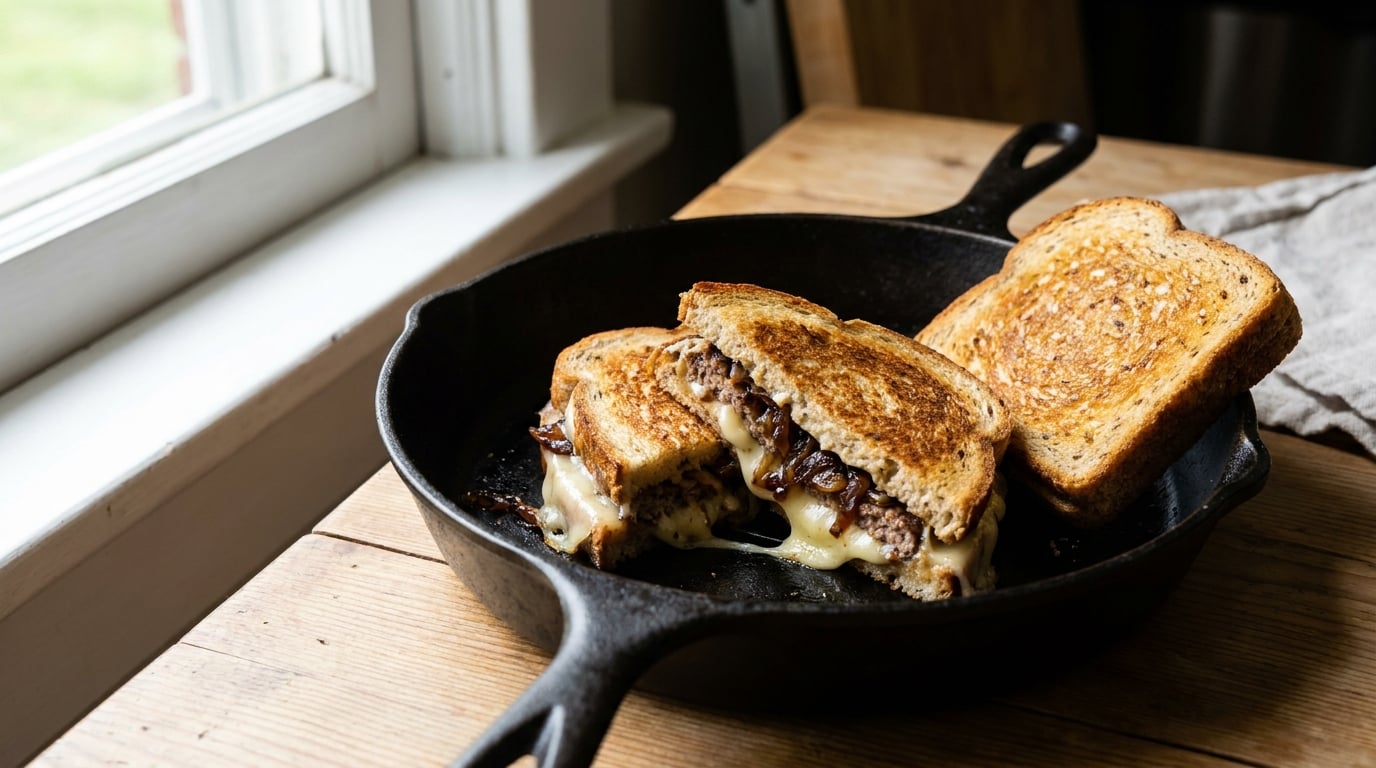
A patty melt is thin beef patties layered with melted cheese and deeply caramelized onions, then grilled butter-side-down between slices of rye until the bread is crisp and the cheese runs. Learning how to make a patty melt at home takes about 35 minutes start to finish, and every part of it happens in one skillet.
Three things decide whether it tastes like the diner version or like a sad cheeseburger. Shape the patties to match your bread, cook the onions low and slow instead of hot and fast, and give the pan a real preheat before the beef goes down.
What You Need
These quantities make two patty melts. The whole recipe is eight or nine ingredients, and the only real equipment is a heavy skillet with a lid.
For the patty melts
- 8 to 10 ounces ground beef, 80/20 or 85/15 (about 250 g)
- 1 large yellow onion, sliced thin (about 170 g)
- 4 slices seeded rye or sourdough bread
- 4 to 6 slices Swiss cheese, or 4 slices American plus 2 slices Swiss
- 3 tablespoons unsalted butter, divided
- Kosher salt and coarse ground black pepper
For the diner-style sauce
- 3 tablespoons mayonnaise
- 1 tablespoon ketchup
- 1 teaspoon sweet pickle relish
- 1/2 teaspoon Worcestershire sauce
- A pinch of garlic powder
Equipment
- A 10 to 12 inch cast iron skillet or a flat griddle
- A lid, or a large plate and a heavy weight for pressing
- A thin metal spatula for flipping and pressing
- A mandolin is nice for the onions, not required
One buying note that saves a wasted trip: buy more onions than you think you need. Sliced onions cook down by more than half their raw volume, so two medium onions for a pound of beef is closer to right than one. Onion quantity is the most common reason a home patty melt tastes under-seasoned, so err on the generous side.
How to Make a Patty Melt Step by Step
The order is: soften and brown the onions first, mix the sauce while they cook, sear the thin patties hard and fast, melt cheese onto the patties, then grill the assembled sandwich in the same pan until the bread is golden. Doing the onions before the beef is deliberate, because the beef needs that pan at full heat and the onions need it at a gentle one.
1. Form the Patty Melt Burgers
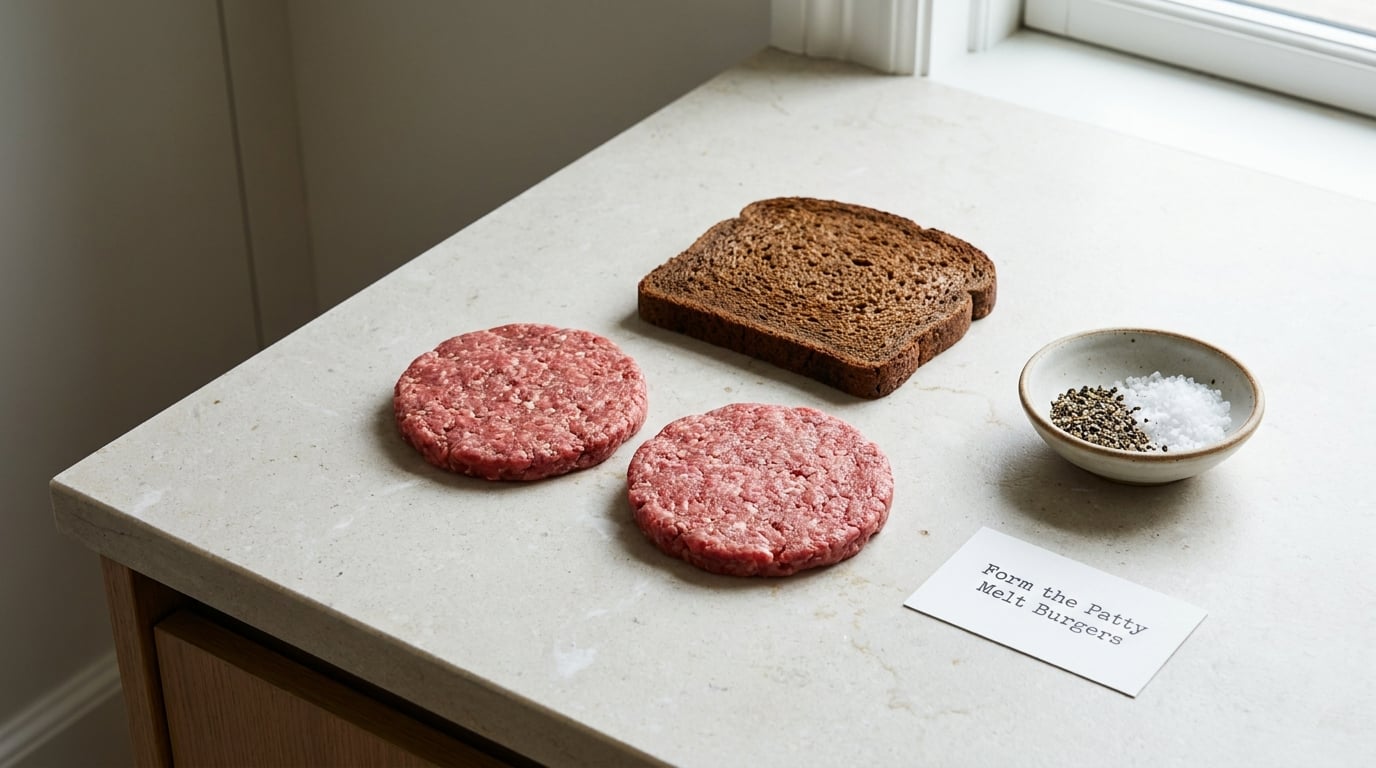
Loosely packed ground beef from the tray is your friend. If you squeezed and kneaded it, the patty turns dense and chewy. Handle the beef as little as possible: weigh out 4 to 5 ounces per patty, pat it into a disc a little wider than your bread slice, and press it flat to about a quarter inch thick.
That patty-to-bread match is the rule most home patty melts break. A patty wider than the bread sticks out, cooks unevenly, and slides out from under the sandwich the moment you cut it. A thin patty the same width as the slice keeps the whole thing together.
Season both sides lightly with kosher salt and black pepper right before they hit the pan. A light rub of Montreal steak seasoning or a few drops of soy sauce also works if you want more depth than plain pepper.
2. Season and Preheat the Griddle
Set the cast iron skillet or griddle on medium-high and give it three to four minutes to come up. A drop of water flicked onto the surface should skitter and evaporate rather than sit there. A cool pan is the number one reason home patty patties steam grey instead of searing brown.
Burger cooking advice lands on the same short sear: high heat, a very short sear, and a barely-pink center. That lines up with the physics, since a thin patty hits temperature almost instantly.
Do not wipe the pan. If you browned onions in it earlier, leave the browned bits in place and wipe only excess oil across them with a paper towel. That fond is where the flavor sits.
3. Cook the Beef Patties
Lay the patties down and leave them alone for two to three minutes. Resist the urge to press, poke, or flip early, because every one of those lifts the crust you are building. You want a deep brown edge and a faint gray line of rendered fat around the outside.
Flip once, cook another two to three minutes, and press gently with the spatula for ten seconds to confirm the patty is even. For ground beef, the safe internal temperature is 160°F, and a quarter-inch patty gets there fast.
Carryover cooking is real here. Pull the patties at 155°F if you are nervous about drying them out, because the hot bread and melted cheese finish the job. Then turn the heat down to medium and keep going.
4. Add Cheese and Toast the Bread
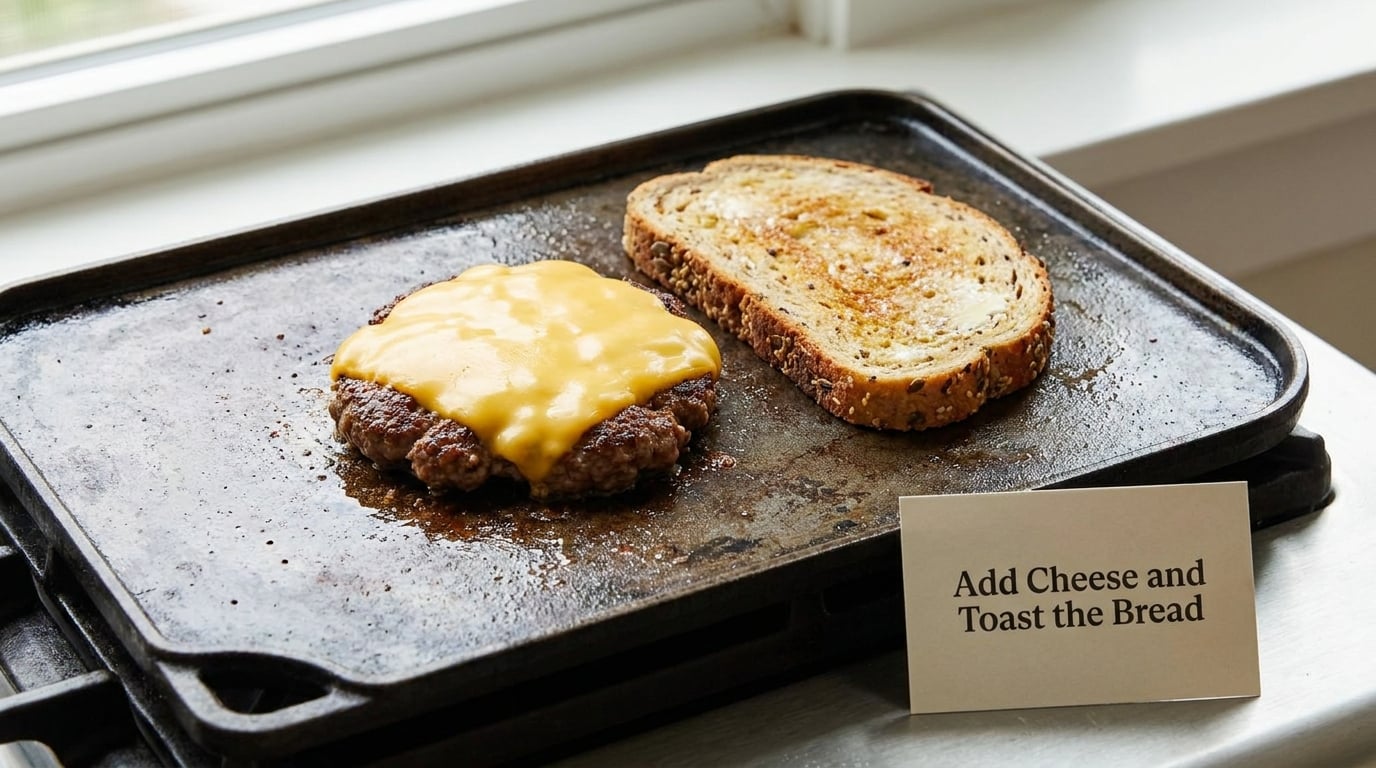
Lay a slice of cheese on each patty, and if you have six slices, put one on top of each patty too. The double layer is the single biggest difference between a patty melt and a grilled cheese with beef in it, and it gives you the oozy pull when you cut across it.
Drop the lid on the skillet and give the cheese forty seconds to soften, or stand the skillet over a low flame if your cheese is a slow melt. You want it fully melted, not just slumped.
Butter the outside faces of the four bread slices with the remaining butter and set them in the same pan, cut side down, while the cheese melts. Toast for about a minute until golden, then flip them butter-side up to use as the sandwich base.
5. Assemble and Serve
Stir the sauce ingredients together in a small bowl while the bread toasts. It should taste a little too sharp and too sweet on a spoon, because the beef and the onions mute it once it is spread thin.
Build the sandwich in this order: bread, cheese, patty, onions, second cheese, top bread. The onion layer goes last so it stays on top of the patty instead of sliding out when you cut.
Set the sandwich in the skillet, butter-side down, and weight it with a heavy pan or a foil-wrapped brick for about two minutes per side. That press is what melts the cheese through the middle and re-crisps the bread. Cut on the diagonal with a sharp knife and serve right away, with dill pickle spears and a plate of fries.
Common Mistakes
Patties That Are Too Thick
A patty thicker than a quarter inch cooks unevenly at the edges and steams in the middle. Roll the beef between two sheets of parchment paper to get an even thickness fast, and cut a small round template from a square of bread paper to size it. Thin and even beats thick and beefy every time.
A Skillet That Is Not Hot Enough
Gray, limp patties mean the pan was cool. Preheat the cast iron four full minutes, and if you are nervous, brown a scrap of beef first and wipe the pan before shaping the real patties. That costs you thirty seconds and tells you exactly how the surface is behaving.
Bread That Turns Soggy
Sogginess comes from steam escaping upward and sauce soaking into soft crumb. Toast the bread dry on its own first, put the sauce on the cut face rather than the buttered one, and keep the sandwich on a wire rack for a minute after grilling. Rye survives this better than a soft white roll, which is part of why it is the classic.
Cheese That Refuses to Melt
Two fixes, depending on the cause. If the cheese is too cool, add the second layer and give it another thirty seconds under the lid. If the cheese is the wrong type, low-moisture Swiss and aged cheddar melt well while fresh mozzarella and most reduced-fat cheeses fight you the entire time.
Dry, Rubbery Beef
Lean beef cooked thin and cooked through is the reason people say patty melts are dry. Use 80/20 or 85/15, keep the sear short, and pull the patties before they look done. A teaspoon of Worcestershire mixed into the beef before shaping, or a thin layer of sauce on the patty while it sits, keeps the crumb moist.
Onions That Burn or Steam
High heat plus a crowded pan makes onions steam, and a dry pan makes them catch and blacken. Cook them in a tablespoon of butter over medium-low with a pinch of salt, give them room, and stir every minute or two. Deep gold takes twenty to twenty-five minutes, and you should not rush it.
How to Make a Patty Melt That Does Not Fall Apart
Most collapsed patty melts trace back to one place: the patty is wider than the bread. Size the patty to the slice, keep the onion layer on top, and press the sandwich under weight in the skillet rather than stacking it by hand. If you are cooking for a crowd, a 12-inch skillet holds two patty melts properly, not four. Crowding drops the pan temperature and steams everything.
Tips for the Best Texture and Serving
Taste the sauce before it goes on. Skip the onions entirely and the sandwich is still good, but caramelized ones are the point. Slice the finished melt on the diagonal and eat it in the first five minutes, before the bread softens. Dill pickle spears and a crisp side like fries or potato salad cut the richness better than any dip.
Frequently Asked Questions
What kind of cheese is best for a patty melt?
Swiss is the classic because it is mild, salty, and melts into an even sheet over a thin patty. Low-moisture Swiss works better than the watery imported kind. Sharp cheddar is the second choice, and American cheese is a close third because it melts smoothly and never breaks. For the most oozy result, crumble one cheese and lay a slice of another on each patty.
Can I use a skillet instead of a griddle?
Yes, and most home cooks never use a griddle at all. A 10 to 12 inch cast iron skillet holds heat like a griddle and has the sides to trap steam while the cheese melts. Non-stick works too, though you need a little more oil to get the same brown crust. A lid is the only real substitute for a griddle top.
How do I know when the beef patty is cooked?
A thin quarter-inch patty needs about two to three minutes per side on medium-high heat. The safe internal temperature for ground beef is 160°F, and a probe or an instant-read thermometer is the only reliable check. Keep in mind that carryover cooking pushes the temperature higher once the patty is in the sandwich, so many cooks pull it at 155°F and let the bread finish the job.
Should I toast the bread before adding it to the patty?
Toast it. Butter the outside faces and set the slices cut side down in the hot pan for about a minute before you build the sandwich. A pre-toasted slice has already dried out on the surface, so much less steam gets trapped under the top. It also gives you an even, crisp base that holds up when the cheese and patty go on.
Can I make a patty melt with ground turkey?
You can, and it is a leaner option. Use 93/7 ground turkey, season it more heavily than beef with pepper, paprika, and garlic powder, and do not press it. Turkey releases less fat, so add a tablespoon of oil to the pan and keep an eye on it, since it dries out faster than beef. Skip the Worcestershire if you are avoiding soy.
How do I prevent the bun or bread from getting soggy?
Dry the bread on its own before assembly, spread sauce on the cut face rather than the buttered one, and keep the onion layer on top of the patty. Weigh the sandwich down in the skillet for two minutes a side so trapped steam escapes, and rest it on a wire rack for a minute before cutting. Serve it straight away, because it only gets softer from there.
Conclusion
The first step that decides everything is shaping thin, even patties to the exact size of your bread and cooking them on a properly preheated surface. Get that right and the rest is straightforward: caramelize the onions slowly, melt cheese onto both sides of the patty, and grill the sandwich under a weight until the bread is golden.
Tear the bread rather than cutting the whole sandwich, slather on that diner sauce while the cheese is still molten, and serve it straight away with pickles and fries.