
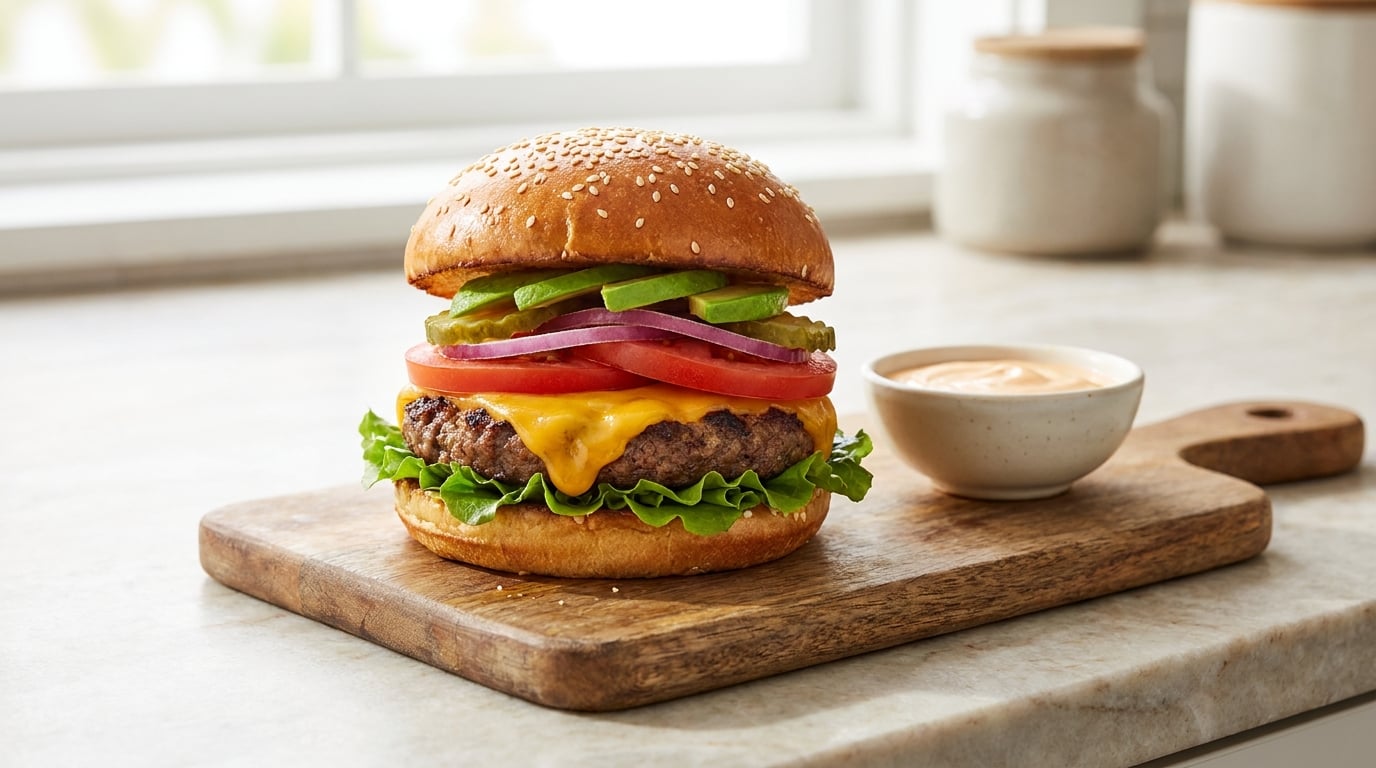
A California style burger is a beef patty layered with melted cheese, crisp lettuce, tomato, thin red onion, dill pickles and a creamy sauce, then served on a toasted bun. The whole thing takes about 25 minutes, most of it waiting while the patty sears, and it works just as well in a cast iron skillet as it does on a grill.
The name sounds fancier than the work. There is no deep marinade, no boiled onion technique, nothing that needs a store trip. The whole thing hangs on two things: a loosely formed patty that stays juicy, and an assembly order that keeps the bun from turning to mush.
I make these on weeknights when I want something that tastes like a cookout without firing up the charcoal. Once you know the three steps below, you can put one together faster than delivery takes to arrive.
What You Need
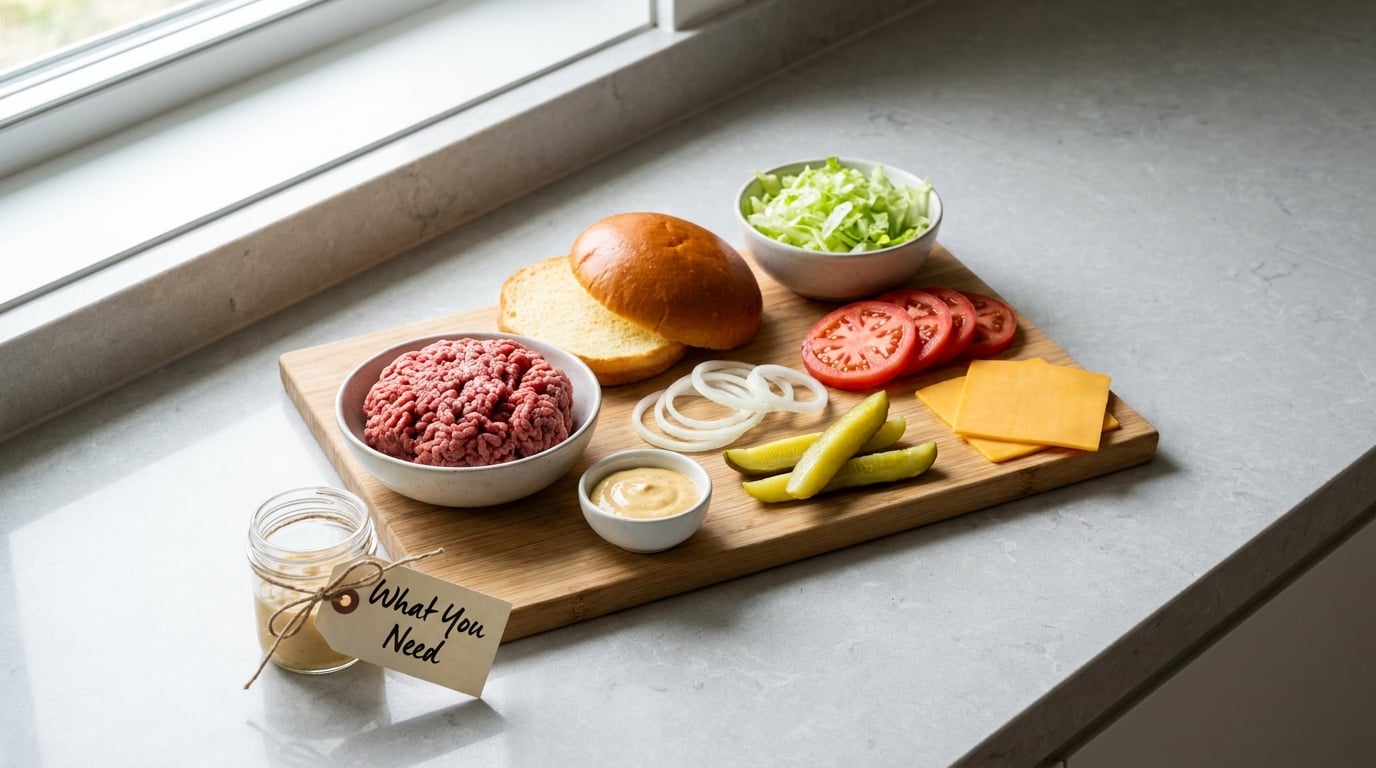
For two burgers, gather everything before you start. Once the meat hits the pan, the rest moves fast.
For the patties
- 1 lb (450 g) ground chuck, 80% lean / 20% fat
- 1 tsp kosher salt, plus more for the patties
- 1/2 tsp freshly ground black pepper
- 1 tsp Worcestershire sauce
- 1/2 tsp garlic powder
- 1/2 tsp onion powder
For the toppings
- 2 brioche buns, or potato buns
- 2 slices Monterey Jack or Pepper Jack cheese (optional)
- 4 leaves green leaf or romaine lettuce
- 1 tomato, sliced thick and patted dry
- 1/2 red onion, sliced paper thin
- 6 to 8 dill pickle chips
- 1 ripe avocado, sliced at the last second
- 2 tbsp butter for the bun
For the sauce
- 1/3 cup mayonnaise
- 1 tbsp yellow or Dijon mustard
- 1 tsp pickle brine or rice vinegar
- A pinch of salt and a few shakes of black pepper
Equipment
A cast iron skillet or grill pan, a spatula, a sharp knife, and an instant-read thermometer. The thermometer is the one people skip and then regret. Ground meat should hit 160F (71C) internally, and eyeballing it is how burgers end up dry in the middle or raw in a stubborn spot.
Step-by-Step
How to Shape the Burger Patty
Divide the beef into two loose mounds and pat each into a disc about 1 inch thick and slightly wider than your bun. Bigger than the bun is right. Patties shrink as they cook, and a patty cut to the exact bun diameter ends up smaller than the bread it sits on.
Handle the meat lightly. You want the mixture to hold together loosely, not kneaded. Overworking ground beef develops the proteins that make it springy, and a dense patty turns out tough no matter how good the toppings are.
Press one shallow thumbprint into the centre of each patty. That indentation keeps the middle from bulging and helps it cook evenly instead of curling into a taco shape on the grill.
How to Season and Sear the Burger
Season both sides generously with salt and pepper right before the meat hits the pan. Seasoning early pulls moisture out of the surface, which is what you do not want at the moment the crust is forming.
Set the skillet over medium-high heat and add a thin film of oil. Let it get properly hot. A lukewarm pan steams the beef instead of browning it, and you get a pale grey patty with none of that caramelized crust.
Lay the patties down and leave them alone. Resist the urge to press, poke or move them. Each of those touches lets juices escape, and that is the whole reason restaurant burgers feel wetter than homemade ones.
Sear about 4 minutes on the first side, until you can see the browning creeping up the side. Flip once and give it another 3 to 4 minutes. If you are using cheese, lay it on in the last 60 seconds of the second side so it melts without overcooking.
Check the thickest part with the thermometer. USDA guidance puts ground beef at 160F (71C) for safety. Many cooks pull at 150F (66C) and let carryover heat finish the job, but I cook straight to the mark on lean meat because there is not much margin for error.
Rest the patties on a plate for 2 minutes. Resting is not optional politeness here. It lets the juices redistribute instead of running out onto the cutting board the moment you cut in.
How to Toast the Bun and Add Toppings
Melt the butter in the same skillet and lay the buns cut side down for about 45 seconds, until the cut faces are lightly golden. Pull them out. Butter the toasted faces while they are still hot.
Do not skip toasting. The toast is a moisture barrier, and it is the single biggest difference between a California burger that holds together and one that drips through the bottom bun within two bites. A dry bun can take sauce. An untoasted one turns to paste.
Spread about 1 tbsp of sauce on the bottom bun only. Leave the crown plain. Sauce on both sides doubles the moisture load in the middle of the burger for no flavour gain, since nobody tastes the top of the bun through the lettuce anyway.
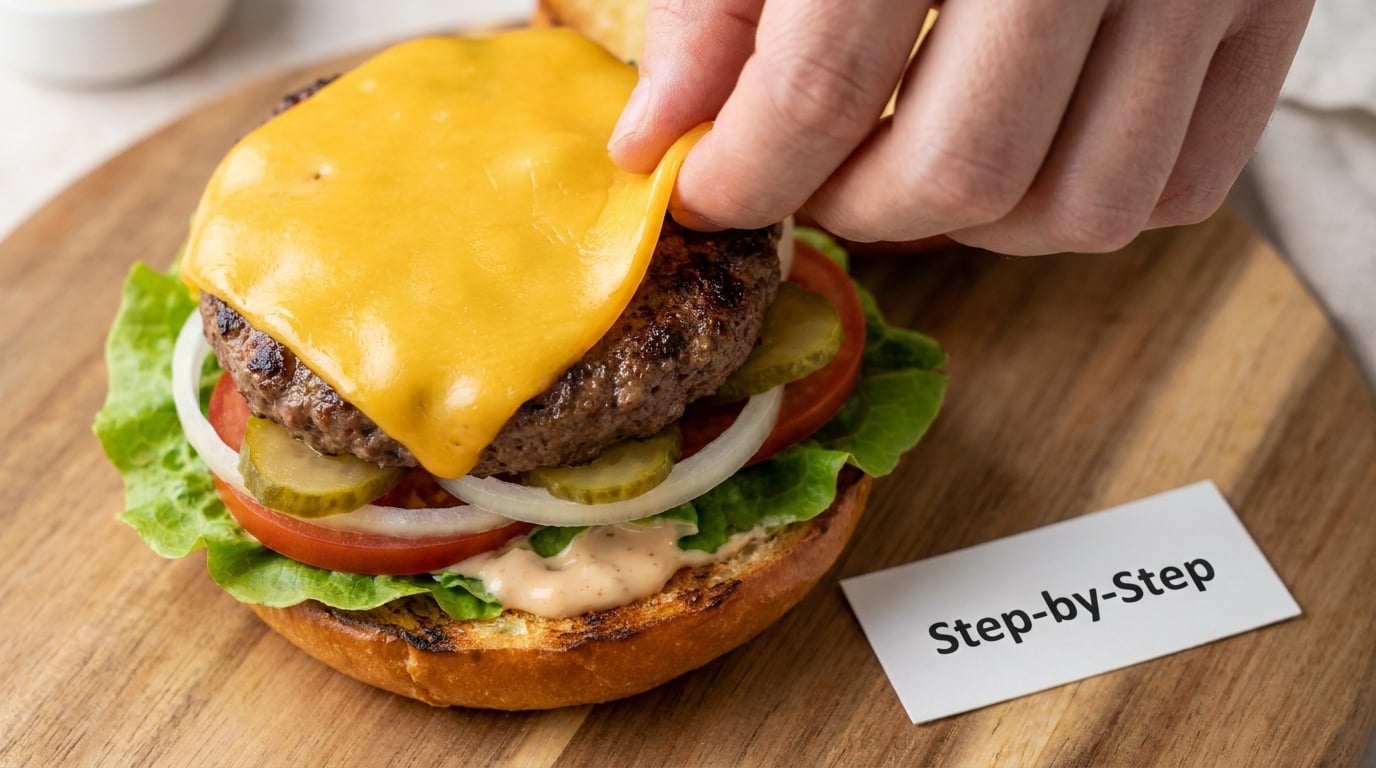
Layer in this order: lettuce, patty, cheese, tomato, red onion, pickles, avocado. Add the avocado last, right before you eat, and squeeze a little lemon or lime juice over the cut face so it stays green.
Top with the crown and eat it right away. An assembled California burger has a short window before the tomato and the sauce start doing exactly what you do not want them to do to bread.
Common Mistakes
Six things account for nearly every disappointing homemade burger. All of them are avoidable with a small change in technique.
- Overworking the beef. Mixing and kneading it like meatball meat makes a dense, bouncy patty. Combine seasoning in gently, with light hands, and stop while it still looks like loose crumbles.
- A cold pan. Oil that is barely warm steams the meat grey. Give the skillet two to three minutes at medium-high before anything goes near it.
- Pressing the patty. A spatula pressing down squeezes out juice and dries the burger. Flip once, and press only to correct a bulge.
- Soggy buns. Toast the cut faces, sauce the bottom bun only, pat the tomato dry, and assemble right before serving. Skip any of those four and the bun collapses.
- Bland toppings. Underseasoned lettuce and onion are the usual culprit. Salt the tomato slices and the onion separately, and make sure the patty itself is seasoned on both sides.
- Assembling too early. Build a burger per person, not a batch for the table. Every minute of waiting costs you a layer of bun crispness.
One more that sneaks past people: cooking to well done out of habit. That is what drains a patty. Pull it the moment the thermometer says 160F.
Tips for the Best California Style Burger
Pick the cheese for the melt, not the name
Monterey Jack is the traditional pick and melts smoothly. Pepper Jack adds a mild heat, cheddar adds a sharper flavour and holds its shape less well, and provolone or Swiss bring saltiness that works with pickles. One slice per patty is plenty. Two makes assembly a chore.
Adjust the sauce to your taste
The mayo-mustard base is the classic. Add a teaspoon of ketchup for a sweeter fry sauce profile, a splash of hot sauce for heat, or a spoonful of chopped pickles for crunch. Thin it with pickle brine a little at a time; it thickens as it sits.
Try the regional toppings
Thinly sliced cucumber and sprouts show up on West Coast burgers often enough that they belong in the rotation. Grilled onion instead of raw, pickled jalapenos, or a fried egg all pair well with the avocado.
Scale it up without losing the ratio
For four burgers, double everything except the skillet heat and the cook time. Two patties fit a 12-inch skillet with room for air circulation. Crowd the pan and the temperature drops, which means grey patties instead of a crust. Cook in batches if you must.
Keep the patty juicy
Fat is the lever. 80/20 gives a juicy burger that still holds together; 90/10 works if you add a tablespoon of Worcestershire and keep the rest time honest. Going leaner than that and skipping the rest is how you get a dry burger.
Charcoal or gas grill both work here. Aim for medium-high direct heat and keep the lid open for the sear, closing it only if you want a softer crust and more smoke.
Frequently Asked Questions
What kind of beef is best for a California style burger?
Ground chuck at 80% lean and 20% fat is the sweet spot for this burger. The fat gives you a juicy patty that still holds together under a layer of wet toppings, which matters more here than on a plain burger. If you only have lean ground beef, mix in a tablespoon of Worcestershire sauce and rest the patty for a full two minutes after cooking. Avoid ground sirloin, which stays dry.
How do I keep a homemade burger juicy?
Three habits do most of the work. Never press the patty with your spatula, never flip it more than once, and rest it 2 minutes before serving. Use beef with around 20% fat, and season right before the meat hits the hot pan rather than earlier. If you season in advance, salt goes on no more than 15 minutes ahead, or the surface goes wet and stops browning.
Can I make a California style burger without a grill?
Yes, and most home cooks do it in a cast iron skillet. Get it medium-high hot, add a thin film of oil, and sear about 4 minutes per side. An air fryer at 380F (193C) takes roughly 14 minutes for a quarter-pound patty, and a broiler needs about 8 minutes on one side plus 3 to 5 minutes on the other. Check with a thermometer either way.
Should I add cheese to a California style burger?
Cheese is traditional but optional. Monterey Jack is the classic choice because it melts smooth and mild, letting the avocado and sauce lead. Pepper Jack works if you want a little heat. Skip cheese entirely if you are layering bacon and a heavy sauce, since the burger can get rich quickly. One thin slice on the last minute of the second side is the usual amount.
How do I know when the burger is cooked through?
Use an instant-read thermometer in the thickest part of the patty. USDA guidance for ground beef is 160F (71C), and some cooks pull at 150F (66C) and let carryover heat finish it. Check the centre, not the edge, since the edge cooks first. If you have no thermometer, cut into one patty before serving the batch, and always cook patties to the safe internal temperature.
Can I prepare the toppings ahead of time?
Yes, with one exception. Shred the lettuce, slice the onion, mix the sauce and toast the buns up to a few hours ahead; keep everything chilled. Slice the avocado only at assembly time and add a squeeze of lemon juice to the cut face. Tomato can be sliced ahead and patted dry, but do not salt it early or it will release water onto the bun.
Conclusion
Start with the patty: form the beef loosely, keep it larger than the bun, season it right before a properly hot pan, and press it never. Rest it two minutes, then toast the bun, sauce the bottom only, and layer everything in while it is still hot. That order is the whole difference between a California style burger that holds together in your hand and one that falls apart by the second bite.