
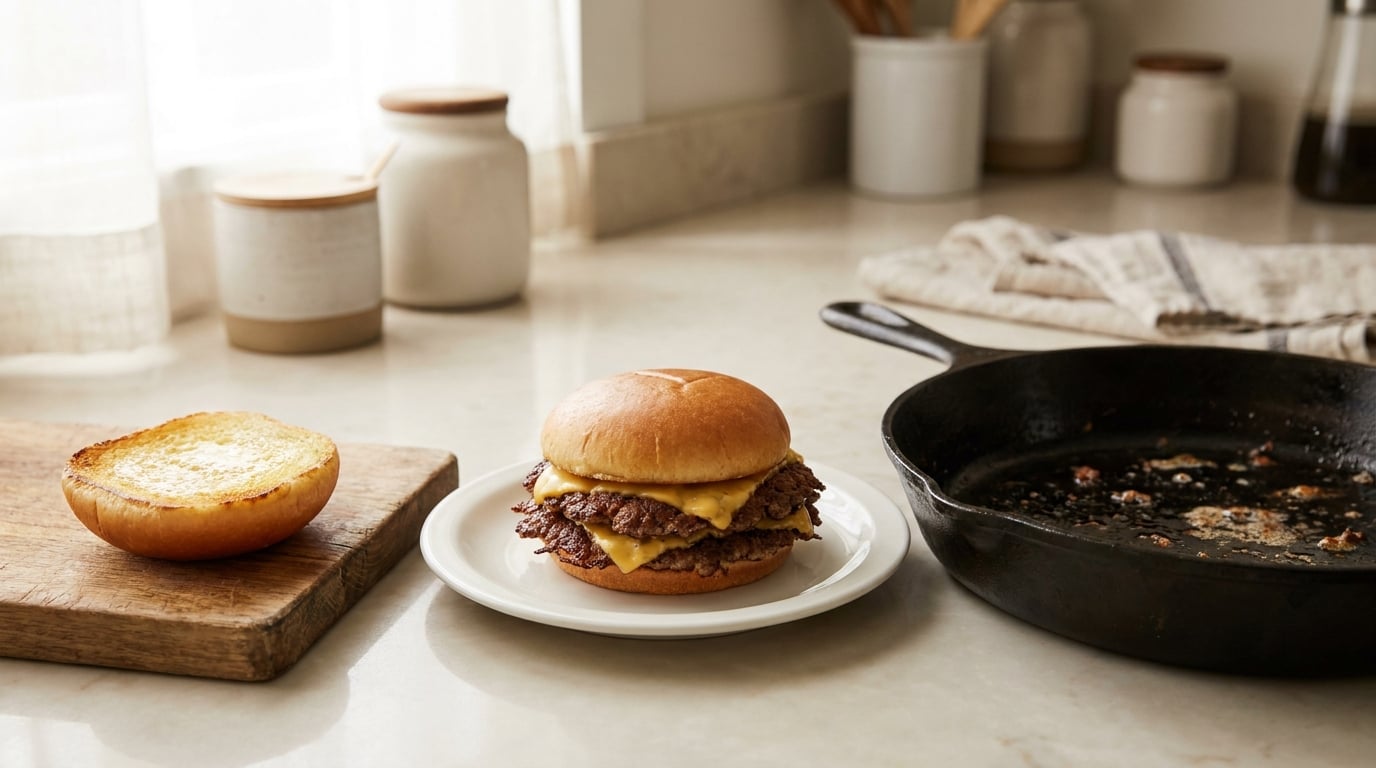
A diner style cheeseburger is a fast-casual burger built the way classic American diners make them: two thin, 2-ounce beef patties smashed hard onto a very hot flat-top griddle so the edges turn lacy and crisp, each topped with a slice of melty American cheese, and stacked on a buttered, griddled bun with simple toppings like pickles, raw onion, lettuce, and ketchup-mustard. Learning how to make a diner style cheeseburger at home takes about 25 minutes start to finish, and the whole thing happens in one pan.
It is not a hard recipe. It is a technique recipe, and nearly everything that goes wrong comes down to three things: the beef gets handled too much, the pan is not hot enough, or somebody presses the patty a second time. Get those right and you get a browned, crunchy edge with a juicy middle. I have made this dozens of times, and the version where I rushed the preheat is always the one that came out pale and greasy.
Table of Contents
- What You Need
- Step-by-Step: How to Make a Diner Style Cheeseburger
- Common Mistakes
- Diner Style Burger Tips
- Frequently Asked Questions
- What cheese is best for a diner style cheeseburger?
- How thick should I make a diner style cheeseburger patty?
- How do I know when a cheeseburger is cooked safely?
- Should I toast the bun before assembling a cheeseburger?
- How do I stop a diner style cheeseburger from getting soggy?
- Can I make a diner style cheeseburger in a regular nonstick skillet?
- Conclusion
What You Need
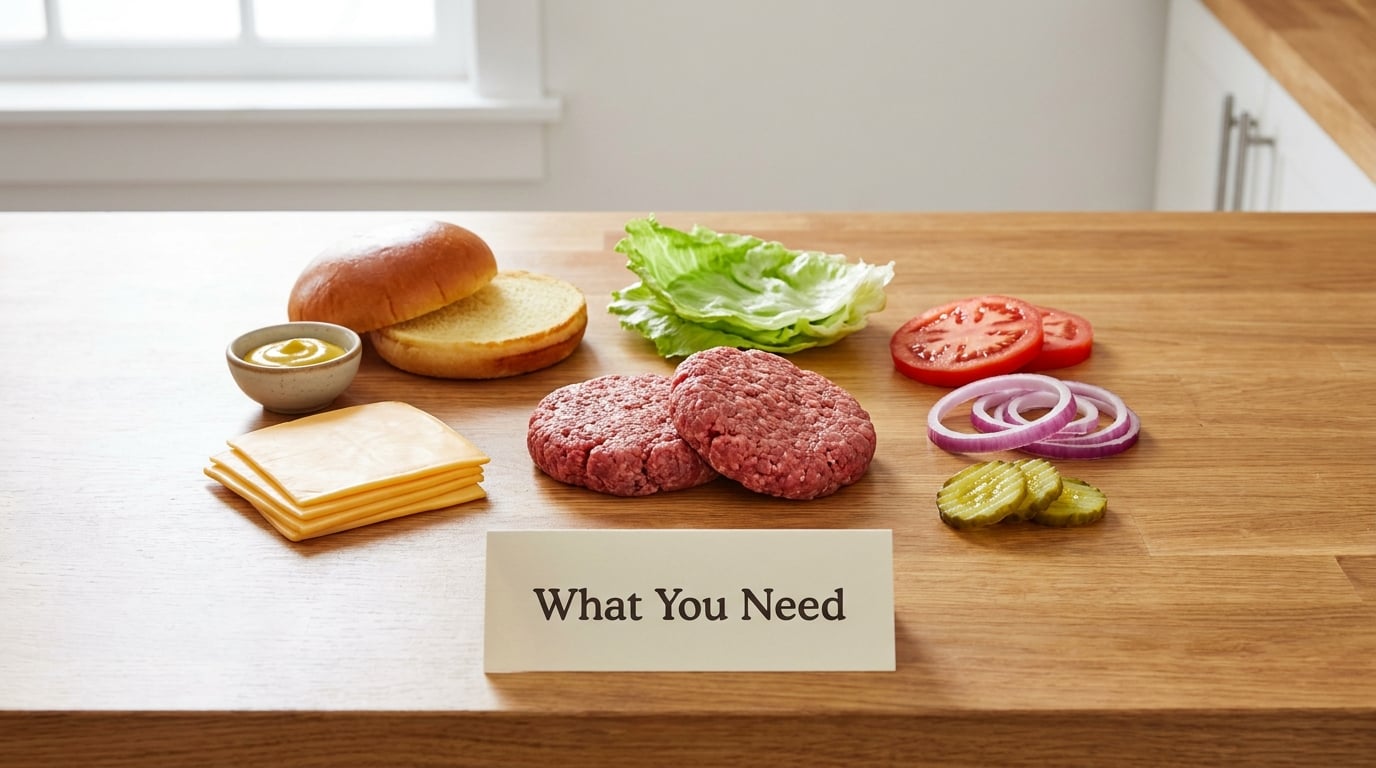
You need very little, and most of it you probably already have. The one ingredient worth buying fresh is the beef.
- Ground beef, 80/20 blend — 1 lb (450 g) makes four patties at 2 oz each, or eight at the half-size diner weight. This fat ratio is the sweet spot: enough fat to stay juicy through a fast cook, not so much that the patty greases the pan before it can brown. Lean 90/10 dries out in a two-minute sear, and very fatty 70/30 tends to flare and scorch. If you cannot find 80/20, buy chuck and blend it with a little ground sirloin.
- Cheese — American is the authentic diner choice because it melts smooth instead of breaking into oily strings. Sharp cheddar, Swiss, or pepper jack all work if you like more flavor.
- Buns — a potato bun is the classic. Its soft, slightly sweet crumb toasts well and never goes stale on contact with sauce. A sturdy brioche or sesame bun works too.
- Seasoning — coarse salt and black pepper, plus a small pinch of garlic powder and onion powder if you like. Seasoning goes on the meat itself, not just the surface.
- Toppings — dill pickle chips, thin-sliced white or red onion, shredded lettuce, tomato slices, and yellow mustard. Ketchup if you want it.
- Equipment — a cast iron skillet, a flat-top griddle, or a heavy stainless skillet, plus a stiff metal spatula. A parchment square or two makes the smash far easier, and a bacon press is helpful but not required.
Step-by-Step: How to Make a Diner Style Cheeseburger
1. Choose and Season the Right Patty
Ball the beef loosely with your fingers. Do not knead it, do not pack it, do not roll it into a tidy log and slice it — that squeezing is what pushes the juice out and leaves you with a dry, dense puck. Each ball should look a little ragged, and that is the point.
Patty weight matters. At 2 to 2.5 oz (57 to 70 g) each, two patties stack into a burger that stays about level with the bun. Once cooked, the patty should be slightly wider than the bun but no more than an inch beyond each edge — that overshoot is the crispy lace people are looking for.
Press each ball flat with your palm to about three-quarters of an inch, right before it hits the pan. Season both sides generously with salt and pepper now. Salt at this stage seasons the meat all the way through; seasoning only the top leaves the inside bland.
2. Heat the Skillet or Griddle
Preheat over medium-high for about five minutes, until a drop of water skitters and then flashes to steam across the surface. If you have a cast iron griddle or plancha, give it longer — eight to ten minutes — because the mass of the iron holds and returns heat in a way a thin home burner does not.
That heat gap is real. Restaurant flat-tops run far hotter than a home stove element, so if your burner tops out well below what a frying pan handles comfortably, give the pan extra time and cook in small batches. Crowding the skillet drops the surface temperature and the patties will grey and steam instead of sear. A thin film of neutral oil is worth adding only when the surface looks dry.
3. Sear the Burger Until Browned
Drop the ball, then immediately press it. Put a sheet of parchment over the top and smash with the flat side of a stiff metal spatula until the meat is thin, about an eighth of an inch, and wider than the bun. Hold pressure for a solid 10 seconds, then lift straight up so the paper peels away clean.
Cook it and leave it alone. Two to three minutes, no peeling, no shifting, no pressing. You are driving off surface moisture to reach the temperature where the Maillard reaction kicks in, and every time you touch the patty you re-wet that surface. When the edges turn dark brown and the top loses its raw pink look, flip with a quick confident motion — hesitating mid-flip tears the crust off, which is the single most common reason patties stick to the pan.
Press once more, firmly, for about 10 seconds, then cook another 60 to 90 seconds. Check the center with an instant-read thermometer and cook until it hits 160°F (71°C), the USDA safe minimum internal temperature for ground beef. A thin patty reaches that fast; thick ones need longer and are the reason many home burgers come out with a raw center.
4. Melt the Cheese and Toast the Bun
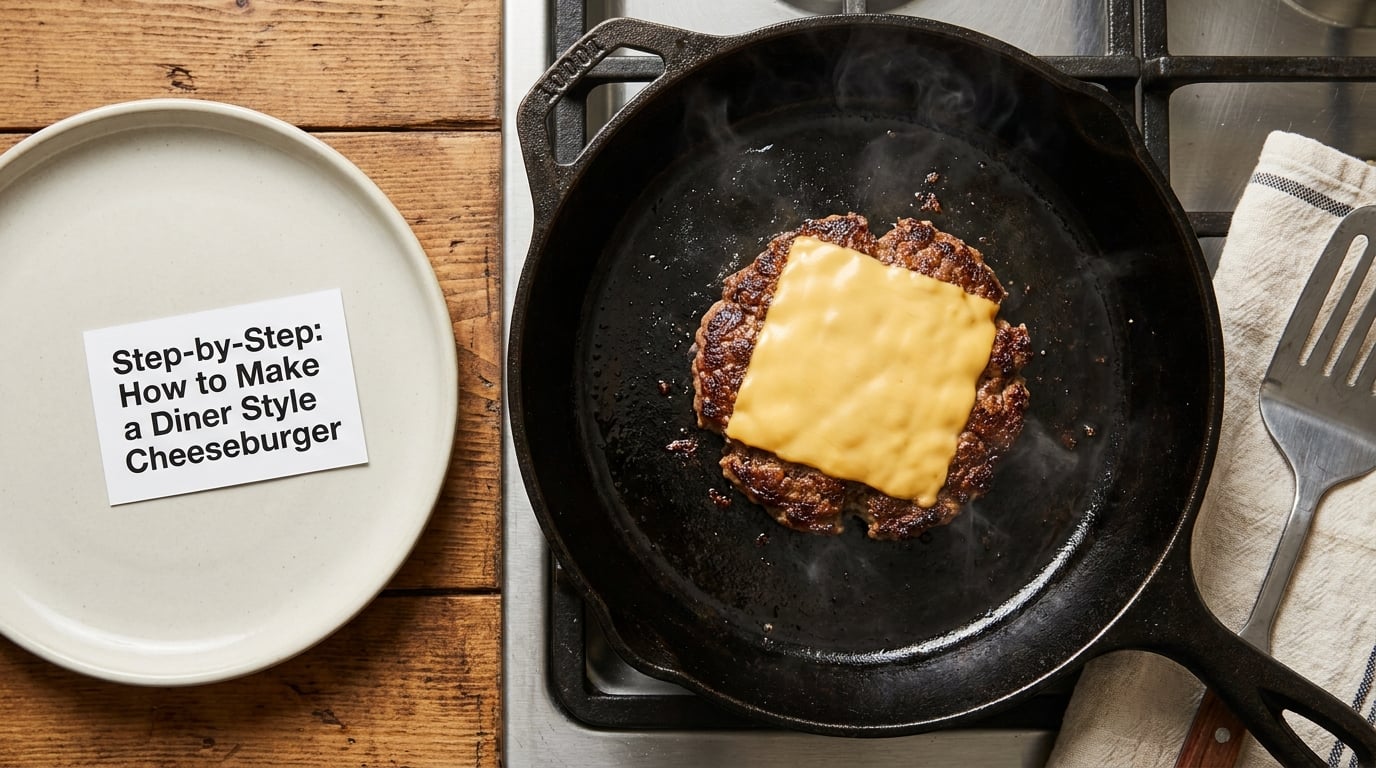
Add the cheese the moment the patty is done. It should hit a hot surface and start sagging almost immediately, which means the patty is hot enough to melt it from below rather than just warm it on top. Let it sit 30 to 60 seconds until the corners droop and the slice looks glossy.
If you want the melt to happen faster and more evenly, drape a metal bowl over the patty with a couple of tablespoons of water underneath. The trapped steam softens the cheese all at once instead of leaving the center stiff, and the patty underneath stays hot while the bun toasts.
Split the buns, butter the cut faces, and lay them in the rendered beef fat for 15 to 30 seconds until golden. If the pan is dry, a teaspoon of butter or the fat spooned off the patty is enough. Toasting a bun is not optional in diner style: the crisp cut face is what keeps the bottom from going soggy the moment sauce goes on.
5. Assemble and Serve Immediately
Spread a thin layer of mustard on the bottom bun, then lettuce, then the patty with cheese, then pickles and onion. Tomato goes on last against the top bun so it does not push the whole stack sideways.
Two patties per burger is the diner convention, and it works because two thin patties give you a browned edge on both faces. If you build a double, press an un-cheesed patty on top of the cheesed one so the stack holds its shape under the toppings. Cap it, eat it in the next few minutes, and do not hold it wrapped — trapped steam softens the crust you just worked for.
Common Mistakes
Nearly every disappointing smash burger traces back to one of these six.
| What went wrong | Why it happened | How to fix it |
|---|---|---|
| Patties steam and stay gray | Cold or crowded pan, so the meat slowly renders instead of searing | Preheat longer, oil lightly, and cook four patties at most per batch |
| Patties stick and tear | Surface moisture, or a slow hesitant flip that drags the crust | Salt only just before cooking, scrape with a sharp spatula edge, flip fast and flat |
| Burger is dry and rubbery | Beef was kneaded or packed, and the patty is too thick to cook fast | Ball the meat loosely, keep patties under a quarter inch, press once only |
| Beef shrank a lot in the pan | Fat rendered out over a long cook because the patty was oversized or the heat too low | Keep patties close to bun width, cook two to three minutes per side, don’t re-press |
| Cheese never melted | Added too early, before the patty was hot, or off the heat entirely | Add on the hot patty in the pan and cover briefly to trap steam |
| Bottom bun went soggy | Sauced and stacked too far ahead, on an untoasted bun | Toast cut-side down in beef fat, sauce lightly, and assemble to order |
One more worth naming: adding a raw egg or breadcrumbs to the beef. It is unnecessary at this fat ratio and it gives you a denser, meatloaf-style patty with none of the lacy edge.
Diner Style Burger Tips
Salt the meat, not the crust. Seasoning the patty before the smash is the difference between a burger seasoned all the way through and one that is only salty on top.
Leave the edges a little irregular. Perfectly round patties look neat but the frilly, uneven edge is where the best browning happens. Nobody trims those bits off a diner burger.
Double the cheese in thin slices. Two thin slices melt into one smooth layer faster than one thick slice, which is why you often see double cheese on a single patty.
Use a splash of water for the steam melt. A couple of tablespoons under a bowl cover softens American cheese in seconds and gives you a glossy melt without drying the patty.
Toast buns in beef fat. Butter is fine, but the rendered fat from the patties is better and it takes about 20 seconds.
Use a bacon press if you have one, not if you do not. It applies even pressure in a single push, which is exactly what you want. A heavy spatula bottom works almost as well.
Make the patties up to a day ahead. Portion the loose balls, cover, and refrigerate. Let them come to room temperature for about 15 minutes before they go near the heat, or they will fight the pan.
Frequently Asked Questions
What cheese is best for a diner style cheeseburger?
American cheese is the most authentic choice because it melts smooth over a hot patty instead of separating into oily strings. Sharp cheddar, Swiss, pepper jack, and smoked gouda all work well if you want more flavor. Add the cheese in the pan the moment the patty is done, then give it 30 to 60 seconds, or cover with a bowl and a splash of water for a faster, even melt.
How thick should I make a diner style cheeseburger patty?
Make each patty about three-quarters of an inch thick before the smash, then press it down to roughly an eighth of an inch on the hot surface. Weight matters more: 2 to 2.5 ounces per patty is the diner range, and two of those stack level with a standard bun. A patty much thicker than that cooks too slowly to get a crisp edge before the center is done.
How do I know when a cheeseburger is cooked safely?
Use an instant-read thermometer in the thickest part of the patty. The USDA safe minimum internal temperature for ground beef is 160F, and a thin smashed patty usually reaches it in two to three minutes per side. Color is a poor guide here, because a well-browned crust sits on meat that can still be underdone, and pressed patties lose juice fast and dry out if you cook well past that mark.
Should I toast the bun before assembling a cheeseburger?
Yes, and it takes under 30 seconds. Butter the cut faces and lay them in the rendered fat left in the pan, cut-side down, until golden. The toasted cut face is the barrier between your sauce and the bread, which is why a diner burger stays crisp for several minutes after assembly. An untoasted bun goes soft almost as soon as the mustard goes on.
How do I stop a diner style cheeseburger from getting soggy?
Pat dryness and assembly timing do most of the work. Toast the buns, drain wet toppings like tomato and pickle well, spread a thin layer of sauce rather than a thick one, and stack lettuce so it sits between the bun and the patty instead of on top of wet ingredients. Then eat it right away, because a wrapped burger traps steam that softens the crust you just built.
Can I make a diner style cheeseburger in a regular nonstick skillet?
You can, but you will need a hotter pan and more oil than a cast iron skillet or griddle. Nonstick holds heat less aggressively, so preheat it empty for a full five minutes, add a thin film of neutral oil, and cook in smaller batches. A cast iron griddle or heavy stainless pan will give you more crust, but a well-preheated nonstick pan with the same technique works perfectly well.
Conclusion
How to make a diner style cheeseburger comes down to heat, restraint, and timing. Start by balling your 80/20 beef loosely and seasoning it before it hits the pan, preheat your skillet or griddle until it is very hot, and cook each patty undisturbed for two to three minutes a side.
Press once, flip confidently, check the center for 160°F, add the cheese, and assemble on a toasted bun while the patty is still hot. Twenty-five minutes from fridge to plate, and the crust is the reward for not touching the meat while it cooks.