
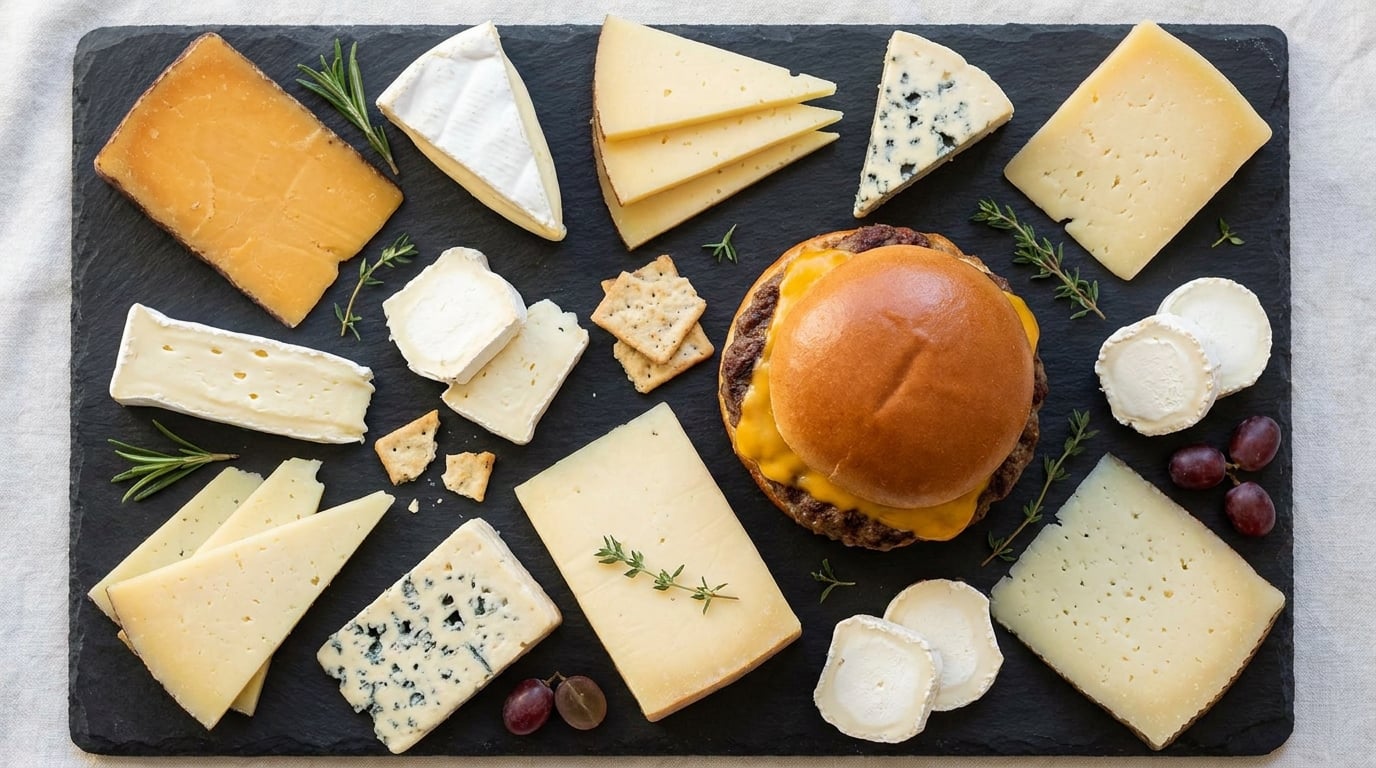
If you want one cheese that melts into an even, creamy layer without breaking apart or turning oily, American cheese is still the answer. It is an emulsified slice, which means added citrate salts keep the fat and water suspended together so the slice melts like a single sheet. If you would rather skip processed cheese, young Gouda, Muenster and medium cheddar get closest. The best cheese for cheeseburgers, in other words, depends on whether you prioritise melt reliability or flavor.
Here is the short version, one line per cheese, and I have attached the catch to every entry:
- American: the most reliable melt, creamy and mild; watch that it softens fast under a lid and can slide off a cool patty.
- Medium cheddar: the best all-round natural cheese; watch for slightly greasy edges on a very hot griddle.
- Sharp cheddar: real aged depth for a grown-up burger; watch that it can seize and turn leathery if it overcooks.
- Swiss: clean, buttery melt that lets onion and mushroom lead; watch for large holes that melt into bare patches.
- Pepper jack: melts fast with a mild kick; watch that the heat fades on a patty that is not searing hot.
- Provolone: buttery and stretchy, ideal with tomato and grilled onions; watch for a salty edge on a small patty.
- Young Gouda: creamy, nutty, very forgiving on heat; watch that it browns before it fully melts if the pan is too hot.
- Smoked Gouda: the barbecue burger cheese; watch that smoke plus char can turn muddy on a well-done patty.
- Blue cheese: bold and creamy for steak-style patties; watch it break into greasy pockets rather than a clean sheet.
- Brie: soft and buttery with a bloomy rind; watch the rind slip and smear if the burger sits too long.
- Gruyere: nutty depth that stands up to bacon and caramelized onion; watch for oil separating on lean patties.
- Goat cheese: tangy and light on simple patties with herbs; watch it does not spread, so coverage is patchy on a thin patty.
Everything below explains why those verdicts land where they do, and how to get the cheese to actually stick to the meat.
Table of Contents
- Best Cheese for Cheeseburgers Explained by Style
- How to Choose the Right Cheese
- The 12 Best Cheeses for Cheeseburgers
- 1. American cheese: the most reliable melt
- 2. Medium cheddar: the best all-round natural cheese
- 3. Sharp cheddar: the most flavor with the most risk
- 4. Swiss: clean and buttery, built for mushrooms and onion
- 5. Pepper jack: the easiest way to add heat
- 6. Provolone: the patty melt cheese
- 7. Young Gouda: the closest natural substitute for American
- 8. Blue cheese: bold, creamy, and picky about the patty
- 9. Brie: buttery, soft, and best eaten immediately
- 10. Gruyere: the best premium pick for a bacon burger
- 11. Goat cheese: tangy and light for simple patties
- 12. Smoked cheddar: built for barbecue flavor
- Cheese picks I skipped, and why
- How to Melt Cheese on a Cheeseburger
- Cheese and Burger Style Pairings
- Common Cheeseburger Mistakes
- Frequently Asked Questions
- A Simple Rule for Choosing Cheeseburger Cheese
Best Cheese for Cheeseburgers Explained by Style
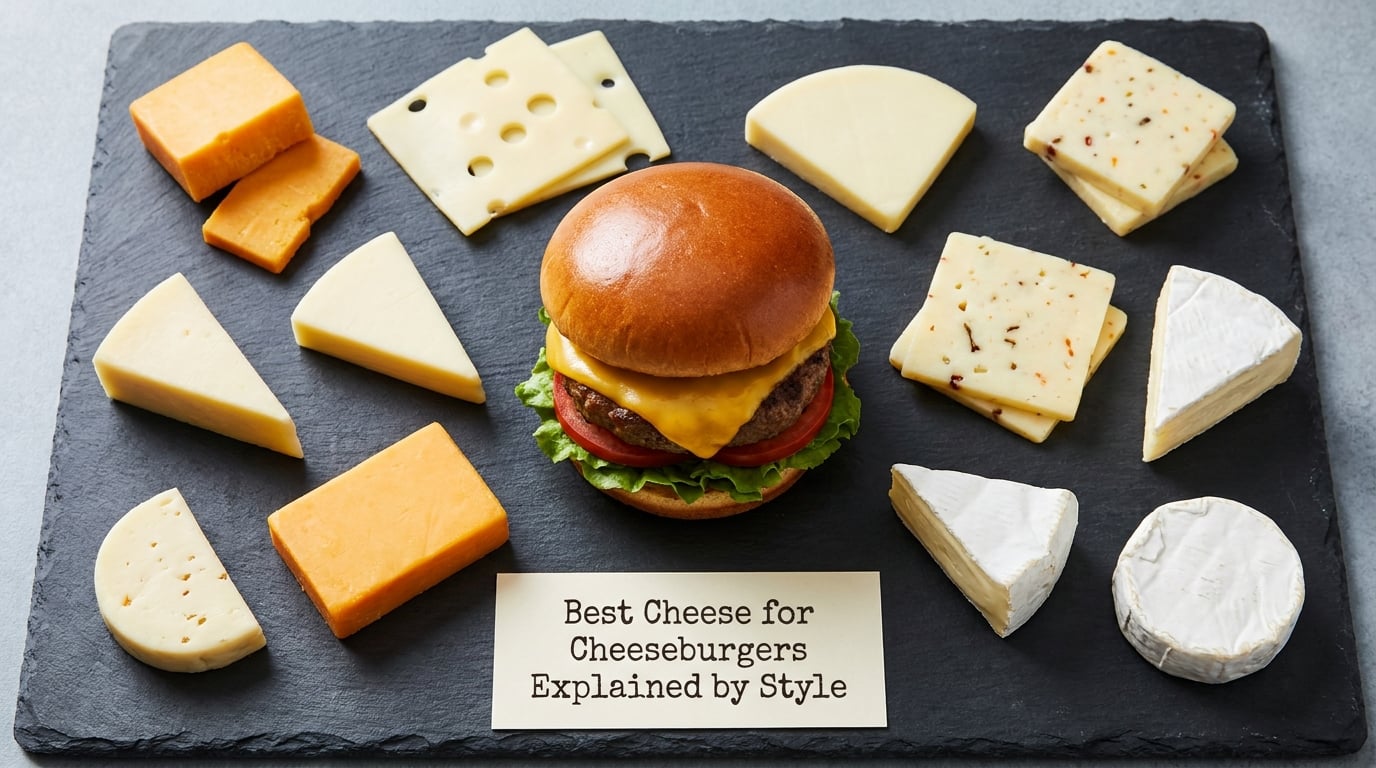
American wins for smash burgers and diner-style patties because the thinner the patty, the faster the patty cooks, and the less time the cheese has to do anything complicated. For a thick backyard patty, medium or sharp cheddar gives you more flavor because there is more cool meat underneath to warm through. For a gourmet build with bacon, Gruyere and Brie hold up where a mild slice would disappear.
The mistake people make is asking for one winner for every situation. There is no single cheese that is best for a cheeseburger in a cast iron skillet and also best on a thin smash patty cooked in a screaming-hot flat top. Match the cheese to the style of the burger and the decision gets easy.
| Cheese | Flavor | Melt | Moisture | Best burger style | Verdict |
|---|---|---|---|---|---|
| American | Mild, creamy, faintly tangy | Very fast, perfectly even | Low, no weeping | Smash burger, diner cheeseburger | Most reliable |
| Medium cheddar | Buttery, gentle sharpness | Fast, sheets well | Medium, minimal grease | Everyday backyard burger | Best natural all-rounder |
| Sharp cheddar | Bold, aged, crumbly | Moderate, can tighten up | Low, oil separates easily | Steak-style patty, grilled cheese burger | Most flavor, most risk |
| Swiss | Clean, buttery, nutty | Fast and smooth | Low to medium | Mushroom and onion burger | Great with delicate toppings |
| Pepper jack | Mild cream with a peppery kick | Very fast | Low | Spicy burger, jalapeno, patty melt | Best heat without heat sauce |
| Provolone | Buttery, stretchy, savory | Fast, strings well | Medium | Italian-style burger, patty melt | Best for a patty melt |
| Young Gouda | Nutty, creamy, caramel edge | Fast and forgiving | Medium | Smash burger, pub burger | Closest natural stand-in for American |
| Smoked Gouda | Nutty with a clean smokey note | Fast | Medium | Barbecue burger, smoked meat | Best for barbecue |
| Blue cheese | Pungent, moldy, creamy | Irregular, breaks up | Medium to high | Steak patty, burger with blue cheese crumbles | Bold, needs a sturdy patty |
| Brie | Buttery, earthy, mild rind | Very fast, softens in place | High, soft center | Gourmet burger with herbs | Decadent, best eaten fast |
| Gruyere | Nutty, deep, aged | Moderate, creamy | Low to medium | Bacon burger, pub burger, patty melt | Best premium pick |
| Goat cheese | Tangy, lemony, creamy | Softens, does not spread | Medium | Simple herb patty, chicken-style burger | Best with light toppings |
How to Choose the Right Cheese
Six things decide whether a slice behaves on a hot patty. Start with melt behaviour, because a cheese that does not melt cleanly will not be rescued by anything else you put on top of it.
Melt behaviour. Young, moist cheeses melt fast and soft. Aged, dry, crumbly cheeses melt slowly and can tighten into a rubbery sheet if they sit on the heat too long. Between those extremes sit the processed slices, which are engineered for a single clean sheet.
Moisture. More moisture means more water to turn to steam, which is why very soft cheeses like Brie weep slightly and why a slice straight from the fridge can steam rather than melt. Very dry aged cheese is the opposite problem: it melts but releases oil instead of water.
Saltiness. Provolone, aged cheddar and Gruyere carry enough salt that they can overwhelm a plain beef patty. Mild cheeses let the beef flavor through and suit a burger with nothing else on it.
Flavor intensity. Match the cheese to the other toppings. Bacon and caramelized onions need a cheese with its own backbone, so Gruyere or sharp cheddar. A grilled beef patty with just salt does not need blue cheese sitting on top of it.
Thickness. Thicker slices take longer to melt but cover a thick patty properly. Thin deli slices melt in seconds, drape over a small patty more neatly, and are the right choice for a smash burger. Very thin, very cold cheese laid on a cool patty can sit there looking untouched for too long.
What kind of burger you are making. A classic cheeseburger wants a mild, fast, even melt. A deli-style burger with ham or turkey wants something with a little more character. A specialty burger wants a cheese that says something specific: blue for steak, Brie for a herb patty, smoked Gouda for barbecue.
How We Picked the Best Cheese for Cheeseburgers
Every cheese in this guide was judged on the same seven points. Taste came first, then melt speed, how evenly the slice covered the patty, how the cheese behaved once it cooled, whether oil separated, how it interacted with plain beef, and how easy it is to buy and use week to night. I was not looking for a universal winner, because there is not one.
The useful part of a ranking like this is knowing where each cheese fails. A cheese that melts beautifully but slides off a patty that is not hot enough is a worse choice for a home cook than a decent cheddar that stays put. The practical verdict is what you should shop on, not the flavor alone.
The 12 Best Cheeses for Cheeseburgers
1. American cheese: the most reliable melt
American is an emulsified cheese product, not a wheel of anything. Emulsifying salts, often sodium citrate, are added to keep the fat and water mixed so the slice softens evenly instead of breaking into curds and oil. That is why it drapes over a patty, clings to the meat and gives you that clean, creamy, slightly tangy layer you remember from a fast food burger.
Best for classic and diner-style cheeseburgers, smash burgers, and patty melts. Watch out: it softens very quickly, so on a patty that is cooling down it can slide toward the bun edge, and it does nothing interesting for flavor on its own. Pair it with something seasoned, such as black pepper, grilled onions or a smoky patty.
2. Medium cheddar: the best all-round natural cheese
Medium cheddar is the one I reach for most often when I do not want processed cheese. It is young enough to have real moisture, which is exactly what you want for a clean melt, and sharp enough to taste like something without turning the burger into a cheese sandwich.
Best for everyday backyard burgers and thick patties cooked on a grill or griddle. Watch out: over a very high heat, the fat can start to separate and leave slightly greasy edges. Keep the heat a touch lower than you would for a smash patty.
3. Sharp cheddar: the most flavor with the most risk
Sharp cheddar has been aged, which means less moisture and more concentrated flavor. On a thick patty that is still hot in the middle, that is a wonderful combination: a rich, nutty, almost brothy layer. On a thin patty that has already lost its heat, the same cheese can seize and pull away from the meat.
Best for steak-style patties, burger-and-fries plates, and a loaded burger where the meat is bland on its own. Watch out: it is the cheese most likely to crumble mid-flip, so add it late and never try to flip a patty after the cheese is on. A slice or a half slice is plenty.
4. Swiss: clean and buttery, built for mushrooms and onion
Swiss melts into a smooth, glossy layer with a mild nuttiness and no sharpness to speak of. It is the cheese to pick when the toppings are doing the flavor work, since it supports caramelized onion, sautéed mushroom and gruyere-adjacent flavor without competing with them.
Best for a mushroom and onion burger, a patty melt, and any build where you want the topping to be the star. Watch out: the holes are real holes, and a large-eyed slice can leave a bare strip of patty. Look for small-eyed Swiss if you are covering a small patty.
5. Pepper jack: the easiest way to add heat
Pepper jack is a young, semi-soft cheese with a creamy base and a scattering of peppercorns or peppers. It melts quickly, stretches well and brings a gentle warmth that builds rather than burns. It is the cheese for a burger where you want kick without reaching for hot sauce.
Best for spicy burgers, jalapeno and pepper slices, a patty melt, and a burger with pickled onions. Watch out: on a patty that has been resting, the pepper flavor fades first, so put it on while the meat is still hot. Very spicy versions can overpower a plain patty, so start with the mild one.
6. Provolone: the patty melt cheese
Provolone is a stretched-curd cheese that melts into a buttery, stringy layer, which is exactly the texture a patty melt needs to hold itself together under a weight of onions. Mild provolone is creamy and gentle; sharp or smoked versions are a different proposition and much more assertive.
Best for Italian-style burgers, patty melts, and anything with tomato, roasted red pepper or grilled onions. Watch out: provolone is salty, and a slice on a small patty can read as too salty on its own. One thin slice is the right portion here.
7. Young Gouda: the closest natural substitute for American
Young Gouda is semi-soft, buttery and nutty, and it behaves remarkably like a processed slice without being one. It melts quickly, covers well and does not turn oily at burger temperatures. If you refuse American cheese and want the closest thing to that same clean melt, this is the first cheese to buy.
Best for smash burgers, pub-style burgers and a cheeseburger that has to feed people who disagree about processed cheese. Watch out: on a very hot pan it browns on the underside before the center softens, so drop the heat a little or add it a few seconds earlier. Smoked Gouda works the same way with a smokey edge added.
8. Blue cheese: bold, creamy, and picky about the patty
Blue cheese is a strong flavor decision. A well-melted piece of Stilton or a mild domestic blue adds a savory, almost meaty depth that no mild cheese can imitate, and it works beautifully with a dark seared patty and a raw red onion. A domestic blue is softer, creamier and far less aggressive.
Best for steak-style patties, burgers with caramelized onion, and a burger where you want the cheese to be the flavor. Watch out: blue cheese does not melt into a neat sheet. It softens in place and can break into greasy pockets, which is the complaint that shows up over and over on burger forums. Use a small amount, add it at the very end, and eat the burger soon after.
9. Brie: buttery, soft, and best eaten immediately
Brie is a bloomy rind cheese with a soft, creamy paste inside. On a burger it melts almost instantly and goes liquid, which sounds messy and is exactly why it works on a gourmet build with arugula, herbs and a light spread. The rind gives a faint earthy note that reads as savory rather than strong.
Best for gourmet and pub-style burgers, a simple beef patty with fresh herbs, or a patty melt with a light tomato. Watch out: Brie softens faster than it melts, so a built burger sits badly after a few minutes. It also runs. If the burger is going to sit, use a firm washed-rind Brie instead.
10. Gruyere: the best premium pick for a bacon burger
Gruyere is nutty, deep and aged, and it is the cheese most often named when people build a burger worth talking about. On a bacon or caramelized onion burger its flavor holds up against the salt and the smoke instead of disappearing under them. Melting it slowly gives a creamy, almost brothy texture rather than a rubbery one.
Best for bacon burgers, pub-style builds, patty melts with caramelized onions, and a thick patty with mushrooms. Watch out: on a lean patty the oil can separate into a slick. Give it a moment of residual heat under a lid rather than cooking it hard on the surface, and use a thin slice so the fat has somewhere to go.
11. Goat cheese: tangy and light for simple patties
Goat cheese is creamy, tangy and faintly lemony, with almost no melt to speak of. It softens rather than flows, which makes it a texture contrast on a burger rather than a cheese layer. Crumbled or in thin slices, it adds acidity that cuts through a fatty patty and a rich sauce.
Best for a herb-crusted patty, a burger with arugula or pickled onions, and any build where you want lift rather than richness. Watch out: it does not cover a patty, so a thin patty will still show meat through the middle. Two thin slices, or a slice plus crumbles, works better than one thick piece.
12. Smoked cheddar: built for barbecue flavor
Smoked cheddar is a natural cheese with a clean, gentle smokiness over a cheddar base. On a barbecue burger with bacon, pulled pork or caramelized onion it doubles up the smoky profile of the meat in a way plain cheddar cannot, and it still melts more cleanly than an aged sharp cheddar.
Best for barbecue burgers, smoked meat burgers, and a patty with barbecue sauce brushed on. Watch out: smoke on a well-done patty that is already charred can turn muddy. Medium smoked cheddar is more forgiving than extra sharp smoked.
Cheese picks I skipped, and why
A few cheeses come up constantly and are worth clearing out of the way. Fresh mozzarella turns into a watery puddle on a hot patty and pulls the bun apart. Ricotta behaves the same way and is better used as a filling. Feta crumbles instead of melting and is a topping, not a cheeseburger cheese. Parmesan shaves rather than melts, so it belongs on a patty melt assembled under a weight, not under a lid. Halloumi is delicious grilled, but on a cheeseburger it squeaks, browns and stays firm instead of draping.
How to Melt Cheese on a Cheeseburger
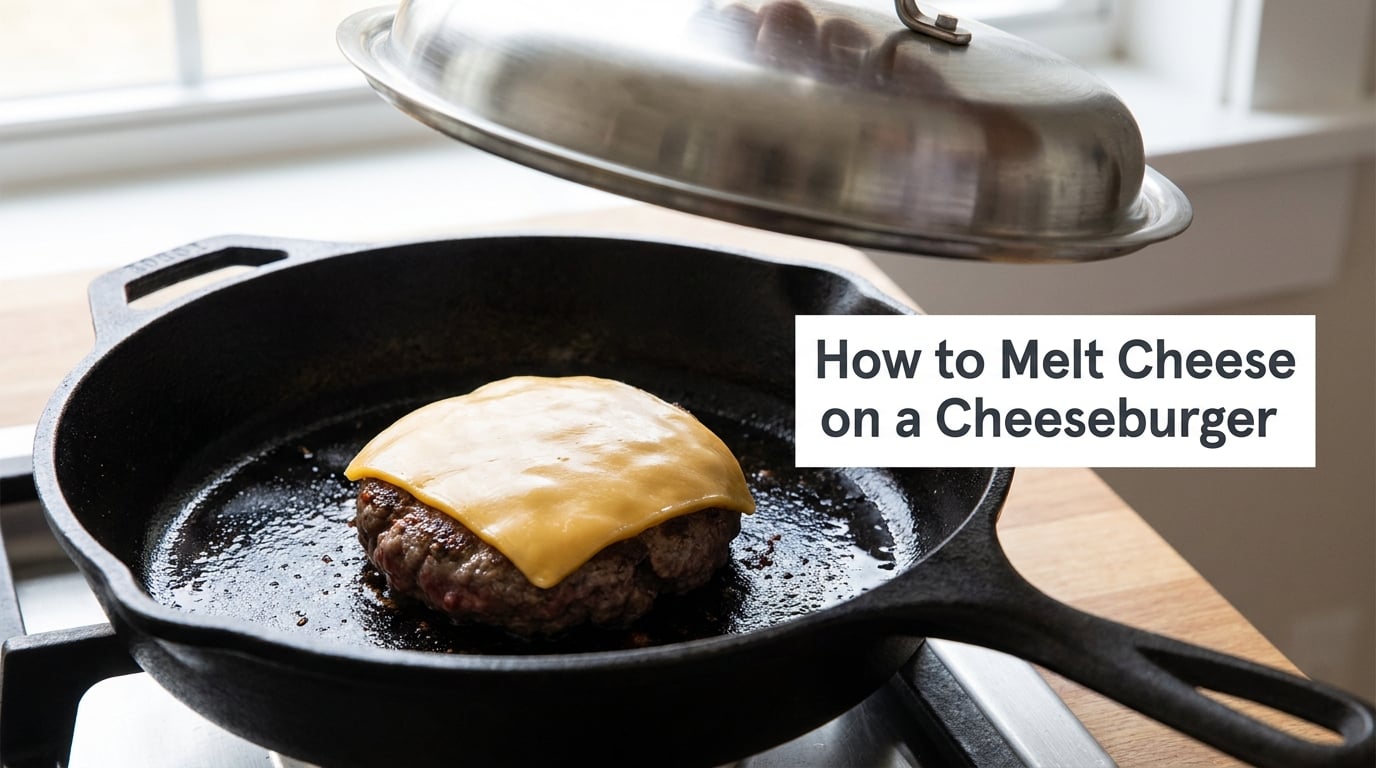
The reason a restaurant cheese looks better than yours is almost never the cheese. It is the order of operations. Cheese goes on at the flip, then the pan gets covered so the cheese finishes in steam instead of direct heat.
- Season and sear the patty first. Get a crust, then cook the second side just until the patty is done. Cook ground beef to a safe internal temperature of 160°F or 71°C, verified with a thermometer rather than by pressing the meat.
- Flip and add the cheese in the same motion. Do not flip a patty with cheese already on it. The cheese will tear, stick to the bun and take the crust with it.
- Use one slice for a thin patty, two for a thick one. A double cheeseburger is best as two thin slices rather than one thick slab, because two thin slices melt evenly instead of leaving a cold core. If you must double up, put the stronger cheese on the bottom against the meat and the milder melting cheese on top, which is a layering trick home grillers pass around a lot.
- Cover the pan. A lid, a heatproof bowl or even a sheet of foil buys you 20 to 40 seconds of trapped steam. That short burst is what turns a slice into a glossy sheet, and it stops the underside from browning while the center is still solid.
- Use the residual heat, not the burner. The cheese is done before the patty is. For a thick backyard patty, take the pan off the heat after the flip and let the cheese melt on the residual warmth for half a minute or so.
- Build and serve fast. Melted cheese keeps melting. A burger that sits for five minutes has a loose cheese layer, which is the number one complaint on grilling forums alongside cheese that slid off the patty in the first place.
On a grill, cheese on a patty over direct flame browns and dries before it melts, so put the cheese on in the last stage with the lid down. In an air fryer there is no steam to borrow, which is why covering or a short closed basket matters more there, and why fast-melting cheeses work better than aged ones. A cold slice straight from the fridge warms the patty instead of melting, so let it sit out for a few minutes while the beef cooks.
Cheese and Burger Style Pairings
American and medium cheddar are the classic and diner pair, and they are the right call for a plain beef patty with salt and pepper. Swiss is the move when the burger is topped with mushroom and onion, because its mild buttery melt supports delicate toppings instead of fighting them. Pepper jack handles a spicy burger and works well with jalapeno or pickled jalapeno. Provolone is the Italian-style pairing, and it is the classic choice for a patty melt with caramelized onions.
Smoked Gouda is the barbecue cheese, particularly on a burger with bacon or a smoky patty, where the smokey note reads as more of the same rather than a gimmick. Blue cheese belongs on a bold steak-style patty, ideally with a raw red onion, where the funk has something to argue with. Brie and goat cheese suit simpler patties dressed with herbs, arugula and pickled toppings, where a rich, sharp cheese would crowd the plate.
Gruyere is the gourmet and pub answer, and it is the cheese most often recommended on r/cheeseburgers for builds with wagyu, bacon and shallot. One home cook described a Gruyere-and-bacon burger as being among the best they have had, which is the general consensus rather than an outlier. A solid medium cheddar is a safe default when the burger has five other toppings already doing work.
Common Cheeseburger Mistakes
Cheese straight from the fridge. A cold slice draws heat out of the patty and takes too long to soften. Let it sit out for a few minutes.
Flipping a patty after the cheese goes on. Once the cheese has softened, the patty and cheese move as one unit and the cheese tears or falls out. Cheese goes on at the final flip and never gets flipped again.
Too many slices. A thick double slab leaves a cold center and the slice slides. Two thin slices melt more evenly than one thick one.
Cheese that is too watery or too dry. Fresh mozzarella, ricotta and Brie weep; extra sharp aged cheddar and crumbly cheeses dry out and seize. Pick the middle of the range unless you specifically want a bold or soft burger.
Overheating the cheese. Direct, high heat browns and dries the slice before it finishes melting. Cover the pan, lower the heat, or finish in residual heat off the burner.
Stacking toppings before the cheese melts. Add the cheese first, let it soften, then add toppings. Lettuce and tomato on top of a cold slice will not melt anything and will make the cheese slide.
Mild cheese with strongly flavored meat. A smoked or heavily seasoned patty swallows American cheese entirely. Match the intensity: bold meat gets Gruyere, smoked Gouda or blue; plain beef gets a mild melt.
One more note on food safety, since a cheeseburger is still a ground-meat dish. Cook ground beef to an internal temperature of 160°F or 71°C. Cheeses such as Swiss, Brie and blue are made with mold cultures, which is a different thing from the raw-milk caution that applies to some aged cheeses, but it is not a reason to skip the thermometer.
Frequently Asked Questions
What is the best cheese for a classic cheeseburger?
American cheese is the best cheese for a classic cheeseburger because it melts into an even, creamy layer without breaking apart or separating oil. It is mild, so the beef flavor still leads, and it drapes over a patty evenly. If you prefer natural cheese, young Gouda or medium cheddar give you a similar clean melt with more flavor.
Is Swiss or cheddar better for a cheeseburger?
Cheddar is better for flavor and Swiss is better for a smooth, neutral melt. Medium cheddar gives you a buttery, gently sharp layer that stands up to a plain patty, while Swiss melts glossily and lets delicate toppings like mushrooms and onion take the lead. Choose Swiss for a patty melt and choose cheddar for a steak-style beef burger.
Can I use pre-shredded cheese on a burger?
You can, but it is the second-best option. Pre-shredded cheese is usually treated with starch to stop it clumping, which makes it slightly drier and less flavorful than a slice you cut yourself. It also melts unevenly because the shreds hit the patty at different times. Buy a block and cut a thin slice, or use a natural cheese slice if you want the cleanest melt.
How much cheese should I put on a cheeseburger?
One slice is right for a thin or smash patty, and two thin slices are right for a thick backyard patty. A single thick slab is the most common mistake, because the outside browns while the center stays cold and the whole thing slides off the meat. If you are doubling up, put the stronger cheese against the patty and the milder melting cheese on top.
What cheese works best with bacon cheeseburgers?
Gruyere is the best match for bacon because its nutty depth stands up to the salt and smoke instead of being buried by them. Sharp cheddar also works, and smoked Gouda is the pick if the patty itself is smoky. Mild American is the least interesting option here, since the bacon and the char do all of the flavor work already.
Why does my cheeseburger cheese not melt properly?
The usual causes are cold cheese, high direct heat and too much cheese. A slice from the fridge draws heat out of the patty instead of melting, and uncovered high heat browns the underside while the center stays solid. Add the cheese at the final flip, cover the pan for 20 to 40 seconds, and use two thin slices instead of one thick one. Aged sharp cheddar will also seize if it overcooks.
A Simple Rule for Choosing Cheeseburger Cheese
Start with American or medium cheddar. Those two will not let you down, they melt cleanly, and they let the beef taste like beef. Once you want a specific flavor, move sideways instead of upward: Gruyere for bacon, smoked Gouda for barbecue, pepper jack for heat, blue for a steak-style patty.
Two habits matter more than the choice. Add the cheese at the final flip and cover the pan so it finishes in steam, and build the burger right after. Choose the cheese to fit the burger you are making, not the burger you wish you were making. This guide was tested and updated for 2026, and the quickest way to find your own answer is to melt one slice of each of these on the same patty and taste them side by side.