
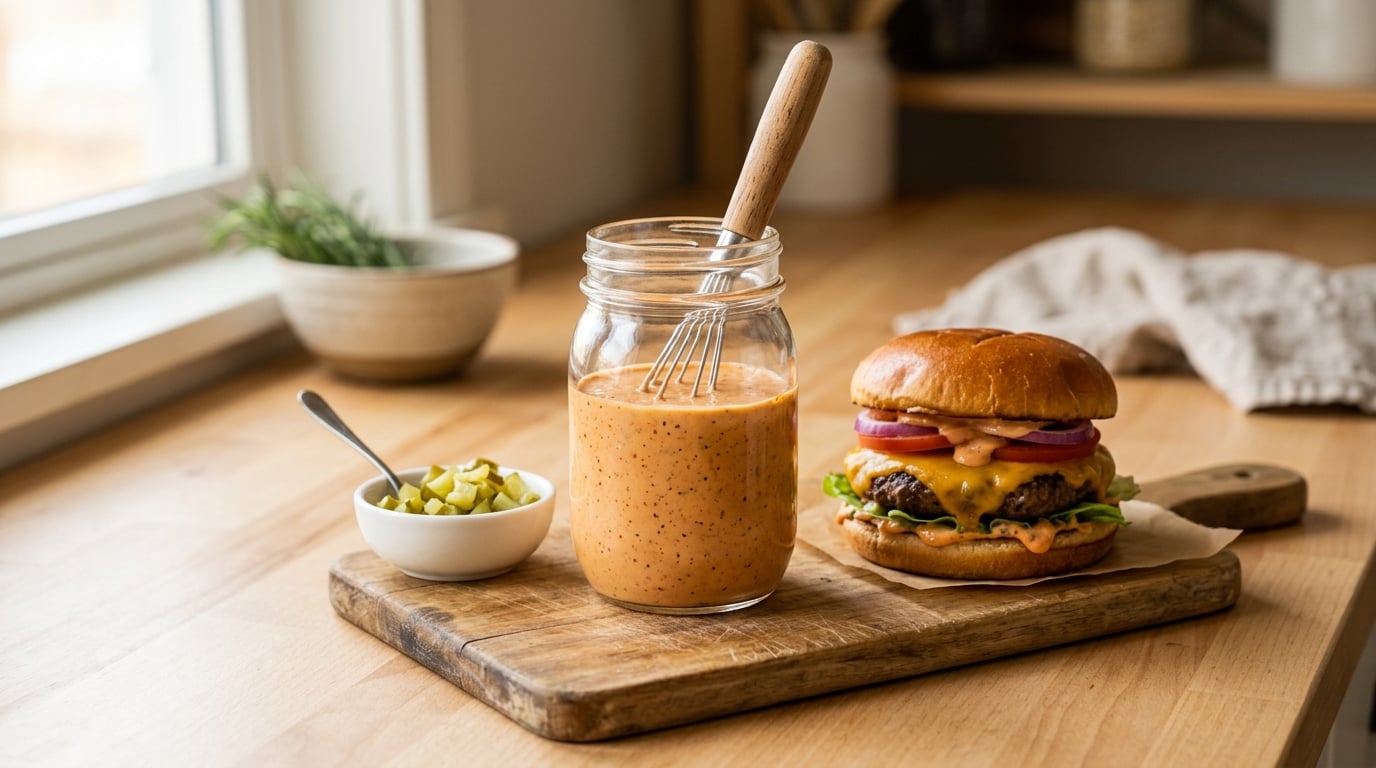
The short answer on how to make comeback sauce: whisk 1 cup mayonnaise with 1/4 cup chili sauce, 2 tablespoons ketchup, 2 teaspoons Worcestershire sauce, and a splash each of white vinegar and lemon juice. Season with dry mustard, smoked paprika, garlic powder, and onion powder, then chill it 30 minutes before serving.
There is no cooking in this recipe. The whole job is getting the ratio of fat, acid, sweet, and heat right, and that is a five-minute job if you have a whisk and a jar. Once it chills, you have the sauce that burger counters, fried chicken baskets, and seafood platters in the South have been putting on the pass for decades.
I keep a batch in the fridge and end up putting it on things I did not plan for. A smear under a smashed patty, a dip for fries that came out of the air fryer, a drizzle over a salad to rescue a boring bowl. It disappears fast enough that I make it twice a month.
What You Need
This makes roughly one and a half cups, which is about twelve servings as a dip or spread. Everything comes from a normal pantry, and the only real decision is which chili sauce you reach for.
- 1 cup mayonnaise — the creamy body of the sauce. Full-fat works best because it emulsifies and stays stable longer.
- 1/4 cup Heinz-style chili sauce — tomato base plus a gentle heat. This is the ingredient most versions leave out, and it is what separates comeback sauce from plain burger sauce.
- 2 tablespoons ketchup — sweetness and a little extra body.
- 2 teaspoons Worcestershire sauce — the savory, salty depth that you taste more than you can name.
- 1 teaspoon distilled white vinegar — sharp acid that cuts through the fat.
- 1 teaspoon lemon juice — brightness, and it makes the color look fresher.
- 1 teaspoon dry mustard powder — Colman’s-style dry mustard gives a clean pungency. Prepared yellow mustard works in a pinch.
- 1/2 teaspoon smoked paprika — a faint smoky note that reads as “grilled.”
- 1/2 teaspoon garlic powder — background savoriness, not garlic-forward.
- 1/4 teaspoon onion powder — rounds out the allium side.
- 1/4 teaspoon black pepper — better than you think at this amount.
- Pinch of salt — optional, since Worcestershire and ketchup already carry plenty.
- 1/2 cup finely chopped dill pickles, plus 1 tablespoon pickle brine — optional, but this is the move that gets you a pickle-forward version most restaurant bottles never bother with.
On the mayo: full-fat is the reliable choice because the extra fat holds the emulsion together when you add vinegar. A light mayo works, but the sauce will thin out faster in the fridge, so you may want to hold back a tablespoon of the liquid you are using to loosen it. Aioli-style mayo with olive oil gives a richer, slightly olive-forward result, and any plain emulsified mayo you like the taste of will work.
On the ketchup: sweet ketchup rounds out the chili sauce, and a tart ketchup (the small-batch roasted garlic and jalapeno kind) pushes the sauce in a different direction. Do not skip the ketchup expecting the chili sauce to cover for it; you will lose the sweetness that balances the Worcestershire.
Equipment is one medium bowl, a whisk or fork, and a jar or squeeze bottle with a lid. That is the whole list.
Step-by-Step: How to Make Comeback Sauce
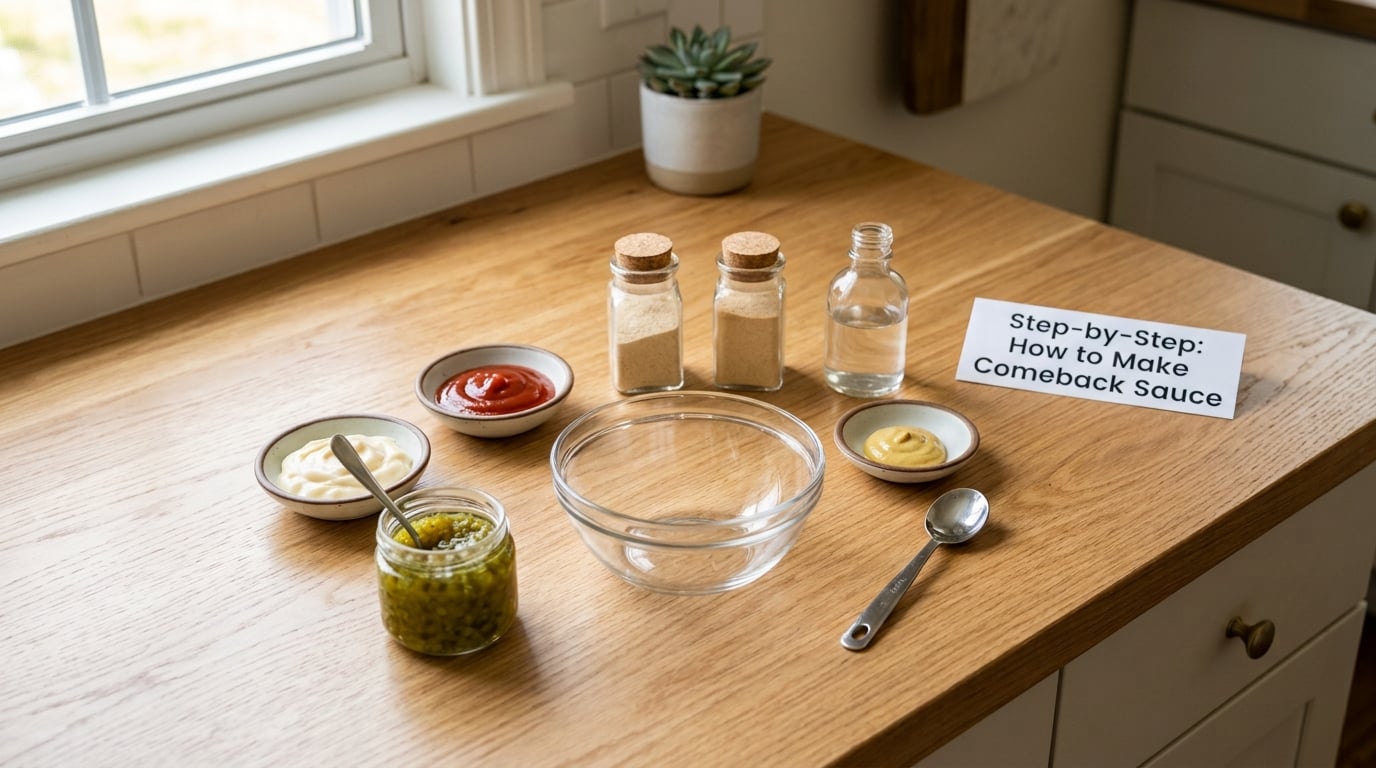
Step 1: Combine the wet ingredients
Add the mayonnaise, chili sauce, ketchup, Worcestershire, vinegar, and lemon juice to the bowl. Whisk until the streaks of ketchup disappear and the color goes evenly pink-orange.
Scrape the bottom and the sides. Mayo clings there, and that unmixed pocket is the lump you will find on your burger later.
Why this works: mayonnaise is already an emulsion, so the vinegar and lemon do not break it, they season the fat. The acid is what stops the sauce from tasting flat, so if it feels sharp right now, that sharpness rounds off as it chills.
Step 2: Add the seasonings
Add the dry mustard, smoked paprika, garlic powder, onion powder, black pepper, and the salt if you are using it. Stir with the whisk, using short strokes rather than fast circles, until no powder is sitting on the surface.
At this point the sauce should smell like a burger joint: sharp at the nose, savory in the middle, faintly garlicky. Taste before it chills, because cold flattens everything and you want the seasoning to land on the strong side.
If you are going pickle-forward, fold the chopped pickles and pickle brine in now with a spatula so the brine disperses through the whole bowl.
Step 3: Check the balance, then adjust the comeback sauce
Taste with a clean spoon and run through four things: is it too sweet, is it too acidic, is it salty enough, and does the heat suit you.
- Too sweet? Add a teaspoon of vinegar at a time until the ketchup stops leading.
- Too sharp? Add a teaspoon of mayonnaise or a small splash of ketchup.
- Flat and dull? Usually a pinch more salt, then another 30 seconds of tasting.
- Not enough heat? A few drops of your hot sauce, mixed in rather than poured on top.
Change one variable at a time. The habit of dumping in all three at once is how people end up with a jar of orange sweet pickle milk.
Step 4: Chill until the flavors settle
Pour the sauce into a jar or squeeze bottle, seal it, and refrigerate for at least 30 minutes. An overnight rest is better, and overnight is what I almost always do.
Cold thickens it slightly and mutes the mustard and paprika, so the sauce tastes more integrated and less like a list of ingredients. Expect a texture somewhere between a thick dressing and soft icing, glossy enough to hold the ridge a spoon leaves behind.
Keep it refrigerated in an airtight container and use it within about a week for the best flavor, up to two weeks at the peak of its refrigerated life. Do not freeze it; the mayo-based emulsion goes grainy and watery when it thaws.
Step 5: Serve and adjust
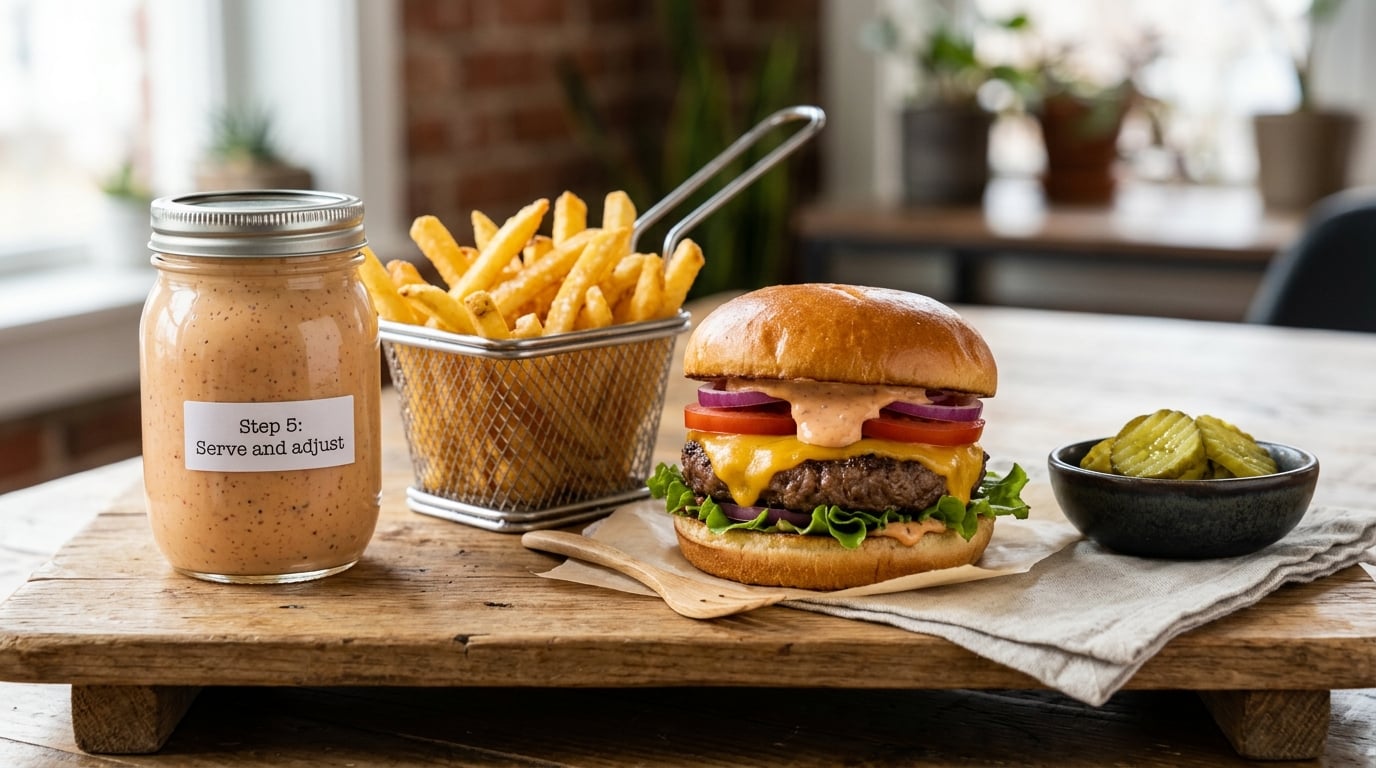
Spoon it on a burger with the lid closed for a minute so it softens, or squeeze a thin line across a hot patty. A cold sauce straight from the fridge is too stiff for a bun, so give the jar a shake and let it sit out five minutes first.
Variations from the same base:
- Thicker dip: add 2 tablespoons finely grated cheddar, or reduce the lemon juice and chill longer. Grated cheese is the better move for a dip pot because it adds body without thinning out.
- Lighter, tangier version: swap half the mayonnaise for plain Greek yogurt and add another teaspoon of vinegar. It gets a little tangy on its own, so taste before adding acid.
- Vinegar-based, no mayo: this is the older Mississippi and South Carolina style. Use 1/3 cup ketchup, 1/4 cup chili sauce, 1/4 cup distilled white vinegar, 1 teaspoon Worcestershire, and the spices. It is thinner, sharper, and lasts longer without dairy.
- Hot version: add 1 to 2 teaspoons of a vinegar-forward hot sauce such as Tabasco or Frank’s RedHot, or a teaspoon of Texas Pete for real heat. Go slowly; you can always add more.
- Pickle-forward: double the chopped pickles to 1 cup and add 2 tablespoons pickle brine. This is the version people ask about after trying the plain one.
A third of a cup of leftover sauce thinned with a spoon of olive oil and a squeeze of lemon makes a decent salad dressing, and it works as a marinade for chicken or shrimp that you give 30 minutes before the grill.
Common Mistakes
Most disappointing comeback sauce comes down to five minutes of tasting that did not happen. Here are the failures I have seen most often.
It tastes like ketchup with mayo. That means the chili sauce went in too late or the Worcestershire got left out. Fix it with 2 teaspoons Worcestershire and a teaspoon of dry mustard, then let it sit 20 minutes before tasting again.
It is too sweet. You added honey, brown sugar, or a sweet ketchup, and now the acid cannot keep up. Add vinegar a teaspoon at a time rather than trying to fix it with more sugar, and serve it alongside something salty like fries or a charcuterie board.
It is watery or thin. Usually too much pickle brine, or a light mayo stretched with acid. Stir in 1 to 2 tablespoons mayonnaise, or chill it 30 minutes longer; mayo-based sauces firm up as they get cold. Drain your relish before adding it.
It is too thick to spread. You went heavy on the mayo or the mustard powder. Loosen with a teaspoon of pickle brine, lemon juice, or water, one at a time, until it drips slowly off the spoon.
It is bland. Nine times out of ten this is salt, not acid. Add a quarter teaspoon of salt, stir, wait a minute, then taste again. Worcestershire and ketchup both carry sodium, so the sauce often needs very little.
It is unbalanced heat. Too much hot sauce early on means the sauce reads as spicy instead of tangy with a kick. Dilute with an extra 2 tablespoons mayonnaise, and next time add hot sauce in the last five drops so you can taste each one.
Never boil or heat it. Heating mayonnaise-based sauce breaks the emulsion and makes it grainy. This is a mix-and-chill recipe from start to finish.
Frequently Asked Questions
What is comeback sauce made from?
Comeback sauce starts with mayonnaise whisked with chili sauce, then gets sweetening ketchup, savory Worcestershire sauce, and an acid such as white vinegar or lemon juice. Dry mustard, smoked paprika, garlic powder, onion powder, and black pepper do the seasoning, and chopped pickles are an optional regional addition. Nothing is cooked; the sauce is mixed, tasted, and chilled.
Can I make comeback sauce without relish?
Yes, and most classic versions skip it. The creamy base, chili sauce, Worcestershire, and acid carry the flavor on their own. If you want that pickle note without the crunch, stir in a tablespoon or two of pickle brine from the jar. If you want crunch too, add about half a cup of finely chopped dill pickles and skip the extra brine so the sauce does not turn loose.
How long does comeback sauce last in the refrigerator?
Kept in an airtight jar and refrigerated, it is best within the first week and generally good for up to two weeks. The mayo and the vinegar both slow spoilage, but the flavor still fades as the mustard dulls. Use a clean spoon each time, and discard the sauce if it smells off or the texture turns watery on the bottom. Do not freeze it; the emulsion goes grainy.
How can I make comeback sauce thicker?
Add mayonnaise one tablespoon at a time and mix it in fully, which is the safest fix. For a dip-thick consistency, folding in 2 tablespoons finely grated cheddar works well. Chilling longer also thickens a mayonnaise-based sauce noticeably, so half an extra hour in the fridge can do the job on its own. Avoid reaching for flour or starch, which will dull the flavor and make it grainy.
Is comeback sauce supposed to be spicy?
Not really. The heat in a classic batch is background warmth from the chili sauce and a few drops of hot sauce, not heat you notice on the finish. It should read as tangy and savory first, with a small prickle behind it. If you want a noticeably hot version, add a teaspoon of a vinegar-forward hot sauce and taste as you go. Start low, because you cannot take heat back out.
What foods can I serve comeback sauce with?
Burgers are the obvious answer: smash patties, cheeseburgers, and chicken sandwiches all take it well, especially on a hot bun. It is also a dip for fries, onion rings, fried pickles, and fried chicken, and it works as a drizzle over a salad or a dip for raw vegetables. Seafood takes it too, including shrimp, fish tacos, and crab cakes. Any extra sauce thinned with lemon juice and olive oil becomes a dressing.
Whisk the wet ingredients smooth, season it, taste it, and give it at least half an hour in the fridge. That is the whole recipe, and once you have the ratio down you can make it by feel.