
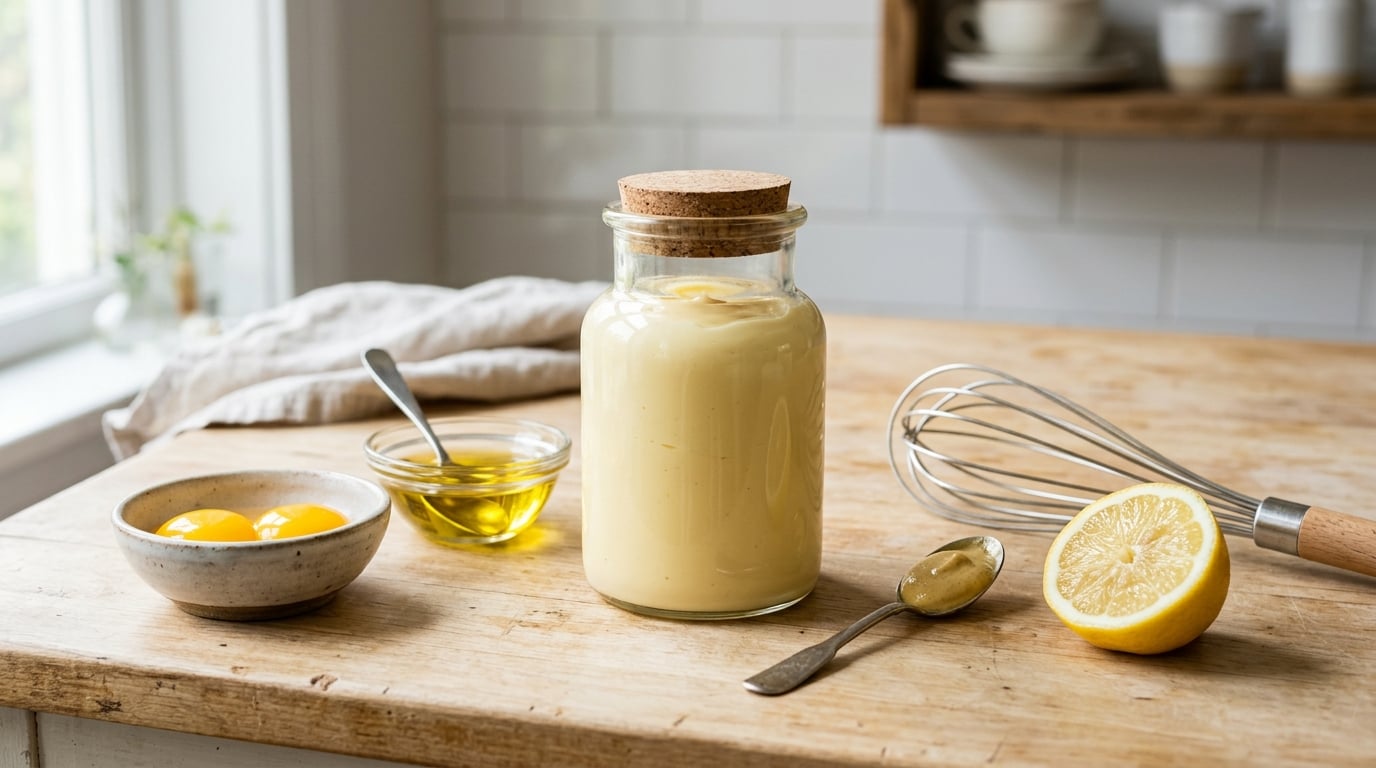
Homem mayonnaise is an oil-and-egg emulsion you can make in about five minutes with a whisk, a jar and a pour of oil. To learn how to make homemade mayonnaise, you whisk egg yolks with a spoonful of mustard and lemon juice, then stream in the oil slowly until the mixture turns pale, thick and glossy. The whole difference between a good batch and a bowl of oily water is patience during that last step.
The method is not fussy, but the room temperature detail genuinely matters. A mayonnaise that splits within seconds usually means the oil went in too quickly or the ingredients were cold. Cold yolks and cold oil cannot emulsify properly, and the mixture reverts to what it really is: water and oil that want to be apart.
The payoff is taste. A jar of store-bought mayo is pasteurized and preserved for a reason: it has to sit on a warm shelf for months. Homemade mayonnaise has none of that, so you taste the actual egg, you choose the oil, and you can turn one base batch into aioli, ranch or a chipotle spread with a teaspoon of something else.
Table of Contents
What You Need
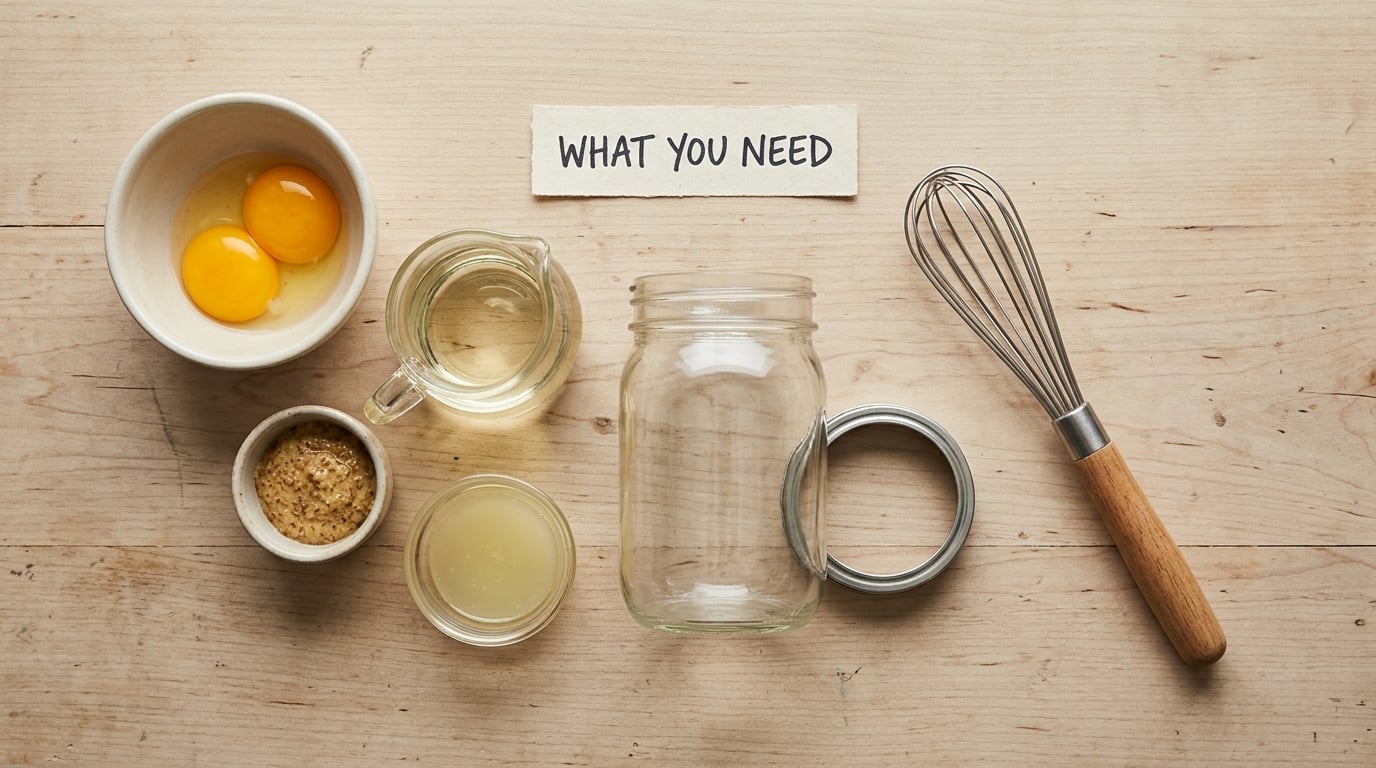
This base recipe makes roughly one and a quarter cups of homemade mayonnaise. It is the same ratio most restaurant kitchens use: about a quarter cup of oil per yolk, added slowly. Write the quantities down before you start, because the second you start pouring oil you stop being able to measure anything.
- 2 large egg yolks, brought to room temperature. One whole egg plus one extra yolk gives a lighter color if you prefer.
- 1 tablespoon Dijon mustard (yellow mustard works, and so does a teaspoon of ground mustard powder).
- 1 tablespoon fresh lemon juice, plus 1 tablespoon white wine vinegar or apple cider vinegar. Pick one if you want a cleaner flavor.
- Half a teaspoon of fine kosher salt and a few grinds of black pepper.
- 1 cup of neutral oil (about 240 ml), divided. Canola, grapeseed, avocado, sunflower and refined peanut oil all work.
- 1 tablespoon warm water, held back for adjusting the thickness at the end.
A neutral oil means one with almost no flavor of its own, so your lemon and mustard still taste like something. Olive oil, butter and anything coconut-flavored will fight you. They are not bad choices, but they turn the result into aioli or a different spread entirely, and heavily flavored oils emulsify less reliably.
Equipment: what actually helps
- A whisk is all you truly need, plus a wide bowl so you have room to work.
- A tall, narrow jar or cup the width of your immersion blender head, if you have one. The narrow shape gives the oil somewhere to go, and a straight-sided jar is far easier than a tapered glass.
- A rubber spatula for scraping the bowl.
- A clean glass jar with a lid for storage, washed and dried thoroughly.
Food processors are the most commonly recommended tool and also the one people report failing most often. The bowl is too wide, so the oil pools away from the blade instead of being dragged into the yolks. If that is the only machine you own, use the narrowest vessel you have and drizzle rather than pour.
Three-ingredient version: one egg yolk, one cup of oil and one tablespoon of lemon juice will make mayonnaise, technically. It also tastes flat, because salt and mustard are doing real work in the recipe. Salt seasons, and mustard carries emulsifying compounds that help the oil stay suspended. Treat those two as the difference between mayonnaise and edible oil spread.
Step-by-Step
How to Make Homemade Mayonnaise: Whisk the Base
Put the two yolks, the Dijon, the lemon juice, the vinegar, the salt and the pepper in a bowl. Whisk until everything is smooth, foamy and slightly thickened, with no streaks of raw yolk visible in the bottom of the bowl. This should take about 30 seconds.
Two things are happening here. The salt and the mustard dissolve into the liquid phase, and the acid partly uncoils the yolk proteins so the mixture is ready to hold oil. If the yolks stay cold and sluggish, hold the bowl over a warm pan of water for a minute rather than forcing it. Room temperature means somewhere in the 68 to 77 F range, not lukewarm, and definitely not hot enough to cook the egg.
Add the Oil Slowly
Now the part that decides everything. Add the oil one teaspoon at a time, or in a thread-thin stream, while you whisk continuously. When the mixture turns pale and begins to thicken, you can widen the stream. When it holds the track of the whisk, you can pour in a normal thin pour.
The visual sign that a portion has emulsified is the color and body change: the mixture lightens from yellow to cream, holds ridges, and stops looking slick. That is your cue that the next portion of oil will be carried rather than dumped. Adding oil faster than the mixture can absorb it is what produces a broken batch, and no whisking technique fixes oil that was poured in too fast too early.
Faster route with an immersion blender: put the egg, mustard, lemon, vinegar and salt in the tall jar, set the blender head on the bottom so it sits in the base, and turn it on low. You do not add the oil separately, so it feeds in through the top of the blender. Start low, and as the sauce climbs and thickens, tilt the jar very slightly and lift the head a fraction. The yolks are sitting right where the blades are, and the oil meets them immediately instead of sitting on the surface.
Check the Texture
Finished homemade mayonnaise should be glossy, pale and thick enough that a spoon dragged through it leaves a clean channel that stays put. Lift the whisk and you should see a slow ribbon fall and hold its shape at the top. If oil beads around the edge of the bowl or slides off the spoon, keep whisking; that is a sign the last addition has not finished dispersing.
For a lighter dressing, beat in the tablespoon of warm water one teaspoon at a time. Warm water is fine here because the oil is already safely dispersed and the water is going into a stable structure, not a raw one. For a richer result for burgers or sandwiches, add another teaspoon or two of oil. Once the emulsion is tight, extra oil thickens it slowly, so be patient.
Season and Store
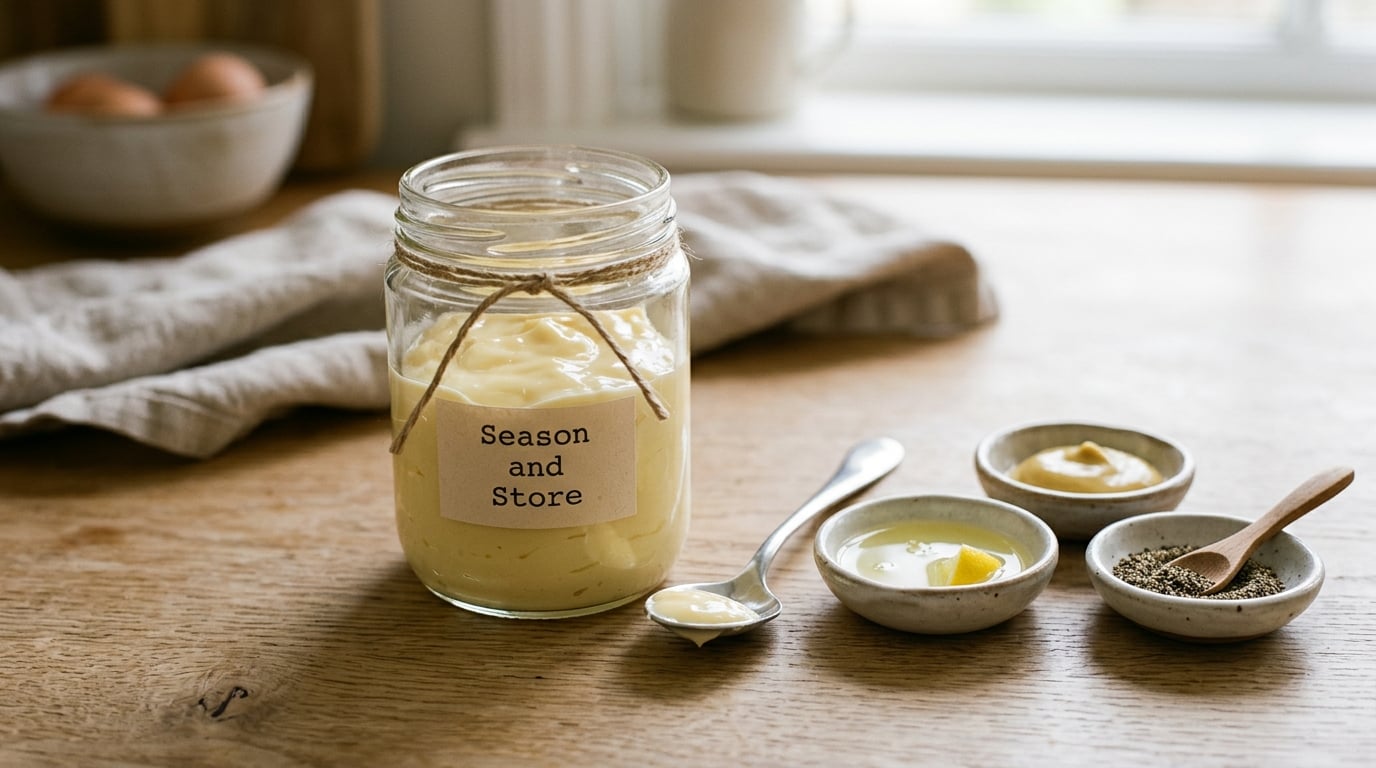
Taste it before it goes anywhere near a sandwich. It usually wants more salt than you expect, because the flavor of the raw egg and the oil is louder than in commercial mayo. Adjust in small steps: a pinch of salt, then a few drops of vinegar if it tastes flat, then a dash of mustard for body. A quarter teaspoon of sugar is the quiet fix for a batch that tastes sharp.
Scrape everything into a clean, dry glass jar and seal it. Label the jar with the date, because fresh homemade mayonnaise looks exactly like old homemade mayonnaise and only the label or your nose can tell them apart. Keep it in the coldest part of your refrigerator, not in the door, and use a clean spoon every time rather than dipping in twice.
Plan on one to two weeks refrigerated at 40 F or below. That is the honest window, and it is far shorter than the shelf life of the jarred version because there is no pasteurization step and no preservative. If you mix the mayo into egg salad or potato salad, treat the whole dish as a leftover and eat it within three to four days.
Do not freeze it. The egg proteins set during freezing and thawing, and the emulsion does not come back together. It ends up watery and grainy, and there is no way to rescue it.
Common Mistakes
It broke and separated. You will see yellow oil floating on a layer of watery liquid. The fix takes about a minute: put the bowl in an ice bath or a sink of cold water for a minute, then whisk hard and steadily while you trickle the oil back in, one teaspoon at a time. Starting cold is what makes the rescue work, because the structure has to be rebuilt from a quiet base. If it is still oily after a full minute, add a fresh yolk and whisk that in before adding more oil.
It stayed thin. Usually one of three things: the oil went in too fast, the ingredients were cold, or there were not enough yolks for the amount of oil. You can fix the first two next time, and you can rescue this batch by whisking a second yolk into the end of it, which often thickens the whole thing at once.
It tastes too sour or too sharp. You added the acid early and the flavor had nowhere to go. Fix it with salt, a small amount of sugar, or both. A mayonnaise that needs a little more acid is easy to correct, but one that tastes of vinegar cannot be rescued, because the sharpness is what the yolk and oil are holding onto.
It turned grainy or stiff in the refrigerator. That is cold, not broken. Let the jar sit on the counter for about 15 minutes, then stir vigorously with a butter knife until the oil re-incorporates. It goes back to normal every time.
It tastes like plain oil. The emulsion worked, the flavor did not. More salt first, then more acid, then mustard, and check your oil is not rancid. Old oil is the one mistake here that no amount of seasoning will correct.
Tips for Success
Room temperature ingredients are the single biggest factor. If you only remember one thing from this guide, remember that one. Take the eggs out of the fridge for 20 minutes and keep your oil somewhere cool but not cold.
Start the oil at the bottom, literally. With an immersion blender, the head goes in first and stays low until the sauce climbs. With a whisk, the oil goes in against the side of the bowl near the surface, then down into the middle, so the thin stream is pulled in immediately rather than sitting on top.
Chill the bowl, not the mixture, when you are working in a warm kitchen. A bowl resting in cold water keeps the emulsion stable without slowing your hands down.
Use the mustard. Its emulsifying compounds are a genuine safety net in the recipe, and it is the ingredient people most often drop when they improvise. The same is true of the acid, which keeps the yolk proteins from clumping.
Stick with a small-batch ratio of about a quarter cup of oil per yolk when you are learning. A large batch poured into a wide bowl is far more likely to break, and you have less time to react. If you are working through how to make homemade mayonnaise for the first time, one small batch is the right place to build the habit.
| Method | Time | Difficulty | Failure risk |
|---|---|---|---|
| Immersion blender in a narrow jar | 1 to 2 minutes | Lowest | Very low |
| Whisk by hand | 5 to 7 minutes | Moderate, arm gets tired | Moderate, depends on the pour |
| Food processor | 2 minutes | Low effort, poor results | Higher, wide bowl |
| Sealed jar, no blender | 10 minutes plus shaking | High | Highest, texture is unpredictable |
Make one base batch and branch out from there. A tablespoon of chopped garlic and a squeeze of lemon turns it into aioli. A spoonful of ranch seasoning and a splash of milk gives you a ranch-style dip. Chopped pickles and a little mustard make quick pickle sauce for sandwiches. Chipotle in adobo, blended in, is the one variation that disappears into burgers so well people assume you bought it.
Frequently Asked Questions
Why did my homemade mayonnaise break?
It broke because more oil reached the mixture than the yolk and mustard could disperse, or because it went in too fast. The droplets merge, water pushes out, and you get watery liquid floating on slick oil. Start over with a fresh yolk, add oil one teaspoon at a time at the start, and set the bowl in cold water if it helps you keep a steady pace.
Can I make mayonnaise without eggs?
Yes, though the texture comes out different. The liquid from a can of chickpeas, called aquafaba, works as the emulsifier in place of egg yolk. Blended with lemon juice, salt and oil, it thickens into something smooth and light, but airier and looser than an egg-based batch. Store it in the refrigerator and treat it as the shorter-lived version.
How do I make homemade mayonnaise thicker?
Add oil one teaspoon at a time, whisking thoroughly between each addition, and the mayonnaise will stiffen. Yolks thicken more than whole eggs, so a double-yolk base gives you more body from the start. If the emulsion is already as stiff as you want, extra oil will not help, so chill it instead, since cold mayonnaise always sets up thicker.
Can I use olive oil instead of neutral oil?
You can, but a strongly peppery extra virgin oil will dominate and can taste flat or bitter once it is emulsified, because there is nothing left to balance the sharpness. A mild or light-tasting olive oil is more forgiving than a neutral one. If you want the olive flavor to read clearly, make aioli rather than a plain spread, and use it that way.
Is pasteurized egg better for homemade mayonnaise?
For safety, yes. Pasteurized eggs have been heat-treated to kill Salmonella, which makes homemade mayo made with them a better choice for young children, older adults, pregnant people and anyone immunocompromised. The texture is very close to raw egg, so nothing about the recipe changes. The main inconvenience is that they are sold in the refrigerated section in liquid form.
How long does homemade mayonnaise last in the refrigerator?
About one to two weeks, kept at 40 F or colder and always spooned out with a clean utensil. Write the date on the jar so you are not guessing. Cold mayonnaise often stiffens and gels in the fridge, which is normal: let it sit on the counter for about 15 minutes and stir it back together. Discard it if you see fuzz, a pink or orange tint, or a sour smell.
Start with two yolks, a tablespoon of Dijon and a cup of canola or avocado oil, and take the eggs out of the fridge first. Drip the oil in a teaspoon at a time, whisk the whole time, and widen the stream only when the mixture turns pale and holds a track. Season it to taste, date the jar, and keep it in the back of the fridge for no more than a couple of weeks. Everything else on this page is a variation on that one careful pour.