
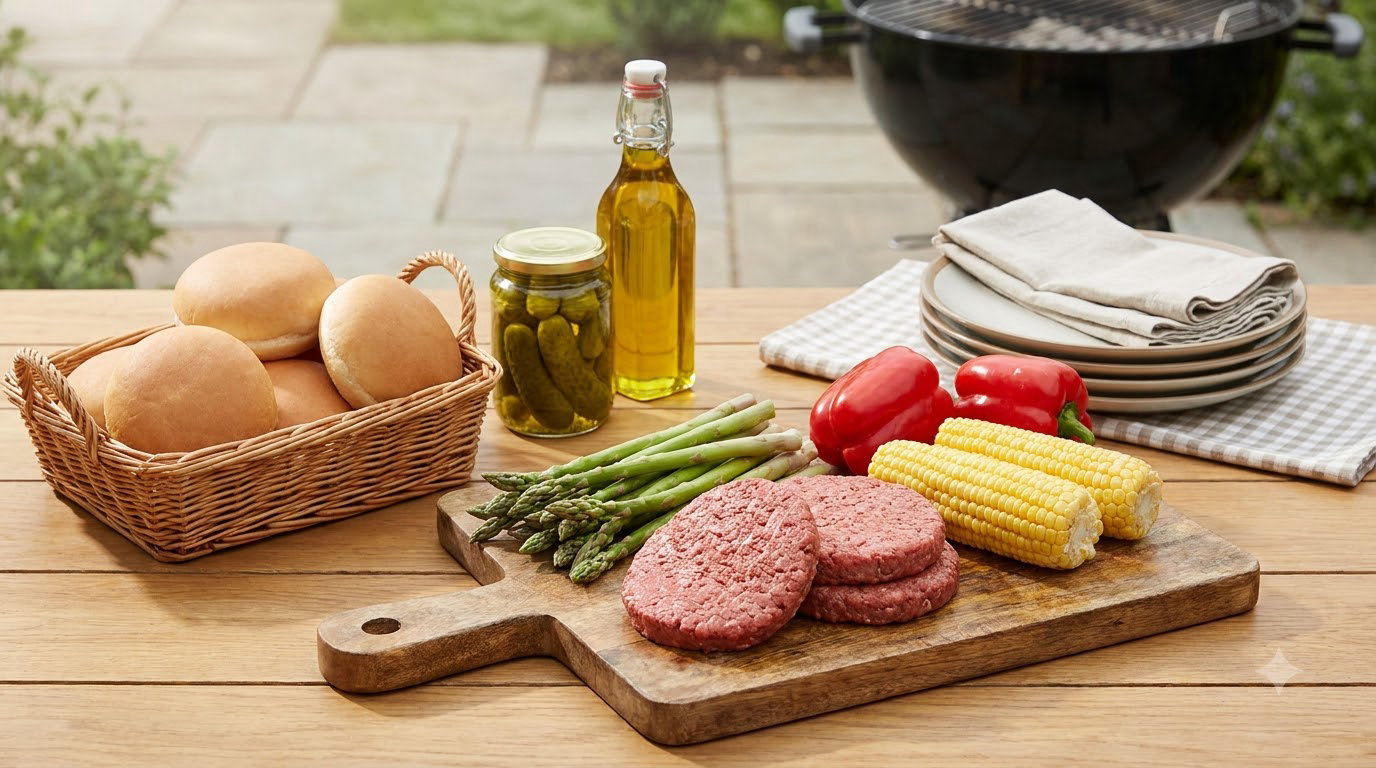
Building a cookout shopping list takes about fifteen minutes once you know your guest count, and it removes the two failures that ruin most backyard barbecues: running out of food at 7 pm, and discovering at 6 pm that you never bought a single paper plate. The method is simple. Pick your headcount, choose a menu you can actually execute, multiply each item by a per-person quantity, subtract what is already in your pantry, and add the supplies everyone forgets.
How to build a cookout shopping list that holds up, step by step, in a guide that works for a family of five on a Tuesday or a holiday cookout for fifty. Adjust the numbers rather than the system.
What You Need Before You Shop
Before a single item goes on paper, gather five things: your guest count, how long the cookout runs, the menu format, any dietary restrictions, and what your grill and kitchen can already handle. A list built without those five pieces is guesswork with extra steps.
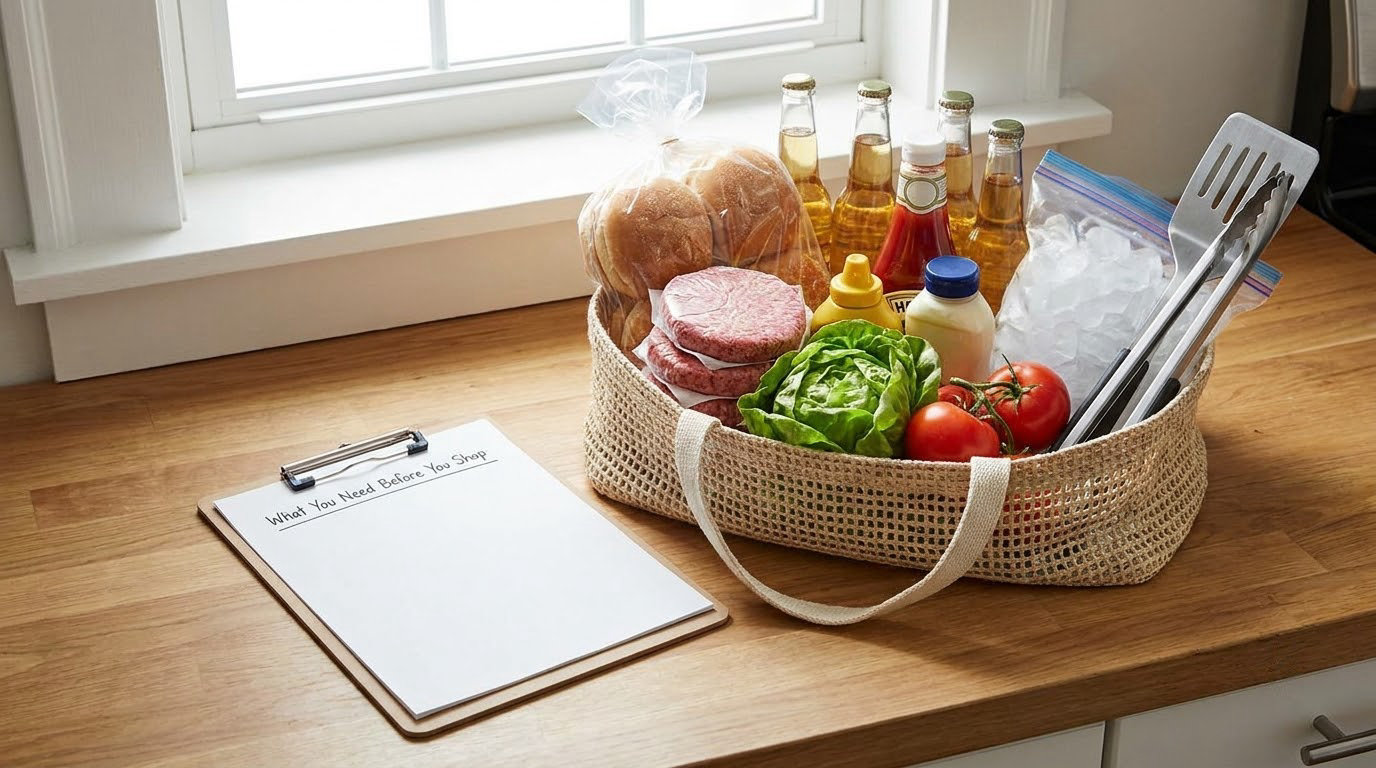
Here is what each one does for you:
- Guest count. Your best guess of how many people will actually eat, not how many you invited. Add 10 percent above that number as a buffer.
- Length of the event. A two-hour afternoon cookout and a six-hour evening one drink and snack at very different rates. Plan roughly one drink per person for the first hour, then one more for each additional hour.
- Menu format. Are you grilling everything, buying most sides premade, or splitting the list among guests as a potluck? This decision shrinks or grows your list more than any other choice.
- Dietary needs. Ask directly instead of guessing. One vegetarian, one gluten-free and one nut allergy change a different set of items than most people expect.
- Equipment and pantry stock. One person at a charcoal grill cannot feed fifty people well. Check grill size, cooler space, cooler count, and how many plates, cups and napkins you already own.
Knowing which side of that list is a cookout shopping list and which side is a supplies list matters too. Food gets all the attention, and the supplies are what turn a good cookout into an annoying one.
How to Build a Cookout Shopping List Step by Step
Six steps, in this order. Do not start at step four and work backwards, because that is exactly how hosts end up with forty hot dogs and no buns.
1. Set the guest count and portions
Write your best attendance number and add a 10 percent buffer. That buffer is not waste; it becomes next-week lunch. If a third of your guests are children under ten, count them at about half a portion each, and add a few extra adult portions to compensate for the adults who eat more.
Meal timing changes the math too. Serve food in one sitting and most people take one main portion. Serve it buffet style over four hours and they will graze, so add roughly 20 percent to mains and sides.
2. Choose a simple cookout menu
The most reliable cookout menus are narrow. One main protein, two or three sides, one salad, one dessert and two drinks is plenty for a group of any size. Two mains work too, but only if one of them is cheap and fast, like hot dogs alongside burgers.
Hosts get into trouble by planning three mains and four sides, then spending the whole cookout in the kitchen. Pick the menu that leaves you standing at the grill instead, and buy the rest premade.
3. Calculate food quantities
Multiply your guest count by a per-person figure for each category. These ranges assume a typical adult appetite at a buffet, and you can nudge them up for a crowd of known heavy eaters or down for a retirement party lunch.
| Category | Per person | Notes |
|---|---|---|
| Hamburger patties | 1.5 to 2 patties | A 3/4 lb patty feeds one hungry adult; a 1/3 lb slider patty feeds one |
| Ground beef by weight | About 3/4 lb per person | 20 lb of beef feeds roughly 26 people as full-size patties |
| Hot dogs | 1.5 to 2 | 1.5 hot dogs per person covers a burger-and-dog crowd |
| Buns | 1 per serving, plus 10 percent | Buy 10 percent more buns than patties, never fewer |
| Brats, sausages, chicken | 1.5 to 2 pieces | Useful as the second main when you want to avoid a third |
| Vegetarian or plant-based patties | 1 to 2 | Guests who eat them rarely announce it, so buy for the confirmed count plus two |
| Cheese slices | 1.5 per person | Extra slices for those who double up |
| Toppings | About 1/2 cup per person | Lettuce, tomato, onion, pickles across all burger toppings combined |
| Condiments | 2 to 3 tablespoons | Buy squeeze bottles for ketchup, mustard and barbecue sauce rather than jars |
| Premade side salad | 1/2 to 3/4 cup | Potato salad, coleslaw and macaroni salad fall here |
| Vegetables | 1/2 cup | Grilled corn on the cob counts as one serving each |
| Chips and crackers | About 1 ounce | Two standard bags serve roughly eight as a snack |
| Dessert | 1 serving | Cut brownies and cookies small; cake disappears faster than you expect |
| Water and cold drinks | 1 per hour of the event | A gallon jug or a case covers water specifically |
| Ice | 1.5 to 2 lb per person | Buy bagged ice the day before; cubed ice melts slower in coolers |
Scale that up for a real headcount. Twelve people needs roughly 20 patties, 20 hot dogs, 24 buns, 3 pounds of side salad, a gallon of water, and about 20 pounds of ice. Twenty people roughly doubles the food and adds about 10 pounds of ice. Forty people lands near 60 patties, 60 dogs, 80 buns, 10 pounds of side salad, 2 gallons of water and about 70 pounds of ice.
On grill capacity, hosts on grilling forums consistently point out that one cook at the grill cannot keep up with a large crowd. If you have one person on heat, plan fewer main items or recruit a second cook for the side and toppings station.
4. Add cooking and serving supplies
This is the half of the list that grocery-only lists skip. Add fuel and tools first: charcoal or a propane tank, lighter fluid or a chimney starter if charcoal, a grill brush, tongs, a spatula and a meat thermometer.
Then the serving and cleanup block: paper plates, sturdy paper cups for hot drinks, napkins, plastic cutlery, aluminum foil, food covers or plastic bowls with lids, gallon-size trash bags, a roll of paper towels and dish soap. Add a cooler per 25 people, plus a separate cooler kept shut for drinks and one for perishables.
A few extras pay for themselves: to-go boxes so nobody loads a car with a borrowed container, a bottle of sunscreen, insect repellent for evenings, and a first-aid kit. Those are the items hosts remember on the drive home, not at the store.
5. Organize the list by store section
Sort the finished cookout shopping list into the order you will actually walk the store, and you will not double back through an aisle three times. Use this grouping:
- Deli and meat counter. Patties, hot dogs, brats, chicken, sliced cheese, cold cuts.
- Produce. Lettuce, tomatoes, onions, pickles, peppers, corn, lemons, limes, fruit, melons, herbs.
- Bakery. Buns and rolls, sliced bread for a sub tray, hamburger buns in the size you actually need.
- Refrigerated and premade. Potato salad, coleslaw, macaroni salad, dips, marinated vegetables, fruit trays.
- Groceries and pantry. Condiments, barbecue sauce, mustard, ketchup, relish, chips, dessert, marshmallows, coffee, tea, mixers, snack items, first-aid and repellent.
- Frozen. Frozen vegetables, fries, ice cream sandwiches, ice cream.
- Beverages. Water, lemonade, sweet tea, soda, juice, beer, wine, and a mocktail option for non-drinkers.
- Non-food and supplies. Ice, charcoal, propane, lighter fluid, plates, cups, napkins, cutlery, foil, food covers, trash bags, paper towels, cooler bags.
On the bun and patty package mismatch, the rule is simple: buns are sold in fixed counts and patties are not, so round buns up. Buy hot dogs in even numbers and buns in whatever count you can get, then buy the extra bun pack rather than the extra dog pack.
Two more shopping rules that solve most failures. Buy ice last, since bags are heavy and melt in a warm car, and buy all perishables last so they stay cold. If the store is far, use one cooler for the trip.
6. Review for dietary needs and extras
Read labels, not assumptions, for anyone with a restriction. A gluten-free bun and a gluten-free bun from a bakery aisle are different products, and so are fries cooked in shared oil. Ask the guest what they need rather than guessing from the label.
Label homemade dishes with small cards: name of the dish plus its top allergens. It takes five minutes with index cards and a pen, and it lets guests with allergies serve themselves without interrogating you mid-party.
Finish with a small buffer and a plan for extras. Keep 10 percent on food, but skip the buffer on supplies since extra napkins and foil cost almost nothing. Put a bag of to-go boxes near the door and plan to pack leftovers into it before the crowd disperses.
For food safety, keep raw meat below cooked food in the cooler and use separate boards and plates, with a plate for raw patties that never touches a finished burger. Cook ground meat to 160°F and poultry to 165°F, verified with a thermometer. Perishable food that sits out longer than two hours, or one hour above 90°F, goes in the trash rather than the fridge. Refrigerate leftovers within two hours and use them within three to four days.
Common Mistakes
Nearly every failed cookout traces back to arithmetic or memory, not to bad grilling. These are the ones that repeat, with the fix for each.
Buying fewer buns than patties. One package of hot dogs rarely matches a package of buns. Fix: buy 10 percent more buns than meat and stop there.
Forgetting the supplies aisle. Plates, cups, napkins, cutlery, foil covers and trash bags are the most common missing items. Fix: write the supplies block before you leave home, not in the parking lot.
Running out of ice mid-party. A bag of ice covers roughly ten people. Fix: budget 1.5 to 2 pounds per person, buy it the day before, and stash a spare bag in the freezer.
Over-buying sides and desserts. Nobody planned portions, so every dish is sized for a crowd. Fix: 1/2 to 3/4 cup of side salad per person, one dessert serving per person, then stop.
Ignoring dietary restrictions until the day of. Fix: ask when you send the invitation, add those items to the list in the same pass, and label homemade dishes with allergens.
Leaving the pantry out of the math. You probably already own salt, pepper, oil, foil and a few condiments. Fix: walk the kitchen and cross off what you have before you shop.
Buying everything yourself. One host feeding forty people is an expensive, exhausting default. Fix: turn the list into a potluck split. Assign categories rather than dishes, such as sides to one guest, dessert to another and drinks to a third, and confirm assignments a week ahead.
One more worth naming: buns left uncovered overnight turn hard and stale by the afternoon. Store them sealed, and buy them a day or two before the cookout rather than the morning of.
Frequently Asked Questions
How much food should I buy for a cookout?
For a typical adult at a buffet, plan about one 3/4 lb burger or two hot dogs per person, 1/2 to 3/4 cup of side salad, one dessert serving and one drink for the first hour. Add 10 percent to your guest count as a buffer, and 20 percent more if food is served buffet style over several hours rather than all at once.
What should I put on a cookout shopping list?
Build it in this order: meat and alternatives, buns, condiments and burger toppings, premade sides and vegetables, chips and snacks, desserts, beverages, then ice and supplies. That last group, ice, charcoal, propane, plates, cups, napkins, cutlery, foil covers, trash bags and paper towels, is the part most lists skip and the part guests notice most.
How many burgers and buns should I buy per person?
Buy 1.5 to 2 burger patties per person, or about 3/4 lb of ground beef per person, and match buns at one per serving plus 10 percent. The extra buns matter because meat and buns come in mismatched package counts. A single 3/4 lb patty feeds one hungry adult, so scale up for guests who are known heavy eaters.
Should I buy sides and desserts for every guest?
Yes, but in smaller portions than most hosts assume. Plan 1/2 to 3/4 cup of potato salad, coleslaw or macaroni salad per person, about 1/2 cup of grilled vegetables, and one dessert serving each. If the cookout lasts more than a few hours, add 20 percent, since people graze at a buffet rather than sitting down to a single plate.
What supplies do I need for a backyard cookout?
Beyond food, you need grill fuel such as charcoal or a propane tank, lighter fluid or a chimney starter, tongs, a spatula, a grill brush and a meat thermometer. For serving and cleanup, stock paper plates, cups, napkins, cutlery, aluminum foil, food covers, gallon trash bags, paper towels and dish soap. Budget one cooler per 25 guests and a separate drink cooler.
How do you account for dietary restrictions when shopping?
Ask each guest directly when you send the invitation rather than guessing from a label. Buy a confirmed count of vegetarian or plant-based patties plus two more, because those guests rarely announce themselves. Label homemade dishes with small cards naming the dish and its major allergens, and use a separate plate and utensils for anything allergy-sensitive.
Conclusion
The order of operations is what makes this repeatable. Confirm the headcount, choose a menu you can cook without living in the kitchen, write down per-person quantities, cross off what you already own, add the supplies block, then shop in store order with ice and perishables last.
Start tonight with the headcount, because everything else on your cookout shopping list multiplies out from that one number. Fifteen minutes of math now saves you an unplanned supply run at 6 pm with ten hungry guests waiting.