
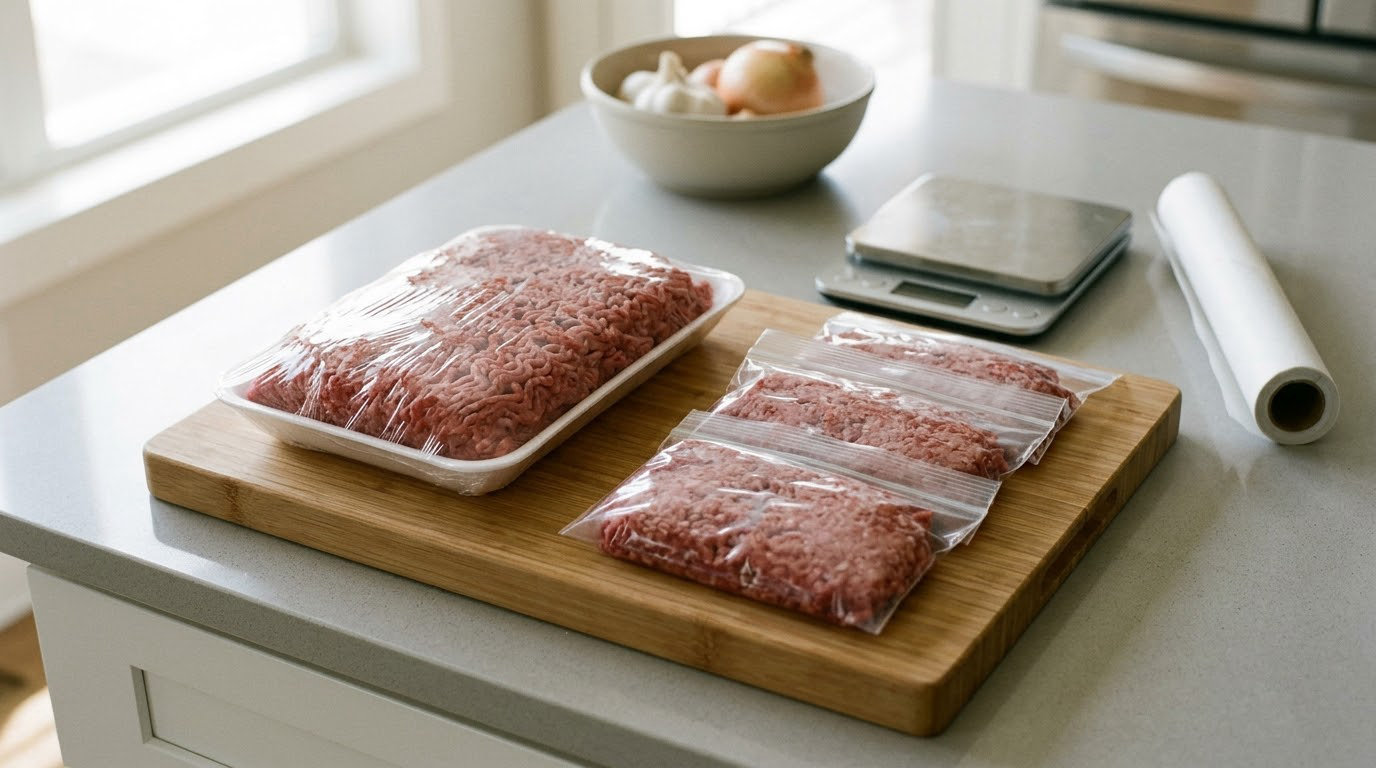
To save money on ground beef, do three things: pay the lowest price per pound, buy the largest package your freezer can actually finish, and stretch each pound across more than one meal. That is the whole game. Ground beef gets expensive because it is priced by lean percentage and package size, so the savings live in the unit price, the pack you choose and how many dinners each pound covers.
I cook for a household that goes through ground beef most weeks, and the difference between a careless purchase and a deliberate one is real money over a year. The trick is doing the math in the aisle with the package in your hand, not after you get home. Here are ten ways to save money on ground beef, in the order I actually use them.
One note before we start: the numbers below are typical US ranges that shift by region, season and store, so treat them as a way to run the calculation rather than a promise. And when we talk about cooking ground beef, we are talking about 160 degrees internal, every time.
Table of Contents
- How to Save Money on Ground Beef at a Glance
- 1. Buy Ground Beef During Routine Sales
- 2. Choose the Right Fat Ratio for Your Recipes
- 3. Buy Larger Packages and Divide Them Correctly
- 4. Freeze Ground Beef in Meal-Size Portions
- 5. Use Ground Beef in More Than Burgers
- 6. Mix Ground Beef with Complementary Ingredients
- 7. Cook Once and Plan Leftovers
- 8. Compare Store and Brand Options by Unit Price
- 9. Make Your Own Burger or Meat-Sauce Blend
- 10. Buy What You Will Actually Eat
- Frequently Asked Questions
- Conclusion
How to Save Money on Ground Beef at a Glance
Here is the short version of all ten methods, with the trade-off each one carries so you can pick the ones that fit your kitchen.
| Method | What you gain | Best used for | Trade-off |
|---|---|---|---|
| Buy on the sales cycle | The biggest single drop in cost per pound | Meals you can freeze | Requires a freezer with room and a plan |
| Match the fat ratio to the dish | Buy the cheaper blend and lose nothing | Taco meat, chili, meat sauce | Burgers need fat, so the leanest blend is not for patties |
| Buy the value pack and divide it | Lower cost per pound, fewer trips | Households eating 3 to 4 meals a week | Portioning takes ten minutes up front |
| Freeze in meal sizes | Stops waste and freezer burn | Any discounted bulk buy | You must plan the meals first |
| Cook it in more ways | More dinners per pound | Soup, chili, sloppy joes, casseroles | More prep time on some nights |
| Stretch with beans, oats or rice | Feeds more people per pound | Meatballs, meatloaf, tacos | Texture changes, so seasoning adjusts |
| Cook once, repurpose | Two to four meals from one batch | Weeknight cooking | Season separately to avoid flavor fatigue |
| Compare unit prices | Closes the gap between stores | Every single purchase | Takes a minute in the aisle |
| Grind your own blend | Full control of the ratio | Anyone with a grinder | Equipment, time and a mess to clean |
| Buy only what you will eat | The savings you keep instead of waste | Every household | Takes a week of planning |
1. Buy Ground Beef During Routine Sales
Buy on sale, because a sale is the only discount that is actually a discount. Weekly ads run a predictable rhythm, and beef and ground beef discount more often than most people watch for.
The catch is that a sale is only a saving if you have somewhere to put the meat. Before you buy a five-pound tray on deal, decide how many meals that is. A five-pound pack is roughly 10 to 12 servings at a quarter pound each, or 20 small burger patties at an eighth of a pound apiece. If your family eats that in three weeks, buy it. If it would still be sitting in the freezer a month later, walk away.
When beef is on deal, cook something that freezes well rather than the weekday pasta. Chili, meat sauce and taco filling are the three that hold up best.
2. Choose the Right Fat Ratio for Your Recipes
Match the blend to the dish, because a 90/10 lean tray is wasted money in a pot of chili and an 80/20 tray is the wrong choice for a clean burger patty. Lean percentage is the single biggest driver of the shelf price.
Here is the rough relationship as it works on most shelves. 80/20 usually sits at the low end of the ground beef price range, 85/15 lands in the middle, and 90/10 and leaner run well above both because the lean is harder and more expensive to separate.
| Blend | Typical price band per pound | Where it belongs |
|---|---|---|
| 80/20 | Lowest of the three | Meat sauce, chili, meatloaf, sloppy joes, everyday tacos |
| 85/15 | Middle of the range | Hamburgers, meatballs, casseroles where you want a little richness |
| 90/10 and leaner | Highest of the three | Breakfast patties, meatloaf you want to keep light, dishes where fat would make them greasy |
There is a third option that almost nobody uses. Buy the fattier cheap blend and the leanest cheap blend and mix them yourself in your kitchen. One pound of 73/27 plus one pound of 96/4 gets you close to an 85/15, and you get there without paying the 85/15 price. Our deeper breakdown of beef to fat ratios for juicy burgers covers why each percentage behaves the way it does.
3. Buy Larger Packages and Divide Them Correctly
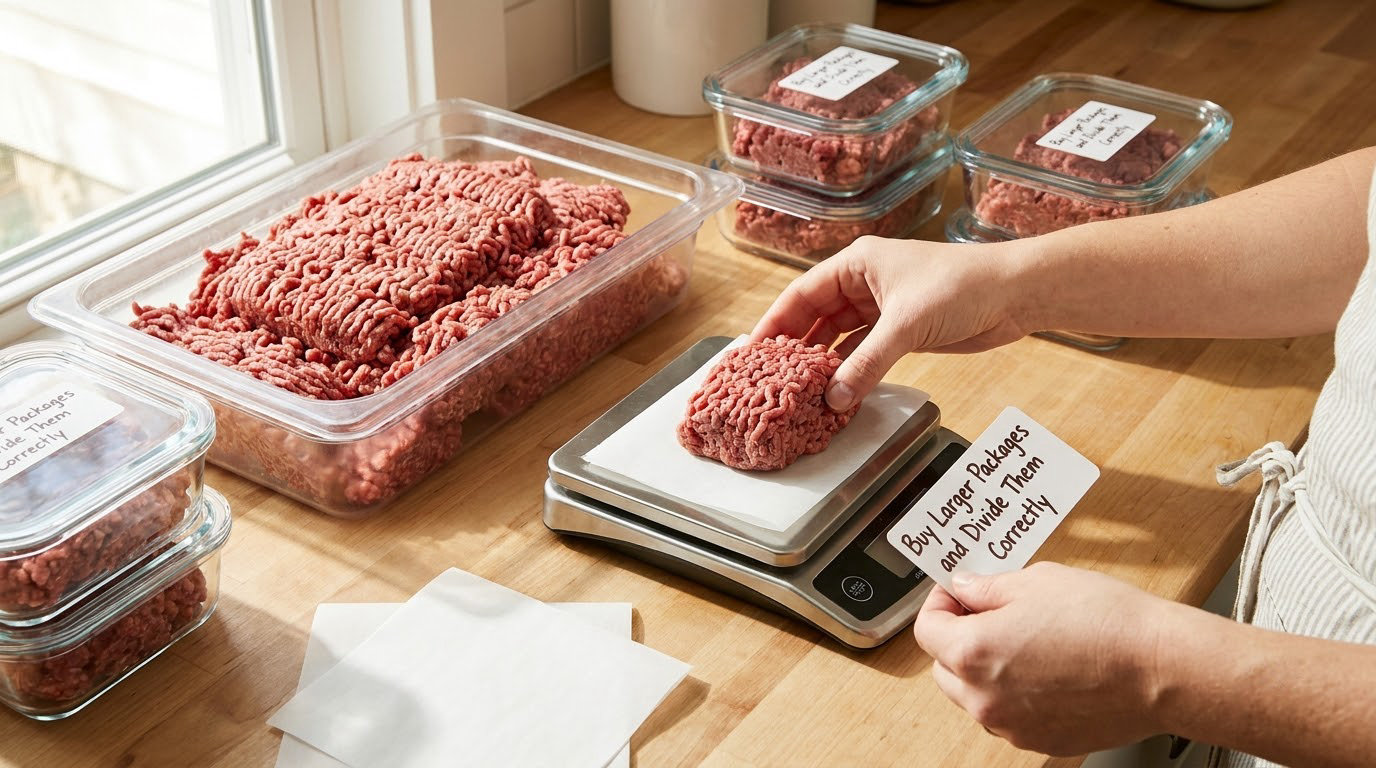
Compare the cost per pound before you compare the total, because a bigger tray is only cheaper when the price per pound actually drops. Divide the shelf price by the number of pounds and compare that number to a single tray.
Forum shoppers point this out constantly, and they are right. Bulk packaging does not automatically mean a better deal. Plenty of value packs are priced so the per-pound number is the same as the single tray, or worse, because you now have three times the meat to store. Check the per-pound number before you check anything else.
When the per-pound price is genuinely lower, do this the moment you get home. Lay out freezer paper or parchment, press the meat flat about an inch thick, cut or mark off portions, then label every bag with the date and the amount. Ten minutes of work turns a value pack into a month of meals. Weights matter more than volume here, so a scale helps.
4. Freeze Ground Beef in Meal-Size Portions
Freeze flat in meal sizes, because that is what stops the hidden loss. Freezer burn and half-used trays are where most bulk-buying savings quietly disappear.
Flattened bags stack cleanly and freeze faster. Push out the air, seal the seam twice, and keep portions in the sizes you actually cook. A family of four eating four-ounce servings wants a bag of eight; a single person cooking a skillet dinner wants a one-pound bag.
The safety numbers are short. Raw ground beef keeps in the refrigerator one to two days, and the freezer is good for three to four months at peak quality. Thaw in the refrigerator, in cold water or in the microwave, and cook straight from thawed. Our guide to thawing ground beef fast and safely covers the methods in order of speed.
One detail worth remembering: you can refreeze ground beef that was thawed in the refrigerator, but not meat thawed on the counter. If it sat out more than two hours, it is time to let it go.
5. Use Ground Beef in More Than Burgers
Use the beef in more than burgers, because the pound gets cheaper every time the same pound shows up as a different dinner. Burgers are also the most expensive way to eat ground beef once you count the buns and the toppings.
Cheap uses for the same pound include taco filling, sloppy joes, chili, meat sauce for pasta, meatballs, meatloaf, soup, stuffed peppers and quick skillet dinners with rice. Each one stretches a pound further because the flavor comes as much from the sauce and seasoning as from the meat.
Cost per serving is where this pays off. Quarter-pound servings put a burger night at four servings per pound. A pot of taco meat with beans and peppers stretches the same pound across six or eight.
6. Mix Ground Beef with Complementary Ingredients
Stretch with inexpensive add-ins, because beans, lentils, oats, rice, bread crumbs, potatoes and vegetables let you feed more people per pound of beef. This is the oldest budget move in the category and it still works.
The useful ratios are simple. For meatballs, one pound of beef to half a cup of breadcrumbs and a quarter cup of milk-soaked bread. For meatloaf, one pound of beef to half a cup of oats or a cup of diced onion and bell pepper. For taco filling, brown the beef, then add beans and a can of diced tomatoes. The add-ins hold moisture too, which is why a stretched batch often tastes better than a lean one.
Two things shift and you have to adjust for them. Texture loosens, so season a little heavier than feels right. And the temperature does not change: whatever you add, the whole dish still has to reach 160 degrees in the center, which takes longer with a thick meatloaf than with a thin skillet of beef.
7. Cook Once and Plan Leftovers
Cook one big batch unseasoned, because that is how a single pound becomes three or four different meals. This is the move that shows up most often in home cooking forums, and it is the one I lean on hardest.
Brown two pounds of 80/20 with nothing but salt, let it cool fast, and refrigerate it unseasoned. Then split it into containers: taco meat gets cumin, chili powder and tomato; sloppy joes get ketchup and mustard; meat sauce gets garlic, oregano and a long simmer; a fourth container goes to the freezer for soup or casserole night.
Storage rules for cooked beef are worth repeating. Refrigerate within two hours, use it within three to four days, and reheat to 165 degrees. Cooking a bigger batch than you need is only a saving if the extras get used, so pick meals you genuinely want to eat rather than extras you feel obliged to finish.
8. Compare Store and Brand Options by Unit Price
Compare unit prices across stores, because the gap between retailers is usually bigger than most shoppers expect. It takes a minute and it is the most reliable saving on this list.
Warehouse clubs and big-box chains tend to win on large packs because they run fewer promotions and lower margins on ground beef. Discount grocers like Aldi price ground beef low across the board and treat it as a traffic driver rather than a profit line, which is why their beef reads cheap. Regular supermarkets are usually the most expensive but they win on markdown deals and pharmacy-adjacent specials. A local butcher can beat everyone on a pack that other stores never carry, especially if you ask them to grind a cheaper cut.
Store brand versus name brand is less clear than shoppers assume. Ground beef is a commodity; the label tells you the lean percentage and the grind, and the difference between private label and a national brand is often small. The store brand is frequently overpriced, so check the per-pound number rather than assuming either way.
How to save money on ground beef when prices climb
Run the same three checks every time: per-pound price, blend match and freezer capacity. When the per-pound numbers are close, buy the smaller pack and skip the freezer math. When beef is on sale, buy the largest package you can divide into meals you already planned. And when prices climb across the board, shift a serving or two a week to ground turkey, ground chicken or ground pork, which is where the budget coaching forums have landed anyway.
9. Make Your Own Burger or Meat-Sauce Blend
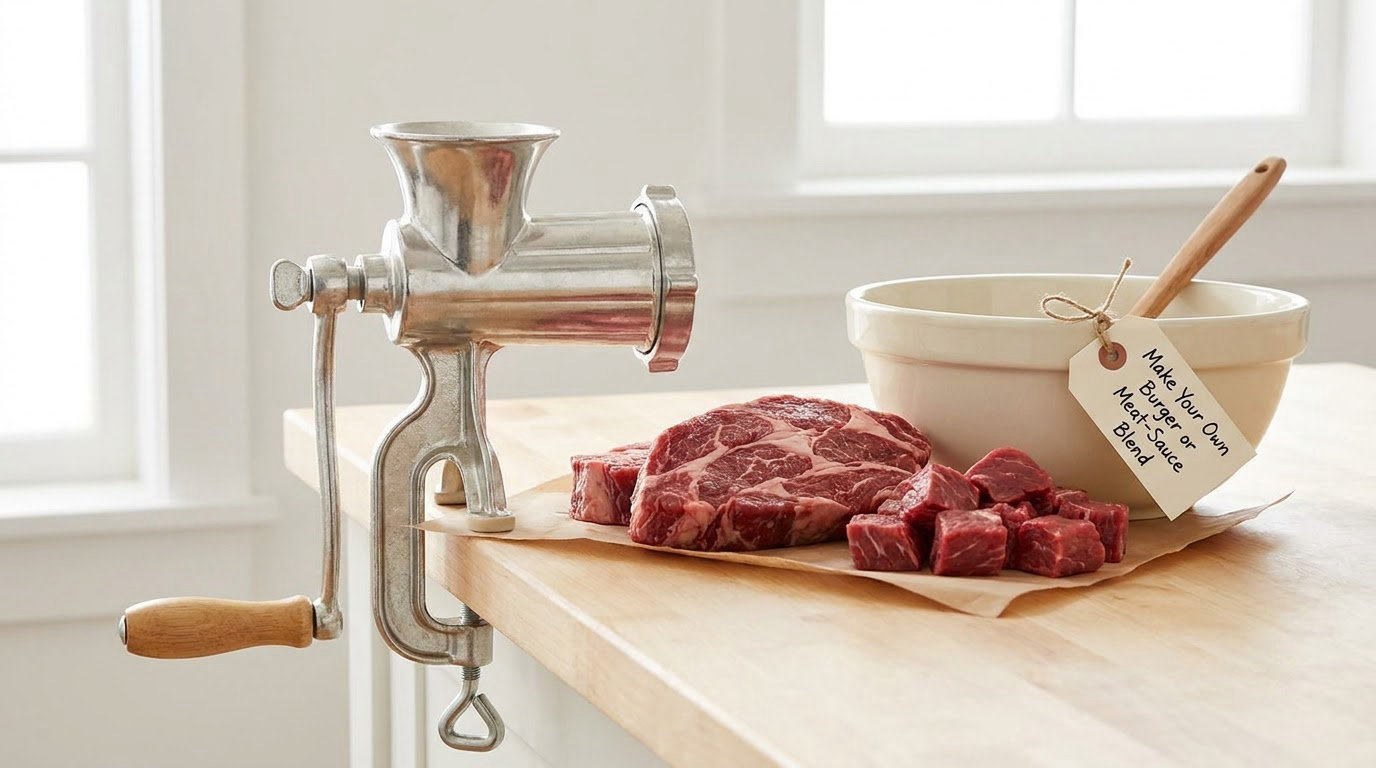
Grind your own when you own a grinder and can buy whole cuts cheaply, because you control the fat ratio and often end up ahead on the per-pound number. A single-ingredient meat grinder is the only real requirement.
The method is straightforward. Buy chuck for fat and a lean cut for the rest, cube both, chill them hard, and pulse rather than grind continuously so the meat does not warm up and smear. In-store grinding usually lands under the shelf price for ground beef, and that gap is what makes a grinder pay for itself once you grind regularly.
Be honest about the trade-off. A manual grinder takes time and a cleanup, and an electric one costs money. If you buy a few pounds a month, the savings are real. If you buy a package every few months, the store’s grinder is faster and probably cheaper in total.
10. Buy What You Will Actually Eat
Buy only what you will eat, because the most expensive ground beef is the ground beef that hits its date in the back of the fridge. This is the counterweight to every bulk-buying tip above it.
Work backward from meals instead of forward from appetite. Look at your family’s actual rotation for the next two weeks, count the ground beef dinners, and multiply. That number is your budget. Buying past it feels like savings on the receipt and shows up as waste in the trash a month later.
Watch for partially used trays with a use-by date coming up before your meal plan catches them. Cook them first, freeze them flat, or use them in the batch-cook method from method seven. If the date is already closer than your plan, make tonight a ground beef night.
Frequently Asked Questions
What is the cheapest type of ground beef to buy?
For most cooking, 80/20 is the cheapest ground beef on the shelf and it works in chili, meat sauce, meatloaf and tacos. Buy 90/10 only for dishes where fat would make them greasy. If a store sells 73/27, that is often cheaper still. Check the per-pound price on each, since the leanest tray is rarely the value choice once you consider how much of it you need.
How long can ground beef stay in the refrigerator?
Raw ground beef keeps in the refrigerator for one to two days, and one to two days is the safe window even if the package says longer. Cooked ground beef gets about three to four days. If you bought more than that, freeze it on day one in flattened meal-size bags rather than trusting the date on a tray you opened last week.
Can I refreeze ground beef after thawing it?
Yes, if it was thawed in the refrigerator. Refreezing is safe, though the texture can suffer after a thaw and refreeze, so freeze portions that you will use in things like chili or sauce rather than for burgers. Never refreeze beef that was thawed on the counter, and throw out anything that sat above 40 degrees for more than two hours.
Is 90/10 ground beef cheaper than 80/20 ground beef?
No. 90/10 is almost always the more expensive tray, because the lean is harder and costlier to separate from the fat. You can sometimes land on a middle blend cheaper by buying a fatty 80/20 and a lean 94/6 and mixing them yourself. The exception is a sale or markdown, where a store is clearing a lean tray and the shelf price drops below the fatter one.
Can I add beans or vegetables to ground beef to save money?
Yes, and it is one of the most reliable ways to stretch a pound. Beans, lentils, rice, oats, breadcrumbs and diced vegetables all work, and the finished meal usually stays moist because of the moisture they add. Season a little heavier than usual since the texture loosens, and remember the whole dish still has to reach 160 degrees, which takes longer with a thick meatloaf than a thin skillet.
Conclusion
Start with the per-pound number in the aisle, not the sticker total. Pick the blend the dish actually needs, buy the largest package you can divide into meals you already planned, and freeze it flat and labeled that same evening. Everything else in this guide builds on those three checks, and they are where the money actually is. For reference on how long the meat in your fridge stays good, read how long ground beef lasts in the fridge before you plan the week.