
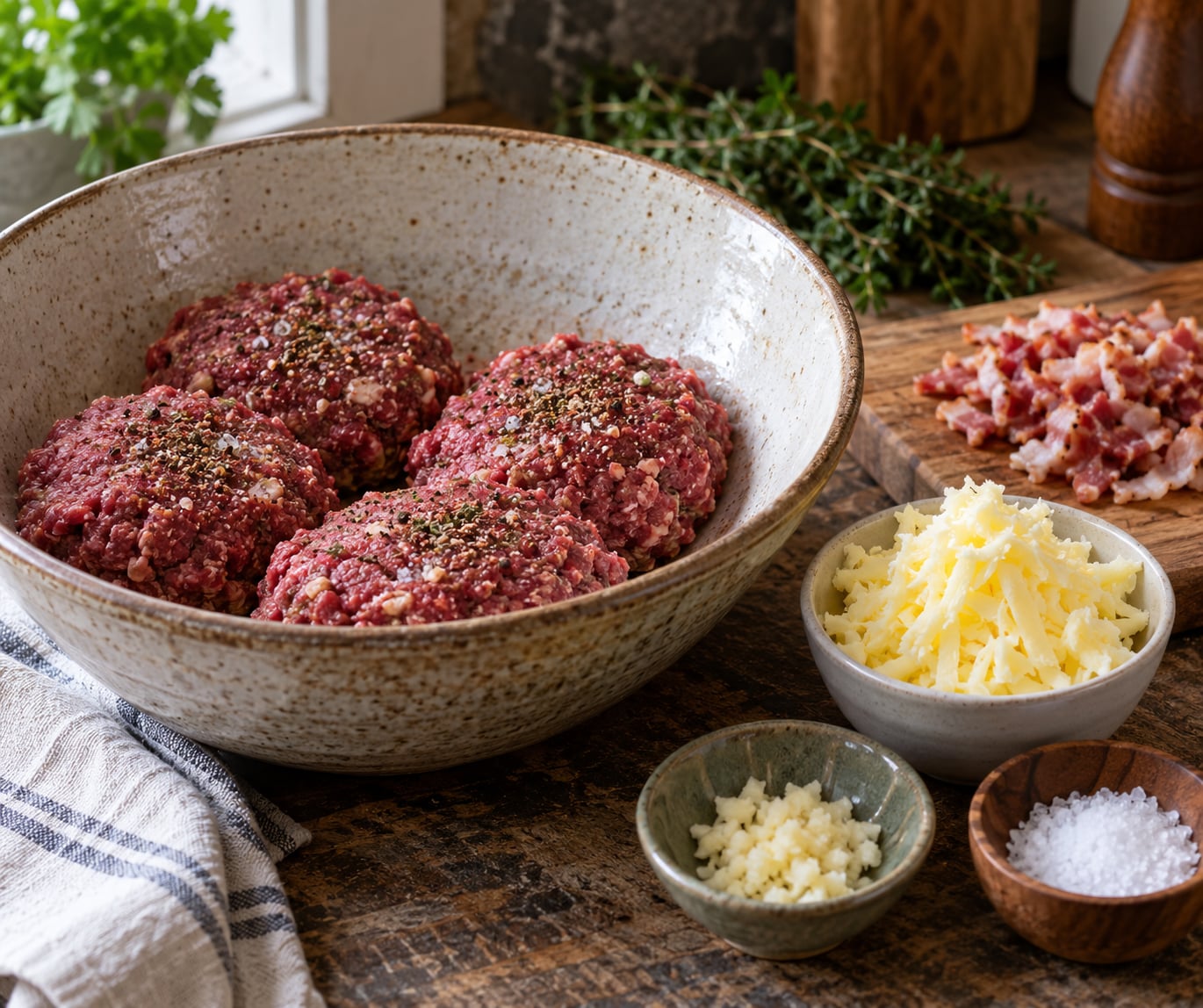
How to make elk burgers comes down to two things: add fat to lean meat, and stop cooking before it dries out. Mix 1 lb of ground elk with 3 tbsp of cold grated butter or 2 slices of finely chopped bacon, season it, form quarter-pound patties about three-quarters of an inch thick, chill them 15 to 20 minutes, then sear 4 to 5 minutes per side over medium-high heat until the center hits 160F.
That takes about 40 minutes start to finish, plus the chill. Ground elk carries roughly 10% fat, sometimes less, where standard 80/20 ground beef carries 20%. Cook it straight and you get a patty that is firm, dull and dry instead of juicy.
The good news is that the fix takes about a minute of work. Elk also has a deeper, earthier flavor than beef, so it rewards a strong seasoning rather than a delicate one.
What You Need
For four burgers, start with 1 lb (16 oz) of ground elk. That gives you four quarter-pound patties, which is the right size for a standard bun. Bigger patties cook unevenly on a home grill, and smaller ones dry out before they brown.
The base mix
- 1 lb ground elk, kept cold
- 3 tbsp cold unsalted butter, grated, or 2 slices bacon, finely chopped
- 1 tsp kosher salt
- 1 tsp coarse ground black pepper
- 1 tsp garlic powder
- 1 tsp onion powder
- 1/2 tsp smoked paprika
- 1 tbsp Worcestershire sauce
That is the standard version, and it works every time. For a no-bacon version with no added dairy, swap the butter for 2 tbsp of a 50/50 elk and ground pork blend. Our bison burger guide covers that blend in more detail if you want to compare the two.
How much fat to add
Fat is the whole ballgame with lean game meat. These amounts are per pound of ground elk.
- Cold unsalted butter, grated — 3 tbsp. Rich, rounds out the game flavor, classic.
- Bacon, finely chopped — 2 to 3 slices. Smoky and salty, and the most popular choice.
- Ghee, melted and cooled — 2 tbsp. Clean butter flavor, no dairy solids.
- Olive oil — 2 tbsp. Light and fruity, pairs well with blue cheese.
- Ground pork blend — 4 to 6 oz. Mildest option, no added fat needed elsewhere.
- Beef tallow, melted — 2 tbsp. Beef flavor, good for hunters making a big batch.
Skip the game fat. Elk and bison fat goes rancid in the freezer faster than domestic fat, so hunters on forums trim it out and add bacon or butter instead.
On binders: an egg and a couple of tablespoons of breadcrumbs help a patty hold together, but they also absorb juice. Use one or the other, not both, and only when the patties are actually breaking apart. A thumb indent does more for structural integrity than any binder.
Equipment
You need a wide spatula with a thin edge, a digital thermometer that reads instantly, a large bowl, and either a grill, a cast iron skillet, or a flat-top griddle. A plate or wire rack for resting the finished patties is worth having, since putting them straight on a cutting board steams the crust soft.
Step-by-Step: How to Make Elk Burgers
Six steps, and each one is doing a specific job. Skip the chill or the thermometer and you will notice it in the first bite.
1. Keep the meat cold
Set the bowl in the fridge while you gather everything else, or put the package back in the coldest part of the fridge for 15 minutes. Cold meat holds its shape better and the fat stays in distinct pieces rather than smearing into the muscle.
How do you know it worked? The ground elk looks matte and pale, with no shine from warmth. If it looks grey and greasy, it warmed up too long.
2. Mix the seasoning and the add-in fat
Add the seasonings, Worcestershire sauce, and your chosen fat to the cold elk. Then mix with your clean hands until you just see every speck of seasoning and no pools of liquid.
The cue is that the mixture still looks slightly streaky. Stop there. Venison and elk have almost no connective tissue, so kneading them works gluten into the meat and gives you a dense, rubbery patty nobody asked for.
3. Form the patties
Divide the mix into four equal balls, roughly a quarter-pound each. Pat each one into a 3/4 inch thick disk, about as thick as the heel of your palm. Press a shallow indent in the center with your thumb so it stays flat instead of bowing upward into a dome.
4. Chill the shaped patties
Set the patties on a tray and refrigerate for 15 to 20 minutes. This firms up the fat and the patty together, so it hits the hot grill as one piece rather than falling apart.
If you have space, separate them on the tray. Patties touching each other chill unevenly and can stick where they meet.
5. Preheat and clean the cooking surface
Get the grill or skillet to medium-high before the patties come out of the fridge. Then wipe the surface with a paper towel held in tongs and oil it lightly. That final wipe is the step that gives you a clean, even crust instead of a black, sticky one.
6. Sear, check the temperature, assemble
Lay the patties down away from you and do not move them for 4 to 5 minutes. Flip once with a thin-edged spatula and go down without pressing. Cook the second side 3 to 4 minutes, add cheese for the final minute if you want it, and pull the patty at 160F in the thickest part.
Toast the buns in the rendered fat for the last minute, then build: sauce on the bottom bun, patty, cheese, toppings, and a final press of the lid if you want it to hold together for eating on the move.
How to Make Elk Burgers That Hold Together
Elk patties fall apart for three reasons: the mix got overworked, the patties went straight from the fridge-shaped stage onto a screaming-hot grill, or they got flipped with a thick spatula and mashed. All three are avoidable.
Mix with a light hand, using your fingertips to break up the fat clumps rather than kneading the whole bowl. The 15-minute chill matters most here. It firms the surface fat just enough that the patty keeps a single piece when it hits heat.
When you flip, slide the spatula all the way under the patty before lifting, and turn it in one motion. Pressing it flat squeezes out the juice you spent ten minutes protecting, which is why so many people end up with dry burgers despite following the recipe.
How to Cook Elk Burgers on a Grill or Griddle
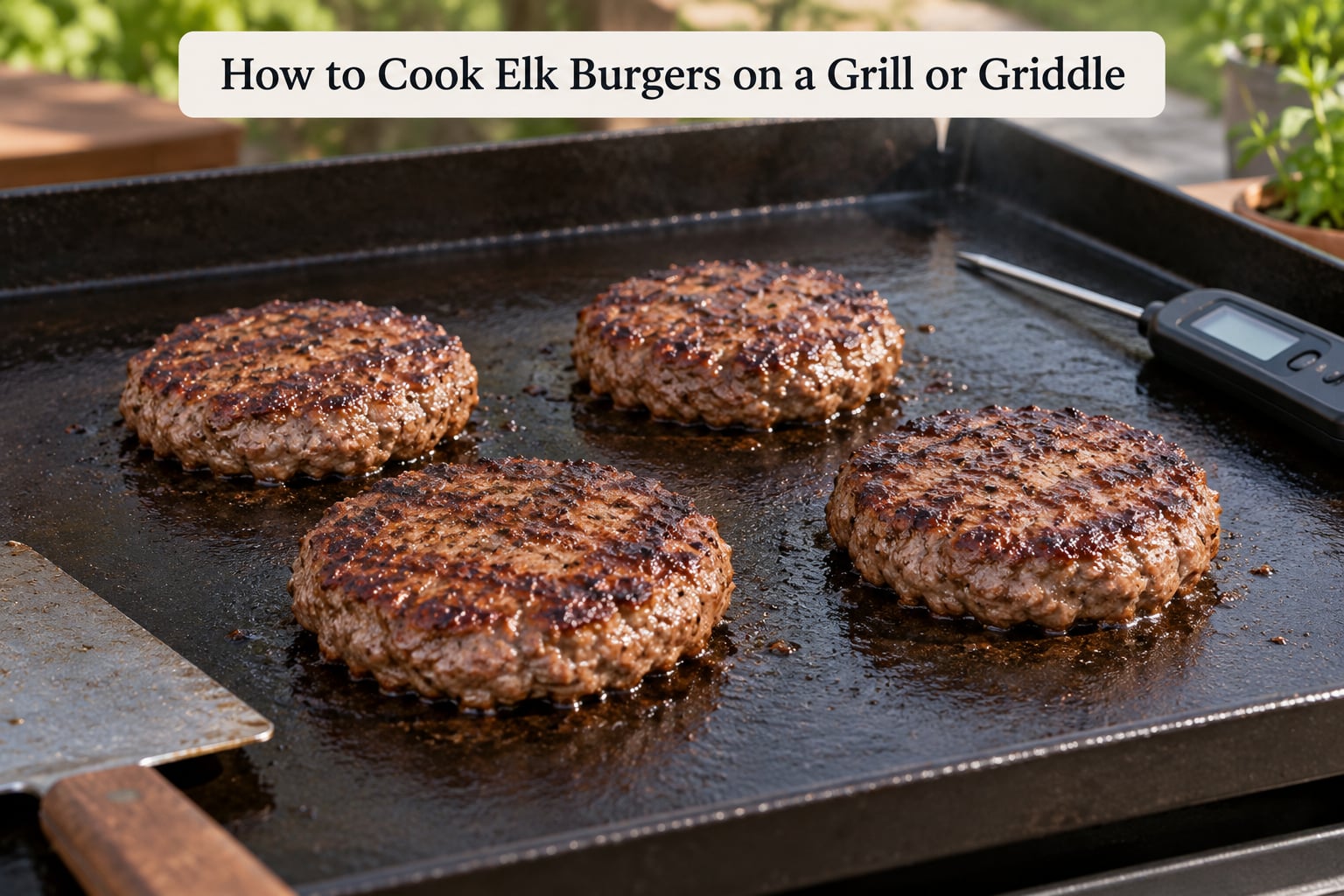
Set up two heat zones if you are grilling over charcoal or gas. Sear the patties over direct medium-high heat, then move them to the cooler side to finish if they are thick or if you are cooking a big batch at once.
- Charcoal or gas grill — medium-high, direct, 4 to 5 minutes per side. The best choice when you want smoke and char flavor.
- Cast iron skillet — medium-high, preheated 5 minutes, 4 minutes per side. Indoor cooking with a maximum crust.
- Flat-top griddle — medium, two zones, 3 to 4 minutes per side. Best when cooking four or more at once.
- Pound or smash style — medium-high, thin patty, 2 to 3 minutes total. For thin, crisp-edged patties.
For cast iron, preheat the skillet empty for five full minutes before the meat goes in. A cold skillet is the fastest way to a pale, stuck patty. If you are working with ground turkey, the same heat logic applies. Our turkey burger tips cover the stovetop method in more depth.
Common Mistakes
Almost every disappointing elk burger traces back to one of these seven.
Dry patties. The meat went on the grill without added fat, or it stayed on far too long. Add the butter or bacon at mixing time, and pull at 160F rather than cooking until the juices run clear. Time alone is not a doneness test.
Dense, crumbly patties. Two opposite mistakes live here. Overworked meat turns rubbery, while no fat at all turns it loose and sandy. Mix until the seasonings disappear, then stop.
Patties cracking while cooking. Usually overcooked or flipped more than once. Give it one flip, and use a thermometer rather than your sense of timing.
Scorched outside, raw inside. The heat was too high for the patty thickness. Drop to medium-high, press a thumb indent, and keep the patty at 3/4 inch. Thinner patties cook fast enough for high heat; thicker ones do not.
A spatula pressed flat on the patty. This is the single most repeated warning in cooking forums about game burgers. Every press squeezes juice onto the coals. Slide the spatula under and flip without touching the top.
Over-seasoning. Elk is more strongly flavored than beef, so a heavy game rub plus salt and pepper can push a burger into jerky territory. Season generously but evenly, and taste the mix if you are using a rub you have not used before.
Skipping the chill. No chill means the fat softens, the patty spreads, and it hits the grill as a loose pile. Fifteen minutes in the fridge solves the problem before it starts.
One final tip that ties most of these together: rest the finished patties for 3 to 5 minutes on a rack before serving. The juice that runs out during the rest is the juice that stays in the burger.
How to Tell When an Elk Burger Is Done
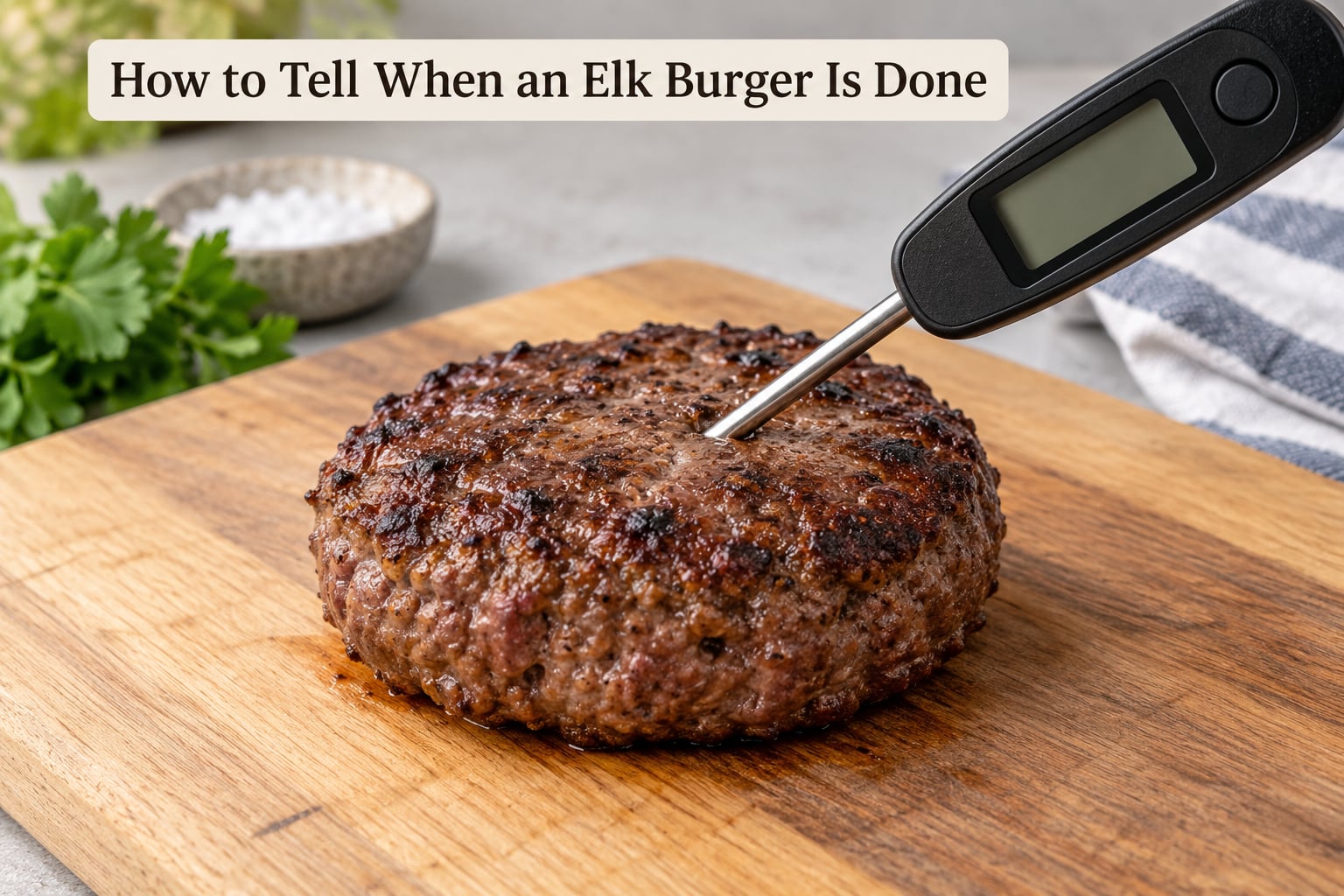
Use the thermometer first and the color second. Insert it into the thickest part of the patty, not the edge, and read it without touching bone or the pan.
160F is the USDA safe minimum internal temperature for ground meat, and that includes ground elk. Because elk is very lean, many cooks pull it a shade early in fear of drying it out, which is understandable and unnecessary. A 3/4 inch patty with added fat holds its moisture fine at 160F.
The visual cues to check alongside the reading: the surface is evenly browned with a formed crust, the juices running out are clear rather than pink, and the patty springs back slightly when you press it. A pink center in ground game is not a doneness signal the way it is for a whole steak, since the color comes from myoglobin rather than surface exposure. Cook to the number, not the color.
For the freshest toppings, a sliced tomato with a little salt works well on an elk burger, and so does a simple homemade guacamole if you want something with a little acidity against the rich meat.
Frequently Asked Questions
Are elk burgers safe to eat?
Yes, when they are cooked to the USDA safe minimum internal temperature of 160F, which is the same standard that applies to ground beef and ground pork. Elk is a wild game meat and carries the same surface bacteria concerns as any ground meat, so avoid cross-contamination, cook the patty through to 160F in the thickest part, and check with a thermometer rather than judging by color alone.
Do elk burgers need to be cooked all the way through?
Yes. Unlike a whole steak, ground meat has to reach 160F throughout because any surface bacteria gets mixed through the whole patty during grinding. Elk is leaner than beef, so the worry about drying it out is real, but a three-quarter inch patty with added fat stays moist at 160F if you pull it the moment the thermometer reads it.
How should I store uncooked elk burgers?
Keep raw ground elk in the coldest part of the refrigerator and cook it within one to two days, or freeze it in airtight portions. For a hunting harvest, form patties and freeze them in a single layer first, then stack once solid. Leave the game fat out, since it turns rancid faster than domestic fat, and add the bacon or butter when you cook rather than before freezing.
Why do my elk patties fall apart?
Three causes cover nearly every case. You mixed the meat too aggressively and it lost its structure, you skipped the 15 to 20 minute chill before cooking, or you pressed the patty flat with a spatula when you flipped it. Mix gently, chill the shaped patties, and slide the spatula all the way underneath before turning. A well-chilled patty needs no binder at all.
Can I make elk burgers with a light breadcrumb coating?
Yes, and it works better on a griddle or in a skillet than on an open grill, since crumbs need contact with the pan to crisp. Use a light hand, about a quarter cup of panko or plain breadcrumbs, and press them on just before the patty hits the surface. A full coating competes with the crust for moisture, so a partial coating is the safer route with lean elk.
What toppings pair well with elk burgers?
Elk has a rich, earthy flavor, so toppings should add acid, heat, or cream rather than more meatiness. Sharp white cheddar, smoked cheddar, and pepper jack all melt well on a lean patty. Sliced raw onion and dill pickles cut the fat, and a mustard aioli or a hot sauce with vinegar works better than a heavy sweet barbecue sauce.
Conclusion
Learning how to make elk burgers is mostly about respecting lean meat. Season generously but evenly so the game flavor has something to sit against, handle the mixture lightly so the patty stays tender, chill the shaped patties for 15 to 20 minutes, and cook them over medium-high heat with one flip and no pressing.
Add fat at mixing time, three tablespoons of cold butter or two slices of chopped bacon per pound, and pull the patty the moment a thermometer reads 160F. That combination is the difference between an elk burger that eats like a dry cube and one that makes you close the bun for a second bite before you answer.