
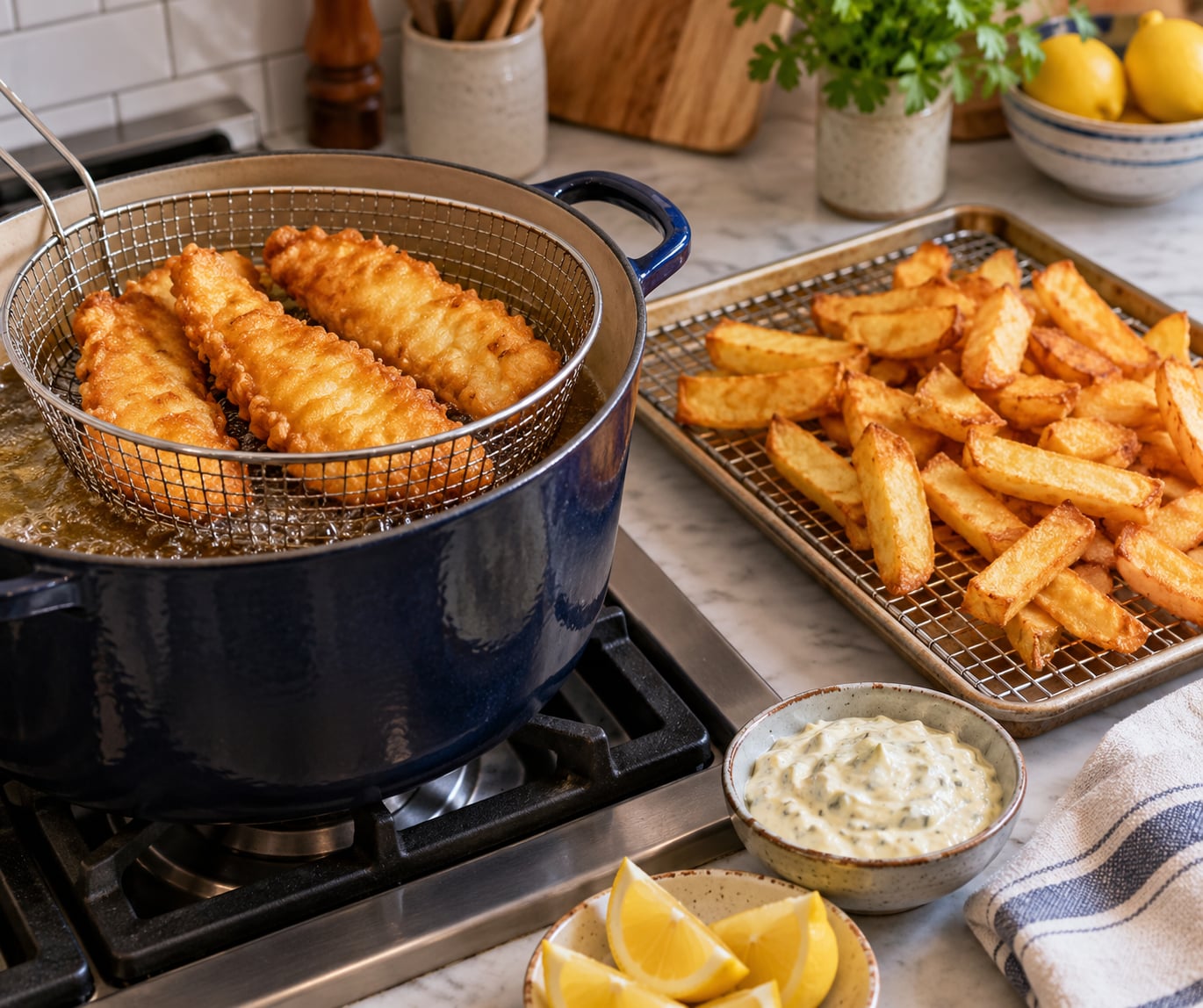
Learning how to make fish and chips at home is mostly about controlling heat and keeping water out of the oil. The chip-shop version comes from a flour batter with a little cornstarch, a cold beer or fizzy water, and thick-cut Russet potatoes fried twice. The whole thing takes about 45 minutes and needs one heavy pot with a thermometer.
I’ve made this roughly a dozen times in a normal home kitchen, and the version below is the one that finally stopped giving me pale, limp chips. The chips go in first at a lower temperature, the fish goes in second at a hotter one, and everything gets drained on a wire rack rather than kitchen paper.
- Use a firm white fish: cod, haddock, whiting or pollock, cut into even 5 cm pieces.
- Use Russet or Maris Piper potatoes, cut thick, soaked in cold water, then dried completely.
- Fry the chips twice: 325°F/160°C first, then 375°F/190°C for a minute.
- Fry the fish at 350°F/175°C to 375°F/190°C for 5 to 7 minutes, until it reads 145°F/63°C in the thickest part.
- Drain on a wire rack over a tray, season immediately, and serve within minutes.
What You Need
Everything here is a supermarket ingredient. There is no specialty equipment in the method, and the only real requirement is a pot deep enough that the oil does not come within three inches of the rim.
Ingredients for four servings
- 1.5 lb (680 g) skinless white fish fillets — cod, haddock, whiting or pollock
- 4 large Russet or Maris Piper potatoes (about 2 lb / 900 g)
- 1 cup (120 g) plain flour, plus extra for dredging
- 2 tbsp (16 g) cornstarch
- 1 tsp baking powder
- 12 oz (355 ml) ice-cold lager, or the same volume of sparkling water
- 1 tsp salt for the batter, plus salt for seasoning
- 1 tsp paprika and a pinch of turmeric, optional for colour
- Neutral oil for frying — sunflower, groundnut, canola or peanut, about 2 quarts (1.9 L)
- Malt vinegar, lemon wedges and tartare sauce to serve
Which fish and potato to pick
Cod is the classic and it holds together well, though it can go a touch dry if you overcook it. Haddock has a sweeter, fatter flesh and takes batter beautifully. Whiting and pollock are cheaper and softer, so they are more forgiving but need shorter frying. Ling works too and has the firmest texture of the lot.
Russet and Maris Piper are high in starch, which is exactly what you want: the coarse starch gives chips a fluffy centre and a craggy surface once they hit the oil. Waxy new potatoes make chips that stay soft and bendy, which is not the texture most people are chasing.
Equipment and oil safety
A heavy-bottomed pot with 4 inches (10 cm) of walls works as well as a dedicated fryer, and a clip-on deep-fry thermometer is the one tool that will genuinely change your results. Add a wire rack resting over a baking sheet, a slotted spoon or spider, and a wire colander for the chips.
Fill the pot no more than one third to one half full of oil. Oil expands when food goes in, and a full pot is the fastest way to a burn, so keep the oil well below the rim and never leave it unattended. Start with cold oil and let it heat with the fish out of the pan.
Step-by-Step: How to Make Fish and Chips at Home
1. Prepare the fish and potatoes
Pat the fish fillets completely dry with paper towels, then cut them into even pieces about 5 cm (2 inches) wide. Even thickness matters more than shape, because pieces of different sizes cook at different rates and the thin ones go dry before the thick ones are done.
Salt the fish lightly and leave it for 10 to 15 minutes. The salt draws a little water out of the surface, and that wet patch is exactly what makes batter slide off, so blot the fillets dry again afterwards.
Cut the potatoes into chips roughly the same width as the fish, then 2 cm (¾ inch) thick. Soak them in a bowl of cold water for 30 minutes, changing the water once if you can. That pulls the surface starch out, which is the difference between chips that crisp and chips that go gluey. Drain them and pat them dry, or spin them in a salad spinner.
2. Make the batter
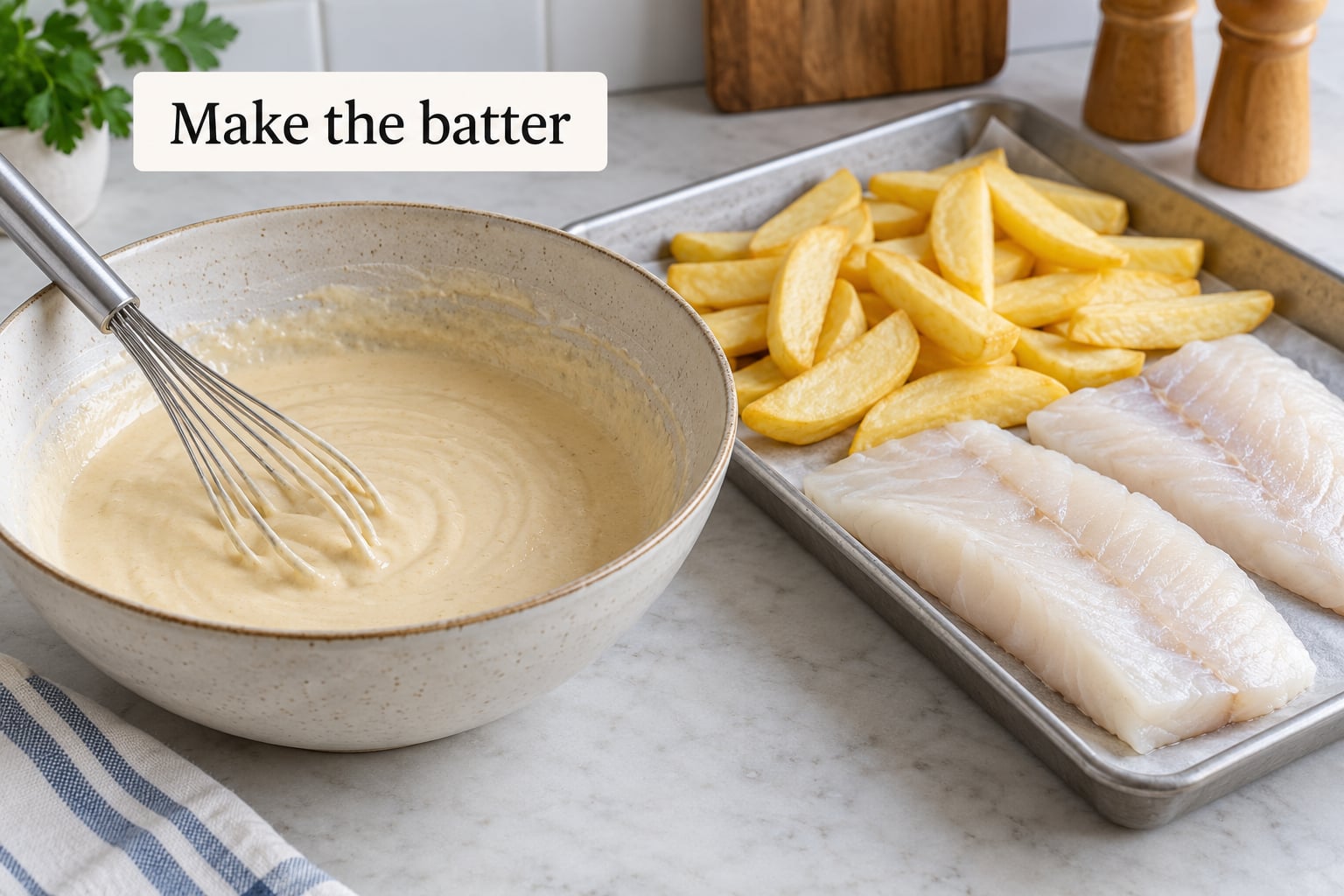
Whisk the flour, cornstarch, baking powder, salt, paprika and turmeric together in a large bowl, then pour in the ice-cold lager and stir with a few strokes until it just comes together.
Stop while it still looks slightly lumpy. Over-whisking develops gluten and gives you a thick, bready shell instead of a light one, and the lumps are what create the shaggy lacy coating a chip shop produces. Use the batter straight away, or cover it and keep it in the fridge for up to two hours.
Never add an egg. Home cooks often reach for one out of habit, but the traditional batter has no egg in it, and an eggy batter is heavier and crisper in a different, less lacy way. If you want a coating that will not budge, dredge the fish in seasoned flour before it goes near the wet batter.
3. Heat the oil safely
Put the oil in the heavy pot and bring it to 325°F/160°C over medium-high heat. Clip the thermometer to the side of the pot so the tip sits in the oil but not touching the bottom, where the reading runs hotter than the real temperature.
If you have no thermometer, drop a teaspoon of batter into the oil. It should sizzle hard and turn golden within about a minute. Slow bubbling means the oil is too cool; aggressive smoking means pull it off the heat immediately.
4. Fry the chips
Lower a single layer of chips into the oil using the spider, and fry them for 5 to 7 minutes. They will soften and turn pale but will not take on much colour. Scoop them out and spread them on a rack or tray, not on paper, so steam escapes instead of soaking back in.
Do not overcrowd the pot here. Adding too many chips at once drops the oil temperature, and that temperature drop is the single biggest reason for pale, greasy chips. Working in two batches is slower and correct. If you like your chips a shade crunchier, how to make steak fries at home uses the same double-fry logic with a thicker cut.
Raise the heat until the oil reaches 375°F/190°C. Return the chips for 60 to 90 seconds, until they are golden and rigid, then lift them out, salt them right away and hold on the rack. Timing is short at this stage, so stay with the pan.
5. Fry the fish and serve it straight away
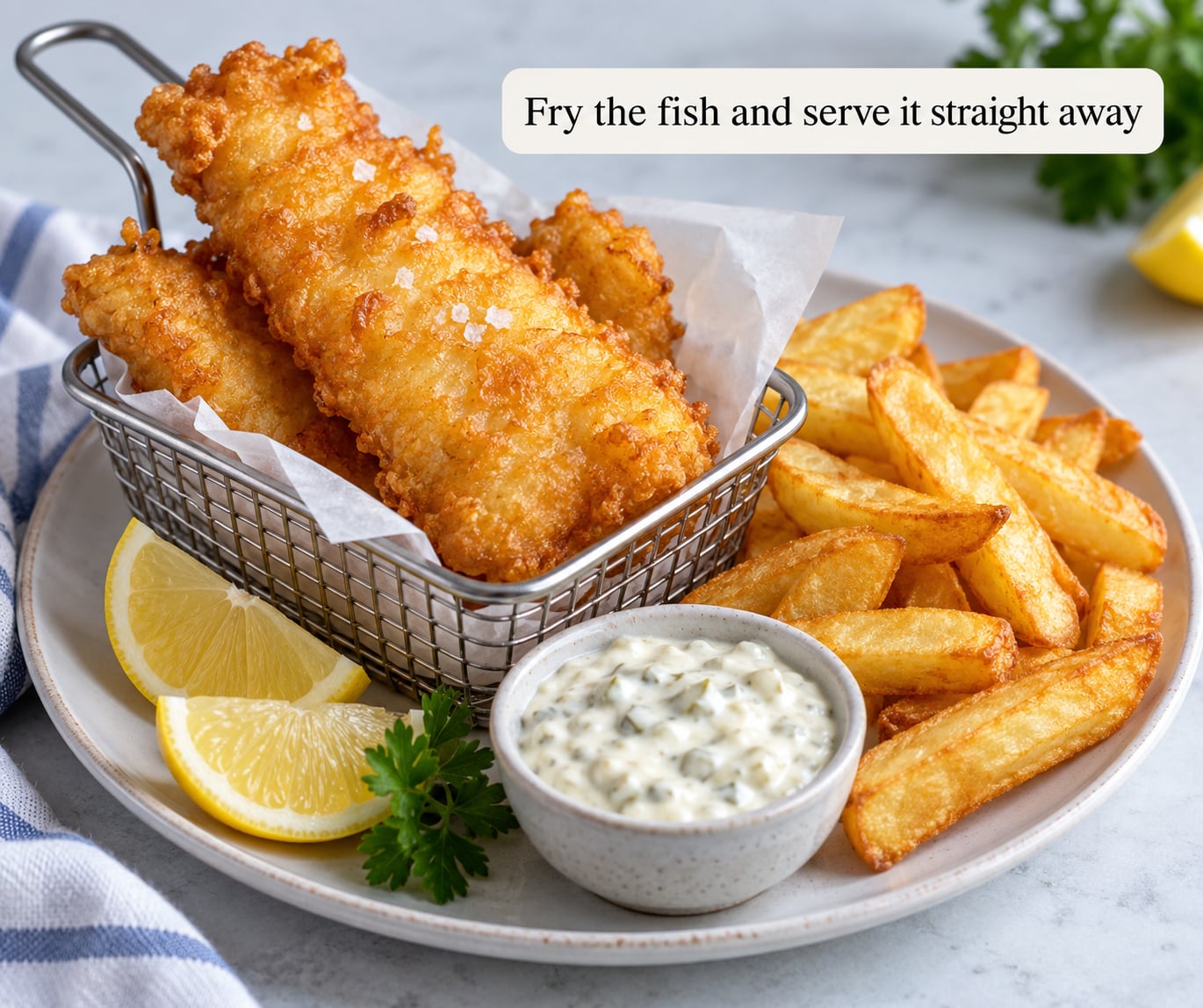
Turn the heat so the oil sits at 350°F/175°C, and let it come back up before you start. Working in batches of two or three fillets, dredge each piece in seasoned flour, shake off the excess, then dip it into the batter and hold it for a few seconds so the excess drains back into the bowl.
Lower the fish away from you into the oil and fry for 5 to 7 minutes, turning once, until the batter is deep golden all over. Test the thickest piece with a thermometer: it should read 145°F/63°C inside, which is the recommended minimum internal temperature for fish.
Drain the fish on the wire rack for a minute so the steam can escape, then serve straight away with a scatter of salt, a splash of malt vinegar, lemon wedges and tartare sauce. If you want the sauce alongside rather than on top, how to make burger sauce at home takes about five minutes and does the same job. A spoonful of mushy peas is the traditional accompaniment if you can find them, and how to make hash browns for brunch is a good second fry while the same pot of oil is still hot.
Eat it within a few minutes if you can. Batter starts giving up moisture within about five minutes of draining, and that is the entire reason a takeaway box is always a little disappointing compared with the plate it came off.
Common Mistakes
Almost every disappointing plate of fish and chips traces back to one of four problems: moisture, temperature, crowding, or timing. Each has a specific fix.
Why your chips turn out limp and doughy
Usually the oil was not hot enough, or the chips went in as a crowded heap. A drop in temperature means the potatoes steam instead of frying, and steamed potato stays soft no matter how long you leave it. Test the oil, cook in small batches, and use a thermometer rather than guessing.
Skipping the soak and the drying is the second cause. Surface starch absorbs oil and turns the outside of the chip into a paste, so a 30-minute soak followed by a proper dry is not optional.
Why the batter slides off or the fish turns greasy
Batter runs when the fish is wet underneath it. Blotting the fillets dry after salting, dredging in seasoned flour, and letting the excess drip off the fish before it goes into the oil all help.
Greasy, heavy crust is usually oil that is too cool, a batter that has been over-mixed, or oil that has been used too many times. Cornstarch in the batter adds extra shatter and reduces how much oil the crust soaks up. Cool the oil completely once it has cooled enough to handle, strain it through a fine sieve, store it away from light, and give it a sniff before reusing — old oil goes bitter and dark, and that flavour carries straight into the batter.
Why the oil spits everywhere
Wet food in hot oil pops. Chips that have not been dried properly, or fish that was patted rather than blotted dry, will spit violently.
Keep the pot no more than half full, and lower food into the oil with a spider or slotted spoon rather than dropping it from a height. Do not add a lid, and keep a lid and a sheet of metal nearby in case of a flare-up.
Why the middle of the fish is still raw
Either the oil was too cool to cook it through before the outside set, or the pieces were wildly different sizes. Cut even pieces, keep the oil between 350°F/175°C and 375°F/190°C, and check the thickest piece for 145°F/63°C rather than trusting colour alone.
Two habits worth dropping
Do not shake vinegar or squeeze lemon over the fish before serving. Wet sauce on a crisp crust is the fastest way to undo the whole method. Do not pile the chips under the fish on the plate either, since trapped steam does the same job. A third habit to skip is holding fried food on kitchen paper, which steams the underside and softens it in minutes.
Frequently Asked Questions
What is the best fish for fish and chips?
Cod and haddock are the classic choices because both are firm, mild and hold together in batter. Haddock is slightly sweeter and fattier, cod is leaner and more widely available. Whiting and pollock are cheaper and softer, so they cook faster but need less time in the oil. Buy skinless fillets and cut them yourself into even 2 inch pieces.
Should I use a thick batter or a light coating?
A thin, slightly lumpy batter gives the lacy, shaggy crust you get in a chip shop. A thick batter turns bready and heavy. Use flour, a little cornstarch and a small amount of baking powder, loosen with ice-cold beer or sparkling water, and stop mixing while it is still uneven. Season both the fish and the batter, since under-salted batter is the usual reason for a bland result.
How hot should the oil be for frying fish and chips?
Chips go in twice: first at 325°F/160°C for 5 to 7 minutes to cook the potato through, then at 375°F/190°C for 60 to 90 seconds to crisp them. Fish goes in at 350°F/175°C to 375°F/190°C for 5 to 7 minutes. A thermometer gives a reliable reading; without one, a teaspoon of batter should sizzle and colour within about a minute.
Can I make fish and chips without a deep fryer?
Yes. A heavy pot with 4 inch walls and enough oil to be 2 inches deep behaves like a fryer, and a clip-on thermometer makes up for the missing dial. A cast-iron skillet or wok gives you roughly a third less capacity, so fry in more, smaller batches. An air fryer works too, at 400°F/205°C for 10 to 12 minutes, but coat the fish well or batter drips into the basket.
How long do leftover fish and chips keep?
Store them in the fridge within two hours and eat within three days, though the coating will have softened by then. Reheat in a hot oven at 400°F/205°C for 8 to 10 minutes rather than in a microwave, which leaves the batter rubbery. Re-frying for 3 minutes in hot oil restores more crunch than any oven will.
Can I bake the fish and chips instead of frying them?
You can, and it is the gentler option. Toss the dried chips in a little oil, spread them on a hot tray and roast at 425°F/220°C, turning twice, while you bake flour-dusted or breadcrumb-coated fish alongside. They will crisp decently but never match a fry, mainly because the chips steam in their own moisture rather than being surrounded by hot oil.
Conclusion
Start with the potatoes, because they take the longest and they hold. Cut them thick, soak them, dry them properly, and give them both frying stages before you touch the fish. Then dredge the fish in flour, dip it into a cold lumpy batter, and fry two or three pieces at a time until the crust is deep gold and the thickest one reads 145°F/63°C.
Fry the chips first, the fish second, and serve them within minutes on a wire rack. That sequence, plus a thermometer, is the difference between the version you make at home and the one you keep ordering in. If you want the full method for how to make fish and chips at home that survives contact with a hungry family, the numbered steps above are the whole thing.