
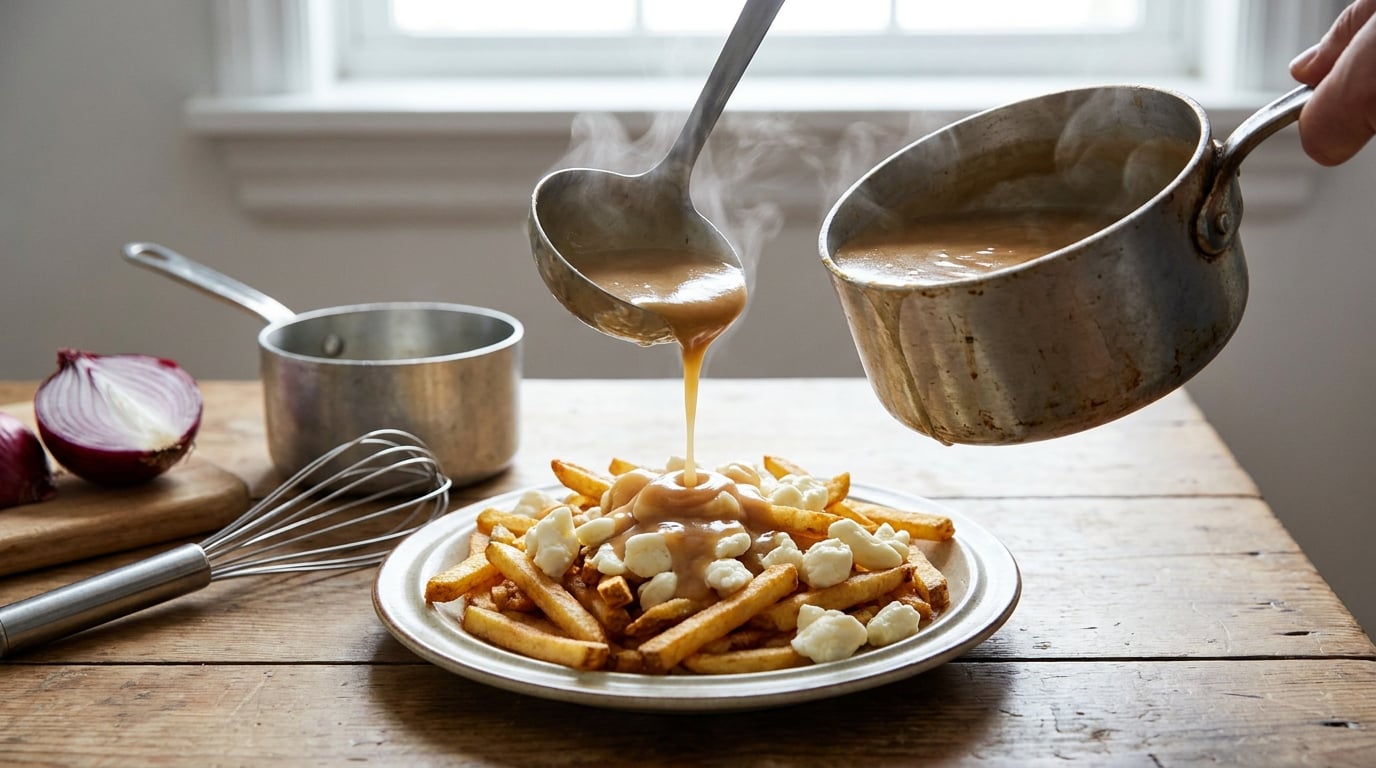
Brown gravy for poutine is a thin, light brown sauce made by cooking fat and flour into a roux, whisking in beef or chicken stock, and seasoning with salt and a hint of pepper. Authentic poutine gravy is thinner than most American brown gravy. It runs off the spoon and coats every fry instead of pooling at the bottom of the bowl. From scratch it takes about 25 minutes, and the whole job is knowing when to stop adding flour.
The French name for it is sauce brune, and a traditional version blends chicken and beef stock. That detail trips people up, because most US brown gravy recipes go heavy on beef and end up thick enough to stand a spoon in. I wasted two batches learning that the thinner sauce is the whole point.
Table of Contents
- What You Need
- Step-by-Step
- How Thick Should Poutine Gravy Be?
- Common Mistakes
- Tips for the Best Brown Gravy
- Frequently Asked Questions
- Can I make brown gravy for poutine without beef drippings?
- How thick should poutine gravy be before it is poured over the fries?
- What can I add to brown gravy to make it taste more like a restaurant?
- Can I use shredded cheese instead of cheese curds for poutine?
- How long can homemade brown gravy be stored, and how should it be reheated?
- Conclusion
What You Need
Here is what a from-scratch brown gravy for poutine needs for about four servings of poutine. Nothing in the list is hard to find, and none of it is specialty.
- 3 tablespoons butter (45 g) or beef drippings, or a mix of the two. This is the fat, and it carries the flavor.
- 3 tablespoons all-purpose flour (about 25 g). This is the roux thickener. Cornstarch works too and gives a shinier, thinner result.
- 2 cups beef and chicken stock combined (480 ml), warmed. Low-sodium is better, since you season the finished sauce yourself.
- 1 tablespoon Worcestershire sauce (15 ml) for a savory, slightly tangy note.
- 1 teaspoon white pepper (3 g), or half the amount of black pepper if you prefer.
- 1 small onion, finely minced (about 100 g), optional. Cook it into the fat for body.
- 1 to 2 teaspoons salt, added at the end and adjusted by taste.
Nothing fancy. The one upgrade worth making is a stock blend. Chicken stock alone tastes a little flat for this, and beef alone can turn heavy once it reduces.
| Stock base | Flavor | Best for |
|---|---|---|
| Beef and chicken, blended | Balanced, closest to traditional sauce brune | The default, and what I use at home |
| Chicken only | Lighter, more neutral, mildly sweet | Serving people who don’t eat much beef |
| Beef only | Deeper and more assertive | Disco fries and loaded fries, where a stronger sauce is fine |
| Mushroom and vegetable stock | Earthy, vegetarian | Meat-free poutine, plus a tablespoon of soy sauce for umami |
Substitutions work well here. Out of drippings, use unsalted butter plus a spoonful of the browned bits from a roast pan. Out of beef, use all chicken. Out of both, mushroom stock with a little soy is more convincing than most people expect.
Step-by-Step
How to Make Brown Gravy for Poutine
The finished gravy should be smooth, glossy, and light brown, thin enough to run freely off a spoon yet thick enough to leave a faint coat on it. Hold a warm fry above the bowl and drizzle it: the sauce should stream off in a ribbon and land in a thin layer, not a blob.
It should taste more savory than it does beefy, a little salty, and gently peppery. If it tastes like a thick pot roast gravy, add stock a cup at a time until the coat on the spoon thins out. That adjustment at the end is much faster than trying to fix it at the start.
Brown the Butter or Cooking Fat
Melt the butter in a medium saucepan over medium heat and, if you are using onion, cook it in the fat until soft and translucent, about 3 minutes. Then let the butter cook without stirring for another 1 to 2 minutes.
You are watching for the milk solids at the bottom of the pan to turn golden and the kitchen to smell like toasted nuts rather than plain butter. The foam that forms will quiet down as the water cooks off. That is your signal to move on.
If it goes from golden to dark brown, or starts smoking, throw it out and start over. Burned butter tastes bitter, and no amount of stock hides it.
Make the Brown Roux
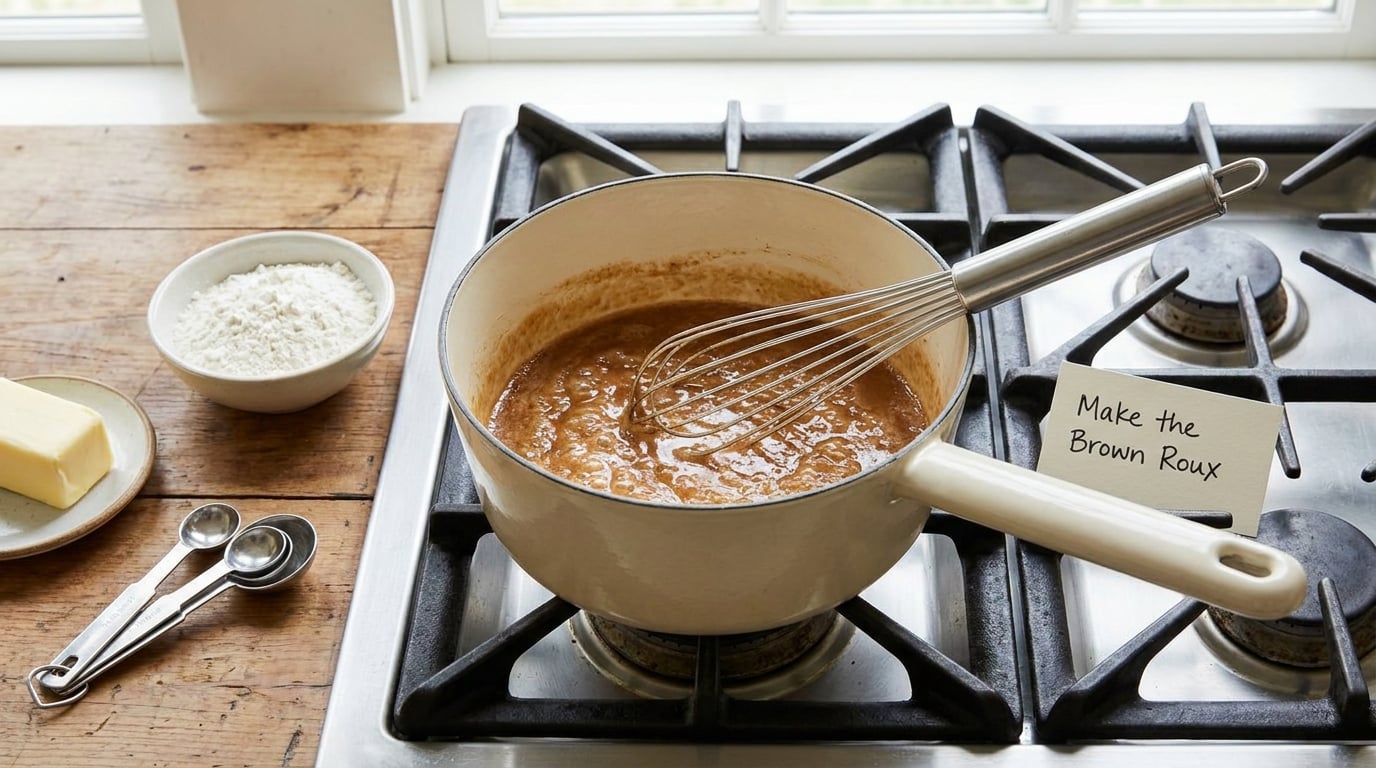
Stir the flour into the hot fat with a whisk or wooden spoon and keep it moving for 60 to 90 seconds. The mixture will foam, then settle into a paste the color of milk chocolate.
It should smell toasty, not raw. Raw flour tastes chalky and slightly sweet, and that flavor follows the gravy all the way to the bowl. Sixty seconds of constant stirring is the fix.
Keep the flour under control here. If you add it all at once to very hot fat you can get a raw-flavored patch, so lower the heat a notch and whisk steadily.
Add Stock Gradually
Pour in about half a cup (120 ml) of the warmed stock and whisk hard until the roux slackens and no dry paste is visible. Then add the rest in 3 or 4 additions, whisking to a smooth, glossy sauce after each one.
Warm stock is the detail that matters most. Cold stock hitting hot roux drops the temperature sharply, and the fat seizes into little grains that give you a broken, grainy sauce. Ninety seconds in a microwave or a minute in the saucepan you are already using solves it.
If the sauce suddenly goes lumpy after an addition, whisk it hard for 30 seconds and it usually comes back. A stiff paste that will not loosen means you went too fast; add another splash of stock rather than more flour.
Simmer and Thicken the Gravy
Turn the heat to low and let the gravy simmer, whisking every minute or two, for 5 to 10 minutes. You want lazy bubbles around the edge, not a rolling boil.
The sauce thickens as the starch cooks and the liquid reduces, and it will thicken further after you take it off the heat. Taste at 5 minutes with a clean spoon, then again at 8. If a spoon drawn through the sauce leaves a bare path that closes slowly, you are close to right.
Stirring matters more than you would think. Without it, the flour settles on the bottom and scorches, and the sauce turns gluey at the base of the pan.
Season and Finish
Off the heat, stir in the Worcestershire sauce, the white pepper, and the salt. Taste before adding more salt than you think you need, because the stock and the Worcestershire both bring plenty.
For more restaurant-style depth, add a small pinch of garlic powder, a teaspoon of Dijon mustard, or a spoonful of bouillon. MSG works better than anything else here if you have it, about half a teaspoon. None of these are traditional, and all of them fix the same problem, which is a gravy that tastes finished but thin.
Adjust consistency last. Too thick means warm stock a little at a time. Too thin means simmer two more minutes rather than reaching for flour, since extra flour dulls the flavor.
Serving Brown Gravy with Poutine
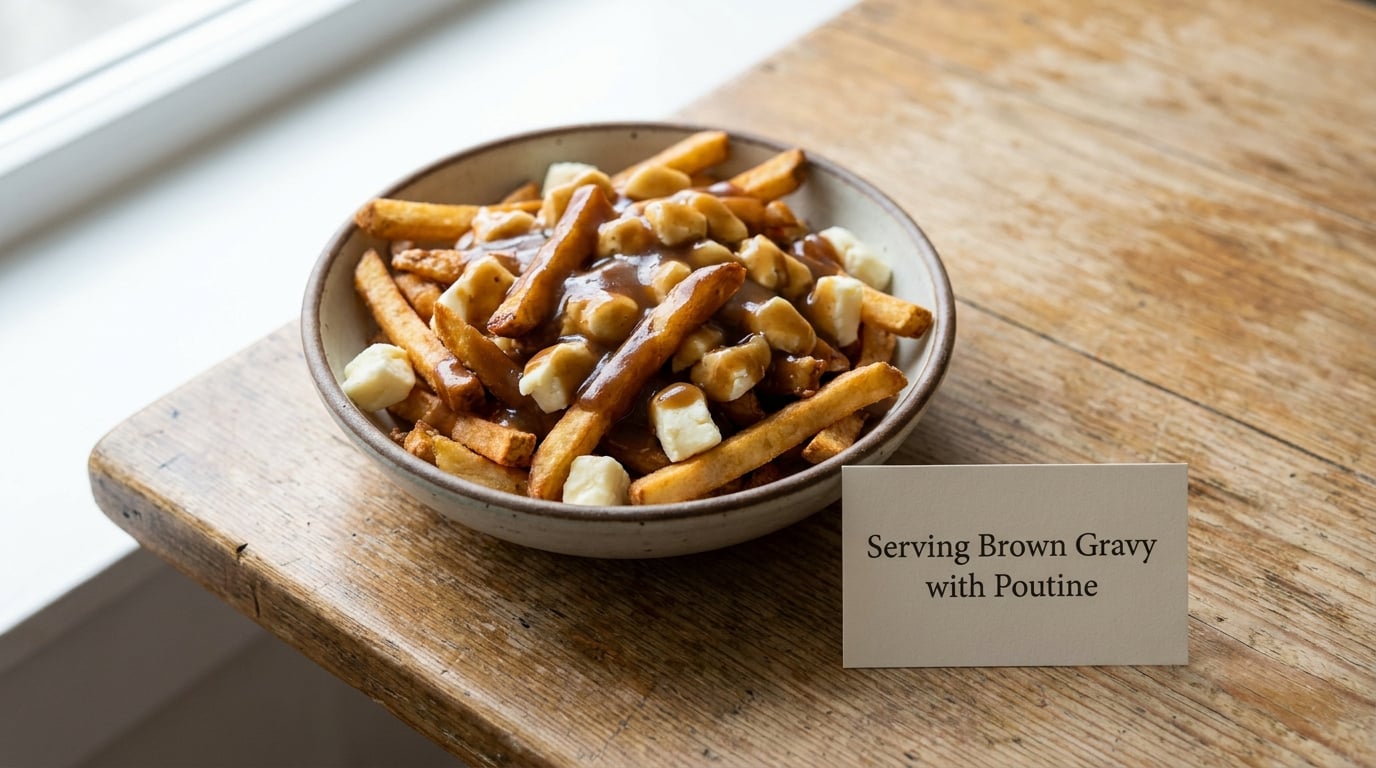
Put the curds down first in your dish, pile hot fries over them, then pour the hot gravy over everything, aiming mostly at the fries. Traditional service uses gravy hot enough to warm the curds without melting them, so the curds come out soft but still hold their shape and squeak.
Eat it right away. The gravy softens the fries within a few minutes, and poutine is a dish where that matters. If you are serving a crowd, keep the gravy in a small pot over the lowest heat and stir it now and then, and do not let it boil.
No fresh curds? Then you are making frite sauce, fries with gravy, which is a perfectly good meal and what the dish is called in Quebec when the curds are missing. A r/Cooking thread a while back put it bluntly: it is not poutine without cheese curds, and people new to the dish argue about that constantly. Squeaky cheese from the dairy case is the closest easy substitute. Shredded cheese melts instead, which is fine for cheese fries but changes the dish.
How Thick Should Poutine Gravy Be?
Poutine gravy should run off the spoon, coat fries in a thin even layer, and never pool in the bottom of the bowl. If a spoon drawn through it leaves a clean line that fills in before you count to three, that is about right. The real test happens on the fry.
Traditional Quebec sauce brune is much thinner than the brown gravy most US recipes produce, and the thinness is deliberate. A thicker sauce leaves some fries bare, drowns others, and goes gluey as it cools. The thin version reaches every fry, which is the whole job.
| Quebec sauce brune | American brown gravy | Disco-fries gravy | |
|---|---|---|---|
| Consistency | Thin, coats every fry | Thick, clings to the spoon | Medium, glossy |
| Stock base | Beef and chicken blended | Beef broth, often with tomato or ketchup | Beef stock |
| Flour per cup of stock | About 1 tablespoon | 2 to 3 tablespoons | 2 tablespoons |
| Other flavorings | Salt, pepper, onion | Ketchup, mustard, Worcestershire | Often mushrooms or pepper |
| Works for | Poutine | Roast dinner, meatloaf, open sandwiches | Cheese fries, loaded fries |
One warning about substitution. A heavy American brown gravy built from butter, flour, ketchup, mustard, Worcestershire, and beef broth is a real regional style, and it is good on a lot of things, but it is not sauce brune. If you want poutine, build the thin one.
Common Mistakes
1. Lumpy gravy. Usually the stock went in too fast or the roux was under-whisked. Rescue it with a cold-water slurry: mix 1 tablespoon of flour with 2 tablespoons of cold water, whisk it smooth, then stir it into the simmering gravy. Add it off the heat and let it bubble for a minute before tasting again.
2. Gravy tastes raw or floury. The roux did not cook long enough. It should have gone from blonde to a milk-chocolate brown and started to smell toasty. Next time give it a full 90 seconds of constant stirring before any liquid goes in.
3. Gravy is too thick. You are probably following a brown gravy ratio rather than a poutine one. Add warm stock a quarter cup at a time, whisking, until it runs. Thickening the sauce with a starch slurry makes the same problem worse, so resist it here.
4. Gravy is greasy or separates. Two causes: the pan was not the right size, so the butter spread thin and burned, or you added cold stock to very hot fat and the emulsion broke. Use a saucepan where the fat covers the bottom in a thin even layer, and always warm the stock first.
5. Gravy tastes bland. Underseasoned stock and no finishing step. Add Worcestershire, pepper, and salt off the heat, and taste again after a minute. A small amount of MSG, soy sauce, or bouillon adds the savory note that a thin sauce loses quickly on reduction.
6. Gravy pools under the fries. Either it is too thin or you poured too much. Pour from above the fries, not into the dish, and use the smallest spoon that works. Slightly thicker is easier to fix than slightly thinner.
Tips for the Best Brown Gravy
Warm your stock first. It is the single change that most improves a homemade gravy, and it takes a minute.
Brown the fat, not just the flour. Nutty browned butter gives depth that a white roux cannot, and it is what separates a sauce that tastes homemade from one that tastes assembled.
Adjust the final consistency off the heat. The sauce thickens as it cools, so taste it while it is still hot and one shade looser than you want it on the plate.
Hold it warm without cooking it. A small pot on the lowest setting with an occasional stir keeps it pourable for about an hour. If it thickens too much, whisk in hot stock a spoonful at a time.
Make it a day ahead. Roux-thickened gravy keeps in the fridge for 3 to 4 days, tightly covered, per standard USDA guidance for cooked sauces. Reheat on the stove with a splash of water and whisk well, or in the microwave in short bursts. Adding fat during make-ahead helps stop a skin forming on top.
Use the leftovers. The same sauce works over disco fries, loaded fries, a French dip sandwich, or open-faced roast meat sandwiches, and it is the reason to double the batch in the first place.
Frequently Asked Questions
Can I make brown gravy for poutine without beef drippings?
Yes, and most people do. Plain unsalted butter works on its own for a lighter, cleaner sauce, and for more flavor you can brown it for 60 to 90 seconds before adding the flour. If you have a roast pan, deglaze it with a cup of your stock and add that liquid to the gravy. What matters is the 3 tablespoons of butter for every 3 of flour, not where the fat came from.
How thick should poutine gravy be before it is poured over the fries?
Thin enough to run freely off the spoon, thick enough to leave a faint coat behind when you lift the spoon out. A sauce that fills the trail you draw through it in under three seconds is close to right. Traditional sauce brune is deliberately lighter and thinner than American brown gravy, because it has to reach every fry. Test it by pouring a little over a single fry.
What can I add to brown gravy to make it taste more like a restaurant?
The restaurant version is mostly stock quality and a finishing step. Use a blend of beef and chicken stock rather than one or the other, and add a small pinch of MSG, a spoonful of bouillon, or a teaspoon of soy sauce for umami. Worcestershire and white pepper go in off the heat, and a teaspoon of Dijon helps. Each one adds the savory depth a thin sauce loses as it reduces.
Can I use shredded cheese instead of cheese curds for poutine?
You can, but it becomes cheese fries rather than poutine. Shredded cheese melts into the gravy, while fresh curds warm through and keep their shape and squeak, which is the texture contrast the dish is built on. Squeaky cheese from the dairy case is the easiest stand-in if curds are unavailable where you live. Gravy over fries with no cheese at all is frite sauce, a normal and good thing to eat in Quebec.
How long can homemade brown gravy be stored, and how should it be reheated?
Roux-thickened brown gravy keeps in the refrigerator for 3 to 4 days when covered tightly, following standard USDA guidance for cooked meat sauces. Reheat it on the stove over low heat with a splash of water or stock, whisking often, or in the microwave in short bursts with a stir between each one. A roux gravy thickens as it sits, so loosen it during reheating.
Conclusion
Brown gravy for poutine comes down to three things: brown the fat, whisk in the roux until it smells toasty, and add warm stock gradually until the sauce runs off the spoon. Season off the heat, taste, and loosen with stock if it is too heavy. Pour it hot over fresh fries and room-temperature curds, then eat it right away.