
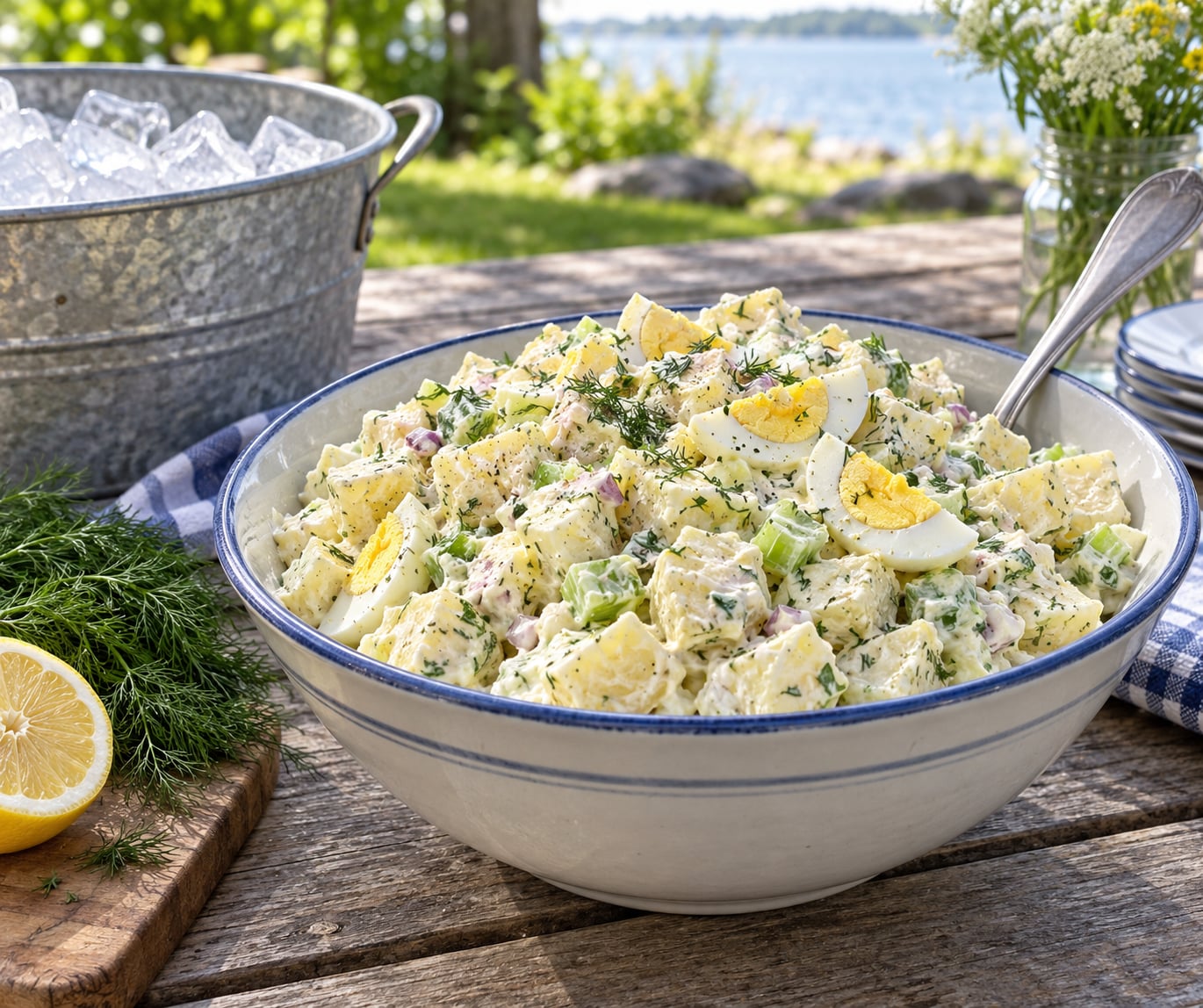
Learning how to make potato salad for a cookout comes down to three things: waxy potatoes cooked only until fork-tender, a dressing seasoned harder than you think it needs, and enough chilling time to serve it cold. This creamy version takes about 45 minutes of hands-on work and serves 8 to 10, and it keeps for up to 24 hours in the fridge, so making it the night before is completely fine.
I make this every summer for the same group, and the two things people always comment on are how it still tastes good an hour after it hits the picnic table and how the potatoes stay in distinct pieces instead of turning to mash. Both come down to technique, not ingredients. Getting those right is what separates a bowl of decent potato salad from the one people come back for seconds of.
Updated for October 2026. I have tested this method across three cookouts, including one 40-person Fourth of July gathering in full sun, and adjusted quantities twice since the first batch came out too loose.
What You Need
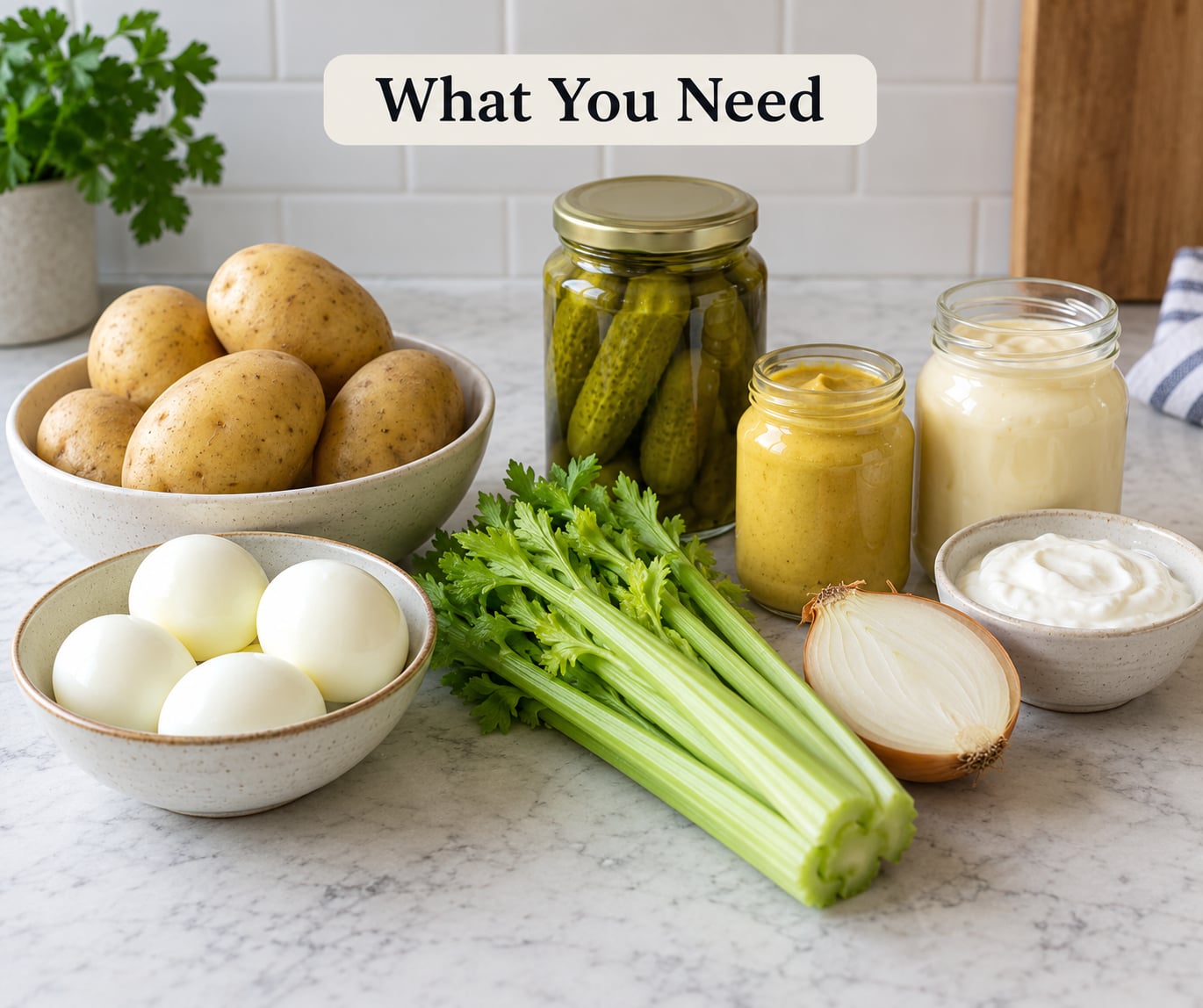
Everything here comes from a normal supermarket, and most of it can be prepped the day before. The base is 3 pounds (1.4 kg) of waxy potatoes, which cooks to roughly 10 cups and serves 8 to 10 people as a side.
- 3 pounds (1.4 kg) waxy potatoes — red bliss, Yukon Gold, fingerling or new potatoes. Leave the skins on if you like the texture and want them to hold shape.
- 4 large hard-boiled eggs — boil them alongside the potatoes, then peel and quarter them.
- 1 cup finely diced celery — about 3 stalks, diced small so every bite has crunch in it.
- 1/3 cup diced red onion, soaked in cold water for 5 minutes to take the sharp edge off.
- 1/2 cup chopped dill pickles or sweet pickle relish — one or the other, not both unless you want it very sweet.
- 1 cup mayonnaise — real mayo, not salad dressing. It is the emulsifier that keeps the dressing from splitting after transport.
- 1/3 cup sour cream — this is what gives the dressing body and tang without turning it tangy-sour.
- 2 tablespoons Dijon mustard plus 1 tablespoon yellow mustard — the pair gives you sharp flavor and visible seed texture.
- 2 tablespoons apple cider vinegar, plus a tablespoon or two of pickle brine if you like.
- 1 teaspoon sugar, salt and black pepper, and a handful of dill or chives if you have them.
For a crowd, plan on about 1/2 cup (roughly 3 to 4 ounces) per adult, or 1 cup for hungry appetites and for anyone treating it as a main. Ten guests means about 5 pounds of potatoes; thirty guests means close to 15 pounds, which means cooking it in three or four separate pots rather than one enormous one.
Scale the dressing at about 1/3 cup per person, and hold back about 15 percent of it. You can always loosen the salad with a splash of pickle brine before serving, but you cannot pull moisture back out of it once the dressing is too tight.
How to Make Potato Salad for a Cookout: Step-by-Step
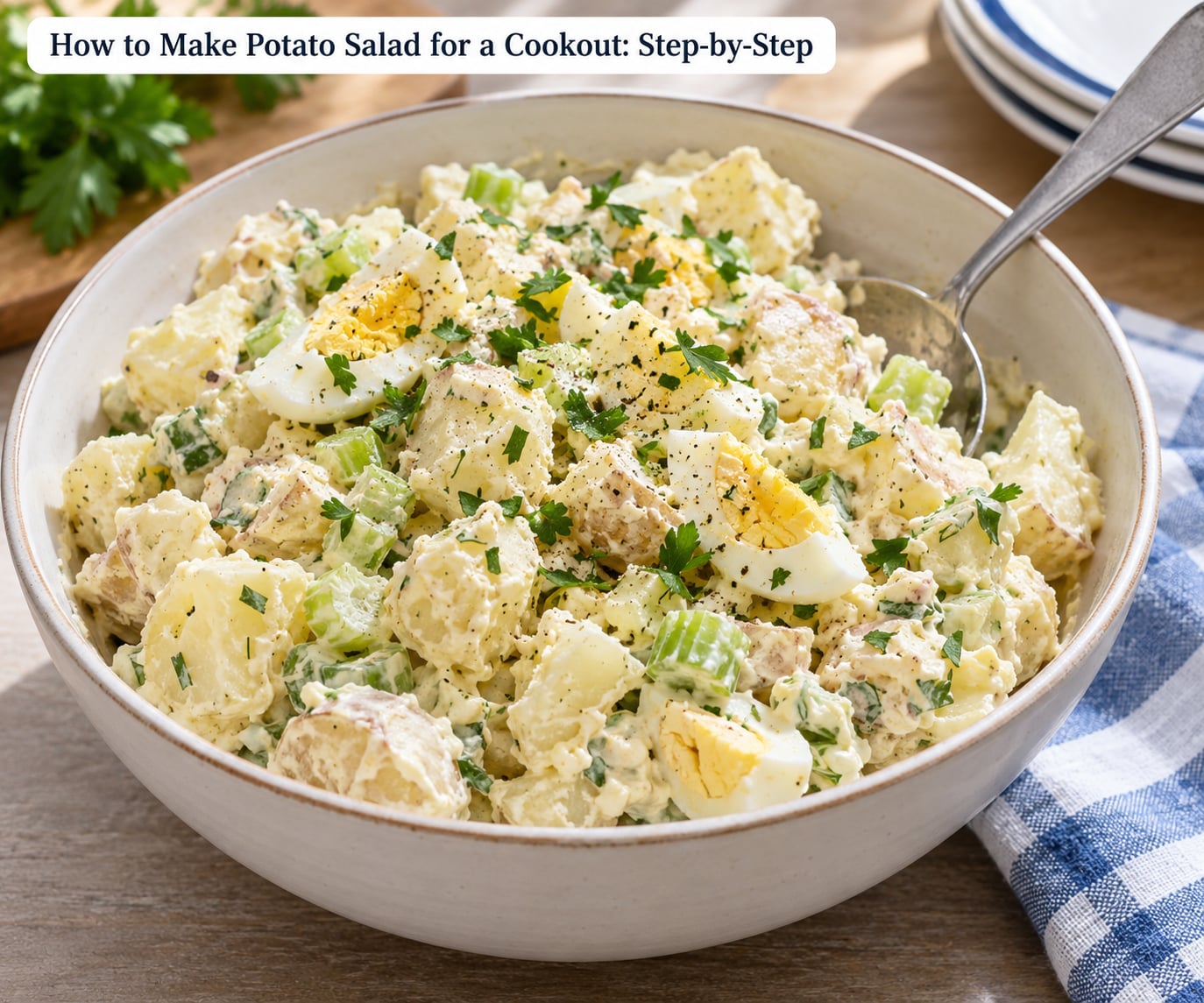
The method below takes about 20 minutes of cooking and 25 minutes of assembly, plus at least 2 hours of chilling. Do not skip the chilling, and do not dress the potatoes while they are hot.
Step 1: Choose and Cut the Potatoes
Waxy potatoes hold their shape because they have less starch than russets. A starchy potato breaks down when you toss it, which is exactly why it turns a salad into paste. A paring knife slid into a raw waxy potato should meet almost no resistance.
Cut the potatoes into roughly 1-inch chunks, or 1 1/2-inch pieces if you want a more substantial, deli-style salad. Keep the cuts even so everything finishes at the same time. Uniform size is what lets you pull the pot off the heat without some pieces dissolving while others are still hard in the middle.
You do not need to soak them overnight. Soaking pulls surface starch off and helps pieces hold together in a broth, but in a dressed salad it mostly just dilutes the flavor. If your potatoes are very waxy and you want an extra insurance policy against breaking, 20 minutes in cold water is plenty.
Step 2: Cook the Potatoes Until Tender
Bring a large pot of salted water to a boil. The salinity should taste like the sea, about 1 tablespoon of salt per quart. Drop in the potatoes and turn the heat down to a steady simmer rather than a rolling boil. Aggressive boiling is the main reason potatoes turn to mush before the timer goes off.
Cook for 12 to 16 minutes and start testing at 12. Slide a paring knife into a piece: fork-tender means it slides in with no resistance at all, but the piece still feels firm and springs back slightly when you press the cut face with your thumb. If the edges are crumbling or shedding into the water, you have gone past it.
Drain in a colander and let them steam dry for about 10 minutes. Skipping this step dumps a surprising amount of water into your dressing, and that pooling liquid at the bottom of the bowl is the single most common complaint about homemade potato salad. For very thorough draining, spread the potatoes on a sheet pan first, then scrape them into the bowl.
Step 3: Make the Creamy Dressing
Whisk 1 cup mayonnaise, 1/3 cup sour cream, both mustards, 2 tablespoons apple cider vinegar, the sugar, 1 teaspoon salt and a few grinds of pepper in a bowl until completely smooth. Taste it on a spoon before it ever touches a potato. It should be noticeably sharper and more seasoned than feels right in the bowl, because the potatoes absorb a lot of it.
Add 1 to 2 tablespoons of pickle brine for extra tang. Stir in two of the chopped egg yolks as a thickener if your mayo is thinner than you like, and mash them in with the back of a spoon. This costs you nothing and makes the dressing cling to the potato instead of sliding off into a puddle.
The secret to good potato salad is acid, and vinegar is the cheapest, fastest version of it. Vinegar added to the warm potatoes seasons them all the way through instead of just on the surface, and pickle brine brings salt and dill flavor at the same time.
Step 4: Fold in the Potatoes and Vegetables
Confirm the potatoes are cool to the touch before you dress them. Heat does two kinds of damage here: it thins the dressing as the fat and water separate, and warm food sitting out is exactly the condition bacteria like. Dress the salad cool, not warm.
Add the warm-but-no-longer-steaming potatoes to the dressing and fold with a rubber spatula. Use a light hand and a scooping motion from the bottom. Stirring hard is what turns salad into glue.
Fold in the celery, the drained red onion, the chopped pickles and the sliced egg whites. The eggs go in at the end so they stay intact and visible. Save the two remaining yolks for the dressing if you have not already used them.
Give it a taste now and correct it. Most homemade potato salad is underseasoned because the salt went into the cooking water and then people assumed that counted. Add salt in small increments and taste between each pinch, then finish with a splash more vinegar if it feels flat.
Step 5: Chill Before Serving
Cover and refrigerate for at least 2 hours. Overnight is better, and up to 24 hours is safe. The salad genuinely improves overnight because the potatoes drink up the dressing and the flavors settle into each other, which is why many cooks prefer to make it a day ahead.
The one change overnight is texture. If the salad looks stiff or a little dry in the morning, loosen it with a tablespoon of pickle brine or milk per batch before serving, then taste for salt again. Waiting the full chill also lets the potato starch set, which thickens the dressing on its own.
If you are dressing the salad the day of the cookout, plan on serving it no earlier than two hours after it goes in the fridge, and let it come out of the fridge only when you are loading the car.
Common Mistakes
Almost every disappointing potato salad traces back to one of five things. They are all fixable, and all of them are visible in the bowl before anyone takes a bite.
- Dressing warm potatoes. This is the mistake that ruins the most batches. Heat thins mayo into a watery dressing and creates a bacterial-friendly temperature. Wait until the potatoes are cool to your hand.
- Overcooking. Potatoes cooked past fork-tender start shedding starch and collapsing. Test at 12 minutes and trust the knife, not the clock.
- Not draining well. Water trapped under the surface dilutes the dressing and pools at the bottom. Steam dry on a sheet pan for 10 minutes.
- Seasoning only the water. The salad needs salt twice: once in the boiling water, once in the finished bowl. Underseasoned potato salad is the number one thing home cooks get wrong.
- A thin dressing. A watery result usually means undrained potatoes or a low-fat mayo, both of which break. Full-fat mayo, a couple of mashed yolks and 15 percent held-back dressing solve it.
If the dressing breaks and turns greasy after a bumpy car ride, that is an emulsion failure, not a ruined dish. Whisk in a tablespoon of cold water or pickle brine a little at a time and it usually comes right back.
How to Keep Potato Salad Fresh at a Cookout
Potato salad has to stay below 40°F (4°C). Perishable food left in the 40°F to 140°F range for more than two hours should be discarded, and that window shrinks to one hour once the air temperature is above 90°F (32°C). A warm afternoon makes that the number to watch.
- Set the serving bowl inside a larger bowl packed with ice. This ice barrier is the most reliable method by a wide margin. The salad never gets warmer than the ice around it.
- Refill the ice as it melts. Budget for two rounds over a four-hour cookout, and keep a bag of ice in the cooler rather than loose in a bucket.
- Park the bowl in full shade. A serving bowl in direct sun can climb into the danger zone while the shaded one beside it is fine.
- Put a wet towel under the bowl. It insulates against the hot tabletop and the ground, both of which conduct heat faster than people expect.
- Serve in small batches. Bring half the salad in a sealed container and restock as it disappears, rather than putting the whole batch out at once.
For transport, pack the salad in a sealed container with a little headspace and carry it inside a cooler. Do not seal it warm, since trapped steam travels with you and softens the potatoes.
For leftovers, get it back under 40°F within two hours and refrigerate in the original container. It keeps 3 to 4 days. If it has been sitting warm, the safe move is to discard it rather than to taste-test and then decide.
Pairing-wise, potato salad is the easiest thing to add to a cookout menu built around a cookout shopping list, and it holds up next to a big tray of classic baked beans without competing with them. If you want a second cold side for the same table, macaroni salad uses the same dressing logic at a larger batch size.
Frequently Asked Questions
What type of potatoes are best for potato salad?
Waxy potatoes are best because their lower starch content keeps them firm through cooking and tossing. Red potatoes, Yukon Gold, fingerling and new potatoes are all good picks. Leave the skins on for texture and shape. Russets and other starchy potatoes break apart in the pot and turn a dressed salad into mash, so save them for a baked dish instead.
Can I make potato salad without eggs?
Yes, and the salad is just fine without them. Eggs in potato salad are mostly there for texture, color and their ability to thicken the dressing. If you want that thickening without the chunks, mash two yolks into the dressing. If you are skipping eggs entirely for dietary reasons, add a little extra sour cream and let the pickles and celery carry the crunch.
Why is my potato salad watery?
Three causes account for nearly all of it: dressing warm potatoes, which breaks the mayonnaise, not draining the cooked potatoes, and using a thin or low-fat dressing. Fix the first by cooling the potatoes to the touch before folding, the second by spreading them on a sheet pan to steam dry for 10 minutes, and the third by using full-fat mayo plus a tablespoon of pickle brine to loosen it. Hold back 15 percent of the dressing so you can adjust at the last minute.
How long should potato salad chill before serving?
Two hours is the minimum and 4 hours is better. Overnight is fine, up to 24 hours, and the flavor usually improves overnight as the potatoes absorb the dressing. If it firms up while refrigerated, loosen it with a tablespoon of pickle brine or milk before serving and taste for salt again. Keep it covered so it does not pick up refrigerator odors.
How long can potato salad stay outside at a cookout?
Keep it below 40u0026deg;F (4u0026deg;C) and discard it after two hours in the danger zone of 40u0026deg;F to 140u0026deg;F. When the outdoor temperature is above 90u0026deg;F (32u0026deg;C), cut that to one hour. Set the serving bowl inside a larger bowl packed with ice, keep it in full shade, and put a wet towel underneath. Bring the salad out in smaller batches and refill as it is eaten.
Can I make potato salad the night before?
Yes, this is the preferred method for a cookout. Boil and dress it the night before, refrigerate covered, then add delicate herbs, bacon and any final seasoning on the day of the party. Overnight storage lets the starch set, which naturally thickens the dressing. Keep bacon out until the last minute so it stays crisp, and give the salad a taste for salt before it leaves the house.
Conclusion
Cooking the potatoes gently, seasoning both the water and the finished bowl, dressing the salad only once the potatoes are cool, and letting it chill for a full two hours is the whole method. Everything after that is logistics: pack it cold, serve it over ice in the shade, and keep 15 percent of the dressing in reserve. That is how to make potato salad for a cookout that still tastes right when the last guest picks up a plate at hour three.