
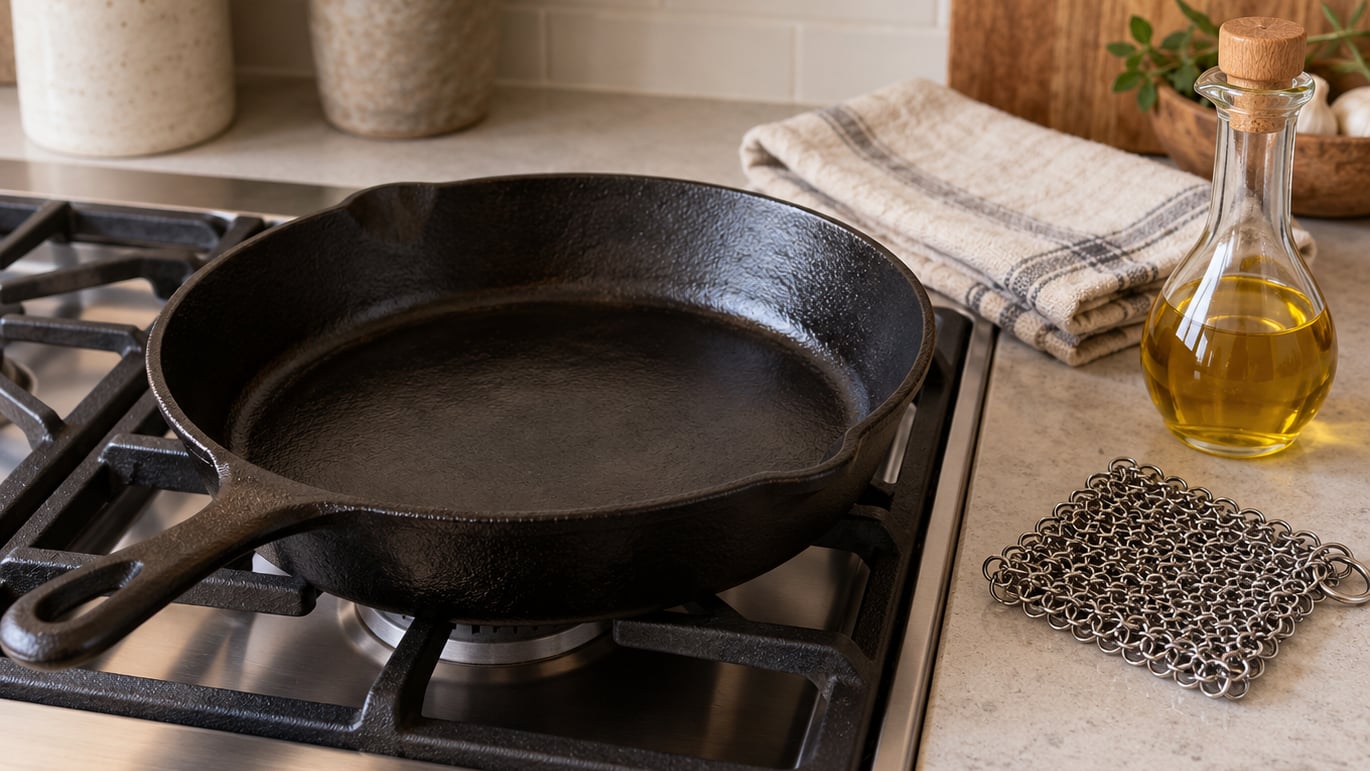
How to clean a cast iron skillet after cooking takes about five minutes: scrape out the food, wash the pan with hot water and a scrubber, dry it completely on the stovetop, then wipe on a thin coat of oil. It takes less time than rinsing a dinner plate, and doing it that way protects the seasoning, the dark polymerized oil layer that makes cast iron cook without a non-stick coating.
The whole thing hinges on two things people skip: drying the pan until it is bone dry, and putting the oil back on afterward. Miss either one and you can end up with a rusty skillet or a stripped pan that needs hours of oven time to come back.
Table of Contents
- What You Need
- Step-by-Step: How to Clean a Cast Iron Skillet After Cooking
- Common Mistakes
- Frequently Asked Questions
- Can I use dish soap on a cast iron skillet?
- Can you put a cast iron skillet in the dishwasher?
- How do I remove melted cheese off cast iron?
- How do I remove burnt-on food from cast iron without losing the seasoning?
- What causes black residue on a paper towel after washing cast iron?
- How do I get rid of rust on a cast iron skillet?
- Conclusion
What You Need
A full setup takes less space than a drawer of sponges. Most cooks already own three of the four things on this list.
- A scraper — a wide-brimmed plastic channel scraper or a wooden spatula for pushing food off the cooking surface.
- A scrubber — a stiff nylon brush, a plastic pan scrubber, or a small chain mail scrubber for stubborn residue.
- Hot water and a small amount of mild dish soap for stuck-on food. Soap is fine; soaking is not.
- Paper towels or a clean cloth for wiping grease and drying the surface.
- A neutral, high-smoke-point oil such as grapeseed, canola, or avocado for the post-clean wipe.
- A stovetop burner for drying, plus a sheet pan, rack, or paper towel underneath if you store the pan with other cookware.
Kosher salt works as a scrubber too, and an empty mesh produce bag or onion bag makes a decent disposable scrubber for cheese and egg. Have those on hand only if you cook sticky things often.
One safety note before you start, since a hot skillet full of grease is the riskiest part of this job: 10 essential kitchen safety tips for cooking with hot oil covers the same handling that matters here. Dry oven mitts, a clear path to the sink, and no water poured into a pan that still has hot fat in it.
Step-by-Step: How to Clean a Cast Iron Skillet After Cooking
Let the Skillet Cool Safely
Wait until the skillet is warm but comfortable to hold, usually five to ten minutes after you pull it off the heat. You do not need it cold, and you should not cool it with cold water.
Cast iron is thick and brittle compared with steel. A sudden temperature swing, dropping a screaming hot pan into a sink of cold water, can crack it or warp the cooking surface. Let it cool on the burner with the heat off, or set it on a folded towel on the counter.
While it cools, tip the pan slightly and let the excess grease pool at the lip so you can pour it off into a jar rather than the trash. Hot grease going down the drain is how pipes get ruined.
Remove Loose Food and Excess Grease
With the pan warm, scrape out anything that comes loose with a wooden spatula or the plastic scraper, working from the edges toward the middle. Most of what people call stubborn stuck-on food is just food that got cold and welded itself into a ring.
Tip the remaining grease into a container, then wipe the surface with a paper towel folded into a flat pad. Press the towel down and drag it rather than scrubbing, and you will pick up the loose grease without grinding anything into the seasoning.
If you are done for the night, stop here. A skillet with a light film of grease left on it overnight is fine. A skillet with a crust of dried food on it is what causes the real damage.
Wash the Skillet With Hot Water
Run hot water over the surface and work a little mild dish soap into it with your fingers or a sponge. The heat and the surfactant loosen grease far better than cold water does, and modern dish soap will not strip a well-seasoned pan.
Keep the washing short. Thirty seconds of scrubbing with hot soapy water removes a surprising amount. If you prefer to compare materials before you commit to cast iron as your everyday pan, cast iron vs stainless steel for burgers compared covers how each one behaves at the stove and in the sink.
Do not put the skillet in the dishwasher and do not let it sit submerged. Standing water and harsh detergent need hours to soak into bare iron, and that is where rust starts.
Scrub Away Stuck-On Food
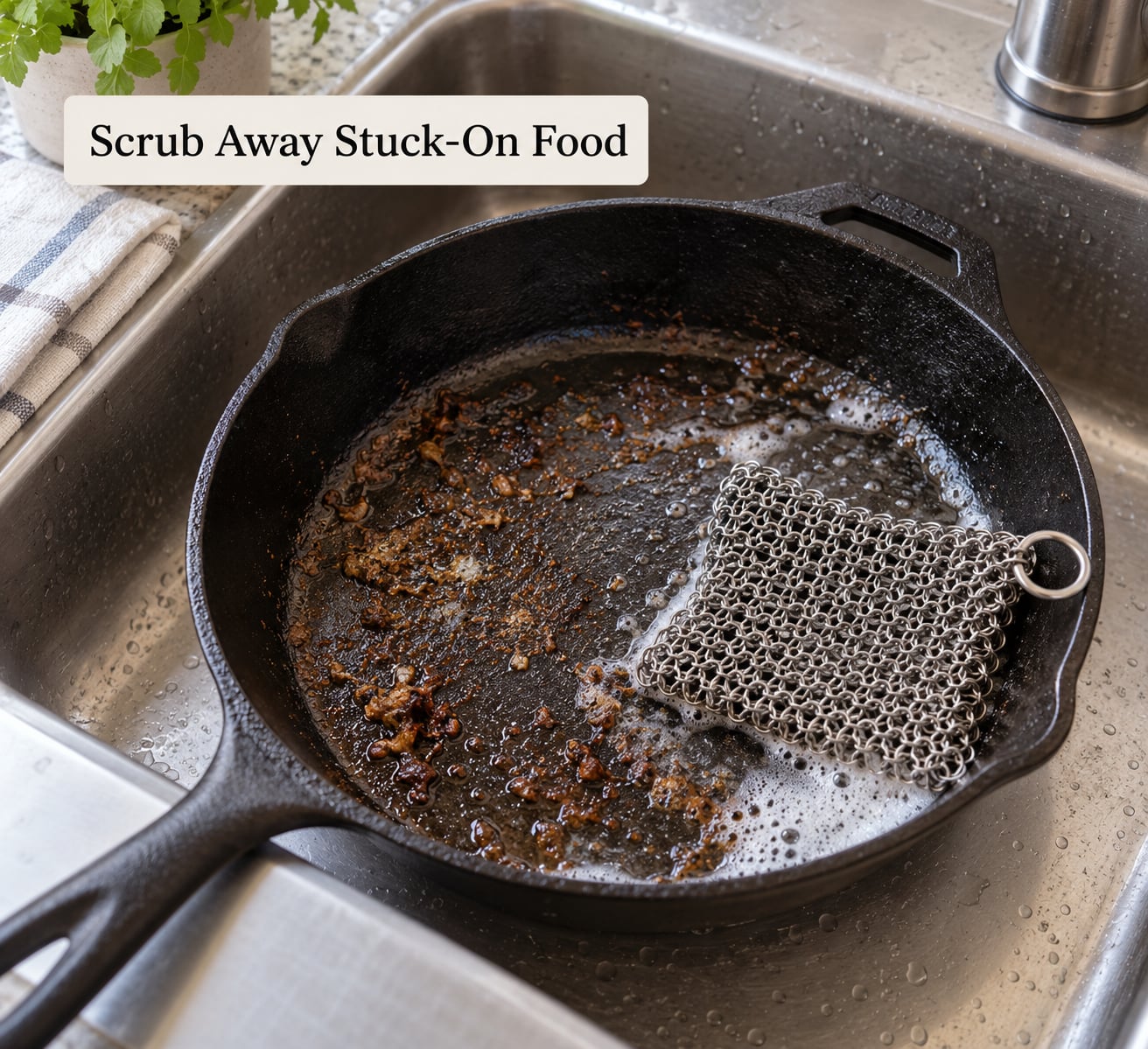
For anything still attached, choose your tool by how stubborn the residue is. A stiff nylon brush handles most of it. A chain mail scrubber strips carbonized bits faster, and a little coarse salt scrubbed with a paper towel or your fingertips works well on a thin film.
Scrub in small circles with light pressure and check your progress every few seconds. You know the food is gone when the bare metal or the dark seasoning underneath shows with no colored film on your brush. Wet food and dry food scrub very differently, and dry, carbonized sugar or cheese takes more passes than anything else.
Skip the green or silver scrub pads and the so-called heavy-duty wool with soap in it. Those are for non-stick and stainless cookware, and they take seasoning off cast iron faster than you can put it back on.
Rinse and Dry the Skillet Thoroughly
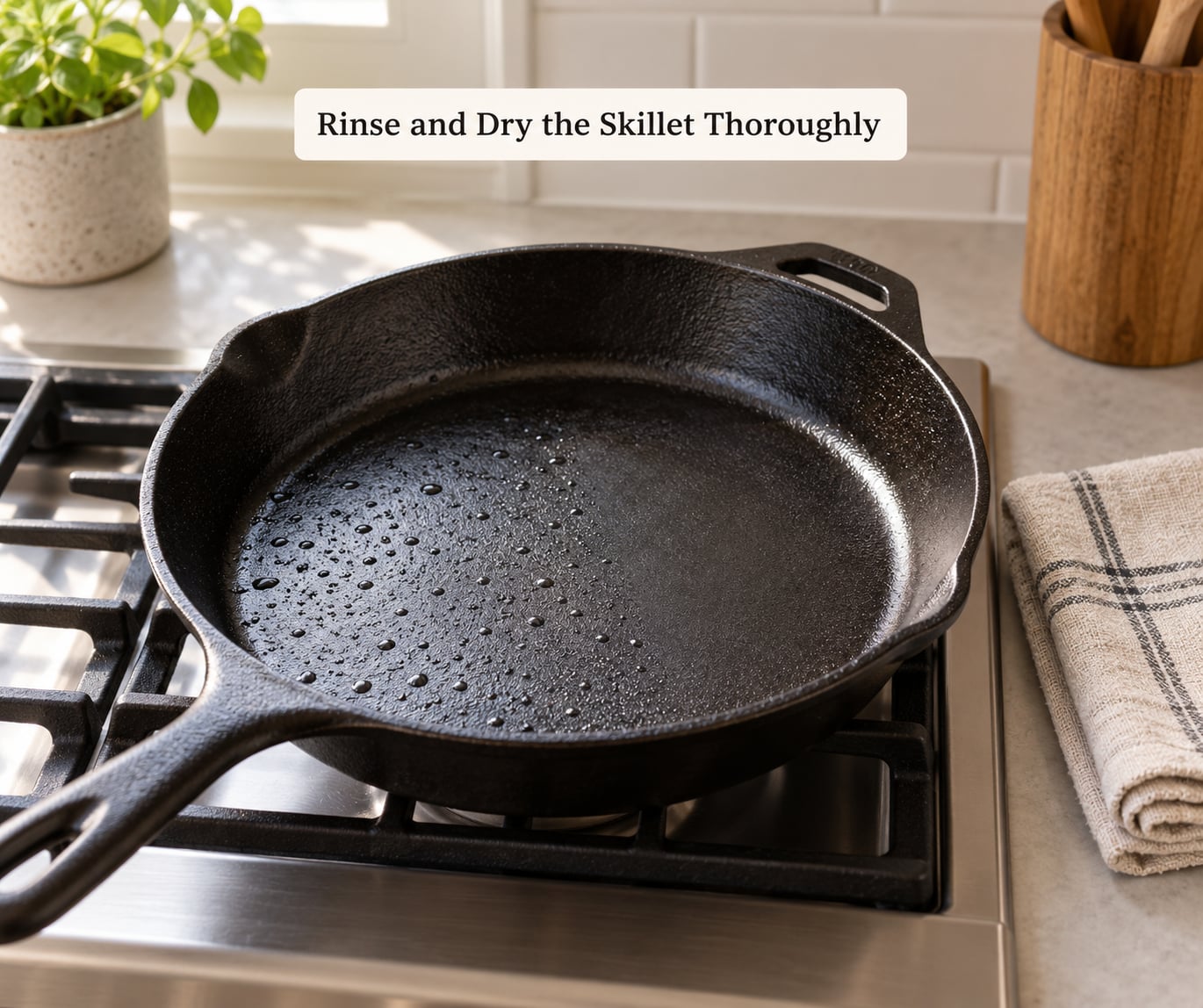
Rinse with hot water and dry with a towel first, then finish the job on the stovetop. Set it on a burner set to low for a minute or two until the surface is completely dry to the touch, including the handle and the rim.
Drying on heat matters because water sitting in the pores of the iron is what turns into orange flecks of rust. Air drying alone works sometimes, usually in a dry climate, but heat drying is faster and far more reliable in a humid kitchen.
Do not run a dishwasher sanitize cycle or park the pan upside down over a dripping faucet to save time. Both keep the surface damp. If the skillet goes into a cabinet right away, set it on a sheet pan, a rack, or a couple of folded paper towels so air can move around the base.
Once the pan is dry and stored, the wider mess around it still matters. How to clean a kitchen after frying covers the stovetop and backsplash cleanup that comes right after.
Apply a Thin Layer of Cooking Oil
Put a drop of neutral oil on a paper towel, wipe it across the cooking surface, the rim, and the outside of the pan, then wipe the pan again with a clean dry towel to pull off the excess. You want a sheen, not a puddle. Any oil left in the bottom of the skillet will eventually turn to carbonized gunk.
Grapeseed and canola oil are the usual recommendations because they have high smoke points and no flavor. Olive oil works, and cooks who use it regularly argue for it, but it is lower-heat and can go rancid in storage. Skip butter, which leaves dairy solids that smell after a week.
Do this after every cook that involves water, even a quick egg or a seared steak. A skillet that is seasoned once and then left wet for a month will tell you about it in the first month of use.
How to Clean a Cast Iron Skillet After Cooking Acidic or Sticky Foods
Eggs, cheese, tomato sauce, and burnt sugar each need a slightly different response than a plain sear, because they either polymerize into the surface or soak water deep into the burnt layer.
- Eggs — wipe out the bulk while warm, then hot water and a plastic scrubber. The white sticks harder than the yolk.
- Melted cheese — let it cool to warm, then use a chain mail scrubber or a mesh produce bag with a little dish soap. Cheese forms a plastic-like film once it cools.
- Tomato sauce and other acidic sauces — hot soapy water and a nylon brush. Clean these sooner rather than later, since long contact with acidic food can dull the seasoning.
- Burnt sugar or caramelized bits — add a splash of water, let it sit for five minutes, then boil briefly and scrape. A little baking soda in the water helps break the caramelized bond.
- Carbonized seasoning flakes — loose black flakes that come away on the towel are not seasoning. They are burnt polymer, and a light scrub with a chain mail scrubber removes them.
One safety note for any of these: do not leave cooked food sitting in the skillet at room temperature for more than about two hours, whatever the cleanup method. Move it to a container first, then clean the pan.
Common Mistakes
The Three Things That Ruin a Skillet
Almost every ruined cast iron pan has one of these three stories behind it.
- The dishwasher. Hot water, harsh detergent, and a long soak cycle strip seasoning completely and leave the pan grey and spotty. Recovering means scrubbing to bare metal and re-seasoning for hours.
- Soaking. Even fifteen minutes in standing water lets water sit inside the iron long enough to raise rust spots. Wash and dry, or scrub dry.
- Too much oil at the end. A heavy coat does not protect more than a thin one. It polymerizes into sticky black flakes that smear onto food and paper towels. Wipe the pan dry with a second towel.
Cold water on a hot pan belongs on that list too. It is how cast iron cracks.
The Soap Myth: Why a Little Detergent Is Fine
The old rule that soap strips seasoning is not true of modern dish soap. Seasoning is a cured oil polymer bonded to iron, and the surfactants in a bottle of dish soap are too mild to remove it in the time a skillet spends under a faucet.
Manufacturer guidance from Lodge, and testing published by America’s Test Kitchen, both allow a small amount of soap for stuck food. The advice to avoid it comes from an era of harsher, lye-heavy detergents. Use soap when you need it. Skip it when hot water and a brush will do the same job in less time.
The people arguing hardest about soap on cooking forums usually own several pans with different seasoning levels, and a routine wash on the newest one is not what stripped the oldest one.
Why Your Paper Towel Keeps Coming Back Black
If your towel comes away grey or black after a wash that felt thorough, the material on your pan is loose carbonized oil rather than seasoning attached to the iron. A long thread on r/castiron covers this exact complaint, and the fix is the same for everyone: scrub harder than feels necessary with a chain mail scrubber, wipe the pan dry with a clean towel, and put on a fresh thin coat of oil.
Two quick checks tell you where you stand. Rub a spoon across the cooking surface: if it leaves a shiny brown streak of released oil, that is loose carbon, not seasoning. Then run the butter test — a small pat of butter heated in the pan should melt without turning the butter grey or sticking in patches. Grey butter means there is still loose carbon to remove.
If black flakes keep coming back after a few cycles, or the surface looks grey and patchy rather than dark brown, the seasoning layer has thinned past what a clean-up will fix. That is a re-seasoning job, not a scrubbing job.
Frequently Asked Questions
Can I use dish soap on a cast iron skillet?
Yes. Modern dish soap is mild enough that a small amount used during a normal wash will not strip a well-seasoned pan, and both Lodge and America’s Test Kitchen support it. Scrape and wipe first so you use less soap, wash with hot soapy water, scrub, then rinse and dry on the stovetop. Avoid only the soaking and dishwasher habits that give soap hours to work.
Can you put a cast iron skillet in the dishwasher?
No. The dishwasher’s long, hot, soapy cycle strips seasoning and leaves the pan grey and spotty, and it can cause rust on exposed iron. If a pan goes through by accident, scrub it back to bare metal with coarse salt or a chain mail scrubber, dry it thoroughly, and re-season it in the oven before cooking on it again.
How do I remove melted cheese off cast iron?
Let the cheese cool to warm, add a small drop of dish soap and hot water, then scrub with a chain mail scrubber or a mesh produce bag. Cheese forms a plastic-like film as it cools, so a plastic pan scrubber alone often leaves a patch behind. Repeat the hot water and scrub cycle until no color comes off on the cloth, then dry on the burner and oil lightly.
How do I remove burnt-on food from cast iron without losing the seasoning?
Add a splash of water and a spoonful of baking soda, let it sit for five minutes, then let it come to a simmer on the stovetop. The steam softens the burnt layer and the scraper lifts it. Boiling water alone loosens most stuck-on food. Afterward, scrub any remaining residue with a nylon brush and dry the pan fully before a thin oil coat.
What causes black residue on a paper towel after washing cast iron?
That black smear is usually loose, carbonized oil rather than seasoning bonded to the iron. It comes from too much oil at the end of a clean, or from seasoning that has been overheated until it flakes. Scrub with a chain mail scrubber, wipe the pan dry with a clean towel until nothing comes off, and apply a fresh, very thin coat of oil.
How do I get rid of rust on a cast iron skillet?
Rust spots mean water sat on the pan. Scrub the affected area with coarse salt or a chain mail scrubber until bright metal shows, rinse, and dry immediately on the stovetop. A short vinegar soak loosens heavier rust before scrubbing. Once the pan is bare and completely dry, wipe on a thin coat of oil and re-season in the oven at about 450°F until it stops smoking.
Conclusion
Start with the first step, because everything after it depends on it: the habit that matters most in how to clean a cast iron skillet after cooking is to wash it while it is still warm, not cold and not hot enough to burn you. Five minutes of scraping, hot water, a scrubber, a full dry on the stovetop, and a thin coat of oil is the whole routine.
Avoid the dishwasher, skip the soaking tub, and never trade oil for volume. Do that consistently and the pan you own now can still be cooking for someone else in fifty years.