
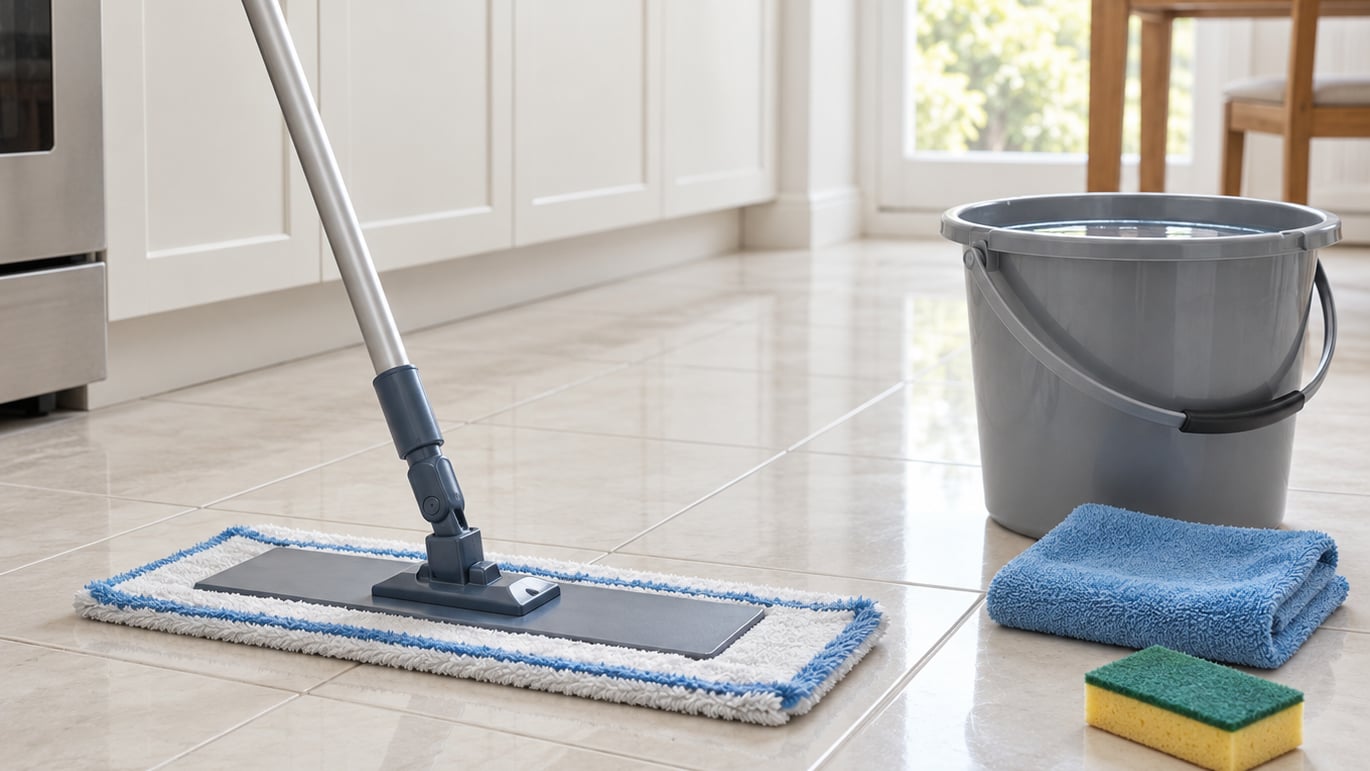
A sticky kitchen floor is almost never leftover dirt. It is a thin film of dried cleaning product, grease, or old wax that feels tacky under bare feet and grabs whatever walks across it. To clean a sticky kitchen floor, clear the area, sweep it dry, scrub with a small amount of dish soap in warm water, rinse with plain clean water, and let it dry fully. The whole job takes about 30 minutes and needs no machine.
Updated for 2026
That last step is where most people give up. They mop, the floor looks wet and shiny, they walk away, and by the next morning the tack is back. The film never got rinsed or never got dried, so it re-welded itself to the surface overnight.
A word about what you probably already have in mind. Vinegar, scented pine products like Fabuloso or Pine Sol, Murphy Oil Soap, and oil-based Mop & Glo are the usual suspects in sticky-floor complaints, and the reason is chemistry: their surfactants cut grease well and leave behind a film that does not evaporate. More of that product means more film. The fix is less cleaner, more rinsing.
What You Need
The supply list is short, and most of it is already in a closet or under a sink.
- A broom, dustpan, or vacuum to pick up loose crumbs and grit first
- Dish soap, pH-neutral if you have it, plus warm water and a bucket for mixing
- A flat microfiber mop, or a sponge for small patches
- A nylon scrub brush for grout lines and textured tile
- A second bucket for clean rinse water, kept separate from the soapy water
- Dry microfiber cloths or old cotton towels for the drying step
- Optional: a spray bottle, a soft scrub pad for stubborn film, and a fan or open window for airflow
A commercial floor-safe degreaser earns its place when grease is the main problem, such as a lane beside the stove or a drop zone under the fridge. Use a cleaner labelled neutral or pH 7 and follow the dilution on the label exactly. Anything alkaline or heavily fragranced is what tends to create the film in the first place.
Harsh chemicals are worth avoiding for a second reason: they can etch grout, dull a sealed wood finish, or bleach the pattern out of vinyl and laminate. Bleach, ammonia, and vinegar all have their place as targeted spot treatments, but never mixed together, and never spread over a whole floor as a routine mop.
If the smell is half your problem, how to get grease smell out of a kitchen covers the odor side, and how to clean a kitchen after frying covers cutting the buildup at the stove in the first place.
Step-by-Step
Five steps, in this order. Each one exists because skipping it puts the problem back.
1. Clear the Area and Identify the Sticky Residue
Move chairs, rugs, trash cans, and appliances you can lift without unplugging them. Then sweep or vacuum the whole floor dry, paying attention to the edges along the baseboards and the line behind the fridge. Grit left on the floor acts like sandpaper under the mop and grinds the film into the finish instead of lifting it.
Look at where the stickiness actually sits, because the location tells you the cause. A sticky lane from the stove to the sink points to grease film. Tackiness in a straight line along the walking path usually means cleaner residue. Grout lines that stay tacky while the tile feels fine mean grime packed into the joints. A uniform tackiness across the entire room after a cleaning service visit may be wax or a polymer floor finish rather than soap.
Touch the floor with the back of your bare hand, then with your fingertips. If it feels greasy rather than tacky, you are dealing with cooking oil and need a degreaser. If it feels tacky and slightly soapy, you are dealing with a surfactant film and water plus a little dish soap will move it.
Identify the flooring before you add water. Ceramic and porcelain tolerate damp mopping. Sealed hardwood and laminate tolerate a damp mop only, never a flooded one. Vinyl and LVT handle a wet mop fine as long as you stay off the seams.
2. Mix a Cleaning Solution for Most Kitchen Floors
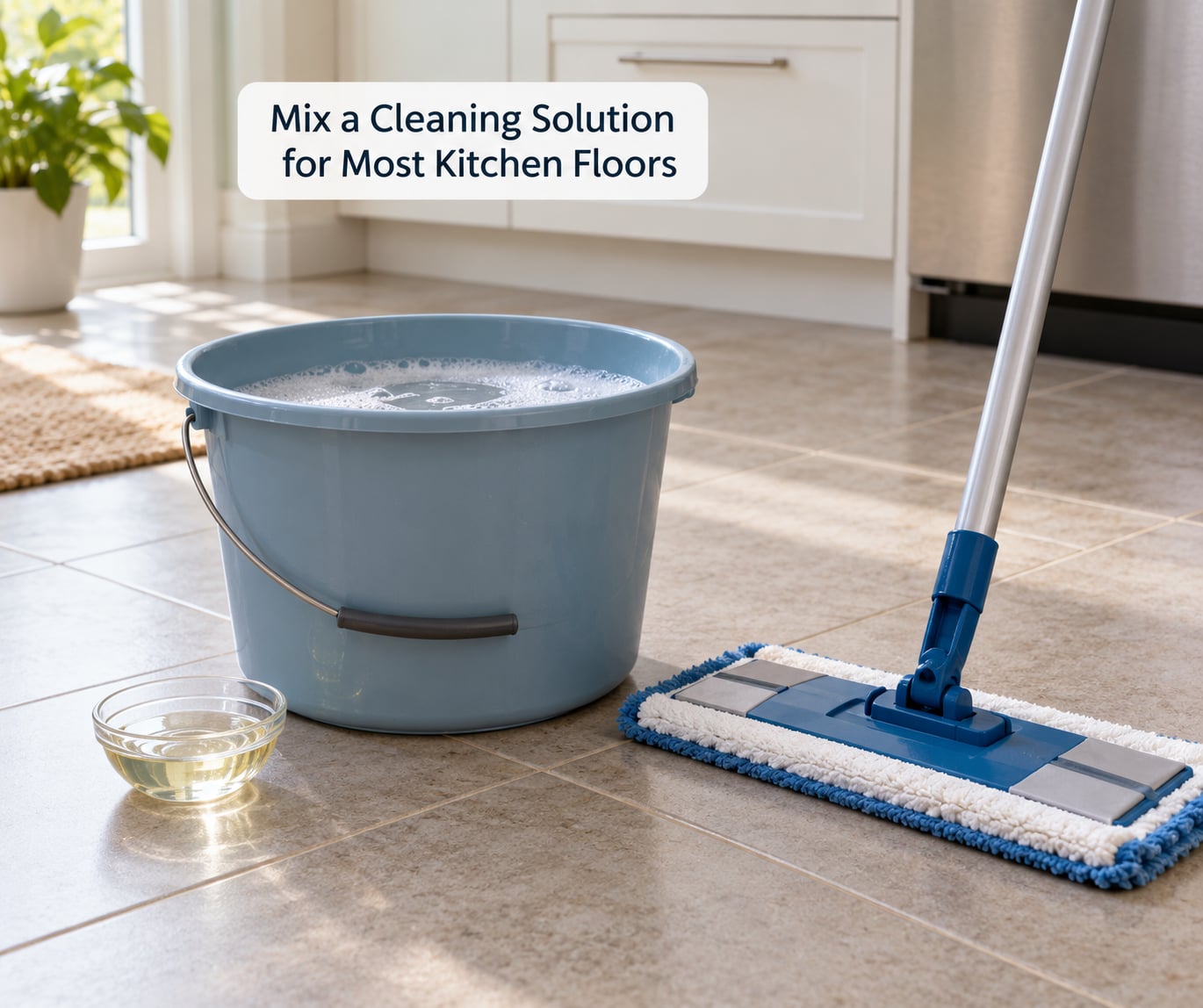
Fill a bucket with warm, not boiling, water and add two to three drops of dish soap. That is roughly a teaspoon for a full bucket, and it is far less than most people pour in by reflex. Stir it until you see a faint sheen and stop there.
The small dose matters. Surfactants work by surrounding grease particles, and if there are more surfactant molecules than the rinse can carry away, the extra ones dry into a tacky coating. Under-dosing and rinsing well beats over-dosing every time.
For a grease-heavy section, swap in a floor-safe degreaser at its labelled dilution, or add a teaspoon of dish soap to a spray bottle of water and spray the greasy patches directly instead of soaking them.
Skip water entirely, or use a barely damp cloth, on unsealed wood, on waxed or oiled wood floors, and on any stone that is unsealed. Marble, travertine, and limestone are acid-sensitive and can be dulled by acidic cleaners, so keep vinegar off them.
3. Apply the Solution and Let It Loosen the Grime
Work in a small section, roughly a metre square, rather than spraying the whole kitchen at once. You want the surface damp, not flooded. A damp flat mop leaves a thin, even film of solution; a dripping mop leaves puddles that sit too long and can soak seams or baseboards.
Give the solution a few minutes to work, usually two to five. That dwell time is what lets the soap get under the film instead of just moving it around. If you scrub the instant you mop, you are mostly rearranging the residue.
Spot-test first in a corner or behind the fridge, especially on a finish you have not cleaned this way before. If the surface shows no change after 10 minutes, stop and pick a gentler approach.
4. Scrub the Sticky Patches Without Spreading Them
Take your sponge or flat mop and work the section in slow passes. The idea is to lift residue into the water, not to push it toward the baseboards. Start at the far end of the room and work toward your exit so you do not walk back over wet floor.
For textured tile and grout lines, use a nylon brush and dig along the joints at an angle. Alternate the brush angle each pass so you are not just smoothing the same line. On smooth tile and vinyl, a microfiber pad does the same job with less risk of scratching a gloss finish.
Grout responds to a paste rather than a soak. Mix a little dish soap with just enough water to make a thick paste, spread it along the joints, leave it five minutes, then scrub with the nylon brush and rinse with plain water.
For a stubborn spot that will not budge, a paste of baking soda and a little water works as a mild abrasive. Apply it, give it about 10 minutes, scrub, then rinse. Keep baking soda off sealed wood and off any floor with a wax or acrylic finish, since the abrasion dulls it over time.
A bare white vinegar straight from the bottle, applied to a stubborn spot and given about 30 seconds before scrubbing, is another option for tile and grout. Vinegar is not a good floor mop, though, and here is why: an acidic rinse over alkaline residue can re-activate it, and it strips the finish from wood and dulls stone. Use it as a spot treatment only.
Swab the dirty water as you go. Every pass through the same bucket adds grime back onto the floor, which is how a sticky patch returns after what felt like a good cleaning.
5. Rinse, Mop, and Dry the Sticky Kitchen Floor Completely
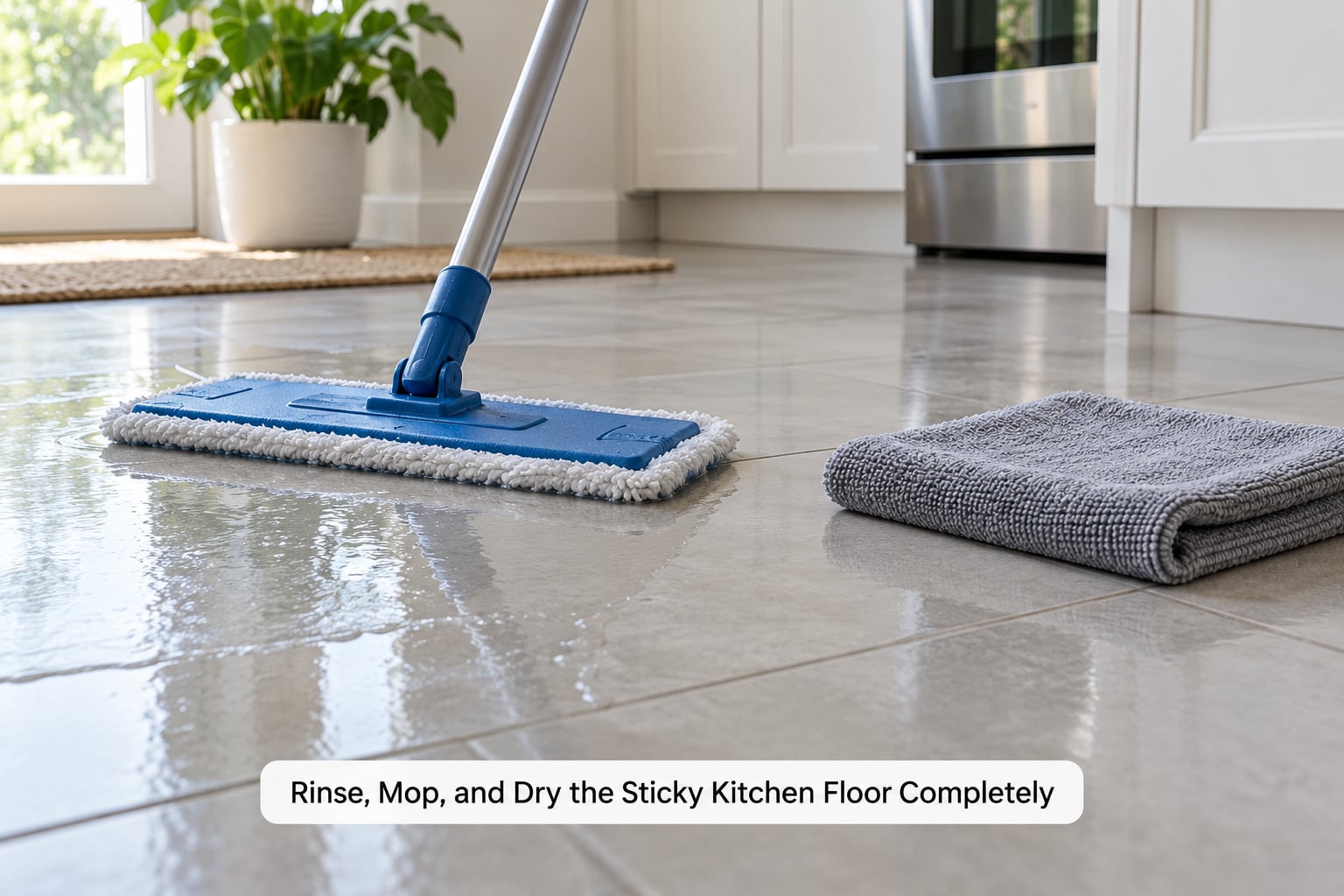
Empty the soapy bucket and refill it with plain water. Rinse, using no soap at all. The rinse is what removes the surfactant film, and skipping it is the single most common reason a sticky kitchen floor comes back within 24 hours.
Mop section by section with the plain water, wringing the mop out firmly each time. Change the rinse water whenever it turns cloudy, which in a greasy kitchen may mean every few passes.
Walk the floor with a clean finger or the sole of your shoe after each section. Bare feet are the most sensitive test you have; shoes hide a thin film that bare feet find instantly. If the section still feels tacky, rinse and mop that area again with fresh water.
Dry the floor fully. Lay microfiber cloths or old cotton towels over the damp areas, run a fan, and open a window. On hard wood or laminate, keep the surface only damp and let the fan finish the job. Walking on a floor that is still damp re-welds the residue back into place, which is exactly why the floor feels tacky the next morning.
Grout lines dry slower than the tile around them. Run a dry cloth along the joints last, and keep traffic off the section for at least an hour if you can.
Common Mistakes
Using too much cleaner. More soap means more film. Fix: two to three drops per bucket, and dilute until the water only looks faintly soapy.
Scrubbing a dry floor. Dry scrubbing grinds grit into the finish and spreads grease thinly instead of lifting it. Fix: dampen the section first and keep a damp cloth in your other hand.
Soaking water-sensitive floors. Water pools at seams and baseboards on laminate, LVT, and wood, and moisture there can swell the board or lift an edge. Fix: damp mop only, and change sections rather than adding more water.
Using abrasive tools on a coated surface. Metal scrubbers, green scouring pads, and baking soda on a sealed or waxed finish scratch the coating, and scratches hold dirt that feels like stickiness. Fix: nylon brush or microfiber pad, and spot-test baking soda in a hidden corner first.
Skipping the plain-water rinse. Soap film dries tacky, every time. Fix: a second bucket with clean water, and keep it strictly separate from the wash bucket.
Reusing a dirty mop. A cotton or sponge head carries old detergent and grease from one room to the next. Fix: wash the head in hot water with a rinse cycle after each use, or swap a microfiber pad and launder it separately from your towels.
Mixing cleaners. Bleach with vinegar releases chlorine gas, and bleach with ammonia makes chloramine gas. Dawn with baking soda simply neutralises itself into soapy water and does nothing useful. Fix: one cleaner per bucket, mixed with water only, and ventilate the room.
Walking on the floor before it dries. Traffic on a damp floor presses the residue back down and it dries as a bonded film. Fix: lay cloths down, run a fan, and give it an hour.
Frequently Asked Questions
Is vinegar useful for a sticky kitchen floor?
Vinegar is useful as a spot treatment and poor as a floor mop. Straight white vinegar dabbed on a stubborn sticky spot and left about 30 seconds can break down light residue on tile and grout. Mopping the whole floor with it can do the opposite: the acid reactivates alkaline residue and dulls wood finishes and acid-sensitive stone. Use it spot on, never full floor.
How do I remove dried syrup or gum from a kitchen floor?
Scrape off dried gum or hardened sugar with a plastic card or the edge of a spoon, working from the outside inward so you do not spread it. Then warm water with a drop of dish soap and a sponge, repeating every two minutes as it dissolves. On sealed hardwood, blot rather than soak and keep the wood only damp.
Can I clean a sticky kitchen floor while cooking?
You can, but you will get a better result with the stove off and cooled. Steam and warmth soften a fresh film and let it redeposit, and a floor you walk across constantly while cooking picks up food traffic again before it dries. If you must clean mid-cook, clear the area, use a small amount of solution, and keep people off the section until it is dry.
What if my floor is still sticky after mopping?
Walk the floor barefoot and pinpoint where the tack remains. Rinse those sections again with plain water and mop dry, changing the water each time; it usually takes two or three passes. If the whole floor stays tacky, your cleaner was likely too concentrated or too alkaline, so stop using it entirely. If stickiness persists after three clean rinses, suspect an old wax or sealant film rather than soap residue.
How long should baking soda stay on a sticky floor?
About ten minutes, no longer. Baking soda works as a mild abrasive, and longer contact does not help while it does raise the chance of dulling a sealed or waxed finish. Spread the paste only on the sticky patch, scrub with a soft pad or nylon brush, then rinse with plain water. Never use it on unsealed wood, waxed floors, or natural stone.
Does a sticky floor mean the flooring is damaged?
Usually not. Most sticky floors are coated in a removable film rather than damaged material. Signs that something deeper is wrong include a dull or etched surface, softening that feels spongy underfoot, lifting seams or edges, and grout that crumbles or wears away when scraped. If stickiness is limited to one room and appeared after a service visit, wax or sealant overspray is the likely cause and needs stripping.
Quick Conclusion
Clear the floor, find out what it is made of, then use a small amount of dish soap in warm water and scrub. Rinse with plain water, dry it completely, and stop using whatever cleaner left the film behind in the first place.
Spot-test on any finish you have not cleaned this way before, keep water-sensitive floors damp rather than wet, and never mix bleach with vinegar or ammonia. For the kitchen side of the job, our guide to what a properly cleaned kitchen looks like covers the surfaces most people forget.