
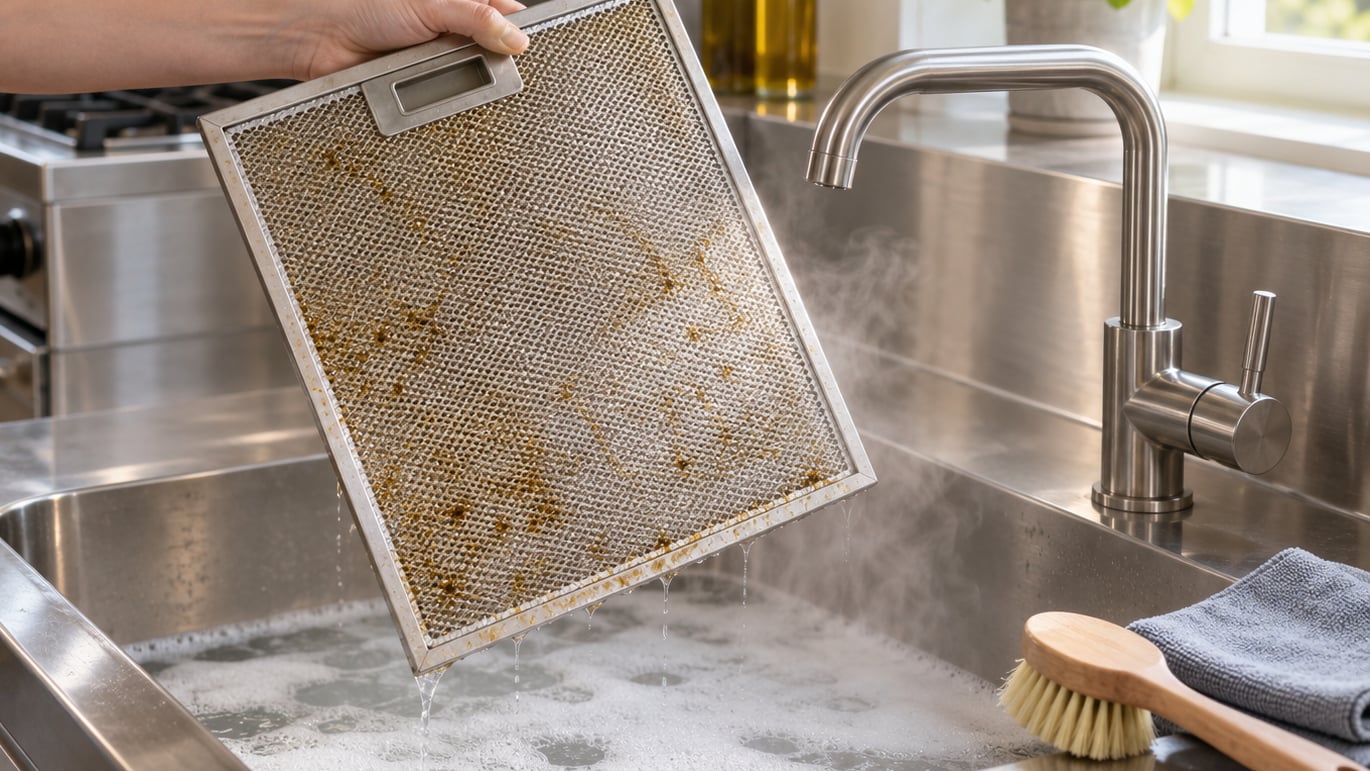
To clean a greasy range hood filter, soak the metal filter in very hot, soapy water made with degreasing dish soap and baking soda for 15 to 30 minutes, scrub it with a non-abrasive brush, rinse it under running water, and let it air dry fully before you slide it back in. Budget about 25 minutes for a normal filter and longer for one that has gone a year without attention.
The reason grease collects there at all is that the filter is doing its job. It catches airborne grease, smoke and steam before they travel through the house, and a loaded filter stops catching anything. Kitchen grease film on cabinets, counters and walls that are nowhere near the burners is usually the filter talking, not the stovetop.
Grease-laden filters are also the reason range hoods show up in fire safety guidance. Grease is a fuel, and a hot cooking surface sits inches away from it. The National Fire Protection Association treats hood and duct cleaning as a routine part of kitchen fire prevention, and a clogged filter also starves the fan, so the hood runs hotter and works harder for less capture.
Where you are in the middle of a frying session matters too. Our guide to cleaning a kitchen after frying covers the counters and stovetop; the filter is the piece people skip and the piece that causes the rest of it to come back.
What You Need
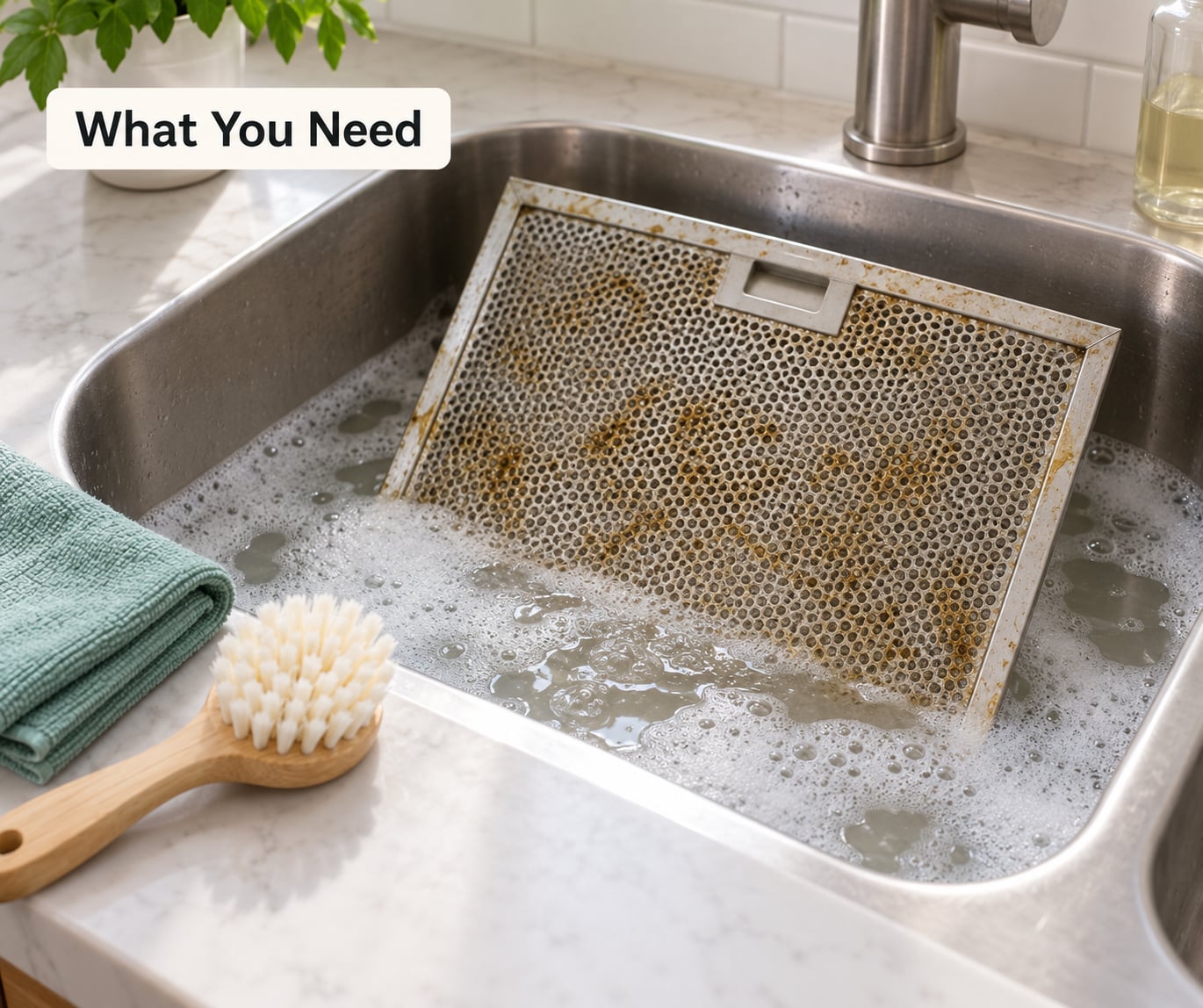
Six things cover almost every metal filter job:
- A sink, large tub or a big pot that the filter fits inside
- Boiling or very hot water
- Degreasing dish soap, the Dawn-style kind rather than standard hand dish soap
- Baking soda, about 1/4 cup per large pot of water
- A non-abrasive brush, nylon sponge or an old toothbrush
- A microfiber cloth or paper towels for drying
Add rubber gloves, and a labeled kitchen degreaser if the filter carries years of buildup. The filter type and the manufacturer’s care instructions decide the safest method, so read those first. A charcoal filter is a replacement part, not a wash item, and a coated or non-washable filter should never see boiling water or a brush.
Step-by-Step: How to Clean a Greasy Range Hood Filter
Turn Off the Range Hood and Check the Filter
Switch the hood off, then cut power at the breaker or unplug it if the manual asks you to. Give the light and fan a few minutes to stop, and let any hot grease on the housing cool before you touch it.
Open the hood’s filter panel or grease cup and look at what you actually have. Common shapes are metal baffle filters, mesh or micromesh panels, aluminum grease filters, and activated carbon filters on recirculating hoods. If the manual is gone, the model number printed inside the housing usually gets you the care instructions from the manufacturer.
Stay out of the housing itself. Reaching past the filter panel to touch wiring, fan blades or a light socket is how a cleaning job turns into a repair bill.
Remove the Filter Without Taking the Hood Apart
Most metal filters slide straight out toward you, or press down and pivot free on spring-loaded tabs. Look for a small handle, notch or arrow stamped into the frame, and follow it rather than pulling on anything that feels like a fastener.
Support the filter with both hands as it clears the channel. A filter that has not been cleaned in months carries a surprising amount of weight, and it often drips the moment it tilts, so keep it level over the sink. Set it down instead of balancing it on the edge of the counter.
Bending a baffle filter slightly is usually recoverable, but kinked mesh traps grease permanently and never recovers. If a filter is already warped or rusted through, cleaning it is a waste of effort and replacing it is the better call.
Soak the Filter in Warm, Soapy Water
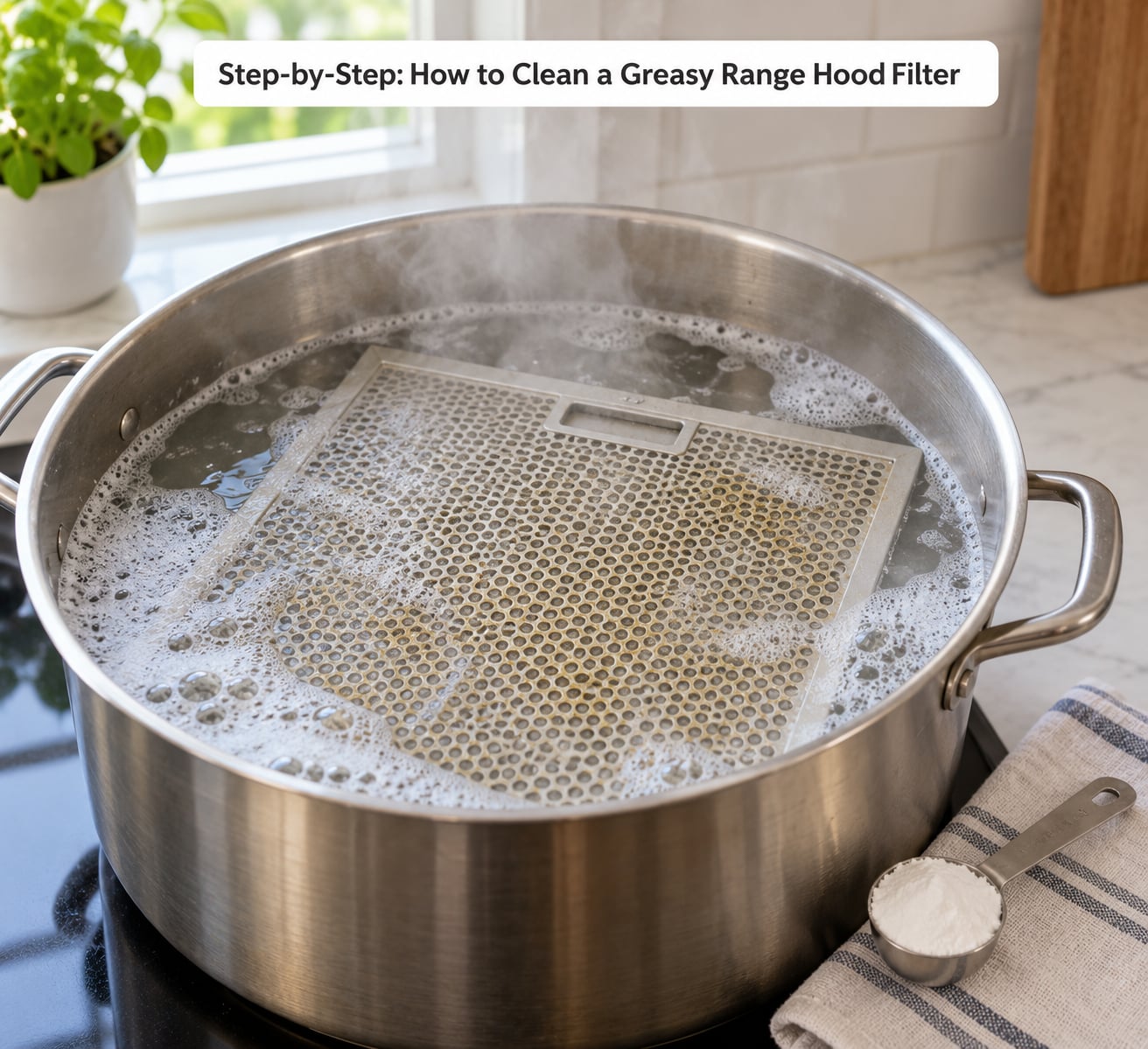
Fill a large pot or tub with near-boiling water, then add 1 to 2 tablespoons of degreasing dish soap and 1/4 to 1/2 cup of baking soda. Stir gently so it does not foam over the rim, then lay the filter flat in the solution so the grease-filled surface is covered.
Dwell time depends on the load:
- Light grease (washed within the last month or two): 10 minutes
- Moderate buildup (a few months of regular cooking): 15 to 30 minutes
- Heavy or neglected grease (a year or more, or inherited from a previous tenant): several hours, or overnight
Rotate or flip the filter halfway through so fresh solution reaches both faces. If it is too big for the container, soak one side at a time in the same solution, which costs nothing extra.
Skip boiling water and skip long soaks entirely on non-washable, coated or charcoal filters. Never combine vinegar with bleach or with a concentrated dish soap, and remember that concentrated soap plus high alcohol can turn grease gummy instead of lifting it.
Scrub Stubborn Grease from the Surface
Work along the mesh and pleats with a soft brush, nylon sponge or old toothbrush, following the direction of the channels rather than pushing debris into them. Hold the filter under the surface while you scrub so loosened grease stays in the solution instead of landing in your sink drain.
For thick, blackened grease, a kitchen degreaser earns its place here. Follow the label, apply it to a small corner first, and leave it a few minutes to see whether the finish dulls or etches before you go over the whole filter. Rinse it thoroughly afterwards, since residue from a strong degreaser keeps attracting new grease.
If a fine micromesh filter will not hold onto a brush, soak it longer in degreaser solution rather than scrubbing harder. Many people have worn out a toothbrush on a filter that needed patience, not pressure.
Rinse and Check the Filter
Rinse both sides under hot running water until the water runs clear and you no longer see soap bubbles trapped in the mesh. Hold it up to the light: a clean filter looks like open holes, not a dark screen.
Check for remaining oil, sticky residue, blocked holes and any sign of damage. If water will not run freely through the filter, or grease is still visible in the pleats, repeat the soak and scrub with fresh hot water before you reinstall it.
Pour the soak water down the drain with plenty of cold water running after it. Never send greasy water into a composter or a greywater setup.
Dry and Reinstall the Filter
Set the filter on a clean rack or towel to air dry. You can towel-dry it gently first to speed things along, but skip hairdryers, ovens and other heat, which can warp metal or bake residue on. A filter goes back only when it is dry all the way through, since trapped moisture turns to rust and grease sticks to damp metal.
Slide it back along the same channel it came out of until it sits flat and the latch or spring clicks into place. Turn the power back on and run the hood on high for a minute to confirm airflow and listen for anything rattling.
While the panel is still open, wipe the grease-catching lip around the filter and the underside of the hood. That film goes back onto a clean filter the next time you cook.
Common Mistakes
Using abrasives. Steel wool, scouring powder and stiff green scrubbers scratch metal and can strip a coating, leaving a surface that grabs grease faster next time. Stay with non-abrasive tools.
Bending the filter. Pressing a multi-layer mesh panel flat to “get at the grease” creases it into permanent channels that never clean again. Support it with both hands and let the soak do the work.
Pouring boiling water on a coated filter. Heat warps some baffle filters and ruins non-washable ones. Near-boiling water is plenty for washable metal; very hot tap water is the safe ceiling otherwise.
Cleaning one side only. Grease loads on both faces, and the back is usually worse because it sits closest to the heat. Turn it halfway through the soak and rinse both sides.
Using the wrong detergent. Ordinary hand dish soap is built for mild food residue, not set grease. Concentrated dish soap plus alcohol can emulsify oil into a sticky film that feels worse than what you started with, which is a complaint you will see repeated on cleaning forums. Use a straight degreasing dish soap and skip the alcohol additive.
Reinstalling a wet filter. Damp metal plus trapped grease equals rust and odor. Air dry fully, even if it means waiting an extra day.
Treating a replacement filter as washable. Carbon or charcoal filters cannot be cleaned back to working capacity, and non-washable cartridges are meant to be replaced. Washing them wastes the effort and can damage the housing.
How to Maintain a Clean Range Hood Filter
Check the filter monthly by pulling it out and looking at it against a light. Wipe the grease channel and hood underside while it is out, because that film is what people notice on cabinets and counters before they notice the filter.
Match the cadence to how you cook. Light cooking most nights suits a check every two months, daily home cooking suits monthly, and frequent frying or searing needs a monthly wash with a quick wipe-down in between. Gas burners deposit grease faster than induction or radiant electric, so a gas household usually sits at the tighter end.
Filter replacement runs on its own clock, separate from washing. Follow the manufacturer’s schedule, and replace anything rusted through, warped, or coated in grease that stays after two full soak-and-scrub cycles. Washing a filter past its limit is false economy.
If your hood runs weak, gets loud, or leaves a film on walls a few feet from the stove, treat the filter as the first suspect. Restricted airflow is the common thread. It is also the exact standard described in our guide to what to look for in a clean restaurant kitchen, where vent filters are inspected on a schedule rather than when they look bad.
While the hood is open, also wipe the light lens, the fan cover and any charcoal filter indicator. That is a five-minute addition to a job you were doing anyway, and it keeps a greasy hood from becoming a greasy ceiling.
Frequently Asked Questions
What is the best degreaser for cleaning a range hood filter?
A straight concentrated degreasing dish soap is the best starting point for a range hood filter. Add 1 to 2 tablespoons to a large pot of near-boiling water with 1/4 cup of baking soda, soak 15 to 30 minutes, then scrub with a soft brush. For filters with years of hardened grease, a labeled kitchen aerosol or pump degreaser applied to the surface and left for a few minutes works better than soaking alone.
Can I put vinegar in my filter to clean it?
Vinegar is useful on the hood shell, the light lens and light mineral film, but it is not a grease remover and it is a poor choice for aluminum filters, which it dulls. Never mix vinegar with bleach or with concentrated dish soap. For a greasy filter itself, hot water, degreasing dish soap and baking soda do the actual work.
Is it okay to wash range hood filters in the dishwasher?
Most metal baffle, mesh and aluminum grease filters are dishwasher-safe, and the heat and detergent do a good job on light grease. Always check the manual first, since some coated or non-washable filters warp in the machine. Lay filters flat rather than leaning them against the racks, skip the drying cycle so they do not bake on, and never put charcoal or carbon filters in the dishwasher.
How do I clean a very greasy stove hood?
For a very greasy hood, escalate in order: soak the filter 15 to 30 minutes in near-boiling water with 1 to 2 tablespoons of degreasing dish soap and 1/4 cup baking soda, scrub both faces with a soft brush, then rinse. If grease remains, repeat with fresh hot water, then try a labeled kitchen degreaser. Filters untouched for a year often need an overnight soak and two full cycles before a replacement is worth considering.
Can range hood filters be washed?
Metal grease filters can be washed by hand, soaked, or run through the dishwasher when the manufacturer allows it. Charcoal and activated carbon filters cannot be washed, because water strips the carbon and leaves the filter useless. Non-washable replacement cartridges are also not designed for cleaning. If the type is unclear, check the model number inside the hood housing before you use water.
How do I clean an aluminum range hood filter?
Soak an aluminum range hood filter in hot water with degreasing dish soap and baking soda for 15 to 30 minutes, then scrub gently with a nylon sponge or soft brush. Skip acidic cleaners and vinegar, which leave a dull film on aluminum. Rinse well and air dry, because trapped water leaves permanent spots. Check the manual, since some aluminum filters are dishwasher-safe and some are not.
Conclusion
Start by identifying your filter type and reading the care instructions, then switch the hood off and let it cool. Take the filter out carefully, soak it 15 to 30 minutes in near-boiling water with 1 to 2 tablespoons of degreasing dish soap and 1/4 cup of baking soda, scrub both sides, rinse, and let it air dry fully before it goes back in.
Replace filters that are warped, rusted through, non-washable, or still greasy after two honest cycles instead of reusing them. Follow the manufacturer’s replacement schedule, and the next cooking session starts with a hood that actually moves your smoke.