
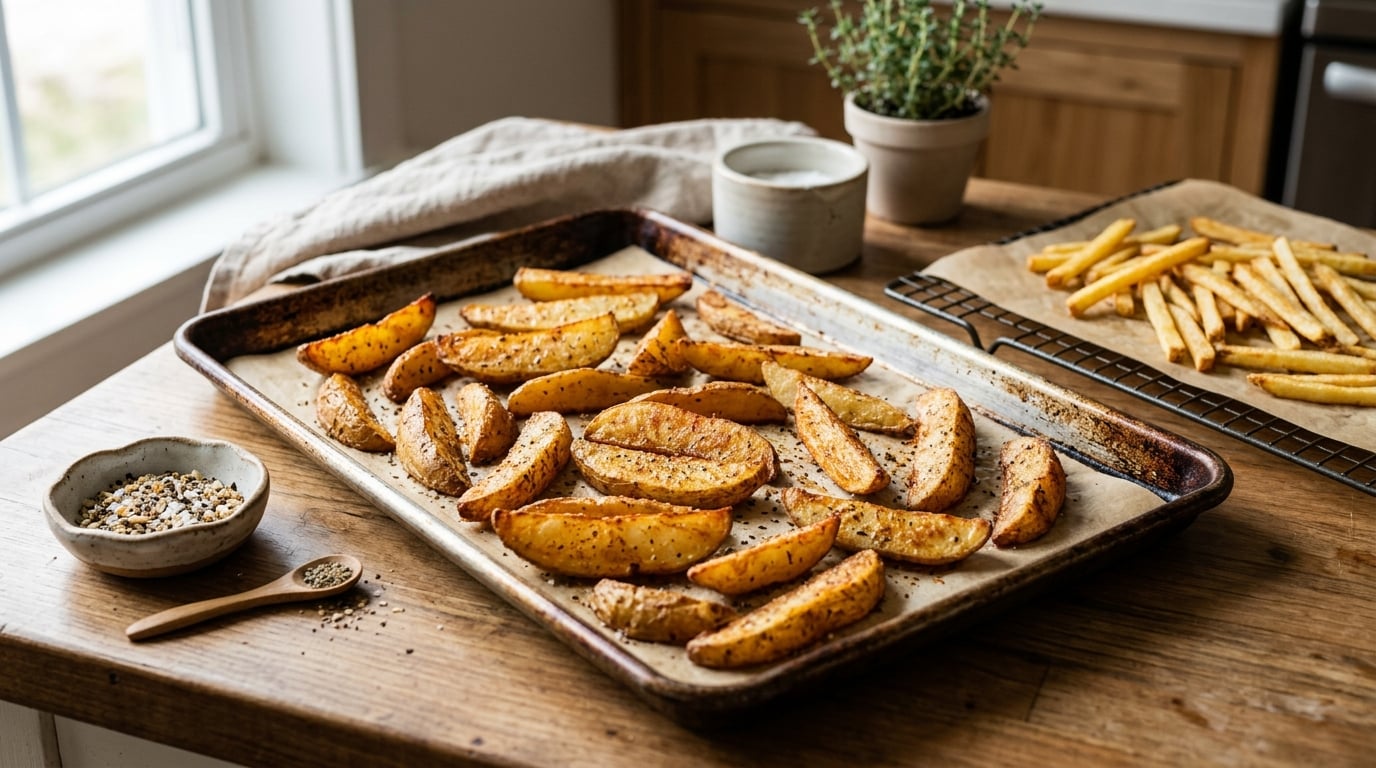
To make steak fries at home, cut unpeeled potatoes into thick half-inch wedges, dry them completely, then fry at 350 to 360F until the edges crackle and the centers go creamy. Baking works too, at 425F for 35 to 45 minutes with a single flip. Total hands-on time is about 25 minutes.
Most people who fail at this are not using the wrong seasoning. They cut the wedges too thin, pile them on top of each other, or put them in the pan wet. Fix those three things and you get something close to a steak frites plate without owning a deep fryer.
Steak fries are the restaurant cut, not a flavor. They are chunky, roughly the width of your thumb, and they are meant to be dunked. Think of the difference between steak fries and French fries the way you would think of a ribeye and a tenderloin: same animal, very different job.
What You Need
The whole list is short. Six ingredients do almost all of the work, and the only real tools are a sharp knife, a sturdy baking sheet or a pot, and a way to get the wedges dry again.
Ingredients
- 2 to 3 large russet potatoes (about 1.5 to 2 pounds / 680 to 900 g). Unpeeled, scrubbed.
- 1 to 2 tablespoons high-heat oil for the oven method, or enough to fill a heavy pot 2 inches deep for frying.
- 2 tablespoons steak seasoning, or the homemade version below.
- 1 teaspoon kosher salt, plus more for finishing.
- 1 teaspoon cracked black pepper (optional, but good).
- Optional finishing: a little cornmeal for extra crunch, chopped parsley, or garlic powder.
Which potato to use
There is a real disagreement on this one across recipe sites, and it is worth settling. Russet and Yukon Gold both work, but they give you different results, and neither is wrong.
| Potato | Texture | Crispness | Best for |
|---|---|---|---|
| Russet | Fluffy, very dry, slightly chalky when overcooked | Highest of the three | Crisp edges, restaurant texture |
| Yukon Gold | Creamy and moist, holds shape well | Good, more golden than shattering | Creamy centers, loaded fries |
| Red potatoes | Waxy, dense, skin stays soft | Lowest | Color and shape, softer texture |
My default is russet. The high starch content is what gives you a shaggy, brittle crust when it hits hot oil, and the interior breaks apart into that fluffy center a frites plate is built around.
Yukon Gold is the better call if you are cooking for people who like a soft, almost custardy middle, or if you are loading the fries. Red potatoes are the weakest option for this method, though they still taste fine with a strong seasoning.
Which oil to use
For the oven, a neutral oil like avocado, canola, or vegetable gives the cleanest potato flavor. Olive oil works and adds a faint fruitiness, but use the lighter varieties; extra virgin turns bitter at roasting temperatures.
For deep frying, the oil needs a high smoke point. Avocado, peanut, canola, and refined olive are all safe. Beef tallow is excellent and gives a mild beefy note that suits the name of the dish, and readers who have tried it tend to become converts fast.
Homemade steak seasoning when you have none
This is the most requested thing in the comment sections under the big steak fry recipes, and it takes no time at all. Stir together equal parts of:
- Coarse kosher salt
- Coarse ground black pepper
- Garlic powder
- Onion powder
- Smoked paprika
- A pinch of red pepper flakes, optional
A teaspoon of mustard powder or a pinch of cumin makes it read more like a Montreal-style blend. If you have no smoked paprika, plain paprika works and the fries are still good.
What each cooking method needs
Recipes online disagree on temperature, and that disagreement is mostly noise. Here is what each method actually asks of you.
| Method | Temperature | Time | Batch size | Result |
|---|---|---|---|---|
| Deep fryer or pot | 350 to 360F | 6 to 8 minutes | Single loose layer, never packed | Crispest, closest to a restaurant |
| Oven, high | 425F | 35 to 45 minutes | Half a sheet pan, spaced | Golden, well browned |
| Oven, slow | 400F | 45 to 55 minutes | Half a sheet pan, spaced | Softer, creamier center, less even browning |
| Air fryer | 400F | 16 to 20 minutes | Basket half full at most | Very crisp, fastest |
Use 425F when you want color. Use 400F when you want the potato flavor to come through and you are in no hurry. The 400F method genuinely produces a creamier interior, at the cost of paler edges.
For the oven methods, a wire rack set on top of the baking sheet is the one upgrade worth making. Air circulates under the wedges, the bottom faces cook instead of steaming, and the fries brown on all sides. A rimmed sheet with no liner works fine too, just a little less evenly.
Step-by-Step
Here is the method that holds up most reliably, from cutting through serving. The steps are numbered because the order matters more than any single technique.
1. Cut the Potatoes Into Even Sticks
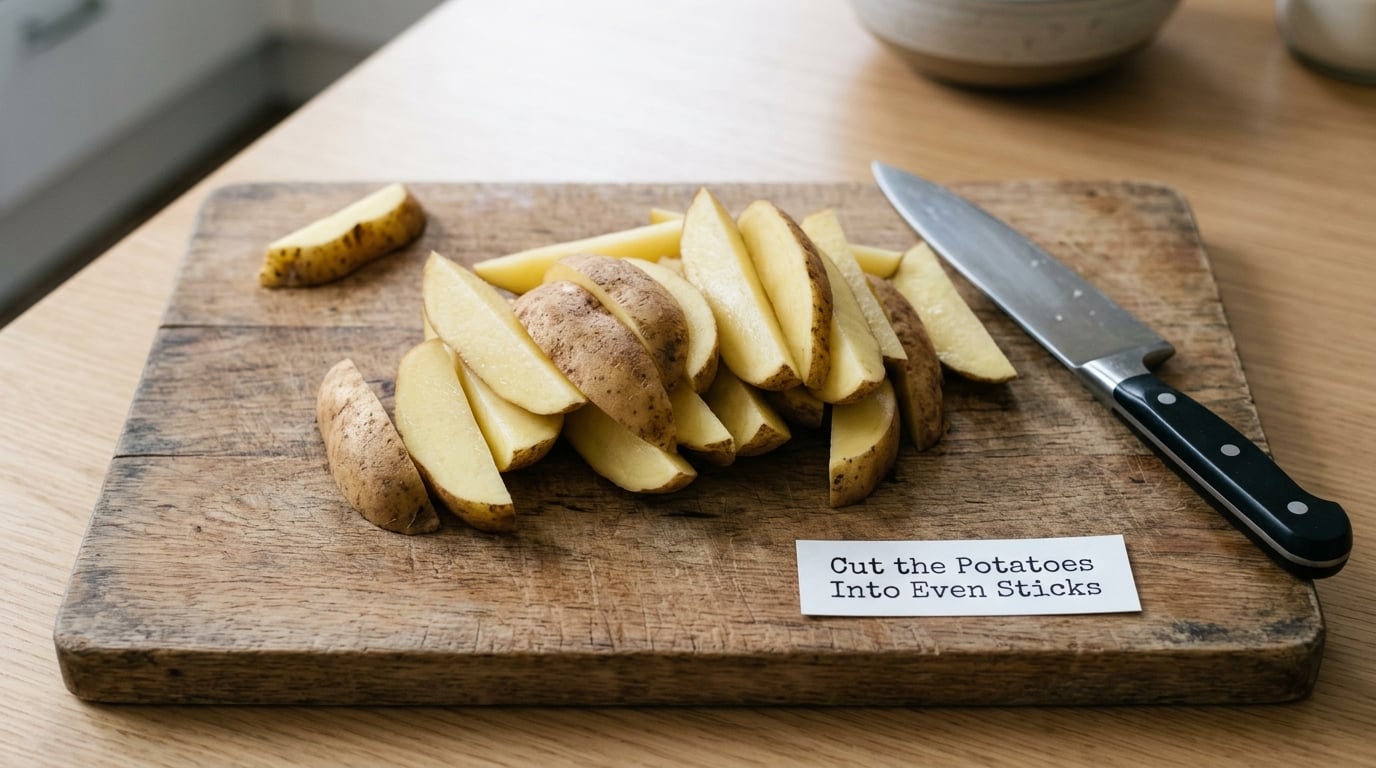
Scrub the potatoes well and leave the skin on. It is a thin layer that crisps up and holds the wedge together, and peeling it just gives you a softer, more fragile fry.
Stand the potato on its flat end and cut it lengthwise into quarters, then cut each quarter into two or three sticks. Half an inch thick is the target. You should get roughly 10 to 12 wedges from a large potato.
Trim any pieces that are much thinner than the rest. Small fries cook faster than big ones, which means the thin ones burn before the thick ones are tender, and that is exactly the uneven result most people blame on the oven.
If you want a restaurant wedge rather than a stick, cut each quarter in half lengthwise. The two flat faces are what contact the pan, and a wedge with more flat surface browns better than a rounded bat.
2. Blanch or Soak the Fries
You have two options, and the honest answer is that both help a little and neither is the make-or-break step most sites claim.
Soaking: submerge the wedges in cold water for 30 to 60 minutes, or until the water runs noticeably clearer. The water pulls loose surface starch off the cut faces, and starch is what turns gummy when it hits heat. A longer soak in cold water, changed once or twice, does more than a short dip.
Par-blanching: boil the wedges for 4 to 6 minutes until barely tender, then drain and cool them completely. This sets the outside, and it is the same first pass a restaurant uses. Cool them flat on a towel so they do not steam themselves soggy.
If you are in a hurry, skip it. Plenty of good fries come out of a hot pan with a well-dried, well-oiled surface. But if you already have soggy fries, this is the first thing to add back in.
3. Dry the Fries Thoroughly
This is the step that decides the outcome, and it takes two minutes. Surface water turns to steam the instant it hits hot oil or a hot pan, and steam is the enemy of browning. The fries cook in moisture first, then the exterior has to dry out again before it can brown, which is why wet fries are pale and limp at the same time.
Spread them on a clean towel and roll them around, then pat the surfaces dry. If you soaked them, a salad spinner gets more water out in fifteen seconds than a towel does in two minutes. They should feel dry and slightly tacky, not cool and damp.
4. Heat the Oil and Fry in Batches
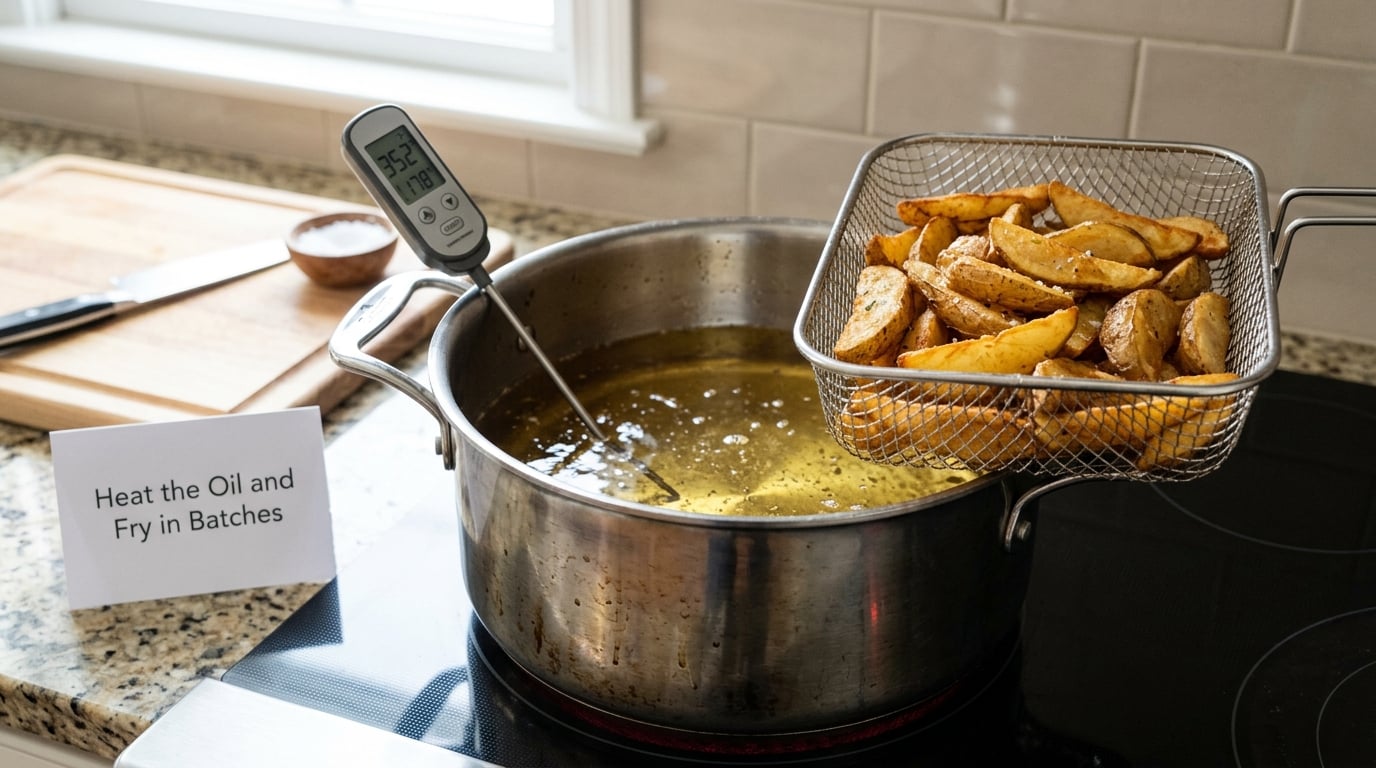
For deep frying, use a heavy pot with at least 3 inches of oil and a thermometer. Guessing temperature is why home fries go greasy; the oil needs to be at 350 to 360F before the wedges go in, and it will drop hard when you add a cold basket.
Fry in small batches. A packed pot drops the temperature fast, and fries sitting in oil that never got hot absorb it and turn heavy. Use a slotted spoon or a basket that lets oil drain freely. Leave the wedges alone for the first two minutes so a crust can form, then stir once.
They are done when the edges are deep golden, the surface feels firm to a tap, and a knife pushed into the thickest wedge meets almost no resistance. Pull them a shade before you think you should, since they keep cooking off the heat. Drain in a single layer, not piled in a colander, and salt them while they are still steaming.
For the oven: heat to 425F, toss the dry wedges with the oil and seasoning so every face is coated, and spread them on the hot sheet in one loose layer. Roast 35 to 45 minutes, flipping once at the halfway mark with a thin flat spatula. Leaving a small gap between pieces matters more than lining with parchment, which traps moisture and slows browning.
For the air fryer: 400F for 16 to 20 minutes, shaking the basket every 5 minutes, with the fries in a single layer. If they touch, run two batches. Crowding is the single most common reason air fryer fries disappoint.
For the restaurant texture without a fryer, par-fry at 350F for 4 minutes, drain and cool for at least 15 minutes, then finish at 375F for 2 to 3 minutes. The rest between passes is what drives moisture out of the center and gives you the glassy crunch people mean when they say fries like a restaurant.
5. Drain, Season, and Serve Immediately
Move them to a wire rack or a towel-lined plate rather than a pile, so steam escapes instead of softening the bottom faces. Salt immediately while the surface is still wet with oil, and add a second pinch of your steak seasoning if you want more punch.
Serve within a few minutes. Fries are at their best in the window right after they leave the oil, and they lose it fast no matter how good the batch was.
Common Mistakes
Soggy steak fries are almost always one of six things. Here is how to find yours.
The wedges are touching or overlapping
The most common mistake, and the one people do without realizing. Where two wedges touch, neither one browns; both just steam each other. Give every piece a finger’s width of space, and use two sheet pans if the first batch looks crowded.
The potatoes went in wet
Water on the surface means steam instead of a crust, and it also makes the oil spit. Dry them properly after soaking, every time.
You skipped the flip
Without a flip, the side that touched the pan browns and the side facing the air stays pale and soft. One flip at the halfway point fixes it. Lay the wedges cut-side down when you load the pan so the finished faces land facing up.
You lined the pan with parchment
Parchment is a reasonable safety shortcut, but it insulates the potatoes from the hot metal and pulls browning back noticeably. A bare rimmed sheet, or a wire rack over a sheet, browns better. Light cooking spray on bare metal is the compromise most cooks settle on.
The oil was not hot enough, or not hot enough yet
Underheated oil soaks into the potato instead of sealing it. If the oil is below 350F when the first batch goes in, the fries come out greasy no matter how long you cook them.
You seasoned too early or too little
Salt applied before baking draws moisture out of the surface and works against the crust. Season once when they come out of the oven, then again if you want a heavier finish.
Make a big batch for a party
Read across the “batch size” column above and scale pans, not oil depth. Four pounds of potatoes needs two full sheet pans at 425F, not one crowded pan, and the total cook time stays the same. Fry in batches of what the pot can hold loosely; crowding is the enemy, so plan on a second pot rather than one big pile.
Things readers add that work
Readers of the big steak fry recipes report a few variations worth trying. A spoonful of cornmeal tossed in with the seasoning adds real crunch. Laying all the wedges facing the same direction makes it obvious at a glance which ones you have flipped and which ones need another turn. Swapping in beef tallow or adding Cajun seasoning, taco seasoning, or extra flaky salt all produce good results.
One honest limitation: oven fries brown more evenly on top than on the bottom, and no amount of technique fully closes that gap. A wire rack narrows it considerably. Deep frying is the only method that gives you all five faces equally crisp.
Frequently Asked Questions
What makes steak fries steak fries?
Steak fries are defined by the cut, not the seasoning. They are thick wedges, roughly half an inch wide, cut from unpeeled russet or Yukon Gold potatoes. French fries are cut into narrow batons, usually a quarter inch or thinner, which gives you more surface area and a drier, crunchier result. Steak fries are wider, so the inside stays soft and creamy while the two flat faces brown into a crust.
Should I soak potatoes before making steak fries?
Soaking helps, but it is not the make-or-break step most recipes make it sound like. Thirty to sixty minutes in cold water draws loose surface starch off the cut faces, and starch is what turns gummy in hot oil. Changing the water once midway helps more. If you skip it, dry the potatoes thoroughly and give them plenty of space on the pan, and you will still get good fries.
What seasoning is on steak fries?
Usually a coarse steak seasoning blend built around salt, black pepper, garlic powder, onion powder, and paprika, sometimes with red pepper flakes or mustard powder for a Montreal-style edge. Stir those together at equal parts and you have a convincing homemade version. Toss the wedges with the blend and a little oil before cooking so it adheres, then finish with flaky salt while the fries are hot.
How to make good steak fries at home?
Cut unpeeled russet potatoes into half-inch wedges, trim any thin pieces, soak 30 to 60 minutes in cold water, and dry them completely. Toss with oil and steak seasoning. Fry at 350 to 360F in small loose batches for 6 to 8 minutes, or roast at 425F for 35 to 45 minutes, flipping once. Spread in a single layer, drain on a rack, and salt immediately.
Can I make steak fries at home without a deep fryer?
Yes, and most people get results they like better than they expect. Roast at 425F for 35 to 45 minutes, flipping once at the halfway mark, with the wedges spaced apart on a hot rimmed sheet. An air fryer at 400F takes 16 to 20 minutes with the basket shaken every 5 minutes. The oven version colors beautifully; it just browns the bottom face slightly less than hot oil does.
How do I reheat steak fries so they stay crispy?
Skip the microwave, which steams them. Put the fries in a single layer in a hot oven at 400F for 8 to 10 minutes, or in an air fryer at 400F for 4 to 5 minutes, shaking once. A wire rack in the oven works best since the underside re-crisps too. From frozen, add 5 to 7 minutes to the oven time and spread them out so they do not touch before they start cooking.
Conclusion
Four things decide whether your steak fries come out right, and none of them is the seasoning blend. Cut the wedges an even half inch thick and trim the stragglers. Dry them completely after soaking. Cook them in a single loose layer at a verified hot temperature, whether that is 360F of oil or a 425F oven. Then salt them while they are still hot and eat them within minutes.
Get those four right and you will not need a deep fryer, a restaurant, or a bag of frozen fries to make a convincing plate of steak frites at home.