
Turkey burgers turn dry because lean meat has little fat to hold onto juice, and most people cook them too long or press them flat. Pick an 85 to 90% lean blend, add a milk-soaked bread panade, mix it gently, and pull the patties off the heat the moment they hit 165°F. That whole method takes about 30 minutes and is beginner-friendly.
Four burgers come out of the batch below. Most of the work is ten minutes of hands-off prep, then a skillet or grill does the rest.
Home cooks who follow how to make turkey burgers that are not dry usually fail at the same two places: buying 99% lean turkey and standing over the pan pressing the patty with a spatula. Fix those and the rest is detail.
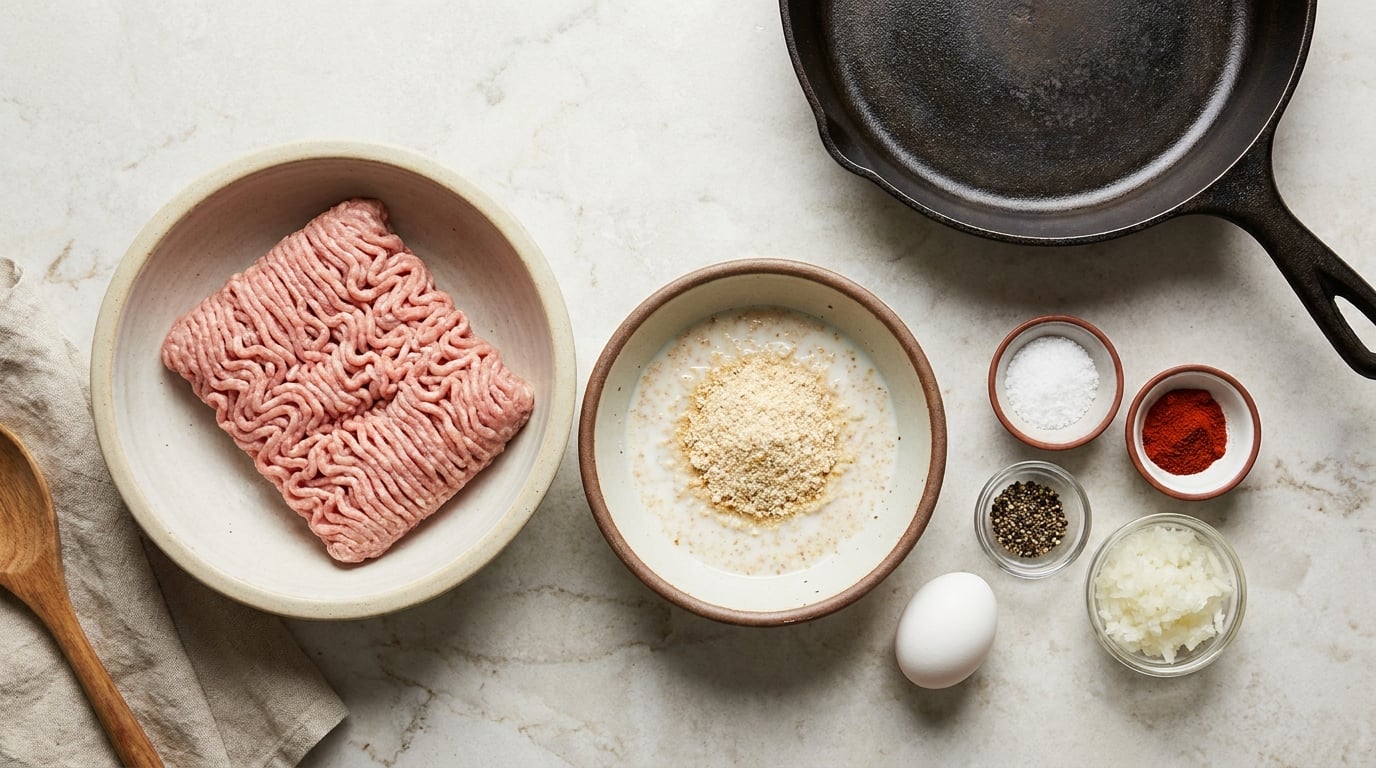
What You Need
The ingredient list is short, and every item on it earns its place by holding water through the cook.
- 1 to 1.25 pounds ground turkey, ideally 85% or 90% lean. Turkey thigh is the best value here because dark meat carries more fat than breast.
- 1/4 cup whole milk plus 1/2 cup coarse breadcrumbs or torn rustic bread. This is the panade, a paste of bread and milk that swells and traps juice.
- 1 large egg for binding. Optional if you are using a panade, and it adds a little richness.
- 1 tablespoon Worcestershire sauce and 1 teaspoon Dijon mustard for salt-free depth and a second source of moisture.
- 1/4 cup grated onion. Grating it releases juice straight into the meat.
- Salt, black pepper, garlic powder, smoked paprika to taste.
For tools, a mixing bowl that is wider than it is deep, a sturdy spatula or wooden spoon, an instant-read thermometer, and either a heavy skillet or a grill. A kitchen scale helps because even portions cook evenly.
One note on the panade. A panade is just bread soaked until it turns to mush, and it is the single technique cooks on cooking forums mention most often when they complain about crumbly patties. The milk does two jobs: it hydrates the bread and adds water the meat will hold onto.
Step-by-Step: How to Make Turkey Burgers That Are Not Dry
1. Choose turkey with enough fat
Ground turkey labeled 93/7 is 93% lean and 7% fat, and that ratio is the practical floor for a burger. Fat is what carries flavor and juice through high heat, so very lean turkey starts the cook already behind.
That said, 99% lean does not have to be a write-off. It works when you add liquid, keep the patty loose, and stop cooking at 165°F. Buy 85% or 90% lean when you can and you have far less to correct later.
2. Add moisture without making the mixture sticky
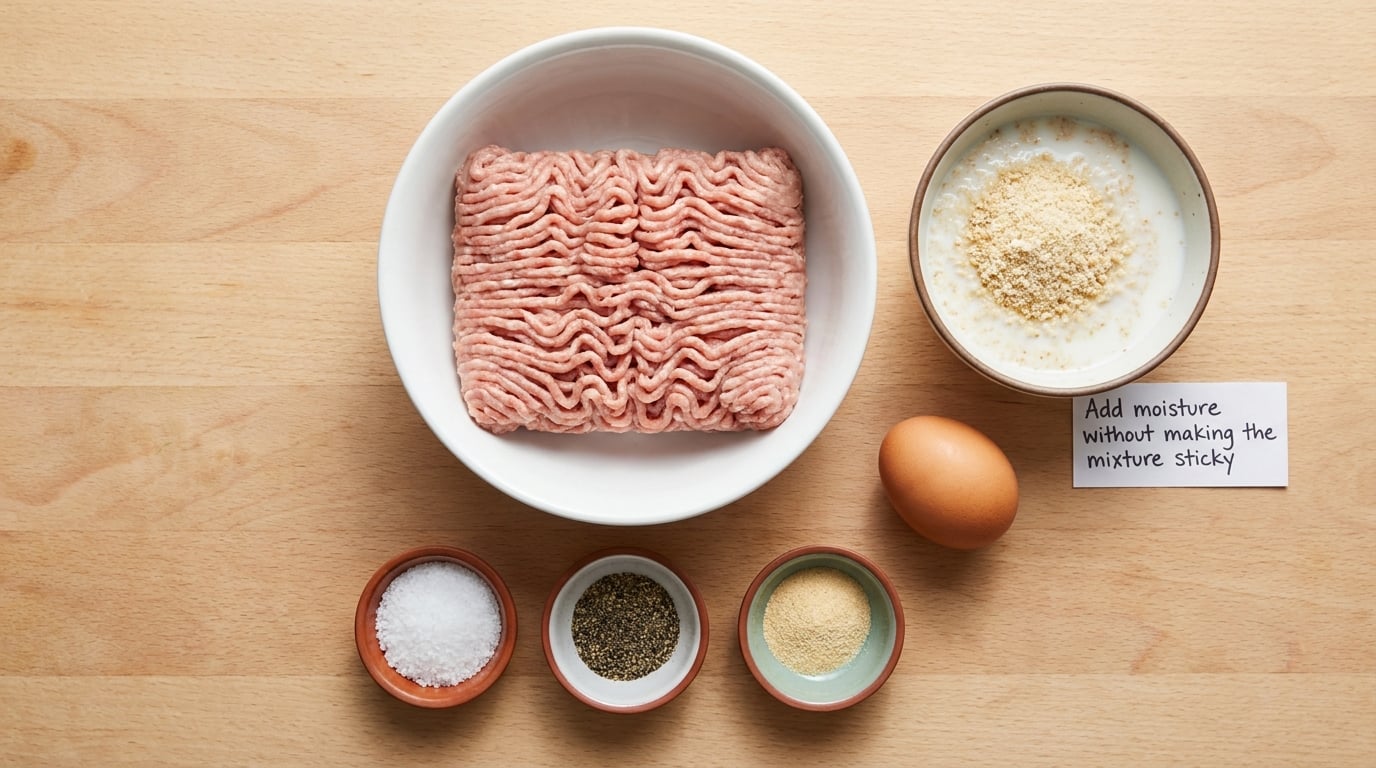
Soak the breadcrumbs in the milk first and wait two or three minutes until the mixture looks like wet sand with no dry pockets left. Add it to the turkey along with the egg, Worcestershire, Dijon, grated onion and seasoning.
Add the wet ingredients to the dry meat, not the other way around. Liquid distributed from the start spreads through the patty instead of pooling in one spot and washing out the seasoning.
3. Mix gently so turkey burgers stay juicy
Use a light hand and stop the moment the color looks even. Overworking meat develops a tough, springy texture no binder can rescue, and that is where a lot of dry turkey burgers come from.
Squeeze one small piece and cook it in a pinch of the pan. If it tastes flat or needs more salt, season the batch now rather than after cooking.
4. Shape patties without compacting them
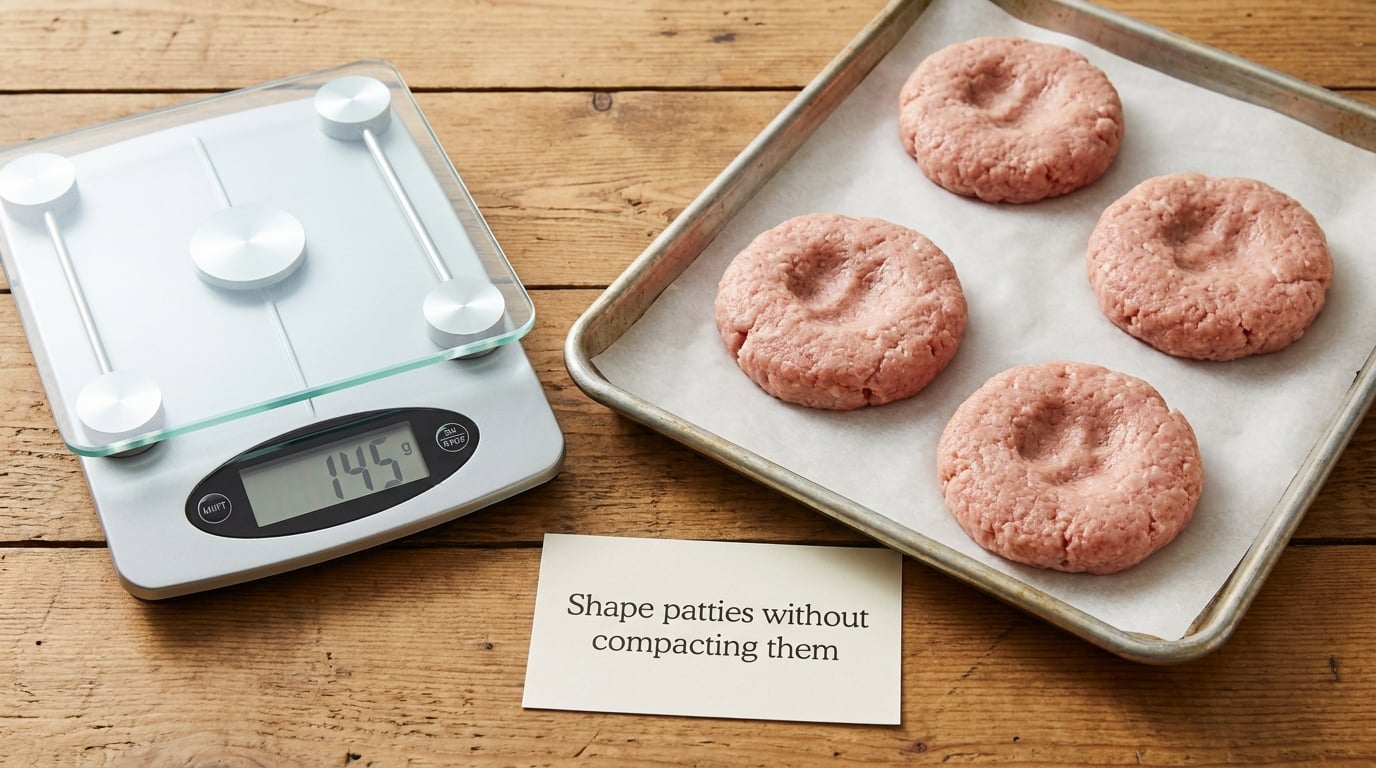
Divide the meat into four equal balls and pat each one into a patty about three-quarters of an inch thick. Make them the same size so they finish together.
Press only enough to keep the shape. Pack the meat tightly and the patty squeezes out moisture in the pan. Use your thumb to leave a shallow dimple in the center, which stops it from doming, and leave the edges ragged rather than smooth and compressed.
5. Cook gently and check the internal temperature
Heat a heavy skillet over medium-high and add a thin layer of high-smoke-point oil, like avocado or canola. Sear the patties about 3 minutes per side without moving them, then drop the heat to medium-low, cover the pan and cook another 3 to 4 minutes.
Ground turkey must reach 165°F, or 74°C, according to USDA guidance for poultry, so the thermometer is not optional here. Press the probe into the thickest part and take it out the moment it reads 165°F. Cooks who overcorrect for fear of undercooked poultry are the single biggest source of dry patties.
On a grill, set up two zones. Sear over direct heat for the crust, then move the patties to the cooler side and close the lid. On an air fryer, 375°F for about 9 to 11 minutes, flipping once at the halfway mark, also lands you near 165°F.
Do not press the patties with a spatula, and do not flip more than once. Every press squeezes out juice that never comes back.
6. Rest and serve the burgers
Move the patties to a plate and wait about 5 minutes. Resting lets the juices redistribute instead of running out onto the cutting board, which is the step most people skip and the cheapest one to fix.
Toppings matter here. Choose ones that add moisture rather than hide a dry patty: mayo or aioli, melted cheddar or Swiss, avocado, pickles, and a tomato slice salted just before assembly. Toast the bun in butter for thirty seconds so it does not steal the moisture from a patty that is still resting.
Common Mistakes
Dry turkey burgers are almost always traceable to one of these, and each has a straightforward fix.
- Using 99% lean turkey. There is not enough fat to hold moisture. Switch to 85% or 90% lean, or accept the lean blend only if you add liquid and keep the cooking short.
- Overmixing the meat. Heavy mixing, kneading or squeezing makes the meat dense and dry. Mix until the color is even, then stop.
- Pressing the patty flat in the pan. Squeeze the meat and you push out the juice. Let it cook undisturbed for the first 3 minutes.
- Flipping too often. Repeated flipping tears the crust and dries the surface. One flip per side is plenty.
- Cooking past 165°F. Every extra minute pulls out water. Take the patty at 165°F, remembering that carryover cooking adds a few more degrees after it leaves the heat.
- Compacting the patties when shaping. Tight meat shrinks. Handle it gently and let it hold its shape in the pan.
- Skipping the rest. Cutting into the patty right away lets the juice escape. Wait 5 minutes.
- Breadcrumbs added dry. Dry crumbs pull moisture out of the meat. Soak them first.
A few adjustments are worth knowing. Grated onion works better than chopped onion because the released juice stays in the meat. A tablespoon of mayonnaise or plain Greek yogurt in the mix adds fat and moisture without tasting dairy-forward. Worcestershire and Dijon supply umami and salt, so you can pull back on the added salt and season with pepper instead.
For make-ahead work, shape the patties, lay them on a parchment-lined tray, and freeze until solid, then move them to a bag and keep them for two to three months. Cook from frozen at 350°F or thawed in the refrigerator overnight, adding about two minutes to the skillet cook. They lose a little moisture frozen, so form them slightly thicker than you want them.
Frequently Asked Questions
What is the best binder for turkey burgers?
A milk-soaked bread panade is the best all-around binder. Soak half a cup of coarse breadcrumbs in a quarter cup of milk until the crumbs are fully wet, then add it to the meat. An egg binds well on its own, grated onion adds moisture and texture, and a tablespoon of mayonnaise adds fat. Avoid dry breadcrumbs, which pull liquid back out of the meat.
Are turkey burgers supposed to be juicy?
Yes. A properly made turkey burger should give off visible juice when you cut it and taste tender, not chalky. Lean turkey tends to be drier than beef because it contains less fat, so juiciness depends on your blend, a binder, and how long you cook. If your patty is dry when sliced, the fat ratio and the cooking time are the first two things to change.
Is it better to cook turkey burgers in oil or butter?
Oil for the initial sear, since it tolerates the heat without burning. Use avocado, canola, or another high-smoke-point oil in a thin layer over medium-high heat. Butter burns at searing temperatures because of its milk solids, so add a pat of butter to the pan only after the heat drops for the covered finishing stage if you want that flavor.
How do you keep turkey burgers from drying out in the air fryer?
Air fryers cook hot and dry, so lower the temperature and shorten the time. Cook at 375u0026deg;F for 9 to 11 minutes, flipping once, and pull the patty at 165u0026deg;F rather than letting it brown for extra color. A light spray of oil on the patties keeps the surface from tightening, and wrapping loosely in foil for the last three minutes helps too.
Can you freeze uncooked turkey burger patties?
Yes. Shape the patties, set them on a parchment-lined tray and freeze until solid, then transfer to a bag and store for up to two to three months. Thaw overnight in the refrigerator for the best texture, or cook straight from frozen at 350u0026deg;F. Because patties dry slightly in the freezer, form them a little thicker than your target size.
Why do my turkey burgers fall apart when I flip them?
A patty that breaks usually was packed too tightly, mixed too long, or flipped before the crust set. Mix the meat gently, shape loose patties with ragged edges, and leave the first side undisturbed for about 3 minutes so a crust forms and holds. A panade with soaked bread and an egg also gives the patty more internal structure.
Conclusion
If you change one thing about how to make turkey burgers that are not dry, change the meat. Buy 85% or 90% lean turkey instead of 99%, soak a quarter cup of breadcrumbs in a quarter cup of milk, and fold it in with an egg using a light hand.
Then cook it once, on medium, without pressing, and pull it at 165°F. Five minutes of rest and the patty you cut into is the one that juices instead of crumbles.