
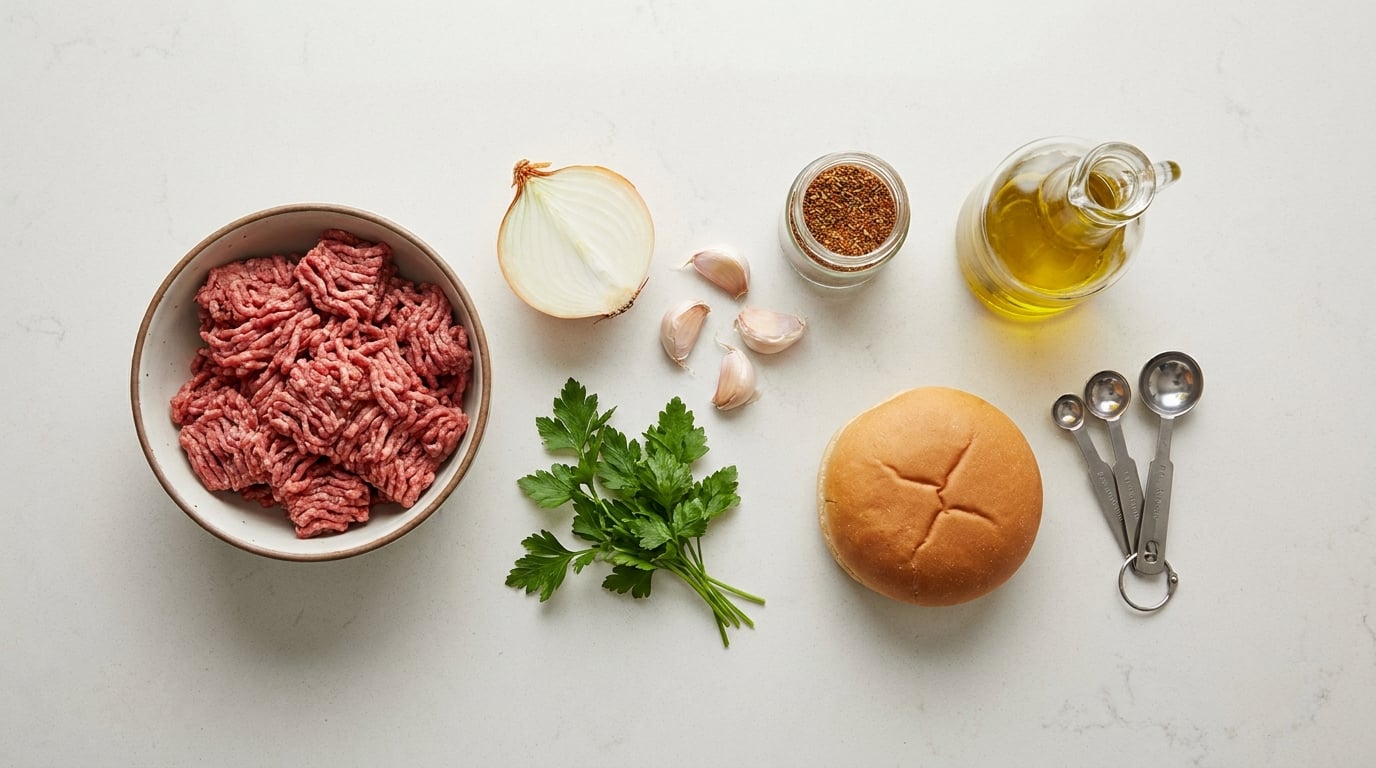
Learning how to make low sodium burgers that still taste good comes down to four flavor layers instead of one: dried spices, acid, umami boosters, and fat. A plain beef patty is already low in sodium, so you can skip the added salt and rebuild flavor with garlic powder, smoked paprika, mustard or vinegar, mushroom powder, and a tablespoon of olive oil worked into the meat.
That last part matters more than most recipes admit. Remove the salt and the fat at the same time and you get a dry, boring patty. Keep one of them and you keep a burger that people actually want to eat.
Updated October 2026. Everything here is general cooking and label information, not medical advice. If sodium is restricted for your heart or kidneys, your doctor or a registered dietitian sets the number you should aim for.
Table of Contents
- What You Need
- Step-by-Step: Making Low Sodium Burgers
- Common Mistakes When Making Low Sodium Burgers
- Frequently Asked Questions
- Can I make low sodium burgers without tasting bland?
- What is the best seasoning for a low sodium burger?
- How do I keep burgers juicy when reducing salt?
- Which burger toppings are naturally low in sodium?
- Can I freeze seasoned burger patties before cooking?
- Do I need to use lean ground beef for a low sodium burger?
What You Need
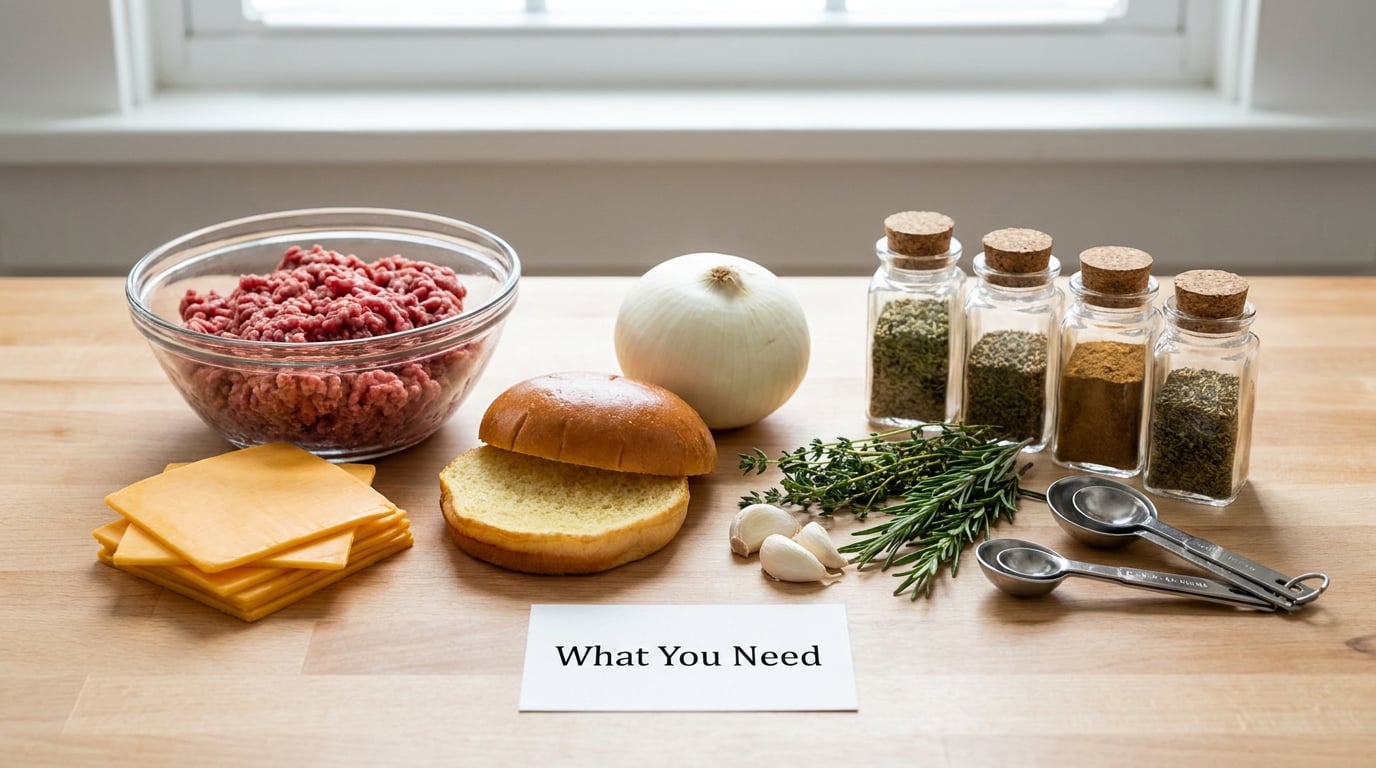
The patty itself is short and cheap to assemble. For four burgers, you need 1 pound of ground beef, 1 tablespoon olive oil, 1 teaspoon garlic powder, 1 teaspoon onion powder, 1 teaspoon smoked paprika, 1/2 teaspoon black pepper, 1 tablespoon Worcestershire sauce or mustard, and 1 teaspoon apple cider vinegar. One egg white is optional and helps a lean patty hold together.
That is the base formula. It lands around 200 mg sodium for all four patties, most of it from the Worcestershire sauce, which is why the reduced-sodium version matters here more than anywhere else.
Optional flavor boosters
These are the extras that keep a low sodium burger from tasting like a diet plate. Add any two or three:
- 1 tablespoon unsalted tomato paste for a sweet, deep savoriness that reads as meaty
- 1 teaspoon mushroom powder, the single most useful umami booster in a low-sodium kitchen
- 1 teaspoon nutritional yeast for a faint cheesy note that costs almost nothing on the label
- 2 teaspoons finely chopped fresh parsley or cilantro mixed in raw, so the herb flavor survives cooking
- 1 teaspoon maple syrup or brown sugar, optional, to round out the paprika
Skip the Worcestershire if you add tomato paste. Two salty-savoriness boosters in the same patty is the usual reason a low sodium burger tastes salty and nobody can say why.
Tools
A digital thermometer matters more than any gadget here, because ground meat has no color cue. A 12-inch cast iron skillet or a grill pan with a heavy base gives you the crust that makes a burger taste like a burger. A metal spatula, a plate for resting, and parchment paper for the oven method round it out. That is the whole kit.
Step-by-Step: Making Low Sodium Burgers
Step 1: Choose a Lower-Sodium Starting Point
A plain patty carries very little sodium on its own, which is the fact most low sodium burger recipes leave out. Naturally occurring sodium in raw ground beef runs roughly 60 to 90 mg for a 4-ounce cooked serving. The bun, the cheese, and the condiments are where a burger quietly collects several hundred more.
One home cook on r/LowSodium put a number on it: a seasoned bison patty came to about 88 mg of sodium on its own, then about 345 mg once a bun and a slice of Swiss cheese went on. Same patty, roughly four times the sodium, and the extra had nothing to do with the meat.
Here is where the sodium in a typical burger actually sits. Figures are typical label values for standard serving sizes, and your brand will differ, so read the panel.
| Component | Typical sodium | Lower-sodium version |
|---|---|---|
| Plain cooked patty, 4 oz | 60 to 90 mg | No change needed |
| Standard American cheese, 1 slice | around 300 mg | Low-sodium Swiss, about 15 mg per slice |
| Standard hamburger bun | 200 to 350 mg | Lettuce or cabbage leaf wrap, under 20 mg |
| Ketchup, 2 Tbsp | around 300 mg | Reduced-sodium ketchup, or a homemade vinegar-mustard sauce |
| Regular Worcestershire sauce, 1 Tbsp | around 200 mg | Low-sodium Worcestershire, around 50 mg |
| Mustard, 2 Tbsp | around 200 mg | No-salt mustard, usually under 10 mg |
| Sweet pickles, 5 slices | around 200 mg | Fresh cucumber and a squeeze of lemon |
| Grilled onions cooked in butter | around 100 mg | Onions cooked in olive oil or the rendered beef fat |
Read the label before you buy, because the terms are defined and people mix them up constantly.
- Low-sodium means 140 mg or less sodium per serving. That is an FDA definition, and a low-sodium bun still carries more than most people assume.
- Reduced-sodium means at least 25 percent less sodium than the standard version. Useful, but a 25 percent cut on a 400 mg sauce still leaves 300 mg.
- No-salt-added means no salt was added during processing. Naturally occurring sodium is still there, and the product is not automatically low-sodium.
- Sodium-free means under 5 mg per serving. Rare in the condiment aisle.
For the meat, choose plain ground beef with no added salt and no added solutions such as sodium triphosphate, which you will see listed as a thickener. Regular 80/20 keeps more fat in the patty and stays juicier on its own. Lean 90/10 works if you are using the olive oil trick, and extra lean works if you are not.
Step 2: Build Flavor Without Heavy Salt
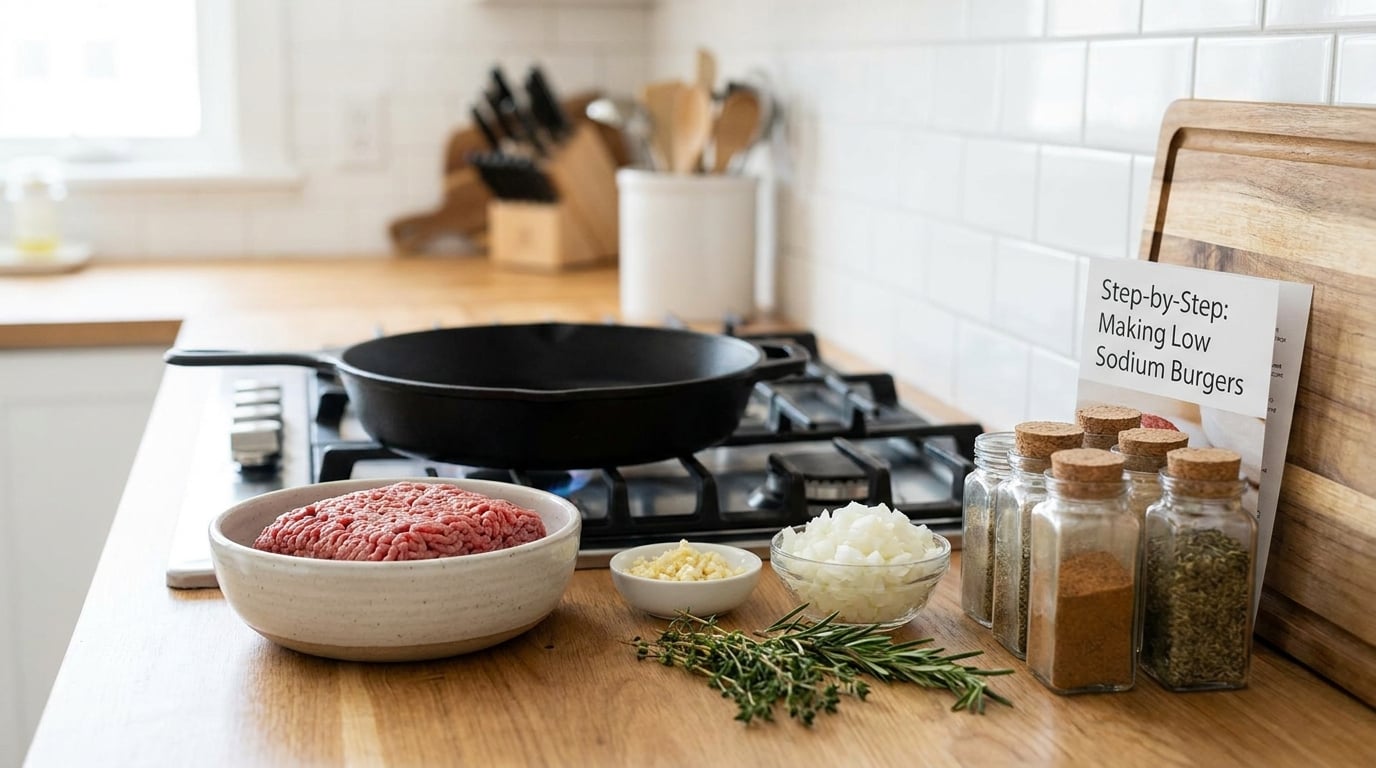
Work per pound of meat, never per burger, so the ratio stays right when you scale up. For 1 pound of ground beef: 1 tablespoon olive oil, 1 teaspoon garlic powder, 1 teaspoon onion powder, 1 teaspoon smoked paprika, 1/2 teaspoon coarsely ground black pepper, 1 tablespoon low-sodium Worcestershire sauce, 1 teaspoon apple cider vinegar, and 1 egg white if the meat is leaner than 80/20.
Each part does one job. The spices give warmth and depth, the acid makes the sharpness your tongue expects from salt, the Worcestershire brings fermented savoriness, the oil carries flavor into a lean patty and keeps it juicy, and the egg white binds without adding sodium. A reader on the Big Man’s World comment thread described her own working formula as fresh herbs plus paprika plus an egg white plus stock powder, which is very close to the same thing.
Step 3: Mix and Shape the Burgers
Add the oil and seasonings to the cold meat and mix with your fingertips until you just see streaks, not a uniform paste. Overmixing tightens the protein and the patty turns out dense and bouncy.
Divide into four equal balls, then press each into a patty about 3/4 inch thick, roughly the width of the bun. Make a shallow indentation in the center with your thumb. The indent stops the patty from doming up as it cooks, which is why every restaurant patty has it.
Let the shaped patties chill for 10 minutes if you have time. Cold meat sears instead of steaming, and that sear is most of the flavor you are trying to build without salt.
Step 4: Cook the Burgers Safely
Heat a heavy skillet or grill pan over medium-high heat and add a thin film of olive oil. Cook the patties undisturbed for 3 to 4 minutes per side, pressing once with the spatula for a flat sear. Use the oven for the last few minutes if the center is still not cooked through.
Ground meat must reach 160F internal, and ground poultry 165F. A probe thermometer in the thickest part is the only reliable check, so take the burgers off the heat slightly before you think they are done. It keeps cooking off the burner.
The oven method is easiest for a batch: 400F for 15 to 18 minutes on a foil-lined sheet, flipped once. Air fryer works too at 400F for 8 to 10 minutes at full patty thickness. Avoid deep frying, which needs salt and fat to work.
Rest the patties for 3 to 5 minutes on a plate. Resting is not a serving formality here, it is how the juices stay in the meat instead of running onto the board, and dry patties are the most common complaint in every low sodium burger comment thread.
Step 5: Add Sodium-Conscious Toppings
Build the burger in this order: sauce on the bottom bun, then the patty, then cheese if you are using it, then the wet toppings, then the crunch. It keeps the bun from going soggy and lets you taste each layer.
- Wrapper: a lettuce or cabbage leaf instead of a bun, which removes 200 to 350 mg sodium in one move
- Cheese: low-sodium Swiss at about 15 mg per slice, or skip it and rely on extra smoked paprika for the savory note
- Fresh toppings: tomato, red onion, shredded lettuce, cucumber, avocado, all under 20 mg per serving
- Pickles: fresh dill pickle spears or a spoonful of pickle brine for that briny hit, with less sodium than sweet bread-and-butter pickles
- Sauce: a homemade mix of no-salt mustard, a splash of apple cider vinegar, a spoonful of reduced-sodium ketchup and a pinch of paprika often beats the jarred version
- Herbs: a handful of fresh parsley or dill on top, added after cooking so it does not wilt
For sides, roasted sweet potato wedges and air-fried fries use no added salt at all, and a slaw dressed with vinegar and olive oil keeps the plate balanced. If you want a crunch with a little edge, salt-free roasted chickpeas work.
Common Mistakes When Making Low Sodium Burgers
The patty comes out bland. Almost always missing acid rather than missing spice. Add a teaspoon of vinegar or a tablespoon of no-salt mustard, taste a raw pinch of the mix, and adjust. Salt is one of five flavor signals, and people cut it and leave the other four alone.
The patty comes out dry. Two causes. You used 93 percent lean meat with nothing else adding fat, or you flipped it five times instead of letting a crust form. A tablespoon of olive oil mixed into the raw meat fixes the first one, and patience fixes the second. Skipping the oil is the single most common self-inflicted wound in this recipe.
The patty falls apart. Not enough binder, or the patties were formed too thin. Add an egg white to the next batch, keep them 3/4 inch thick, and chill them 10 minutes before the pan.
The burger tastes salty anyway. The meat is innocent. Check the bun, the cheese, the pickles and the sauce one at a time, and you will almost always find it in the condiments, which is where four-fifths of a burger’s sodium usually lives.
Watery juices flood the plate. You flipped the patty too early or opened the pan repeatedly while it seared. Each opening drops the pan temperature, the meat releases water, and no amount of resting brings it back.
Uneven cooking. Patties of different sizes cook at different rates. Weigh them if you can, or make all four before you start the pan rather than shaping the last one while the first one cooks.
Frequently Asked Questions
Can I make low sodium burgers without tasting bland?
Yes, and the trick is to replace salt with several other flavor signals instead of just cutting it. Use dried spices for warmth, an acid such as vinegar, mustard or lemon for brightness, an umami booster such as mushroom powder or tomato paste for savoriness, and a tablespoon of olive oil in the patty for richness. For a pound of beef, that is 1 tsp each garlic powder, onion powder and smoked paprika, 1/2 tsp black pepper, 1 Tbsp low-sodium Worcestershire and 1 tsp apple cider vinegar. Taste the raw mixture before cooking and adjust the acid first.
What is the best seasoning for a low sodium burger?
Garlic powder, onion powder and smoked paprika form the base, with black pepper for heat. Per pound of ground beef use 1 tsp each of the three powders, 1/2 tsp black pepper, 1 Tbsp low-sodium Worcestershire sauce and 1 tsp apple cider vinegar. Many home cooks simply swap in a no-salt steak seasoning for the same purpose. Add 1 tsp mushroom powder or 1 Tbsp unsalted tomato paste if the burger still tastes flat once cooked. Skip the salt entirely rather than using a reduced amount; the other flavors need to be strong enough to stand alone.
How do I keep burgers juicy when reducing salt?
Do not cut fat and salt at the same time. Add 1 tablespoon of olive oil to the raw meat and mix it in before shaping, and lean ground beef stays tender even at 90 percent lean. Use 80/20 meat if you would rather not add oil at all. A second trick is a small amount of acid, which makes the mouth water and sells juiciness. Third, press a shallow indentation in the center of each patty so it does not dome, then rest the cooked burger for 3 to 5 minutes before serving so the juices stay in the meat.
Which burger toppings are naturally low in sodium?
Fresh vegetables carry very little sodium: lettuce, tomato, red onion, cucumber, shredded cabbage, bell pepper, mushrooms and avocado are all well under 20 mg per serving. Fresh herbs like parsley, dill and cilantro add aroma for almost nothing. A lemon wedge or a splash of vinegar adds brightness with no sodium at all. A lettuce or cabbage leaf wrap replaces a 200 to 350 mg bun with under 20 mg. The toppings to watch are the briny and processed ones: sweet pickles, olives, bacon, and pre-seasoned or cured meats.
Can I freeze seasoned burger patties before cooking?
Yes, and it is the easiest way to keep a low sodium household stocked. Freeze raw patties after shaping, before cooking, on a tray until solid, then move them to a freezer bag with parchment between the layers. They keep for three to four months at zero. Cook from frozen on a skillet or grill pan at medium heat, giving each side about 5 minutes, or thaw in the refrigerator overnight if you have the time. Thaw them in the refrigerator rather than on the counter, and never refreeze a burger that has been fully thawed.
Do I need to use lean ground beef for a low sodium burger?
No. Lean meat affects fat, not sodium, and all plain ground beef is naturally low in sodium, roughly 60 to 90 mg per 4-ounce cooked serving. Regular 80/20 is often the better choice because the fat keeps the patty juicy once you have removed the added salt. Lean 90/10 works well if you mix in a tablespoon of olive oil. Ground turkey and chicken are leaner, but check the label because many are injected with a sodium-containing solution for moisture. Bison and 93 percent lean beef are the driest, so both need the olive oil method.
Start with the patty: 1 pound of 80/20 ground beef, a tablespoon of olive oil, and the spice and acid mix above, shaped and chilled while you set out the rest. Then swap the bun for a lettuce leaf and the American cheese for low-sodium Swiss. Those two changes take more sodium out of the burger than anything you can do to the meat, and you keep the stack, the sear, and the whole experience.