
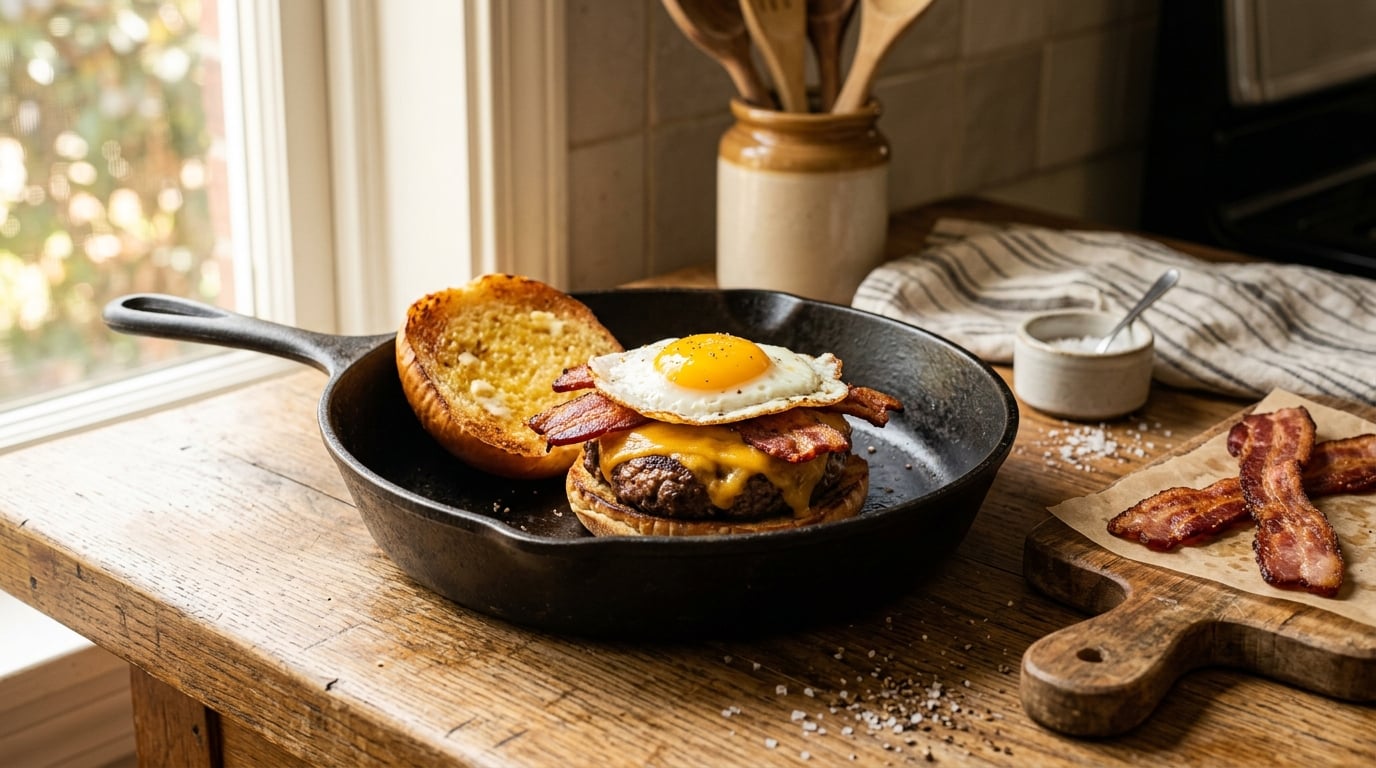
A burger breakfast sandwich is a seasoned beef patty cooked on a hot griddle or skillet, stacked on a toasted bun with a fried egg, crisp bacon and melted cheese. The whole thing comes together in one pan in about 20 minutes, and the only real technique is deciding what to cook first so nothing goes cold or soggy before you take the first bite.
What makes a burger a breakfast burger is the topping list, not the patty. Take the four things that define a cooked English breakfast, fried egg, bacon or sausage, hot buttered bread, and something sharp or salty on top, and stack them on a seared beef patty in a bun. Sear the patty the way you would for a lunch burger and the result tastes like brunch, not like a burger that got lost in the morning.
I make these on weekend mornings when I want something that feeds four without standing at the stove for an hour. The first time I tried it, I cooked the patties first, then the eggs, and by assembly time the buns had gone soft and the eggs were cold middles. Cooking in reverse order fixed it. Do the same and the sandwich is still warm ten minutes later.
What You Need
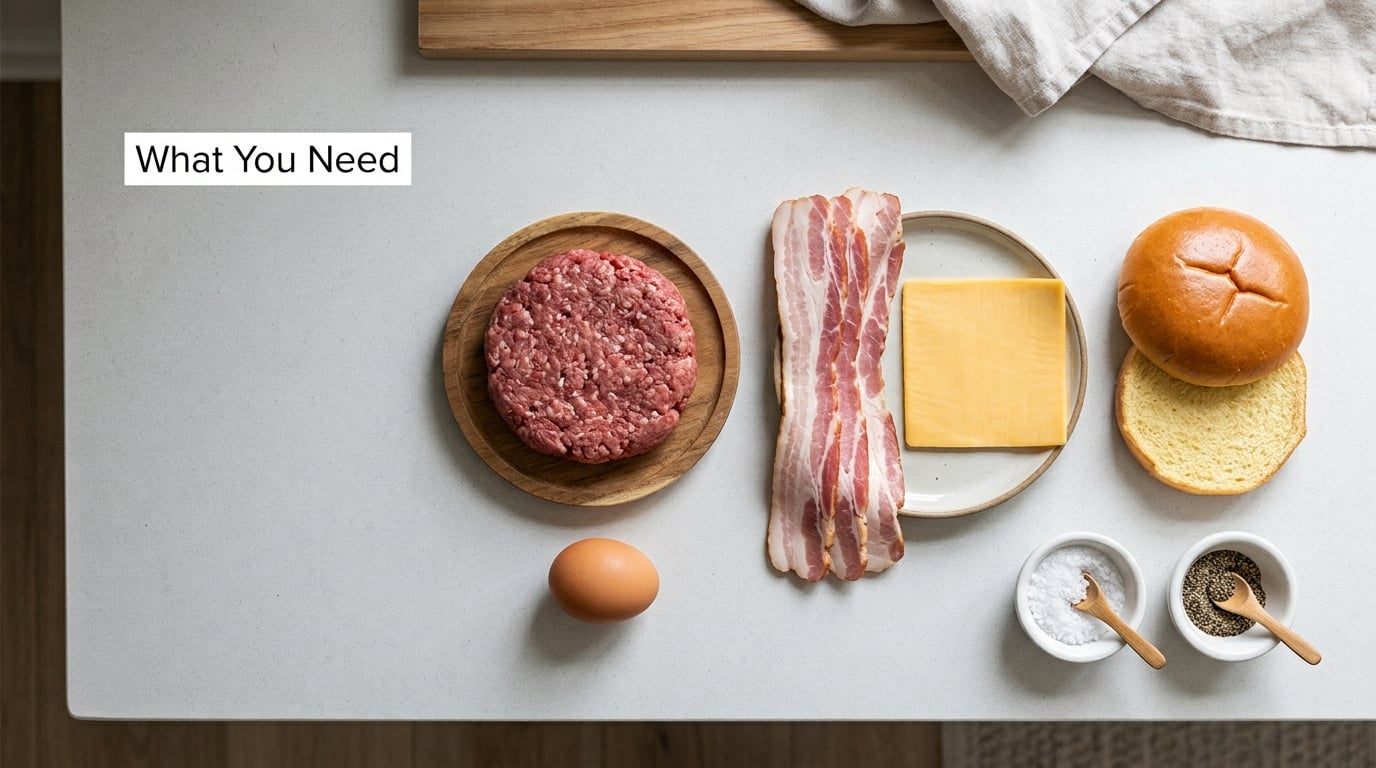
For a single burger breakfast sandwich you need a bun, 4 ounces of ground beef, one egg, one slice of cheese, two strips of bacon, butter, salt, pepper and a sauce you actually like. The sauce is what turns a decent sandwich into one people ask about, and it takes ten seconds to mix.
To make four, multiply everything by four and work in two batches. A crowded griddle drops the temperature and steams the patties, and a steamed patty never crusts. Two patties at a time on a home griddle, four in a wide skillet if it will hold them.
Bun: brioche is the sweet spot, sturdy enough for a tall stack and toasts to a golden crumb. An English muffin makes a lighter, less tall build, a bagel holds up best if you are doubling the patties, and a plain biscuit is the Southern answer if that is the tradition you grew up with. Sourdough works too and adds tang that cuts the richness of the patty.
Beef: 80/20 ground chuck gives you the best sear and enough fat to keep a thin patty juicy. Lean ground beef is fine, but it dries out faster, so a double stack or a cheese layer matters more. Loosen it with a pinch of salt and a tablespoon of water, then form 4-ounce patties slightly wider than your bun, since beef shrinks about 20 percent as it cooks.
Breakfast meat: bacon gives you the best flavor, thick-cut and cooked on a cool start so it renders instead of burns. Breakfast sausage patties work but need more seasoning than you think, since they are already salted. Ham is the fast option, and a vegetarian patty or thick grilled tomato and mushroom layer works if you are skipping meat.
Cheese: sharp cheddar is the classic and the most reliable melt, American is the kid-friendly pick and melts best for a kid’s plate, and pepper jack or a mild gouda adds a little more character. One slice per patty is enough, two if you are doubling.
Sauce and seasoning: salt, black pepper, garlic powder and a pinch of paprika for the patty. For the sauce, mayo, a squeeze of yellow mustard and a dash of hot sauce takes fifteen seconds and beats plain mayo every time.
Step-by-Step
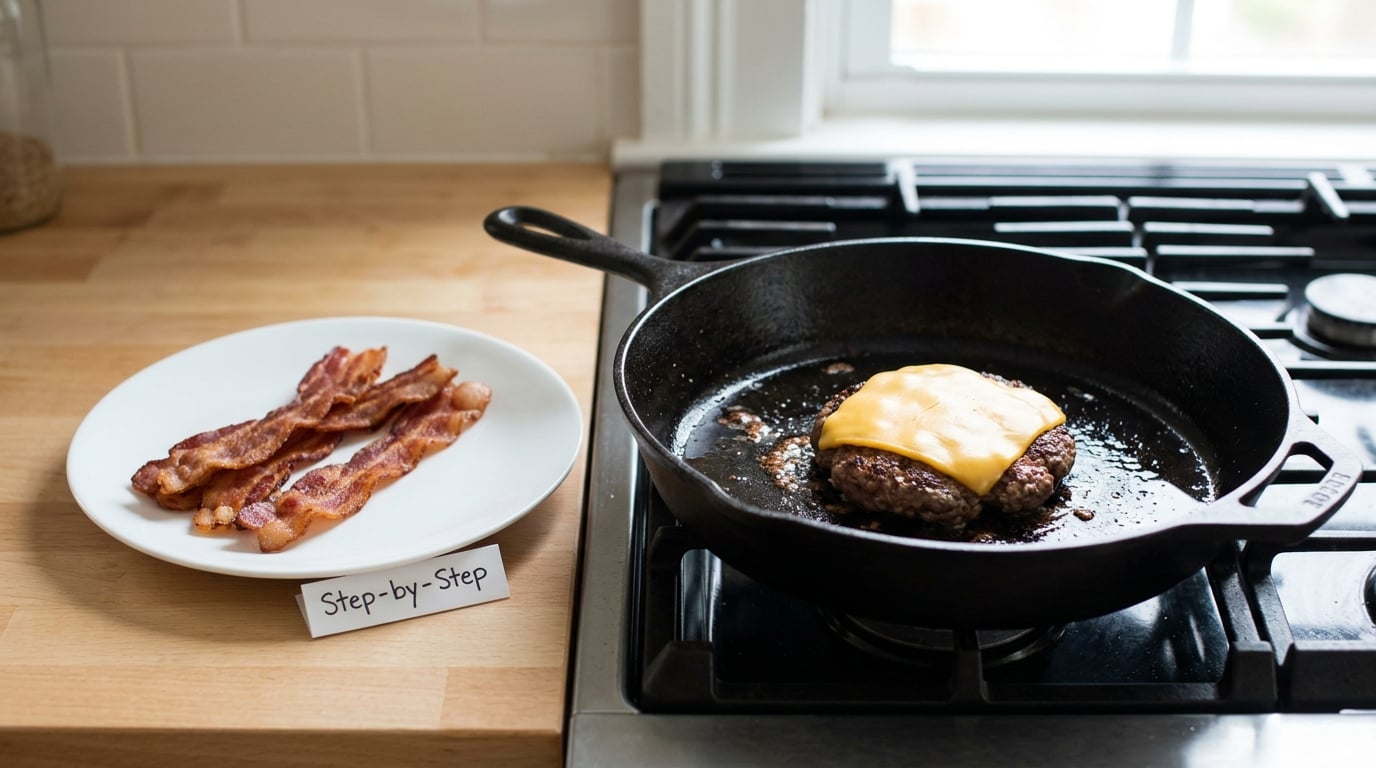
How to make a burger breakfast sandwich step by step, in the order that keeps every layer hot. Set up everything first, then move fast. The order is: toast and dress the buns, crisp the bacon, fry the eggs, sear the patties, melt the cheese, assemble.
Cook the beef patty
- Season 4 ounces of 80/20 ground beef with salt, black pepper and garlic powder, then shape it into a patty about one inch wider than your bun.
- Heat a cast iron skillet or griddle over medium-high heat until a drop of water sizzles and evaporates in a couple of seconds, roughly 400 to 450 F.
- Set the patty down and press it flat for 10 seconds, then leave it alone. Resist flipping it more than once so the crust can form.
- Cook 2 to 3 minutes per side for medium, or use a thermometer and pull it at 160 F for food safety, since ground beef must reach that internal temperature.
- Add the cheese in the last 30 seconds, drape it over the patty, and cover the pan for 15 seconds so it melts evenly.
Crisp the bacon or breakfast meat
- Cook bacon in a cold skillet over medium heat so the fat renders slowly, turning often, until the edges are deeply browned and the fat has cooked out, about 6 to 8 minutes.
- Drain it on a paper towel or a rack rather than a plate, since trapped steam softens the edges you just worked for.
- For sausage patties, brown them in the same pan at medium heat for about 4 minutes a side, and taste before adding salt.
Add the egg
- Lower the pan heat to medium and wipe out the extra bacon fat, leaving just a thin film so the egg does not fry away from the meat flavor.
- Crack in the egg and cook until the white is fully set, about 2 to 3 minutes, flipping once for over hard or spooning hot fat over the top for over easy.
- Salt the egg right before it goes in the sandwich, not before it goes in the pan.
Melt the cheese and assemble the sandwich
- Toast the cut side of both bun halves in buttered skillet residue, about 30 seconds a side, and spread the sauce on the cut faces immediately so it does not soak through.
- Stack from the bottom up: sauced bun, patty with melted cheese, egg, bacon, then any crunch you want like hash browns or caramelized onion.
- Put the top bun on last and press gently for a few seconds so the stack holds together instead of splitting apart halfway through the second half.
Toast the bun and serve
- Serve immediately while the cheese is still running and the bun bottom is crisp. If you have to hold it for more than a few minutes, leave the top bun off so steam does not soften the crust.
- Cut in half with a serrated knife so the knife does not drag the patty out of the sandwich.
One note on the 5-6-7 burger doneness rule, since it comes up constantly: it is 5 minutes per side for rare, 6 for medium, and 7 for well done. It is a rough timing guide for a thick grill patty, not a rule for a thin breakfast patty. A 4-ounce patty on a hot griddle hits medium well before minute three, so use a thermometer rather than the clock.
Common Mistakes
Almost every bad breakfast burger comes down to heat management or assembly order. The good news is that both are easy to fix once you know what went wrong.
Patty falls apart in the pan. You flipped it too early or pressed it too hard after it started cooking. Let it sit for 2 full minutes before the first flip, and use a thin spatula slid under the edge rather than a thick one that scoops.
Bun goes soggy. Sauce went on too early, or the bottom bun sat under a wet patty and egg. Toast the buns last, sauce them right before assembly, and put hash browns between the meat and the bun to create a moisture barrier.
Egg turns rubbery. It was cooked over high heat or overcooked before it left the pan. Medium heat and 2 to 3 minutes is the range, and taking it out while the yolk still looks underdone means it finishes in the sandwich.
Cheese comes out cool and stiff. It went on after the patty sat. Put the cheese on during the last 30 seconds of cooking and cover the pan, or set the assembled sandwiches under a low broiler for 60 seconds.
Sandwich falls apart when you pick it up. Too tall, too wet, or the patty is too thick. Halve the patty into two thin patties, or use a thicker bun, and keep the sauce on the top-facing cut surface rather than the bottom one.
Should you mix egg into the patty like you do for a meatball? Not for this sandwich. Egg works as a binder in meatball mixtures because it is mixed through raw meat and cooked gently for a long time. A breakfast patty sears hard and fast in a thin layer, and the egg in the mix scrunches into a rubbery texture instead of staying tender. Season the beef and keep the egg where it belongs, on top, where you get the texture you actually wanted.
Frequently Asked Questions
What is the best bun for a breakfast burger?
A brioche bun is the safest pick because it is tall, sturdy and sweet enough to balance a salty patty. An English muffin gives you a lighter, less tall build that is easier to eat, a bagel holds up best when you are doubling the patties, and a buttered biscuit wins if you want the full Southern version. Whatever you choose, toast the cut face in butter for 30 seconds before assembly.
Should I make the egg sunny-side up, over easy, or fully set?
Over easy is the best all-around choice for a breakfast burger. The set white holds the sandwich together and the runny yolk becomes its own sauce, so you need less of the spread. Sunny-side up works but the yolk breaks the moment you cut in. Fully set is the pick for kids or for anyone who prefers every bite to taste the same. Season the egg right before it goes in the sandwich.
What is the 5-6-7 rule for burgers?
It is a timing shortcut: 5 minutes per side for rare, 6 for medium, and 7 for well done. It assumes a thick patty on a moderate grill. A 4-ounce breakfast patty on a hot griddle reaches medium in well under three minutes per side, so treat the rule as a starting point and confirm with a thermometer. Ground beef should reach 160 F internally.
Do you mix egg with ground beef for burgers?
No, not for a breakfast burger. Egg is a binder in meatball and meatloaf mixtures, which cook gently and slowly. A breakfast patty sears fast in a thin layer, and mixed-in egg turns rubbery against that heat. Keep the beef seasoned with salt, pepper and garlic powder, and cook the egg separately so you control its texture.
Can I make breakfast sandwiches ahead of time?
Yes, and the trick is splitting the work. Cook the patties and crisp the bacon up to three days ahead and refrigerate them separately from the buns, which go stale within a day. Store the buns at room temperature and toast them fresh. Cook the eggs the morning you serve, since a fried egg does not reheat well. Reheat patties in a skillet over medium for 2 minutes a side.
What can I use instead of beef patties?
A breakfast sausage patty is the closest swap, though it needs no extra salt. A turkey or chicken patty works with added salt and pepper since lean poultry dries out, and a black bean and oat patty holds up well with cheese and a fried egg on top. A thick slice of grilled tomato and mushrooms works too, and the egg and bacon do most of the work of the flavor.
Conclusion
The whole method comes down to one rule: cook in reverse order of assembly. Toast and sauce the buns, crisp the bacon, fry the eggs, then sear the patties and melt the cheese last, then stack and eat while it is hot. Get that order right and a burger breakfast sandwich stops being a pile of good ingredients and starts tasting like the brunch place you were hoping to drive to.
If you only try two variations, make one with sharp cheddar and a runny over-easy egg, and one with a double patty plus a layer of crisp hash browns between the meat and the bun. Between them you will find out which version becomes your regular.