
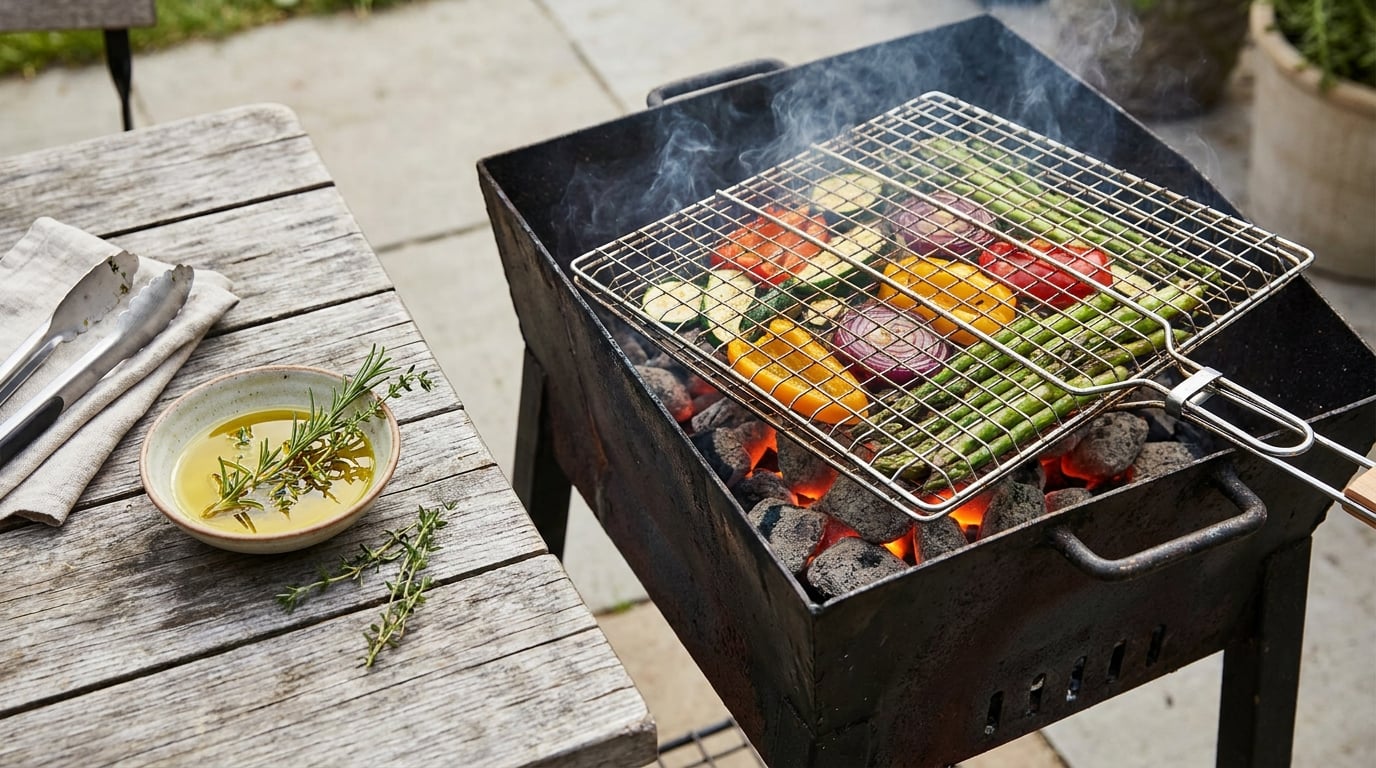
Grilled vegetables are vegetables cut into similar-sized pieces, tossed in oil, seasoned, and cooked over medium-high direct heat until lightly charred and tender. To make grilled vegetables for a burger night, start with sturdy options like bell peppers, red onion, zucchini, mushrooms, corn, and asparagus, then give them 8 to 12 minutes on the grate.
That is the whole trick. Vegetable grilling is not complicated, it is just easy to do badly in three specific ways: crowding the grate, loading up on oil too late, and putting thin slices down over dripping beef fat. Fix those and the veg comes out the same time your patties do.
On a weeknight I usually fire the grill, get a coffee going, and use the 20 minutes of burner time to cut everything into roughly the same size. Uniform cuts are the difference between a plate where nine of ten pieces are perfect and one that is half burnt zucchini.
Table of Contents
- What You Need
- Step-by-Step
- Common Mistakes
- Grill Methods: Skewers vs Basket vs Foil vs Cast Iron
- Timing Your Vegetables Around the Patties
- Frequently Asked Questions
- What vegetables are best for grilling with burgers?
- Can I make grilled vegetables ahead of time for a burger night?
- How do I keep vegetables from getting soggy on the grill?
- Should I use a grill pan or grate for grilled vegetables?
- How long should I grill zucchini, peppers, eggplant, and mushrooms?
- What toppings go well on grilled vegetables for burgers?
- Conclusion
What You Need
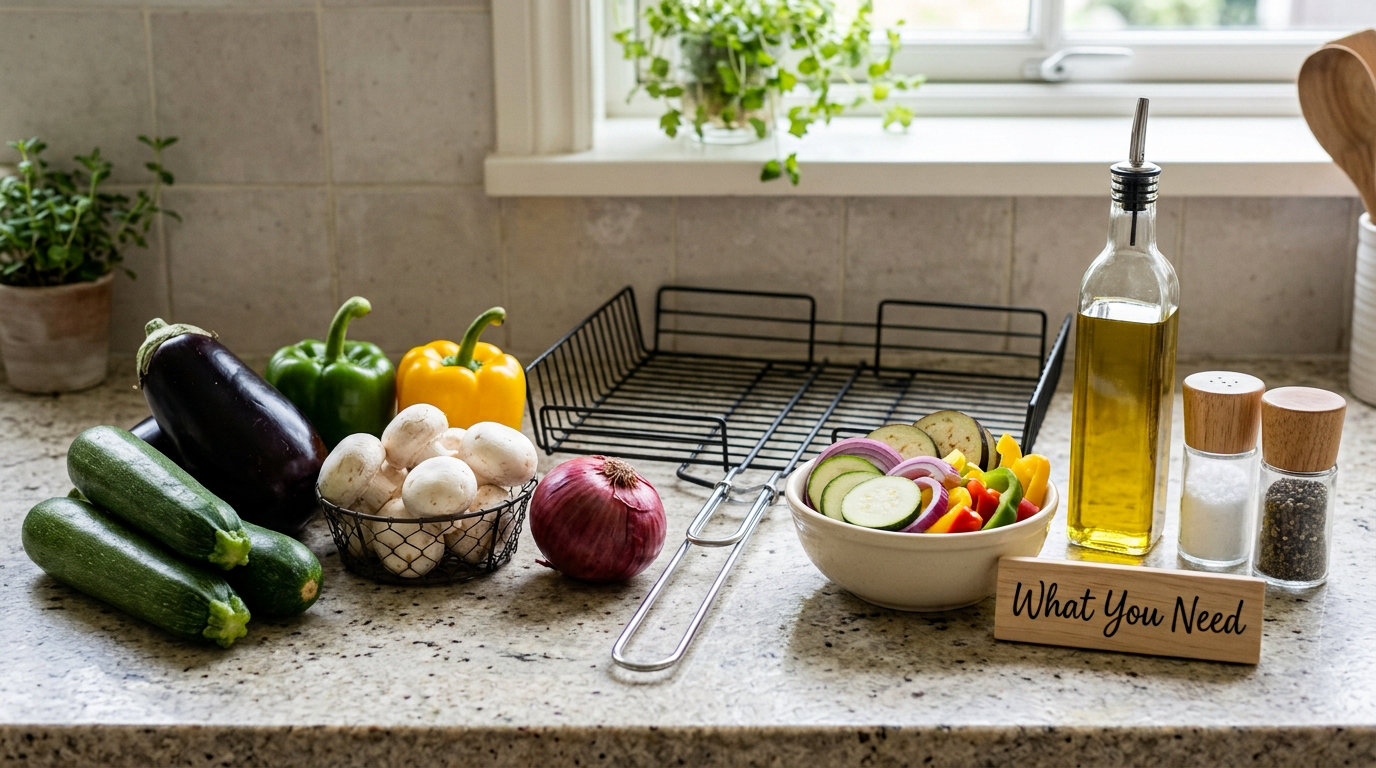
Pick four to six vegetables, no more. A mixed tray tastes better than a single vegetable, but every extra type needs its own cook time, and if you are juggling burgers at the same time, keep the list short.
Vegetables that earn their place on a burger night grill
- Bell peppers — thick 1-inch wedges, red or yellow, with two or three ribs left on. They hold their shape and go sweet and blistered.
- Red onion — cut into 1-inch wedges with the skin still on. The skin keeps the layers from falling apart on the grate.
- Zucchini and yellow squash — half-inch half-moons. These cook fast, so they go on last.
- Cremini or button mushrooms — leave small ones whole, halve the big ones. They need a hot pan or basket and nothing else.
- Fresh corn — cut into 1-inch rounds off the cob, or grill the cobs halved lengthwise for about 12 minutes.
- Asparagus — a whole bunch, woody ends snapped off. Four minutes over direct heat and it is done.
- Eggplant — three-quarter-inch rounds, salted and patted dry first if you have five spare minutes.
Skip anything watery. Fresh tomatoes release liquid and go from grilled to steamed in under a minute, and cucumbers turn to nothing but squeaky skin.
Equipment
A wire grill basket is the single most useful tool here, because it solves both the falling-through-grates problem and the small-piece problem at once. Beyond that you need long tongs, a small bowl for oil, a spray bottle for a fine mist, and either a cast iron grill pan or a sheet pan for the mushrooms.
Oil and seasoning
Use a neutral oil with a high smoke point for the grill surface work, and finish with a good olive oil off the heat. Sea salt, freshly ground black pepper, and garlic powder cover most of it. That is the seasoning, plus whatever fresh herbs you have left over.
For dipping: a bowl of chimichurri, tzatziki, or store-bought pesto. One sauce, not four.
Step-by-Step
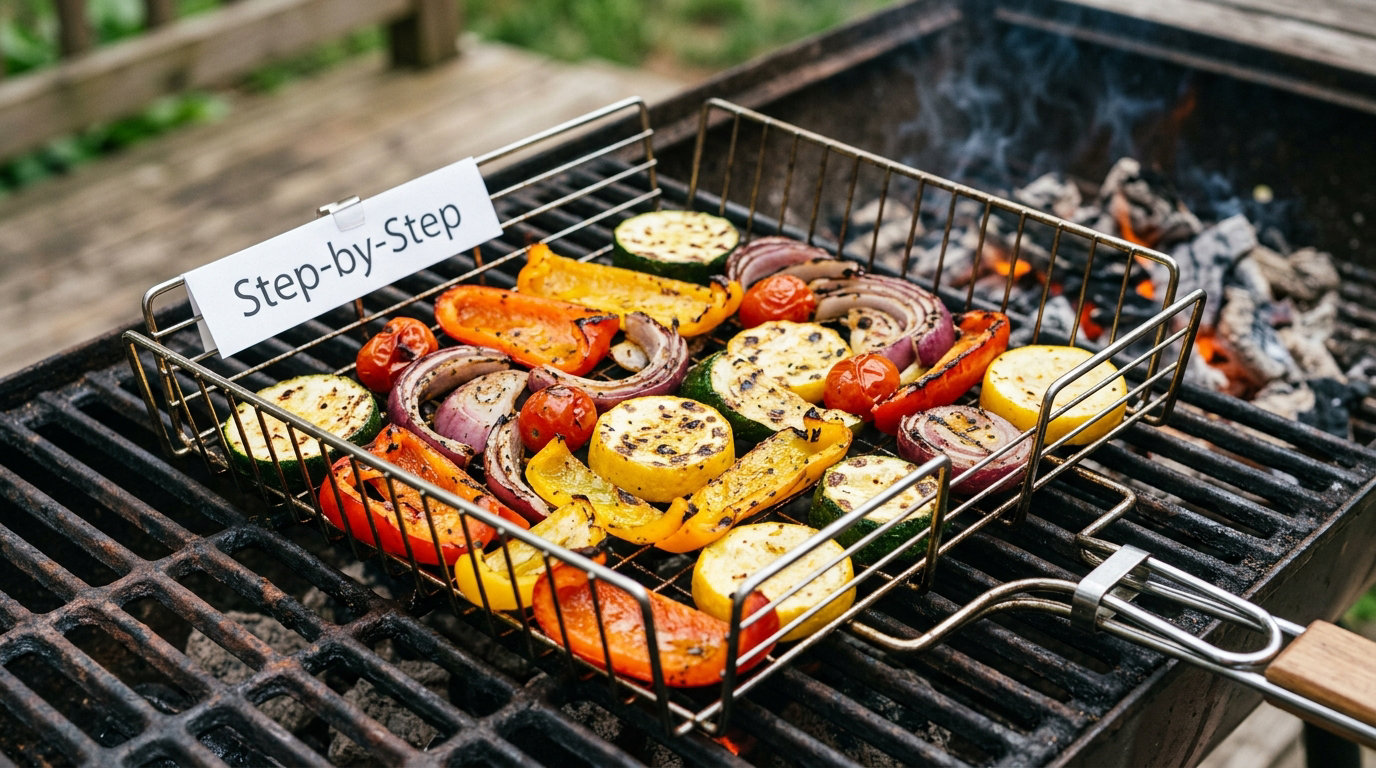
How to Make Grilled Vegetables for Burger Night
Here is the order that matters. Prep everything first, because the moment beef fat hits the coals the clock is running and you cannot chop an onion with tongs in one hand.
- Preheat the grill fully. Medium-high heat means you can hold your hand a few inches above the grate for 5 to 7 seconds. On charcoal that is roughly 10 to 15 minutes with the lid closed. On gas, let the burners run 10 minutes with the lid off. A grill that is not hot yet will steam your vegetables instead of searing them.
- Cut everything to similar sizes. Aim for pieces that are within about a quarter inch of each other. Big chunks survive the grill, thin slices char fast. For a family meal, a one-inch piece is the sweet spot; anything smaller falls through the grates or burns before the center cooks.
- Oil before the grill, not after. Toss the vegetables with 1 to 2 tablespoons of oil per pound and a pinch of salt, right in your biggest bowl. Oil on the surface is what stops peppers and onion sticking and what gives you browning instead of dry heat.
- Start the thick, slow vegetables first. Onion, eggplant, portobello caps, and corn go on over direct heat when the burgers go on. Mushrooms go in the cast iron pan at the same time. Zucchini, squash, peppers, and asparagus wait.
- Keep a clean zone. Push everything to one side of the grate and give the patties their own space, or put the vegetables over indirect heat on one end of the grill. Food touching a vegetable does not get good grill marks, and dripping fat on a zucchini slice burns it black in about 20 seconds.
- Turn once, halfway. No tongs-fiddling, no constant flipping. One turn per side with a flip halfway through gives even char on all four faces. You want grill marks, not stripes.
- Pull at the right moment. Vegetables are done when a fork or skewer slides through with no resistance and the edges are lightly browned, not black. Taste one, adjust the salt, then move it to a warm platter. The sauce and fresh herbs go on off the heat.
How to Choose Vegetables for Burger Night
Cooking times break down by thickness and density, which is more useful than a flat list. Thin, watery vegetables take under 5 minutes per side. Dense ones take 8 to 10 and benefit from a closed lid for the last few minutes.
| Vegetable | Ideal cut | Minutes per side | Best method | Char level |
|---|---|---|---|---|
| Bell pepper | 1-inch wedges | 3 to 4 | Grate or basket | Light, with blistering |
| Red onion | 1-inch wedges, skin on | 8 to 10 | Grate, lid closed at the end | Moderate |
| Zucchini and yellow squash | Half-inch half-moons | 4 to 5 | Grate, spaced apart | Light |
| Cremini mushrooms | Whole or halved | 5 to 7 | Cast iron grill pan | Moderate to deep |
| Eggplant | Three-quarter-inch rounds | 6 to 8 | Grate, well oiled | Moderate |
| Fresh corn | 1-inch rounds or halved cobs | 8 to 10 | Grate or basket | Light to moderate |
| Asparagus | Whole bunch, ends snapped | 4 to 5 | Grate | Light |
| Portobello cap | Whole cap, stem removed | 8 to 10 | Cast iron grill pan | Deep |
For a build-your-own burger bar, split your batch in two. Mushrooms, grilled onion, and peppers go on the patties, where they warm through and soften in the bun. Squash, corn, and asparagus go on a separate plate as a side dish, so they keep their texture.
Mixing raw density on one skewer is the most common mistake on a grill. Corn and mushrooms need ten minutes, asparagus needs five, and a single stick can only finish one way. Use separate skewers, or a basket, and pull each one on its own time.
Seasoning and Serving Ideas
Season twice. Salt and pepper before the grill for seasoning the food itself, then again right off the heat for the flavor you actually taste. A pinch of garlic powder, smoked paprika, or a little chili flake in the oil blend handles the rest.
Off the heat, finish with a drizzle of good olive oil, a squeeze of lemon for zucchini and squash, and fresh herbs that suit the vegetable. Basil and oregano for peppers, dill for zucchini, thyme for mushrooms, parsley for anything charred hard.
For dipping, chimichurri cuts the richness of a burger best, and tzatziki cools a hot pepper. Pesto thinned with a splash of lemon works with almost anything on the tray. Greek dressing does the same job with less work.
Serve it straight from the grill onto a warm platter, not a cold plate, and let people build their own. A tray that goes out to the table keeps coming back; individual plates do not.
Common Mistakes
Almost every disappointing vegetable plate traces back to one of these. The fix is usually a smaller adjustment than you would expect.
- Crowding the grate. Touching vegetables steam each other and never char. Cook in two batches, or spread one layer with real space between the pieces. This is the one that matters most.
- Grilling over dripping beef fat. A flare-up blackens thin slices in seconds. Keep the patties and the vegetables in separate zones, and move the vegetables to indirect heat when a patty goes on for its second side.
- Oiling too late, or not enough. Oil applied on the grate burns off before it seasons anything. Toss in the bowl instead, and use a spray bottle to mist any piece that looks dry halfway through.
- Not preheating. A lukewarm grill cooks vegetables slowly and pulls out water. Give it 10 minutes minimum on gas, 10 to 15 on charcoal, and add a piece of onion to test the heat: it should sizzle immediately, not wait.
- Overcooking mushrooms and peppers. Mushrooms release water, then drink oil, then burn. Get them moving in a hot cast iron pan and pull them at the first sign of browning. Peppers only need a char on the outside, so cut them thick and stop early.
- Letting vegetables sit on the grill after cooking. Carryover heat keeps cooking them. Pull everything at once onto a warm platter and the residual heat finishes the job while you dress the burgers.
- Using wood skewers over direct flame. They burn, and the vegetables slide off. Metal skewers handle heat better, and a grill basket means you can skip skewers entirely.
One more worth naming: smoke. A pellet grill or an over-fired charcoal grill can give vegetables an acrid, bitter taste within minutes, because vegetables absorb smoke faster than meat does. Keep the temperature moderate, keep the lid closed to trap less smoke around the food, and pull the vegetables as soon as they are tender.
Grill Methods: Skewers vs Basket vs Foil vs Cast Iron
Where you put the vegetables matters less than people think, but it does change the result. Each method has a case where it wins, and each has one clear drawback.
| Method | Best for | Pros | Cons |
|---|---|---|---|
| Wire grill basket | Zucchini, peppers, onion, corn, mixed trays | Nothing falls through, easy to shake and turn, one tool for everything | Smaller contact area, so char is lighter than an open grate |
| Metal skewers | Kebabs for serving straight off the fire | Great presentation, portions cook individually | Needs a soak for wood, and each skewer has one cook time |
| Foil packet | Root vegetables, mixed roasts, smoky-free cooking | Holds moisture, no small pieces lost, works on any grill | Smoke does not penetrate the foil, and you get no grill marks |
| Cast iron grill pan | Mushrooms, portobello, small diced vegetables | Highest heat of any method, best browning, keeps pan juices for a sauce | Needs a 10-minute preheat, and it is heavy to lift with full hands |
| Sheet pan on the grate | Feeding six to eight, a large tray of chopped veg | One pan, easy to move, good for a crowd | Soft vegetables sit in their own liquid and never crisp |
Many grillers put vegetables in the cast iron pan rather than a basket, and the argument is easy to understand: a hot pan sears the cut face instead of just the edges, which is what makes a mushroom taste grilled rather than cooked. If you only own one thing, a basket is the more forgiving choice for a mixed tray.
Timing Your Vegetables Around the Patties
Ground beef needs to reach 160°F in the center, and the timing gets much easier once you build the grill around that. Start the burgers over direct heat, and put the thick vegetables on at the same moment.
Flip the patties at four minutes, and add the medium vegetables with them. Mushrooms in the pan, peppers and onion on the grate, squash and asparagus at the six-minute mark. Pull everything from the heat when the patties reach 160°F, then let the burgers rest 5 to 10 minutes while the vegetables finish off the residual heat.
For a group of six to eight, the practical method is a sheet pan: chopped peppers, onion, zucchini, and mushrooms spread on it, drizzled with oil, seasoned, and set on the grate beside the patties. It handles the volume without three more trips to the kitchen.
Grilled vegetables keep three to four days in the fridge in a sealed container. They are good cold in a bun the next day, and reheating them in a hot dry pan for two minutes per side brings back the char that the microwave flattens out.
Frequently Asked Questions
What vegetables are best for grilling with burgers?
Bell peppers, red onion, zucchini or yellow squash, cremini mushrooms, fresh corn, and asparagus are the strongest picks. They are firm enough to hold up over direct heat, they cook in 5 to 10 minutes per side, and their sweetness and char pair well with beef. Cut them to similar sizes so everything finishes together.
Can I make grilled vegetables ahead of time for a burger night?
Yes. Grill them up to two days ahead, refrigerate them in a sealed container, and reheat in a hot dry cast iron pan for two minutes per side. A microwave works but flattens the char, and the pan is what brings it back. Do not reheat in a microwave twice; the vegetables go soft and lose their shape.
How do I keep vegetables from getting soggy on the grill?
Space the pieces out, do not pile them on, and get a real sear first. A crowded grate traps steam between the pieces, and a cool grill adds to it by cooking slowly. Toss everything in oil before it hits the grate, use a basket for small cuts, and pull the vegetables off while the centers are still just tender, not soft.
Should I use a grill pan or grate for grilled vegetables?
Use the open grate for peppers, onions, zucchini, corn, and asparagus, and a cast iron grill pan for mushrooms, portobello caps, and anything small that would fall through. A pan gives you more heat on the cut face and holds the juices for a sauce. A wire basket is the best compromise when you want one method for a whole tray.
How long should I grill zucchini, peppers, eggplant, and mushrooms?
Zucchini and yellow squash take 4 to 5 minutes per side, bell peppers 3 to 4, eggplant 6 to 8, and cremini mushrooms 5 to 7 in a hot pan. One inch is the right thickness for all of them. On medium-high heat, none of these need more than 16 minutes total, so they are easy to time with the patties.
What toppings go well on grilled vegetables for burgers?
Grilled onions and peppers belong right on the patty, and mushrooms go on top with a slice of cheese so the heat softens them. For a side plate, finish with chopped herbs, a drizzle of olive oil, and a lemon wedge. Chimichurri, tzatziki, thinned pesto, or Greek dressing all work as dips for the tray.
Conclusion
Start with a fully preheated grill and a cutting board, not the meat. Cut your vegetables to roughly the same one-inch size, toss them in oil with salt and pepper, and put the thick ones on when the patties go down, saving zucchini and asparagus for the last six minutes. Cook in one uncrowded layer, keep the vegetables clear of dripping fat, and pull everything while the centers are just tender. Grilled vegetables for a burger night are ready before the burgers have finished resting.