
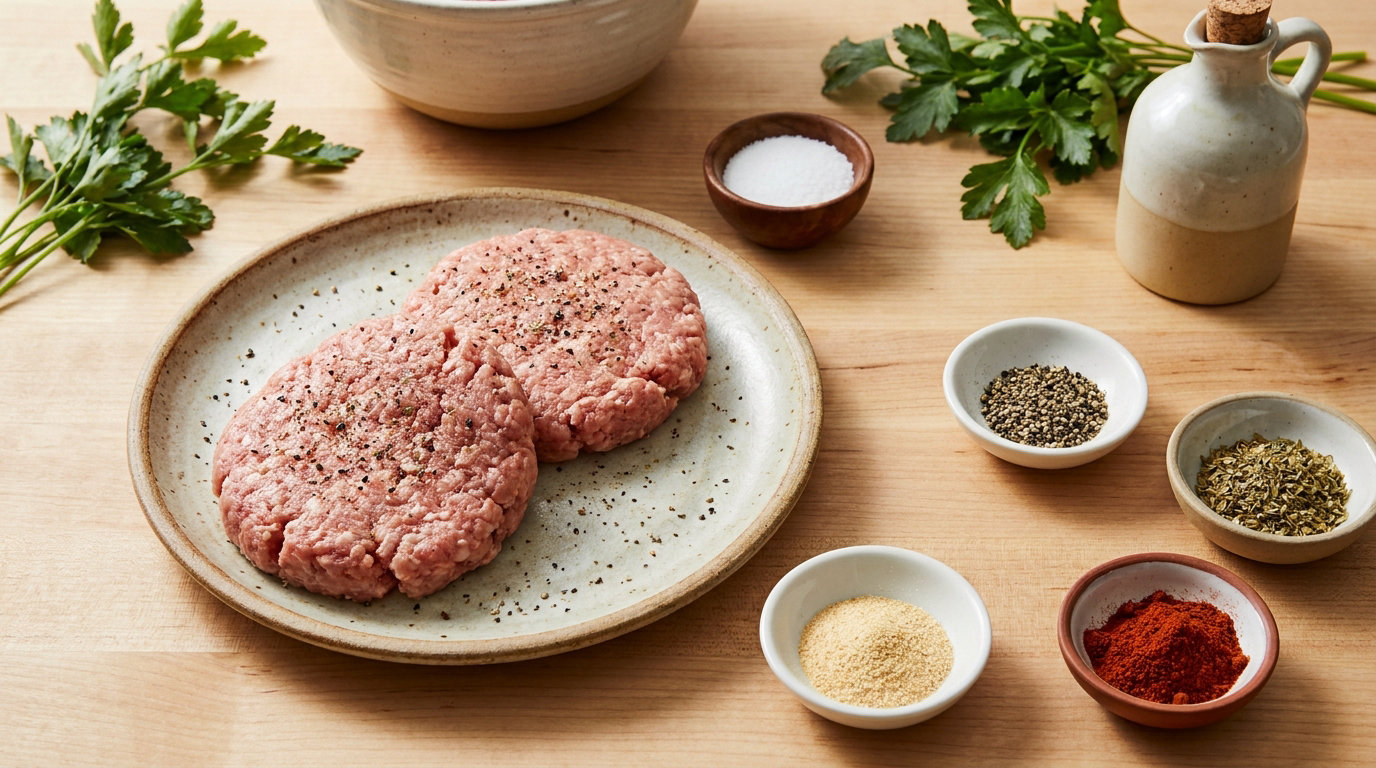
Learning how to season ground turkey for burgers comes down to five things per pound: salt, an umami booster, aromatics, spices, and something wet to bind and hydrate. Mix that blend into the raw meat rather than rubbing it on the patty, rest the bowl for 10 minutes, then cook to 160 degrees F. It takes about 15 minutes of prep and 12 minutes on the grill.
The reason most turkey burgers disappoint has little to do with the seasoning and a lot to do with the meat. Ground turkey is almost pure muscle with no marbling, so it arrives with almost no fat to carry flavor and almost no fat to keep it moist. Beef patties get richness from rendered fat and iron-tasting myoglobin; turkey gives you neither in useful amounts.
That is why store-bought plain turkey burgers taste like drywall. Seasoning is not a garnish here, it is the whole technique. Salt, a salty umami source like Worcestershire or soy, garlic and onion, a warm spice, and one wet ingredient solve nearly every complaint people post about turkey burgers.
Table of Contents
- What You Need
- Step-by-Step: How to Season Ground Turkey for Burgers
- Common Mistakes
- Tips for Juicy Turkey Burgers
- Frequently Asked Questions
- What should you season ground turkey with?
- How do I get ground turkey to stick together for burgers?
- How do I make my ground turkey less dry?
- When should I season ground turkey, before or after forming patties?
- What are common mistakes when making turkey burgers?
- How do I make ground turkey taste like ground hamburger?
What You Need
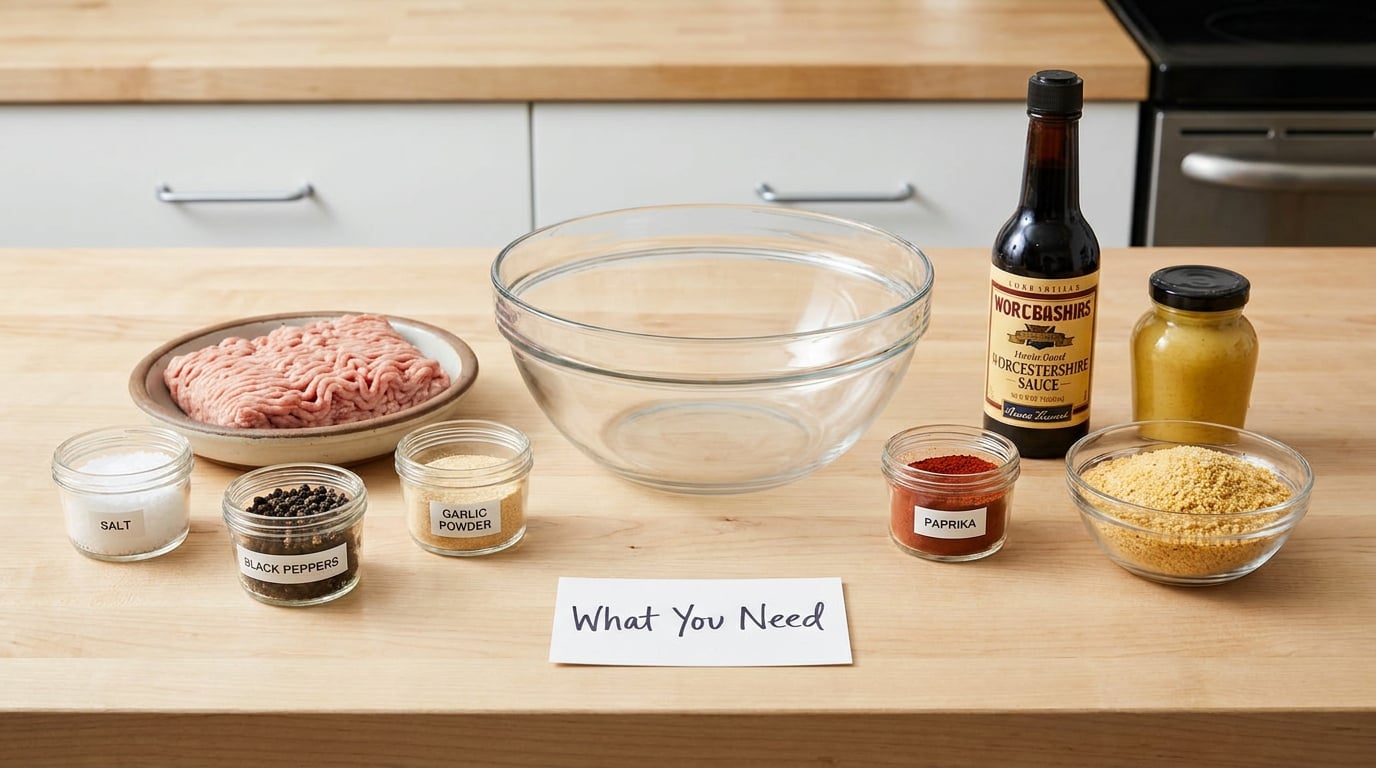
You do not need a long list. Everything below fits in a single bowl and most of it comes from a cabinet you already own.
The core seasonings, per pound of ground turkey
- Kosher salt, 1 to 1.5 teaspoons
- Coarsely ground black pepper, 1 teaspoon
- Garlic powder, 1 teaspoon
- Onion powder, 1 teaspoon
- Smoked paprika, 1 teaspoon
- Worcestershire sauce, 1 tablespoon
- Grated onion, about a quarter cup, squeezed dry
The wet binders and flavor add-ons, optional but effective
- One egg, beaten, for a patty that holds together without effort
- Two to three tablespoons of panko or breadcrumbs
- One tablespoon of Dijon or yellow mustard
- One tablespoon of soy sauce, which replaces part of the salt
- One teaspoon of a fat-based umami powder, optional
Skip the fresh herbs in the raw mix. Parsley, cilantro and basil wilt into green flecks and taste grassy. Add them as a topping after cooking instead.
The tools
A wide bowl, a fork or your hands, a plate or sheet of parchment for shaping, a cast iron skillet or grill, and an instant-read thermometer. The thermometer is the one people skip and then overcook the burger anyway.
One honest note on salt. If you use table salt rather than kosher, cut the amount roughly in half, because table salt packs about twice as much salt into the same teaspoon. This is the single most common reason home turkey burgers taste oversalted before they even taste bland.
Step-by-Step: How to Season Ground Turkey for Burgers
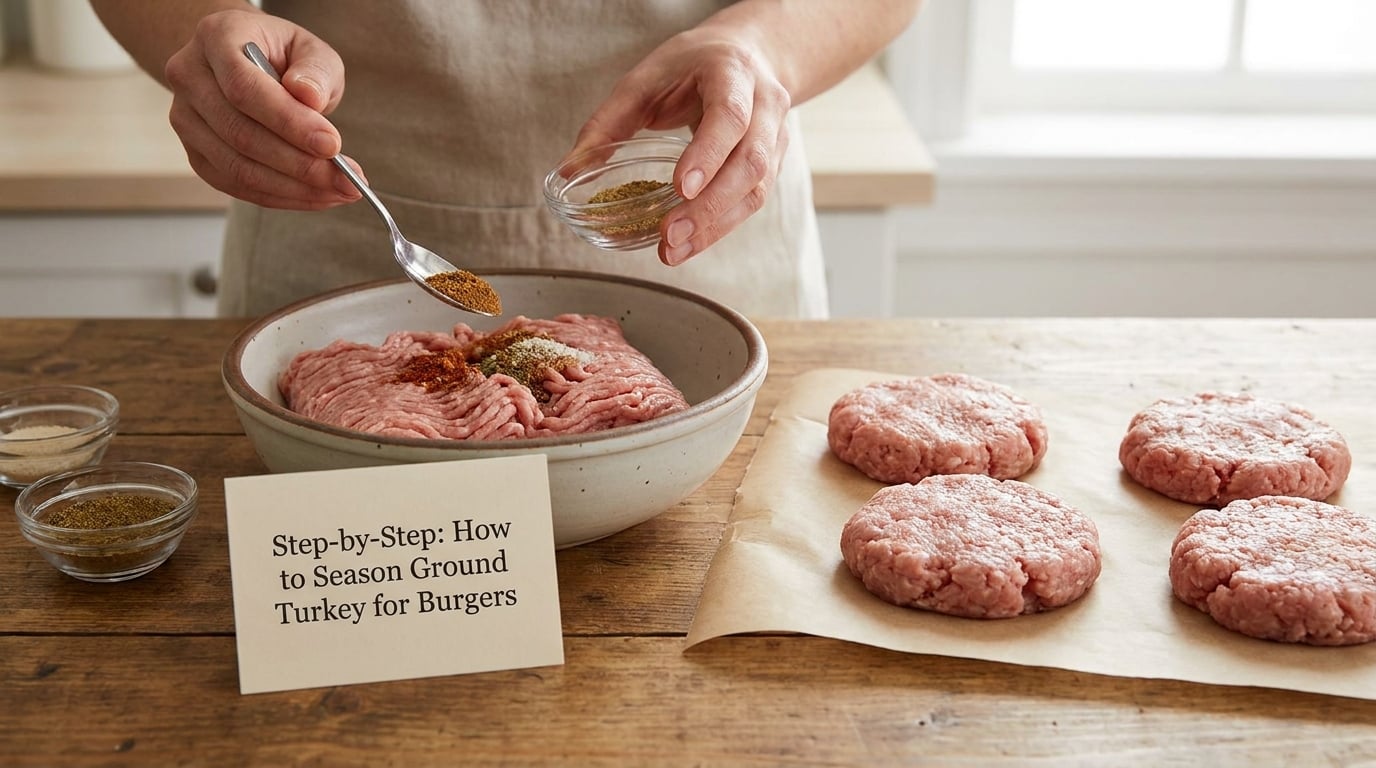
Work in this order and each step sets up the next. Skipping the rest or the chill is where most attempts go sideways.
- Check the package. Look for the lean percentage printed on the tray and note it, because it changes how much binder and moisture you add.
- Break the meat up in a cold bowl. If it was packed tight, work it with a fork until no dense lumps remain.
- Measure the dry seasoning into a small dish first. Mixing it in layers tends to clump, and pre-measuring keeps you honest.
- Add the wet ingredients: Worcestershire or soy, grated onion, egg and mustard if using.
- Mix with your hands until every piece of meat is coated and the color is even, about 30 to 45 seconds. Stop while it still looks slightly uneven.
- Rest the bowl at room temperature for 10 minutes so the salt dissolves and spreads deeper into the meat.
- Divide into 8-ounce portions for a normal burger or 6-ounce portions if you are serving buns that are already large.
- Shape into patties about a half inch thick, press a shallow dimple in the center with your thumb, and chill for 10 minutes if you have time.
- Cook at a high heat until a crust forms, flip once, and pull the patty at 160 degrees F internal temperature.
Choose the Right Turkey Blend
Lean percentage decides almost everything else about your seasoning. Turkey labeled 85% lean is 15% fat and behaves much like a beef patty. At 93% lean you have 7% fat, which is enough to brown well if you do not push it. At 99% lean you have about 1% fat, and that patty needs help to taste like anything.
Cooks on carbon steel often say the same thing about lean turkey: give it a thin coat of bacon fat or a spoonful of oil in the pan so it stops sticking and picks up flavor from the surface. On a grill, a light brush of oil on the grate or the patty does the same job.
If you are stuck with 99% lean, add moisture at the source rather than only at the surface. An egg plus two tablespoons of panko and an extra tablespoon of Worcestershire will move it back toward the 93% result. Mixing a quarter pound of 85% lean into a pound of 99% also works if you are the type who cares about that difference.
Add Salt, Pepper, and Savory Seasoning
Season with more confidence than feels right. Lean meat has no fat to mellow the hit, and the seasoning mellows as the patty cooks and rests under the bun. Start here and adjust next time.
| Ingredient | Per pound of turkey | What it does |
|---|---|---|
| Kosher salt | 1 to 1.5 tsp | Base seasoning and helps the meat hold water |
| Black pepper | 1 tsp | Sharp heat and aroma that survives grilling |
| Garlic powder | 1 tsp | Savory depth without the raw bite of fresh garlic |
| Onion powder | 1 tsp | Sweetness and body, plus a Maillard-friendly surface |
| Smoked paprika | 1 tsp | Color and a hint of campfire |
| Worcestershire sauce | 1 tbsp | Umami and salt in one pour |
| Grated onion, squeezed dry | About 1/4 cup | Water and sugar that keep the patty moist |
If you want to push the savory flavor further, the levers most home cooks use are soy sauce, a fat-based umami powder, and a small amount of fish sauce. Home cooks report that soy sauce plus garlic powder mixed straight into the raw turkey produces the biggest jump in perceived savoriness. Fish sauce works the same way and does not taste fishy once it is mixed in at a tablespoon per pound.
Acid does the opposite job. A teaspoon of Dijon, a splash of rice vinegar, or a little lemon mixed into the raw meat keeps the burger tasting bright and light rather than heavy. Choose one, not all three.
Adjust rather than following blindly. The package lean percentage, the brand of salt you own and the size of your pan all shift the answer, and no table predicts that better than your own palate after one cook.
Mix Without Overworking the Meat
Mixing is the step people rush, and rushed mixing is why some turkey burgers come out dense and bouncy. Thirty to 45 seconds of gentle handling is enough. You want the color even, not the mixture perfectly homogeneous.
If you add panko or breadcrumbs, overworking is worse because mixing develops the gluten in the flour and gives you a springy texture. Fold those in with a light hand at the very end.
Rest the seasoned meat 10 minutes before forming. Salt needs that time to dissolve and migrate, and the small amount of time lets the onion and egg release water into the meat instead of sitting on top of it. Skip the rest and the seasoning tastes layered, with a salty outside and a plain center.
Chilling the formed patties for 10 to 15 minutes helps too. Cold fat firms up, and the patty holds its shape longer on the grill, which means fewer broken burgers.
Shape and Cook the Burgers
Shape 6-ounce patties about a half inch thick and press a shallow dimple in the center with your thumb. The dimple stops the middle from doming up as the outside cooks, and it is a small habit that separates a good turkey burger from a flat one.
For more crust, press the patty thinner, closer to a quarter inch, and cook it fast on a very hot flat surface. That is the smash-burger approach home cooks keep recommending: more contact area means more browned surface per minute.
Cook on a preheated cast iron skillet or a very hot grill. Leave the patty alone for 2 to 3 minutes so a crust forms before you flip, and resist pressing it down. Cook the second side 2 to 3 minutes more, then check with an instant-read thermometer in the thickest part.
The USDA safe minimum internal temperature for ground meat is 160 degrees F. Many turkey burger recipes push to 165 degrees F, and either is safe, but going well past 160 dries the patty and gives it that rubbery chew people complain about. Take it off the heat at 160 and let it rest 2 minutes before serving.
Rest the patty on a warm bun for a minute, not a plate, so the bread soaks up the juices. Seasoning only the outside is the other half of that complaint, which is another reason to mix it into the raw meat.
Common Mistakes
Nearly every disappointing turkey burger traces back to one of five things. Match the symptom to the cause and the fix is usually a small change to next cook.
| Symptom | Likely cause | Fix |
|---|---|---|
| Dry, chewy patty | Cooked past 160 degrees F, or 99% lean with no added moisture | Pull at 160, rest 2 minutes, and add an egg plus grated onion to the raw mix |
| Falls apart on the grill | Not enough binder, or patties formed too loosely | Add one egg and two tablespoons of panko, then chill the formed patties 15 minutes |
| Tastes bland in the middle | Seasoning only on the outside | Mix the salt and spices into the raw meat and rest 10 minutes |
| No crust, pale surface | Pan or grill not hot enough, or patty too thick | Preheat 4 minutes on high, press patties thinner, and do not move them for 3 minutes |
| Sticks to the grate | Lean meat renders almost no fat | Brush the grate or patty with a thin coat of oil, or cook in bacon grease |
| Oversalted, still bland | Kosher salt measured with a tablespoon, or a pre-seasoned patty plus added salt | Measure salt by volume with teaspoons and buy plain unseasoned turkey |
Two more habits cause trouble. Mixing for a full minute with a spoon develops a gluey texture, so use your hands briefly. And crowding the pan drops the surface temperature, which gives you steam instead of a sear and a pale patty; cook in batches if your skillet is full.
Tips for Juicy Turkey Burgers
For more moisture, add grated onion and squeeze out the water, or mix in a tablespoon of mayonnaise. Mayonnaise brings fat and acid, and the fat is what lean turkey is missing. A tablespoon of olive oil works too, though it flavors more distinctly.
For a stronger savory punch, double the umami instead of the salt. That means a tablespoon of soy sauce or Worcestershire plus a half teaspoon of a fat-based umami powder, with the salt cut back. Penzeys Shallot Pepper and similar allium-forward blends get recommended often in home cooking forums for exactly this reason.
For toppings that match the blend, the classic blend pairs with a sharp cheese and raw onion. Southwest takes cheddar, grilled corn and a squeeze of lime. Mediterranean works with feta, tzatziki and lemon. Teriyaki wants a brushed glaze in the last two minutes plus sesame seeds and scallions.
For make-ahead patties, form them, lay them on parchment so they do not touch, and freeze flat. Thaw in the refrigerator rather than on the counter, and cook from thawed with a few extra minutes on the first side. Season with the dry blend at mixing time, then add a light sprinkle of salt right before they hit the pan so the surface seasons without the inside curing.
For different cooking methods, cast iron gives you the best crust at high heat. A sheet pan at 425 degrees F works for a batch of eight, though expect less browning. An air fryer at 400 degrees F for 8 to 10 minutes gives decent browning with almost no effort. Grilling adds smoke flavor but needs the oiled grate, because lean turkey will not let go of the bars on its own.
One last tip. Buy plain turkey, not the pre-seasoned patties. Those are typically salted twice, pre-diluted with binders, and shaped so they cook unevenly. Seasoning your own takes five minutes and gives you control over the salt level.
Frequently Asked Questions
What should you season ground turkey with?
Season ground turkey with a five-part formula per pound: 1 to 1.5 teaspoons kosher salt, 1 teaspoon each of garlic powder, onion powder and smoked paprika, 1 teaspoon black pepper, 1 tablespoon Worcestershire sauce, and about a quarter cup of grated onion squeezed dry. Add an egg and two tablespoons of panko if you need the patty to hold together. Mix it all into the raw meat and rest 10 minutes before forming.
How do I get ground turkey to stick together for burgers?
Binders are the fix. One beaten egg and two tablespoons of panko or breadcrumbs per pound of turkey give the patty structure, and a tablespoon of Worcestershire or soy sauce adds tackiness plus flavor. Mix gently, only about 30 to 45 seconds, so the breadcrumbs do not develop gluten and turn the patty rubbery. Chill the formed patties 10 to 15 minutes before cooking so the cold fat firms up.
How do I make my ground turkey less dry?
Add moisture and stop overcooking. Grated onion squeezed dry, a tablespoon of mayonnaise, or an egg all bring water and fat into the patty. If you are using 99% lean turkey, add a quarter pound of 85% lean to each pound to bring the blend back toward 93%. On the heat, pull the burger at 160 degrees F and rest it 2 minutes, since every extra minute past that dries it further.
When should I season ground turkey, before or after forming patties?
Season before forming when you have loose ground turkey. Mixing the salt, spices and wet ingredients into the raw meat seasons the whole patty, and the 10-minute rest lets the salt dissolve and spread. If you are working with pre-formed patties, season just before cooking so the surface browns well and the seasoning does not cure into the meat during storage.
What are common mistakes when making turkey burgers?
The usual mistakes are using too little salt, seasoning only the outside, overmixing, skipping the binder so patties fall apart, crowding the pan so nothing browns, and cooking well past 160 degrees F. Each has a small fix: measure salt with teaspoons, mix it into the meat, use your hands briefly, add an egg, cook in batches, and pull the patty at 160 with an instant-read thermometer.
How do I make ground turkey taste like ground hamburger?
Layer umami instead of just adding salt. Per pound, mix in a tablespoon of soy sauce or Worcestershire sauce, a teaspoon of garlic powder and onion powder, a teaspoon of smoked paprika, and a tablespoon of grated onion. Advanced cooks add a small amount of fish sauce, a fat-based umami powder, or MSG for a deeper edge. The extra wet ingredients also keep the patty moist, which is part of what reads as beefiness.
Start with the base blend this weekend: 1.5 teaspoons kosher salt, a teaspoon each of garlic powder, onion powder and smoked paprika, a tablespoon of Worcestershire, and a quarter cup of grated onion per pound. Mix it into the raw meat, rest the bowl 10 minutes, and take the patty off the heat at 160. Everything else on this page is an adjustment from that baseline.