
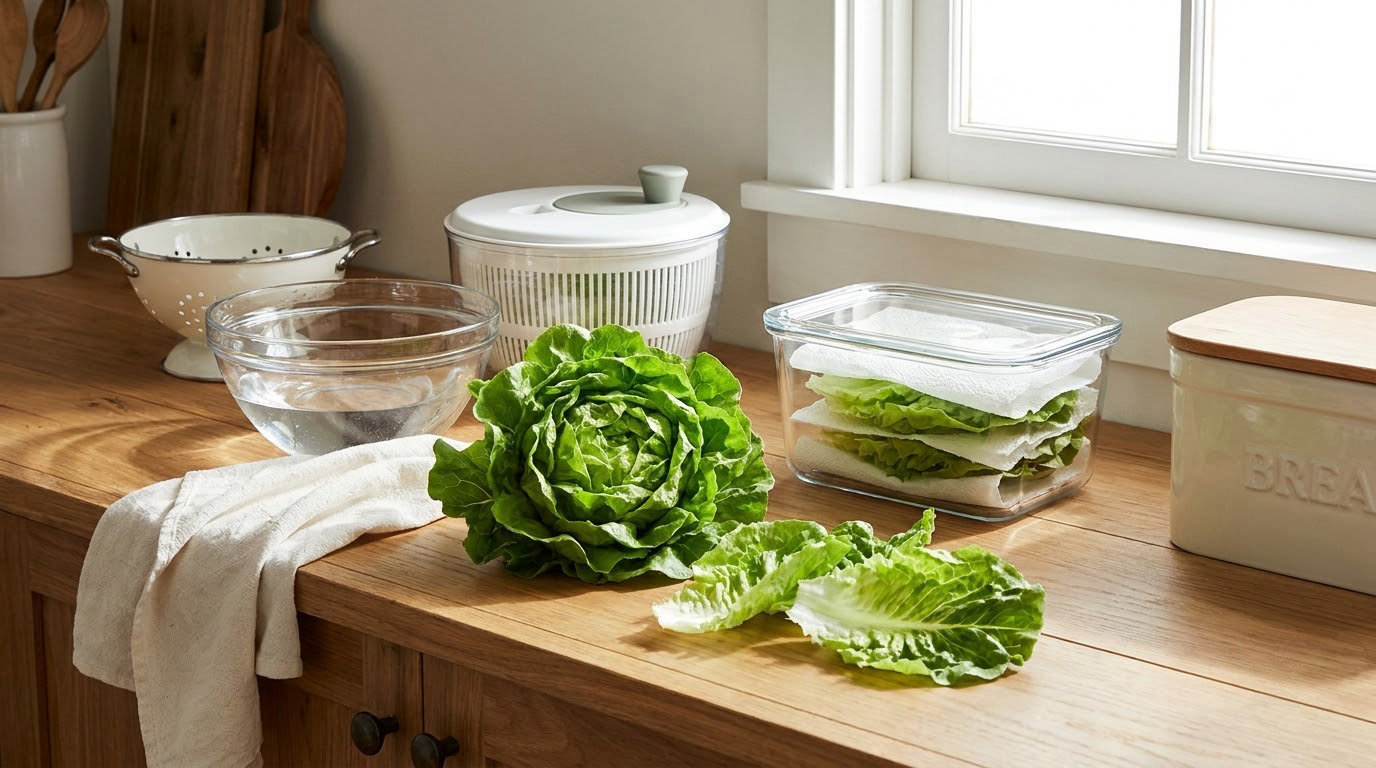
The short answer: dry the leaves completely, chill them briefly in ice water, then store them wrapped in a paper towel inside a closed container in the fridge until you build the sandwich. Add the lettuce as late as you can and keep wet fillings away from the bread. That is the whole method, and it takes about ten minutes the first time.
There are actually two different problems hiding inside this question, and most advice online only fixes one of them. The first is wilting, which is the leaf losing water in the fridge until it goes soft and floppy. The second is sogginess, which happens inside the sandwich when tomato, mayo or deli meat water migrates into the bread and the lettuce gets buried in the middle of it. Fix the fridge half and your leaves stay crunchy. Fix the assembly half and they stay crunchy on the plate too.
Here is the full sequence, from the grocery bag to the sandwich, with the signs that tell you each stage actually worked.
What You Need
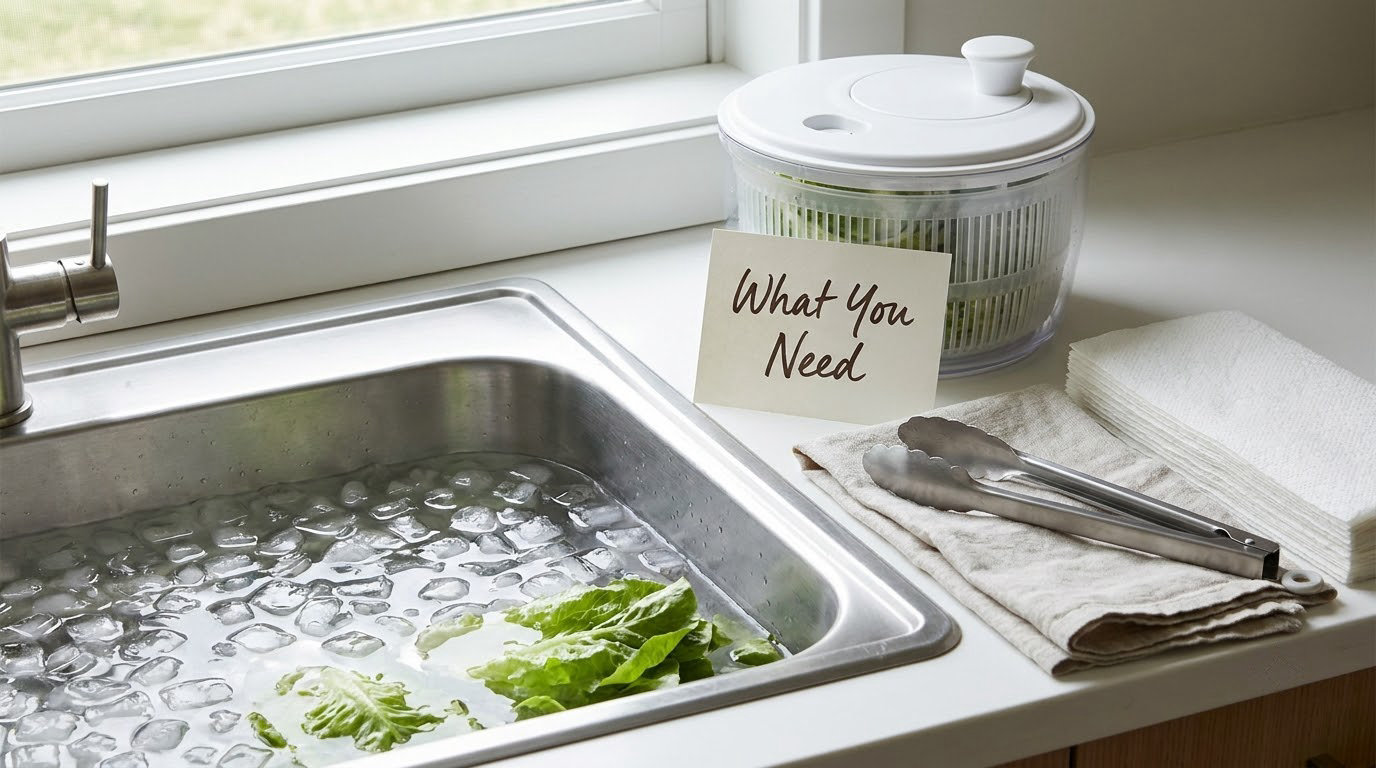
None of this is specialized equipment. Most people already own everything on this list, which is why the method works.
- A large bowl or the sink, filled with cold water
- Ice, for the chilling bath
- A salad spinner, or a clean kitchen towel you do not mind sacrificing
- Paper towels, for drying and for wrapping
- Tongs, which are kinder to leaf edges than your hands
- An airtight container or a plastic bag that seals
- A fridge crisper drawer, if you have one
If you want the ten-minute version, all of that collapses into three moves: wash under cold running water, spin until dry, store in a paper-towel-lined container in the fridge. The rest is refinement.
Step-by-Step: How to Keep Lettuce Crisp for Sandwiches
Choose Fresh, Cold, Undamaged Leaves
Pick leaves that are crisp, cool to the touch, and free of tears, brown edges, or slime at the base. A head that has gone soft in the store never recovers, because the water has already left the cells. Starting with healthy leaves is most of the battle, and it costs nothing extra to squeeze the head at the bag.
Romaine hearts and the inner leaves of a head are the sturdiest. Outer leaves dry out faster, and torn ribs tear further when you separate them.
Separate and Wash the Leaves Gently
Break or cut the leaves apart at the base with a sharp knife instead of tearing them by hand. Tearing rips cell walls, and every rip is a place water escapes later.
Rinse under cool running water and rub each leaf gently between your fingers. Cool water keeps the leaves firm; hot water softens them on contact. Skip the twenty-minute soak. For most leaves a quick rinse is enough, and a long soak leaves so much water inside the leaf that it takes half a spin cycle to get back out.
You know the wash worked when the water in the bowl runs clear and the leaves still snap when you fold them.
Chill the Lettuce in an Ice Bath
Fill your bowl with cold water, add a good handful of ice, and submerge the leaves for 10 to 15 minutes. Cold water and low temperature firm the leaves back up, and the ice bath is the fastest way to fix lettuce that has already softened on the way home from the store.
You can tell it worked because the leaves go from floppy to rigid in the cold, almost like they snap back when you lift one out.
Dry the Lettuce Completely
This is the step people skip, and it is the step that decides whether your lettuce stays crisp or turns to mush in the container. Wet leaves sitting in a closed box will brown and break down, which is rot rather than wilting.
- Spin them in a salad spinner in two or three rounds until the water stops coming off.
- If you have no spinner, lay the leaves in a clean towel, roll it up loosely, and gently squeeze. A towel pulls off more water than most people expect.
- For the last pass, blot each leaf with a paper towel. It looks fussy and it works.
Run a leaf along your cheek. If it feels cool and tacky rather than dry, it is still too wet.
How to Keep Lettuce Crisp for Sandwiches During Storage
Now you store the leaves dry, cold, and slightly humid. Put a dry paper towel at the bottom of the container, lay the leaves on it, then add a second paper towel on top and close the lid. The towels wick off condensation. Leave them in rather than swapping them for fresh ones every day, and change them only when they feel damp.
Keep the container in the crisper drawer or the coldest part of the fridge, at or near 37 F, and keep it closed. Do not pack the drawer so full that air cannot move. Once washed, lettuce needs no rinsing again until you eat it.
| Storage method | Humidity control | Typical shelf life | Sandwich performance |
|---|---|---|---|
| Paper towel in an airtight container | Good, towels absorb condensation | 7 to 10 days | Best overall, leaves stay flat and green |
| Whole head, uncut, in the crisper | Good, cut heads breathe more | 10 to 14 days | Fine, but you still have to prep it later |
| Loose leaves in a produce bag | Fair, bags trap some moisture | 5 to 7 days | Decent, but leaves often bruise in the bag |
| Wet leaves in a sealed container | None, and harmful | 1 to 2 days | Poor, browns and goes slimy fast |
| Fully submerged in water in the fridge | Very high, but low oxygen | About 7 days | Good, but leaves must be dried again before use |
Two more things help. Keep greens away from apples, bananas, avocados, pears and tomatoes, which release ethylene gas that speeds yellowing and wilting in nearby leaves. And rotate with the oldest in front, the newest in back, so you eat the head you bought first.
On food safety, washed lettuce kept covered and refrigerated is generally fine for the week most home cooks manage. If it smells sour, feels slimy, or the edges have gone brown and translucent, it is time for the bin. Ice baths do not reverse decay, only dehydration.
Layer the Lettuce Just Before Serving
Dry leaves are crisp leaves, and a leaf that touches wet bread or wet tomato goes limp in minutes. Put the lettuce where it shields the bread, not where it absorbs the filling.
- Spread a thin layer of butter, mayo, or mustard directly on the bread. Fat is a moisture barrier, and it keeps the bread from absorbing water from the filling.
- Place one lettuce leaf on each slice of bread, so the fillings sit between two leaves instead of touching the bread at all.
- Put the wetter items, tomato, pickles, deli meat, in the middle of the stack where they are cushioned.
- Add the lettuce last, right before you close and eat, or as late as you can manage when packing.
- For a packed lunch, keep any dressing in a separate container and add it at lunch.
Stack order matters more than most people expect. Deli meat on the bottom, cheese next, wet vegetables above that, lettuce on top against the upper slice of bread. The leaves end up holding moisture against a bread face that is already protected.
Restore Lettuce That Has Started to Wilt
Limp from dehydration is fixable. Soggy and brown from decay is not, and no amount of ice water will fix that.
- Pull off any leaves with brown or slimy edges and discard them.
- Submerge the rest in ice water for 10 to 15 minutes.
- Lift them out, spin or towel them dry until no water is left on the surface.
You can skip the ice and use plain cold water if you have ten minutes rather than fifteen. You cannot skip the drying. A revived but wet leaf will be limp again within the hour, because the water inside the cells now has somewhere to go.
Where People Go Wrong During Prep
- Storing lettuce wet. Wet leaves brown; they do not wilt.
- Using the fridge crisper but packing it solid, which blocks the airflow the setting depends on.
- Leaving the fridge door open while you cook, which warms the whole cabinet.
- Washing the same head twice, since every rinse leaves fresh moisture behind.
- Cutting leaves hours early for a sandwich that will not be eaten for hours.
Common Mistakes
Most limp sandwich lettuce comes down to one of six things, and each has a straightforward fix.
Soaking the leaves. Long soaks fill the leaf with water the towel cannot remove. A quick rinse under cold running water is enough. You can tell it went too far when the leaves feel heavy and floppy right out of the bowl.
Drying halfway. A spinner run is not a drying. Do two or three rounds, and finish with a paper towel. The sign of a properly dry leaf is that it is room temperature, not cool, against your hand.
Storing without a paper towel. A closed container with no absorbent layer traps condensation on the leaves, and the result is brown edges within a day or two. One towel top and bottom costs nothing.
Leaving it out. Room temperature is where leaves lose water fastest, and a sandwich sitting on a counter for two hours gets limp in a way no storage method can undo. Time on the counter is the biggest single factor people control.
Lettuce touching wet fillings. Salt and acid draw water out of the leaf, and that water goes straight into the bread. One dry leaf under each bread slice is the whole barrier.
Sauce spread all the way to the crust. Mayonnaise and mustard need to be spread edge to edge. A bare corner of bread is an open door for moisture, and that is the corner that turns to mush first.
Variety matters too. Romaine hearts hold their crunch longest in a sandwich because of the thick rib. Iceberg is the crispest and the least flavorful, and its tight leaves lie flat against the bread. Butterhead is soft and creamy, which people love but which wilts fastest. Red leaf looks good and fades quickly, so use it same-day.
The same barrier thinking applies to burgers. If you want the bun and the lettuce to behave, read how to keep burgers from puffing up in the middle for the other half of sandwich structure that trips people up.
Frequently Asked Questions
Does iceberg lettuce stay crisp longer than romaine?
Not by much. Iceberg stays crisp because its leaves are tightly packed and sturdy, so it shrugs off bruising, but romaine hearts usually hold their texture a day or two longer because the thick rib keeps water in the leaf. For a sandwich built the same day, pick iceberg for maximum crunch. For a sandwich that has to survive in a lunchbox overnight, romaine is the safer bet.
How long does prepared lettuce stay crisp in the refrigerator?
Store washed, thoroughly dried leaves in a paper-towel-lined airtight container and you will get 7 to 10 days at or near 37 F. A whole uncut head in the crisper can last 10 to 14 days. The moment the leaves go in wet, expect one or two days before the edges brown. Dry leaves, longer life, every time.
Should I wash lettuce before or after storing it?
Wash before storing, but only if you dry the leaves completely first. Washing means you do not have to deal with a sink full of wet leaves at 6 in the morning, and covered, refrigerated, washed lettuce is generally fine for about a week. If you have no spinner or the patience to dry them properly, store them unwashed and wash right before you eat.
What is the best way to dry lettuce for sandwiches?
Use a salad spinner in two or three rounds, then blot each leaf with a clean paper towel. If you have no spinner, roll the leaves in a clean kitchen towel and squeeze gently, then finish with paper towels. A properly dry leaf feels room temperature and matte against your hand. A cool, tacky leaf still holds water and will go limp in the sandwich.
Why does my sandwich lettuce get soggy so quickly?
Because the leaf is touching wet filling and damp bread. Salt and acid in tomato, pickles, mayo and deli meat pull water out of the leaf, and that water plus the filling’s own moisture soaks into the bread. Fix it by spreading butter, mayo or mustard edge to edge, putting a dry lettuce leaf on each bread slice, layering wet ingredients in the middle, and adding the lettuce as late as possible.
Conclusion
Five things do most of the work. Start with fresh, undamaged leaves. Chill them for 10 to 15 minutes in ice water. Dry them until they feel room temperature and matte, not cool and tacky. Store them dry in a paper-towel-lined container in the coldest part of the fridge, away from fruit. Then add the leaves to the sandwich as late as practical, with one leaf on each slice of bread so nothing wet touches it directly.
Follow those and how to keep lettuce crisp for sandwiches stops being a fridge problem and becomes a habit that takes ten minutes a week.