
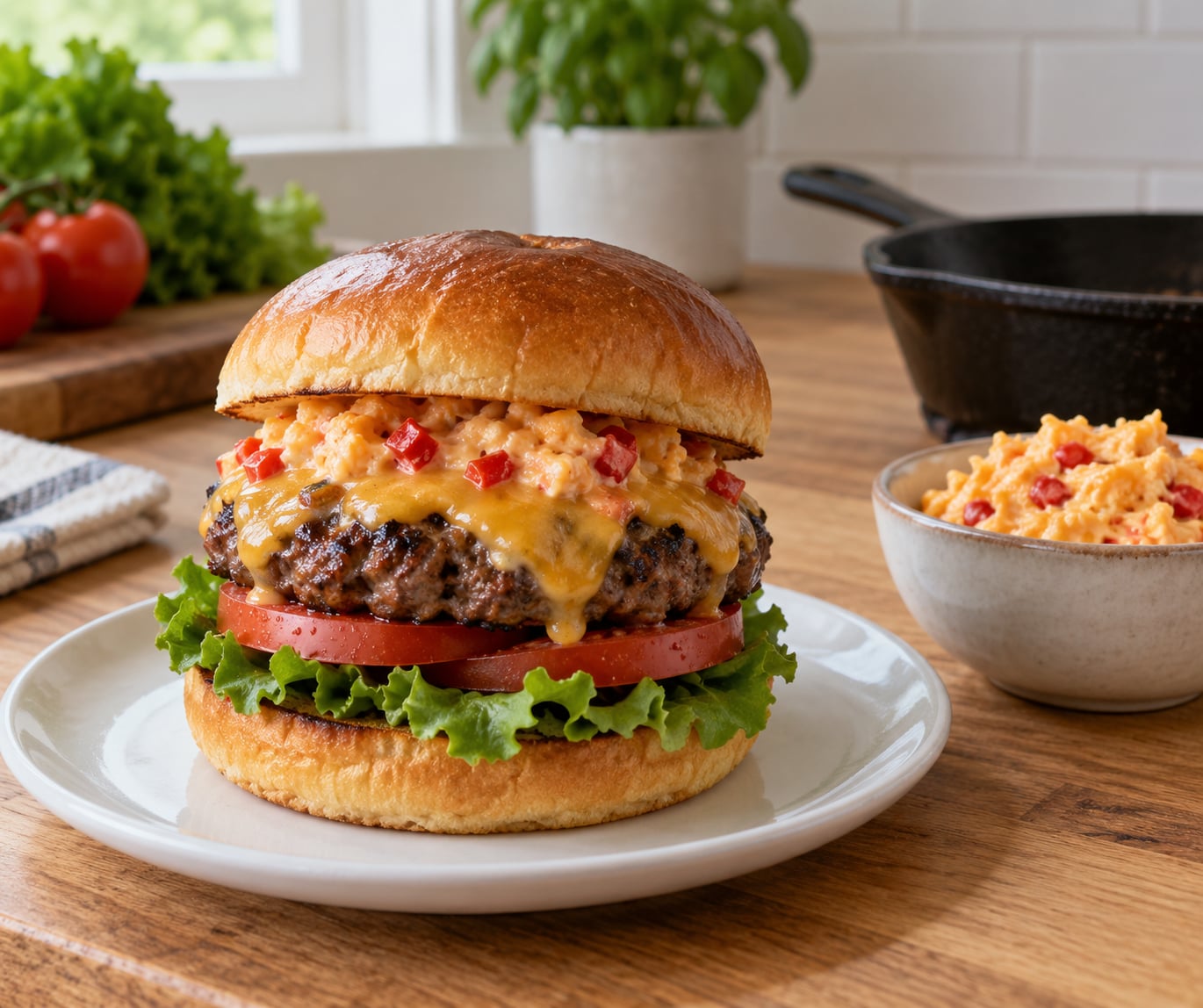
A pimento cheese burger is a grilled beef patty topped with a thick layer of creamy pimento cheese spread — sharp cheddar, mayonnaise and diced sweet red pimentos — served on a toasted bun. Make it in about 35 minutes, and most of that work happens while the beef rests.
The recipe below makes two burgers and covers every decision that trips people up: how loose to form the patties, whether the spread goes on hot or cold, and how to keep the bottom bun dry. A cast iron skillet or a hot grill both work, and the method is written so you can switch between them mid-cook.
What You Need
Everything splits into two groups. Build the spread first and let it chill while you work on the beef — it firms up faster than you think and spreads much cleaner cold.
Pimento Cheese Spread
- 8 ounces extra-sharp cheddar, grated
- 3 ounces cream cheese, softened to room temperature
- 1/3 cup mayonnaise
- 1/4 cup diced pimentos, well drained and patted dry
- 1 tablespoon bread-and-butter pickle juice
- 1 teaspoon yellow mustard
- 1 teaspoon horseradish sauce
- Kosher salt, freshly ground black pepper and a pinch of smoked paprika
Burgers and Assembly
- 1.5 to 2 pounds 80% lean ground chuck
- Kosher salt and black pepper for the patties
- 4 hamburger buns, brioche or potato rolls
- Toppings you like: shredded lettuce, tomato, red onion, dill pickles, fried onions, bacon
- Butter or oil for the griddle
Equipment
An instant-read thermometer is the one tool worth owning. A wide, thin spatula gets under a patty without tearing it, and a cast iron skillet or a flat-top griddle gives you the hard sear that turns the pimento spread brown at the edges.
Easy Substitutions
Sharp cheddar is the backbone, but Monterey Jack mixed in equal parts melts smoother and softens the sharpness. Cream cheese can be left out if you use a third more mayo. Bacon instead of butter for toasting buns adds a smoky edge, and a gluten-free bun works fine as long as you toast it well.
Step-by-Step: How to Make a Pimento Cheese Burger
Make the Pimento Cheese
Grate the cheddar by hand if you can — the coarse strands melt into the mayo instead of staying in rubbery shreds. Beat the softened cream cheese until smooth, then work in the grated cheddar a handful at a time.
Stir in the mayonnaise, pickle juice, mustard and horseradish until every shred is coated and the mixture looks like soft paste. Fold in the dried pimentos last, along with the paprika, salt and pepper.
Spoon it into a small bowl, press the surface flat and refrigerate for 20 to 30 minutes. Chill too long and it sets like a brick, so pull it while it still gives slightly under a spoon.
Season and Shape the Burger Patties
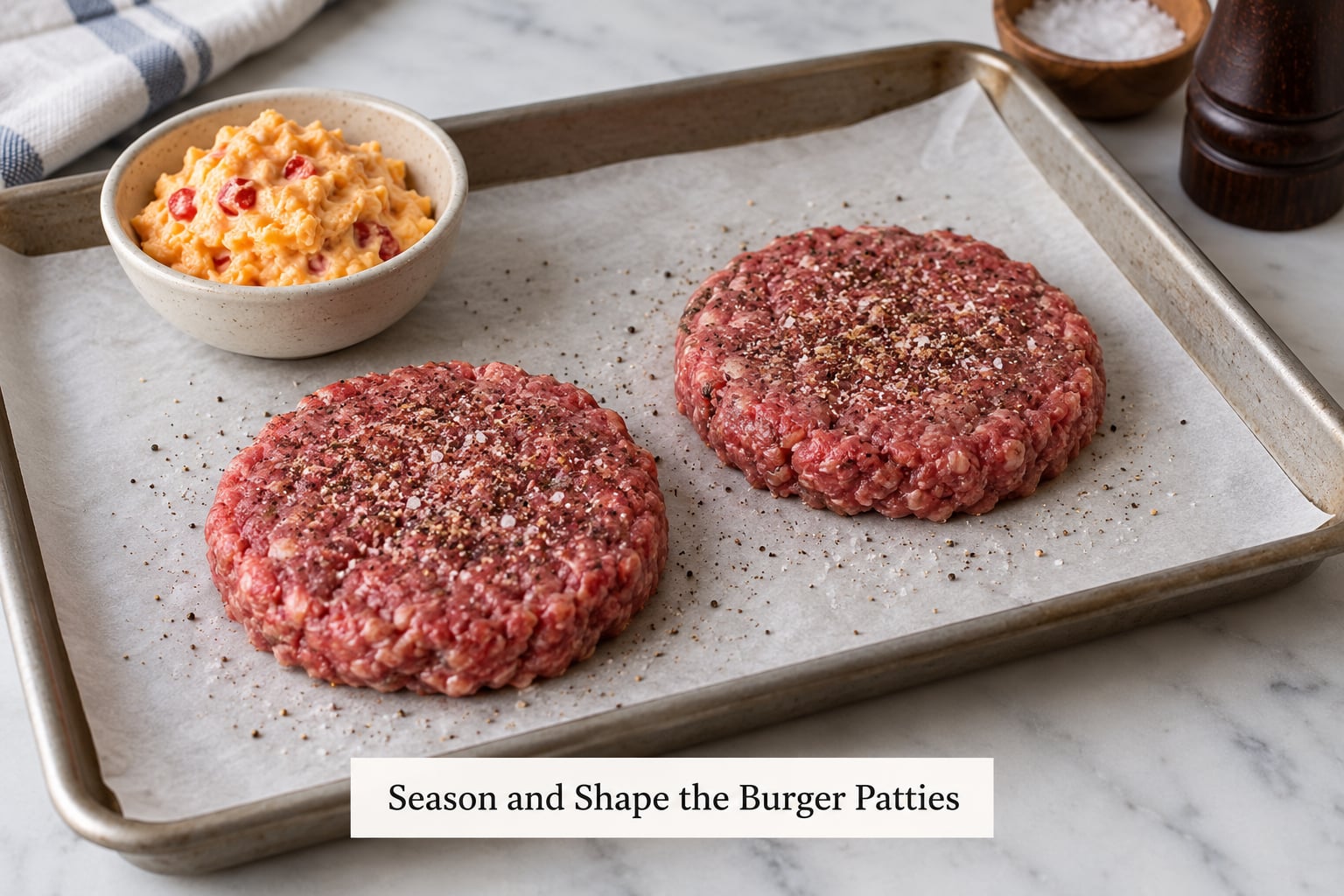
Divide the beef loosely. Resist the urge to handle it more than necessary, because compacting the meat squeezes out the air and fat that keep a patty juicy. A gentle thumbprint in the center stops it from doming and cooking unevenly. If yours keep falling apart when you flip them, work through how to make burger patties that hold together before you fire up the pan.
Pat the surface dry with a paper towel, then season both sides with a heavy pinch of kosher salt and more pepper than feels right. The pimento cheese brings plenty of salt and tang of its own, so hold back on the seasoned salt until you taste.
Grill or Pan-Sear the Patties
Heat a cast iron skillet over medium-high until a drop of water skitters and evaporates, or build a two-zone charcoal fire with a hot side and a cool side. Brush the surface with a little oil and lay the patties down.
Leave them alone for 3 to 4 minutes on the grill or about 4 minutes in the skillet. You are looking for a deep brown crust and juices running clear along the edges — the Maillard browning that gives the finished burger its flavor. Flip once, press gently, then move the patty to the cool zone if you are grilling.
Check the thickest part with your thermometer. Ground beef is safe at an internal temperature of 160°F per the USDA, which usually lands 4 to 5 minutes after the flip. Pull the patties at 160°F and let carryover cooking finish the job while they rest.
Two shortcuts work well. For a smash burger, press each patty thin on a screaming-hot griddle for 60 to 90 seconds to get a wide, lacy crust. For a broiler finish, cook on the stovetop as above, then park the pan under the broiler for 90 seconds to flash the top.
Toast the Buns and Prepare the Toppings
Toast the buns in the same skillet during the patty rest. Butter the cut faces, lay them down for 30 to 60 seconds until golden, then set them face up on a board so the steam escapes.
Dry your toppings. Salt the tomato and cucumber slices in a colander for a few minutes and blot them, and squeeze excess liquid from your pickles. Lettuce stays crisp unwashed in the fridge, so wash it earlier rather than at the last second.
Melt the Cheese and Assemble: How to Make a Pimento Cheese Burger That Holds Together
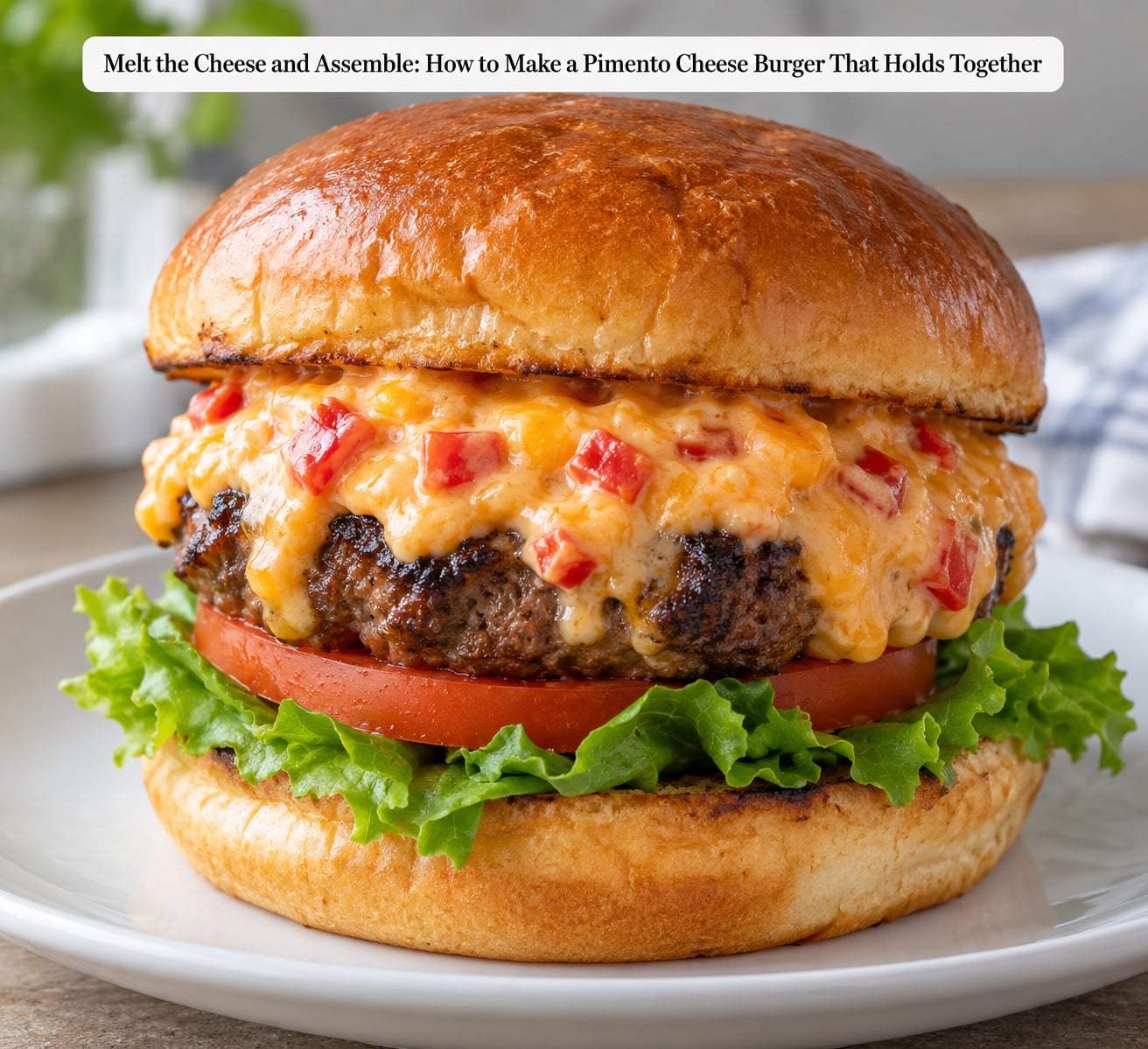
Take the spread out of the fridge 15 minutes before you cook. Room temperature pimento cheese melts into the meat instead of sitting on top of it in a cold slab, and a cold spread will drop the patty’s surface temperature right when you want that crust to stay hot.
Spoon a generous layer onto the warm side of each patty, then cover the pan or set a lid over the grill for about 60 seconds. The trapped steam softens the spread and melts it into the beef without drying the patty out. Our lid-and-steam method for melting cheese on a burger works the same way for a plain slice.
There is a rule about whether melting works. A mayo-heavy spread melts cleanly; a spread that leans on cream cheese and sharp cheddar will break into grains and slide off instead. If your jarred pimento cheese is on the firm, crumbly side, skip the heat and spoon it on just before serving — the same way you would add cold crab salad.
Stack from the bottom: toasted bun heel, a swipe of mayo or butter if you want insurance against sogginess, lettuce, the patty with its pimento cheese, then tomato, onion and pickles under the crown. Keep the total stack to about four inches so it stays eatable, and secure anything tall with a toothpick.
Common Mistakes
Watery pimento cheese. Almost always undrained pimentos or too much pickle juice. Pat the pimentos dry on a towel before folding them in, and measure the pickle juice with a spoon instead of pouring it in.
Grainy or split spread when melted. Too much heat or too little fat in the mix. Add a spoonful of mayonnaise to loosen it, or serve it cold rather than fighting it in a hot pan.
Dry, overcooked patties. They went past 160°F and got pressed the whole time. Pull them at 160°F, rest them 3 to 5 minutes, and stop squeezing.
Spread sliding off. Cold cheese went onto a cooling patty, or the stack is too tall. Warm the spread, spoon it onto the hot face, and keep the build under four inches.
Soggy bottom bun. A mayo-based spread plus a wet tomato on an untoasted bun. Toast the bun, blot the tomato, and put a lettuce leaf down as a barrier.
Uneven cooking. Patties domed in the middle or pressed too thin. Leave the center dimple and keep the thickness even across the batch so they all finish together.
Tips for the Best Pimento Cheese Burger
Let the spread chill, then soften it before it goes on. The same mix that is too firm in the bowl spreads cleanly once it has sat out, and that fifteen minutes is the difference between a topping and a layer.
Season the beef twice, not once. Salt before the sear builds a better crust, then a light pass after the rest brings the surface flavor up.
Make the spread up to three days ahead and keep it covered in the fridge. It firms up hard overnight, so give it a stir and fifteen minutes out of the fridge before serving.
Counter the richness with acid rather than more richness. Vinegar slaw, quick pickles, a squeeze of lemon on the fries, or a few drops of hot sauce all cut through the fat that pimento cheese and 80/20 beef pile up. A thin layer of comeback sauce under the patty does the same job if you want something sweeter.
Hold the burger together by keeping moist ingredients off the bun face. Lettuce is the simplest barrier and it adds crunch where you need it most.
Frequently Asked Questions
What goes on a pimento cheese burger?
A grilled beef patty, a thick layer of pimento cheese spread, and a toasted bun. Most builds add shredded lettuce, tomato, red onion and pickles on top, with fried onions or bacon when you want something heavier. Keep the build simple, because the spread already carries sharp cheddar, sweet pepper and tangy pickle. Salt your tomatoes or blot them first so the bottom bun stays dry.
Can I use store-bought pimento cheese?
Yes, and most jarred versions work well. Spoon it on the warm patty rather than into a hot pan, since a stiff jar spread tends to grain and slide off instead of melting. Take it out of the fridge about fifteen minutes ahead so it softens. If it tastes very sharp straight from the jar, stir in a tablespoon of mayonnaise to loosen it and take the edge off.
How spicy should pimento cheese be?
Barely hot is the traditional answer. The pimento is a sweet, thin-walled red pepper, not a chili, and the sharpness should come from the cheese, the pickle juice and a little mustard. For heat, fold in sliced pickled jalapeños or a spoonful of Sriracha at mixing time so the flavor spreads through the whole batch rather than sitting in one spot.
Can I prepare pimento cheese ahead of time?
Yes, and it is better made a day early. Cover it and refrigerate for up to three days, then stir and let it stand at room temperature for about fifteen minutes before spreading. Cool patties should not be frozen with the spread on them, because the mayo and cheese can turn grainy or weep when thawed. Freeze plain cooked patties and add fresh spread after reheating.
What should I serve with a pimento cheese burger?
Something acidic cuts the fat best. Vinegar slaw, quick-dilled pickles, coleslaw with a sharp cider vinegar dressing, or a side of fries with lemon all work. Sweet pickles or fried onions add crunch, and a cold iced tea or sparkling water finishes the meal. Skip heavy dips like queso or ranch, which add more richness to a burger that already has plenty.
Start with the spread. Mix it, chill it, and let it sit out while the patties cook — that fifteen minutes of softening is what keeps the cheese melting into the beef instead of sliding off, and everything else in this method follows from that one step.