
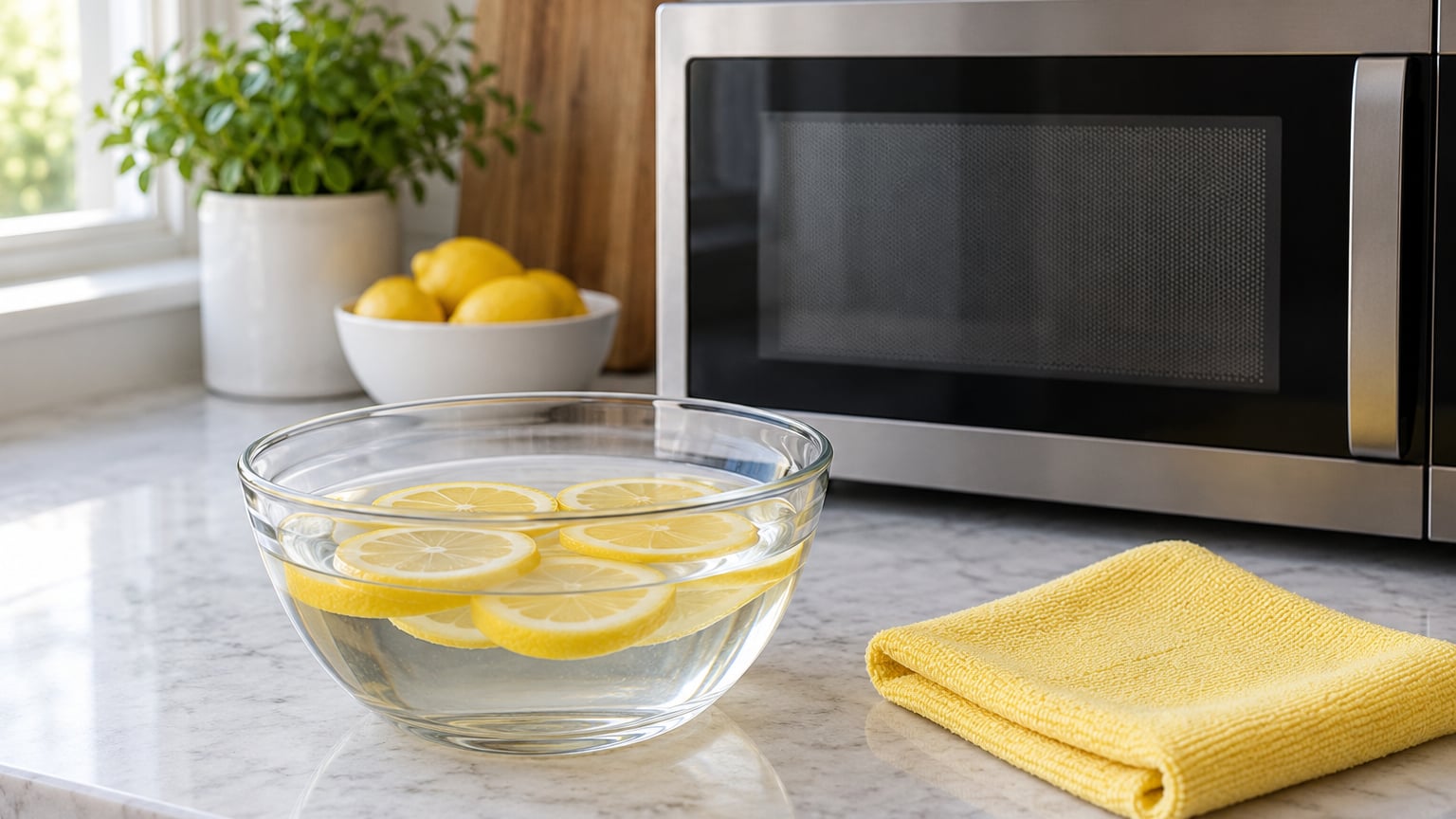
How to clean a microwave with lemon takes about 15 minutes and needs nothing more than a bowl, water and half a fruit. Put a cup of water and half a lemon in a microwave-safe bowl, heat until the bowl is hot and steaming, leave the door shut for 5 minutes, then wipe the loosened grease away with a damp cloth. No spray bottles, no scrubbing pads, no fumes.
The whole trick is that heat turns the lemon water into steam, and trapped steam carries citric acid onto the dried food stuck to your walls. Five minutes of standing time gives that steam time to soak in, which is why the wipe afterwards feels almost effortless.
Table of Contents
- What You Need to Clean a Microwave with Lemon
- How to Clean a Microwave with Lemon Step by Step
- Common Mistakes When Cleaning a Microwave With Lemon
- Frequently Asked Questions
- How long does it take to clean a microwave with lemon?
- Can I use lemon juice instead of lemon slices?
- Should I clean the microwave while it is still warm?
- How do I remove burnt-on food from a microwave after using lemon?
- Do I need vinegar to clean a microwave with lemon?
- Can I use a metal bowl to steam lemon in the microwave?
- Conclusion
What You Need to Clean a Microwave with Lemon
You probably have all of it already, which is the nice part of this method.
- 1 lemon, halved, or cut into 4 thick rounds. Keep the peel on. Most of the citric acid and nearly all of the aroma sit in the rind and the pith just under it, and the peel is what kills smells rather than just grease.
- 1 cup of water, cool tap water is fine. A full cup matters because it takes longer to boil away and gives you a longer steaming window.
- 1 microwave-safe bowl or a 2-cup liquid measuring cup. A narrower container keeps the water from reducing to nothing before you get to it.
- 1 microfiber cloth or a soft sponge, plus a clean dry cloth for drying.
- Optional: baking soda for stubborn spots, a soft nylon brush or a plastic scraper for crusted bits, and a little ordinary dish soap for the final wipe-down of the interior and door.
A tired lemon that has lost its juice still works. Squeeze what is left of it into the water and drop the rind in, and you get the same result with less fuss.
How to Clean a Microwave with Lemon Step by Step
1. Prepare the Microwave
Take everything out, including the turntable, and check that the cavity is cool enough to touch comfortably. Set the plates and containers on the counter rather than piling them next to the microwave, so crumbs do not end up scattered across your worktop instead.
Wipe out any loose crumbs and old spills with a dry cloth while the door is open, which takes ten seconds and means you are not loosening baked-on food later. Check for anything metal that got left inside, and do not try to scrub off a burnt patch with anything sharp.
2. Steam the Interior with Lemon
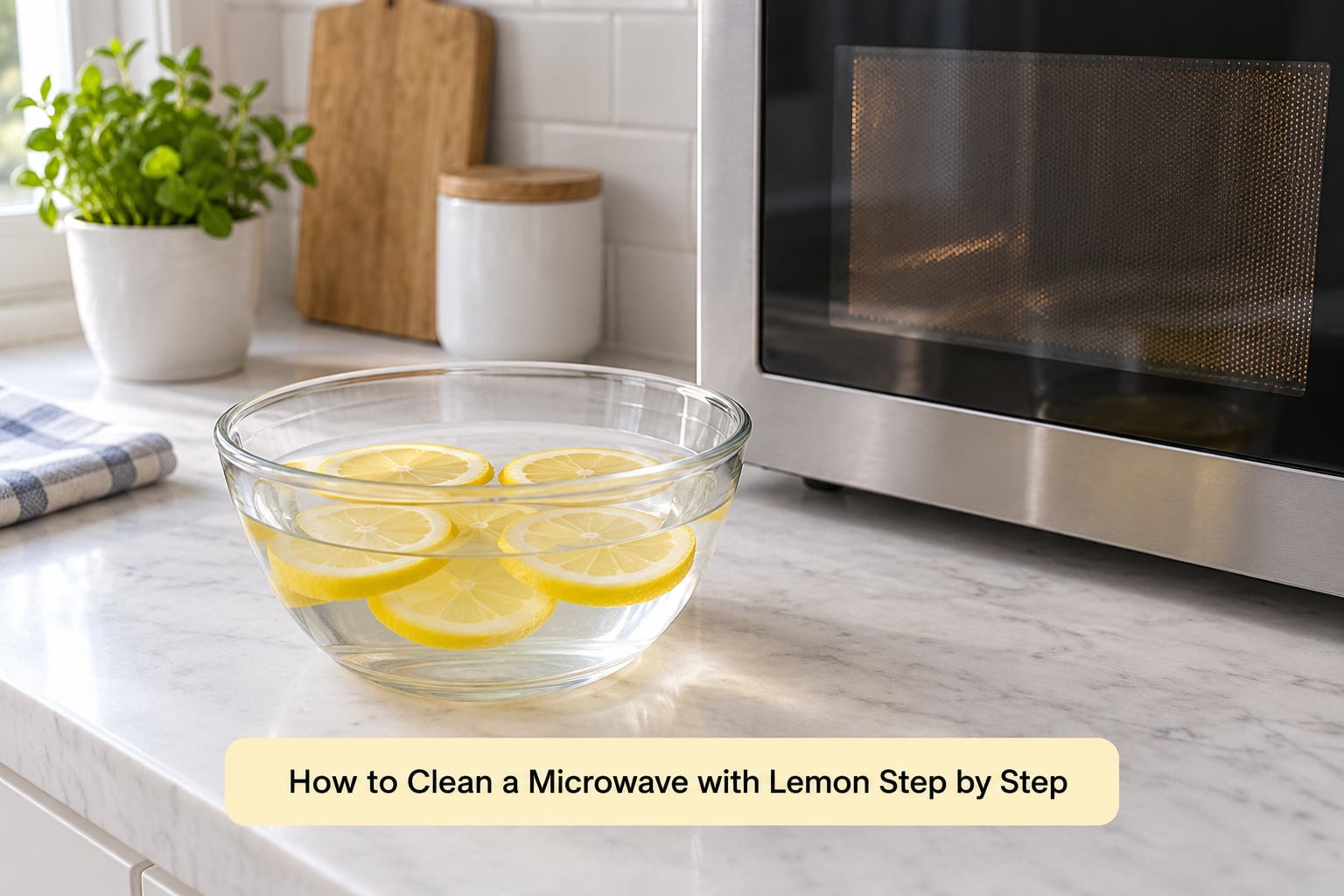
Put the water and the lemon in the bowl and set it in the middle of the cavity. A cramped bowl that sits off-centre boils unevenly, so centre it. Do not use a bowl that is cracked, metallic, or not labelled microwave-safe.
Heat on high for 3 to 5 minutes. Watch it if you can: stop as soon as the water is steaming heavily and the surface is breaking into bubbles, which usually lands somewhere around 3 minutes for a lightly soiled cavity and closer to 5 for a greasy one. Longer is not better here, since you mainly need the water to boil and hold.
When you are confident it has boiled, set the microwave to its lowest power setting or turn it off. Leave the door closed and leave the bowl inside.
3. Loosen Stuck-On Food and Grease
Stand time is where the cleaning actually happens. Wait 5 minutes with the door shut for normal grease, up to 10 minutes if food has been baked on hard.
Open the door slowly and stand to the side of it, because the steam that comes out will be hot enough to scald bare skin. A lot of people lose their nerve here and wipe too early, which is why their microwave never looks clean.
After standing, the residue should lift with almost no pressure. Use a bowl or spoon to scoop out softened lumps from the floor, and a soft nylon brush or the bowl edge to lift crust from the walls and the underside of the top panel. Scrape, do not scrub: abrasive pads scratch the enamel and leave marks that trap the next layer of grease.
Pay attention to the ring the turntable leaves on the floor, the corners where the walls meet, and the door seal, which is the part most people forget entirely.
What the steam cannot shift is carbonised, blackened food, or a layer of grease several weeks old. Those need a paste of baking soda and water worked in with a soft cloth and left to sit 10 minutes before you wipe. Anyone trying the lemon method on that kind of mess should expect a second pass rather than a finished job on the first.
4. Wipe Down the Interior
Dip a clean cloth into the bowl of lemon water, wring it out until it is damp rather than dripping, and wipe the ceiling first, then the walls, then the floor. Work top to bottom so you are not dragging grease back onto a clean surface.
Turn the cloth often and swap sides. The job is done when the enamel looks dry and even, not when it looks wet. Rinse and re-dip as you go, and if the water in the bowl has gone cold and grey, top it up with hot water before you keep wiping with it.
Give the door window, the inside of the door and the seal a separate pass with the damp cloth, following the same top-to-bottom order. That window film usually has splatter baked onto it that nobody notices until the light hits it.
The bowl of lemon water is a cleaning solution, not a drink. Pour it out as soon as the wipe-down is finished.
5. Clean the Touchpad and Door and Dry Everything
The exterior is a different job. Wipe the door face, the handle and the touchpad with a lightly damp cloth, using barely any water around the buttons. Never spray a cleaner directly onto the keypad or the panel, and never let liquid run down into the vent grille on the side or back, because that is where the moisture goes once it is inside the casing.
For a stubborn splatter on the outside, dampen the cloth rather than the surface and press it against the mark instead of scrubbing. Then dry the door, the handle and the panel with a separate soft, dry cloth.
Dry the interior completely too, including the turntable and the underside of it, and leave the door ajar for a few minutes so trapped moisture can escape. Run the microwave empty for one minute with a cup of water in it to warm off any damp patches you may have missed.
Common Mistakes When Cleaning a Microwave With Lemon
Using a bowl that is not microwave-safe. Metal sparks, and a bowl with a metallic rim can arc where the edge touches the wall. Use glass or a plastic labelled microwave-safe, and discard it if it is cracked or has rimmed edges.
Heating for a fixed time regardless of the cavity. A small microwave boils a cup of water in under 2 minutes; a large one can take 5 or more. Heat in shorter bursts and check, rather than setting a timer once for every machine.
Standing for 15 minutes by default. A long stand is fine once you know how to open the door safely, but it is not required for a light clean, and plenty of readers report being nervous about the burst of steam. Five minutes is the sweet spot; go longer only for baked-on food.
Scrubbing with an abrasive pad or steel wool. These scratch the enamel coating permanently. A microfiber cloth or a nylon brush does the same work on food that has already been softened by steam.
Soaking the microwave or flooding the cavity. Standing water around the base can reach the turntable motor and the magnetron area. Use a damp cloth, never a soaked one, and keep liquid out of the vent grille.
Forgetting the parts you cannot see. The turntable, the ring underneath it, the door seal, the door window and the touchpad account for most of what people complain about still looking dirty. A lemon clean that skips them always feels unfinished.
Leaving standing water behind. A damp floor inside the cavity is how rust marks and musty smells start. Dry everything, run it empty for a minute, and leave the door open briefly.
A few habits keep the job small. A 30 to 60 second pass of lemon water on high, with the door shut for a minute afterwards, is enough to deodorize between cooks. For a routine wipe-down, once a month is enough for most households, and once a week if you heat fish, curry or strongly spiced food regularly. If your microwave still smells burnt after a full clean, the odour is usually in the door seal and the ceiling vent area, so wipe those specifically rather than repeating the whole job.
Grease builds up in the same places whatever you clean with, and a kitchen that has been dealing with fried food daily needs a wider reset than a microwave alone. Our guide to how to clean a kitchen after frying covers the stovetop, splashback and extractor work that goes with it, and what to look for in a clean restaurant kitchen is a useful benchmark for the standard most kitchens should hold themselves to.
Frequently Asked Questions
How long does it take to clean a microwave with lemon?
Allow about 15 minutes in total. Heating the lemon water takes 3 to 5 minutes, standing time with the door closed adds another 5, and the wipe-down takes 5 minutes or less. A lightly soiled microwave needs only a 30 to 60 second burst and a 1 minute stand if you are deodorizing between cooking sessions rather than doing a full clean.
Can I use lemon juice instead of lemon slices?
Yes, bottled lemon juice works, and around a quarter cup in a microwave-safe bowl is enough. Be aware that many bottled juices contain added sugar, which leaves a faint sticky film on the walls rather than lifting grease. For the best result, use fresh lemon and keep the peel in the bowl, since the rind carries most of the citric acid and the deodorizing oils.
Should I clean the microwave while it is still warm?
Let it cool first, until the cavity is comfortable to touch, even if it is only slightly warm. Cleaning a warm or hot microwave means more steam for you to dodge, and water splashed onto hot enamel can craze the coating. Ten minutes with the door open is plenty of cooling time after a normal cooking run.
How do I remove burnt-on food from a microwave after using lemon?
Make a paste of baking soda and water, spread it over the burnt patch, and leave it for 10 minutes before scrubbing with a soft cloth. The lemon steam loosens ordinary grease and splatter but will not lift blackened carbon, which has to be broken down mechanically. A nylon brush or a plastic scraper helps on crust stuck to the turntable ring or the ceiling panel.
Do I need vinegar to clean a microwave with lemon?
No, vinegar is not required and you do not need both. Lemon handles grease and everyday smells better because of its scent, while vinegar is stronger on mineral film and on heavily burnt odour. If you want the deodorizing power of both, add about 3 tablespoons of white vinegar to the bowl with the lemon and heat as normal.
Can I use a metal bowl to steam lemon in the microwave?
No, never use a metal bowl. Metal reflects microwaves, and a bowl with a thin or metallic rim can spark and damage the interior coating or the magnetron. Use glass, ceramic without a metallic decoration, or a plastic container clearly labelled microwave-safe. Never put a metal utensil in the bowl either, and never use a bowl with a cracked or chipped edge.
Conclusion
Start by making the lemon water, steaming the empty cavity for 3 to 5 minutes, and leaving the door shut for 5 so the grease has time to soften. Then wipe the loosened food out with a cloth dipped in that same water, clean the turntable, the door seal and the touchpad, and dry everything before you close it up.
It takes a quarter of an hour, costs a couple of ingredients you probably already have, and leaves no chemical smell in the kitchen. Once you know the timings it suits a monthly clean and, in its 30-second version, a quick deodorize between cooking sessions.