
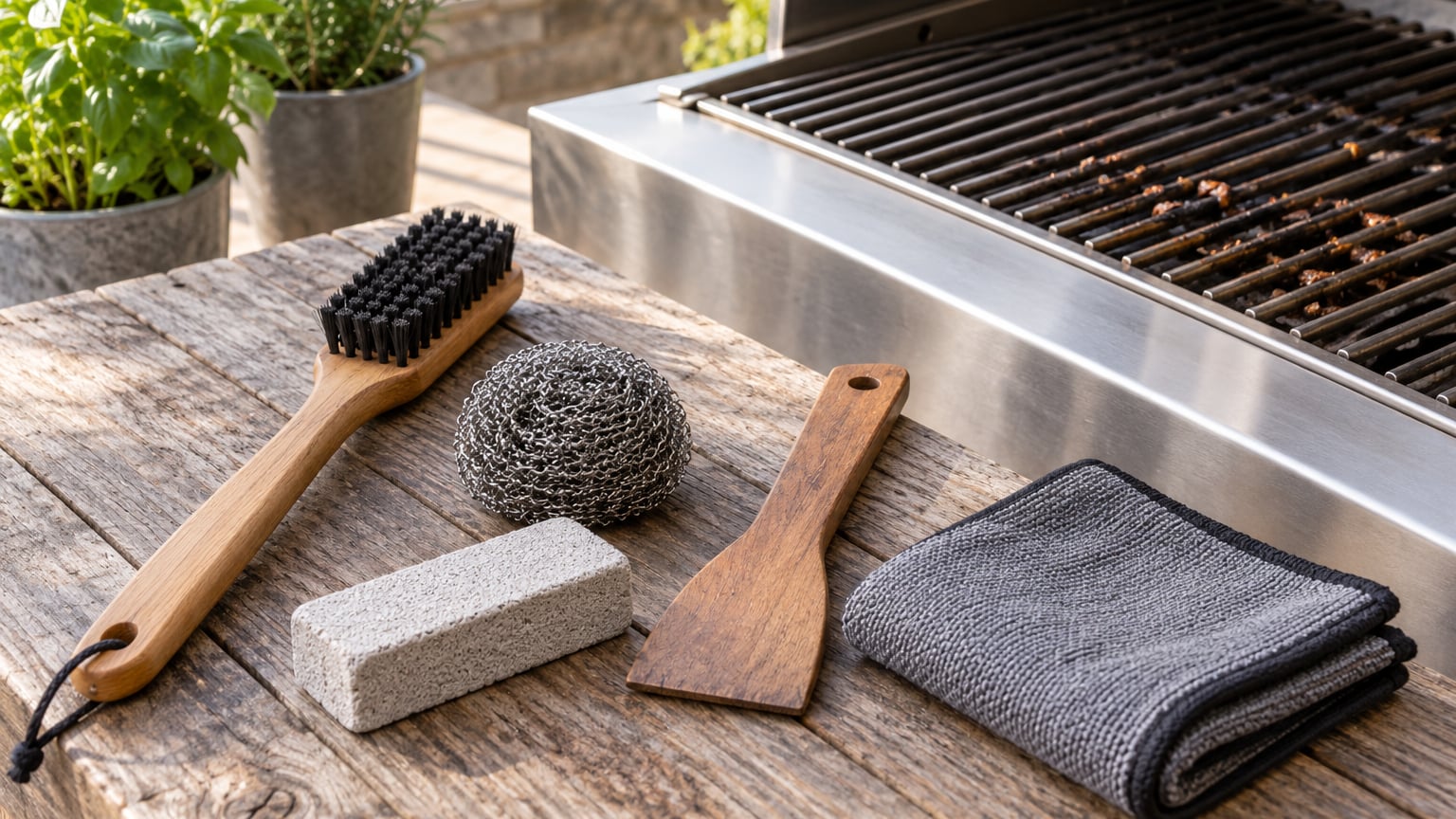
A safe alternative to a wire grill brush is any tool that lifts cooked-on food and carbon without putting loose metal bristles on your grate. The practical shortlist: a nylon-bristle brush for routine grease, a stainless mesh sponge or brass mesh pad for stubborn crumbs, a pumice or ceramic stone for carbonized buildup, and a wooden scraper for lifting stuck food with zero bristle risk.
Nobody serious claims a wire brush is risk-free. A 2016 study in Otolaryngology–Head and Neck Surgery found roughly 1,700 Americans treated in emergency rooms between 2002 and 2014 after eating a wire bristle in grilled food, and about one in four of those cases required hospital admission. Stainless steel does not dissolve or rust away in the body, so a bristle that gets swallowed can work its way through tissue on its own schedule.
I have cleaned grates with every kind of tool on this list, and the honest summary is that no single one replaces a wire brush on every job. What they replace is the risk. Below is what each option does well, where it falls short, and the order I would buy them in.
Table of Contents
- Safe Alternatives to Wire Grill Brushes at a Glance
- 1. Nylon-Bristle Grill Brush
- 2. Stainless-Steel Mesh Sponge
- 3. Brass or Copper Mesh Pad
- 4. Coarse Pumice or Ceramic Cleaning Stone
- 5. Wooden Grill Scraper
- 6. Wooden Popsicle Stick or Wood Shovel
- 7. Grill Cleaning Brick
- 8. Steam and Thick Heatproof Cloth
- 9. Bristle-Free Grill Pad
- 10. Reversible Cast-Iron Griddle Plate
- Which Alternative Is Best for Your Grill?
- Frequently Asked Questions
- Are safe alternatives to wire grill brushes as effective as steel-bristle brushes?
- Can I use a wire-free brush on a nonstick grill grate?
- What is the safest way to remove burned-on residue from grill grates?
- Is a natural-bristle wooden brush better for a stainless-steel grill?
- When is a wire grill brush still the right tool?
- What to Try First
Safe Alternatives to Wire Grill Brushes at a Glance
| Option | Best for | Residue it handles | Ease of use | Main limitation |
|---|---|---|---|---|
| Nylon-bristle brush | Routine post-cook cleaning | Grease, crumbs, light char | High | Cool grate only |
| Stainless mesh sponge | Tough crumbs, moderate buildup | Moderate carbon | Medium | Abrasive on porcelain and nonstick |
| Brass or copper mesh pad | Softer metal abrasion | Light to moderate char | Medium | Not for delicate coatings |
| Pumice or ceramic stone | Deep carbon removal | Hard-baked carbon | Medium | Strips seasoning, leaves grit |
| Wooden grill scraper | Lifting stuck-on food | Cooked-on food and char | High after break-in | One grate pattern only |
| Wooden popsicle stick or shovel | Free household fallback | Loose food, light char | High | Thin edge wears quickly |
| Grill cleaning brick | Restoring raw steel or cast iron | Baked-on carbon | Medium | Not for coated grates |
| Steam and heatproof cloth | Greasy residue on cooled grates | Softened grease and film | High | Slow on thick carbon |
| Bristle-free grill pad | Flat and cast iron bars | Grease and light char | High | Low pressure means patience |
| Reversible cast-iron griddle plate | Preventing buildup entirely | None, by design | Low effort | Costs cooking surface and heat |
Two columns above matter more than the rest: the residue it handles and the main limitation. Almost every disappointing cleaning experience I have had came from using a tool past its column, not from picking a bad tool.
1. Nylon-Bristle Grill Brush
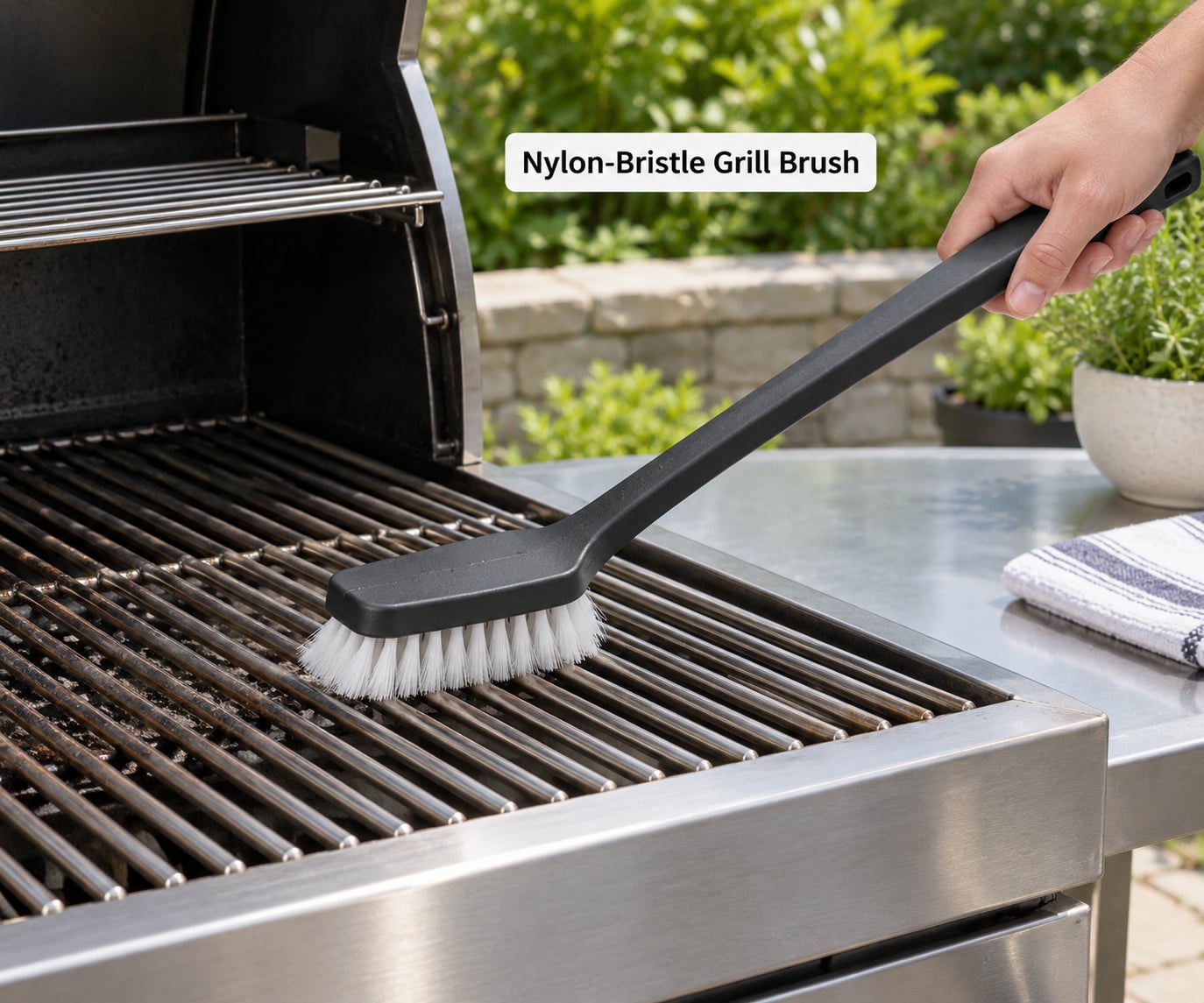
A nylon-bristle brush is the default answer for most people, and it is a good one. The synthetic bristles are anchored into a solid head rather than crimped into a ferrule the way steel is, so nothing shears off and flies onto the grate.
The catch is heat. Nylon softens and deforms when the grill is hot, so this is a cool-grate tool. Let the grill sit until the grate is cool to the back of your hand, brush with the grain in long back-and-forth strokes, then wipe with a damp paper towel to lift the loosened crumbs.
On heavy carbon it takes more than one pass and a nylon brush is weaker than steel. Owners on grilling forums often complain that cheap nylon heads shed and lose shape in a season, so I look for a solid head, a replaceable bristle cartridge, and brightly colored bristles that are easy to spot on a dark grate.
How a nylon brush compares with a wire grill brush for safety
It compares well on the risk question and less well on power. A nylon filament is a single continuous plastic fiber rather than a piece of drawn and cut steel, so it bends and frays instead of breaking off and disappearing into the gaps of the grate.
Example: after a Saturday of burgers on a stainless grate, one pass with a nylon brush and a damp wipe clears the grease film and the crumb bed. If a wire brush had done the same job, I would be inspecting the grate with a flashlight afterward, looking for hairlines of bright steel standing up between the bars.
2. Stainless-Steel Mesh Sponge
A stainless mesh sponge, the kind sold as a heavy-duty scourer, handles stubborn crumbs and moderate buildup that a nylon brush walks away from. The loops of wire are woven into a single pad, so nothing is crimped or glued on and there is no bristle to detach.
It also dries fast and rinses clean, which matters more than people expect. A sponge that stays damp in a grill shed becomes a smell problem by August.
The limitation is the same one that makes it useful. It is abrasive, so keep it off porcelain-coated and nonstick grates, where it will take the coating off in patches. On raw stainless and bare cast iron it is fine.
3. Brass or Copper Mesh Pad
Brass and copper mesh pads do the same job as steel mesh but with softer, non-ferrous metal. That matters for two reasons: softer means less scratching on stainless, and copper and brass will not leave orange rust flecks on a grate the way a steel pad can if it sits damp.
Storage is the part people get wrong. I keep mine in a ziplock or clipped to a hook indoors, because a copper pad left outside on a damp patio starts turning green within days. Dry it by the sink after use and it stays fine for years.
One more caution: buy a pad that is a single woven sheet, not one assembled from loose cut rings. Poorly made pads shed small metal pieces that are harder to see than a wire bristle but just as unwanted.
4. Coarse Pumice or Ceramic Cleaning Stone
A dampened pumice stone or ceramic bar works by grinding carbon away rather than scraping it loose, so it attacks the hardest baked-on residue without any bristle at all. A wet stone on a raw stainless grate will take an evening of steady scrubbing and leave the metal noticeably cleaner than any wire brush would.
Pressure is the variable. Light, wet, repetitive passes work. Leaning on it hard just wears the stone faster and can leave grit across the grate, so I keep a bowl of water and a rag nearby and rinse as I go.
Grate compatibility decides whether it is usable. It suits raw stainless, bare cast iron, and grates marked by the manufacturer for stone use. It does not belong on porcelain-coated, enameled, or nonstick grates, and it strips cast iron seasoning, so budget a re-season afterward.
5. Wooden Grill Scraper
A wooden grill scraper is a flat scraper shaped to one grate pattern, and it is the closest thing to a zero-risk tool on this list. Nothing can detach from solid wood, and the scraper works by friction and grain rather than by plucking residue off the surface.
It needs a break-in. New wood is hard and slick; after a dozen cooks it softens and starts conforming to the bars, and that is when it becomes genuinely effective. Owners in the barbecue forums rate them highly but warn about two things, both fair: the break-in takes time, and a scraper cut for round cast iron bars will not fit a flat stainless grate or a second grill.
It also leaves carbon behind rather than dissolving it. Expect it to clear stuck-on food and the first layer of char, not a heavily neglected grate.
6. Wooden Popsicle Stick or Wood Shovel
A flat wooden popsicle stick, a wooden spatula, or a scraper cut from a piece of scrap lumber costs almost nothing and handles the job nobody wants to buy a tool for. Straight flat grate bars are its sweet spot.
Here is how it goes in practice. A wedge of onion sticks to a flat stainless bar after a cook. Let the grate cool, hold the stick at about a 30-degree angle to the bar, push the wedge off in one firm motion, then wipe the crumbs away with a damp paper towel. That is a two-minute fix with zero risk.
The limitation is the edge itself. Popscicle sticks are thin and blunt, so they lift food rather than carbon, and the wood dulls after a few weeks. Treat them as disposable, and never use one on a grate that is still warm enough to soften the wood or smoke it.
7. Grill Cleaning Brick
A grill cleaning brick or stone is a dense abrasive block meant for heavy restoration on raw grates and flat tops. Wetting it and scrubbing loosens baked-on residue in a way a nylon brush cannot, and the block itself never sheds anything onto the grate.
Read the manufacturer’s compatibility note before anything else. Bricks vary widely in grit level, and a coarse block on a porcelain grate will scar the coating permanently. If the grill manual does not list the stone as compatible, do not use it.
Water control is the second rule. Keep the block damp throughout, rinse the grate as you work, and wipe the surface dry when you finish. A dry brick dragged across a grate is just an abrasive sledgehammer.
8. Steam and Thick Heatproof Cloth
Steam cleaning works on grease rather than carbon. Held against a cooled grate, a steam nozzle or the nozzle end of a steam-cleaning gun loosens a greasy film, and a thick heatproof cloth finishes the job without a single abrasive surface touching the metal.
Are safe alternatives to wire grill brushes safe to use on a hot grate?
Only some of them. Every tool in this list needs a cool grate unless the manufacturer says otherwise, and a cloth plus steam combination needs a genuinely cold grate and full shutoff. Turn the burners off, close the lid on a gas grill so the residual heat escapes, then wait. Pouring water onto a hot grate warps cast iron and sends up a burst of steam that can scald you.
Cleaners built around aramid fabric and a stainless steel outer cage handle greasy grates well. The fabric tears if you use it on a grate with hard food still stuck on, so scrape or knock the loose pieces off first.
9. Bristle-Free Grill Pad
A bristle-free grill pad is the purpose-made answer for anyone who wants a brush-shaped tool with no fibers at all. Silicone and composite pads flex around individual bars, which means they reach the sides of each grate channel where crumbs hide.
The wrap-around shape is the real advantage on flat stainless and cast iron bars. A rigid pad only touches the top edge; a flexible one contacts the full side of the bar and dislodges far more material per pass.
Where it performs poorly is heavy carbon. These pads work by gentle abrasion, so they need the same patience as a nylon brush and the same cool grate. On bare cast iron they will not strip seasoning the way a stone does, which makes them a better everyday choice than a brick if your grates need regular maintenance rather than a restoration.
10. Reversible Cast-Iron Griddle Plate
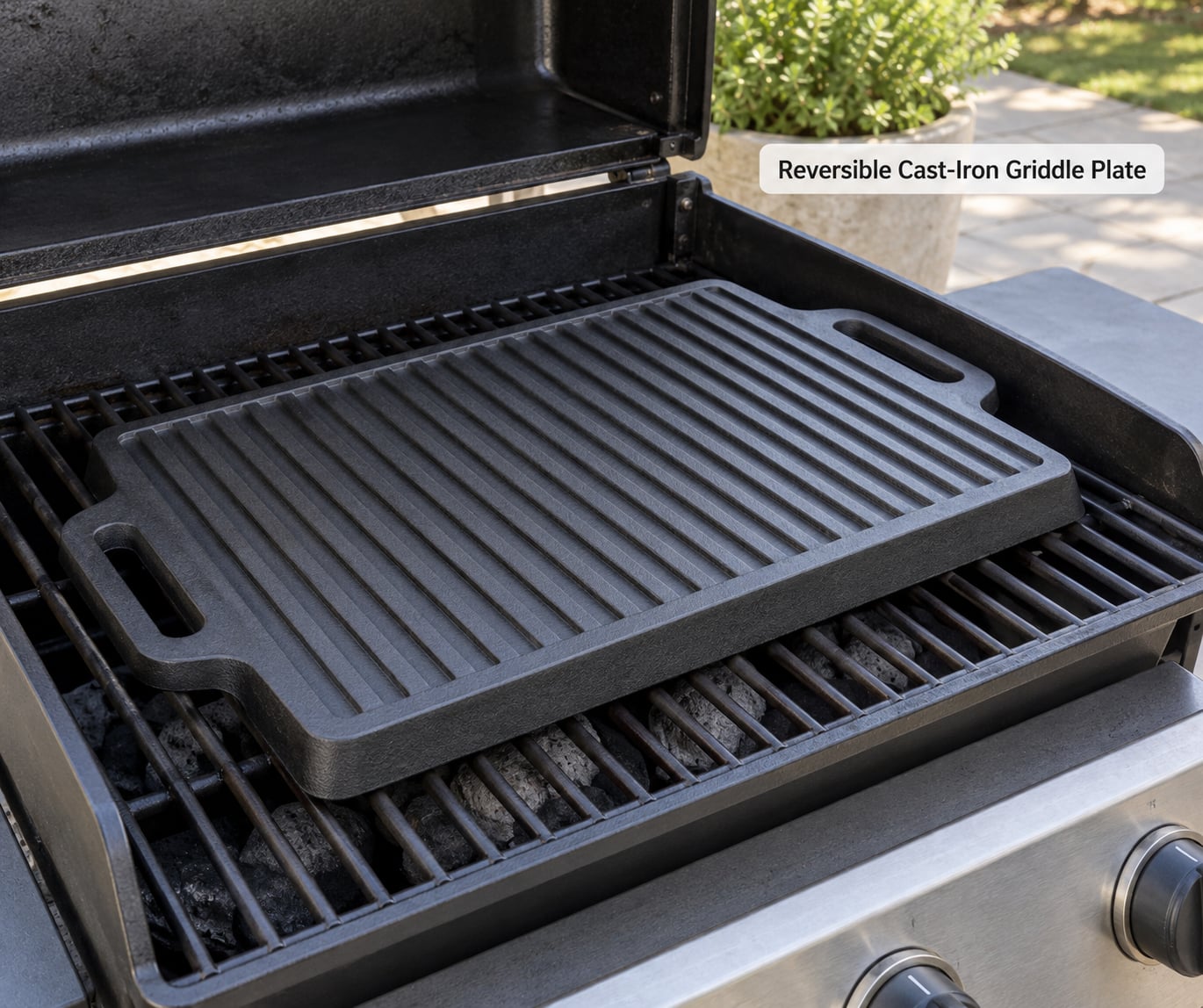
A reversible cast-iron griddle plate is not a cleaning tool, and that is the point. Set it on the grill inverted, ribbed or flat side toward the food, and nothing touches the upper grate. When you lift it off, the grate underneath is clean because nothing cooked on it.
The plate also concentrates heat on one side of the grill, which helps if you are chasing a sear or keeping burgers from drying out while you set up two zone heat.
The trade-offs are real. You lose about half your direct cooking area, and on a charcoal grill a cold plate against the coals eats heat the coals would otherwise give you. It is a strong choice for weeknight burgers on a gas grill, a poor choice for a long charcoal cook where grate char is part of the flavor you want.
Which Alternative Is Best for Your Grill?
Match the tool to the grate, not to the marketing. Flat stainless bars, the kind on most gas grills, respond well to a nylon brush for routine work and a mesh sponge when the buildup gets stubborn. Bare cast iron grates take a bristle-free pad or a nylon brush daily and a pumice stone only when they need restoring.
Porcelain-coated and enameled grates are the strictest case. Abrasive pads, steel wool, stones, and hard scraping are all out, so you are left with a soft nylon brush, a wooden stick, or steam and a cloth. Go gently and often, because a damaged coating does not come back.
Round cast iron bars are where a wooden scraper earns its keep, because a scraper cut to the pattern rides the curve instead of catching on it. Kamado grills, where the grate sits close to the fire, get the nylon brush on a fully cooled grate and nothing that can smoke or warp.
Whatever you choose, three conditions hold: the grill is off and cool, the tool matches the grate material, and the tool is one that cannot shed. A single bristle in a burger costs a lot more than a grill stone.
Frequently Asked Questions
Are safe alternatives to wire grill brushes as effective as steel-bristle brushes?
On heavy carbon, no. Steel wire is genuinely stronger, and a nylon brush or wooden scraper will take several passes where a wire brush takes one. On grease, crumbs, and food stuck to a grate, most wire-free tools match a wire brush easily. The practical answer is a two-tool setup: a nylon brush for routine cleaning and a stone or block for the once-a-season deep clean.
Can I use a wire-free brush on a nonstick grill grate?
Only a soft one. Nonstick manufacturers generally warn against abrasive pads, steel wool, mesh sponges, and stones because they scratch the coating and it then flakes into food. A soft nylon brush, a wooden stick, or steam with a cloth is the safer choice. Check your grill’s care guide first, since coatings vary and a damaged surface cannot be repaired.
What is the safest way to remove burned-on residue from grill grates?
Turn the burners off and let the grate cool completely, then soften the residue with warm soapy water or a manufacturer-approved grill stone. Follow with a nylon bristle brush and a damp wipe to carry the loosened bits away. Skip the water-onto-a-hot-grate shortcut: it can warp cast iron and flash to steam fast enough to scald you.
Is a natural-bristle wooden brush better for a stainless-steel grill?
A well-made natural-bristle brush is gentle on stainless steel, but it is not automatically safer. Poorly anchored natural fibers can shed just like wire, and plant fiber is not always as visible on a grate as bright steel. Look for durable anchored bristles, a solid handle, and a replaceable head, and wipe the grate with a damp towel afterward either way.
When is a wire grill brush still the right tool?
A wire brush is defensible on a bare cast iron or raw stainless grate with heavy carbon buildup, where nothing softer will move it fast enough. If you use one, work on a hot but not smoking grate, wipe the bars with a damp rag straight afterward to catch detached bristles, then dry and oil the grate. Replace the brush yearly and never brush a porcelain-coated grate.
What to Try First
Start with a nylon-bristle brush with a replaceable head and use it on a cool grate after every cook. That single habit prevents most of the buildup you would otherwise be attacking with harsher tools.
Only escalate when the buildup demands it: a stainless or brass mesh pad for stubborn crumbs, a pumice stone or cleaning brick for baked-on carbon, and a wooden scraper when food is genuinely stuck. If you want to stop the problem at the source, an inverted griddle plate keeps food off the grate entirely. If you are still seeing flare-ups with a clean grate, that is a different problem, and our guides on controlling flare ups and setting up two zone heat cover it.