
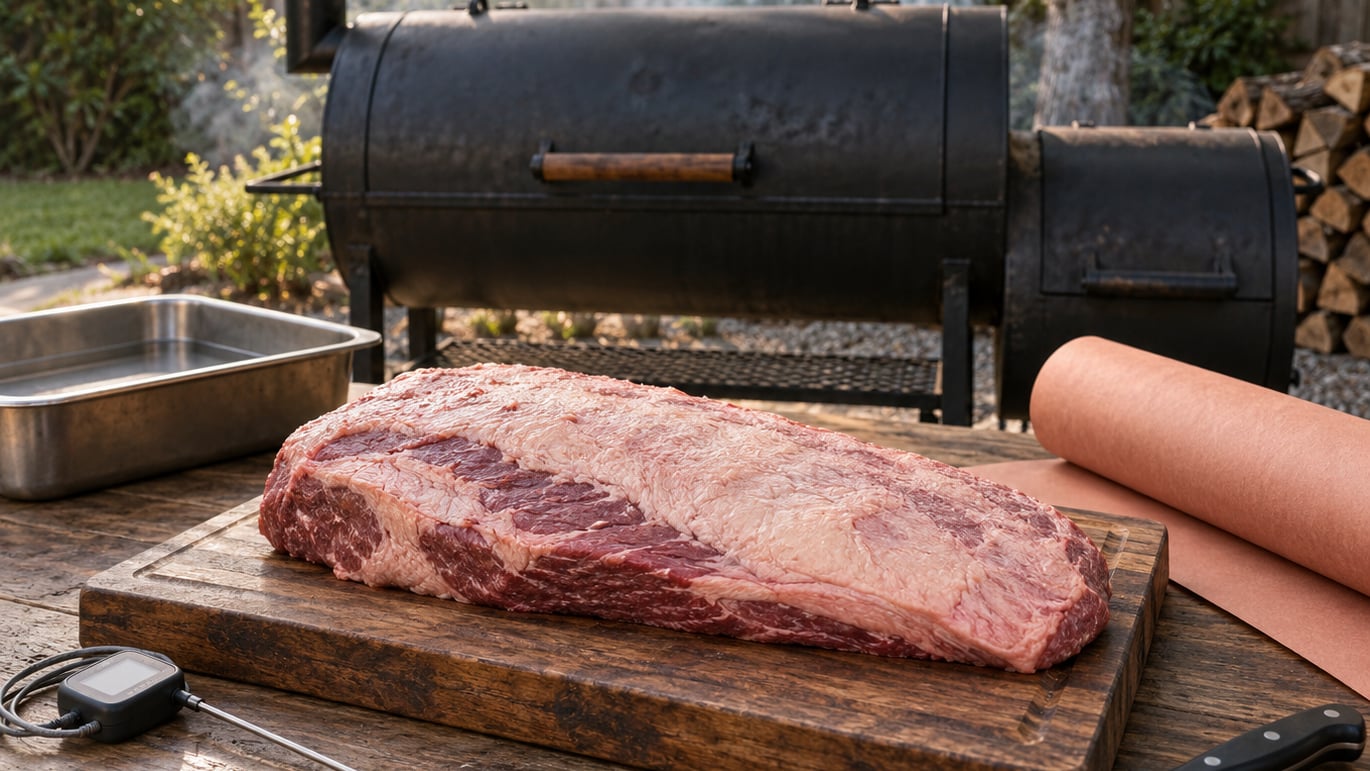
How to smoke a brisket for beginners comes down to five moves: trim the fat cap, salt it the night before, hold a steady 250F in the pit, wrap it when it stalls around 160F, then pull it at 195-205F and let it rest an hour before slicing. That is the whole process.
The part nobody tells you is the clock. A 10 to 12 lb packer brisket takes somewhere between 8 and 12 hours plus rest, and a small smoker in cold weather can stretch that further, so plan the cook as an all-day or overnight event rather than an afternoon one.
Difficulty is lower than most people expect. You are managing heat and a thermometer, not performing any technique that cannot be undone, and a brisket that comes out merely good is still a very good meal.
What You Need
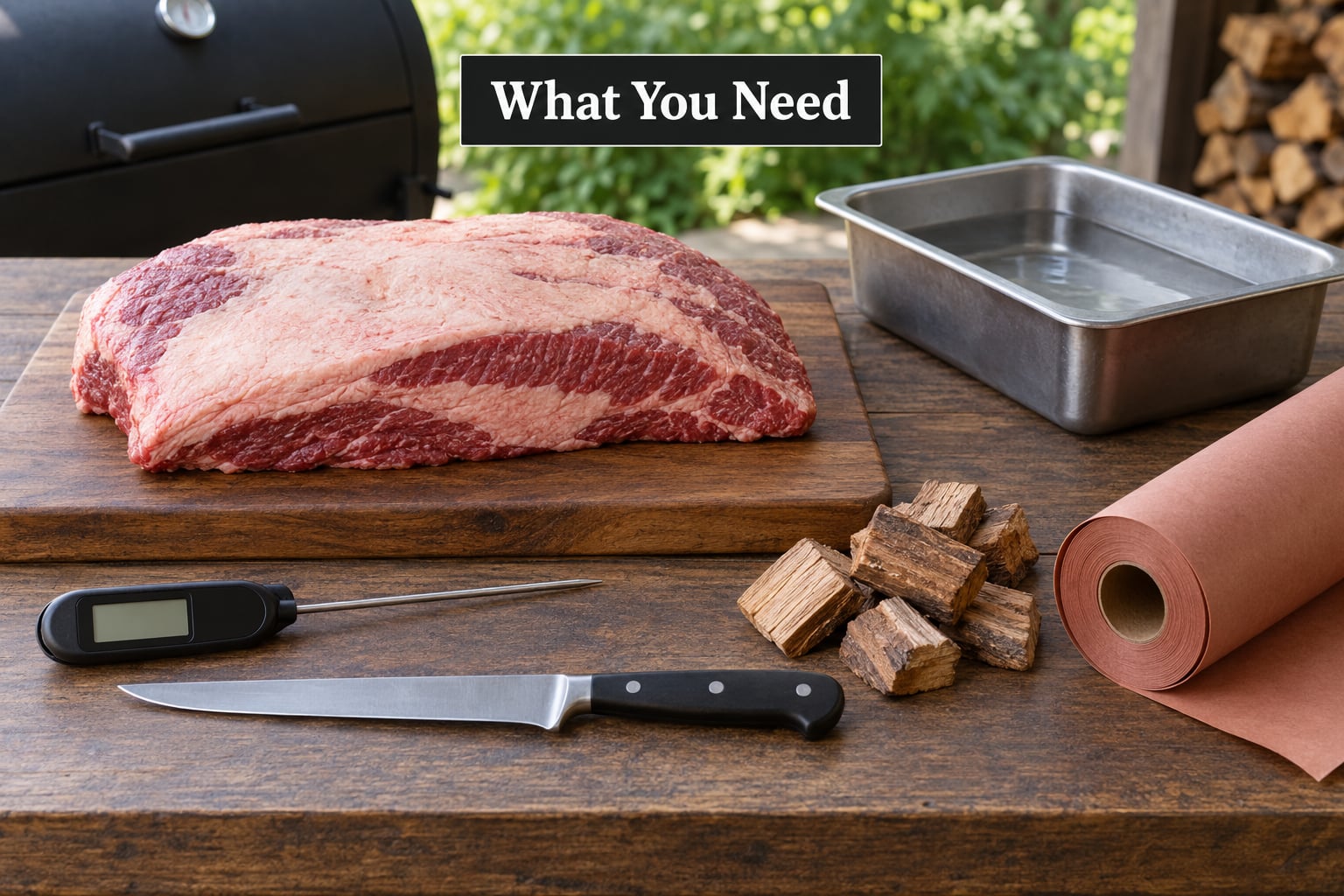
Brisket rewards preparation more than expensive gear. You can absolutely learn how to smoke a brisket for beginners on a charcoal offset, a pellet grill, or an electric cabinet smoker, and the difference between a good cook and a great one comes down to heat control and a good probe.
Essential gear
- A smoker that holds temperature. Charcoal offset, pellet, electric cabinet, or kamado all work. The ability to hold 250F with the lid closed for ten hours matters far more than the brand.
- A charcoal chimney starter if you burn charcoal. It lights in 15 minutes instead of 25 and gives you a cleaner, more even coal bed than a pile of matches.
- A water pan for charcoal and offset smokers. It keeps the pit from drying out, stabilizes temperature swings, and buys you time during the stall.
- An instant-read thermometer for checking pit temperature where the air actually is, near the brisket but not directly over the smoke box.
- A leave probe thermometer with two or three wires. This is the single most useful tool in the whole process and the one beginners skip.
- A boning or trimming knife and a sharp carving knife. Trim dulls quickly and a dull knife shaves meat instead of lifting fat.
- A yellow mustard or oil binder, coarse kosher salt, and a grinder for 16-mesh black pepper.
- Butcher paper and foil for the wrap, plus a wire rack and a clean board or pan for resting.
Nice to have, not required
A meat injector, a spray bottle for a water or apple juice spritz, and a charcoal grill for rendering trimmed fat are useful later. Skip all three on your first cook; none of them fix a badly managed pit temperature.
One more piece of planning matters more than any gadget. Decide when you want to eat, then work backwards, because a brisket that finishes at midnight is not ruined, it just needs somewhere warm to wait.
How to Smoke a Brisket for Beginners: Step-by-Step
Trim and Season the Brisket
Trim the brisket the night before. Set the fat cap side down on a cutting board and shave the top layer with a sharp knife held nearly flat, leaving about a quarter inch of fat. That thin layer is what becomes the bark, and thick patches of fat render unevenly and turn bitter.
Flip it over and remove the loose, thick fat from the bottom and the sides, but leave the deckle, the rounded point end, intact. The deckle is full of connective tissue and moisture, and cutting it down dry is the fastest way to lose the juiciest part of the meat.
Season it with a 1:1 dry brine of coarse kosher salt and 16-mesh black pepper, about one tablespoon per pound of trimmed meat, pressed into every surface. A thin coat of yellow mustard helps the rub stick, but skip it if you are using mustard inside the wrap later. Let it sit uncovered in the fridge overnight.
Cold brisket on the smoker is the right call. The long, slow temperature climb gives the smoke time to penetrate and lays down a stronger smoke ring than meat that starts at room temperature, and it means one less variable on the morning of the cook.
Set Up the Smoker and Preheat It
Build your fire and get the pit to 250F a full 45 minutes before the brisket goes on. A cold smoker that heats up alongside the meat produces exactly the uneven temperature beginners blame on the brisket.
For a charcoal smoker, fill the chimney, light it, and dump it into one side of the firebox. Empty the water pan and add hot water. Add a couple of wood chunks on top of the coals once the charcoal is ashed over; too much wood early puts a bitter, acrid taste into the meat before the bark has formed to protect it.
Wood choice is mostly about taste. Post oak and hickory give the classic hickory-soaked result, cherry adds mild sweetness, and mesquite is sharp enough that beginners usually regret it. Start with a mild wood so you can taste the beef.
Place the fat cap facing up and put the point end on the side that cooks fastest, or toward the side with more coals if your smoker has a hot spot. Insert the leave probe into the thickest part of the flat without touching bone, and keep the lid closed.
Smoke Until the Brisket Reaches the Stall
Leave it alone. Opening the lid to check the color drops pit temperature, adds cooking time, and sets back the bark. Check the meat with your wires only when you are adjusting the vents or adding wood.
For the first two hours, hold the vents wide open and let the fire burn clean and hot so the pit settles at 250F. After the bark sets, you can dial the fire down a touch and narrow the vents.
The fat cap does more than season the meat. It renders slowly and bastes the brisket from above as it drips through the cook, and that is your built-in moisture system, which is why you leave a quarter inch rather than trimming it bare.
Wrap the Brisket for the Tenderizing Phase
Wrap it when the internal temperature stalls around 160F to 170F, or once the bark is mahogany colored and you can hear a difference in the way the meat moves. This is the Texas crutch, and it cuts the finish time significantly while holding in moisture.
Butcher paper is the beginner-friendly choice. Peach paper breathes slightly, so bark and smoke flavor stay on the surface while moisture stays in. Lay a large sheet on the bottom, put the brisket fat side up, then pull the paper up the sides and over the top. Leave one corner loose so steam can escape.
Foil wraps tighter and speeds things up more, but it steams the bark soft and can slide off when you unwrap it. If your bark is not dark enough yet, use paper.
Wrapping that bark too early is the most common way beginners lose the crust they worked for, so wait for color. If you are unsure, wrapping ten degrees earlier is safer than ten degrees later.
Check Doneness and Finish Cooking
Cook to tenderness, not to time. The usable range runs from 195F to 205F for most home cooks, with the flat usually reading a few degrees ahead of the point. Pulling at 215F is not more tender, it is drier.
Use your instant-read probe as a tender test: slide it into the thickest part of the flat with almost no force. If it goes in and out like pushing a finger into cold butter, it is done. If you feel resistance, give it another 15 minutes and check again.
Food safety is not the limiting factor here. The USDA minimum safe internal temperature for whole cuts of beef is 145F, which a brisket passes hours before it is tender, so always cook by texture rather than by the minimum.
Rest, Slice, and Serve
Rest it for at least one hour, and two or more if you can. Resting is not a food safety pause, it is the step where the muscle fibres relax and reabsorb the juice that pushed out during cooking. Slice it hot and you are pouring that juice onto the cutting board.
If you finish earlier than you plan to eat, hold the wrapped brisket in a clean cooler or a 150F to 160F oven. Holding keeps the surface above the temperature where bacteria multiply, and it lets you serve hours late without a second cook.
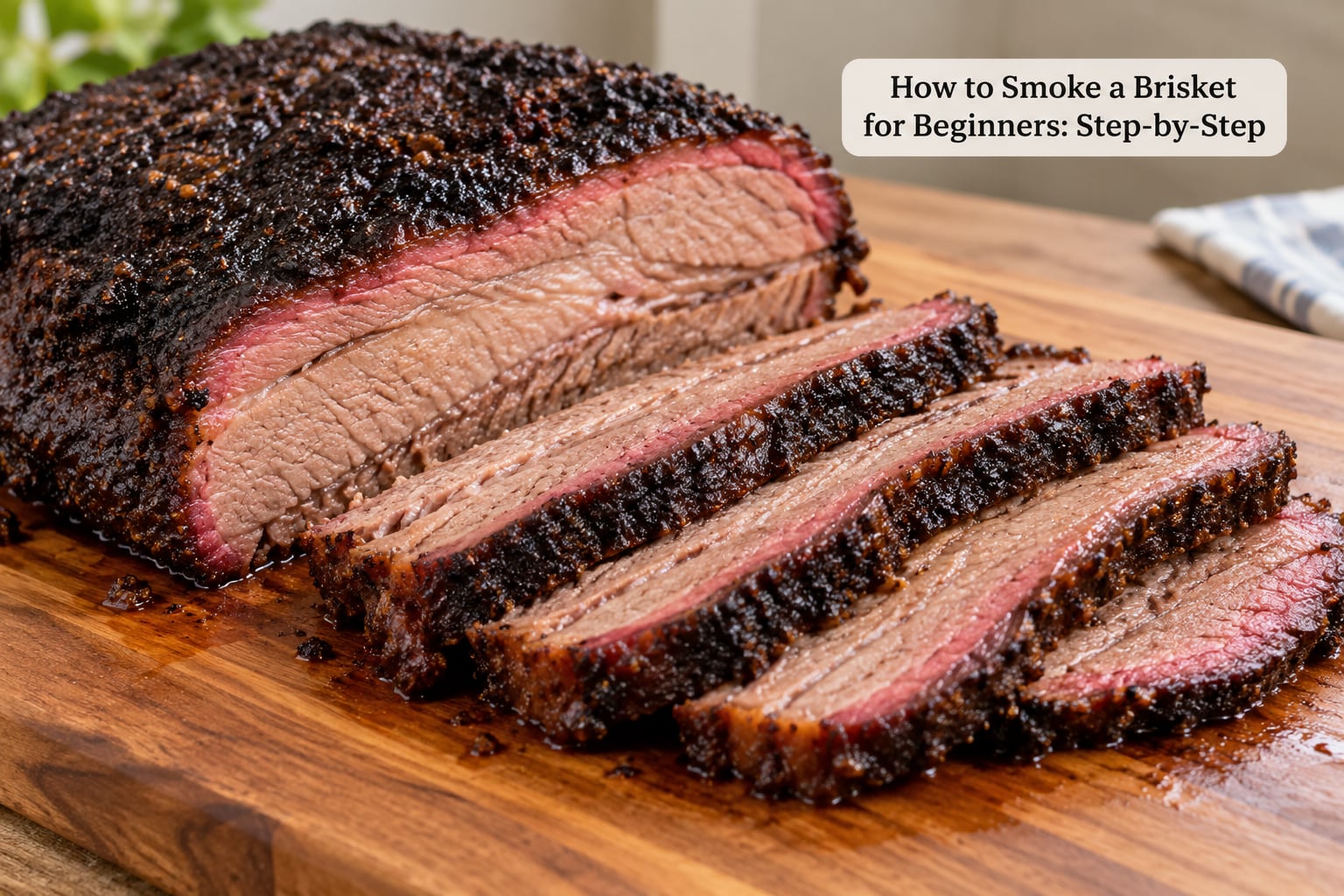
Slice across the grain, roughly a quarter inch thick. Find the grain on the flat by looking for the direction the fibers run, and cut perpendicular to it. Thin slices from a flat-first brisket make excellent sandwiches; if you are using leftovers, the brisket and chuck burger blend explained covers how the point behaves once it is trimmed down.
Common Mistakes
What beginners get wrong most often
- Letting pit temperature swing. Big swings dry the surface and stall the bark. Add small amounts of fuel, adjust vents gradually, and use a water pan.
- Over-smoking early. Heavy, white smoke before the bark forms puts a creosote bitterness on the outside that wrapping will not remove. Thin blue smoke is the target.
- Trimming off too much fat. Bare patches dry out and tear when you handle the meat. Leave a quarter inch on top and keep the deckle whole.
- Wrapping too early. Wrapping at 140F locks in pale bark. Wait for color, usually 160F to 170F.
- Checking the meat too often. Every wire probe opening is a small heat loss. Trust the leave probe and check it when you are already tending the fire.
- Slicing straight off the smoker. This is the biggest source of dry brisket and juice on the board. Rest first, always.
- Cutting with the grain. It does not matter how good the cook was; against the grain is what makes it tender to eat.
- Cooking to 215F and above. Beyond about 205F the extra collagen conversion is minimal and the moisture loss is real. That is where the dry flat problem starts.
- Planning a six-hour cook for a twelve-hour brisket. Every schedule problem traces back to this. Add buffer, then more buffer.
Tips for Better Beginner Results
Judge readiness by probe tenderness and temperature together, and remember the stall is a phase, not a failure. You may also see the temperature drop after the plateau, sometimes from the high 180s back to the 160s, which experienced cooks on smokingmeatforums describe as normal rather than a mistake.
Match your effort to the weather. Cold ambient temperatures and a small firebox are the two variables experienced cooks on r/BBQ name most often when they look back at a disappointing first attempt, so add coal more often in winter and expect a shorter cook in July.
Spritzing is optional and easy to overdo. A light water or apple juice spray after the bark sets helps a long cook, but a wet surface delays bark formation if you spray too early.
For leftovers, cool slices in a single layer, refrigerate within two hours, and use them within three to four days. Reheat gently in a covered pan with a splash of broth or water so the flat does not turn to leather.
Frequently Asked Questions
How do you smoke a brisket overnight?
Smoke it overnight by keeping the pit at a steady 250F, leaving the probe in the thickest part of the flat, and never opening the lid except to add wood or adjust vents. Start the night before, wrap around 160F, pull at 195-205F, then rest or hold until serving. A 10-12 lb packer usually takes 8-12 hours.
When should I start smoking my brisket?
Work backwards from serving time. A 10-12 lb brisket needs about 45 minutes to preheat the smoker, 2 hours to reach the stall, 3-4 hours after wrapping, and at least 1 hour of rest. For a 6pm dinner that means seasoning the night before, lighting the smoker around 6am, and the brisket on the grate by 7am.
Should I wrap brisket when smoking?
Yes, for beginners. Wrapping at 160-170F, once the bark is mahogany colored, cuts the finish time significantly and holds moisture in during the tenderizing phase. Use butcher paper rather than foil so the bark stays intact, pull the paper snug around the sides, and leave one corner loose so steam can vent.
Why is my brisket not getting bark?
The usual causes are too much smoke early, a wet surface from spritzing or mustard before bark sets, and a fat cap trimmed too thin. Hold thin blue smoke instead of heavy white smoke, stop spritzing after the first two hours, leave a quarter inch of fat, and keep the pit at 250F so the surface dries out rather than staying moist.
Is it normal for a brisket to stall at 175F?
Yes, entirely normal. A plateau anywhere from 150F to 175F happens while collagen converts and the surface releases moisture as evaporative cooling, which can drop the pit reading too. Close the vents if the fire is running hot, leave the brisket untouched, and hold for another hour or two. It will climb again.
Do you need to inject a brisket?
No, not on your first brisket. Injection is for large, lean cuts that stall on a schedule, and a well-trimmed packer brisket with a quarter inch fat cap bastes itself as the fat renders. Learn the basic cook first, then inject if you want to speed up long cooks or feed a large crowd from one piece of meat.
Conclusion
Start here: trim the fat cap to a quarter inch the night before, coat it with equal parts salt and coarse pepper, preheat the smoker to 250F for 45 minutes, and put a probe in the thickest part before the brisket goes on. Everything after that is reading temperature and waiting.
The stall will test you. Let it run, wrap at 160F to 170F, pull between 195F and 205F, rest an hour, and slice against the grain. Miss the rest on your first cook and you will learn why it exists quickly enough.
Leftover brisket makes great sandwiches, and a trimmed point is the best burger meat you will ever put on a griddle, so cook a size larger than you think you need. Nothing goes to waste, and the next brisket gets easier. Pair it with something cold and simple, like a how to taste beer like a pro guide for the table, or keep the rest of the meal fast with burgers on the stove without smoke.