
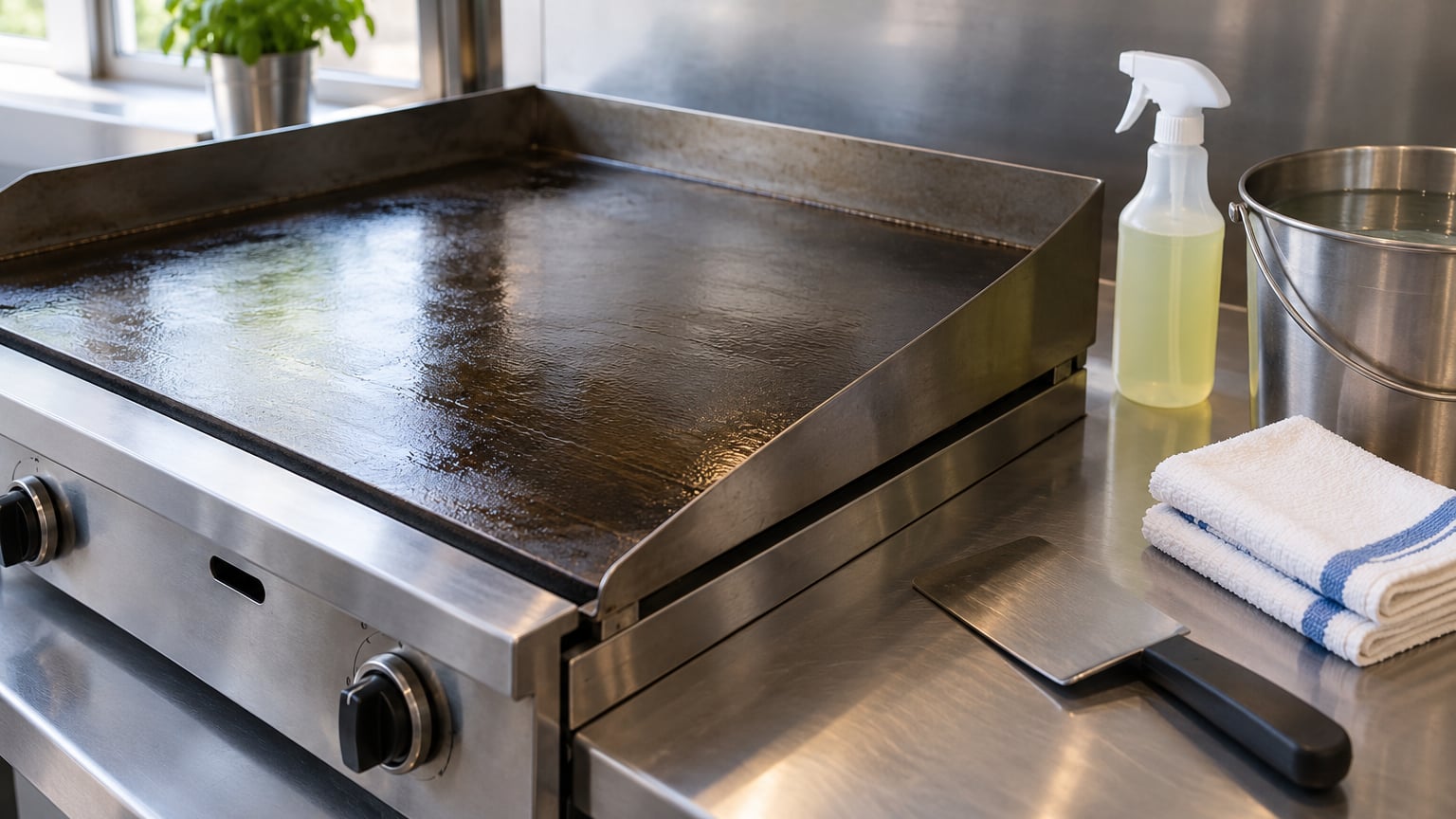
Cleaning a flat top griddle after cooking takes about five minutes: scrape the solids off while the surface is still warm, loosen the stuck-on grease with a splash of water or a food-safe degreaser, wipe everything down, dry the plate completely, and finish with a thin coat of high smoke point oil. That last oil film is what keeps bare steel from rusting between cooks.
Done properly, the routine keeps the seasoning intact, keeps heat where it belongs, and stops a grease fire from ever having a chance. Done badly — cold water on a hot plate, steel wool, a thick coat of oil — it takes months to undo. I learned that one the hard way after leaving a foil cover on a warm griddle overnight and finding orange freckles across the cooking surface the next morning.
Whether you are running a home Blackstone-style griddle in the garage or a restaurant flat top that sees forty burgers an hour, the mechanics are the same. If you have not cooked on yours yet, our guide to smash burgers on a griddle covers the heat and technique side that keeps cleanup easy in the first place.
Table of Contents
- What You Need
- How to Clean a Flat Top Griddle After Cooking: Step-by-Step
- Common Mistakes
- Frequently Asked Questions
- Can I use water to clean a flat top griddle?
- What is the best way to remove burnt-on food from a flat top?
- Should I oil a flat top griddle after every use?
- Can I use steel wool on a cast iron flat top?
- How often should I deep-clean a flat top griddle?
- What should I do if my griddle has a strong grease smell?
- Conclusion
What You Need
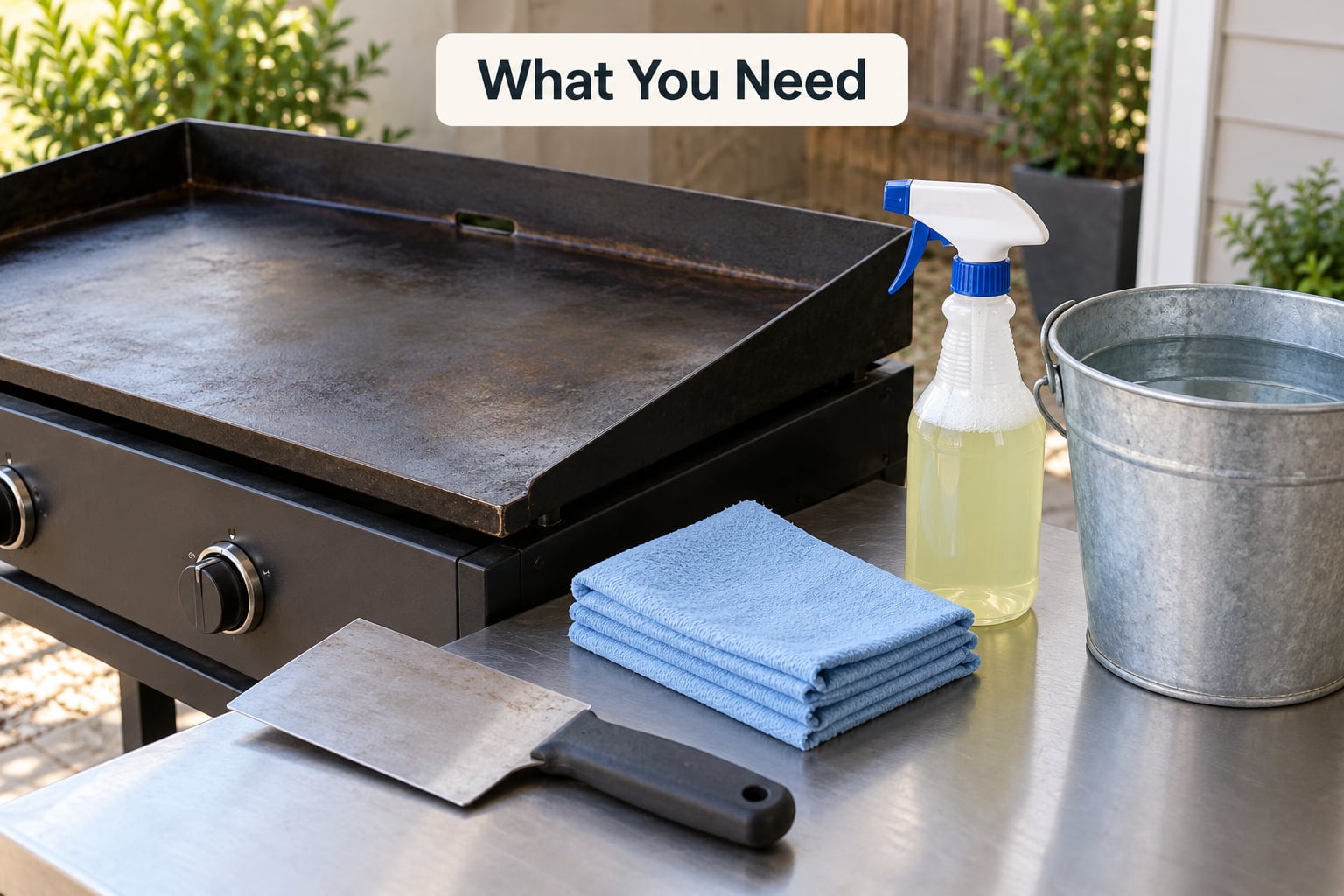
Most people buy a specialty griddle cleaner and a griddle brick before they need one. Both are optional. What you actually need is a short list of cheap tools, and three of them you probably already own.
- Straight-edged metal scraper or bench knife. A wide, flat, unbranded blade lifts cooked-on food better than a spatula because it has no flexible edge to smear the crust across the plate. Hold it at a shallow angle, almost flat.
- Folded shop towels or heavy paper towels. Cheap paper towels shred and leave fibers on the surface. Rag towels work too, but launder them separately so you never wipe a griddle with something that has been through the laundry with fragrance softener.
- Food-safe degreaser. Check that it is labelled for food-contact surfaces. You use a small amount, not a pool.
- A shallow bucket. For wash water, so you are not pouring greasy water down a drain or onto your patio.
- Heat-resistant gloves. A plate at 300 to 350 degrees will blister skin in seconds.
- A high smoke point oil. Canola, vegetable, grapeseed, or avocado. Flaxseed works for seasoning layers but burns off faster, so it is a weekend oil, not a daily one.
Two items are worth adding once you get past the first few weeks. A griddle brick is the traditional deep-clean tool for stubborn carbon on cast iron and bare steel, and it is a consumable that wears down over months. A pumice stone or composite plate cleaner handles the same job on chrome and composite surfaces where a brick would scratch. Neither belongs in your daily routine.
How to Clean a Flat Top Griddle After Cooking: Step-by-Step
How to Clean a Flat Top Griddle After Cooking: Let It Cool Safely
Turn the burners off or drop the heat to its lowest setting and let the plate come down to roughly 300 to 350 degrees. You want it warm enough that grease has not solidified into a varnish, but far enough from glowing that water will not flash into a sheet of steam across your hand.
The one thing never to do is splash cold water onto a plate that is still hot from a high-heat sear. Two bad things happen at once: the sudden temperature change can warp the steel or crack a cast iron plate, and the burst of steam can burn your forearm. Warm water on a warm plate is safe. Cold water on a hot plate is not.
Scrape Solids While the Surface Is Still Slightly Warm
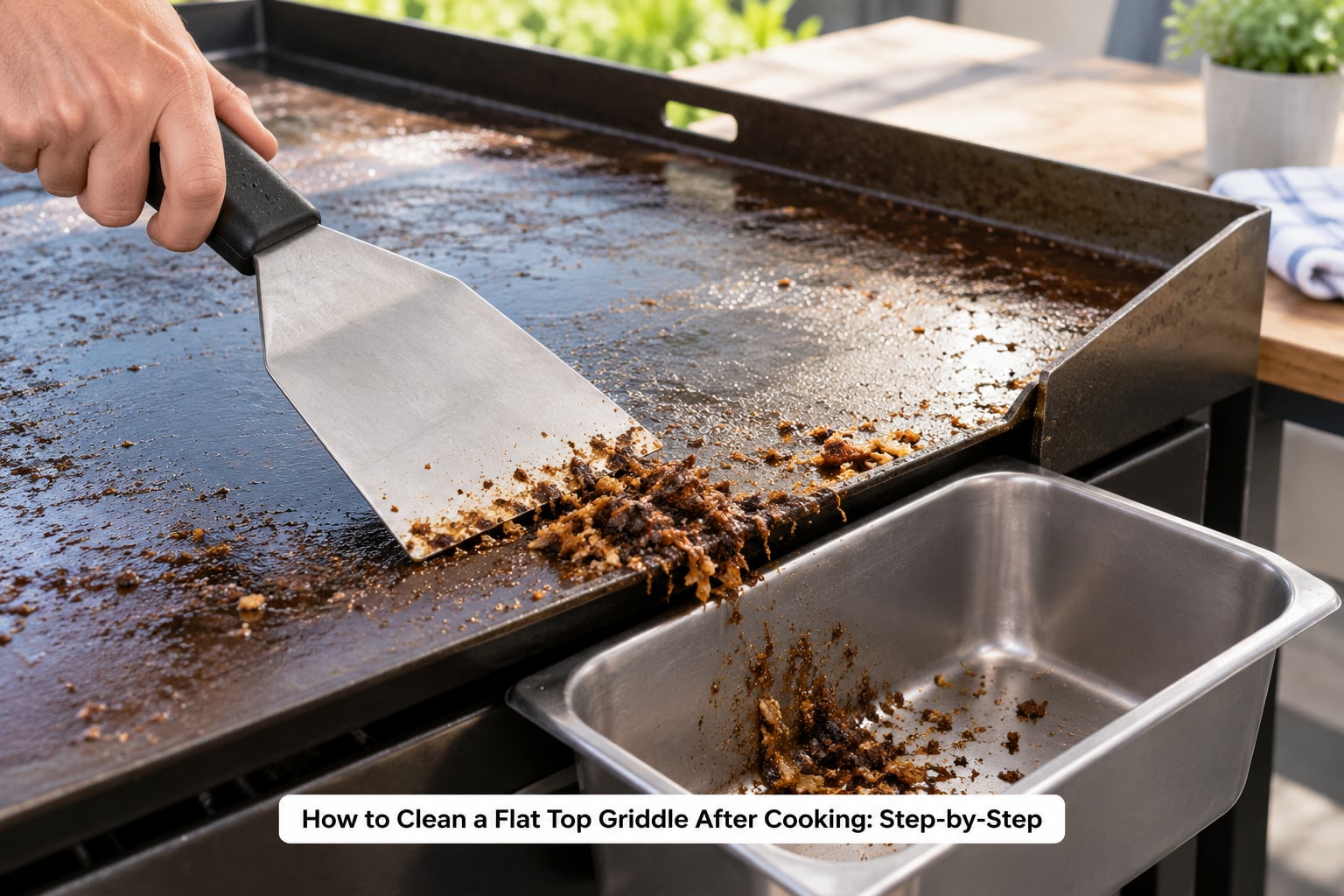
Set the scraper flat and push in one direction, working from the back of the griddle toward the grease channel at the front or side edge. Solids at this stage come up in sheets. If the food has hardened into a solid carbon crust and will not budge, let the plate cool fully and come back to it later with a degreaser rather than leaning on the blade.
You are looking for a surface you could wipe with a bare hand, not a mirror finish. Over-scraping is its own damage: dig in hard enough and you grind black flakes into the plate, which is how a seasoning layer ends up looking patchy. Learn to read the angle. Too steep and you gouge; almost flat and the blade does the work for you.
Apply Degreaser to the Cooled Surface
Once the plate is down near room temperature, spray a light film of your food-safe degreaser across the surface and let it sit for the time printed on the label. Give it a minute or two. On a stainless commercial flat top you can go heavier here, since stainless does not rely on a seasoning layer to stay non-stick.
If the surface is a seasoned cast iron or steel plate, this is also the moment for the water trick that most griddle owners learn from a video and then never do again. Pour two to three tablespoons of room-temperature water onto the warm plate, wait thirty seconds, and the steam does the scrubbing for you. Push the softened debris into the grease channel with the scraper and repeat until the water runs clear. Water that runs clear is your signal that you are done, and it is a much better signal than guessing.
Wipe and Rinse Without Creating a Grease Clog
Fold a shop towel, dampen it with the bucket water, and wipe in long overlapping strokes. Unload a little grease into the bucket, turn the towel, keep going. Paper towels are faster on small home griddles and more expensive per clean on a 40-inch commercial unit.
Rinse only when the manufacturer allows it. Plenty of home griddles are fully sealed steel units where you damp-wipe and stop, because water running into the burners or under the plate is how a unit warps and how a grease channel gets blocked. On a commercial stainless top, a quick rinse with a low-pressure hose is routine and keeps the drain lines clear.
Empty the grease channel drawer after every service. Caked grease in the drawer sits under the plate all night, it is a fire waiting for a spark, and it is the single most common thing I see go unchecked on lightly used home units. Pour it into a metal container, not a plastic bottle.
Dry the Griddle Thoroughly
Take the griddle towel and wipe the plate dry while it is still warm, then run a dry towel across the edges, the grease channel, and the front lip. Moisture left in a crease at 5 percent of the surface area is enough to start a rust spot, and once spots appear they spread.
Touch the plate with a dry hand before you oil it. If it feels tacky anywhere, keep drying. A damp surface under an oil coat traps water and you will find rust in a month even though you did everything else right.
Oil the Surface Lightly Before Storage
Pour about one tablespoon of canola, vegetable, or grapeseed oil onto a folded towel and wipe the plate in long strokes until the surface has a faint sheen and nothing more. If you can see a film pooling in a low spot, wipe that excess off. The finish should look almost dry.
Thick coats are the most common self-inflicted wound in griddle care. Excess oil does not polymerize into a hard non-stick layer; it bakes into a gummy, sticky coating that grabs flakes of carbon and leaves the surface cooking unevenly. If your griddle turns tacky after seasoning, a few heavy-handed oilings are usually the reason.
Cover the griddle only once the plate is completely cool. A cover thrown over a warm surface traps moisture all night, which is the single biggest cause of the surprise rust people report after a few days of no use. Our step-by-step cast iron seasoning walkthrough covers what to do when you have already stripped too much of that oil layer.
Common Mistakes
Almost every damaged griddle I get asked about traces back to one of these six habits. Each has a straightforward fix.
Pouring water on a hot plate. It warps steel, cracks cast iron, and throws a cloud of steam that can scald you. Use room-temperature water, and only on a plate near 300 degrees.
Using steel wool or abrasive pads. Steel wool strips seasoning down to bare metal and leaves a rough surface that grabs food forever. Use a griddle brick for heavy carbon on cast iron, a non-scratch pad for stainless.
Leaving a thick coat of oil. It bakes gummy, goes sticky, and flakes into your food. Wipe until the plate looks nearly dry, not shiny.
Cleaning cold and waiting for the next day. Grease that cools for hours turns into a hard varnish that no scraper will lift. Scraping and degreasing the same evening takes five minutes; the same job the next morning takes three times as long.
Using dish soap or oven cleaner on a seasoned surface. Both strip the polymerized oil layer that food actually slides on. A plain steel plate can handle a light detergent wash, but then it needs to be re-seasoned before it is used again.
Covering a warm or damp griddle. Trapped moisture and condensation cause rust in days. Let it cool completely with the cover off, then cover it.
Two more worth naming: vinegar is a fine natural degreaser on bare stainless steel, but it will etch a chrome plate over repeated use, and creamy caramelized sauces need the full water-and-scrape cycle rather than a quick wipe. Cooking with oil or butter on the surface is also a fast route to a sticky, overheated polymer that flakes. Our kitchen cleanup after frying guide covers how to keep a deeper grease reset on the same schedule if your griddle shares a hood and duct run with a fryer.
Frequently Asked Questions
Can I use water to clean a flat top griddle?
Yes, on a warm surface and in small amounts. Two to three tablespoons of room-temperature water on a plate around 300 to 350 degrees creates steam that loosens stuck-on food and lifts grease, then you push the loosened debris into the grease channel with a scraper. Repeat until the water runs clear. Never put cold water on a hot plate; the thermal shock can warp steel or crack cast iron, and the steam burst can burn you.
What is the best way to remove burnt-on food from a flat top?
Turn the heat down, let the plate settle near 300 to 350 degrees, and pour a few tablespoons of room-temperature water on it. Wait about thirty seconds for the steam to do the work, then scrape with a straight-edged metal blade held at a shallow angle. Repeat the water-and-scrape cycle until the water runs clear. If the carbon is thick enough to survive that, drop the heat to the lowest setting and work slowly rather than pressing harder.
Should I oil a flat top griddle after every use?
On a cast iron or bare steel plate, yes. Wipe on roughly one tablespoon of a high smoke point oil such as canola, vegetable, or grapeseed while the griddle is still warm, then wipe off the excess so the surface looks almost dry. On a nonstick or composite surface, follow the manufacturer instructions instead, since many of those are factory pre-seasoned and only need a light wipe. Stainless commercial tops need less oil, just enough to slow surface rust.
Can I use steel wool on a cast iron flat top?
Not for routine cleaning. Steel wool strips the polymerized seasoning down to bare metal and leaves microscopic gouges that make food stick permanently. For stubborn carbon on cast iron, use a griddle brick or a chainmail scrubber at a shallow angle while the plate is warm. For a really bad build-up, burn it off with a heavy scrape at low heat or use coarse salt as a mild abrasive, then re-season the surface before cooking on it.
How often should I deep-clean a flat top griddle?
Weekly for a home griddle used two or three times a week, and every few days for a commercial unit in constant service. A deep clean means degreaser left on for the label time, repeated water-and-scrape cycles, a griddle brick or pumice stone pass on stubborn spots, and a thin re-oil afterward. Empty and wipe out the grease channel drawer at least weekly, since it is a fire hazard regardless of how the plate looks.
What should I do if my griddle has a strong grease smell?
A burnt smell usually means the surface is running hotter than your oil, and a greasy smell means the grease channel or drawer is full. Take the heat down, empty the channel drawer into a metal container, and degrease the plate with a food-safe cleaner, then run the water-and-scrape cycle until the water runs clear. Oil the surface thinly and stop cooking on it at high heat until the smell is gone.
Conclusion
Start with the heat: drop the burners, wait for a warm-not-hot plate, and scrape before the grease turns to varnish. Then steam, wipe, dry, and finish with the thinnest coat of oil you can manage. Five minutes that way keeps the seasoning, the even heat, and the surface itself in better shape than an hour of scrubbing on Sunday.