
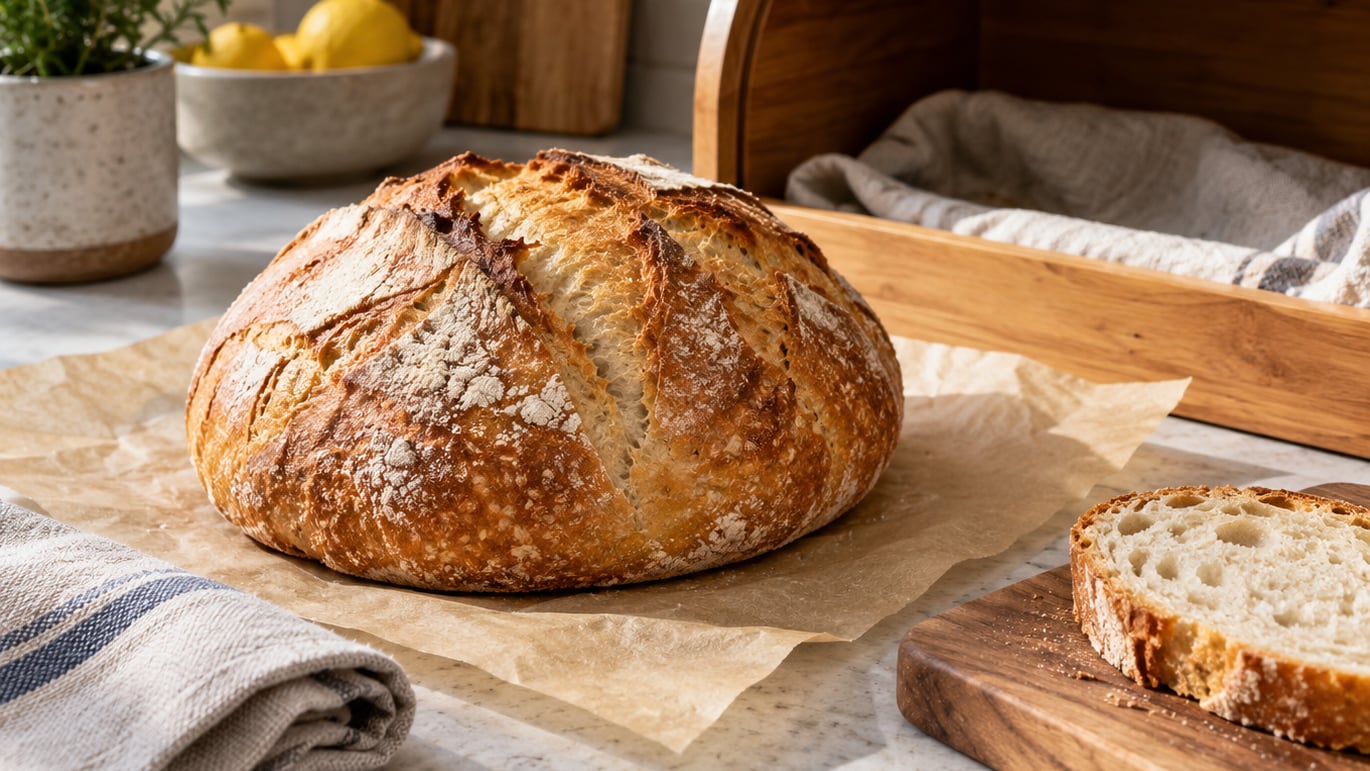
If you want to know how to keep bread fresh longer, the whole thing comes down to three moves: let the loaf cool completely before you touch it, wrap it in the material that suits its crust, and keep everything you will not eat within a day or two in the freezer. Counter storage in a bag or box buys you two or three days of good crumb. Freezing stops the aging process almost completely, and a slice can be pulled straight from the freezer into a toaster. Nothing else on the counter changes the outcome nearly as much.
Two different things go wrong with bread, and most of the confusing advice online mixes them up. Staling is physical: the starch in the crumb recrystallizes over the first few days, so the loaf firms up no matter how you wrap it. Mold is biological: warm, damp, enclosed bread gives mold spores an easy start, usually within two or three days. Cooling and air flow fight the first problem. Sealing and temperature fight the second.
One more thing worth saying up front, because it is the piece most guides get wrong. The refrigerator is not where bread belongs. Cold temperatures speed up starch retrogradation, which is why a sandwich loaf that feels fine on Monday turns hard and rubbery by Wednesday.
What You Need
None of this is expensive or hard to find, and most of it is already in your kitchen.
- A wire cooling rack for the first few hours, so air moves under the loaf instead of under a damp cutting board.
- Parchment paper or a clean cotton or linen towel for crusty loaves, baguettes, and sourdough.
- A plastic bag, a resealable container, or plastic wrap for soft sandwich bread, burger buns, rolls, and enriched loaves like brioche or challah.
- A bread box or a dry cupboard that does not sit above the stove or next to the dishwasher.
- Freezer bags, a marker, and a sharp serrated knife if you plan to freeze any of it.
If buns are part of your week, these same principles apply in reverse. How to keep burger buns from getting soggy covers the moisture side of the problem, which is the other half of keeping bread fresh.
Step-by-Step: How to Keep Bread Fresh Longer
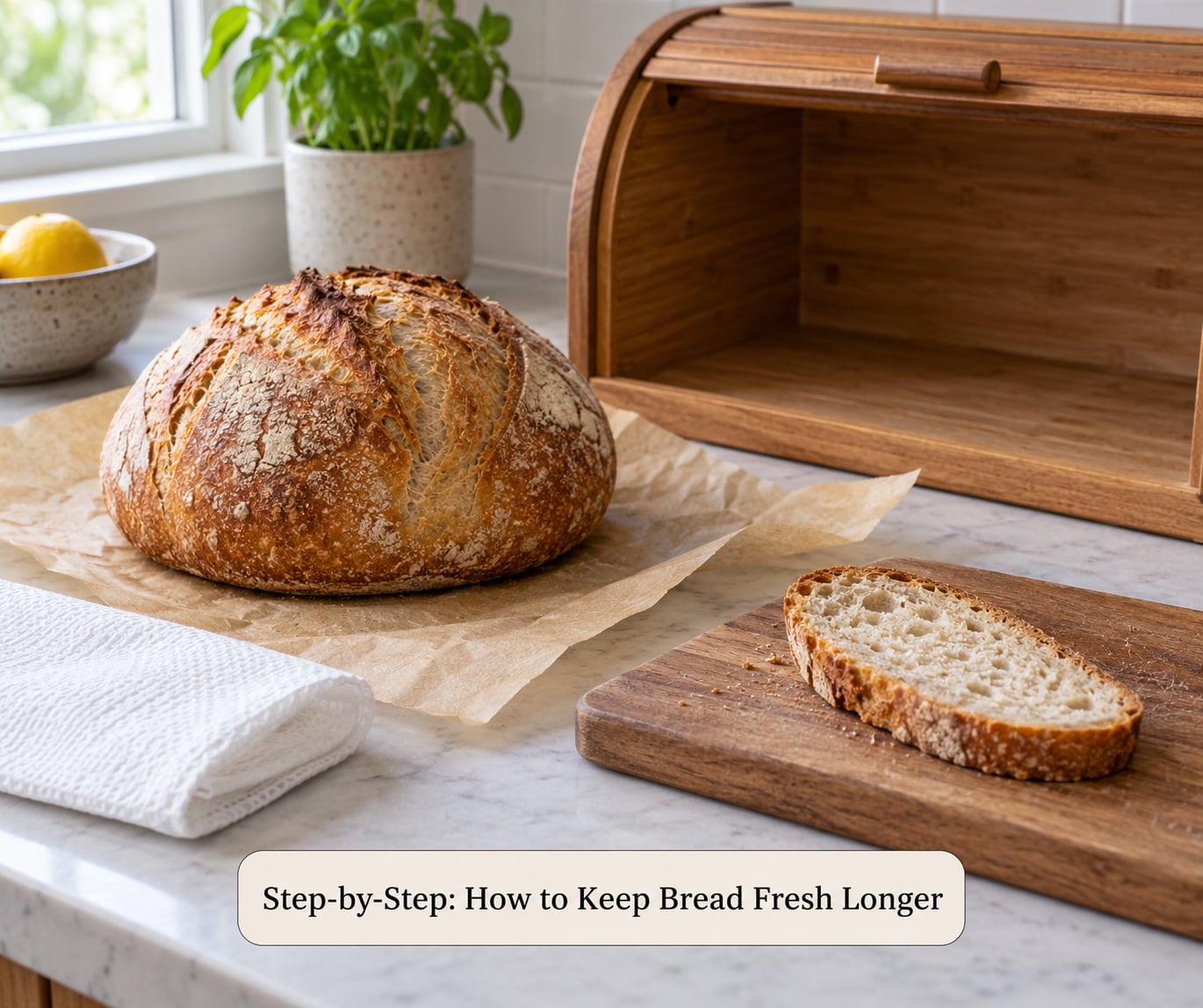
These five steps work for every kind of bread. The only thing that changes between a sourdough boule and a loaf of white sandwich bread is which wrapper you pick in Step 2 and how long you let it sit in Step 3.
Step 1: Let the Bread Cool Completely
Bread wrapped while it is still warm traps steam. The crust goes soft and tacky, the crumb weeps, and the trapped moisture gives mold spores a head start. It is the most common mistake home bakers make, and it happens in summer heat more than anything.
Rough cooling times, from the oven or the bread machine:
- Baguette or small roll: 1 to 2 hours
- Standard loaf or sandwich bread: 2 to 3 hours
- Large sourdough boule or heavy whole-grain loaf: 4 to 6 hours
The test is simple. Touch the bottom of the loaf. If it is completely room temperature and dry to the touch, it is ready. I once wrapped a loaf after a two-hour wait on a warm day and found a grey fuzz inside the bag the next morning, which is how I learned to check the base rather than the crust.
Step 2: Choose the Right Wrapper for the Bread
The paper versus plastic question has a real answer, and it depends on what kind of bread you are holding.
For crusty bread such as sourdough, baguettes, ciabatta, and most whole-grain loaves, use something breathable: a paper bag, parchment paper, or a clean cotton or linen bag. Plastic traps moisture against the crust and turns it soft and leathery within hours. This is the single most common complaint on bread forums, and it is entirely a wrapping problem.
For soft bread such as sandwich bread, burger buns, dinner rolls, milk bread, and anything with fat or sugar in it, use plastic. The bag holds moisture in the crumb so the slices stay bendable instead of snapping when you butter them. King Arthur Flour, one of the most referenced names in the baking world, recommends exactly this split, and bakery practice matches it.
Keep plastic away from bread that is still warm, and do not seal a crusty loaf inside a container with a lid if you want the crust to survive. If you like the idea of skipping plastic, beeswax and linen bags sit in between and give you moderate breathability, which works nicely for sourdough.
Step 3: Store Bread at the Right Temperature and Location
For one to three days, room temperature storage is right. The trick is picking a spot that is cool, dry, and dark, and keeping it away from heat and steam. A bread box works because it holds a steady moderate humidity around the loaf, letting the crumb stay soft without letting the crust drown. A dry cupboard on the far side of the kitchen does nearly as well.
Skip the shelf above the stove, the back of the counter next to the dishwasher, and anywhere a window or oven throws off humidity. Bread picks up ambient moisture quickly, which is why a kitchen that feels stuffy to you can mean moldy sandwich bread by day three.
If you live in a hot, humid climate, treat bread as a two-day food rather than a four-day one. Move it out of the open air, keep it sealed in plastic if it is soft bread, and freeze it sooner. In a dry climate with indoor heating running all winter, bread loses moisture fast, so a sealed plastic bag or a bread box matters more than breathability.
Use the refrigerator only for breads that are meant to be chilled, such as packaged rye or a dense whole-grain loaf you will serve with cold cuts within a day. For everything else, the freezer is the better cold option.
Step 4: Freeze Bread That You Will Not Eat Soon
Freezing does not make bread fresh again. It stops the aging where it is, and a slice taken from the freezer and toasted tastes like the day it was baked.
Here is the method that works:
- Cool it fully using the times from Step 1.
- Slice it if you plan to eat it one or two slices at a time. Freeze sandwich bread sliced and store-bought bread in its original packaging if you prefer, since the wrapper is already sized for a freezer bag. Leave a crusty loaf whole if you want to cut it yourself later, because a whole loaf freezes and refreshes with a better crust.
- Lay the slices flat on a baking sheet and freeze them for 20 to 30 minutes, then drop them into a freezer bag. That flash freeze keeps the pieces from fusing into one block.
- Press out the air and seal the bag, or use a vacuum sealer if you have one. Double wrapping, freezer bag inside a second bag, is what home bakers reach for to prevent freezer burn.
- Label with the date and the type of bread.
Frozen bread keeps three months easily and stays usable up to six if it is sealed well. Thaw slices in a toaster oven or straight into a toaster, no waiting. For a whole loaf, let it come to room temperature in the bag, roughly an hour, before you cut it.
Step 5: Refresh Bread Before Serving
Bread that has softened or gone slightly stale is not ruined. Heat drives off the water that got absorbed into the crumb and relaxes the starch structure so the loaf tastes fresh again.
- Oven, best result: Set a slice or loaf at 350°F for 5 to 10 minutes. Lightly dampen the crust with water first if it feels hard.
- Toaster oven: 350°F for 3 to 5 minutes, which is faster and works well on frozen slices with no thawing.
- Toaster: One cycle on medium, straight from frozen.
- Microwave, fastest but uneven: 10 to 15 seconds. Wrap the slice in a damp paper towel first and eat it right away; the crumb will soften faster and turn chewy as it sits.
You know it worked when the crust sounds crisp when you tap it and the crumb springs back slightly under your thumb. Bread that is moldy is a different problem entirely, and heat will not fix it. If you see fuzz, a musty smell, or blue-green spots, throw the loaf out rather than cutting off the affected part.
Common Mistakes
Wrapping bread while it is warm. Fix: wait out the cooling time for the loaf size. Steam is the root cause of both soggy crust and fast mold.
Putting crusty bread in a plastic bag. Fix: paper, parchment, or a cotton bag. That is the whole fix, and it does not need anything fancier.
Storing soft bread in a paper bag. Fix: it dries out and then gets chewy. Plastic is right for enriched and sandwich breads.
Refrigerating bread. Fix: move it to the counter for the first few days or to the freezer for longer. Cold speeds up staling, which is why the fridge loaf goes chewy fastest.
Freezing soft bread in its thin store packaging only. Fix: put the wrapped loaf inside a freezer bag and press out the air. Air is what causes freezer burn, and that is the freezer version of going stale.
Skipping the label. Fix: date the bag. Most freezer loaves are fine well past the time people throw them out out of caution.
Assuming commercial and homemade bread follow the same clock. A packaged loaf with preservatives and added fats sits comfortably for a week or more, sometimes up to ten days. Homemade bread without preservatives is a two-to-three-day food at room temperature, and that is normal, not a mistake you made. Sourdough holds longest of the homemade kinds, because the fermentation acids lower the pH and slow mold.
Leaving the bread box or bag open to pests. Ants find bread fast, and pantry moths find it too. Wipe the crumb tray and shelf clean, store the loaf in a sealed container or bag, and put a bay leaf or a few dried chili flakes near the shelf if you are in a problem area.
A few tips that do not fit anywhere else. Store rolls and buns in a single layer or stacked loosely, because piling them crushes the ones underneath. Never seal bread in a container while it is still warm, and wipe condensation out of the container each morning. Cut side down on a wooden board is an old trick that works well for overnight crusty bread, since the cut surface stays partly sealed against air.
If your kitchen is dedicated to burgers and you are chasing consistency across every component, how restaurants keep burgers consistent every time covers the assembly side. How to keep lettuce crisp for sandwiches is the same storage logic applied to the vegetables.
Frequently Asked Questions
How long does homemade bread stay fresh at room temperature?
Most homemade loaves stay good for two to three days on the counter when wrapped correctly, and sourdough usually gains a day because its fermentation acids slow mold. A packaged commercial loaf with preservatives can last a week or longer. If you will not finish a homemade loaf in that window, freeze it rather than trying to stretch it at room temperature.
Should I store bread in the refrigerator or on the counter?
Counter, for the first two or three days. Refrigerators hold a steady cold temperature that speeds starch recrystallization, so refrigerated bread goes firm and rubbery faster than bread left on the counter. The exception is breads meant to be served chilled, such as packaged rye, which you eat within a day or two. For anything longer than a few days, the freezer beats the refrigerator.
How do I keep burger buns fresh for several days?
Freeze the buns the day you buy them, still in the bag. To use them, take out only the number you need and toast them from frozen; they come out soft in the middle with a lightly crisp top. At room temperature, keep buns sealed in plastic or in a container with a lid, never in a paper bag, and fill a torn plastic bag with a small amount of air to keep the tops from drying out.
What is the best way to freeze homemade bread?
Cool the loaf fully, slice it if you want to eat it piece by piece, spread the slices flat on a baking sheet and freeze them for 20 to 30 minutes, then transfer them to a freezer bag. Press out the air, seal it, and label with the date. Double wrapping in a second bag helps prevent freezer burn. Toast slices straight from frozen and never refreeze bread you have already thawed.
Can I refreeze bread after it has thawed?
You can, but quality drops each time. The first freeze and thaw leaves the crumb close to where it started. A second freeze and thaw leaves it drier and less springy, especially for a crusty loaf. If you thaw a whole loaf and only eat part of it, refreezing is still better than throwing the rest away. Slice the loaf before the first thaw so you only take out what you need next time.
How do I bring stale bread back to life?
Put it in a 350°F oven for 5 to 10 minutes, or a toaster oven for 3 to 5 minutes. If the crust feels hard, dampen it lightly with water first. A microwave works in 10 to 15 seconds if you wrap the slice in a damp paper towel, but the crumb turns chewy as it cools, so eat it right away. Refresh only stale bread, never moldy bread, because heat will not make that safe.
Conclusion
Start with the first decision: how long until you plan to eat it. Two days or less means cool the loaf fully, wrap it for its crust type, and leave it on the counter in a bread box or dry cupboard. Longer than that means slice, double wrap, label, and freeze. Then refresh whatever you keep for a day or two in a 350°F oven before serving. Bread is a perishable food like anything else, but a few minutes of care at the start keeps most of a loaf out of the trash.