
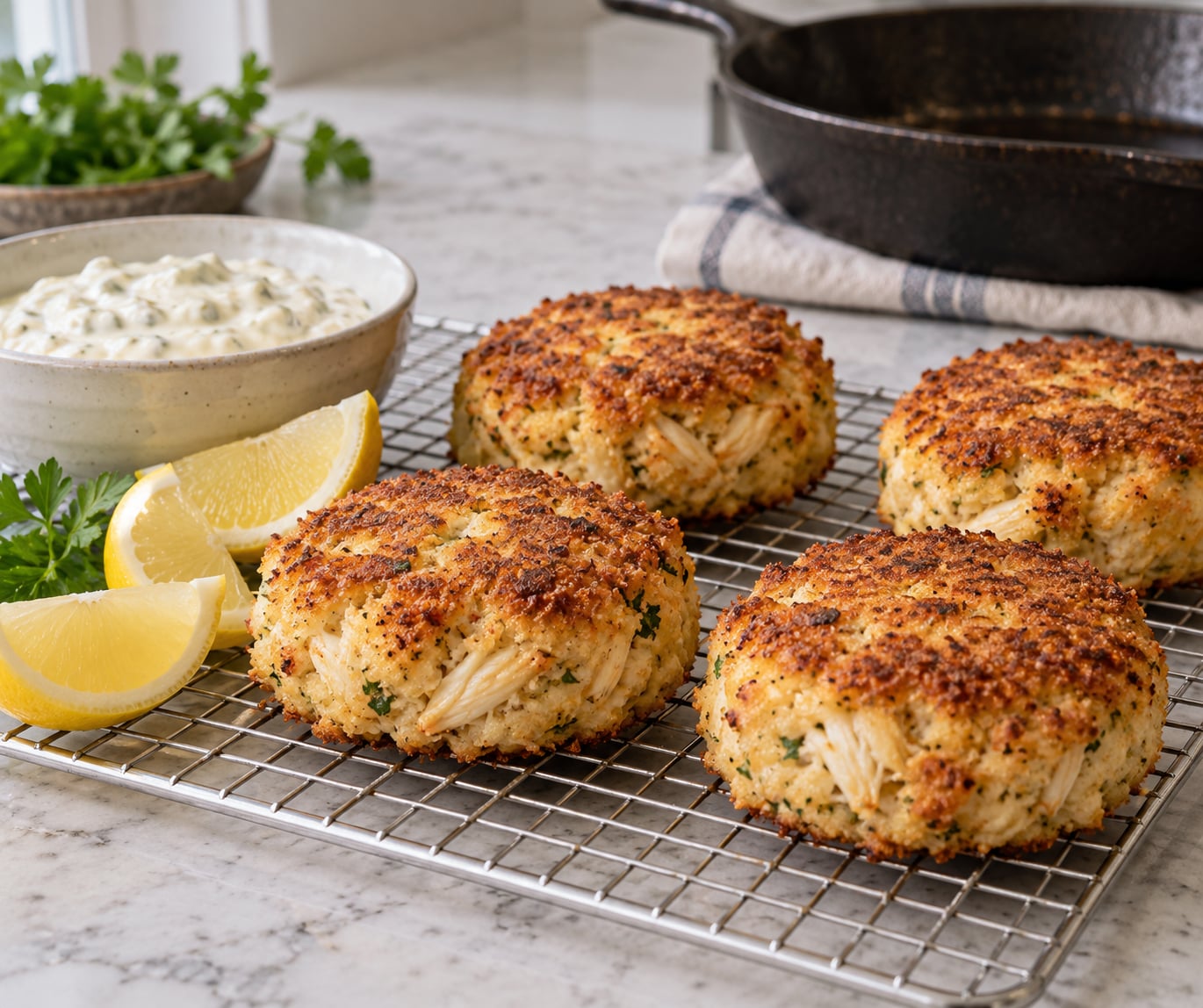
How to make crab cakes that stay together, brown evenly, and taste like crab instead of filler comes down to three things: dry the meat, bind it lightly, and give it time to chill before it hits the pan. A pound of lump crab meat makes four or five cakes, and the whole job takes about 40 minutes plus an hour of chilling. That chill is the step most people skip, and it is the step that decides whether you get golden patties or a pile of crab rubble.
I make these the same way every time: egg and mayonnaise for the binder, a small handful of crumbs for structure, seasoning with celery salt or Old Bay, and a very hot skillet with a thin layer of neutral oil. Read through the mistakes section first if you have had cakes shatter in the pan before, because those problems all trace back to a wet mixture or a hot, impatient flip.
What You Need for Crab Cakes
The list is short on purpose. Crab cakes are crab, not stuffing, so every extra ingredient has to earn its place.
- 1 pound jumbo lump or lump white crab meat, picked through for shell fragments, or three 6-ounce cans of lump crab meat, drained well
- 1 large egg, lightly beaten
- 1/3 cup mayonnaise
- 2 tablespoons Dijon mustard
- 1 teaspoon Worcestershire sauce
- 1 teaspoon Old Bay seasoning, or 1/2 teaspoon celery salt plus a pinch of black pepper
- 1/2 cup panko breadcrumbs, crushed saltine crackers, or plain breadcrumbs
- 2 tablespoons chopped scallions, optional, plus 1 tablespoon chopped fresh parsley
- 2 tablespoons lemon juice, divided
- 3 to 4 tablespoons neutral oil such as canola or vegetable for frying
- Flour, for dusting before the final crumb coat
Crab selection is where flavor lives. Jumbo lump has the biggest pieces and the sweetest taste, and it is the closest a home cook gets to a Maryland crab cake. Lump is more available in supermarkets and works well. Backfin has more shredded meat from the body, and claw meat is firmer and more strongly flavored but noticeably more expensive, which is why claw rarely shows up in a home recipe.
Canned crab works. Drain it in a colander for ten minutes and pick it over for bits of shell, because the flakes from the can are loose and break apart more easily in the pan. Fresh or canned, spread the meat across a paper towel and pat it dry. Every bit of water you remove there is water that would otherwise steam the crumb and stop it from browning.
On the binder, mayonnaise and egg together form a protein matrix that sets as it chills, and the crumbs soak up moisture and act as glue. If you like seeing how binders behave, my notes on how to make burgers with breadcrumbs vs without at home cover the same idea for a different meat.
Filler is a texture choice. Panko gives the lightest crunch and the driest center. Saltines are the traditional Chesapeake option and add a subtle sweetness. Plain breadcrumbs brown fastest and are the one to use for a gluten-free version, as long as you pick up certified gluten-free ones.
For equipment, a wide thin metal spatula is the tool that saves cakes, since a thin blade slides under a patty without tearing it. A wire cooling rack set on a baking sheet drains the underside of a cake that a plate would steam. A 3-inch ring mold or a cookie scoop gives you even 3/4-inch-thick cakes, and an instant-read thermometer removes the guesswork from doneness.
Step-by-Step: How to Make Crab Cakes
1. Make the crab mixture
Pat the crab dry again, then put it in a large bowl. Add the beaten egg, mayonnaise, Dijon, Worcestershire, seasoning, scallions and parsley. Fold with a spatula until everything is evenly coated, using as few strokes as possible so you keep the lumps intact.
Sprinkle the crumbs over the top and fold just until they disappear. The mixture should hold together when you pinch a bit between two fingers but still break apart with a nudge. If it feels sticky and wet, add another tablespoon of crumbs. If it feels dry and sandy, add a tablespoon of mayonnaise.
Add the lemon juice now, but only a teaspoon of it. Acid mixed into raw crab can thin the protein that holds the cake together, so most of the brightness belongs at the table instead.
2. Chill the mixture
Cover the bowl and put it in the refrigerator until the mixture is firm enough to handle, about 1 hour. You are waiting for the egg and mayonnaise proteins to set, which is what lets a cake hold together through a flip. Thirty minutes works in a hurry, but the texture is noticeably looser and the cakes break more often.
A second chill after shaping pays off too, especially if you are making ahead. That is why an hour of chilling plus 15 minutes in the freezer is my standard for parties, where every cake has to survive a trip to the table.
3. Shape uniform crab cakes
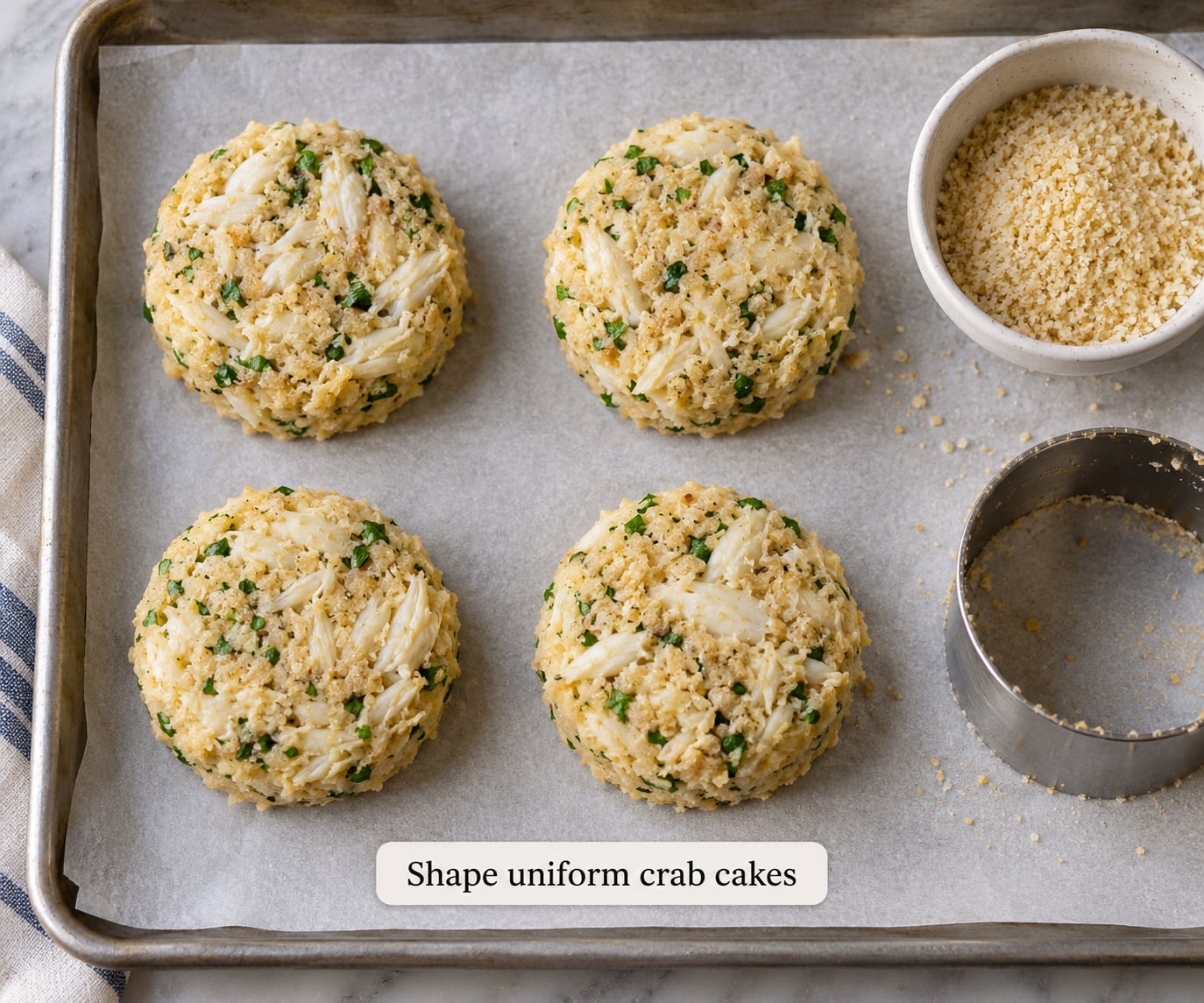
Divide the chilled mixture into eight equal portions with a wet hand. I use eight for a full-size restaurant cake, or five if you want a generous patty, plus a small test portion you fry to check seasoning.
Press each portion into a 3-inch round and about 3/4 inch thick. Press with the palm first, then the thumb, so the edges stay round rather than splitting. Then press a shallow well into the center of each cake with your fingertip. That small indentation makes the middle cook at the same rate as the rim, and it is the difference between an evenly done cake and one with a raw center.
4. Create a reliable crust
Set up a shallow bowl of flour, a bowl of your crumbs, and a plate. Flour each cake first and press out the excess. The flour layer absorbs surface moisture and gives the crumbs something to grip, so the coating stays attached when you flip.
Press the crumb mixture onto both sides, working around the edge with your fingertips rather than dumping it on top. A thin, even coat is all you need. Piles of loose crumbs in the pan turn dark long before the cake is done, and they soak up oil you will taste on the finished crust.
5. Cook until golden and tender
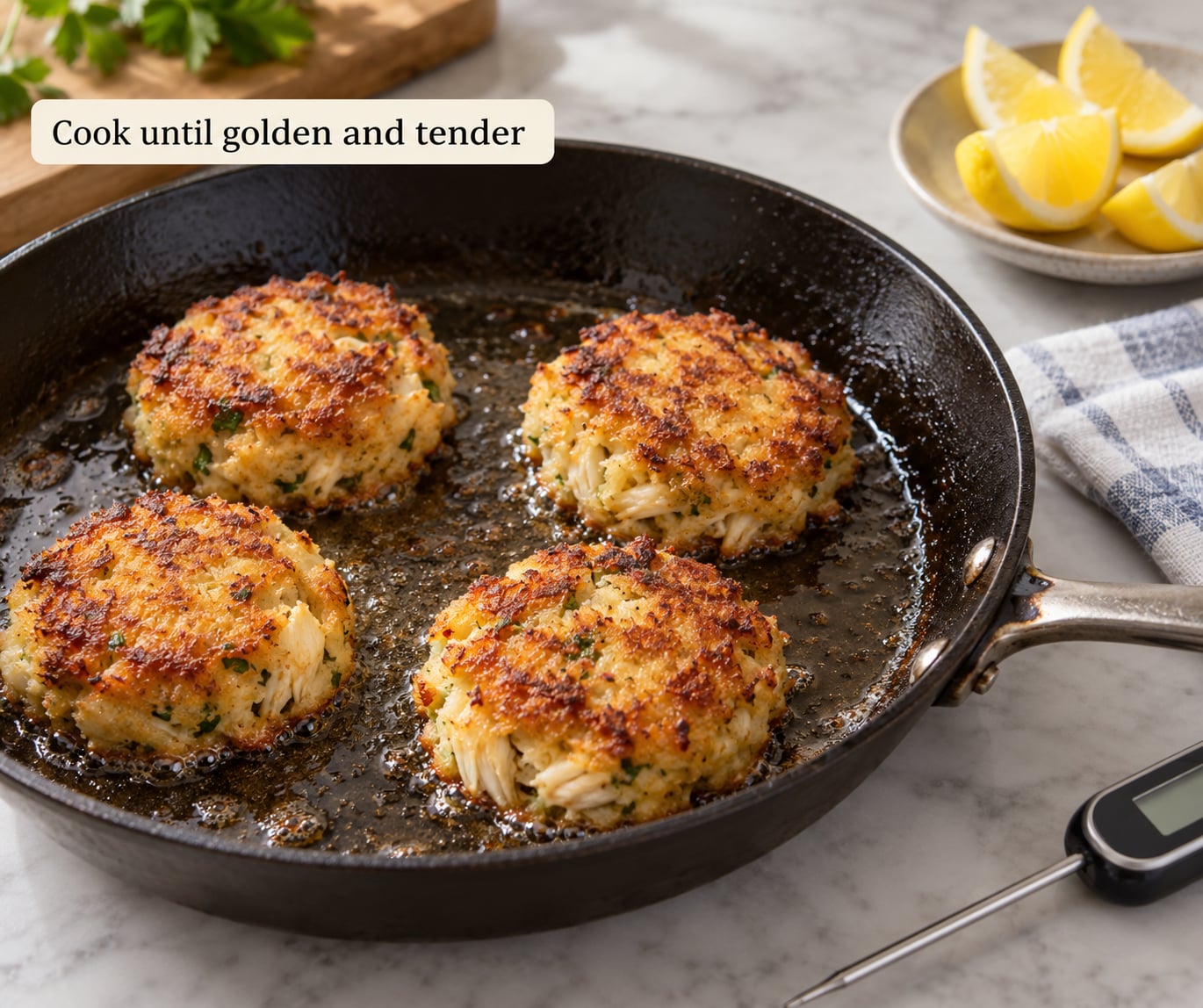
Heat 3 tablespoons of oil in a heavy skillet over medium-high heat until it shimmers but does not smoke. Work in batches of three or four cakes, leaving room between them, and hold each batch for 3 to 4 minutes a side.
Look for a deep golden-brown crust and a firm edge before you move anything. Slide the spatula all the way under a cake, then use a second utensil, a spoon or your fingertips on the top edge, to steady it as you turn. A slow, supported flip is what prevents tearing. Lower the heat to medium if the crust colors faster than the center cooks through.
Crab is fully cooked at 145F / 63C, and a thermometer in the middle of the thickest cake confirms it in a second. That reading takes about 2 to 3 minutes into cooking a side, so a partially cooked center is the usual reason for a pale, crumbly cake. Some cooks like to take the temperature out of the center to leave a few lumps slightly translucent, which is a matter of taste rather than safety at 145F.
The oven works too, and it is the easier route for a larger batch. Bake at 425F for 10 minutes, brush or mist the tops with the remaining oil, then broil for 1 to 2 minutes until the crust is browned and the center hits 145F. An air fryer at 400F gives the closest result to frying in roughly 8 minutes, flipped once at the 4-minute mark, with only a teaspoon of oil sprayed on the tops.
6. Drain and serve
Move the cakes to a wire rack over a baking sheet, not a plate. A rack lets hot air reach the bottom so the crust stays crisp, and it keeps the underside from steaming.
Squeeze the rest of the lemon juice over the warm cakes and serve them right away. Good partners: a simple tartar sauce made from mayonnaise, chopped pickles, capers and a little mustard; a lemony herb dressing with parsley, caper and olive oil; or a burger-style sauce of mayo, ketchup, mustard and a splash of pickle brine. For a plate, add something crisp and cold, and if you are building it out, how to make hash browns for brunch is a good trick for a browned potato side in the same skillet style.
Common Mistakes and How to Fix Them
The cakes break apart in the pan. Almost always a wet mixture or a rushed flip. Drain canned crab hard, pat the fresh meat dry, add a tablespoon more crumbs if the mixture smears instead of crumbling, and let it chill a full hour. For the flip itself, use a wide thin spatula and support the top edge with your other hand. If you can get the whole cake to lift in one piece, it will land intact.
The filling falls out or the cake crumbles when cut. You under-bound it. One egg and 1/3 cup of mayonnaise per pound of crab is the reliable base. For a looser, more delicate version, some cooks add only a splash of mayonnaise and rely on the egg, which makes a finer cake that suits a first course rather than a sandwich filling.
Too much filler, not enough crab. Most supermarket recipes lean heavy on breadcrumbs because they are checking the binder box, not the flavor. Cut the crumbs to 1/2 cup per pound and add a bit more scallion or parsley. If you are after a modern, lightly bound style, drop the crumbs entirely and see how the egg and mayo hold on their own, the same idea you can test with a fresh, bright topping like this one rather than a heavy filling.
The crust is pale and soft. Three causes: the pan was too cool, the cakes were crowded, or the crumb coat was too thick and loose. Heat the oil until it shimmers before the cakes go in, cook three or four at a time, and press the crumbs on thin. Dropping a few crumbs into the oil first tells you the temperature in a second, since they should sizzle immediately.
Cakes are different sizes and cook unevenly. Weigh them. Divide the mixture with a scale, or level each portion to the same thickness with a ring mold. A 3/4-inch cake is the sweet spot, thin enough to cook through in the time you want and thick enough to stay tender inside.
The center is dry and chalky. You went too heavy on crumbs, overcooked the cake, or cut into it too early to check. Rest fried cakes for a minute on the rack so the juices settle, and pull them the moment the crust is golden. Reheating in an oven at 350F for 8 minutes keeps them crisp; a microwave reheats them fine but leaves the crust soft.
The cakes fall apart in a bun. Cook them a minute longer than you think and let them rest on the rack before you build. If you are serving them as a sandwich, stir a little extra mayonnaise into the sauce on the bottom bun so the moisture does not reach the base of the cake.
For storage and freezing, keep uncooked formed cakes on a parchment-lined tray in the refrigerator for up to 2 days. Freeze them in a single layer first, then move them to a bag or container; they keep about two months and cook from frozen with an extra minute per side. Cooked cakes last 2 days in the refrigerator, covered loosely so the crust can breathe. Re-crisp them in a hot oven rather than the microwave whenever you can.
Frequently Asked Questions
What is the best binder for crab cakes?
Mayonnaise and egg together are the most dependable binder, and they are the pair most restaurant kitchens use. For every pound of crab, use one beaten egg and about 1/3 cup of mayonnaise, then add 1/2 cup of panko, crushed saltines or breadcrumbs to absorb extra moisture. Some cooks add a teaspoon of Dijon or Worcestershire for flavor. The test is simple: pinch a portion and it should hold without smearing. If it smears, add crumbs. If it crumbles apart, add a spoonful of mayo.
Can I make crab cakes without eggs or breadcrumbs?
Yes, and the result is a softer, more delicate cake. Combine one pound of crab with 1/4 cup mayonnaise, 1/2 teaspoon Old Bay and 2 tablespoons scallions, chill an hour, and form into smaller cakes. They need a delicate touch in the skillet, so cook them gently over medium heat and support them carefully when flipping. Egg-free cakes are more fragile than traditional ones, so I would not freeze them raw and I would not stack them in a bun.
Are crab cakes better fried or baked?
Fried wins on crust. A shallow fry in 3 tablespoons of hot oil gives the deepest browning and a crunch you cannot get in the oven, and it takes about 3 to 4 minutes a side. Baked is better when you are cooking six or more at once. Bake at 425F for 10 minutes, then broil 1 to 2 minutes to brown the top. An air fryer at 400F for roughly 8 minutes, flipped once, lands somewhere between the two with far less oil.
How long should uncooked crab cakes stay in the refrigerator?
Chill the formed cakes for 15 minutes to firm the coating, and up to 2 days for storage. Cook them within that window for the best texture, since the coating softens as it sits. Keep them on a parchment-lined tray covered loosely, not sealed airtight, which traps condensation and softens the crumb. If the mixture is only chilled and not yet shaped, one hour is the minimum before you try to form it.
How do I make crab cakes hold together without a binder?
You cannot get a sturdy cake with no binder, but you can get a tender one. For each pound of drained crab, mix in 1/4 cup mayonnaise and 2 tablespoons chopped scallion, then chill the mixture a full hour so the crab sugars and starches firm up on their own. Form the cakes smaller than usual, about 2 inches across, and keep the crumb coat thin. Cook them in the oven at 425F rather than frying, where a fragile cake has a much easier time staying whole.
Conclusion
Start by drying your crab. That one step, followed by a light hand with the binder, is what separates a crab cake that tastes like crab from one that tastes like stuffing. Chill the mixture for an hour so it firms, shape cakes of equal size with a shallow dip in the center, coat them lightly in flour and crumbs, then cook in a thin layer of hot oil until deep gold and 145F inside.
Once you get the timing down on one batch, the rest is repetition. Make the mixture a day ahead, freeze the raw cakes flat, and you have something crisp on the table in twenty minutes whenever the mood strikes.