
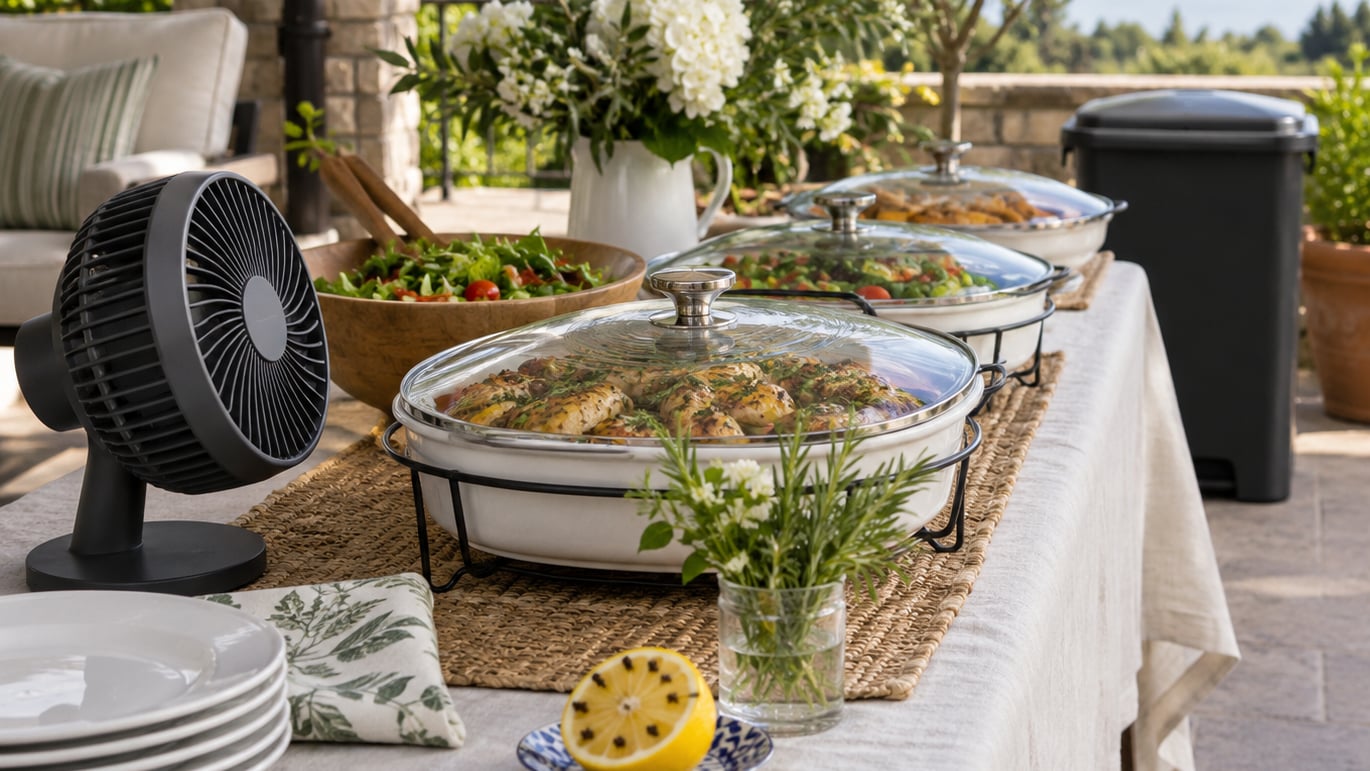
The fastest way to keep flies away from food outside is to remove what attracts them and put a physical barrier between them and the plate. Clean the table, wipe up sweet spills, keep garbage lidded and away from the serving area, cover every dish the moment it is set down, and run a small fan so air moves across the table. Add traps and scented products only as support, never as the main plan.
Most of the advice floating around online treats this as a single trick, usually a candle or a spray. That is why the flies come back by the time the dessert plate goes out. Flies are not stubborn, they are responding to smell and to an easy landing, so the setup has to answer both.
Here is the system I use for a patio dinner or a Saturday barbecue. It takes about fifteen minutes before guests arrive and a couple of minutes of attention during the meal. If you would rather not fuss with gear, our guide to labeling frozen food properly for safe storage is a good place to start prepping everything ahead of time instead.
Table of Contents
- What You Need
- Step-by-Step: How to Keep Flies Away From Food Outside
- Common Mistakes
- Frequently Asked Questions
- How do I keep flies away from food outside when I do not have a food cover?
- Can I use a fan to keep flies away from an outdoor food table?
- Where should I place fly traps when serving food outside?
- Does spraying insect repellent on a table keep flies away safely?
- What is the best way to keep flies away from a barbecue or picnic area?
- How often should I clean an outdoor food table to prevent flies?
What You Need
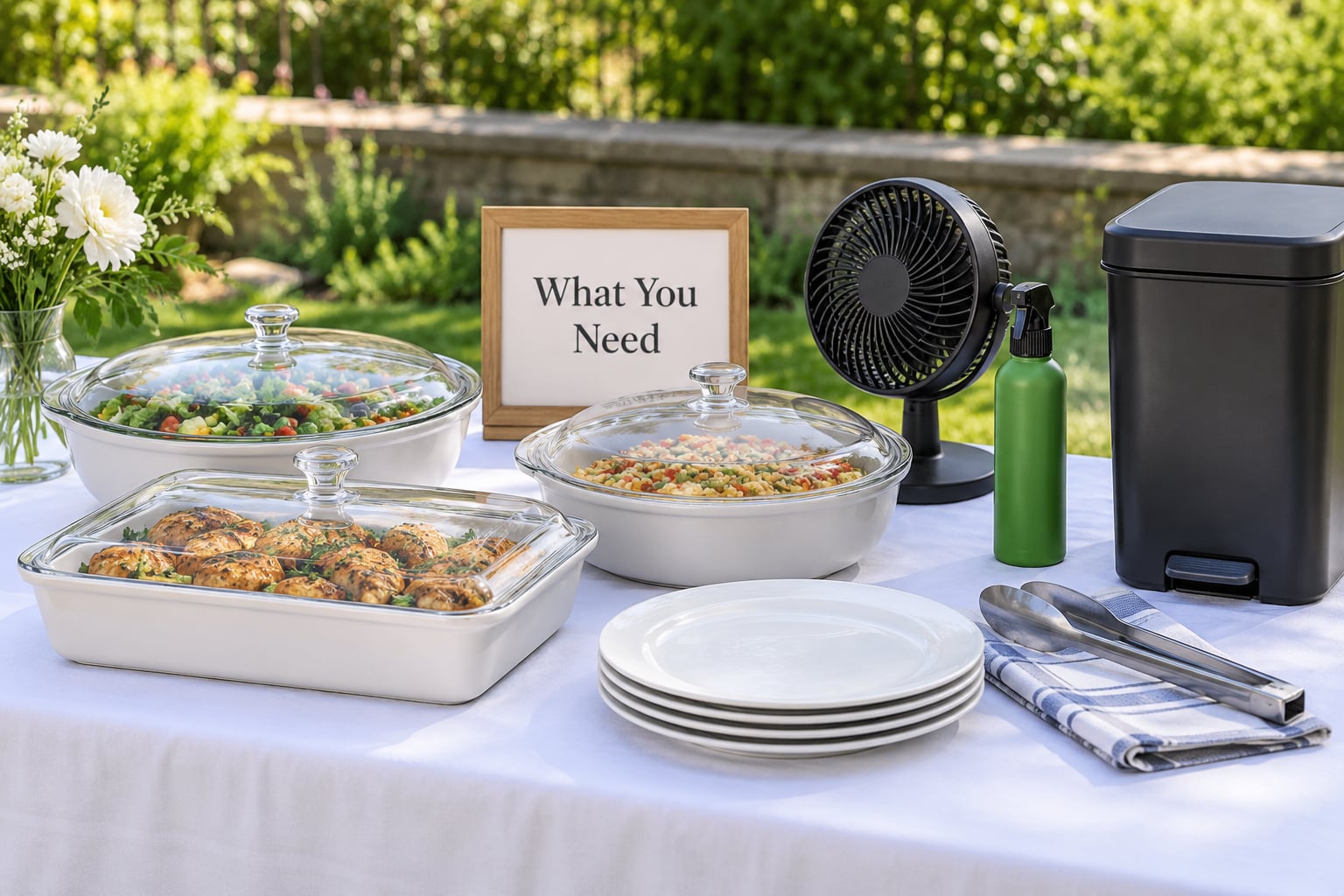
None of this is specialised, and most of it is already in your kitchen. What matters is that you can reach it without walking away from the table.
- Clean serving containers with fitted lids. Snap-on lids beat plates under a dome, because there is no gap for a fly to find. A wire dome or a pop-up mesh food tent works too, especially for a big platter.
- A small fan. A tabletop or oscillating fan is enough. A battery-operated one saves you a cord running across the walkway.
- A lidded waste container. A bin with a tight-fitting foot pedal lid, placed as far from the table as your yard allows.
- Cleaning supplies within reach. Paper towels, a damp cloth, a spray bottle of soapy water, and a small brush for the grill edge.
- Traps placed well away from food. Commercial fly traps or jars of bait that sit opposite the table, never next to it.
- Insect-safe repellent for the perimeter. Citronella candles or a torch, used around the edges of the seating area rather than over the plates.
- Hand wash and a bucket. One for you, one to drop used wipes and packaging into without crossing the serving area.
A quick trick: put your condiments, drinks and dessert bowls in their containers with the lids on until the last second, then bring the whole tray out at once. Less time uncovered equals fewer landings.
Step-by-Step: How to Keep Flies Away From Food Outside
Step 1: Prepare the serving area before food comes out
Start fifteen minutes early, before anything edible appears. Wipe the table with hot soapy water, not just a damp cloth, because the sugary film you cannot see is what they land on first.
Empty anything holding water, including cooler meltwater, plant saucers and dog bowls. Rinse the cooler and close it, since standing water is where flies breed rather than where they dine.
Set your layout so that food is at one end and refuse is at the other. Put drinks somewhere other than beside the food too, because sugary soda on a table sends a signal as strong as a plate of burgers does.
You will know this step worked if the table is still clean-looking at the end of the first thirty minutes with nobody wiping it.
Step 2: Keep food covered between servings
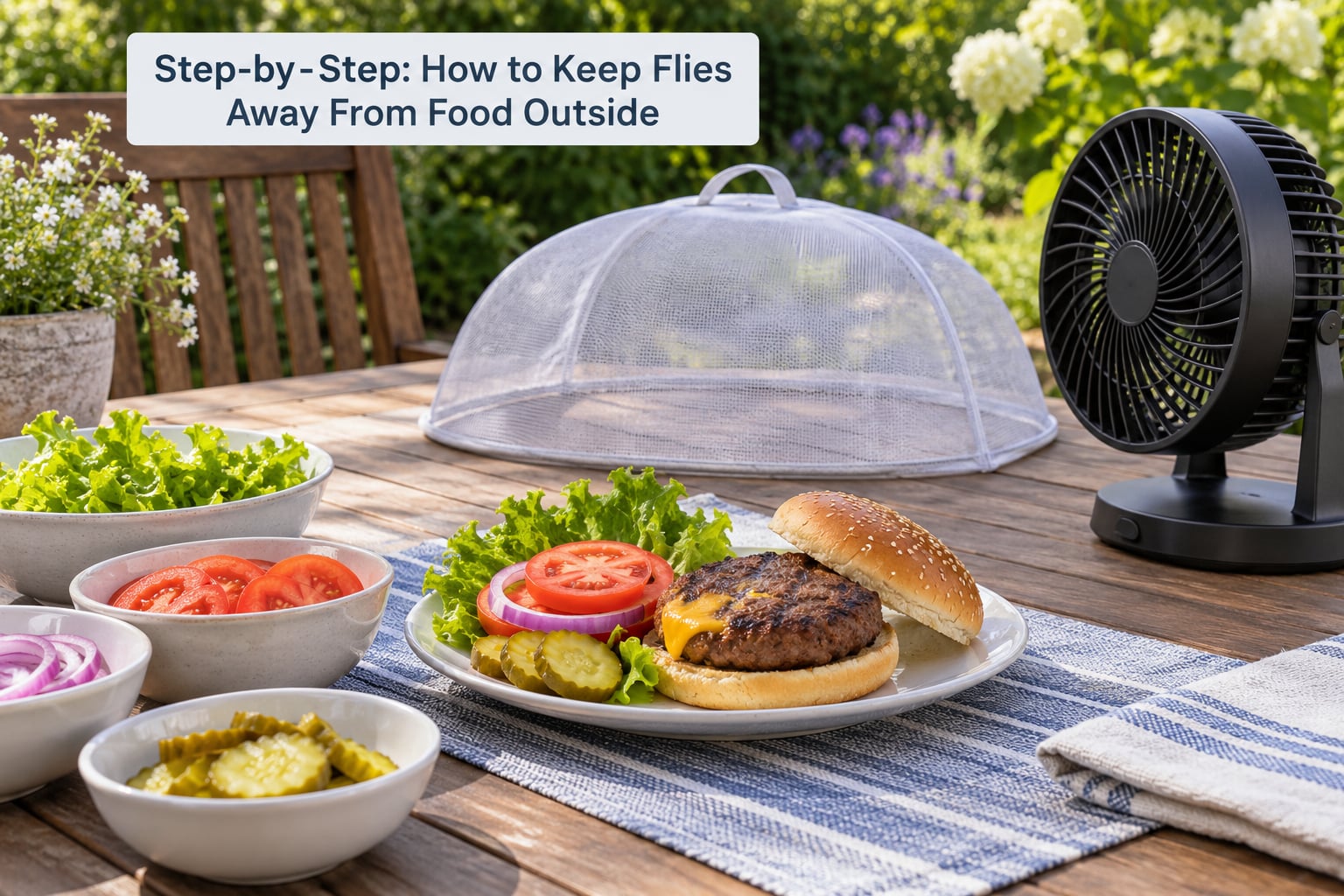
Covers are the single most reliable thing you can do, and forum readers agree: asked how to keep flies off food at an outdoor party, the answer that comes back most often is a physical barrier. Mesh food covers, pop-up tents, domes and cloches all work, and the fitted lid on a storage container does the same job better because it has no seam.
Put a cover on each dish as it comes out, and keep it there while people eat. When you plate the next round, uncover one platter at a time rather than the whole table.
Watch the heat, too. Covering hot food slows nothing that matters, but covered food sitting out drifts toward the danger zone. Follow our food safety rules for grilling meat for the safe handling side, and remember that flies are not the reason food goes off, they are just the reason you notice.
Sides deserve the same attention as the burgers. An open tray of fries is a landing pad, and our guide to keeping fries hot and crispy while serving covers holding them warm without leaving them open.
Step 3: Use airflow to discourage flies from landing
Flies are weak fliers. A steady air current across a surface makes it hard for them to hold position, so they circle and drift toward easier targets, usually the bin and the compost.
Point one fan across the serving area, roughly at table height, not straight down at the plates. A second fan at a slight angle to the first creates the moving air that restaurant kitchens rely on, which is the same principle as positive air flow behind a restaurant’s service doors.
Two small fans beat one big fan for the same table. Angle them so the air crosses rather than meets, and check that napkins, paper plates and uncovered packaging are not sailing off the table. If they are, drop the fan to a lower setting or move it back a foot.
Several fly fans built specifically for tables, with spinning holographic blades that scatter light, are sold for exactly this job and get positive reviews from people who buy them. They work, but any fan moving air across the table does most of the job.
Step 4: Eliminate the attractions that bring flies in
This is the step people skip, and it is the one that decides how long your setup holds. Flies follow food smells from a distance, so the smell reaching them matters more than what is on the plate.
- Secure garbage. Lidded bin, or bagged waste in a lidded container, emptied before the meal if possible.
- Pick up pet waste and droppings from the lawn before guests arrive.
- Rinse dirty dishes and drop them in a bucket away from the table, not in a sink next to the food.
- Wipe sugary spills the moment they happen, including drink rings and sticky BBQ sauce.
- Move the compost bin or the neighbour’s barbecue smoke out of your line of sight if you can.
- Empty any standing water: cooler, birdbath, blocked drain, dog bowl.
If flies still appear after fifteen minutes of quiet setup, something outside the table is pulling them in. Check what is running behind you, and check the bins you cannot control.
Step 5: Use traps and repellents only as support
Traps belong opposite the table, not on it. A commercial fly trap with a baited cup does two jobs at once: it pulls flies away from your serving area and it keeps their focus off your food. Set it before anyone eats, re-baited on the label schedule, and never within a few feet of an open plate.
Repellents work in a radius. Citronella candles and torches are more reliable against mosquitoes than flies, so place them in clusters around the perimeter of the seating area, where guests are sitting, rather than relying on one candle next to the platter. Same with a potted mint, basil or lavender on the patio rail, useful as a quiet addition rather than a solution.
Lemon and cloves get mentioned more warmly than almost anything else in forum threads on this topic. Push whole cloves into a cut lemon or orange, set the cut face up on a small dish, and put a few out around the table. Several people report the fruit never darkens while it is out, which is a decent sign the method is doing something.
Never spray repellent on food, plates, utensils or any surface food touches, and follow label directions for anything you do use. Some outdoor foggers are applied two or three hours before guests arrive, which is a different job entirely from deterring flies at the table.
Step 6: Recheck the setup throughout the meal
Assume something will drift off. Every fifteen minutes or so, walk the table and put covers back on, empty scraps, wipe new spills and rotate a dish that has been sitting open. It takes less time than answering a question about where the tongles are.
Watch where the flies come from rather than only what they land on. If they stream in from one direction, you have found a source, and closing it beats any product. Neighbouring bins, a dog bowl, an uncovered compost pile and tall plants brushing the table all send them straight to you.
One more habit helps: keep raw meat on a separate board until it hits the grill, and take the finished plates straight out on a tray. Less movement of uncovered food means fewer chances.
Common Mistakes
Leaving food uncovered while people chat. It is the most common failure and it is easy to fix. Fitted lids go on as the plate lands, and come off when someone is actually about to eat.
Setting out a beautiful spread and then leaving it. A buffet that sits untouched for an hour is an open invitation. Bring out smaller batches and refill them, so what is exposed is a small amount of food.
Putting the bin next to the table. No cover, no screen and no fan in the world fully competes with that. Move the refuse as far as the space allows and keep the lid down the whole time.
Spraying repellent near plates and drinks. Follow the label, keep sprays and aerosols away from anything people eat or drink, and never apply them to food or food surfaces. Citronella products should be used where there is no breeze carrying them toward the table.
Aiming a fan at the food. Air straight onto an open plate blows napkins off and lifts smells toward the flies. Send air across the table instead, at a low angle.
Placing a trap beside the serving area. A trap next to the food concentrates insects next to the food and contaminates the spot. Put it across the space, ideally downwind from where guests sit.
Ignoring sticky tables and chairs. Sugar residue on a chair arm is as attractive as the platter and nobody looks at it. Wipe the whole eating area, not just the tabletop.
On the food safety question that comes up most often in these conversations: if a fly has landed on food, the honest guidance is to discard that item rather than brush it off. Flies pick up bacteria from waste, faeces and decaying material and carry them on their bodies, and brushing or wiping does not remove what is already transferred. Sauces, cut fruit and anything eaten with bare hands are the ones to throw away. Solid items like sealed bread crusts or unpeeled fruit are lower risk, but the cheap answer is always to toss it and put out a fresh plate.
Frequently Asked Questions
How do I keep flies away from food outside when I do not have a food cover?
Use a clean inverted dome, a wire mesh food tent, or an upside-down colander over the platter, weighted with a can so it does not lift in the breeze. An overturned cup or bowl works over smaller items. If you have nothing at all, keep the food in its container with the lid on and bring only small batches out at a time, then run a fan across the table to make landing harder.
Can I use a fan to keep flies away from an outdoor food table?
Yes. Flies struggle to land and hold position in moving air, so a fan aimed across the serving area at table height pushes them away. Angle two smaller fans so the air crosses rather than meets, and keep the airflow low enough that napkins, paper plates and uncovered packaging stay put. A fan is a support measure, not a replacement for covers and clean surfaces.
Where should I place fly traps when serving food outside?
Set traps as far from the food as your space allows, ideally across the yard or downwind of the seating area, so they pull insects away from the table instead of concentrating them beside it. Bait and place them before guests arrive, keep the lid closed while food is being served, and follow the label for re-baiting. Never place a trap within a few feet of an open plate.
Does spraying insect repellent on a table keep flies away safely?
No. Do not spray repellent on a table, on food, or on plates, cutlery and surfaces that touch food. Follow the product label, keep aerosols and sprays away from anything people eat or drink, and avoid using them in a breeze that carries the product toward the serving area. Citronella candles and lemon studded with cloves are gentler options for keeping smells away from the food itself.
What is the best way to keep flies away from a barbecue or picnic area?
Use a screened enclosure or canopy for a barbecue station where you can, since a physical barrier blocks access completely. For a picnic, bring lidded containers and a fitted mesh food tent, keep the refuse bag lidded and away from the blanket, and set a fan to move air across the spread. Wipe sugary spills fast and empty any standing water before anyone arrives.
How often should I clean an outdoor food table to prevent flies?
Wipe the whole eating area, including chair arms, with hot soapy water before guests arrive. During the meal, check it every fifteen minutes and wipe sugary spills, drink rings and sticky sauces immediately, dropping used wipes into a bucket away from the food. Rinse dirty dishes right away rather than letting them sit beside the table, and empty the bin before it fills.
Start with the fifteen minutes of setup, because that is where the whole thing is won. Wipe the surfaces, move the bin, empty the standing water, put the lids on the containers and point a fan across the table. Keep covers on between servings and toss anything a fly has touched.